The Truth About Mainstream Media Nobody Talks About
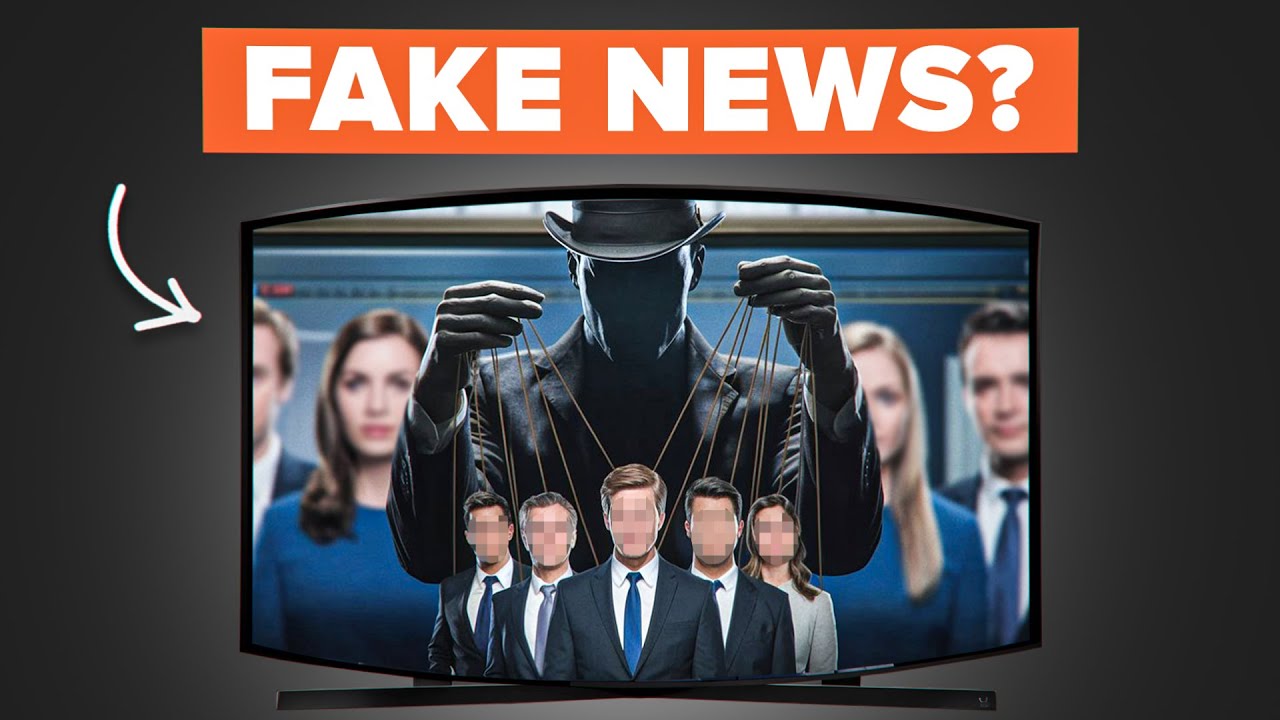
Eric Siu and Neil Patel discuss how distrust in mainstream media pushes audiences to social platforms, creating opportunities for digital marketers. They cover 2024 growth drivers like webinars and SEO, then shift to hiring philosophy: they prefer senior experts over young talent, use a three-tier player framework, and apply Brian Chesky's "guilty until proven innocent" principle when evaluating candidates.
Chapters
It's very difficult to trust mainstream media. Like, back in the day, our parents used to watch mainstream media all the time. And I think a lot of people in America have realized, oh my God, you can't trust traditional media anymore. You know, there's this— the Liz Cheney piece, right, where people are ripping Trump for this. Again, we're not saying we support either side. Go vote today. Today's Election Day, right? Actually, it'll be past by the time this goes live.
Yeah.
But so I'm just looking at the Google results here. It says, So the context here is that traditional media ripped Trump for saying that Liz Cheney should be shot or something like that, right? Do you remember that?
Yes. Let's put her with a rifle standing there with 9 barrels shooting at her, OK? Let's see how she feels about it.
So CNN, Trump says war hawk Liz Cheney should be fired upon in escalation of violent rhetoric against his opponents. PBS says, Trump says Liz Cheney might not be such a war hawk if she had rifles shooting at her. And then 19th News, Trump suggests Liz Cheney should be shot. And so, okay, whether you like Trump or not, what he mainly said was, hey, like, if you were to go to war, you probably wouldn't be such a warmonger. That's basically what he was saying. Like, anybody that goes to war, it's like, you don't wanna put those people at risk, right? If you understand what war looks like, it's a very ugly thing. Like, you probably don't wanna be fighting all these wars, right? And that's what he was saying. But instead it's like, oh no. You know, Trump said Liz Cheney should be shot, right? And guys, like, when you manipulate someone's words like that, that to me is being dishonest. I don't care which side you're on. Like, it could be Kamala Harris or Trump. Like, I think when you manipulate it, that's unfair. And that's when people start to look for other mediums. And that's when they start to move over to new media.
Which I think it creates a huge opportunity for us digital marketers. And that's why you should be optimizing for all these social platforms because it's less filtered. and a lot of people are moving their attention there. You can see the rise of popularity of social, right? It's just continually boom. The average person spends over an hour, and I think it's 27 minutes, hour 27 minutes a day. Somewhere around there.
It's somewhere around there.
And speaking of digital and growth, one thing is our agencies, you know, 2024 has been a tough year for both of us, but we've still both seen growth. I'm knocking on wood for good luck. We've both seen growth in 2024. You want to talk a little bit about What we've been doing to grow?
Yeah, so we'll talk about kind of the usual suspects first, then we can move into some more advanced things. So the usual suspects for both of us, I think, are webinars work really well.
Yeah.
That's one for sure. Partnerships, collaborations work really well.
Yeah.
For, I think for both of us, SEO still works pretty well.
Yep.
And then I would say the 4th thing would be, interestingly enough, I told Neil this, that when I look at our Gong phone calls, I type in the word podcast, 10% of the conversations include the word podcast. And I type in YouTube, around a little less than 10% include the word YouTube in it. That's not saying everything comes from that, right? But it's saying maybe a good chunk comes from podcast, YouTube. And—
So being omnichannel.
Being omnichannel works well. And then when people come up to us at conferences, sometimes they'll watch Shorts, sometimes it's long-form videos. But we know the podcast is still a very important piece. It's hard to attribute back to this, but we know based on, You know, more qualitative insights, I would say, that we know it's moving in the right direction. This is why we spend money on this thing.
Yeah, and Eric and I have been going to a lot of events in 2024, which I believe has helped both our businesses.
I cut down on events this year. So usually I travel about 130 to 140 days a year. This year it's going to be around 60.
Forget how many days, how many events though, because a lot of times when you travel, you go for—
It's usually for an event, but that means I've cut down on events. Yeah. So yeah.
But you usually add on also some spare time for you to see the city or whatever.
Not usually, sometimes I do. Yeah. For example, this one, I'm just kind of going back.
Yeah.
All right. So I wanted to take a second to tell you about the Agency Owners Association. So this is an agency peer group ran by my podcast co-host, Neil Patel, and myself, Eric Siu. And these were 9 and 8-figure agency owners respectively. And what I will say is at the end of the day, you want to learn from people that have been there, done that. If you want to grow your agency to 7 figures, 8 figures, and beyond, this is the group for you. And we bring in other agency owners to speak as well, and it's a great peer group where you can help each other out. And you're going to learn how to acquire more clients, you're going to learn how to take yourself out of the day-to-day and to build the business of your dreams. And the cool thing, till November 30th, we are holding a special price, and you can apply at marketingschool.io/agency. And the great thing about it as well, if you try to get into group, there's a 7-day free trial, right? So what Once November 30th hits, we're going to increase the price by $200 per month. So right now you're getting it at the lowest price possible. So go to marketingschool.io/agency to learn more and we'll see you inside.
So we've done events, events have helped us. Another thing that's really helped us is hiring really good people. I think both you and I have spent a lot of money in 2020.
This year has been a game changer for hiring. I would say, you know, sometimes, you know how Russell Brunson says you're one funnel away. And then Ayman, who used to be the CEO of AppSumo, he's like, you're one hire away, right? And it's really true. One hire can really turn around your business. But if you pick around a— if you pick up some super, like 4 or 5 superstars in a year, you're off to the races.
Yeah. And Eric yesterday at dinner was mentioning, was it Peter Thiel or Elon Musk hiring philosophy on the younger people?
Oh yeah. Okay. So there's a great video on YouTube right now. So Keith Rabois did these episodes with Airbnb founder Brian Chesky, and then also the CEO of Ramp, Eric Kleyman, I think. So Keith Rabois was just sharing a story. So you can search for The Art of Hiring on YouTube, great video. I had my HR team watch it. And basically it's— so Keith Rabois is like, yeah, Peter Thiel couldn't say this back in the day, but at PayPal, he was just saying that, you know, don't hire people above 30, basically saying that, right? In unsaid words. And he's like, okay, so what's the reason for that? Well, the reason for that is 'cause Google and like a Meta, they've already taken all the people that are above 30 and they're amazing already and they're going to pay them an arm and a leg, right?
Yeah.
But people from 20 to 30, you're going to be able to afford them and they're going to be crazy hard workers and some of them turn out to be superstars, right? Who'd they have? He had, you know, there was David Sacks. He picked up Keith Rabois, right? I think Elon might've been in his 20s or so, right? Reid Hoffman was probably in his 20s back in the day, right?
Max Levchin.
Max Levchin of Affirm.
YouTube founders?
YouTube founders were there too, right? And so they just found these people that really wanted to grind and work on something that was like kind of world-changing. And Keith Rabois was just like, those times were amazing because we found amazing— and the thing was we hired all amazing people. And whenever we made a mistake on a bad hire, the amazing people would just push the bad ones out.
Yeah, we on our end do a little bit of the opposite. We tend to hire more Older established people within our field. We do also hire younger people as well. I think the younger people may make up the majority, I'm guessing, I don't know. But for a lot of our leaders, what we found is when you hire senior people who have done it before and are experienced, it just ends up saving you a lot of time and mistakes, although it costs more.
You know, there's a story. So this is a raggedy guy. So this guy's drinking, this guy's like 39 years old, this guy's a programmer at IBM. And he's sitting in a bar. And then this raggedy guy comes in and sits next to him. He's like, so what do you do? He's like, oh, I'm a programmer at IBM, blah, blah, blah. And he's like, why don't you come work for me? Right? He said, what's it going to take for you to come work for me? He's like, well, I would like a Porsche and blah, blah, blah. And, you know, 2 weeks later, he has a Porsche on his driveway. And the guy, the raggedy guy that walked up to him was Steve Jobs. And Steve Jobs, even back in the day, he was like, don't trust anyone above 30 except for this guy over here, this 39— except for this 39-year-old over here. Right? So kind of like similar philosophies, I think. What Neil's saying is, by the way, it depends on the business. So for agencies, like an established type of business, there are a lot of people that have been there, done that. You can hire, you could definitely hire these people, right? You balance the people that have been there, done that with kind of the people that will push. But if you're going for like Apple, or if you're doing PayPal, which is payments back in the day, brand new, it might work out more in your favor if you go for, you know, the Peter Thiel rule, right? So we're not advocating for one or the other. There are different ways to do it.
Also, Eric and I are in an industry where you're not innovating as much versus trying to create the next PayPal or ChatGPT. It requires a ton of innovation. You need people to think outside the box. Whatever their ages are, those are the ones you want to end up trying to find. What else have we done this year to grow our agency? Oh, we created that group.
Agency Owners Association.
Yeah.
And we also— That's sort of a fun community.
Yeah. And we started sharing all the different ways we're growing and other people are growing. So that's helped us.
Dude, speaking of hiring, The person that's running the group now is— I can't list him out right now because that would give him away to his current employer. But he's been amazing. And he's helped this one company really stay relevant in the last 8 years or so. And he understands a lot about community. And that's just an example. See, it's like, I thought that me speaking at one of these events wasn't going to pay off. I'm like, okay, that pays off because we picked him up and he's going to help grow the community. And every— by the way, when you hire someone amazing, They are literally speaking the future into you. They're like, hey, here's what we're gonna do for next 6 months. What about this thing over here? This thing, this thing, this thing. Oh my God, just do all of it, right? And that's when you know you found someone amazing because they're 6 months ahead.
Yes. And you actually posted on that on LinkedIn.
Oh, you liked it? I liked it. Yeah, yeah.
So yeah, good post.
Do you remember what I said?
Uh, kind of, and I'll try to repeat it. You can correct me. Uh, you have talent in 3 buckets: someone who's amazing, Average and someone who sucks.
A, B, and C player.
Yeah. So the A player is 6 months ahead and you don't have to tell them to do anything. They're already doing the stuff you should be doing 6 months from now. The B player is just keeping up to date and current with the stuff they need to do, and sometimes you have to tell them a little bit of things here and there. The C player, you got to tell them what to do and they're behind many months.
Yeah, they're behind 6 months. It's like Oh, I did this. Yeah, I should have done that 6 months ago. Right?
Yeah.
And so, there's a big difference. If you audit your entire company, the last thing I think I'll say on people is, you know, if you look at your entire staff right now or maybe the people that you work with directly, keep asking yourself, would I rehire this person? Would I rehire this person? If you wouldn't rehire this person, ideally, let's say Neil hired me, right? If Neil wouldn't rehire me, he should have a conversation with me. He should be like, hey, Eric, let's just have an uncomfortable conversation right now. If you were to leave today, I would feel indifferent. And so let's figure out how we can change that. Yeah.
And when it comes to hiring, like when it comes to marketing, it's actually really simple. What did you do before that we need help with? Is it social media? Is it SEO? Pick a channel. What have they done before? And don't just hire them based off of that. Hey, here's our problems. Here's some of our data. What would you do to fix it? And, you know, Just run a quick test and pay them for their time. And if they can actually do stuff that you like, now you got a potential hire on hand. If you don't, then something's off.
So, Brian Chesky said this, and then we can work on wrapping this. But Brian Chesky, founder, CEO of Airbnb, he said that when it comes to hiring, everyone is guilty until proven innocent. He's like, I don't know why we all go into hiring believing that someone's great already. They're guilty until proven innocent. They need to prove that there's evidence of greatness. And I really like that line.
Yeah.
And that's a line that we push through now. It's like, yeah, we're looking for evidence of greatness. So sure, they can talk about ideas, but also like, what have you done in the past? And if it feels like this person's— in Australia, they call them gunners, right? If it feels like this person is a gunner, then you go for it, right? Because hiring is a leap of faith at the end of the day. But what else have you done in terms of— what else have we done this year as we work towards wrapping up here?
We actually haven't done— oh, we focused on creating a lot more content. You know, we record a lot more videos, we create tons more content, we push it out on the social web. We've experimented with content types. Eric's done more interview formats. I've done more scripted content for Shorts and stuff like that. Some of it's worked, some of it hasn't for both of us. But if we had to sum it up, there's not a ton that we actually did from testing 100 different ideas or anything like that. It's more of the stuff we talked about, but we had focus and we really doubled down on it. Yeah.
I think the younger us, maybe 10 years ago, we'd try to talk about the new things all the time. As we get older, it's the standard blocking and tackling stuff. And you realize it's the same boring stuff.
Yeah.
And you just keep solving problems and you keep going. I remember, so we have a client, you know, they do over $100 million a year. He's like, yep, I've just been doing this for 30, 35 years. Nothing cute or anything like that. And, you know, that's the spirit of a real entrepreneur. So that's what we learned from this year. And we're going to end right on time here. So that is it for today. Again, from Frankfurt, Germany, this is Marketing School. And don't forget to rate, review, subscribe and go to marketingschool.io/agency if you want to join the Agency Owners Association. And we'll see you tomorrow.









