These Are the 3 First Marketing Hires You Should Make
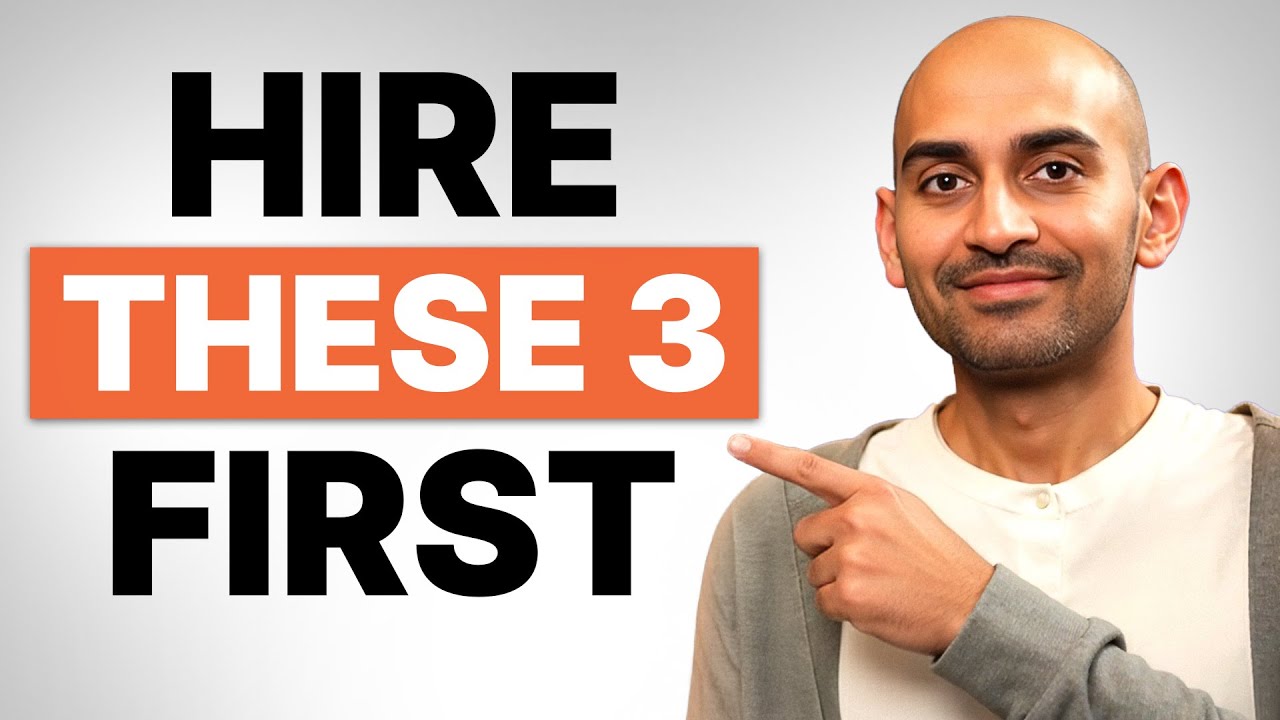
Neil Patel and Eric Siu break down the three marketing hires that matter most in 2026: an influencer marketing director, a data and analytics specialist, and a content creator. They cover micro-influencers, digital PR for LLMs, and high-ROI email strategies like the Beehive segmentation approach.
Chapters
So if you were to build a marketing team in 2026, I actually had this question asked to me this morning. How would you set up your marketing team?
Of what kind of business?
It can be software, it could be services, it could be e-commerce, and people already know the basics. But if you had to pick 3 key hires, this was actually the specific question that was related to the marketing team because I asked something similar. I was like, Well, how is the marketing team already set up? Is it new? Is it not? So then it got narrowed down during the podcast interview to what would be your 3 main hires in marketing for 2026?
So this was actually spawned from a Twitter thread that we actually went over a couple weeks ago. So I, because I remember this thread, it was from one of the Marketing Operators Podcast guys. And I think for me, if we're talking D2C, I think you have to have an influencer marketing person. I think you have to have an influencer marketing person. What's your first one?
So let's combine them. I also believe in influencer marketer, but I think you need an influencer marketer whether you're B2C or B2B. I think it has a huge edge, but influencer marketing only works if you go after micro and nano influencers. So like sub-100,000 followers, sometimes you can go a little bit more, but the 10,000 followers, the 5,000, the 20,000, we're finding huge ROIs in them in both B2B and B2C. We're not seeing the economics or the ROI pan out well from larger influencers. The cost basis is just too high and we don't see them put enough time and energy. And you have to reach out manually to get a lot of these smaller influencers, but we're seeing the numbers add up and it become extremely profitable. We see that as a really good revenue generation opportunity in 2026 that not enough businesses use because they don't want to reach out to the masses. And when you look at your biggest competition, Your biggest competition isn't the SMBs, it's actually the enterprises because the enterprises have the dollar amounts. They're what's bringing up the influencer costs because they're the ones with bigger budgets. But if you look at the enterprises, they tend to just pay the ones with larger follower accounts and they outsource to other agencies and they don't want to go after 1,000 smaller influencers because it's too much work. So they'd rather just spend more money and get fewer people.
Yep. So we agree, you need an influencer director/manager. Okay, now I do think if you have internal creator slash producer, so either they're the creator or they're the producer, organic short form, especially for e-com, I think even for B2B too, is interesting. You know what's funny? This is a complete side note thing, but you know how we kind of talk about how like short form isn't going to generate you conversions directly, but it will generate views. And if you're lucky now, we're actually generating more emails using ManyChat on the emails. So one of my videos, we were talking about ChatGPT ads, right? And that one, it didn't do like, it didn't go viral. It got 80,000 views, which is decent. But who followed me from that? Afrojack, the DJ.
Oh, that's cool.
Hassan Whiteside, the basketball player. And then the founder of T-Mobile, John Legere or whatever. So my point is you never know who's going to happen. And these people all know other people too, right? Which eventually might come back to you. But that's my number 2. How about you?
My number 2 would be data and analytics. We see too much wastage in marketing spend just across almost every industry. every company, all digital channels, even all traditional channels. And the reason I think data and analytics is more important than ever is there's too many more channels. AI's made things worse. There's more new platforms that you got to mix in because the old channels still drive volume and results. And you need people who know how to use AI to be more efficient in data and analytics. And if you don't have good data and analytics, what ends up happening is you keep spending money, but you're not fine-tuning as much because what people believe is a source of truth is just off. Like the numbers are off and they're not really the numbers you should be making decisions off. And that just crushes the business. Like everyone thinks to grow, you need to keep spending more and more and more and fine-tuning. And I think to really do that, you need clarity. If you don't have clarity around your numbers, everything else is screwed.
So we got the influencer director, we have the data person, and what was the third one on your side?
Influencer person, which we both agree with. I have data on my side. You have an AI content creator on your side.
No, not AI content creator, just a content creator. Either they're content creator slash producer.
Okay. So let's go for 3. What would your third one be? And I'll tell you my third.
My third one's actually going to go in your direction on the data side, the data side. And a big bonus would be if they're actually, this is a huge bonus, but if they're actually really good at data research as well, which ties in with data visualization, which makes more content.
Yeah, my third person would be a digital PR person. It drives a lot of citations and I think not enough corporations focus on citations. I think if you're not getting cited enough, you're not going to see the ChatGPT, the Perplexity mentions and rankings.
Bless you.
Sorry about that. Thank you. But I would say that's very important in this new ecosystem where people are reliant on LLMs. And you got, you gave a great example earlier. I think it's going to improve, but it's really bad at this point. Like someone hitting you up and being like, Eric, I want to talk to you about your marketing agency because you guys specialize in healthcare marketing. Now you're a good marketing agency, but would you agree with the statement? I'm trying to— I'm not trying to talk trash. I love you to death. You're not a healthcare marketing agency.
We're not. Yeah.
And that's the problem with LLMs is they're really off right now and they're going to get better. And when they get better, They're going to become even more popular. So I think it's more important to have the citations and get there. Now, all props to you on the healthcare. If you get more of those, you'll get enough healthcare clients and then you will be a good healthcare marketing agency.
Sometimes they call it fake it before you make it, right? So this is interesting because we're talking about marketing roles right now and I want to talk about the death of the CMO and then also this, this Vibe growth marketing manager one. So we started late, so we have to, we have 10 more minutes. But if you're in B2B, here's the deal. LinkedIn account-based marketing sucks, but it doesn't have to. Karrot, it allows you to create personalized ads towards your customers and also personalized landing pages that align with the ads. So you're going to have higher conversions and influence pipeline reporting to prove that your ABM works. So if you want to learn more, just go to karrot.ai and you can join the waitlist. Again, it's karrot.ai, and we'll see you on the other side. Kieran Flanagan from HubSpot tweeted this, or not tweeted this, but brought this up. So did you know that Ramp is hiring a vibe growth marketing manager?
Do you know what that is? So they just figure out how to grow through like just vibe marketing, vibe coding, and philosophy.
Similar stuff. It's like with vibe coding, obviously you're just kind of vibing and then you're using Replit or the new, the new Google one that came out yesterday. I forgot what it's called already. Um, but vibe analysis is when you use Cursor to analyze all your data and then you have a vibe growth marketing manager. So here's what's in the role. You have the ability for someone to do the work autonomously, end to end, from idea to execution. It literally says in the job spec without needing support from engineering. Okay. Number 2, being skilled in AI workflow tools to build agents that improve speed, personalization, and targeting across marketing channels. Marketers will gradually become AI agent trainers and managers. And then your prototype plus ship versus meeting and memos. This to me, honestly, if I'm looking at this, is if I'm 21 years old or whatever, I'm probably this already. And this is what they're looking for, right? This is going to be the baseline expectation. So like, you know, we're looking for a Vibe growth marketing manager who's a builder of prototypes and ships faster than most teams can spec in a brief, use AI tools, LLMs, no-code, low-code platforms. I'm I'm almost tempted to say this is a requirement for our new, maybe the more junior people, and eventually it's going to be everybody, right? But like, you got to know Python, GPTs, making Zapier workflows, APIs, and FastCrafty builds. So I think we're going to see a lot more of this. And I think this probably scares people that don't have high agency. What do you think?
Yeah, I agree with you on this.
So then if you agree, that brings me to the death of the CMO. So this person posted this. This is a Twitter conversation, but starting to think that the CMO role is on its way out. Spoken with a dozen CMO track executives recently, and every one of them is trying to shift into a Chief Operating Officer role or CBO, Chief Business Officer role, instead of staying on the CMO track. And then this guy says, I have learned recently that CMOs suck at marketing and develop bad habits from 2015 when you can just spend on Facebook and everything worked. Building a brand and winning consistently is hard. You cannot just media buy.
I would disagree with that because it depends on the organization size. And I think You want me to give you an extreme example?
Yes, sure.
I meet up with CMOs who, no joke, manage marketing budgets. I won't tell you the full amount because if I give you the full amount, you'll know the company name.
Give some examples.
But like this CMO that I met up with spends more than $1 billion globally a year on marketing, literally more than $1 billion. You know how much, like that's a crapload of money to spend more than $1 billion. I do think when you have spend levels of that high, The CMO understands marketing. They may not be the expert at everything, but what they're really good at is strategy and managing a P&L.
I think the death of a CMO doesn't apply to like a global organization, but I think to a smaller organization, I think the role— I don't think there's a death of that role. You always need a leader. But I think the role changes pretty drastically because even the last few years, the last 10 years or so, we've seen that CMO tenure going down and down and down. And you and I have met a lot of CMOs, like the global ones, They have a lot to manage, right? They're very impressive people on their own, but the smaller, like very small company CMOs, like let's just say like 100 people or so, they've probably got to change.
On the global level, when you're looking at big organizations, what the CMOs are really good at is they're just good operators more than anything else. You're not just there understanding marketing, you truly are an operator, but you're an operator for everything related to marketing.
I got a question for you. This will be the last one. So there's this concept known as the make money button, okay? So when you look at your email list, you might have, I don't even know the last time you opened your, your, you open your ESP every week?
What do you mean?
Your email service provider.
I know, but you're talking about like the, like the tool to send out emails? Yeah.
Yeah. Yeah.
Or are you talking about our internal lists?
No, you, cause you're, you're still writing your own emails, right?
Yeah, but there's 2. There's one that are like auto done, like, you know, your own software solution plugs in with SendGrid and it just sends it out and you don't log in or like Uh, you know, like a Mailchimp.
Beehive, Mailchimp.
Yeah, Mailchimp where you log in and you're sending out emails.
Okay, so your, what's your open rate right now across the board?
For the Mailchimp type of campaigns or the other ones?
Mailchimp.
I haven't looked at it in a while.
Yeah. Use Kit though, right?
Yeah. Yeah. Uh, if I had to guess somewhere around 30%.
Okay.
Maybe a little bit down now.
So my, I, I was looking at, I, I, I typically don't open my Beehive. I was looking at the list and I was like, dude, our, our open rate's like 60%, but then half of our email list opens at 82%. And then, because—
Yeah, 60%?
Yeah.
How many emails are you sending?
55, 60%. We're sending like 4 or 5 emails a week.
You must be scrubbing your list. There's no way they can maintain.
We scrub it once, we scrub it every month.
Oh, okay.
Yeah, yeah. So Matt Paulson, you know Matt Paulson? He's MarketBeat, right? They do about $50 million a year. He has an email business, great guy. So he tweets this, introducing the Beehive make money button. Step 1, make a segment of your most active users. So that is the people who have clicked in the last 7 days or opened at least 3 emails in the last 7 days. So very engaged people on your list, okay? Step 2, make an automation with your 5 to 10 best affiliate marketing sales emails. Let's just call it your sales emails.
Okay?
Whatever has performed for you, just make a list, have 5 of these emails, and then send an email, one email, wait 2 days, send another email, wait 2 days, right? It's just a sequence of these 5. And then step 3, go back to your segment and open it. Then you just export into this new segment, right? But the key thing now is you want to make sure that this automation has a conditional reentry, meaning that If people fit this segment again after 21 days, it puts them back into the segment. So it just keeps running it, right? And I'm like, this is, I think you and I have known this for a while, but email marketing is just so underrated. It's stuff like this prints money, right? You run a lot of emails to drive people to your webinars. Email is such good ROI.
Dude, it's huge ROI. And I first learned about the power of email from a guy named John Reese. Do you remember him from income.com?
Yeah. Yeah.
And John would have this image back in the day. This is a long time ago of someone cleaning a fish tank in his house. And it was a scuba diver because they would dive into his fish tank. It was that big and clean it from the inside. He just had a massive fish tank in his house. And everyone's like, what the heck does John do to have this big of a fish tank? Nice house, nice cars, all this kind of stuff. And he would always tell everyone, he's like, oh, I just have my own ATM machine. People are like, what do you mean you have an ATM? You're in the business of like— Banking? He's like, no, I have an email list. It's my digital ATM machine. Every time I need money, I just click send. And that's when I realized the power of an email list. And since then, I've always pushed hard on it. I think it's one of the best marketing channels.
Yeah. And Neil has a great setup or had a great setup when his organic traffic was ginormous and it was just an email collecting machine. And that's what it was.
It was an ATM machine. You know, we still collect at least a few hundred thousand new emails a month.
Huge. Huge.
Yeah.
Yeah.
We collect probably more before we start that.
So all the people that tried to poo-poo on you like 2 years ago and say, oh my God, Neil lost all his traffic. It's like, dude, a couple hundred thousand emails, that's a couple hundred thousand dollars a month that you would typically be paying to Meta. So in my mind now, I'm like looking at these numbers, I'm like, why are we not just dumping a lot of this money back into just building our email list for?
But for us, we found that it's not as valuable as it used to be. So same with like the website traffic and I'm not saying traffic's bad. We used to have mass quantity traffic. And when I mean mass quantity, it would be for anyone who's talking or interested in marketing. The problem with that is when you're trying to go after companies that generate over $1 billion a year in revenue, there's only a finite amount of companies. And what we found is changing our marketing approach, we still do focus on generating traffic, but a different kind of traffic that's more tailored towards enterprise brands.
Yeah.
But doing marketing in different ways, From in-person events to partnerships to award submissions because of the judges that we really care for, not necessarily winning the award, right? All these things have helped us generate more of the type of leads that we're looking for. But yeah, I think people just need to adapt based on where—
It's a different game.
Is their ideal customer.
Yeah, it's just a different game that you're playing. But in my eyes, I'm like, why am I not doing this? Because I just look at the people on the list and sometimes you have enterprise people on the list, but still it's a different buying motion. for what you're looking for.
Yeah. And one really quick thing, if you're ever trying to do marketing for a specific customer, like you're going after a really specific customer type and you're like, hey, we want to do what Neil does and just do award submissions. So we're going to do a ton of award submissions. It can also backfire for you and create a negative impression and hurt you with those potential customers because those people hop around to different companies. So for example, if we're doing award submissions and award submissions were really bad compared to the competition—
And you keep submitting.
And I keep submitting, it would actually cause to generate less future business.
Because they remember you.
Yes.
It's like that company.
When people hop around, they'll be like, oh, you never want to work with them. We've seen some of their work and results. So you have to be careful on the type of marketing you're doing. Just because something works for me, I'm not saying you can't do it. You want to be careful because it can actually backfire and hurt you.
Yeah. And I think the key lesson from this one, guys, is marketing 101. You want to go to where your customer is hanging out and you want to talk to them how they expect to be talked to, right? So if you're going enterprise only, that's the motion that you're doing now. So yeah. Yeah. Anyway guys, that's it for today. Please don't forget to rate, review, subscribe, and we'll see you tomorrow. Bye!









