This content was created by Eric Siu. This content was uploaded by Eric Siu. This is a YouTube episode ("This 1 Simple Advice Will Save Your Business in a Tough Economy | Ep. 2607") published on 2023-11-18. The excerpt is an English, podcast-style conversation featuring Eric Siu (primary speaker), Neil Patel, and an additional participant labeled as "Speaker B." They discuss leadership and management in tough economic times—emphasizing the need to apply pressure to teams, hiring and firing challenges, founder-led vs. investor-backed company dynamics, and cite Ben Horowitz. The clip ends with a typical podcast sign-off asking viewers to rate, review, and subscribe.
Chapters
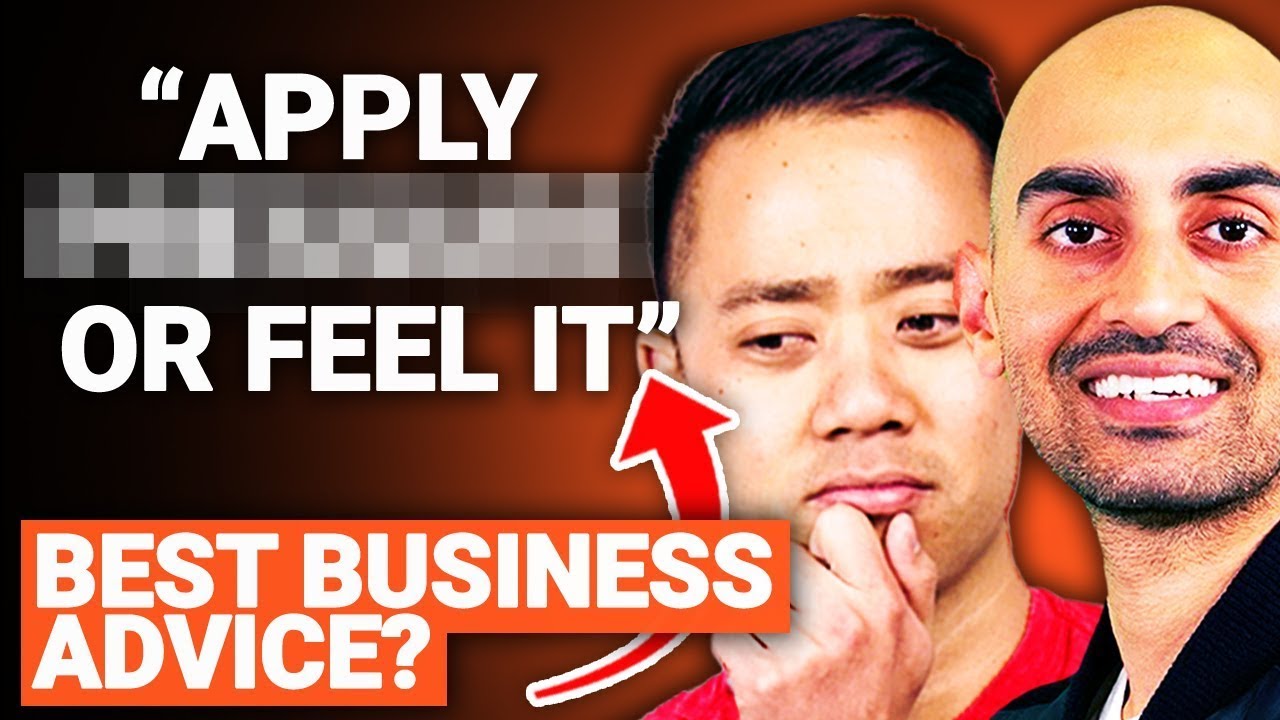
If you want the results that you're going to get, no pressure, no diamond. If you're not the one that's pushing the pace, pushing people to hit their numbers, the pressure all comes back to you. You're going to hire people that aren't a fit. That means you're going to have to rotate people out. The problem is when you have to let go of people, some people don't react well to it. All right, so here is a quote for these— today's times. Apply pressure or you feel it. And this is from Ben Horowitz. He's one of the co-founders of Andreessen Horowitz, which is a popular venture capital firm. And he wrote a great book called The Hard Thing About Hard Things. And I think this is a quote that, again, it applies for times like this right now where the economy's not doing that great and could potentially get worse. We hope it doesn't, but we try to be practical people here. And by the way, neither Neil and I are economists here, but I think this makes a lot of sense too, because it's like you think about running a company or you think about running a marketing team, for example. If you're not the one that's applying pressure, let's say you're a leader, if you're not the one that's pushing the pace, pushing new initiatives, or pushing people to hit their numbers, then ultimately what's going to happen is you being so accommodating to everyone else, what ends up happening is the pressure all comes back to you and you have to carry the load. And it becomes an imbalance almost because you weren't willing to apply the pressure necessary to hit the results that you want to hit. Right. And actually, Neil, so before you go, I think you're actually a good example of this because it's not like you try to hurt anyone's feelings at the end of the day. You're just a very direct person, right? And it's like you do what's necessary.
So what Ben's pretty much saying is apply pressure to your team to get things done or to achieve what you want to achieve and need to achieve, or else you're going to feel the pain later on.
So 90%. So it's yes, you apply pressure to your team, right, in a kind way. But if you don't apply pressure, you will be the one feeling the pressure, right? So imagine you're running a business. If you're not applying any pressure, everything's going to come back to you.
Yeah, that makes sense. And I also think it varies for different kinds of businesses. I think the pressure could be more for venture-backed businesses or private equity-based businesses because they have to hit certain milestones.
But a great example of this is I have a buddy who owns a private company. They do around $600 million in revenue. Never raised a dollar. It's in the tech industry. It's boring, ugly. Most people have never heard of the company. And I know for a matter of fact, they do like around $160, $170 million a year in profit, somewhere around there. So for him, the dude lives a really chill life. He has no other shareholders in the company other than him, no outside investors. They have debt lines, but they haven't used any of the debt, but they have debt lines in case they want to make acquisitions. And for him, I know he doesn't apply much pressure, but there also isn't much pressure that gets put on him if it doesn't work out because he's like, well, if it goes from 160 to 120 or 100 million, he's like, I don't care. I'm never going to use the money. I'm going to donate it all, right? So I think there's different scenarios, but in the Andreessen Horowitz, you know, world, you got to apply the pressure. Because you got to hit numbers and valuation goals and growth goals, or else your company is not going to end up exiting. But even if you're privately owned and you have no outside investors, yeah, like even us, I do apply pressure to some extent in a nice way because I want to grow and I want to hit certain milestones and goals, and it's just for, you know, personal satisfaction. But you are right in which if the company, if the people aren't performing, I had to figure out myself and apply the pressure on myself, which is a pain in the butt because then I had to end up dealing with it, which I'm okay with as well.
It's tough, right? So applying pressure means having to deal with the tough situations too. Some a lot of times unfortunately you're going to hire people that aren't a fit. You're lucky if you can even bat 500 on that, so 50 percent. That means you're going to have to rotate people out. But the problem is when you have to let go of people, you some people don't react well to it, right? And so there's just a lot to deal with. And here's another example. So our mutual friend. Does about $300 million a year. You probably know who I'm talking about already. And they recently raised $200 million. And what ended up happening was they hired a lot of people that they didn't need to hire and they hired a lot of executives that they didn't need to hire. And now, he's back in the business cleaning things up and he feels like the business is a 1 out of 10. But slowly but surely, he'll know he'll bring it back. But it's because they stopped applying pressure and it's because a lot of the leadership was not necessarily founder-led. And he had to step away from the business for a little bit as well. And so now that he's back, it's just like, I'm done with all the— I'm done with working in this new style where other people like all about remote. He's like, my thing is I'm all about in office. And he's forcing any new hire he brings on, they got to move to his state. So that's his way of applying pressure.
Dude, what's funny is I remember the last time I saw him in person, he taught me to, You can use that. If you can use an iPad and get most of your work done, that's great because that means you can assign a lot of the tasks that you shouldn't be doing to someone else. And when I saw him, he wasn't using his iPad. I'm like, whoa, what happened here? He's like, my business, you know, needs a lot of work. I can't use the iPad to fix it.
No, it was something funnier than that. It's like, my business is not good enough for an iPad right now.
Yeah, he said it in a more clever way like Eric's mentioned, but we were just laughing because I was like, where's the iPad? He's like, I got to fix stuff. I can't use the iPad to fix this stuff.
Yep. So look, apply pressure or feel it. Personally, like, I don't care if you're venture-backed or like you're bootstrapped. Like, at the end of the day, if you want the results that you're going to get, no pressure, no diamond. That's another one. That's another saying. So you figure out the size of the diamond that you want. So that is it for today. Please don't forget to rate, review, and subscribe, and we'll see you tomorrow.