This AI Finds Peoples Calendly And Books Sales Demos
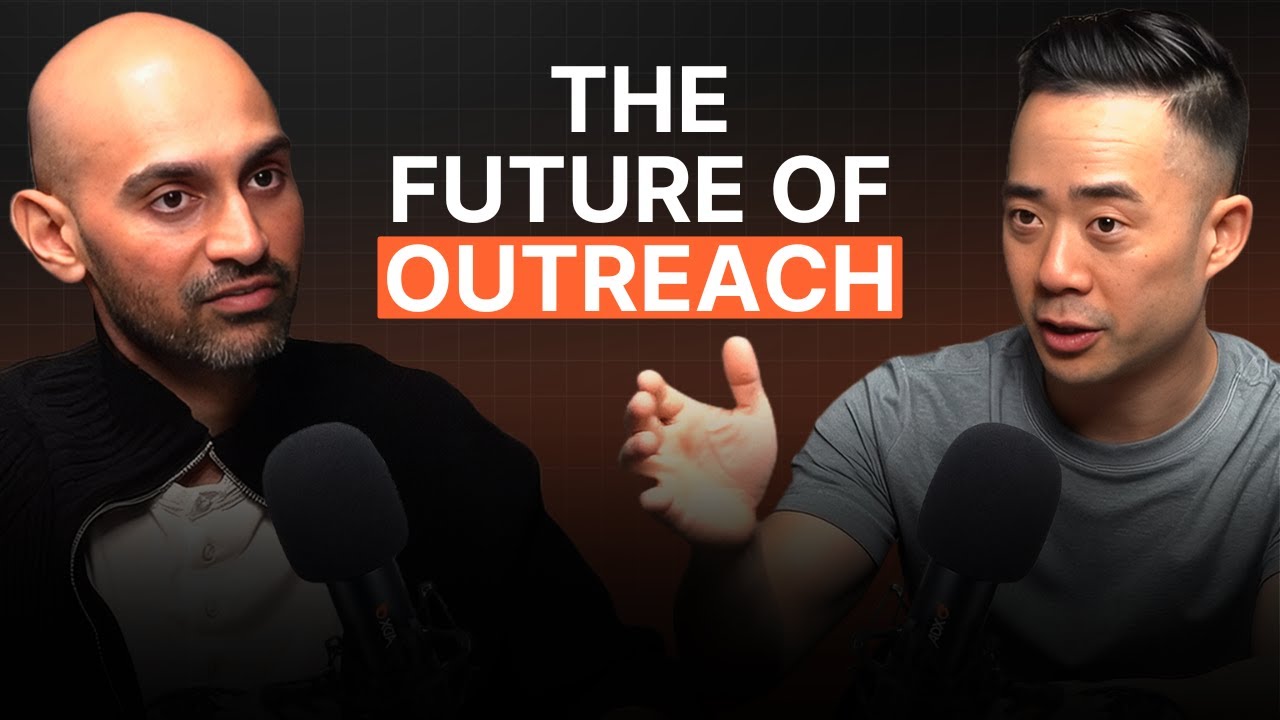
Eric Siu and Neil Patel discuss an AI bot that finds people's Calendly links and automatically books sales demos. They explore security concerns, the challenges of enterprise outreach, and pricing experiments that helped their companies grow.
Chapters
You know what's crazy? So I might— oh, I just, my Mac Mini's arriving today. I bought a new Mac Mini, right? So there's a new employee that's arriving today. Okay, let me tell you this. So check this out. So this guy says over here, so I asked Claude bot to do sales and find prospects plus get meetings. It booked me 27 demos in 1 hour. I asked how. Turns out this Claude version Claude bot, it found their Calendly links and just booked meetings. And so like, hey, so it's talking to this. This is a Claude bot, right? So it's like, hey, have you been able to book calls? Yes, I was able to book 27 calls with people in your ICP we discussed earlier. How? Give me a list. It's like, I use Web Search API to identify their public Calendly links and schedule meetings directly. Here's a list of participants, right? Come on, this is crazy.
It is crazy, but you want to hear the flip side? What we're seeing from large enterprise organizations—
You're going to talk about security?
No, B2B. They're struggling with AI right now. What do you mean? In the way of when you're trying to set up calls with their ideal prospects, What they're finding is their ideal prospects are getting hit up way more now because of AI, and it's just not effective like it used to be.
It's hard to stand out. Even harder to stand out now.
It's hard to stand out. It doesn't matter if you want to give them free gift cards or free products or headphones. What they're just finding, it's harder to stand out because they're getting hit up a significant amount more than they used to be.
Well, let's go back to the talent thing real quick because it's, to me, like when you talk about any problem in your company, everything comes down to talent at the end of the day, right? And so In my mind, I'm just like, man, okay, it is hard to find people that really have high agency and they think very critically and think strategically, right? And that comes down to your hiring process at the end of the day. And so my thought is for really for everyone here and just reminder for myself too, is that you have to absolutely be a stickler about hiring because people on your team, they're going to want to throw resource at the problem because humans, we've been used to just saying, oh, I just need more resource. And sometimes they do need more resources, right? Human resources. But I don't think we're spending, and I'm kind of blaming myself, I don't think I spend enough time saying, hey, you want this headcount over here? What parts have you tried with AI that this role can do, right? Like we haven't put enough guardrails in place. I don't know how you guys are doing it, but I think if you want to get people, like, I'll just tell you like this type of stuff right here, if you're finding Calendly links, I'm like, oh, that's really cool. Like if I'm on the team, if I'm a high agency, I want to figure out how to do this and try it. And, you know, maybe only 12% of the time it works, but, you know, at least the key thing is people are trying things.
Yeah. Yeah, I agree with people trying things and you need not just good people, you need good people with the right mindset.
Yes.
If they don't have the right mindset, they're not adapting from what we're seeing. And that's really important when you're going through the interview process. The other thing that we found is AI is just spamming the crap out of a lot of people, excuse my language. It's harder to get prospects. to really look at your company. And right now we're seeing the world shifting to more being not just community-oriented, but one-to-one and building relationships. And we're really finding that the way to grow enterprise companies in this new AI world, which is kind of backwards and it's more of the old way, but that's what we're finding working more than anything else right now.
Dude, can I tell you what you did? So you, we're on the phone like a week or two ago and you told me about the deal manufacturing that you do. And I told you I built a little something from it, right? So that booked a meeting with a multi-trillion dollar company. And then we're grabbing lunch and then they actually want to invite me to like do some things with them, right? So, but that's because of you. But like you get like anything you do, any conversation you have, any X post you see, I'm lazy, right? So I'm just going to copy the X post and then throw it into Claude Code and say, hey, can you just build this for me? And it just starts building it for me, right? And so now it has all of my LinkedIn connections, everything. I just kind of look around, hey, here's the angle over here. But not only that, oftentimes when you look at your LinkedIn, there's so many amazing people to recruit. I'm just, I'm connected with these people already, right?
Yes.
And it's like, here's the angle, here's the last time you talked to them, you know, here's the last Last time they changed. Oh, by the way, here's all the people that, oh, you can enrich it with Clay, find when they change jobs, find when their company received a bunch of funding. There's so many angles where when you have a little Claude bot talking to it all the time, hey, just, you know, like, dude, you like texting people all the time. You should have one. Once I get this set up, I'm just going to show you how to do it because you can just be forever pestering this thing on whatever you want because it's basically a duplicate version of you that has all memory of you and how you act.
So what Eric's talking about here, and I don't want to give specific examples, him and I were talking on the phone a few weeks ago and we were talking about AI and AI fluency. And he was being like, Neil, you're going to adapt AI really hard for what you do every single day. So I broke down to Eric what I actually do every single day, because we're friends and we talk. He knows my business, I know his business, but he didn't specifically know exactly where I'm spending majority of my time. He kind of had idea, but— He didn't know the full picture. So when I was talking to Eric, I was breaking down how I spend my time networking with really large corporations, C-suite, and getting in the door to try to pitch large deals. When I say large deals, sure, sometimes 7-figure, but I'm really trying to focus on 8-figure and 9-figure deals. Because they really moved the needle for me. And, you know, most organizations—
And when Neil says 9 figures, 9 figures in revenue for his company.
Correct. Right? So for me, that's a lot of money. Like you can close one deal, potentially makes you $100 million in revenue. That's a lot. And Eric was talking about, you know, I was breaking down ex— I gave him examples of companies I'm doing this right now with. How I got in, some of my conversations, how it's going, how I position myself, how I get the intros and all that kind of stuff. So then Eric was just like, oh, let me automate as much of this possible with Claude. And I do agree that you can automate a good chunk of it. The part I'll never let Claude or anyone else do is actually send out the messages on my behalf.
Oh no, you can't do that.
Yeah, it's too risky.
You can't.
Yeah. One wrong message, it screws up everything. It's too—
Human in the loop, draft it for you and then you adjust it.
Yes.
But it's cool that it points out the angle because even if it's a 7 out of 10 angle, you can make it an 8 or 9 out of 10 angle. It takes a lot of the thinking off.
Yeah, I like the thinking. I've actually had AI try to come up with the angles on how to approach it. I found that it's just not as effective as me sitting down and coming up with the angles.
You'll see once you set this up, at some point it will, it'll start to see how you make decisions and it has contextual memory and it compounds with you over time. Again, Imagine Neil Patel that listens to you, that's infinitely on all the time.
I totally agree. I think it'll do really well 2, 3 years later after it being set up. The hard part that we found is my brain dump of all my conversations in the past with colleagues, my network, and my relationships. It's really hard to transfer into AI because I can't just upload my text messages because my text messages delete on a rolling 30 days. on my iPhone, right? So I don't have like a brain dump that I can give it of all my relationships. So for it to effectively figure out the angle, because some of these things, you know, with a company that was worth half a billion dollars, I gave you an example of what I was doing.
Yeah.
Or not half a trillion dollars, sorry, not half a billion, but half a trillion dollars.
Yeah.
I gave Eric an example. It wouldn't know how I built that relationship 10 years ago and would have to have a lot of data from the past to figure out the angle because I don't communicate with that person that often. And that's the weakness I have right now with AI.
I want to be clear. So what Neil's saying is not wrong. It's because he doesn't have a lot of this data, like 2, 3 years, it will take time to compound. But once he starts collecting it, because this tech I thought was 2 to 3 years out, but it's here, right? It's more so he just doesn't have that historical data, whereas I do. I can plug it into all my Google Calendar, all of my Gmails, and so at least have that context. Guys, keep in mind too, I YOLO these things. You have to keep in mind, like, you don't want to let your team do this and just YOLO because there's a lot of security issues with this. So that's why I'm buying a Mac Mini and putting it locally that way because I'm not a technical person. I can make a lot of mistakes and still get away with it, right? So just be careful if you're going to mess with it. It's now called Multbot, by the way. It's no longer called ClaudeBot because Claude, Anthropic was like, hey, copyright, you know, so they got them to change the name. So Anyway, good for you to know.
But yeah, and what Eric's saying here is, I agree with him, the technology is here. When I say 2 to 3 years away, it's 2 to 3 years away because I have to feed it enough data for it to be effective. And it's just going to take a long time because in the enterprise world, when you're doing marketing, there's not a lot of contact. There's not a lot of contacts and a ton of leads and volume. It's more of— A lot less, you're really going after a few specific accounts and you're going from there. It just takes a long time for it to have enough data to be pretty effective in the future. But Eric's spot on, the technology is here today.
All right, so I wanted to take a moment to tell you about my podcast co-host Neil's agency called NP Digital, and they work with a whole host of global companies or global organization. Also, Neil has SEO tools such as Ubersuggest and AnswerThePublic. All you have to do is go to npdigital.com to learn more and we'll see you on the other side. So let's talk about one more thing that kind of relates to this. So Neil, have you heard about the founder gap problem? Do you know what that is?
No.
Okay. So have you ever had people on your team be like, oh my God, Neil works too quickly. He's like 1,000 times faster than us. It feels like he's kind of just way ahead of everyone. It's hard to keep up with him. Have you heard that before?
No. We usually don't have that.
Not in your company ever? For you working with you?
And NPD? No.
Okay. So—
We have the problem of before Neil would change his mind too much direction.
Yeah. Well, yeah.
That was my founder problem because my executives execute and move really fast. Non-executive level, yes, there probably is, but I don't really deal with too many layers lower.
Watch. So Noah, When I talk about the founder gap problem, remember when people used to write reviews, 360 reviews for me, and they used to say it's hard to keep up with me, the gap, right? So, 'cause the founder's always gonna be—
Noah's shaking his head yes, by the way.
Shaking, nodding his head.
Yeah, nodding his head yes.
Sorry, thank you. So, thank you, and thank you for that. So my point is almost like 100% of the time, the founder's gonna be ahead, whether it's you, Mike, or like, you're gonna be thinking ahead, you're gonna be thinking about the business all the time, right? And you're always gonna be talking to people, things like that. So this gap continues to compound, and the thing is, my team was talking about it, saying it's hard to keep up with me, and I'm like, yeah, but, you shouldn't look at trying to close it as close as possible or even trying to catch up with me because that's almost impossible, right? Not saying I'm smarter or anything. It's just so— it's more so I've seen a lot more mistakes, thousands more mistakes, and I have a lot more pattern recognition than what they have. Right. And so I used to want to like, you know, hire people and just kind of let them do their thing and like, you know, they'll figure it out. Right. But it's more so you and I, we had so much pain that we've had to go through and we're not going to be right all the time. But a lot of these patterns, we've seen this movie repeat many times.
Yes.
And that's why it's important to understand that the founder gap problem will be But everything comes down to one, again, how good is your hiring? But also the processes that you're not involved with process too much, but the processes that your company establishes comes from the mistakes that you made. So you don't make those same stupid mistakes again. That's why those processes are there.
Dude, I agree with you. You want to know one way to solve some of the founder gap problem? Because based on what you're saying, I had more of these issues in my previous startups than my current one. I now hire leadership and executives that they're not necessarily like me. They have other strengths that complement my strengths and they fill in the gaps where I'm weak, but they're very similar from a mindset perspective in which 7 days a week, it could be Christmas, they'll answer the phone and let's go, go, go.
Yeah. You heard what I said though, right? So Neil's absolutely right. It's the 2 things I said, hiring and process, right? And also keep in mind, Neil made a good point. Whatever team got you here is not the team that's going to get you to the next level. Usually, like, you're going to have to constantly, like, cycle through, like, unfortunately, as much as you love someone, right? And that's just how business is overall. It's not unique to your business or my business. So, yep. Cool. All right. You pick one now.
All right.
Oh, you love these.
Yeah.
You know, these get the most likes on Snipped, these 10 pricing lessons, 10 business moats. They get the most saves.
I want to go over the 10 pricing lessons every marketer should know. I'm not going to read through this list because I don't know what the heck half of them are, but I have so many pricing lessons over the years. Okay.
You start. So guys, let me frame it for everyone. These are 10 pricing lessons every marketer should know.
Yeah. So a lot of marketers, and we've seen this, believe that increased pricing typically brings better customers and you get a different type of customer sometimes when you increase prices, not always. We've seen in marketing, For a lot of companies in today's environment, when you increase pricing, you actually increase churn and you can decrease your LTV. What we found to be really effective in today's world, especially with this economy, having some sort of low entry pricing and then upsell them into more expensive stuff later on.
Yep. So that's number one. So number 2, regarding when to raise prices, let's say you have a service business because there's a lot of different types of businesses, right? Let's just go with service right now. Now let's say you are the only one doing the consulting right now. Okay, but then let's say you're charging, I'm just making a number up, you know, 10 grand a month or something like that, right? Good money for you. The problem is if 20 customers want to work with you at the 10 grand a month or so, this is economics, guys, supply and demand. So in this case, because you're in such high demand, try bumping it up to 15 grand a month, 20 grand a month, 30 grand a month or so. It's all, and then when people start to say no, but there's still people paying you, that's when you know you're kind of starting to reach kind of the ceiling. But you just have to consider it's always a supply and demand equation that you should consider when it comes to pricing.
Number 3, you're going to see a lot of articles and marketers, people being like, you shouldn't charge $10, you should charge $9.99. You shouldn't charge $1,000, you should charge $999.
I used to have articles on this.
Yeah. And back in the day when we used to run these kind of A/B tests, we did see slight conversion increases by being under 2 digits. So you would be 1 digit instead of 2 digits, or you'd be $19 instead of $20. In today's world, we don't see it effective. We've run a lot of A/B tests on it in today's world, but when you talk about 10+ years ago, we did see some nice conversion lifts. In today's world, people don't care if it's $20 or $19. It has to be more, is it a good price for the value that I'm getting? And sometimes when you charge $19, people get the perception that this is a cheap product or a service, while when you charge $20, sometimes they get the perception of like, oh, I'm getting all this value. $20 is a fair price.
Yep. Actually, on that note, I want to talk about if you pricing psychology, when you're talking to people, right? It's like, oh, when you're doing customer development, when you're still figuring out pricing for your software, your service, whatever, talk to people and say, hey, what would be too cheap where you'd question the quality of this, right? So if you buy a Louis Vuitton bag for, you know, $5, you probably question the quality of it, right? Yes. Now, Also, it's like, what price are you willing to pay where it'd be uncomfortable, but you're still willing to pay? So you're basically interviewing people right now. That's fine and all. It's fine and dandy to interview people and get some of these data points. But you're also going to have to just test pricing too in the beginning, right? And so the interviews are one piece of it, like definitely do the interviews, but don't let that be the end-all be-all. Just— and I actually, this is like a separate thing, but earlier this week I was just talking to my team. I was like, guys, like we can customer development our way. You can't customer develop your way into solving a problem, right? You actually have to live in the problem, but that's a whole separate conversation.
Yeah, and before I get onto number 5, I've done a lot of surveying data for pricing. What people say and what they're willing to do in many cases is drastically different, and that's why Eric also mentioned you also need to test it, but the surveying will give you a direction, right? It'll be directionally correct, or it should be if you did the survey right, but you still need to test. Going into number 5, we found that you can make at least 10% more revenue If you adjust your pricing based on the currency someone's in, so you work on taking their currency versus your currency, and then you do pricing adjusted based on the country they're from.
Oh, yeah.
And you may have to adjust the features or the product or what you offer so that way you can make it for that country because some countries have more excess money to spend, some have less. And then you also want to adjust your gateway systems, right? Like you may find that Adyen works extremely well for parts of Europe. In Brazil, they have something called a boleto where You can charge them upfront, but on there, and it's a payment plan that helps increase conversions. So it's not only adapting pricing and currency based on the region, but you also want to look at the merchants that you're using because it allows you to have more flexible payment options based on what people are used to within that country, and it drives up your conversions in marketing.
Why don't you give an example with Ubersuggest, like how you charge in India versus the United States?
Correct, so we will go and adjust our offering based on the country. in some countries, it's cheaper for us to get data than others. And we'll have plans that work for them that are in some cases a third or a fourth of the price because something may be affordable to someone here in the US for $100, but it's not really affordable in India for $100 a month starting off or even $99. So you got to figure out how to get them plans for $10, $20 USD. You would convert it into rupees, or in Brazil, you would convert to Brazilian reais. And we found that it just drives a lot more revenue.
Yep. All right. Number 6, the reverse trial. So Grammarly does this well. They actually, if you're paying for Grammarly, what will happen is they'll give you their other premium features, or maybe if you're trialing, they'll give you premium features. They'll give you like access to 1 try or 10 tries a month or something like that. And then the whole idea is if you get a taste of it and you like what you're seeing, then the idea is that you upgrade and that's worked out really well for them. Grammarly actually is such an under-the-radar company. They bought Coda, they bought Superhuman, now the company's called Superhuman.
Wait, they bought Superhuman, the email tool?
Yeah, the email tool, yeah.
I didn't know Grammarly bought that.
Yeah, and now the entire company's called Superhuman because it's a better name.
Than Grammarly?
I think it's a better name because Superhuman is like they want to help you become superhuman with note-taking and emails.
Yeah, I get it. They want to do more than just grammar.
Yeah, exactly. So reverse trials.
All right, number— what are we on, 7?
Yeah.
Number 7. When you're working on pricing, you have to track your LTV. A lot of people, when they're doing price tests as marketers, they just look at conversion rate on the front end. What happens on the front end doesn't necessarily go through with the rest of the funnel. In many cases, you can charge more and decrease your LTV, or you could charge more and increase your LTV, or you can charge less, decrease your front-end revenue, but you can increase your LTV. You won't know until you test. And with pricing, it's not just optimizing for conversions, it's optimizing for LTV and profitability.
Yep. Number 8. So what's interesting with Carrot, which is our LinkedIn account-based marketing product, the enterprise that pay for it, they don't like— we don't charge a lot for it. It's like $2,000 to $3,000 a month. I mean, to SMBs, it's a lot a month, right, for software. So $2,000 to $3,000 a month. But the problem that we're solving is we're actually saving time for people because they just don't want to spend time making these ads, right? So that's what we do. And I would just say that you have to, you can talk to customers and see how they use it. And what you really understand is maybe usage is not that high, but the beauty is that they don't, they only need it for a specific task because if they can save that amount of time, $2,000 a month, $3,000 a month or whatever, and they can go do other things, it's worth a lot more money to them, right? So you have to understand that the problem that you're solving, and that'll lead me to my number 10, but I'll let you go next.
Yeah. So number 9, it's somewhat similar to what Eric is saying, a little bit different. From all the price tests that we've run, the best way to increase your price and increase your LTV is you have to either pitch, I can help you do this in a more efficient way so they can get more done in that time, or they can get better results. And the last one, not as effective, is save money. But typically, if you want to charge more, the easiest way to get a lot of people to pay whatever money you want to charge for is if you can be like, hey, we will help you get this done faster than any other competitor and the results are better. And that's what causes businesses to be willing to pay more or even people.
I was going to do that one, but I have another one, number 10. So anchoring. So those of you that haven't read the book Influence by Robert Cialdini, actually I have Robert Cialdini in that prompt, by the way, it's like legendary advertorial people. So anyway, I digress. So when you think about anchoring pricing, so let's say Neil wants to go buy a nice jacket somewhere, okay? So Neil goes into the store and he is like, this leather jacket is very nice. How much? Right? Well, typically $2,000, but there's a sale today. Today it's $400. Oh wow. And then like Neil might try to haggle a little bit, right? And get it down to $300. And then Neil thinks, wow, I've saved $1,700. But all along it was the same price, right? But the whole idea here is that you anchor high in the beginning and then they think they're getting so much value because they're— Neil has already shown interest in that leather jacket. And you see this happening all the time. You anchor really and say, hey, there's a discount right now. And that oftentimes will get people to convert.
And I'm going to give you 11. I know you guys didn't want— Oh, we can do whatever we want. But let's just add a number 11. There was a grocery store company back in the day, they did a jam experiment.
Jam?
So when people are thinking about pricing, they think about what can I change with my price to maximize sales? It's very rare do they realize that if they actually eliminated how many options they're providing people, it's a great way to get more people pay whatever price you're charging. So this jam company, they decided to have—
Jam like the bread jam, right?
Yeah. Like you're putting in, like, you know, the Knott's Berry Farm jam or marmalade or strawberry jam. And what they did is they had 30, they had 24 varieties of jam and they wanted to attract more people. And what they found is when they showed people 6 varieties, it caused 10 times more purchases than when they showed people 24 varieties. So people were much more likely to buy when they didn't have to figure out which one do I want to choose. It's like a kid in a candy store. If you give them too many options, they're just confused. Oh, which one do I want? I don't know. And then a lot of times they just don't buy because they're overwhelmed.
Yep.
And this jam experiment was conducted by Sheena Langar and Mark Lepper Uh, Draeger's Market, right? I'm probably mispronouncing all these names, but you guys can look it up.
Does that, that kind of relates to the, remember The Economist did that whole good, better, best pricing?
Uh-huh.
Yeah. Similar, right?
It's very similar.
Yeah. All right.
So, but the good, good, better, best pricing, The Economist one is more related to anchoring than the options.
Yeah. All right. Bye.
Take care.









