Tips from Scaling My Podcasts to 100M+ Downloads
Eric Siu shares how he scaled his podcasts Leveling Up and Marketing School to over 100 million downloads. He emphasizes the three-year commitment rule, evolving your format, strong hooks and thumbnails, and repurposing content across YouTube, TikTok, LinkedIn, and X to build audience.
Chapters
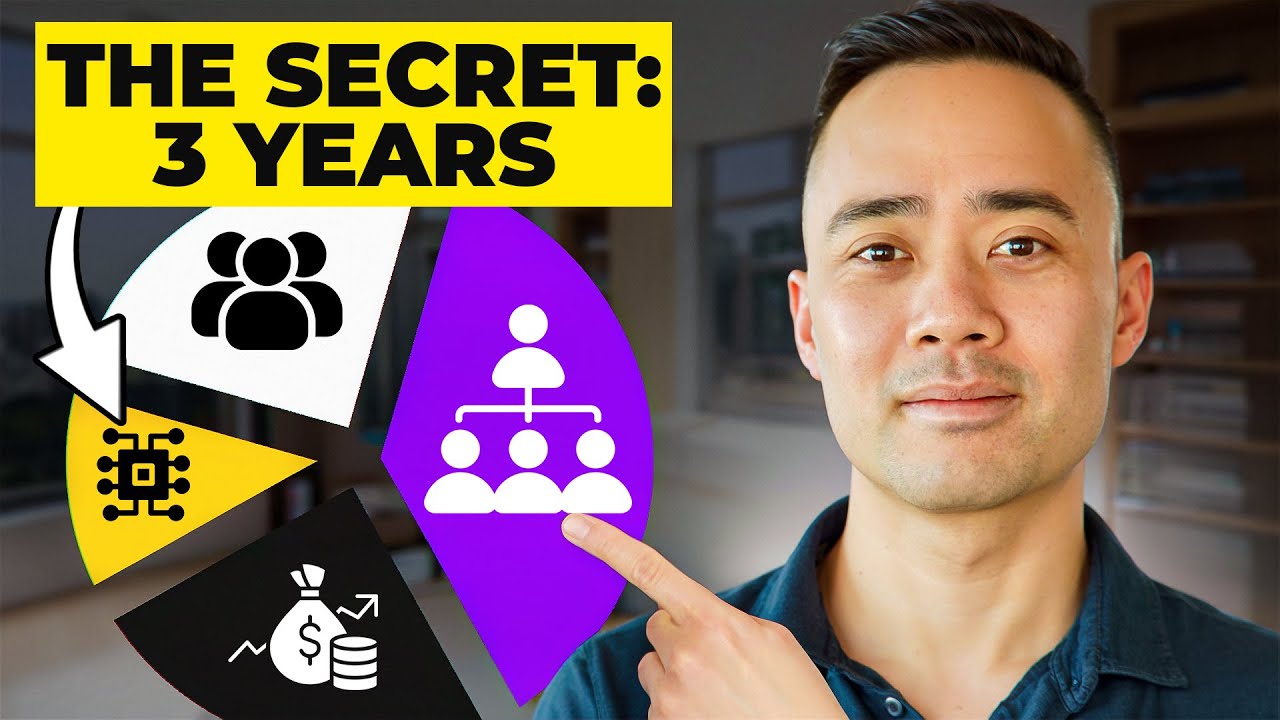
Podcast discovery is really hard. My first podcast, Leveling Up, I started that one maybe 11 years ago or so. This is a lot of hard work. People respect it more when they see that more work is being put into it. We've scaled to about 100 million downloads through the 2 podcasts that we have. And year 1, I remember about 3,300 downloads for the year. And then year 2 was about 14,000 or so. And then year 3, maybe 377,000 downloads. So you can see it starting to compound over time. Now we're year 10, year 11 or so, and we're over 100 million downloads. So there's a couple lessons that I want to share from there. The first lesson is to build over time. The magic number is 3 years. 3 years to build an audience, 3 years to build a business. And I found the magic number to always be 3. It takes, you know, a year, you're kind of slugging it out. 2 years, 3 years. 3 years is when you're like, oh man, I kind of have something, right? So magic number is 3 years, and don't give up before that. The second thing I would say is you must evolve your content format. And what I mean by that is with the Marketing School Podcast, we were doing 5 to 10 minutes an episode for 7 days a week. And we're teaching everything that we knew about marketing. But after 2, 3 years of doing that, you've basically shared all your base knowledge, your foundational knowledge. And so you have to evolve. We didn't evolve for another 1, 2 years after that. And that's when we started to get bad reviews. It's like, oh, you know, they're saying the same things over and over. And that's where you start to get listener churn and You're not growing as fast as you used to. And so, we knew that that format became stale and we took a little too long to adjust, but we did adjust eventually. And I would say the format that we have now where we publish 5 times per week, so Monday through Friday, each episode is 15 to 20 minutes. And the main difference now is that we're reacting to the news cycle. So it's trending topics and you have 2 operators, 2 marketers that are sharing knowledge. And now we get a lot of texts from people saying how much they enjoy this content and we can see the unsolicited response rate in YouTube about how much people are enjoying this content. And even right now, we just started another YouTube channel for Marketing School. And there's a lot of people saying, oh my God, I don't know why you're not getting more views. So when you're starting out, look for those unsolicited responses from people, those comments from people. And that is a signal, that's a leading indicator that you're on the right track. If you're getting no comments or Negative comments, you're probably on the wrong track, right? And when you get negative comments, that to me is more of a signal than anything and you should react to it sooner. I think we took too long to react to it. I wanted to take a second to talk about today's sponsor, Ahrefs. Ahrefs is my favorite SEO tool. In fact, we use it at my ad agency, Single Grain, for internal uses and also for clients. And we've been using it for years and years. And the cool thing is they have a great academy that you can go to if you're looking to just learn SEO. And they have a free offering if you just search for ahrefs.com/webmaster-tools. My favorite feature with Ahrefs, it's a sneaky feature here, but I'm just looking at zapier.com. And what I'm doing is I'm looking at, oh wow, they got 10 million visits in the last, I don't know, 6 months or so compared to the previous 6 months. Well, okay, how are they doing it? I can look at their site structure. So if I click on site structure, I can see that their blog has driven the vast majority of it. And it was a 5 million, a +5 million change, right? So basically what I can do is I can look at the pages that are driving that traffic, and now I have a sense for what they're doing in terms of strategy. So I can look at competitors, I can also look at our own stuff too, to figure out how we can optimize our own website. So you can just check out Ahrefs Webmaster Tools, that's completely free, or you can go to the Ahrefs Academy, that's also free as well to learn more. And that being said, back to the video. And the final thing I'll say, the third lesson here is you must zig where other people are zagging. And what I mean by that is my first podcast, Leveling Up. I started that one maybe 11 years ago or so and that was an interview podcast and I was interviewing entrepreneurs but I was focused on marketing. And so, that was novel at the time. That was new. And I actually was getting a lot of views. I would post them to— I'd post the Skype interviews. You guys remember Skype? I was posting Skype interviews to YouTube and they would get a lot of views. Some videos would get 20,000, 30,000, 40,000 views or so. Back in the day, YouTube was easy, right? That's maybe another side quest. Yeah. Sticking with something that's working, doubling, tripling down on it, that's something I should have done with YouTube. I was too inconsistent with it. But going back to number 3, you have to zig when other people are zagging. And so, the problem now with interviews is everybody does an interview show and nobody's really innovating on it. Now, every now and then someone, you might get a really good guest and the content's going to be really interesting and the interviewer knows how to ask good questions. But most of the time, most interviewers don't know how to ask good questions and everyone's doing— The same thing. Interview podcasts. And so, well, then how are you going to stand out in a sea of sameness? And so, now I've kind of changed my format to focus maybe 10-20% of the time, I'll still do interview podcasts for someone that I— people that I genuinely want to talk to. But I've been doing more solo episodes and I've been enjoying those a lot more. And I actually don't care if I'm getting less viewership on the solo episodes. One, I'm enjoying it. Two, I know I'm going to reach the people that I need to reach because I know the YouTube algorithm is going to continue to work for me all the time. In addition to me posting to all the audio channels too. So when you feel, quote unquote, that a format's no longer serving you, that's when you should think about changing it. All right. Quick note. This is about my company. It's called Single Grain. And Single Grain is an ad agency where we're focused on driving innovation. And so I want to talk about a couple of new strategies. And if you need help with marketing, great. If not, here are a couple of new strategies that you should try out. One is programmatic CRO. So we are doing programmatic conversion rate optimization on our site. We're building products that will automatically optimize your site to increase conversion rates. We're also auto-optimizing, auto-updating from an SEO standpoint. And we're constantly thinking about what else we can do in terms of enriching the visitors that are hitting your website and also tailoring custom messages for them using AI. And so there's a handful of things that we're doing from a marketing standpoint. And our mission is just to drive more innovation. So if you want to learn more, just go to singlegrain.com, grain like rice. So singlegrain.com to learn more. And we'll see you inside. So to wrap up, basically you just got to stay in the game and you have to continue to get better. And that's easier said than done. And I can tell you, I did too many things over 11 years. I was inconsistent. I was talking about different things. You know, I took too long to evolve my content formats or, you know, I just— there's a lot of things there, right? So again, 3 years it takes to build something great. Evolve your content format, zig where other people are zagging, and stay consistent and you're going to be fine. Podcast discovery is really hard. And we're trying to put more of our efforts into YouTube. So for example, you're seeing me record this right now. This is, this is a lot of hard work. We have a, we have a great, you know, AV person that comes in, Brad. And, you know, we sit down, record in person. I have to drive over here. And so there's actually manual work to be done with this. And so you get what you put in. I do tend to think that people respect it more when they see that more work is being put into it. And I can see that with my, my Reels too, my Reels, my TikToks. In some of my reels, you know, they'll get millions of views or so. And it's because I think we're putting in the extra work. So the quality matters quite a bit. Now, the other thing I want to talk about is the difference between 500 views and 30 million views. So I kind of talked about this in the past, but this guy that used to work for me, he basically created 2 new Instagram channels. And one has 700K followers, the other one had 600K. He started a brand new show. Yeah. And he released a video, 500 views, basically crickets. He was really sad because, well, he put a lot of time and effort into it. And he's like, you know what, I need to change something. So, he basically just added in the very first, the thumbnail, or you can say the first image was a title on what people were going to see. And that was the only change. Just right before you watch, there's a little title, right? And that was the difference between 30 million views versus 500 views. And that makes a big difference. So, those of you that are into creating anything, you have to think about your hook. If you don't have a good hook, then you're not going to get the views that you need because people are so busy. You got to think about how you can hook people in, whether it's a very interesting thumbnail or a really good headline. That's what's going to draw people in because it doesn't matter that— this is a perfect example of it doesn't matter how good your content is. 80 cents on the dollar is spent on your headline or your thumbnail or your packaging, right? So when it comes to YouTube, when it comes to TikTok, when it comes to Instagram, you have to think about how you hook people in. And the beauty of organic social now is that you can test how well your organic social videos do and the ones that do well, you can make them into an ad because it's already proven to work. It's already proven to work with organic social. It's proven itself out there in the wild. So now you can actually put ad dollars to it. And I think that's going to continue to be a really big opportunity, probably for the next 12 months or so, probably going into 2025. And, and that's how you're going to get more, more views, right? I got to take a minute to tell you about the Agency Owners Association. This is a peer group for agency owners. Think YPO or EO, but for agency owners. And I just wanted to read you a couple of testimonials. So this first one comes from Carrie, and we asked her, what do you like most about the group? She said, having a group of people to discuss and bounce ideas. The leads are great too. Yes, we share leads in this group as well. This one from Aliyan, he says, the ability to really post whatever I want and need, and the group responds. Great experienced members. Getting a lot of insights from conversations with other members. Getting a lot of value from sessions from Eric. Getting advice from others as well. And so, if you want to grow your agency faster and you want a peer group to do so, just go to marketing school dot io slash agency. This is a group that both Neil and I created, and our hope here is to create a vibrant community of agency owners and do a lot more with it in the future. So again, marketing school dot io slash agency, and we'll see you inside. And the other thing too, talking about views, is when you think about LinkedIn, LinkedIn now. is adding in a For You page. Okay. Twitter or X has basically added a For You— I think they've added a For You page, but they're going a lot harder on video. All that to say is when these new social— or new social— when these platforms launch new features, you want to go all in on them, right? So we're going to go all in on LinkedIn with the For You page. They're slowly rolling that out right now. And then X is going to get more serious over time as well. And that's what I would say. The other thing I would say too, talking about getting more views, is one thing you can do on your Instagram is you can make everyone on your— all your followers, you can make them your close friends. And if they become your close friends, that means you're first in line on the stories, right? And this is like a recent hack people are using to grow their follower account. I think someone got 100 million views or something like that. And so that's something that we might consider testing or playing around with because, you know, we're marketers and we want to experiment with things. We had someone reach out to us that specializes in doing it. So, might be interesting to try out. And that's what I would say. So, that being said, that's it for this segment. Thank you.









