Unlocking Garry Tan's Secrets to Managing a $770M Portfolio
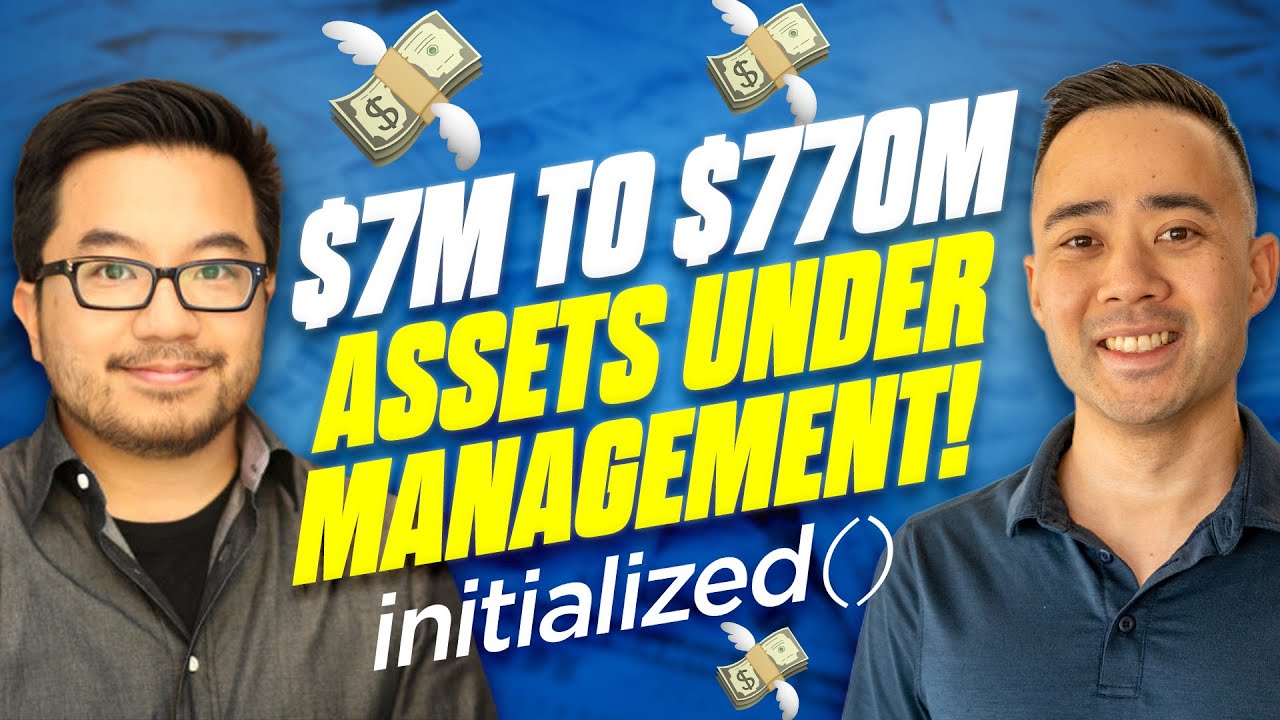
Garry Tan, co-founder of Initialized Capital, manages a $230 million fifth fund built on power-law returns: Coinbase and Instacart generated most of the value. He evaluates founders by asking "Would I work for this founder?" and spends half his time on portfolio support, half on YouTube content creation.
Chapters
How would you introduce yourself? Because I'm sure I've missed some things.
I guess I still think of myself as an engineer and designer and product person, because I think that that's actually the sort of prime mover in all of this. I think that creating products that really work, that solve problems, it's a craft. I mean, it's a craft like any other, like architecture, like cinematography, It's technical, but it also requires an understanding of human beings. So that's what I— I would rather be that than an investor.
Yeah.
And I'd rather be an accidental investor because what I realize is, especially at the early stage, you know, you need people who understand the craft in order to sit next to you. And so I want to be a creator first, whether it's creating YouTube videos or creating software. Secondarily, it's like, yeah, we know now how to invest money into other people who are creators and help them basically build things for a billion people, whether that's an audience of a billion people, hopefully, or it's software that touches that many people.
Yeah, I love that. I was just going to ask you, so basically you're a creator, right? And I think entrepreneurship is basically one of the ultimate forms of creating because you're creating something from scratch, you're hiring amazing people, and you're building stuff, right? So I love that. So my question's got to be, I mean, because, you know, I'm looking at one of your investments. I was talking with a friend the other week which was in one of your investments, puts in a $25,000 check, and then now he's probably gonna return him about $80 million or so. And so, you know, that's a great return. So I think people are probably wondering, I'm wondering for sure, how does someone, how does one get all this deal flow?
Yeah, totally. Uh, I mean, for me, I didn't know that I would become an investor and I wouldn't be one if I hadn't become a partner at Y Combinator very, very early, sort of before YC became synonymous with startups the way it is today. Um, so it's hard to replicate, honestly. Uh, what I would say is go after communities of people who are builders.
Mm-hmm.
And that's why you see a lot of the best angel investors today. They, you know, they worked at some of the top companies and then it's their set of friends that they knew in those companies, uh, that, you know, left an Uber, left a, an Airbnb or an Instacart or something like that. You know, and they've gone on to create more startups. And so it is the tricky thing about investing is it is about who you know. You know, Y Combinator itself is also now one of those places where, you know, it's a 2% acceptance rate. And then people in that community like to take money from people who also went to Y Combinator previously too. So, you know, when it comes to deal flow, I think it is mainly a people business. And the only way you can improve your chances is to actually spend as much time as possible with people who are good creators. And that, you know, that's the best thing to do.
So what I'm hearing is, I mean, proximity is one thing, right? Or for sure, pre-COVID. And the other thing too is I'm also seeing the rise of kind of these micro VC funds, right? It's almost like the first level before they start to raise a bigger fund. And because these people might have a large Twitter following, or maybe they have a gigantic Substack or a YouTube channel, right? Do you think that's kind of the level before they start to, you know, get access to these other people, which is kind of why you're doing What you're doing with all the media stuff?
Yeah, I guess so. I mean, so my story is, um, you know, I ended up working for Paul Graham who created Y Combinator. And before I worked for him, I, um, applied for funding and got into Y Combinator myself in 2008. And, um, he and his essays were really important to me when I was a software engineer and designer and product person earlier in my career. So I was employee number 11 at Palantir working for Peter Thiel, and at the time I didn't. You know, I knew I wanted to be a founder, but I didn't really know how. And so Paul Graham's essays taught me, hey, you weren't meant to have a job. And if I read more of those essays, it taught me more and more about his journey going from being you know a very well-known computer scientist to someone who started a company and then. Selling that to Yahoo. Um, and so now I realize, you know, his storytelling was what drew me to, uh, this entire world of starting a company. And, uh, all he, you know, he didn't have to talk about things he didn't know about. It was better that he talked about things he knew really, really well. And, uh, that's my goal for the YouTube channel broadly is, you know, I, you know, yes, in the end, like I am seeing really interesting companies and a lot of people are reaching out. But, you know, I think just as Paul Graham, he started off with his essays just to try and teach people how to do it, not necessarily with any intention to create, you know, an incubator or become an investor or anything else. Um, and so I feel like I'm just following in those footsteps. I've seen that work really well. Y Combinator, whatnot, that's created something like $300 or $400 billion worth of startups that would not have started, um, or would not have had that success, uh, quite the same way without Y Combinator. And, um, you know, I, I guess with, uh, yeah, with, with Initialized, I, you know, I guess we're maybe $100 billion now. So I, you know, I, that's, that's what I'm chasing. I'm like, how, how do we continue to help the next step of that next stage of people? with the skills and the mindset they need to start a company. And after that, I think the score takes care of itself. It's the founders who actually create these products and then, and then they win, right?
Right.
So it's like, yeah, you know, I do enjoy being an investor, but, you know, what is even more gratifying is just being able to work with people when nobody else believes in them, but you believe in them and you believe in them enough to give them that first million dollars or the first $5 million. Um, there's nothing like, I'm sort of chasing the dragon on that still, you know, after Coinbase.
Yep. So with Initialize, I mean, how long have you guys been around again?
Oh, um, I guess it's only been, uh, 9 years. Wait, is that right? Yes, it's, this is our 9th year. So almost, almost 10 years.
That's amazing. So you guys are writing checks, uh, primarily $1 to $5 million checks. Um, and so I guess I'm curious about this too. So, You know, there's a lot of numbers people can see out there, but I mean, based on your experience, what is the typical breakdown of exits in a standard fund? Right. So an example of this might be 33% fail, 5% are unicorns, whatever. So what have you seen personally? Like, what does that percentage breakdown look like?
Yeah. So in 2012, I raised a $7 million fund and we wrote checks of $50,000 to maybe $200,000, but they almost were all mainly $50,000 checks. And, um, I had done some angel investing, but not that much. So that was sort of our first, uh, fund. And, uh, we funded about 100 companies and, um, basically 80, about 85% of the value is actually in our number one winner in that, uh, portfolio, which is Coinbase. And, uh, the next, you know, the next largest was Instacart and both of those are worth, you You know, tens, if not, you know, $100 billion or more. And, um, yeah, if you add up all of the rest of them, maybe they return the fund 1 or 2x. Um, and whereas that, that whole fund is probably going to be north of 100 times, uh, money in. So, you know, if it's a $700 million return on a $7 million fund. Uh, almost all of it is actually in the top 2 out of 100 companies. Um, and that's the power law in a nutshell, actually. Um, that if, if you're doing it right, they're basically, you know, I guess in the past what you would say is there were 20 companies that really mattered every year. These days, I think it's a lot bigger because they're, you know, back then it was just software and just the Bay Area. Those were sort of the only things that people considered very investable from a venture standpoint. I think today in 2021, uh, the ecosystem for startups has grown both geographically and in sector. So, you know, now you're talking about an international market, and now you're talking about not just software, but also, you know, space and medicine and, um, so many other fields that need smart people to solve problems in those fields. Um, so yeah, the good thing is I think the, the ecosystem that's investible is probably, you know, 10x bigger than it was 10 years ago when we first started out. But yeah, it's all, it's all power law, right?
Yeah.
You know, you have to be in, uh, a few companies that really, really make it. And the tricky thing is like, if you're not in those companies, Um, you, you know, if you look at the statistics on venture capital broadly, and I think angel portfolios are basically similar in the same way, um, if you're not in one of those companies that matter, then it's not going to return very— you're not going to beat even the S&P 500, you know, um, and it's that binary. And that's why the median venture fund and the median angel portfolio, um, it really, really underperforms.
Yeah. Makes sense. Are there any specific industries that you choose? Well, I mean, I'm looking at them right now. It seems like it's really, you're betting on whoever you think is going to be a big winner, right? So what is it? Yeah. First we'll start with that specific industries and then I'll follow up with that.
Yeah. I think there's this sense that in society you can look at what is hot and then follow what is hot. And You know, that was actually something that I had to realize very early on. Um, it's the reverse. So it actually starts with smart people who are very, very skilled. And then they see a problem that, you know, other people typically don't even think is a real problem. Um, you know, whether it's Brian Armstrong deciding to quit his job at Airbnb because he read the Satoshi Nakamoto whitepaper and he said, Bitcoin is going to be huge. And then, you know, how do I make it as huge as it possibly could be? You know, that, that was someone who took something that was not hot, um, and took a, a big chance, right? Like working at Airbnb at that moment would have been just guaranteed tens of millions of dollars because, you know, that Airbnb had just become worth $1 billion at that moment, I think in 2011, 2012. And, uh, of course now it's north of $100 billion today. So it was the guaranteed sure shot. And so for someone to say, I believe in this so much and nobody else believes in this yet, but I'm going to start building software. Um, that's what Brian Armstrong did. And, um, we're all really glad he did it because he actually did push forward, uh, Bitcoin and Bitcoin, Bitcoin itself, you know, would not be as prolific and as important in society today if Brian Armstrong didn't take that first leap. And, uh, that's really sort of the pattern that we've seen for almost a decade now. Um, it starts with a founder seeing something that other people don't see yet and then manifesting it. Um, and so that's hard, right? Um, we don't have specific theses other than the fact that I know that software is remaking all of society. Um, and then at that point, we try to find people who are very skilled. And, you know, as an engineer, as a designer, and many of the people on my investment team were also, you know, they're also engineers and designers and people who have done marketing and shipped software before. Uh, we try and just look at the software. We look at the product that someone's made and we can tell, is that person good at what they do? And then we ask a question, which is, would I go work for that person? And so if you want, uh, to raise money from Initialized, um, you've got to have some skills that impress us as builders, honestly. And, uh, that's amazing. And that does happen, right? And, and, and when we're right, um, you know, those are the founders that actually go on and create things that really, really matter. Um, and so we didn't, you know, for instance, one of our biggest wins, um, you know, uh, Roman in our portfolio, uh, from 2016, 2017, We didn't have a thesis about telemedicine, but we just knew that founding team were incredible builders and had the skills necessary. And they came to us saying, we're quitting our jobs and working on this space. And that, you know, telemedicine is incredibly hot today, but in order to really do venture the way that we like to do it, you actually have to invest in things before anyone's even talking about it.
That's— yeah, bro looks freaking amazing. So the— I guess, you know, when I look at— I remember David Sacks had a tweet and followed Keith Rabois, and they both kind of tweeted their invest— their investing thesis, and I'm sure you've seen it as well. And so, you know, sometimes we'll be looking at, hey, is this going to be one of the most important companies ever? Like, can the founder attract the requisite talent, right? So they have a list of questions that they ask, and you mentioned one, would I work for this founder, right?
Yeah.
I'm just wondering, like, you know, do you have like a specific list of questions you ask? Like, what would be like the top 3?
Yeah. I mean, the first one is probably, would we go work for them? Right. And then the second is like, do we believe that, you know, do I want to live in the world that, you know, where this is, you know, dominant or which is more the mission. And, um, you know, the tricky thing is there are lots of things out there that are basically guaranteed to make money that, you know, we look at that and we say, Hmm. I'm not sure if I want to live in that world. And we decided not to fund, even though it would probably be a great business. Um, you know, life is a little bit too short to, um, you know, choose paths that you don't want to live in. Um, I don't know. There might not be a step 3 for us.
Yeah. That's good. It's worked out for you. So, yeah. Yeah. So, you know, you first start out with a $7 million fund. And so, I mean, these, um, micro VC funds, for lack of a better word, I mean, you know, you have people that, um, have some influence and they're raising maybe $5 million bucks or so. And that to me is maybe kind of the first level, right? So after you did your first fund for $7 million, what was your second fund? How big was it? Cause I just want people to understand the progression.
Yeah. Next time we raised $40 million. So, you know, we had institutional capital, meaning endowments, um, endowments and, um, you know, sovereign wealth funds, large family offices. Um, you know, we had, you know, maybe half of it in Our first fund, and then our second fund. I mean, these are endowments that like to write checks of five to twenty million dollars, and so forty was a very small fund for them. But we were already showing that we were getting into the right companies, and so yeah. And then the only other thing that's kind of tricky is a lot of those larger pension funds and people like that; they don't like to write checks into first. first funds. They actually sometimes can only do it on the second or third fund. Um, and so it does resemble sort of rolling a snowball down the mountain. First you start with a very small snowball, and then, you know, you're writing very small checks. But if you do that well, then more people want to, you know, bring their snow to you.
Yeah.
And then, you know, next thing you know, you're sort of rolling down the mountain. And so our third fund was $125 million. And then, uh, you know, and then after that Fund 4 was $225 million. And then now we're investing out of our 5th fund, which is $230 million.
Wow. Amazing. And so I'm like wondering like how these people discover you, like, so are they just looking at Crunchbase and look, oh, this fund looks like they, they, they did really well and look at all the investments that they're in. I want to give them money. Is that how it works or how did they find you?
Yeah. I mean, I have to call out some of our first investors who, um, they run fund of funds. So I guess to take a step back, you have to understand that the world is absolutely full of money, but all of tech investing is basically a tiny mote of dust. You know, um, before SoftBank Vision, for instance, the total amount of money invested in venture capital, at least in the United States, was less than sort of $50 billion per year. And if you put that in perspective, I mean, the rest of the global financial sectors Whether it's public equities or debt or all, you know, those are all in the trillions. So tech investing has always been this tiny moat of— it's just a speck of dust. It's like nothing compared to the broader ecosystem. And so, and most of the world's money is in the hands of professional investors who are mainly focused on those trillions of dollars. And so when they actually even look at venture capital, They're just saying, you know, could this be the next Sequoia or the next Andreessen or, you know, the next Founders Fund? And, um, that's really the lens by which they look at it. And so it's really 2 things. One is, you know, can you grow a— can you be the franchise? And then 2 is, um, is this the number one top VC fund in the future? You know, can, can they grow their money with you over time? Because that's how they get promoted. And so that's really for people who want to grow really, really big venture capital funds. Those are the 2 main questions people ask. And then the only tricky thing there is like, it's not like Y Combinator. You can't, you know, apply on a website, you know, and, uh, you know, get money, right? Um, you actually Just have to meet people. There's, you know, maybe a few thousand people in the world who allocate, um, the majority of the world's capital, which is kind of crazy to think about. And, uh, they all know each other. And so it, you just, you know, you get one or two and then they introduce you to the people they're closest to. And, uh, it's actually just like, uh, it's hand-to-hand combat sort of enterprise sales, basically.
Yeah, makes a lot of sense. I mean, there's levels to how much you're raising, and then there's levels to the types of people that you're meeting too. So that's amazing. So, you know, I'm gonna— I have 2 more questions on this stuff, and then I want to talk about kind of all the stuff you're doing with media and kind of all your interests. So, you know, I remember one of my friends, you know, we were talking about investing in this one company, and the valuation was $100 million at the time, and he's like, the valuation's just too high, right? And then, you know, you have my other friends in tech, so he's a little more conservative, but other friends in tech that are just like, it doesn't matter what the valuation is, is, right? Like you get in when you get in. So how do you, how do you think about that? Because you have people that are very conservative that are like, no, I'm not going to do that. I'm just going to put the money back into my business. Um, it doesn't make sense. The valuation's too high. My return's not going to be that great. Right. So how do you look at high valuations?
Yeah, it's really hard, uh, in venture because, you know, 9 times out of 10, you'll say that was a mispriced asset. It was too high and you'd be right. And then 1 time out of 10, you'd be wrong. So that's the only tricky thing. Um, if you have to look at it actually from what we talked about earlier, which is the power law. And so the bigger question is, is this one of the companies that's going to be, uh, you know, $1 billion, $10 billion, or $100 billion? And the reality is 90, you know, not even 9 times out of 10, 99 out of 100 times, which is actually the number in, you know, my first fund, you know, we funded 100 companies and only one company. Hmm. Was worth $100 billion. I mean, I that's like the outlier of outliers. So yeah, that's that that is the trickiest thing because you're talking about really extreme outcomes of risk and and so you know you nine times out of ten you'd be right. It's like it's just absolutely overvalued and what you're hoping for. Is you have a portfolio. And this is what I recommend for angel investors. This is why angel investors can't do— you shouldn't do 2 companies, you shouldn't do 5 companies. You should probably do at least 20 to 30 companies, at least, in order to have a portfolio that is wide enough where you could actually, you know, most of those investments may well go to zero and you're going to make back all of the money you put in. Plus, you know, ideally like 3 or 5 times, uh, on 1 or 2 of those investments. So, you know, having a portfolio is the only thing you can do in the face of extreme risk.
Yeah.
Um, and then at that point, it, you know, I think valuation does matter at the end of the day, you know, at the macro level, it doesn't matter in the micro level. You absolutely should look at the valuation because, um, and this is where knowing other investors and knowing what what they want to invest in is really important. You know, say that company had $100 million and it's a seed, seed valuation. Like there was a company in the last Y Combinator batch that happened yesterday or 2 days ago. Um, yesterday actually was YC Demo Day. There's a company in there that had $100 million pre-money valuation. And, um, the big question you have to ask yourself is what can they do with the money they're raising? And can it be worth $200 million, uh, in 18 to 24 months? And that's the main problem with high valuations. Uh, you know, 18 to 24 months out, sometimes it's absolutely impossible for something to get to from zero to say $10 to $20 million a year in revenue, which is what you might need to be able to do to justify a $200 million valuation. You, you can always work backwards from the next valuation and figure out if this one makes sense or not.
Got it. And in the back of your head, are you asking, you know, on the valuation question, are you constantly looking for— it seems like $10 billion would be the sweet spot. And then occasionally, are you constantly asking in the back of your mind, is this going to be a $100 billion company or is it a $10 billion thing? Like, what are you asking, if anything?
I mean, it does actually, if you do the math on fund size, it matters what your fund size is. And so that's actually what I would sort of recommend people do. Um, if you work backwards from the fund size for a $200, you know, for a $200 million fund, we actually need to own 10 to 15%, uh, for, of a $2 to $3 billion company to actually return the fund. Yes. And that's just the math, right? And then we, every single investment we make in that portfolio, We need to be able to write down a scenario in which that becomes true. And then, you know, what's funny is we take it a step further. We actually look at the revenue multiple on that space. So if it's pure software, yeah, we can give it a 10x, maybe even a 20x. But if it's a transactional model, maybe we at most can do a 5x. And then that tells you working backwards from that, like, do I believe that this can be, uh, $2 to $3 billion company based on $200 million to $300 million a year in net revenue and sort of gross sales or whatever value you want to put it on. And that will actually tell you, that's where a lot of VCs use total addressable market. And then the only tricky thing there is you can't always count on total addressable market. Today being accurate in the future. Like if you did the TAM calculation on Coinbase in 2012, you would say there's no way, there's no way. Right. But you know, you have to ask what if it goes right?
Got it. That makes all the sense in the world. So I'm curious. So, I mean, how do you spend your days right now as an investor or mainly creator first? Right. So, uh, like how does that breakdown work?
Yeah, I mean, the reality is we've funded hundreds of companies. And so, um, one thing that is very important to me is that we actually help them get to the next stage. Uh, I think that's something that more investors should do. And it's sort of in all the things that you need to get to the next stage. So, you know, sometimes it's product advice, uh, or helping them hire there. It's, uh, engineering. It's, um, you're helping them figure out the idea maze. You know, it's you versus your, versus your competitors. And what's your pricing? How do you go to market? How do you get customers? Enterprise sales, um, you know, on the marketing side, how do we make sure that your customers know about you? Where are they? Um, what does your homepage say? What do your emails say? I mean, this is really deep in the how do you go from 0 to 1 sort of thing. And so I try and spend probably 50% of my time with the portfolio. And, um, now, now that I actually have a team, we have a team at Initialize, which is 6 investors, including myself, uh, plus 2 principals and 2 partners, or sorry, 2, uh, 2 associates. So we actually have, um, a full team of 10 people on the investing side, helping people mainly with getting to the next stage. And now I have to spend my time training people on how to be a good investor as well. Um, and so that takes up pretty much all of my time. Uh, and then in this like sort of nights and evenings and weekends, I will In the back of my head, write scripts. And, you know, really it comes out of the lessons working with founders. Um, you know, what keeps coming up? What do people not understand? And then anytime I find myself repeating myself in office hours, uh, I'll try and make a video about it. And that's sort of, um, you know, the one-two of it. It's like my main job helping founders comes first. And then, uh, after that, I just love, you know, Writing and making content and trying to help, you know, the next generation.
I love that. So that makes all the sense in the world. And so I'm looking at your YouTube channel right now, and are you doing everything? I mean, are you doing, uh, the thumbnail designs, the headlines, all that yourself, or do you have someone helping you?
Yeah. So this year I just hired a production team, Chris Hall Productions. They're amazing. And, uh, you know, he worked for people like Ray Dalio and I mean, just He's been really leveling up my production, but, um, you know, from 2019 till the end of 2020, it was all me alone sitting with my camera in Final Cut Pro doing it all myself. Um, and so that's one of the things I realized I, I needed to do earlier and I've needed to do earlier, like pretty much every time. Um, I love the creation phase. I could, you know, I wish I could clone myself. And just do it myself. But in the end, um, every founder has to realize you gotta sort of innovate your way out of a job. So I miss doing the editing, but now I can do a lot more videos and do my main job a lot better if I'm not doing the editing myself. Um, and so yeah, having a team is super powerful and important. That just happened and I've, I've been really thankful.
Amazing. And so the videos that you're creating, I mean, some of these are, you know, a lot of them are kind of You know, 10, 15 minutes or so, and then you have some interviews in here. Um, do you just kind of riff? Cause I know when I make videos, I just kind of riff and I might think about it for like a minute or two, but I go, uh, how do you think about content creation on YouTube?
Yeah. Now I, uh, I used to riff with like rough bullet points, but at this point now, um, I find that what works for me is just trying to get my words right. And, uh, try, I try and treat my, my videos kind of like a video essay, like, You know, I try and think what would, what did Paul Graham do? You know, what I do know is he would write down all of the ideas as quickly as possible, and then he would mercilessly sculpt it and edit it down into a package that is really valuable for the reader. And so I try and do that for my videos. Um, and it's a lot of work, but, you know, I might spend 2 to 4 hours per video right now. And then my team might spend tens of hours. But then what I realized is, you know, with the number of views I can get now, that's like thousands of other people's hours actually.
Yeah.
And so I do get like a multiplier of 3,000 to 5,000x my time and my team's time for every video. And so I think it's worth it to, you know, respect my audience, I guess. That's how I think about it. It's like, I want it, I want every minute to be necessary and valuable and a little bit entertaining.
I think it's, you get what you put in, right? I know for, for, for my YouTube channel hasn't been a huge emphasis. So we're at about 55,000 subscribers or so. But when we used to put a lot more effort into it, we'd get, you know, could be a couple hundred thousand views for a video. And now we're down to like a couple hundred, right? Because I just go in and I, for lack of a better word, I half-ass it. So just, I think a good key takeaway here is 2 to 4 hours of prep for like a 10 to 15 minute video. My other friend, I'm— you might've seen his videos, George Gammon. So he talks a lot about macroeconomics and the guy has grown like wildfire, but his videos are like 30 to 45 minutes long. He takes like 8 to 10 hours to prep for each one and all the whiteboard stuff. So that's what it takes to build a YouTube channel.
That's impressive.
Yeah. So, um, I have a question. I'm looking at your Social Blade right now. And in November you gained 30,000 subscribers. What happened there?
I'm trying to piece it together myself. I mean, it might be the algorithm or it was the Palantir IPO. I can't really tell yet. Um, I did hit 10,000 subscribers and, uh, I have read that there's— that's sort of a magic number in the YouTube algorithm. You know, once you hit 10,000 subs, YouTube will start recommending you a lot more. Um, but at the same time, that was when the Palantir IPO happened and the video that really did it for me was The, my, my $200 million mistake.
Yeah, that one's good.
Yeah. And so, you know, I told a story about how Peter Thiel personally recruited me and he, you know, was going to write me a $70,000 check to get me to quit my job at Microsoft. And I didn't take it. And the funniest thing is now that it's a public company, it wasn't a $200 million mistake. It was a $450 million mistake.
You should redo that because that's like, That's awesome. So it looks like, I mean, your cadence is about give or take 4 videos a month for really high quality videos, right?
Yeah. And then I'll usually do 2 or 3 interviews in there as well. So I don't know, it varies. If this past month Clubhouse became, um, a really big time suck for me. And so it actually derailed my video production schedule by a couple of weeks, but I'm back on track now.
So let's talk about Clubhouse real quick. Right. Cause you have like 140,000 plus followers on there now. I look for the— starting December 27th, I started spending a ton of time where it started to get unhealthy, I would argue. Yeah, I understand. So for the first 2 months of 2021, I was averaging, I think, 35 to 40 hours a week. And my phone screen time used to be like 2.5 to 3 hours a day, and it shot up to like, you know, at a high point, like 10 hours a day, right? So I— it totally screwed up priorities. Now I'm back down to 4 to 5 hours a week on it. So I really kind of controlled it. How are you looking at that now?
Yeah, I think I experienced basically the same thing, you know, spending 10 to 20 hours in the evenings and weekends, you know, uh, my wife was definitely like, what is going on over there? But, um, no, I mean, you know, I think COVID did a lot of things to us. One thing that I underestimated was how much I miss, um, just being able to hang out with people. And, um, you know, I think I'm back to 3 or 4 hours a week as well. So, you know, that, that's, I think, the healthy, sustainable amount, 'cause I, I get a lot out of it. I mean, I think Clubhouse is a credit to that team. They've done an incredible job and I don't think it's going away. In fact, I think that, you know, it's really cool that we have this third space that we can go to just basically anytime now.
Yeah. Are you an investor in Clubhouse?
Yeah. Yeah. Personally, I invested.
Yeah. I think, look, I think the format's here to say who knows who's going to win. Right. But I hope Clubhouse wins. Um, so I think, look, you're doing, I'm looking at your LinkedIn as well. You're spending a lot of time LinkedIn, Clubhouse, YouTube. How does your, your brand team look for lack of a better word?
Yeah. So, I mean, Chris Hall's my producer. Uh, we have 2, 2 video editors on staff right now. And, um, and then we have one assistant, one, one assistant who helps with, uh, scripts as well. And then, uh, I'll do, they do sort of, you know, a light edit of my script and then I'll record it, throw it to the editor. Uh, we use frame.io and, uh, we do a couple revs of, uh, that. And I do kind of miss the edit though. Um, but I get 90% of it in frame.io, being able to leave comments and, you know, if I want some B-roll or, you know, go on Storyblocks and find some things that sort of help illustrate or whatever it is.
Yeah.
You know, the edit basically happens more collaboratively without me actually sitting there in Final Cut Pro, like pasting and dropping things in. That's so smart.
God, I'm an idiot. Like, I stopped— we stopped using Frame.io. I stopped helping with Frame.io for like years. So I'm gonna have to tell my team that I want to, I want to be more involved there. So thank you for that. So a couple more questions from my side working towards wrapping up. Generally, I ask about the favorite business book, so that will be coming. But what are you reading to get better? Right? Because as an investor, you have to keep Adding in more knowledge every single day. So what does your information diet look like?
Oh man. I mean, uh, there, I need to look up this one. Sorry. Honestly, I mean, between Clubhouse and I have 2 kids at home and I haven't been keeping up on my reading as much, honestly. Um, you know what, actually, I love the books by Peter Bevelin. Um, he has a bunch of different books that are about basically Berkshire Hathaway, and he'll go through long transcripts, like basically every transcript that exists of Berkshire Hathaway's annual meetings, and he'll actually compile them into coherent books and narratives. And, um, you know, it's like semi-fictionalized sometimes, but super, super good synthesis of the Berkshire Hathaway, uh, way of doing things and thinking of things.
Seeking Wisdom is his most popular one, right?
Yeah. I really liked that one.
A Few Lessons from Investors and Managers from Warren Buffett. I hadn't heard of that one, so I'm going to add to cart right now.
Yeah. It's almost like every book that he's done, it's just really valuable.
Wow.
Okay, great.
What would be your favorite business book?
Oh man. I mean, I have to give it up to Paul Graham. I think Hackers and Painters really did it for me. And, uh, I still, you know, I think it's one of those just classic timeless books that every future founder should read.
God, I'm, I'm adding all 3 to cart right now, which is why I'm, I'm slow to get back to you.
Uh, I mean, Zero to One is really good too, obviously too. I mean, these are all just classics to me. It's like you read Hackers and Painters, you read, uh, Jessica Livingston's Founders at Work, and then you can read, uh, you know, Zero to One by Peter Thiel, and that's like You know, really, really solid staple of, um, you know, how to start.
I love it. Yeah. Damn it. So, so these are books. Okay, cool. I just added them. Um, what would be your favorite business tool?
Business tool.
You mentioned frame.io, so that counts.
Yeah. frame.io is quite good. Um, I don't know. We've been using Around a lot. Around is sort of a new type of, uh, teleconferencing tool. So we're using Zoom here and we're sort of stuck in these little Yeah. Uh, Around is actually built for collaborative teams, uh, to work around documents. So if you're working with Figma, if you're working with, you know, Notion, or, you know, if you're in meetings doing design or, you know, editing or anything that's really collaborative around a document, um, Around Video is really the way to do it.
Cool. Yeah. I think you were the one that shared— I actually had it saved here. So around.co, right?
Yep. Around.co. Yeah. So we were seed investors in that and they've really just been— the product is incredible and you just don't get that sort of like in-your-face Zoom fatigue anymore. Huh.
Okay. I'll have to check that out. That means a lot coming from you. So I looked at it, but I didn't want to explore it as like another video tool, but that endorsement helps. So Gary, this has been great. What's the best way for people to find you online?
Yeah. Yeah. I mean, my DMs are open on Instagram, you know, Gary Tan, G-A-R-R-Y T-A-N. Uh, and then find me on Twitter and please subscribe on YouTube.
All right, Gary, thanks so much for doing this.
Thanks for having me.
Don't forget to check out the next video over there. Okay. Over there. And before we go, open a new tab, levelingup.com to learn more about the book. We may or may not have other goodies tied to this book. All right. levelingup.com in a new tab. You can check out the next video first in a new tab and we'll see you later.









