WD-40 Turned AI Ad Production Into A Growth Lever
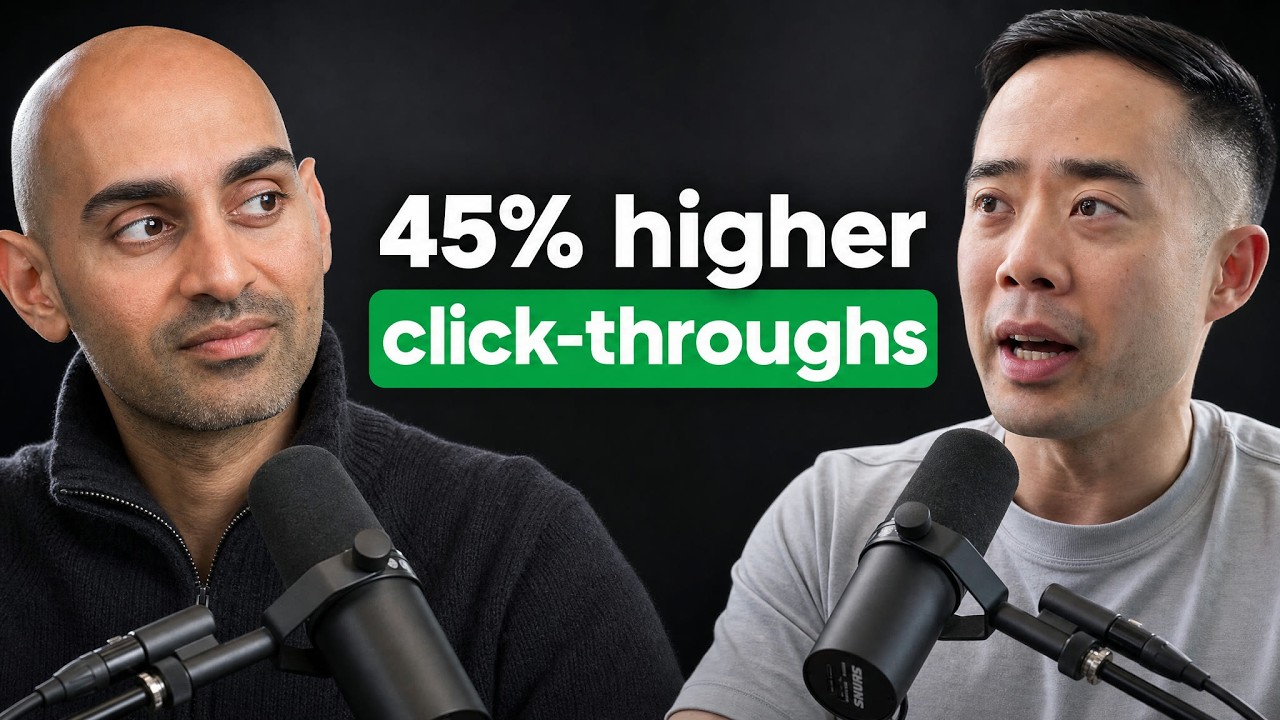
This content was created by Eric Siu. This content was uploaded by Eric Siu. This is a YouTube video titled "WD-40 Turned AI Ad Production Into A Growth Lever" (posted August 20, 2026) containing an English conversational episode featuring Neil Patel and Eric Siu as co-hosts/participants. The discussion covers AI and marketing topics—China-made models and cost/penetration implications, the rise of “AI-native” talent and hiring standards, agency value versus AI automation for ad buying, Cloudflare and agentic/web optimizations, a WD-40 case study about AI-driven Amazon video ads, plus related asides on Singapore’s sovereign wealth practices, negotiation, and introduction etiquette. It reads like a recorded podcast/interview conversation focused on AI’s impact on marketing and agency work.
Chapters
So, and China pulled an amazing marketing move. If you look at a lot of what's happening in AI, there's a lot of uncertainty in the public markets. The reason there's a lot of uncertainty in the public markets is largely because of China. China's releasing models that companies are now using. They may not be as good, but they're good enough and they're a fraction of the cost. And they're just like, hey, you can use our models. It's way cheaper. And they're getting amazing penetration in the United States. And I don't believe organizations and political people like governments thought that, wait, our citizens and our corporations will want to use Chinese products. But they do because, hey, you want to offer something for 1/10 the price that's good enough to get the job done? I hate to say it, most people are going to sign up for that. Including me and Eric.
Well, I'm going to share it with all new hires or all new prospects to scare them away because that is how I see it. If you have the ability or the desire to work on hard problems and you have high cognition, then we want to hire you. If not, I would prefer that you want— this is the problem I've been having. And Neal, I actually did the math yesterday. Let me ask you the question here real quick and I'm going to come back to the article. Because we got to talk about Singapore too. So when you look at the— what would you say is the percentage of people that started the year AI native, like starting? So what percentage would you say that is? And what do you think it is today for your organization?
Yeah, so you're saying what people that are joining a company are AI native?
Not joining, but let's say beginning of the year, maybe 10% of your org was AI native, right? What do you think that number would be today? So what was it before? And what is it now as of August 2026?
I would say, I honestly don't have the exact percentage on my team. We look at it a little bit differently. AI is evolving so fast. If you felt you were good at the beginning of the year and you didn't keep up, we look at it as you can regress and go quite a bit backwards. OpenAI published a stat. I forgot who, I think it was OpenAI. I think less than 10% of their users even use agents. It was something small or minuscule like that. And we're seeing the same thing in which people say they're using agents, they're using AI correctly, they're getting the most out of it, but when we dive a little bit deeper and go under the hood, when we interview candidates or talk to candidates, the quality or the results or what we're looking for doesn't match up to what they're saying in most cases. So people can say a lot, but the action, when we really dig deep, is not really there in what they're claiming for most people and most candidates.
So here's what I'll say. I've talked to a few people yesterday and I've actually even pasted into this AI group, right? And so, and to Neil's point, this is not an exact science. We're all kind of figuring it out as we go. But I think generally leadership has a sense of how things are, right? So we talked, I talked to a mutual friend yesterday. And I was like, so what did it start at? He's like, well, the year we started, maybe 5%. I was like, so what is it now? He's like, 10%, right? Now, that being said, let's say, you know, headcount is 1,000. So going from 50 to 100 is— I would still— that 50 people is still like a good chunk. And I talked to someone else, like, these are both 9-figure companies, but they went from 2% to 8%, okay, in terms of, you know, the AI nativeness, right? And then for a lot of these companies, it's kind of the same. Now, I think I'm looking at our organization, like, Our headcount is smaller, right? It's much smaller, in fact. And so beginning of the year, Neil, I would say we started at 10%. Okay. As of today, I looked through the kind of people yesterday along with my CTO. So we kind of ran through the entire list and I'm like, yeah, it's about 50%. So it went up 5x. But like, if you were to guess, like, is it because we did start doing hackathons? Is it because we started doing AI office hours? Is it because we started doing training? No. And by the way, I'm not saying training is bad by any means, but what happened is the talent standard went up. So what we look for when we hire, what we look for when we fire, and then also like, what does training look like? What does retention look like with these people? So it all came like, and the CTO said, it's like, we can talk about all the training we want every day, and we should absolutely still do those things. But what matters is, are we just bringing in the right people? Much easier said than done. But that also comes down to, okay, what are your standards? What questions are you going to be asking these people when they're coming in? And then are you not afraid to be unapologetic about ending those interviews early if the call isn't working out, right? And so we're going to continue to refine that. But I think most companies need to think about, yes, hackathons, absolutely, AI officers, all that. But at a certain point, you just have to decide, hey, our bar is just going to be this, and that's what it is. And people are like, oh, those people are so hard to find. No, trust me, those people are out there because those people are actually trying to leave the companies right now that aren't on top of it, right? If you market yourself the right way with where you're trying to go, you can attract these people. So I think it's possible for everyone.
Dude, definitely. I think it is. It goes back to what we were talking about earlier and just mindset. And I see that with so many marketers. You know, the most common message that I get when I see marketers in person is times are hard. You know, Google's taking away top of funnel. ChatGPT is taking away top of funnel. Social media doesn't want to send traffic to your website. You can't tell people to click on a link in your bio anymore. Screws up your watch time, which just messes up all the metrics. And I really look at everything in which if you have the right mindset and you want to push hard, you're going to be better off. If you want to take the lazy mindset and not push hard, you're screwed and you're doomed. You got to have the mentality that things can get better. You got to keep testing, you got to keep pushing and trying new things. In marketing, Eric and I, I don't think any times in our career we ever created a business and we're like, this is the exact way to market a business. We're going to do this. And for the next 3, 4 years, we didn't change anything. It doesn't work out that way. There's a lot of uncertainty and a lot of changes that had to happen.
The biggest losers in marketing are the marketers who are entitled.
Okay.
Oh, I lost my traffic over here. Oh, screw Google. Screw this. Like it's, it's, everything to point the finger outward, but to not look inwards and be like, how do I adjust? How do I adjust? How do I adjust? And when I speak at these SEO conferences, by the way, I'm like, guys, don't even complain about the algorithm. Don't even complain about how the game has changed, right? You guys are SEOs. Like, you're supposed to be the most adaptable marketers. You're supposed to— the only thing that's constant is change, right? And so if you have a good relationship with change, that actually means for the most part, like, you have a— you're generally a higher agency person. You're okay with surfing the wave as it comes versus letting the wave hit you. And so my whole thing with marketing in general now, or even this whole debate around cognition and being optimistic about AI, is as long as you have high agency, a good relationship to change, you like solving tough problems, you're going to be just fine. The ones who complain, and by the way, I look at Neil Nye, never once in my 15, 16 years of knowing Neil have I seen him complain about a marketing channel not working. Not once have I seen him complain. And that's not even an exaggeration. Like we might complain about other things, but not about that.
We definitely complain about other things, but yes. I also think as marketers and entrepreneurs, we like the chaos because when times are good, we do enjoy them for the first 6 months, but then things get boring. We kind of like the ups and the downs. Maybe I'm a little crazy. I'll talk about myself. I won't say that about Eric, but maybe that's why I like the ups and downs, but it keeps me going. If things were always just good, I would get bored.
Neil, I was saying pretty crazy too. Remember, so Neil, and we won't go into too much details here, but Neil called me 5, 6 years ago. And as a friend, he said this, right? He's like, he called me and, you know, we're in trouble at the time. He's like, hey, it might be time to just bankrupt this thing, dude. And he's like, he's like, I have an idea. I have an idea. Bankrupt it. Right. And so, by the way, like, that was a situation where I was like, you know what, it's gonna be a great story if we're able to turn everything around. And we're talking about, this is Millions and millions of dollars, right? What we're talking about, like, I'm just gonna leave it at that. But to be able to go through that and be in the position that we're in today, like, man, what a ride. Would I want to do it again? No. But it's through those moments that you learn the most, right? And Bill Gates, a lot of people don't look at him too positively anymore, but I will say he has a good quote. Success is a lousy teacher.
Yeah.
And that's what I would say. So by the way, let's come back to Singapore for a moment, Neil. So they're a very wealthy company, you agree, right? Not company, country.
Yes.
And they are, you would say they're not an emerging market. You would say they're more of a developed market, right?
They're developed. They're not emerging.
Yeah.
Okay.
So what percent of Singaporean respondents are optimistic or negative about AI?
I would say most of them are optimistic about AI. Is that what the status? Yeah. You wanna know something interesting about Singapore? Did you know all the citizens have to contribute money and that money is used for their retirement? Not like a 401, but like investment, like the sovereign wealth fund. So when Singapore or Temasek or any of their GIC invest in You know, these AI companies, the citizens benefit from it so they actually can make money and participate. The reason they do this is so that way when people are older, they have home stability. They have a low population. The government also provides them government housing at a much more affordable rate and dollar amount. So then that way no one's left behind and they don't have a homeless problem.
We should have that. Like, I think we're moving in the right direction with the whole Invest in America accounts, but I think Everyone should have that. So there's less of this rich against the poor thing. It's more about being productive and building things and working on hard problems. I think this whole— it's very easy to fall into this whole rich versus poor mentality because it's easy to blame. It's easy to point the finger, right? And then when you use language like, again, oh, screw the billionaires, whatever, but you replace the word billionaires with successful people, screw the successful people, you realize it doesn't make any sense. So anyway, wanted to share that piece. So I, here, I got more here, Neil. You want to see this, uh, this WD-40 ad production center?
Uh-huh.
All right. So I wanted to take a moment to tell you about my podcast co-host Neil's agency called NP Digital, and they work with a whole host of global companies or global organization. Also, Neil has SEO tools such as Ubersuggest and Answer All you have to do is go to npdigital.com to learn more, and we'll see you on the other side. Okay.
When you say WD-40, I think of the spray.
Exactly. That's exactly— here, let me show you what I got here. So this is how WD-40 used AI video Amazon ads to boost performance. Okay, so let's just look at the numbers here.
Okay, so I'm going to—
crap. Oh my God. Oh my God.
Oh my God, too many ads.
Okay, so anyway, so they use Amazon's DSP. Okay, look at— dude, stop. Oh my God. All right, so I'm getting hit by all these popups here, but the campaign produced a— I'm just going to look over here. So this campaign produced a 45% higher click-through rate than category benchmarks with video completion rates reaching nearly 90%. So Amazon's AI-based video ads lower the cost to create these assets at a much higher rate. It didn't provide details on cost, but I think the thing to call out here— and screw you, MediaPost, for all these pop-ups— but I think we're going to see more of this. I think that you listening to this right now, you shouldn't interpret this as, oh, we're just going to create a lot more ads and we're just going to let AI do it. It's more so you're still going to need someone managing it for you. You're still going to need to hire an agency to do it because Neil, I actually talked to a health company, multi-billion dollar, not health company, hospitality company this week, right? And they're like, okay, Single Brain looks really cool. So what's the secret sauce, right? Like if we can build this, like what's the secret sauce? And I just looked at him and I was like, so who's going to maintain it? And he's like, oh. And then like, yeah, because he was complaining about his team the whole time. They're not— He talked about how he made And we're not going to name names, but he was talking about how he built AI agents for each of his team members, right? Or like to do tasks that his team was doing. I'm like, the fact that you're doing all this stuff right now means you don't have enough people to actually help you. And so this WD-40 thing, the whole like, hey, we can have— we fire your agencies, do this, do that. Like, who's going to manage it for you, right? And so we ain't going anywhere. Neil and I, we're still going to be here. So when people need the help, we'll be here. Don't worry.
It's like people telling me there'll be no need for agencies. You can just do it all with AI.
Who tells you that, by the way? I'm curious.
So Entrepreneur Today told me, just look at media buying and buying ads online. You no longer have to do it. AI can just end up doing it for you. And I was like, have you run ads yourself? They're like, yeah, I've been running ads for, I think they said like 6 years. I said, okay, so back in the day there was solutions like Kenshoo and Marin, I'm assuming you remember them, that would help you do bid management. Eventually Google and Facebook ended up releasing a lot of the features. It got better and better. You know, there's, you know, PMax, AI Max, the list goes on and on. They continue to make it easier and easier for you, yet companies still use agencies. And one can say, Oh no, there's no need, it's a scam. But what if I told you I have case studies to prove companies doing it on their own and hiring internal people using all this latest and greatest technology and then going through us and then us in many cases for a lot of our bigger spenders, I'm talking about people who are spending $5, $10+ million a month, showing them 20+% improvements in revenue while spending less. So the delta's actually much more than 20% here, right? Because you're getting them 20% more revenue and you're spending less money and that's after fees. So overall it's highly profitable or much more profitable than it was. And the reason I told them is the reason people pay agencies is for expertise. They see a lot of data, they work with so many different accounts in different industries, they can tell you what you should change and adjust and what you should try out. And you can end up trying AI and there's nothing wrong with it. We use AI, a lot of companies use AI, but if the AI just replicates the same strategy for everyone, what is your edge?
People go to agencies. Why? Because agencies, one, they have expertise. They also have the data as well, right? And it's not only that, it's, it's, you have the expertise piece, but you also get a shop that can handle multiple things at once. And ultimately what they're doing is they're delivering outcomes and they're taking a lot off of your plate. And that's something that's worth paying for. That's all. And so as long as humans will be hired, agencies are still going to be around.
Dude, I totally agree with you on this.
So actually, speaking of agency, let's talk about agents for a second, Neal. So, you know, our good friend Elon Musk tweeted this. So he says, AI agentic internet traffic will obviously vastly exceed human usage. So not even a close call at all. Cloudflare's forecast is accurate. So Cloudflare, they said humans will be a rounding error on the internet. According to Cloudflare's forecast, bot traffic will exceed human traffic by a factor of 1,000 within 5 years. So what's interesting to me before we react to this, Neil, I've been very impressed by Cloudflare. So you have probably never logged into your Cloudflare dashboard, but I logged in. I happened to just log in because I was just curious over the weekend, right? And I looked at it, I was like, dude, they have all these agentic things, all these like things you can click, like the MD file, you can like add, you know, the ability for agents to buy things and things like that. I think every site needs to become like this. And I'm sure you've seen this already, Neil, And like, every site needs to become agent ready, right? Like how Shopify launched their UCP, and there's all these, you know, PC and CP, all these things launching out, right? And so I think it's— bless you. I don't know if that was a sneeze, but I think it's helpful for us to start to think about not just answer engine optimization, but it's also answer engine optimization for, are you doing it for humans? Are you doing it for agents? Because we're already seeing—
Yeah.
that the number of agents is rising. So you want to make it easy for them to buy things. And a lot of times these agents just want to bypass the UI.
Yeah. And Cloudflare has been releasing quite a few new features. So for example, they make it easier for agents and AI to end up crawling down to crawling your site. Like they release Markdown for agents, which automatically converts HTML into just clear, concise, uh, text-based answers. And then that way the crawlers can get what they're looking for faster. Uh, and then this also, uh, reduces costs for the company. But yeah, they've been making a lot of changes. I've been logging into my cloud for quite a bit over the last few months, but it's mostly because they keep emailing me saying they want us to pay more money. And I've been arguing that I don't want to pay more money and I should get a cheaper price.
Well, see, the problem is Neil actually enjoys those conversations.
Yeah, yeah. And then my team's just like, hey, they presented this, we think it's reasonable. I'm like, no, no, no, no, put me in the conversation. I'm like, I want to pay less. They're like, no, no, they're trying to charge us more. I'm like, yeah, but I want to pay less than what we're paying.
So it's— Neil wants to get more for less, and that's how you do it. That's negotiation, right? So here, like, I actually pulled up, um, the— it's like, here are all the quick wins you can add over here, right? And it's like, here's this technical groundwork. You need to expose the directory of your web services, share login details for AI bots. Preferences for bot behavior, like the MD files Neil was talking about, manage AI bots, right? And then there's like these, all these integrations down here. So what I just did, Neil, I just took a screenshot of this and I just dumped it into my agent. I was just like, hey, how high leverage was this for us? Is this for us? And so interestingly enough, for our agency website, Neil, it's like this is like a 50 out of 100 high leverage, right? But when I looked at the other sites like Single Brain or Carrot or whatever, or ClickFlow, it's like, yes, absolutely make those agentic. Make it easy for them to access the API. Make it easy for them to buy as well. They can even do these little microtransactions, um, like If they want to pull from AnswerThePublic, they want to do all these microtransactions, maybe you guys can make money off of that. And so I'm like, someone needs to be on this. And ideally, I think if you're an AEO SEO person watching this right now, you should learn how this stuff works. We're just making you aware of this. And like, in my younger years, I'd probably spend the time learning how to make this all work. But I just forward this to the team. I'm pretty sure same thing for you too, Neil. So.
Yep. Dude, I— and Recently, I don't know why, in the last few weeks, I've been getting a lot of people adding me to just random group texts, introducing me to people. They're like, hey, you should talk to so-and-so. And it's pretty much sales. Someone's introducing me to someone so I can buy their products or services. And people are starting to get upset that I no longer respond to them. And I do, especially if I know the people, I If I think it's legitimate and it's good, I forward it to my team, but people are like, hey, did you respond to them? You should get on a call with them. I'm like, I don't have the time for this. I'm like, forward. I'm like, it is what it is. The picture wasn't good enough to convince me to join the call.
Well, here's what I'll say. I mean, this is like, people should learn introduction etiquette 101. And when it's a big intro, by the way, you want, and you respect the other person, you probably want to do a double opt-in. And you want to be cognizant of what their interests are. And if you spend— if you go the extra mile here, you're going to get remembered, right? Versus just randomly introducing. Now, here's what I'll say. There's a caveat to that. So if a Neil's coming from— like a Neil, if an intro is coming from someone like that I trust, like a Neil, for example, right? I'm going to trust that he's spent the time and it's something that Neil has already thought about my interest, right? I'm just going to go ahead and go with that. But if someone barely knows you and they're just putting you into a thread, I think that's rude and I think it's stupid and I think that's low cognition and I think that's part of the mental underclass. The new mental underclass.
Yeah, dude, I totally agree with this. People need to understand, you know, what a person actually wants, get their permission. It's like a double opt-in, right? You guys do it with email, do it with introductions over text. And I think that is the best way or else people just ignore it. Like I've had friends that I've known for 15, 20 years introduce me to people. And they're just like, hey, follow up with these guys. I'm like, dude, I don't have time. I'm like, I don't, I'm not even in this department that makes a decision for this product or service. I'm like, I'm the wrong person to make the introduction.
You're nice in those situations. I'm actually pretty mean in those situations. And I do like, follow up what? And I put a period, not a question mark. I put a period. So yeah, then they know not to, they know to stop doing that. Well, I think that's a good place to end. Guys, we will catch you next week and yeah, have a good weekend.









