What a TikTok Ban means for advertisers and marketers, Google gets boosted after big update, & more
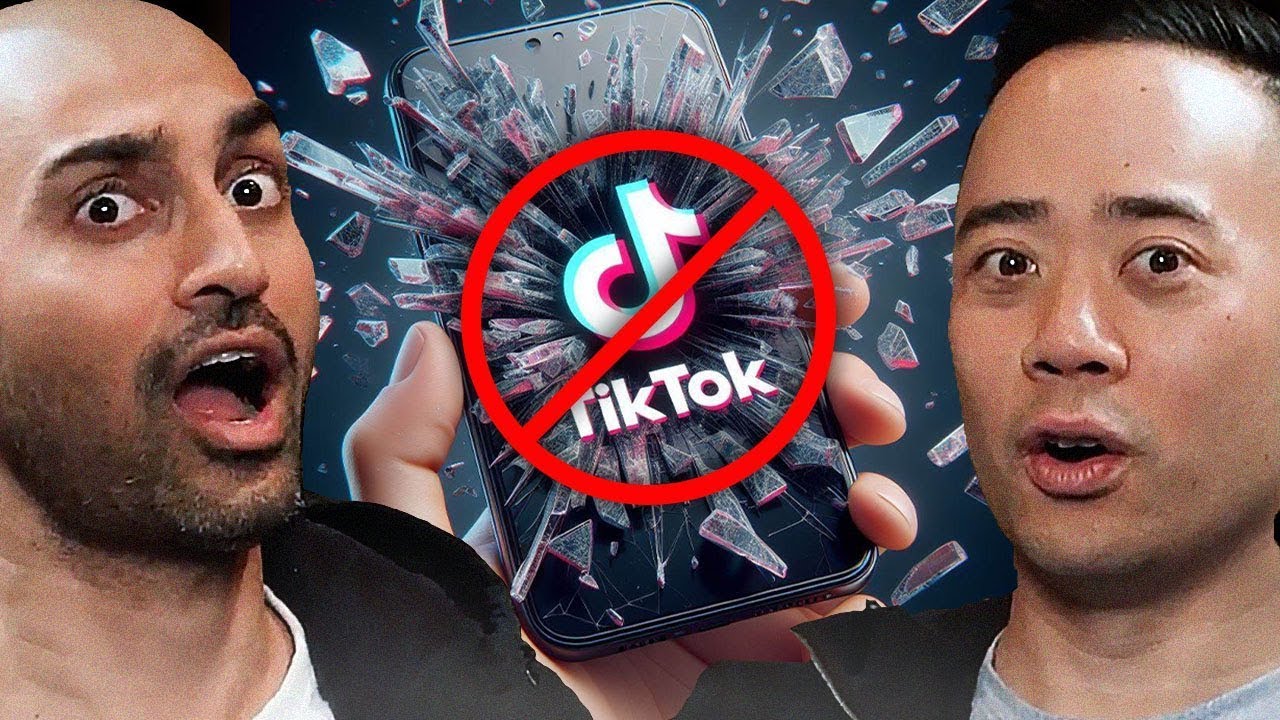
This content was created by Eric Siu. This content was uploaded by Eric Siu. This is a conversational YouTube episode titled "What a TikTok Ban means for advertisers and marketers, Google gets boosted after big update, & more" (published March 20, 2024). It features a back-and-forth discussion between Neil Patel and Eric Siu in an informal podcast-style format. Topics covered include potential valuations and outcomes if TikTok were banned or sold (buyer interest, estimated valuations $60–$100B+), how marketers and influencers would adapt, politics and labor proposals (Bernie Sanders' 4-day/32-hour workweek), corporate responses to "woke" marketing (an Advil "Pain Equity" campaign), effects of a recent Google update favoring Google properties (Google Travel), and promotions for their agency/founder events (Agency Owners Association, Leveling Up Founders). The tone is opinionated, advisory, and promotional, aimed at marketers, founders, and agency owners.
Chapters
You know, it's funny. I know we talked about this on the last episode about TikTok getting banned, but, you know, Ad Age has an interesting article on preparing for the ban and advice to influencers and marketing experts. And it's so funny. It's just like everyone's discussing how you should adapt your marketing and how you should adapt as an influencer. You and I both know this, all right? It doesn't matter if your company's from China, India, Brazil, South Africa, Nigeria, Canada, wherever it is. No one is gonna let— I don't know how much TikTok US is worth. Do you actually know how much it's worth? TikTok US worth? They say though, this article I'm seeing on Google, according to Channel News Asia, and I don't even know how accurate it is.
We should ask the guy that lives in my building, former US CEO of TikTok.
There you go. They're saying it's worth $16 billion. Baby, Daddy's on a phone call. But Daddy's on a phone call, baby. Daddy's on a phone call, baby. So, okay, this is the beauty of having kids. She came in to tell me that, you know, her brother slapped her head, which she instigates a lot, but I love them both to death. and broke her puzzle. Like, you know?
Nice.
Beauty of having kids. But either way, you know, this article is saying that TikTok is worth roughly $16 billion. I think it's probably worth way more than $16 billion. I could be wrong on this.
US TikTok.
Yes, US TikTok. That seems quite low. And what I believe is going to end up happening is everyone is— majority of these entrepreneurs are capitalists. They're not going to let $16 billion or $30 or $10—
Dude, I'm seeing $100 billion on my screen.
I believe 100 is more accurate than 16. I do not see TikTok US selling for 16. I don't know what the number is, but I actually believe it is closer to 100 than it is to 16. Yeah. And no one's going to let it go to zero. So what's going to end up happening is ByteDance is going to get a ton of money. They're going to end up having to let it go. They have no choice. It is what it is, but they're not going to take a zero. People are going to buy this out. Influencers will still have their platform. and marketers will still have a platform to go buy ads on.
There's a former senator, actually, I forgot his name, that's trying to put together a group of investors to go buy it. So here's what it says. North of $100 billion.
This is from—
what's that? Steve Munchin. Yeah, yeah, yeah. Steve Munchin. You're right. So $100 billion is the valuation according to Wedbush analyst Dan Ives. And then another analyst at CFRA Research Angelo Zaino or Zaino has said that it could be valued north of $60 billion. So let's just call it $60 to $100 billion or so. No matter what, look, I think a deal will be done if they have to divest. The other thing too is if let's say TikTok disappears, which I don't think it will, but let's say it disappears, the attention has to go somewhere and marketers will adapt at the end of the day. And these other big platforms are going to benefit from it, but you'll adapt or else you die.
Dude, you hit the nail on the head. Neither Eric or I think TikTok's going to go away. We think it'll just be owned by someone else. But if it does go away, that usage is going to shift to Instagram, YouTube, you know, Facebook. I know Instagram and Facebook are the same company, Snap, et cetera. And then on the flip side, there'll be more inventory for advertisers to buy. It really does.
By the way, Neil and I have an agency owners group called the Agency Owners Association. All you have to do, just go to marketingschool.io/agencyowners. Once again, it's marketingschool.io/agency to learn more. And now back to the show. All right, Neil, here, let's talk about politics a little bit. So did you know that Bernie Sanders just put forth a 4-day work week?
Nah, I did not see that. I saw an article though about a 35-hour work week. I don't know if that's the same thing. Or was it 30 hours?
Well, it's kind of, I mean, but 32 hours would be 4 days. So basically Bernie Sanders pushes bill to establish a 4-day work week. There have been studies, right, in Europe where it's been super successful. And then this tweet is actually from Aaron Levy, the founder of Box. So he says, imagine wanting to destroy America's competitiveness this much. And so I think this is interesting because this is a way for Bernie Sanders to get more headlines to market himself. And then there's also going to be a tug of war here, right? Because all people that are working for companies are going to be like, yeah, 4-day workweek, right? And then anybody that runs a company is going to be like, What is this, right? So, um, I think it's, it's an interesting play from Bernie. And this is how a lot of politicians will play because they're trying to play to your interests at the end of the day to try to garner more votes.
Dude, well, also some of these politicians, maybe they get, maybe they don't, maybe they don't care. But at the end of the day, businesses are going to adapt. And what I mean by this is if people want to work 4 days and they're doing 80%, if they're still doing their whole job and You know, plus more and no one's going to care. But let's say they start doing 80%. Cool. Imagine people getting paid 80% of what they're getting paid. They're going to be upset. And then businesses will just hire other people to do the remaining 20% that they're not doing. Because a business doesn't just magically make more money from this, it'll end up crushing a lot of them. With most companies, their biggest expense is payroll expenses. It's labor.
Look, at the end of the day, the phrase I keep using, and this is from this guy Thomas Sowell, I actually have one of his books over here. Thomas Sowell, or African American economist, which is funny because the title of the book is Social Justice Fallacies. So, so anyway, Thomas Sowell likes to say that there are no trade-offs, only solutions. And so if you are going to ask for less working hours, what's going to happen is there's going to be trade-offs. That means probably people, either people cut their payroll to 80% or you get paid 20% less. Right. And so, you know, I think there's a lot of angles here. We can talk about the actual problem itself, but I just think it's interesting that You know, Elizabeth Warren would be like, oh, no crypto, ban crypto, right? You know, and then, you know, Bernie, you know, stands on this 4-day workweek stuff. I think it's, at the end of the day, if you want to stand out, whatever campaign that you're running, you have to think about something that can hook people in. And this is certainly something that has the potential to hook people in. This is why a lot of people like Bernie Sanders.
Dude, you know what I think they needed to do politically? And I don't know if anyone's ever proposed this. They should, A, put a term limit on some of these, on all these politicians, whether they're good or bad, and B, they should have some sort of age limit. I'm not saying that you're not smart or successful if you're older. There's a lot of people who are older than me that know much more than me. But what's happening is, is some of these people aren't taking the time and don't understand technology or what's happening in the world, and they're just making assumptions. Like, do you remember back in the day when Mark Zuckerberg got called up to the Senate And they were talking about like Facebook and all this stuff and like knowing what you do. And he's like, it's like, what do you, what do you guys do? Yeah. And he's just like, he's like, Senator, that's not how Facebook works.
If you're not— well, no, no, no. He's like, Senator, we run ads.
Yes. But it's just like, they didn't even know half the stuff about Facebook and how it works. And it's like, oh, cool. We are paying these elected politicians and, oh, by the way, they're doing this meeting and they didn't take the time to actually have someone log into their Facebook account and check how it works.
Yeah, look, I mean, look, we're in an election year, right? I know not everybody listening is in the United States, but I think this is the year where like it's going to be the most amount of kind of change happening. Like everyone's voting around the world, right? You know, everyone has their incentives at the end of the day. But again, like what is the Charlie Munger phrase? And Charlie Munger, I think, is over here. The phrase from Charlie Munger is, show me the incentive and I'll show you the outcome, right? You can't give absolute power because absolute power corrupts. Now look, speaking about social justice, I actually have this tweet over here that I want to share, and I'm actually glad I can share my screen today. Check this out. Check this out, Neil. So here, I'm just going to click on this. Can you explain what you're seeing on the screen?
Okay, so I'm seeing a commercial, or it's an end cap at a supermarket. It has a lot of Advil in there. And the text reads, a recent study Advil found 3 in 4 Black people suffering from pain believe there is a bias in how pain is treated. And then it goes underneath and says pain equity occurs when everyone can reach their full health potential. Then the next end cap reads, we can commit to inspire change by— does it say elevating? Elevating stories.
Elevating stories.
And providing education. My eyes aren't good. Read the last one for me.
Together, we will address pain bias at the source. And then you can see on the right side below each Advil box, it says, the Advil Pain Equity Project, Believe Pain. And so, this is when things get taken a little too far. When we talk about— go ahead, go ahead, Neil. You look like you want to say something.
Dude, you know, I'm Indian. I'm not Black. If I was Black, I would be pissed about this in general. I'm, I'm like irritated about this. It's just like they're using someone's race to try to benefit.
Yeah, you're taking advantage. It's, it's basically people are trying to take advantage— like these companies are trying to take advantage of woke ideology, right? And, and they're trying to like rile people up. Like this pain stuff has nothing to do with race at the end. Like we all feel pain, dude. Like what are you talking about? And it's like What's gonna happen is once people start to call this out, they're like, oh my God, it's because, you know, of, uh, everyone was like pushing this woke ideology on corporate, uh, corporations and we had to abide by that. So then they'll just blame it right back on other people. But they're just trying to use this to garner a profit and it's gonna backfire on them.
Yeah, and I feel like it's putting down a race and just using it to their advantage. That's not cool.
Yeah, you're taking advantage of a race Or perceived systemic racism, which I'm not saying there isn't racism, but you're taking advantage of that to try to make a profit. Like, that's disgusting, right?
Totally agree. I don't know who's doing these marketing campaigns, but I would have fired that person.
This message is brought to you by Leveling Up Founders, and Leveling Up Founders is an invite-only event for founders. It happens once a year, usually during August, and past attendees include people such as Ali Abdaal, Cody Sanchez, Neil Patel, Vanessa Lau, and the list goes on and on. And ultimately it comes down to the quality of the group of the people. We try to keep the group high caliber. That's why it's invite only. So if you are a founder at the top of your game, you can go to levelingup.com/founders to learn more about it, and then you can apply and we'll see you on the other side. Do you want to know, by the way, so obviously there's a big Google update recently and it really torched a lot of AI websites, but who do you— which If you had to guess, there's one company that tremendously benefited from this update. What company would you say that is? I don't know. It's ironic answer. I'll give you a hint. Oh, go for it. Well, if you had to guess, if I say it's ironic answer, who do you think it would be? Random guess.
I don't know. I would've said Wikipedia, but I don't think it's Wikipedia.
No, no, no, no. Google. Google. Google. So Google benefited from Google's update. Check this out. So this guy, Keywordian Ian, says this. Check this out. So on the screen it says, this is google.com/travel/hotel. So this is their hotel section. Oh, look, all of a sudden this update happens. They move up and to the right. How is this happening? The organic traffic, according to Ahrefs, this is probably not as accurate, but monthly, let's say it's 499K, but it also shows that it basically, the traffic jumped by about 40% or so, or 50%. And so it's like—
This is just organic traffic though. This is not total traffic, correct?
This is just organic traffic for this section, the travel hotel section on google.com.
Yeah. No, dude, it's so funny. It's just like if you're Google or YouTube, you think they're going to hit their own sites with penalties or, you know, decrease in traffic? I doubt that.
No. And like, again, show me the incentive and I'll show you the outcome. Like, of course they're going to favor themselves, right? It's like they're just like Apple is going to charge a 30% tax to like put apps on their app store. Like, of course they're going to do that. And then like people are going to complain, it's so unfair, blah, blah, blah. But like at the end of the day, this is kind of how business works.
Yep. Well, cool. That's it for today's episode. Make sure you go to marketingschool.io/agency to meet up with Eric and I at our next event.









