What Eric learned from a guy with $800M debt, Insights from Robert Kiyosaki, and more
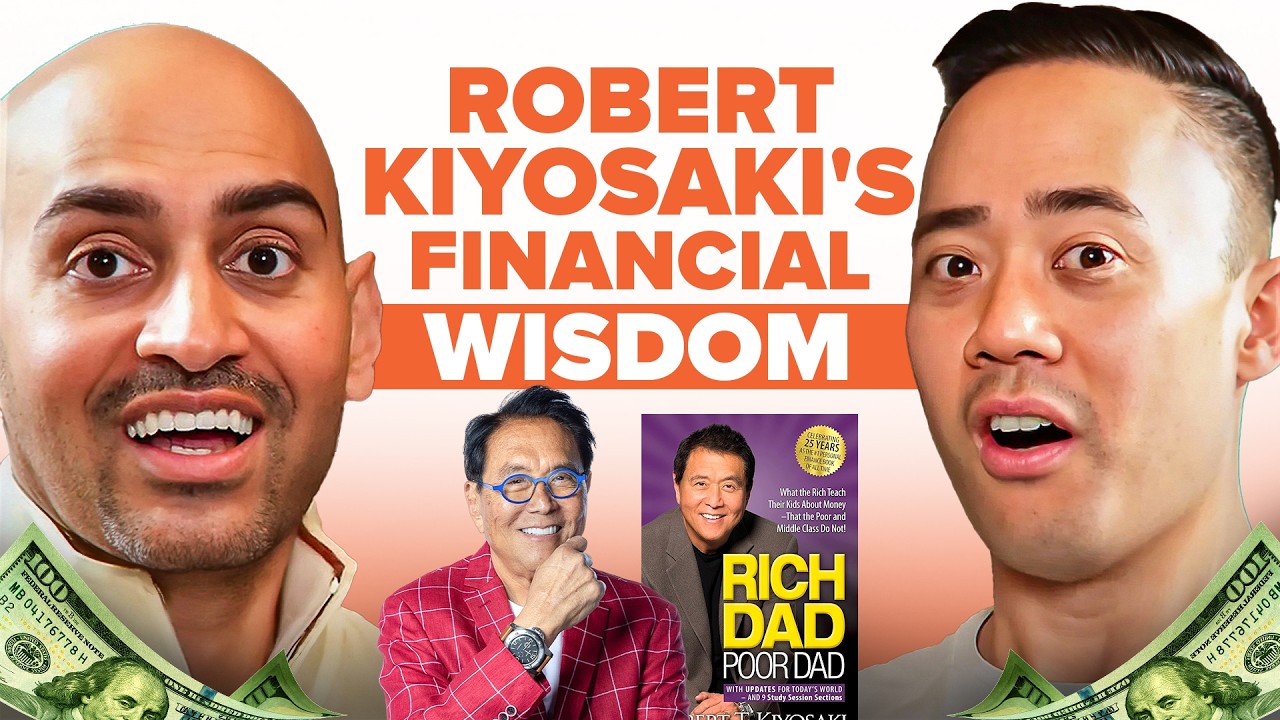
Eric Siu shares lessons from Ken McElroy, who manages $800M in debt, and Robert Kiyosaki on using leverage strategically. They cover how successful entrepreneurs handle debt, tax benefits, energy management at events, and why protecting your marriage matters more than scaling your business.
Chapters
Neil, you want to know what I learned from 2 people that are collectively in $2 billion, $2 billion in debt?
Sure. I'm assuming one's $800 million in debt, one's $1.2 billion in debt.
Exactly. Good math. That's good math. So, I spoke at an event this past week and it was my friend's event called Limitless. And it's my friend, his name's Rob— sorry, it's Ken McElroy is his name. Also a YPO member. And then, so he has $800 million in debt.
Right?
And then I also spoke to Robert Kiyosaki who's $1.2 billion in debt. So, he wrote Rich Dad Poor Dad. The guy's like 77 years old now. So, I did a podcast with both of them and Robert's whole thing is like, I love debt. Debt is great. There's good debt and there's bad debt. He's like, I'm friends with Dave Ramsey. Dave Ramsey is like, don't take on debt, whatever. He's like, I love debt, right? Debt— and you're familiar, you're pretty familiar with this stuff too. It's just like at the end of the day—
Yeah.
Um, the tax benefits that they get, the depreciation. Um, and you know, him saying, you know, I take on all this debt so I don't have to pay taxes. Like, you know, he's, he's saying like there's no downsides. Right. But, um, I want to talk about what I, what I learned about. So what I'll say with Ken McElroy, which I think I told you on the phone already, but I think this is helpful for everyone to know, is that if you actually want your business to grow, um, it's not by focusing on your business first. So what do I mean by that? So in your 30s, in your 20s, you're cranking on your business, right? But you can't focus on your business forever. And his whole thing was he was spending way too much time on his business. My friend and I, we asked him a question. We're just like, hey, like, you know, we're in our 30s now, but like, I think we're realizing that it's not just all about business. He's like, yeah, like I was spending— he's like, I used to prioritize business first and then I prioritize kids second and then the spouse third, right? And then from there, he was like, you know, he realized that his spouse wasn't happy and they went to this one entrepreneur's event where All the entrepreneurs were like super successful and they're all 9s out of 10s, right? They love their life, right? But their spouses are all 6 out of 10. That's the average, right? And then his friend told him, he's like, dude, you gotta reprioritize. Like, if you want the business to work, if you want everything to work, it's gotta be the spouse first, then the kids. No interruption. First the spouse, then the kids, and then the business.
You want the interruption because you just said women, those women are 6 out of 10s. What Eric meant to say is, he didn't mean it in a bad way. He's not rating women.
No.
You're saying that their happiness scale was at a 6 out of—
Yeah, I said the guys were 9s out of 10 and the gals were 6 out of 10. You're right. You're right. That's fair.
That's fair.
It was a survey that was run saying, hey, how happy are you with your life? Thank you for that. Yeah.
I don't want you to look bad.
You know, I appreciate that. I appreciate that. So, so, so anyway, the point is, once that happened, everything turned around. He's been doing that for 15 years or so. And I think a lot of people They just, because they've been so default on for the business for the longest time, they just keep it that way. But what ends up happening, you and I both know people that are in their 70s, 80s, they made all the money in the world, but they're alone and depressed and they have nobody to go to. They have no companionship, right? It's because they locked on too hard to the business.
If you end up wanting to be happy in life, I think you have to optimize for business. You have to optimize for relationships like family, and you have to optimize for health. If you don't optimize for all 3, you're not really going to be satisfied in life. And I've been addicted to business all my life. I'm nowhere near the success of Robert Kiyosaki. I cannot borrow $1.2 billion. No one will lend me that. But I do believe that if you optimize for all 3, you're going to have a much better life than you just optimize for one.
But what would you prioritize right now at your stage? Like, you have kids, you have a wonderful wife, right? What is your prioritization right now?
I've always prioritized in my life just business. And for me, that's worked. I think the key to success and happiness is finding people that accept you for who you are and know how to relate to you. The people who I know that are entrepreneurs, both men and women, I know successful women, I know successful men, I've seen both men unhappy when their wives are entrepreneurs doing really well, and I've seen women unhappy when their men are doing really well, but they both married partners in that case or scenarios where the other didn't truly understand them and didn't know what made them happy and how they're all in on this, and they didn't accept it from day one.
Right.
So they kind of just forced the marriage instead of just both parties understanding it and just Being okay with it.
There's a quote that stuck with me that I actually shared onto my Instagram today. So, here's what it says. It says, every relationship will end if you don't work on making it last. Relationships end because effort ends, tolerance ends, and patience ends. And so, when Ken McElroy said that, my other buddy Steve runs pray.com, he was in the crowd too. So, this is actually his question. I was looking at him as Ken answered that and it clicked for us both immediately. We're just like, yeah, absolutely. Like if you take care of the spouse first, everything trickles down. That moment was like a light bulb moment for me. And I always treasure those moments. So that's what I learned from the guy who's $800 million in debt.
Yeah, look, to me it makes sense. But I also believe if you, from day one, if you find someone who understands you and what your goals are, it just makes it easier. But a lot of people who have made money in business, Made money post-marriage. If you start dating after you've made money and after you've had your business, I think the dynamics change quite a bit.
Yeah. I got to take a minute to tell you about the Agency Owners Association. This is a peer group for agency owners. Think YPO or EO, but for agency owners. And I just wanted to read you a couple of testimonials. So this first one comes from Carrie, and we asked her, what do you like most about the group? She said, having a group of people to discuss and bounce ideas. The leads are great too. Yes, we share leads in this group as well. This one from Ollie, and he says, the ability to really post whatever I want and need, and the group responds. Great experienced members. Getting a lot of insights from conversations with other members. Getting a lot of value from sessions from Eric. Getting advice from others as well. And so if you want to grow your agency faster and you want a peer group to do so, just go to marketingschool.io/agency. This is a group that both Neil and I created, and our hope here is to create a vibrant community of agency owners and do a lot more with it in the future. So again, marketingschool.io/agency and we'll see you inside. Okay, let me tell you real quick what I learned from the guy at $1.2 billion and then we'll move over to one of your topics. So Robert Kiyosaki, bestselling author, Rich Dad Poor Dad. Have you read that book before?
I haven't read the book before. Okay.
So, you know, with him, I mean, he's been doing this for a long time. He's got his talking points. I did ask him because he's friends with Trump. I said, hey, like you're actually friends with Trump. Like tell us what you know about him. I mean, there wasn't a lot he told. He was just like, he's a really good man and he's a really good friend. His big problem is he's like me. Robert's saying he's like both of them. He's like, yeah, Trump talks too much, opens his mouth too much. Robert's like, I open my mouth too much too. That's why he gets himself in trouble. But with Robert, his whole thing is like he had 2 books with him. He's carrying these books around with him at the conference. One was on the Communist Manifestos from Karl Marx. I'm like, why are you carrying that around? He's like, oh, this is because this is what America is becoming. He's like, this is what— like, we have a crowd of like 200-300 people watching. Um, and he has another book called Money GPT. I was like, why are you carrying that book? He's like, because we're all screwed with AI, right? He's like, you need to own assets. You got to buy Bitcoin. You got to buy gold. You got to buy real estate at the end of the day. So, um, there's a little bit of pessimism, like doomerism in there, but I still think he's doing You know, at 77 years old, he's still out there teaching. And, you know, I'll tell you the one thing I learned from him is at that age, if we're still speaking, we're still working hard, is he'll turn it on when he goes outside. You know, everyone's trying to shake his hand, autographs, and all that type of stuff, right? But when we go into the speaker room, you see him like knocked out on like the couch, right? Because he needs to recharge. And so, when he goes out, he's like totally on and he's out and he's totally on again. And I was talking to his assistant. His assistant was like, yeah. He's been doing this for a week. I was like, oh my God, he's been doing this for a week, right? So it's, it's, you got to turn it on and off, on and off. So yeah.
I also think it's the age too. He's in his 70s. We're in our 30s. Yeah, we can go multiple weeks or a month and we don't really need to turn it on.
But even a week at a conference, because he's doing masterminds, he's speaking at multiple things, you're done after like a couple of days. You know what I mean?
Dude, last week I had 3 events in 1 day.
That's a lot. How many days were you out for?
A week, I did multiple events during that whole week. But in one day, I remember the peak, I did 3 speeches, meeting people, networking. Yes, it is exhausting, but I didn't have to turn it off or on. But again, we're in our 30s versus someone in their 70s.
Yeah. And like, I think that's a big thing. We like passively learned that like, he's got the longevity. If you love what you do, you're gonna keep doing it. Go ahead.
Dude, totally agree with that.
The number one challenge for businesses is hiring. And more specifically, the number one thing I get asked for all the time is, Eric, where can I go find an amazing marketer? And the reality is right now, when you think about the world, we have inflation. That also means wage inflation right now. And it means that when it comes to hiring talent, you can't spend as much as you would have in the last couple of years because it's just become too cost prohibitive. And so we've partnered with one of the best offshore recruiting firms when it comes to marketing. They've been a great asset for us, and I believe that they will be a great asset for you. All you have to do is go to marketingschool.io/hire. Again, it's marketingschool.io/hire to learn more. You can fill out the form there and we're going to place you with the best marketing hires that we can help you find.
On a side note, I was in a hotel last week in Brazil and I saw this company. I didn't know their name. It was Brazilian. I don't speak Portuguese. And they were spraying their advertising everywhere. And eventually I met someone from that corporation at one of the events and they told me, they're like, yeah, if you spray your advertising everywhere, it's a guaranteed way to win. And I told them spraying your advertising everywhere isn't a guaranteed way to win. It's a guaranteed way to just burn money.
What do you mean spraying your adver— you mean just spreading it everywhere or like?
So what was it called?
Spraying the advertising, Brazil.
Yeah. Dude, on a side note, I was in Brazil last week and I was in an elevator at this hotel and I was seeing ads. So they had these monitors that kept rotating ads and I saw this company. What company? I was in the JW Marriott Rosewood and Novotel as well as Fasano.
So this is a hotel ad?
In the hotel elevators. One of those 4 hotels had a monitor where I saw an ad of a company. I don't know which one of the hotels, but those are the 4 hotels I stayed at. And when I saw one of those ads, there was this company, bright logo, few different colors. And I remembered it because eventually when I was speaking at an event, I saw their booth and I saw their logo there. So I went up to them and I was talking to one of the gentlemen in marketing and he was telling me, spraying your advertising everywhere is a guaranteed way to win. And I told him, spraying your advertising everywhere isn't a guaranteed way to win. It's a guaranteed way to burn money. And his belief was, it's branding. If you just put your ads out everywhere, people will get to know you and eventually you'll end up making money. So then I asked him a question and the first question I asked him was, what's the profitability of your company? And he's just like, oh, we're losing money right now. We're venture funded.
Mm-hmm.
I was like, okay, what was your growth before you were doing all this stuff? And they're like, oh, we were growing, you know, 60, 70% a year. This is a bad economy and we're growing a little bit more than 100%. So I'm like, oh, your growth has increased. How much have you increased in your marketing spend? And he said, 13x.
Wow.
So when you look at the numbers, and then we started diving into his numbers a little bit, and he's just like, yeah, we're losing more money than ever, but more people recognize our brand.
Yeah.
And I was like, dude, just spraying it everywhere, you just see too many irrelevant people and you're just burning money. I think this is one of the worst ways to market. It's just like those sports arena deals. I'm not saying they're terrible, but if they really produce that big of an ROI, Crypto.com would be doing—
That's a $700 million deal.
Yeah, and Crypto.com's not doing well anymore. And if you look at most major corporations that spend money on advertising, they would have every soccer pitch, every football pitch, every NBA pitch labeled after their brand name if it was that ROI positive, but it's not. Hence, you see a ton of them not do it anymore.
You know what's interesting? Did you see that there was a SoftBank study basically saying that startups that don't raise— the less money you raise, the better you do, right? Basically, it's saying that the more money— because the more money you raise, what ends up happening is you have to hire an executive team. Oh, it's time to grow at all costs. And then what happens is you end up burning a bunch of money and then it becomes this crazy cycle where you can't recover from it. And by the time you try to cut costs, it's already too late.
Yeah.
You're too bloated and that what ends up happening is you just die.
Well, isn't SoftBank the one that raised like a $100 billion venture fund?
Sorry, not SoftBank, Silicon Valley Bank.
Oh, okay.
Yeah, yeah, yeah. And then Silicon Valley Bank had a disaster, but they're still around. Do you know what I mean? They were bought out.
Yeah, they were bought out.
Yeah, so there was a study and they're just basically saying like the less money you raise, the more you're likely to do well. And I think that that's kind of similar to this. It's like people get too used to, like when everything was crazy with the crypto stuff a couple years ago, everyone was doing these stadium sponsorships and they weren't thinking about ROI at all. They're just like bratty, bratty. People sometimes they use bratty as an excuse.
Dude, they use it as a massive excuse, provides a terrible ROI, and people just want to do it because it makes them feel cool. It's the same reason that people want millions of followers. The main reasons were fame. Fame. What was the other ones? Dude, I just talked about this a little bit earlier.
Yeah, you've been on a kick with this. You made multiple pieces of content around this.
Yeah, dude. Fame, recognition, like they walk into a room and people recognize them, and status.
It doesn't even matter. Now you can have a million Instagram followers or a couple million, still nobody's going to recognize you. It just doesn't matter.
Or people may recognize you, but it doesn't mean crap for your income.
And I'd rather just not be recognized. You know, it's better to just be— what do they say? It's better to be rich and anonymous.
Yes.
Yeah.
Or it's better to own one of these big corporations that no one knows about that prints cash. Today I was looking at Sanofi. You know Sanofi?
No. S-A-N-O-I-F-I?
Uh-huh.
I've heard of it.
Yeah, the big French conglomerate, the pharmaceutical. $150-something billion. Most people don't know what it is, or Sensora, or Fortive, or Danaher, or even— I was talking to someone about Accenture today and they were talking about personal brands and how everyone should, you know, build one. And I was like, okay, who's the CEO of Accenture? They're like, I don't know. And this was the agency person. I was like, yeah, Accenture has agencies for pretty much everything you do and I do. I was like, name any top executive at Accenture. Like, I don't know. I'm like, exactly, roughly a $200 billion company. You don't know who gives a crap on a personal brand. I'd rather have the $200+ billion company.
It just so happens that we started in that area. So there's kind of something like you started way earlier and I started a little later. So there's some semblance of a brand somewhere. But if we were to go back in time, we probably would just spend more time on the business. At least I would.
Yes, and I would spend more time on corporate branding versus personal branding because it would have produced a much higher ROI in the long run, but it would have been harder to produce as popular of a corporate brand, right?
And by the way, we talk about branding here, right? So I think this is why you need to have a balance between performance and branding because a couple of months we talked about Nike, we talked about Adidas where their executives are like, we overspend on performance. Okay, that's when you go too hard on performance, but you also need branding to kind of balance it out. But if you go too hard on branding, then you have situations like this where people are just spending everything and the startup might end up shutting down, right? So I think you need a mix to kind of have checks and balances.
Yeah, dude, we have a mutual friend, Chirag, great guy, had a pharmaceutical business. It didn't work out. One of the big problems was—
They raised a good amount of money, right?
Raised a lot of money and just expanded too fast. Sometimes money could be the detriment because when you have a ton of money, people burn it on marketing, product, executives, and all these things that you don't really need. Instead of just focusing on what's working and doubling down on that.
All right, that is it for today. Please don't forget to rate, review, subscribe, go to marketingschool.io/agency. It is now application only, so you can't even pay to get in if you wanted to get in now. You have to apply. Um, and so that is it for today, but other than that, we'll see you tomorrow. See you tomorrow.









