What you can learn from Nike and Starbucks' new CEOs
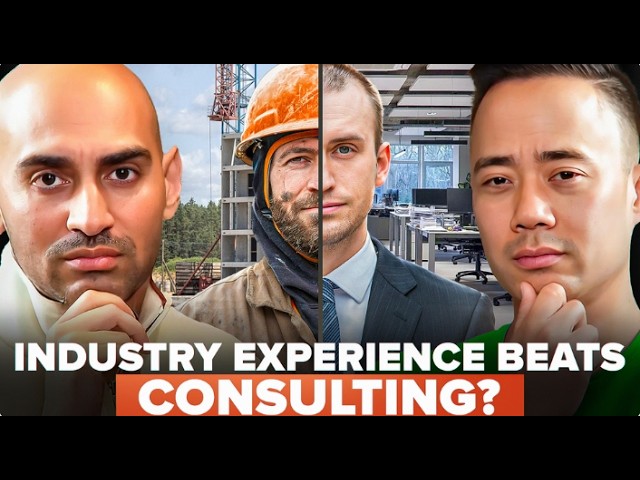
Eric Siu and Neil Patel discuss what Nike and Starbucks' new CEOs reveal about hiring industry veterans versus consultants, the debate over meritocracy versus DEI initiatives, and why offshore recruiting matters for agencies. They also cover YouTube Shorts expanding to 3 minutes and a recent WordPress lawsuit.
Chapters
Let's talk about what you can learn from the Starbucks and Nike CEOs. So, did you know what happened here was Starbucks, when they fired the former consultant who was the CEO, the CEO of Starbucks, right? He worked 19 years at McKinsey, which is a consulting company, big consulting company, right? And so Starbucks, then they replaced that person with the industry vet. So this person worked at Taco Bell, you know, this person was at Chipotle before, I believe, right?
Yeah.
And so this person has 19 years of food and beverage experience, right? So industry vet. The stock pops 20% once this person's hired. Now, when you move over to Nike, so Nike does the same thing. They fire a former consultant, right? 23 years at Bain, okay? Again, big consulting company. And they replace with the industry vet. This guy worked 20 years at Nike. The stock pops 7%. So, I think there's something to be said. I'm not poo-pooing on consultants. Maybe I am in this scenario. But at the end of the day, it's your— how much time have you spent in the trenches And that is invaluable, right? There's just so many patterns that you see when you're in the trenches versus learning about theory or maybe helping like a bunch of different clients. But when you go deep on a company, when you have a lot of depth, you understand all the games to play, you understand all the patterns, you've picked up a lot of pattern recognition, especially after 20 years. That gives people a lot of confidence. And I think that's what you can learn from these 2 CEOs or the 2 new CEOs of Nike and Starbucks.
Dude, I'm with you. I also hate not only how people hire all these consultants and think they know the answers to everything, I also hate how people hire all these execs from Harvard and Stanford and Yale and Princeton and they're like, look how great they are with spreadsheets. Now, I've met a lot of amazing entrepreneurs and execs from these places, but just getting a Harvard MBA doesn't mean you know how to run a business. You can't be experienced over— or experience trumps having a degree from an Ivy League in my opinion.
Yep. Yeah. And that's why— I don't know, you probably do the same thing, but we've hired people straight out of high school. We've hired people that, you know, maybe it wasn't like a prestigious college, but at the end of the day, they demonstrated that they can build something and they demonstrated that they have the ability to figure things out. And the curiosity, that goes a long way, much more than someone that is— I think at least for me, you know, being Eastern Asian, like where you're taught, oh yeah, you should go get a degree at Harvard. You should be a lawyer, doctor, engineer. But those things are all—
Yeah.
It's not because those are good. It's because those roles make money, right? And because those roles are perceived to be safe and those roles are badges of honor. But if you actually go a little deeper, you learn that no, you like, you go on deep, you go deep on what you like, and then you will, you will push longer than most people would, and then you'll get what you deserve. So that's that. Agency owners, if you want to grow faster, my partner Neil Patel and I, we are hosting live agency owner workshops in Beverly Hills, and you're going to learn how to get more clients. You're going to learn how to take yourself out of the day-to-day. You're going to learn how to recruit the right people, and you're going to be hanging out with like-minded people such as yourself. So if you want to learn more, just go to marketingschool.io/agency. Again, it's marketingschool.io/agency, and we'll see you on the other side.
The real reason why so many brands have broken their DEI promises. So Eric, have you seen this article? It's on Ad Age.
I've seen the— I didn't read the article. I saw the headline on Twitter.
So pretty much what happened is a lot of the large corporations have DEI programs, And they got letters from 13 states, specifically from the attorney generals. And the letter concluded companies that engaged in racial discrimination should and will face serious legal consequences. In other words, they're saying treating people differently because of the color of their skin is unlawful.
Yeah, and that's completely true. You and I are both people of color. And I remember back in the day, maybe 4 or 5 years ago, everyone was buying into the DEI, the, you know, the ESG, like all these mandates, right? Where it's like, oh, you need to have a certain, you need to hit a certain quota of this color of skin, this color of skin over here. But that's not what matters at the end of the day. What matters truly is merit, right? Not someone's immutable characteristics. Just because you're Indian and just because I'm Chinese, it doesn't mean anything, right? What matters is how capable are you and what is your character. And I'm glad this is happening now. And Elon himself has even said it, right? And people may say, okay, Elon's white, whatever. But it's like, no, like if you're doing that, you're actually being racist to white people, right? And just because You know, white people are the majority, that doesn't mean that's not racist. Like, it is at the end of the day. So, I'm for this. I don't know how you feel about this. In general, like, I'm for, you know, again, equal opportunity and I want it to all be about merit.
Yeah. So, I don't think you or I— in the United States, we're considered the minority, but in the overall world population, neither you or I are a minority, obviously.
We're minorities in the United States. Yeah, there's only 20 million of us. How many of you?
I don't know, but that's why I just said we're both minorities. Because I know we are, what is it called? A minority-owned corporation. What is that called? Is it minority? There's some acronym for it, but some of the RFPs that we get, they ask if you're minority-owned.
Yeah.
And we are in theory, but I laugh at that because there's over 1.3 billion Indians in this world. I'm like, sure, we're really a minority. And we actually haven't got any contracts from it.
No.
But some of these people have programs. I'll give you a good example of this. And in the United States, Indians and Chinese, I don't think necessarily have the same issue as some of the other races according to the stats, right? The quote-unquote discrimination.
Only 4.8 million.
Indians?
In the US, yes. You're only 25% of us. There's 20 million of us.
Yes.
East Asian. Yeah.
So, or 1/4 of you. The way I look at it is, or let me actually back up here. We have this employee who's African American. His name is Matt, great guy. He's been promoted a lot, been with us for years. If we promoted him because of the color of his skin, he would be offended and upset. We haven't once promoted him because of the color of his skin. We actually don't care what color his skin is. We just care that he does an amazing job and he does. So he deserves raises and promotions. If he does a terrible job, then we got an issue.
Yep.
Right? It should be black and white. It doesn't matter if your skin color is pink, brown, blue, yellow, you know, black. If someone's great, they should get paid. It doesn't matter what color of their skin, what gender they say they are. Great is great. Terrible is terrible.
Dude, one of my technical partners I work with right now, he's gay. Like, I don't care at the end of the day. Like, if he does good work, he does good work, right? So none of that stuff matters. And people like to comment. I remember we've talked about this in the past and people will comment on YouTube saying, haha, it's funny that you think it's merit. Like, this country is not about merit. It's like, then how did all these people build these businesses on the back of, you know, of their great, amazing teams? But like, they built these businesses from scratch, right? If it's not based on merit, like, you love him or hate him, you look at Elon. Okay, wait, he's, he's got internet going around the world right now, like satellites, right? Uh, he's sending rockets back and then he's like, he's pioneered kind of this electric vehicle movement. And again, love him or hate him, he's done some things. You know what I mean?
Online payments as well.
Online payments. Yeah. And by the way, he, he never had to do all these things. He never had to like take all his PayPal proceeds and like close to $200 million, dump it into SpaceX and dump it into Tesla and sleep on his, his friend's couch. Didn't have to do that, but he does it.
And the Neuralink, I don't know if you've seen the videos of that. That's kind of cool.
Yeah. Like he's just doing things to try to move humanity forward. Right. But that is solely based on merit, not because anyone likes to hand him things. Right. Yep. So anyway, that's how we feel about this stuff. Yeah.
And I do agree. Not promoting someone because of the color of their skin in the reverse way is also discrimination.
Dude. And then Same thing with you. So I remember there's executive assistants I had, there was one that was African American. She's like, dude, if you did any of that DEI stuff on me, I would be pissed, right? Straight up told me that.
Yeah.
And I'm like, whoa. I was like, oh, I thought it was like cool. I thought it was the flavor of the month at the time, right? And I was like, I was kind of all for it. But I had employees internally push back. It was ironically the people of color that pushed back on the DEI initiatives. And it was ironically that the people not of color that wanted the DEI initiatives.
Huh.
Yeah. Isn't that ironic?
That is ironic.
Yeah. The number one challenge for businesses is hiring. And more specifically, the number one thing I get asked for all the time is, Eric, where can I go find an amazing marketer? And the reality is right now, when you think about the world, we have inflation. That also means wage inflation right now. And it means that when it comes to hiring talent, you can't spend as much as you would have in the last couple years because it's just become too cost prohibitive. And so we've partnered with one of the best offshore recruiting firms when it comes to marketing. They've been a great asset for us, and I believe that they will be a great asset for you. All you have to do is go to marketingschool.io/hire. Again, it's marketingschool.io/hire to learn more. You can fill out the form there, and we're going to place you with the best marketing hires that we can help you find. All right, so let's move over to YouTube extends Shorts to 3 minutes. I think this one's interesting because You and I, like these podcasts, when it's only condensed to 60 seconds, I think we're not able to get our point out. But when we can wind up over 3 minutes, I find that the longer 3 to 5 minute clips that I post to like LinkedIn, for example, those tend to perform better. And you tend to build a deeper relationship with that person. And TikTok has been doing this already. I think it's 10 minutes for them. Yeah.
I don't know the length for TikTok, but it's quite a bit longer than YouTube.
Yeah. So I think this is, this is great because Especially for people like you and me, because we talk a lot of like, you know, we talk, try to talk more to like companies. Um, it's good for us.
Yeah. It's too hard to say everything that you want within a minute. It's just, you're, you're not going in depth enough and corporations don't find it as valuable.
Plus people don't remember you too. Like, sure, you might get a million views on something like that, but like the, the, you might get a pat on the back. I remember someone saw the Loro Piana video with like the 6 or 7 million views and someone's like, I saw your clip, Eric. It's like, oh, but like a big wow. Right?
Yeah.
So yeah. And then you have one, I think we should call this one out too. So there's been some drama playing out in the last couple of weeks. And by the way, I'm going to have to carry this a little bit because Neil's on 2 hours of sleep. And I'm about to travel for 33 hours, so I'll be reversed.
Wait, I thought you're canceling your flight today?
No, no, no, no, we're not talking about that right now. Okay. No, I'm leaving at 5:00 PM today. Okay. So this drama has been playing out on Twitter over the last 2, 3 weeks or so. And basically WordPress's founder, Matt Mullenweg. So he's the co-founder of Automattic, which they own WordPress, right? He sued for attempted extortion. So I'll give out what I know and you can fill in the blanks here. But someone I had interviewed a couple months ago, Jason Cohen, he has a company called WP Engine, which I think they do $400 million ARR right now. And they built a great business on top of WordPress. So what I've heard was that Matt Mullenweg, again, he controls the WordPress ecosystem. He's basically trying to take a tax off of WP Engine saying, hey, like we should get something from what you make, right? Because they're not making as much money and they're not doing as well from what I hear. And I don't know if I was talking to you about this or maybe somebody else, but that's what I've heard. So you fill in your portion of this because I think what's happening right now is he's going down a downward spiral. I've heard, you know, he's kind of had some, some issues himself, like some personal issues. And I've heard that, you know, investors, you know, maybe aren't so happy with him right now. Again, this is all like I heard, right? So go ahead.
So Matt Mullenweg, from my understanding, from what I read, he is also an investor in WP Engine.
I didn't know that.
Okay, and then eventually WP Engine took on private equity money. So the assumption here is that the company's majoritarily owned by private equity and has been for a while. I believe it's Silver Lake. And he really didn't have issues with WP Engine until recently where he vocally said, hey, WP Engine doesn't really give back much to the community. He also doesn't like how GoDaddy doesn't give much back to the community, but he's mentioning those 2 specifically and he's mainly focusing on WP Engine. He's like, if you look at all the open source 'Cause Automattic is open source, or WordPress is. He's like, if you look at WP Engine, they're not really community— committee— what is it? Not committing. Yeah, committing much to the community. I'm so messed up right now.
Giving back to the community?
Yeah, giving back. There you go.
Yeah.
So when you look at it, he's just like, all right, this is not cool. So eventually what he did is he blocked WP Engine from WordPress. So if you had a lot of plugins, they couldn't get updated. After a few days, he reinstated it and he said, what they're doing is not fair to the community. What they should do is get a commercial license. In other words, that would make him money. And WP Engine sued him for slander at first. I believe it was slander, Silver Lake. And then eventually they are suing him for attempted extortion. He pretty much said straight up, it's not cool unless they just want to pay for a commercial license, which then benefits— Automattic, which is a corporation that is for profit, right? And that's really all he's trying to do, at least from the news articles that I'm seeing. He's just trying to get them to pay more money for leveraging WordPress and making money. I think the big issue with the WordPress ecosystem and Automattic, he's a great entrepreneur or he's done well. WordPress is on, you know, at 42%. Top of the world. Yeah, it's the largest chunk of the internet. But he's done a terrible job building a company for controlling 42% of the internet. And I haven't done as well as him, so I'm not trying to say I'm, I could do better, but for controlling 42% of the internet, he should have had a big corporation like Shopify. And he doesn't. And I think it's just mismanaged, very lax culture. Everything is remote. People do whatever they want. There's no pressure for them to get changes. Hence a lot of the divisions don't promote. WP Engine should have been a business created by WordPress.
Yep.
It wasn't a business created by them. They've bought up a lot of other players in this space, like even WooCommerce. They just haven't done a good job of monetizing the WordPress ecosystem. And I really think the big issue with this business, because it's been around for a while, isn't the traffic, isn't the network effect, isn't the usage. It's the management and them not being aggressive enough to monetize. All right.
That's a good place to end. So that is it for today. Please don't forget to rate, review, and subscribe. And, uh, go to marketingschool.io/agency if you want to learn more about the Agency Owners Association, where Neil and I will help you get more clients and, uh, grow your agency. Goodbye. Thank you.









