When Marketing Misses: Taco Bell's 'Quality Meats' Move
In this episode Neil Patel and Eric Siu dissect a recent Taco Bell marketing campaign that highlighted “quality meats,” arguing that the messaging backfired by raising consumer doubts about past ingredients. They pivot to discuss how marketers can leverage product‑scoring apps, using the Oasis water‑rating app as a case study for building consumer trust in a massive TAM like water. The conversation then shifts to AI‑driven sales development, detailing their plan to test AI setters/SDRs, the importance of rapid follow‑up, and how automation can make even low‑ticket SaaS products viable for a sales team. They critique the online‑course business model, citing examples like Grant Cardone and a friend named Albert, while acknowledging its profitability but questioning its scalability for generational wealth. Throughout, they emphasize the value of surrounding oneself with high‑quality peers, referencing Jim Rohn’s “average of five” principle, and share personal anecdotes about networking, conference experiences, and authentic personal branding (e.g., swapping formal attire for yoga pants). The episode also includes brief promotional plugs for Carrot.ai’s ABM platform and a light‑hearted discussion about wealth symbols versus reinvestment in businesses.
Chapters
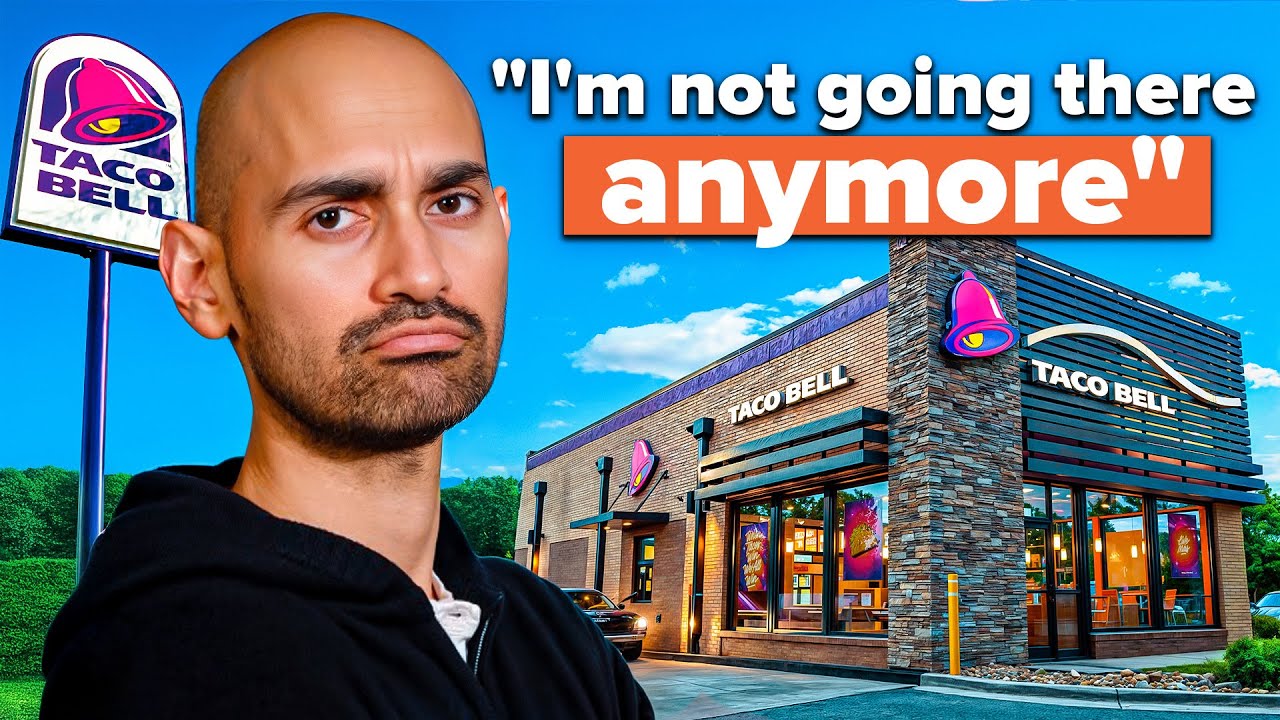
I won't take him to Taco Bell after reading that. Yes, they added quality meats, but what was I giving to my kid before? And, you know, what I put in a spreadsheet, which I thought would be interesting about talking about, is when marketing can go wrong. Because Taco Bell announced that they added quality meats to its creative roster. And I remember McDonald's did this a while ago too, where they're like, our chicken nuggets are made out of real meat now. I'm like, well, what the heck were you giving me before if it wasn't real meat?
Yeah.
To me, This, some could say, oh, this is a great form of marketing and maybe they'll see more sales. I actually think this is going to hurt the business overall. Now, for example, as I mentioned to Eric, I took my son William to Taco Bell a few weeks ago because it was close by some playdate that we had to go and we were a little early. I won't take him to Taco Bell after reading that. Yes, they added quality meats, but what was I giving to my kid before? And even though he didn't eat meat and he had a quesadilla, I just have a bad taste in my mouth for that fast food joint because of that.
I mean, also, I don't go to Taco Bell for quality meats.
Correct. How quality is it really going to be for $5?
Yeah. Yeah. So, okay, that's when marketing could go wrong. Let me talk about when marketing could go right. So, I have this water app called Oasis. Actually, I just follow them on Twitter because I'm too cheap to pay for the app. I think it's like $5 a month. I'm like, I'm not going to pay for a water app, but they scored the water. So, this is a Whole Foods water that I'm holding up. It's real Italian water, right? This has an 88 out of 100, Neil. So this glass water, so no microplastics, right? And wherever it's bottled up, bottled in La Galvania, I think in Italy, right? But my point is, if you're in consumer and it's a massive TAM like water, because everyone drinks water, then why wouldn't you make an app and maybe just score your app the highest in there? Now, you can get in trouble for that, right? You ideally would just want to have the best products. But I think that's smart. It's almost like it's not exactly the same way. It's because when you look at CoinMarketCap, for example, so Coinbase bought CoinMarketCap, right? Which shows you the price of different cryptocurrencies. And I think they grade the cryptocurrencies too.
Eric, Binance bought CoinMarketCap.
Binance did? Okay. Yeah. Well, one exchange did. Yeah. But my point is, you know, when you own kind of distribution, like crypto's a wide TAM, water's a very wide TAM too. I don't think it's very expensive to build one of these apps, but to me, I listen to whatever scores high, I just go and switch over to that water. So yes, I still have the Air One water, I still have my filtered water here, but because I was traveling this past week, I bought a ton of these and that's why I'm drinking this right now.
So I was going through my credit card statements. Did you know we spend $600 a month on Aquapana water?
I believe you. That's why when I look at you, I'm like, you should just buy that Korean filter that I have and save a lot of money.
So then I recently just got a Brita. You know, the Brita water filter?
That's not good enough. No, no, no, that's not good enough. See, if you bought— if you got the Oasis app, just check on Twitter. That Brita does nothing. I used to have a Brita. It tastes like crap, dude. No, you got to get one of these Korean ones.
What's a Korean one called?
Let me take a picture and then ChatGPT will tell you. I remember it told me last time. I'll send you, yeah, the one that I use. Oh, and I have a water guy. I have a water guy that helps you install the different filters in your home, and then he tests the water out right after. You want an intro?
Yeah. So in my, in my new house that we're doing construction on, we just put in a crazy water system.
I'll, I'll, I'll intro— he's known as the water guy.
For the whole house. So if you're brushing your teeth, that way the water's clean and you don't have to worry, but it's all purified. Because I'm like, dude, we spend so much on bottled waters on a monthly basis.
Yeah.
I was like, we should probably cut this off.
I'm enjoying you right now.
Yeah. See, we help each other out.
Yep. If you're in B2B, here's the deal. LinkedIn account-based marketing sucks, but it doesn't have to. With Carrot, It allows you to create personalized ads towards your customers and also personalized landing pages that align with the ads. So you're going to have higher conversions and influence pipeline reporting to prove that your ABM works. So if you want to learn more, just go to karrot.ai and you can join the waitlist. Again, it's karrot.ai, and we'll see you on the other side.
What was it called? Dude, we're testing out a new way with AI for our marketing qualified leads. So Mike had a really good idea. Uh, Mike's my co-founder and we were talking because we were starting to generate leads from our software solutions at scale. We've always generated leads, but like when I say at scale, I'm talking about like thousands and thousands and thousands a day and it's just too many to call on. So I forgot the exact script that Mike came up with and he's like, dude, we should just use an AI setter because some companies are having success with it. We're going to end up testing it.
One of these AI SDRs?
AI SDRs, yeah. Or setter, whatever you want to calling them.
Yeah.
Problem is like, it's kind of cheesy and it's never going to be as, maybe not, I shouldn't say never, but it's most likely at this point in time, not going to be as good of a human. But we had a really unique angle and the unique angle is it's going to call someone. I don't know how it's going to start it off. And it was like, hey, I'm—
I'm an AI.
I'm AI. I'm from NP Digital. We use AI in all forms of our marketing and we actually help companies do XYZ because of AI and we're calling you. And as you mentioned, this is AI. If you want help with your marketing, click here or do this and we'll schedule a call and we'll help you solve A, B, and C problem.
I like that.
So we're going to try that out and see how that happens or see how that works. Probably next week it rolls out where we're just manually calling all the software leads. We're going to go through as many as we can and figure out through just soft scripts what's working and what's not. And then from there, we're going to start taking that data. And then within a few weeks later, we're going to start rolling it out with AI setters or SDRs. And then implementing the best working thing.
Yeah, I think there's a huge untapped opportunity when you look at all, especially when you generate a lot of inbound, people just start to get very reactionary and they forget about the ones that were not booked in a meeting maybe 12 months ago or 24 months ago or something like that, or maybe deals lost, right? People aren't, most people aren't good with the follow-ups, right? And you guys probably are, but the fortune is in the follow-up. And so this is going to plug a lot of holes ultimately. And the time to dial, you're like, you're going to be able to connect with them very quickly and book a meeting because Because when you connect very quickly, your chances of booking a meeting are usually higher, right? So I think we're going to see better efficiencies across the board. And what this will allow too, by the way, the math before was, oh, if your product costs less or service costs less than $30,000 per year, you shouldn't have a sales team. But that's actually, you can have a sales team now if you can drive all the costs down, because it doesn't matter. Like you can sell things for like $10,000 a year or something like that. Yeah.
Yeah. Didn't Jason Lemkin, the founder of, was it SaaStr, said you need a product that's, was it like around $10,000 plus?
I think his was $3,000 a month. So $36,000 a year.
For a sales team to work, right?
Yeah. Yeah. But it's like, okay, what if you think about first principles? Like what, what actually needs to work? Well, it just means that the time to getting it done is not efficient, but now it can be more efficient. So whatever programs you might've had in the past or certificates, you might be able to just sell those like downsell, because you have a bot downsell for you. So that's where like, yes, Neil and I kind of poo-pooed on courses and stuff a couple weeks ago, but in this situation, if it's actually good and it makes sense, and because there's a lot of people that hit chat on my website and a lot of them are students and they just want to learn stuff, right? So you can just send them to that. But yeah.
Dude, and courses, even though I hate on them a lot and Eric hates on them every once in a while, probably not as hard as I do, they do make money and there are ways to do it and that can keep people satisfied. Like if you look at Grant Cardone, he sells courses or some sort of training or something. I know, you know, when I was at lunch with a buddy a while ago, his name's Albert, who also sells courses or informational coaching programs or something like that. Grant Cardone supposedly has 150 salespeople, like 150 salespeople just dialing leads. He's probably running ads too. But even Albert, Albert has 60 salespeople dialing and closing deals on coaching. And the guy's making 7 figures a month just from that. Now he has other lines of businesses that make quite a bit of money, but 7 figures a month just from coaching, and you have your sales reps and setters on commission. It's a very profitable business model.
It's a good business. It's profitable. I think in my mind though, I think it's just, it's difficult to scale that. I think it's a great life, but I think if you're going for something, which is what you're trying to do, if you're going for something generational, And you want something that compounds, then you're probably, it's probably not going to come from courses. And again, this is like, to your point, it's just a business model decision and it's a lifestyle decision and that's okay.
Yeah. He actually asked me about you when I was hanging out with him last and he's like, dude, your co-host, does he do well? And I was like—
No, I do okay.
No, I said he does well like you. He just doesn't have a Ferrari. And he's like, do you mean he doesn't do well? I'm like, no, no, he does well. He just doesn't have a Ferrari. He uses the money for other stuff. Yeah, buying more businesses instead of a Ferrari. And I'm not— I told him like, I'm not trying to talk trash on your Ferrari. It's a nice $600,000 Ferrari. He just chooses to spend his money differently.
But I'm like, he's well off.
You just can't tell because he doesn't have pictures of fancy homes or Ferraris.
Nope. It's, you know, it depends on— it's interesting because, you know, saw family this weekend. It's interesting after seeing a lot of my family this week because nobody actually cares about nice brands and things like that. So I think it's just like a cultural thing too. And so I think most people, they care about building their— their way of showing off might be building their businesses or something like that, or working on a project. It's just different for different people.
I think it comes down to who you hang out with. And I think this is why it's very important to pick your 5 closest friends. They say that's going to be your average net worth.
That's from Jim Rohn. I did a course for Jim Rohn before. Did I tell you that?
No.
Yeah. So, okay. Jim Rohn said that you are the average of the 5 people that you hang out with most, right? So Jim Rohn mentored Tony Robbins and all these people. So When I did work for remembersuccess.com, and so the first course that we launched was a Jim Rohn course, and then you had Tony Robbins talking about how he changed his life, and all of these, like John Maxwell, all these speakers, right? And then that got the drum up for the hype and everything, and then you had to launch the course, and then there's all this hype, and then right after you launch it, you can't even celebrate because you have to go to the next course, and then the next course, and the next course. It never stops. It never stops.
Never stops.
Yeah. Anyway, I digress.
But yeah, no, it's just like you look at the people around you, you end up learning more if you're around the right people. Forget money. Money's great, but money's a byproduct of solving problems. If you aren't around the right people, you just won't learn as much. Eric and I, we learned marketing by implementing, testing, and experimenting, but we also were going to a lot of conferences over the years, networking with individuals at the bar, even though we don't really drink, And we would talk shop with people and learn the latest tactics and strategies that they're using. We would share the ones that we are using and everyone improves and gets better from that.
I will say probably one of the best marketing hacks for you and me has probably been creating content for a while because people do naturally just come up to you and they notice you, right? And then, so, but then we filter. So Patrick Campbell said this about me, I have a very, very strong filter. And so he was making this comment about how there's 2 types of friends. You have transactional friends, And then you have friend friends, right? And then he looked at me and he's like, you're kind of a mix between the two. I was like, what do you mean by that? He's like, it's really difficult for you to let someone in, but so it might appear transactional first, but once you let 'em in, like you're in, like you'll do everything for them, right? And that's completely true with me. Maybe it's true with you too, but I don't let people in really easily. And so my point of saying that is there's also, he cited somebody else who's a very popular creator right now. And I'm like, so how do you peg him? So very popular YouTuber, right? And he's like, oh, he's fully transactional. All he ever does is compare his net worth to mine. And all he ever does is talk about business, or he wants something from me, right? He's like, I don't want to hang out with people like that. So I think my point of saying all this is you want to hang out with people who are humble, hungry, smart. And maybe if you're in your early 20s right now, or even in your teens, you might not know what that filter is, but you can keep optimizing that filter over time. And Neil and I, we've hung out with these people that have They wear the nicest things in the world and they really, there's nothing wrong with loving a lot of money, but they love partying all the time and things like that. That's okay. It's just not for us.
Dude, when I went to Web Summit to speak in Vancouver a few days ago, I ended up taking your advice. Remember we were talking on the last podcast and I was just like, yeah, I don't know if I want to wear my gray slacks anymore.
Right. Yeah.
I'm just wearing yoga pants with a sweater.
Nobody can tell.
Yeah. And then I went, they're not as nice as my Loro Piana pants, but still, I just didn't give a shit. And then I went to that publicly traded company in the Bay Area and same thing. I just wore yoga pants with a gray sweater. I'm like— Yeah.
And by the way, like, look at Gary Vee. He wears a t-shirt and a hat all the time. And it's cool because that's just him. Right. And so, when a lot of, by the way, like it's interesting this week, I got a lot of advice from people, right. Giving me advice on how to handle like, you know, family situation, right? But it's like, not to give unsolicited advice, not to get— it's like, no, just let people do their thing their way. And so a lot of people don't learn that even till the end of their life, that you just got to let people do it their way.
Yes. And Eric didn't get family advice because he did anything wrong or was in a predicament. He just had a natural situation that just happened in his family. So people gathered together, but it wasn't anything that he did wrong.
That is it for today, guys. Please don't forget to rate, review, subscribe. And that being said, we will see you tomorrow.









