Why Intelligence Pales In Comparison To This
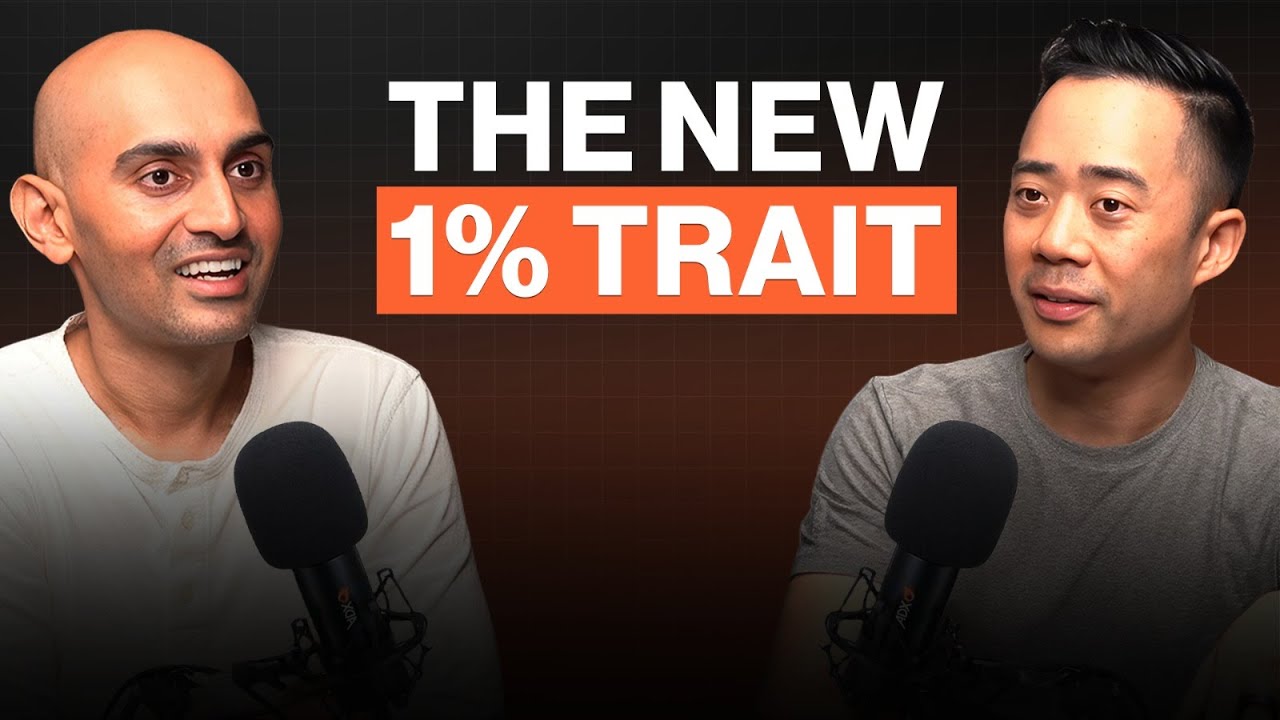
Eric Siu and Neil Patel argue that agency matters more than raw intelligence in the AI era. They point to Klarna's AI-driven efficiency gains and discuss how startups are growing faster by choosing the right tools over building from scratch.
Chapters
Neil, if you had to pick between agency and intelligence, what do you think is more important? And do you want me to describe what agency means?
Agency is a company that just goes— assuming we're talking about marketing agencies, but a company that just— agencies in general?
No, I'm referring to the word agency, like a trait. And so you have intelligence or agency. So when I, when I say agency, someone who is high agency is someone who knows how to figure things out. They know how to get shit done. Okay. So in today's day and age, what do you think is more important, high intellect or high agency?
Uh, high agency of just getting stuff done because you can get a lot of the intellect from AI.
Yep. Okay. So check this out over here.
I feel like you need both though. Yes. Yes.
Um, hopefully you would have both, but, um, Sebastian Siemiatkowski, this is Klarna's CEO. That's what I'll just say. Okay. So, um, Remember Klarna back last year, they were going all in on their agents and then they kind of had to roll that back. So he tweets this, 2026 will be the—
You're talking about Klarna, the buy now pay later company?
Yes, correct.
CEO was like, hey, we got rid of a lot of our support people.
Yes.
But then I think he went back on that and started rehiring them.
He rehired them. Yeah, he rehired them. So anyway, he tweets this, 2026 will be the year when AI starts affecting for real. Been preparing for this since 2022. Software dev costs dropping to zero. Context engineering will be central. Build will win over buy, which is something we can talk about. Build will win over buy. I want to highlight that one for a second. In large organizations, doing yourself— doing things faster yourself versus delegating. Agency now supersedes experience and know-how. And this is a reply. It's a quote tweet based on Andrej Karpathy's from yesterday or 2 days ago, saying that he's never felt this behind his programmer because there's all this new stuff that's coming out all the time. subagents, MCPs, like all these other things, right? He's like, I have a sense that I could become 10x more powerful if I just properly string together what has become. Like, this is one of the top guys in AI. And so I think this is interesting because Andrej Karpathy earlier this year has basically said that agency is greater than intelligence. And so what do you think about this? We can go ahead and react to this because there's a lot of implications here.
I think you ideally need both. I don't think it's one or the other. I think forget 2026, if you want to go forward a few more years, if you don't have both, I think you're screwed. I think you're already screwed right now. Like if you look at the top people who get paid the most, they'll have both.
Yeah. You know, we talked about this a few days ago, but when I was talking to co-founder Sean, he's like, yeah, well, I basically generated close to a billion tokens. I'm not saying that's a good proxy. He's also written 10x more lines of code than he has usually. And we're— I think now when I use AI Studio or when I use all these things, we're just able to do a lot more with less. And this is an interesting comment over here. This guy Kloss tweets this. He says, wouldn't this also essentially mean the end of large organizations? So he's like— and then Sebastian responds. He says, yes, it very well might. 2 trends will meet: large org CEO doing founder AI mode, small companies growing insanely fast. They meet up in the middle. And we're already seeing this very quickly. There's a lot of companies getting to $20 million ARR in like 3 to 6 months or so, hundreds of millions in ARR in, you know, 1 to 2 years. And I think it's tough if you're like a— if you're incumbent, if you're a very large, like an agency holding company, like what do you do in that situation? I think the biggest thing you can do right now, if you're listening to this and you're 18, 20 years old or whatever it is exactly, is you go out and you experiment with these things. This goes back to what I was saying. If you say you don't have time to learn this, even spending 10 to 20% of your time or your working hours learning this stuff, it's crazy to me to not know this. And you're going to have such an advantage over other people who have been in the workforce for a very long time who don't want to adapt and think they can get away with this. The reality is they can't. Because again, my conversation with the CEO of Zapier, he's like, yeah, we do hackathons every 3 to 4 months or so. Initially, they shut the company off or down for a week and they just focus on getting everyone's AI adoption up. And this is a baseline requirement now. And so agency is number one. I think this other, this other comment over here, Neil's interesting. He's saying build will win over buy. What do you think about that?
I think it depends on the context. And when I say context, a lot of times people buy companies because of their attention and audience, not because of the product or the service. A lot of it's the brand and the recognition they've built up over years, which is hard to replace from just building. Again, I always think there's context, right? In some cases, yes. Some cases, no. I think for a lot of stuff, like we bought a writing company, I don't know when.
Oh yeah.
Let's call it a month ago.
Yeah.
We did it because it'll take our dev time down by more than half. I think they actually said we'll end up getting out an MVP version, We bought it, I think sometime December. We'll get it out by the end of January. Let's call it, give my team another week or 2 in case of delays. But if we didn't do that, it would've taken us a few more months on top of that. And then the money we spent was cheaper than the extra time it would've cost to pay engineers.
This is the beautiful thing. Like, I think your team, and maybe you're not in the details on this, but we're not even going to be saying the word MVP anymore. It's just going to be like, hey, just get a prototype out. And a prototype now is just like a vibe-coded thing that's designed well, or you're using something like alloy.app and it takes your screen, Um, you take a screenshot of something that you like. Neil, we used to do this all the time. We'll screenshot things that we like and say, hey, can you go to your dev team? Can you do this? Or your designers, can you just do this? Now it's just like you just, yeah, take the screenshot, drag it over to Alloy, and say, hey, just fold it into my app. And boom, you have a screenshot, and then you just move a lot faster. That's where we're going, guys. Things are just gonna move a lot faster.
Yes, and, and I think that's really a big key in winning, like whether it's entrepreneurship or marketing. Really, speed and execution matter so much. People stress about perfection. Perfection is overrated. I'm a big believer in executing and being directionally correct. You don't have to be correct all the time, just be directionally correct and just keep firing in that direction. Just keep pushing hard and go through as many walls as you need. That's how I tend to operate as a founder. That's not necessarily the most efficient way, but it's worked for me.
I actually think that's the only way because there's a book that I have behind me here called Why Greatness Cannot Be Planned. And when you think about this going into human psychology or human evolution over time, right? So we started out as a single cell of bacteria and we became what we are now. But who knew this was going to happen? Or someone that invented electricity, who knew that it would power all these things that we use today, right? And so all that to say is, if you want to build something that's great for yourself, you just need to take one step forward every single day. Imagine yourself, you're in a marsh, okay? And you only have one stepping stone in front of you. You're gonna take one step forward. Sometimes you have to take 2 steps back. And that's all it is. There's, there's like everything in front of you is fog. You just don't know what's going to happen. Um, so all that to say is high agency, high speed. And by the way, high agency people have high speed anyway, right? Um, yeah. So, all right. So I wanted to take a moment to tell you about my podcast co-host Neil's agency called NP Digital, and they work with a whole host of global companies or global organization. Also, Neil has SEO tools such as Ubersuggest and AnswerThePublic. All you have to do is go to npdigital.com/eric. Here, let's come over to this real quick. This is similar web traffic and we see, okay, a month ago ChatGPT— okay, let me go back a year. 12 months ago, ChatGPT was 87% of GenAI website traffic share. Gemini was 5.4%. You fast forward to December 5th, ChatGPT is 68%, Gemini is 18.2%. And you know what's interesting, Neil? Last week we talked about how you said that your nephews and maybe the young kids, they're all using Gemini. So I actually tweeted this out and it's actually a mixed bag. Some people are using— some kids are using Perplexity, some kids are using ChatGPT, a lot are using Gemini. It's kind of a mixed bag right now. And the reason they say ChatGPT is for old people, it is because old people like us keep talking about it all the time.
No, but I've talked to enough young people after that and I still say the majority end up using Google products. And the reason being is not because it's better or worse, it's because it's free and they don't have cards to spend. You can't go to your parents and be like, I want to cheat on my schoolwork, can you pay for an upgraded version of ChatGPT? It doesn't work.
Yeah, I mean, 68% though, to drop from 87.2% to 68% is pretty significant.
I think, and here's what people aren't taking into account, Google through their AI drives a lot more than that in traffic. A lot of it's through AI overviews, which I consider AI, right? But that's not included in this.
Here's a fun one.
So I bet you if you included AI overviews, Google would be driving more traffic than ChatGPT.
I think that's kind of cheating though. It's like when WhatsApp was saying, or Meta was saying, oh, we have so much usage, but it's like that cheap little like search bar.
My favorite is on Meta, we crossed 100 million users on Threads so fast. I think they beat everyone in a record speed because they just— but who the heck uses Threads?
Threads is a cesspool. I told you. So I enjoy my time just trolling people on Threads because it gets a lot of engagement. So whatever I'm feeling like, I'm feeling feisty, I just go on there and just click away on my keyboard.
Dude, if you haven't seen Eric on Threads yet, it is entertaining. Just go log on Threads, go look at Eric's posts, and then go look at the comments. Go look at the ones that were really taken off. They're really polarizing viewpoints. I don't think they're too extreme or anything like that, but the comments, just some of the people, you could just tell where people stand politically on Threads. It's very, very clear. It's also pretty clear on X as well.
They're both very— Well, here's what I'll say about these 2 platforms, right? And not to be political or anything, it's Threads vilify success. And I'm just like, all the time you spend vilifying success, you could spend time making yourself better. When I use my X, it's more finely tuned. And so I'm constantly learning. There's AI stuff I see popping up, the latest research, all these papers, right? I'm dumping into NotebookLM. It's very productive for me. And so I'm almost trying to be like the old uncle on Threads and just trying to educate people and turn people around to, hey, spend time investing in yourself. Don't spend time pointing. But I'm very sassy about the way I do it. And so I'll just leave it at that. So, Neil, speaking of X over here, what do you think about this? So Elon Musk says this, okay? Double-digit growth. Okay, we're talking about GDP growth is coming within 12 to 18 months. If applied intelligence is proxy for economic growth, which it should be, Triple digit is possible in 5 years. I need to see this from Rounders, Matt Damon going all in.
I do believe that the economy is ripe for a bull run.
Look at this, Marc Andreessen. It's not even time to build anymore, Neil. It's time to grow. And then after hearing Scott Bessen, I can't help but feel bullish. But the thing is, when everyone's feeling bullish, maybe that's a time for a correction. But when you look into Scott, you listen to Scott Bessen, you listen to David Sacks, it's like, it's like, dude, Um, even Scott Bessen saying, like, I saw someone tweet, he's like, he's saying, hey guys, you know, money's gonna fall from the sky in 2026. Um, but yeah, 4.3% year-over-year GDP growth into Q3 is kind of effing crazy. Didn't see that coming.
Yeah, but they're, they're saying the growth is going to be even more next year.
I, I believe it. I don't know.
I'm seeing it in banking, dude. So many of my friends who have businesses are getting bigger loans, more flexible terms, and cheaper rates than Ever before. I'm talking about in the last 5, 10 years. I've never seen anything like this, but it's because of deregulation. It's just the average person does not see it. Like, if I go to a bank right now and asking for money, it is ridiculously easy and cheap for almost anything right now, even in this economy. Like, banks are throwing money on anything. I got someone hitting me up the other day. They're like, do you want to pull money out of your house? They're like, You can pull up to 75, 80% interest only. And I would have a jumbo mortgage and the jumbo mortgage isn't covered by what, Fannie Mae or Freddie Mac. It would be the bank using their own money. They're like, we'll be really flexible. We'll give you better rates. I think they offered me, it was like 4.6% or something like that, which isn't bad for an interest-only loan on a jumbo product. Dude, I didn't take it.
Here's what I'll end it with. Actually, you brought up a good point. Go ahead, finish your point.
And by the way, as you start making more money, the financial terms get even better. I have a mortgage on one of my homes, okay? If I want to change my rate, I don't ever have to refinance. I just call them up and say, can you just change me to the most recent rate? I think they charge me like $1,500 or $1,250 each time, and they just update my rate. Very little paperwork. When I say very little paperwork, they just sent me a one-pager or 2 pages. I think it's actually 2 pages. Sign and just mail it off to them and, you know, send them the digital copy that I just authorized them to charge me $1,250.
Yeah. So if you guys can't sense it, Neil and I are feeling a little bullish about 2026. We did feel bullish about 2025, but I think there's some, you know, stuff to kind of get set with this foundation. Um, but, you know, Tom Lee, you know, the, the Fundstrat dude, right, that you see on CNBC all the time. Um, so he actually thinks Goldman Sachs and JP Morgan will actually hit Mag 7 status, right? And I was like, what? Um, so his reasoning is basically on the transfer transformative impact of AI and blockchain. You're gonna see a lot more stablecoin use. You're talking about credit terms, uh, loosening up. Interest rates are going down. Scott Bessen was saying there's gonna be a lot more loans, which is what you just mentioned. Um, the impact of AI as well, they're probably gonna, you know, probably they're gonna become a lot more profitable, a lot more efficient, and all the money that they have, um, all the lending that they're gonna be doing. And so he's just— I, I think he's just saying that, um, you want to take a look at Goldman and JP Morgan. So not financial advice, but I think it was an interesting thesis.
It is. And when you look at the lending side, which really helps make the economy go round and round, I'm getting a lot of banks hitting me up and I have been for like 6, 7 months now being like, hey, do any of your friends need loans? Like, no joke, banks are asking me for introductions because they're like, our bank's pretty flexible. They have a really strong appetite to lend more money right now. And like, I've been meeting up, I did lunch with JP Morgan at the Maybourne here in Beverly Hills.
You're wearing your watch today.
The what?
Is that why you're wearing the watch today?
No, I usually wear a watch when I go out of the house.
Oh, you do?
Almost always. It's when I go downstairs, I consider that part of the house, so I don't wear a watch usually. But if I'm wearing a watch, that means I went out of the house. JP Morgan, Truist took me out as well. And there's been a few other banks that I've talked to. KeyBank, Zions Bank has been hitting us up looking for more loans and people But like, I'm telling you, the number of companies these guys are all looking to fund, they can't find enough of it right now. And they're all telling me the same thing. Our management is telling us, hey, go find more loans. We will loan right now. They're trying to be super aggressive on rates and everything.
Yeah, knock on wood. Here's the last thing I'll read. I got this from Grok as we're talking here. So, um, Lee highlights how these technologies will dramatically reduce quote-unquote employee intensity in financial services, allowing firms like Goldman, to operate with fewer human resources per dollar of revenue. This efficiency gain is expected to drive substantial margin expansion without necessarily requiring top-line growth, as AI automates back-office tasks, risk management, and operations, while blockchain streamlines settlements, tokenizes assets, and enhances payment systems. As a result, banks could shift from being valued as traditional lenders with lower multiples to high-growth software-driven platforms, leading to a 2 to 3x rerating of valuations and trading more like hyper-efficient tech companies. We'll see. I can see that happening.
I hope so. Yeah, time will tell.
All right, guys, uh, that is it for today. Please don't forget to rate, review, subscribe.









