Why Relationship Capital is the Best Investment You Can Make with Jordan Harbinger
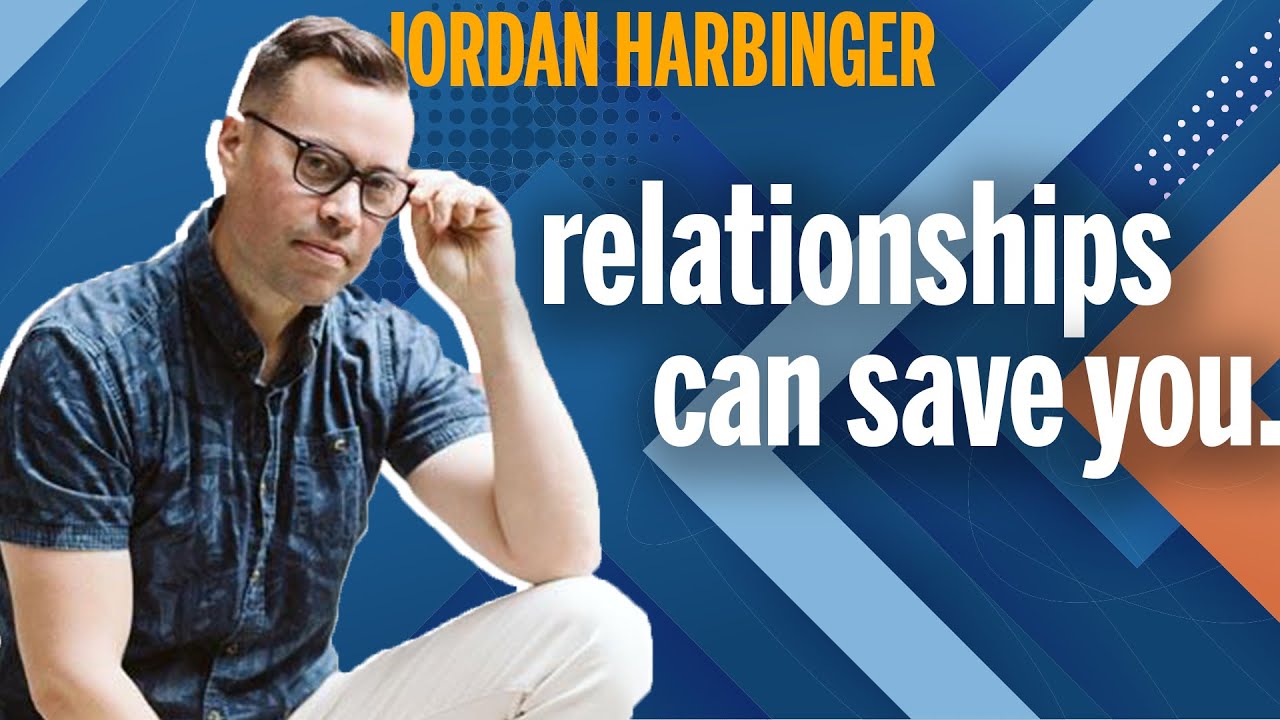
Jordan Harbinger called 80 contacts in two weeks during a crisis and credits his network with saving him. He maintains thousands of relationships through a daily "Connect Four" habit: scrolling old texts and sending four personalized check-ins without asking for anything. His free "6 Minute Networking" course teaches the same quick drills.
Chapters
Welcome everyone. We've got Jordan Harbinger. Jordan, I actually met him at a conference and he actually introduced me. He's really gracious even though I was kind of a dick in the beginning. But Jordan is a Wall Street lawyer turned interview talk host, talk show host. Jordan, welcome to the show. How's it going?
There's potential here because I gotta say, I was probably the most doubtful About our ability to get back on the horse, my wife was like, "We'll be fine." But your wife always says that. My team was like, "I think we can do da da da da da." And I was like, "Well, yeah, but it's not your guys like burning your own savings doing this, and like you don't see all the work that I did over so long. You don't. You only know like your compartmentalized job." But they were totally right. And there was a point at which my producer Jason DeFilippo, who doesn't work with me now, but one of my closest friends and worked with me for seven and a half years, he just left the show. But one of the things he said to his credit. At the time was because I was like whining on Slack and texts and stuff in private channels. And he goes, dude, you had a couple days or a couple weeks to do this. Like, you can do it. I'm here to listen to you. That's fine. Don't let the team know that you are feeling this doubt. Um, 2 weeks, a month in, you have to put on your— he literally said put on your big boy pants. I believe he said put on your big boy pants and like put on a brave face and be Be tough. And my wife was like, echo that. Copy that. Be tough. I was a wreck in the first couple of weeks. I wasn't sleeping. I would wake up at like 1 AM, 3 AM, whatever, to go to the bathroom, and I would just not sleep the rest of the night. And I was like talking to everybody. I was like, what's this? Other entrepreneurs. I was like, what's this feeling where you wake up at like 3 AM and your heart's racing, you're like sweating? Am I allergic to something? And they're like, are you under stress? And I was like, yeah, this whole thing happened. They're like, dude, it's like an anxiety panic disorder that you're bringing on yourself. Like, you need to get exercise. You need to eat right. You need to stop like getting up at weird times and going to bed at weird times and worrying about things you can't control. Easier said than done. So I really— it took me a couple weeks to get through that, but then it was pedal to the frickin' metal, work your ass off, and figure out what worked and call in help from my network. And that was like the biggest lever I pulled was calling— I want to say 80 phone calls the first 2-week period. Half, I'll admit, maybe a third were like me whining and the other person being like, you'll be fine. And then the other 50 were probably like, all right, I'm gonna mail this out to my list. Here's what I do right now if I were you. Uh, do this, do that, do this. And I was calling everybody from random other podcasters that had 1,000 listeners that I knew To the CEO of 1-800-GOT-JUNK, to like, you know, it really ran the gamut. It wasn't just like, get Richard Branson on the phone, I need some advice. It was like, call everyone. So I had great support from other podcasters, but I also had great support from people who were like, you think that's bad? Let me tell you about the time I laid off 1,100 people. And I was like, I don't feel so bad anymore. This is a normal, virtually a rite of passage for somebody who runs a company, lifestyle business or growth company, it doesn't even matter. So suck it up. My producer's right. My wife's right. Toughen up. Suck it up. You're either going to come through this trial by fire as a piece of steel or you're going to get incinerated. So just like, why are you worrying about what might happen? Get your ass in gear. And it wasn't just a pep talk. Like I said, I got a lot of support from my network and that made me really realize that your network, the people that know, like, and trust you, if you keep in touch with them regularly, you're keeping— you're digging the well before you get thirsty. That's the insurance policy. That money cannot buy. And I'm like, thank God I was doing that. You know, thank God I did that. Otherwise, I would be screwed right now still. Yeah.
I think about relationships as, same analogy, you're making deposits every day in the bank. And you've been doing that over years and years and years. And then finally, you're like, I'm gonna make this withdrawal. So I guess even we can talk about how you've built these relationships because I think you're very intentional about how like you You want to make sure that you study the people before you interview them. You want to build rapport ideally. I guess let's start with that first. How do you build relationships? How do you— what do you think you do differently than other people?
So you're right about it being intentional, but I want to put a caveat on this. A lot of people go, oh, I'm intentional about my networking too. I stalked Jason Calacanis and I knew everything about him and I went to this conference that he was at and then when I pitched him, I had my pitch deck like right on my phone and I went up and I'm like, whoa, okay, cool. Good, good, I guess, if it worked especially. But I'm intentional in that I will reach out to— I call it Connect Four. Every day I go into my phone and I go to the bottom of my text messages and I find those threads that are like, oh, you met Eric at an event 3 years ago and you just didn't save his phone number, but like it's in this text thread of you and 3 other dudes going to get like a beer after. And I'll reach out to those people and I'll go, hey, I've done a pretty bad job of keeping in touch since whatever conference that was. What's new with you? Are you still in the Bay Area? I had a kid. Here's a picture, obligatory baby picture of my kid. What's going on with you? Are you still doing your show? But I do that with everyone. I don't go like, hmm, what's in it for me? Can I— this guy gonna be able to help me? I will text my old buddies like fishing buddies. pal. Like, it doesn't matter at all because most of the opportunities that you find in your life are going to be— I call it over the horizon. So like, if I help you with something or if I contact you about something, you might text me back and be like, good to hear from you, Jay. Oh yeah, kids are the best. I'm off to a meeting, see you later. And that might be our only interaction. But then like 2 months later, I might get a text from you that says, hey, uh, sorry I cut our conversation off earlier. Do you do keynote speeches? I know you do something to do with networking. We're doing a sales event. I'm— I gotta pick a keynote speaker. I know that you're a stand-up guy. Would you consider coming into Florida for, you know, 20 grand to talk about networking at a medical device convention? And I'm like, yeah. And that happens to me all the time. And people will go, dang, you just get so lucky. You just must have a great huge footprint because of the Jordan Harbinger Show. Part of that's true, but the other part of it is I'm top of mind for— for 4 people a day, 5 days a week, 300 and— well, whatever, minus weekends because I usually take weekends off— days a year. That's a hell of a— that's hundreds slash, over time, thousands of people that have all but forgotten about me when they hear me by text, and then suddenly I'm top of mind again and again. So I'm spending time that most people waste on Instagram clicking like on random photos of people on beaches. And I'm using it to reengage people in my network, and I'm not asking them for anything. So that is an opportunity generator that requires pretty much no effort. I mean, I'm, I'm using a script that includes their name and is slightly customized based on where I met them and what I remember about them. But this takes like 4 minutes a day. This is jack squat time investment, and it returns major benefits. So when you say intentional, yes, I have practices like that, among others. Where I'm keeping in touch with people, I'm refreshing the relationship, I'm connecting people to each other. That's always a key part of networking and relationship development. But it's not like that intentional where a lot of people think, I'm intentional because I went after the one guy who I knew would be able to help me with something, and then I ignored everyone else in my life because they don't— they're not valuable for me right now.
Right.
That's, that's bad. Most people do that, even, even if they're not bad people. Most of us don't think about other people until we go, oh man, I really need to like get my book out there. Oh, podcasts? Let me email all these podcasters. And every day I get an email like, hey man, we met at a conference 5 years ago. Anyway, here's a PDF of my book. And I'm like, who are you again?
Hmm.
You know? And so I'm much less likely to help somebody like that, all humans are, than we are to help somebody who spent weeks or months Laying proper groundwork. And the same is true right now for people looking for jobs. A lot of people join— I have a free course where I teach a lot of this stuff. I won't be annoying and plug it right now, but—
No, plug it. What is it?
It's 6 Minute Networking, and it's free. It's not enter your credit card free. It's like just free because it also helps me expand my network by extension of everyone else who's doing the course. So it's self-serving in that way for people who want to know what's in it for me, but mostly it just makes everyone better at this. And you don't have to enter your credit card. There's no upsells. jordanharbinger.com/course is where that's at. So the drills are in there. They're really short. Each of these drills that I do— so people who are looking for jobs right now, like, we have a crazy unemployment rate. I'm afraid to look at it. It's like freaking 50% almost or something like that, right?
50 million.
I was looking at it today.
It was 50 million people. 1 in 3 people in the workforce are unemployed. So I threw up a survey. I'm gonna see how that goes, but it's crazy.
That's bonkers. Like, I was off when I said 50%. I guess I was exaggerating, but Only by a little, which is really scary. So there's a lot of people that can't find opportunity right now, and a lot of people that I know who are in the course are saying things like, whoa, am I glad I've been doing this for 8 months because I just got furloughed, but then I went to my connections in my industry and I reached out to them and I'm doing freelance work for 3 different companies, and that's gonna keep the lights on until I figure out what the hell I'm gonna do with my life. And I'm like, wow. The reason is because If I reach out to you and I go, dude, I got let go and I don't know what to do and I got a mortgage and I got a kid, you might be like, ooh, sorry to hear it, man. I haven't heard from you in 2, 3 years. You're a nice guy. You'll land on your feet. But if I've talked to you every 6 months, even by text, you at least know that I'm not reaching out to you to butter you up for something. No one's gonna go, aha, I knew it. You were expecting to get fired in 2 years. Therefore, you've been reaching out to me every 4 to 6 months for just a minute. And just to lay the groundwork for using me later. Like, that's a ridiculous notion. So if I come out with a book, I don't reach out to people and go, hey, haven't talked to you in a while. Life's crazy. Wanna promote my book? I'm going— I'm reaching out to people going, hey, dude that I talked to 4, 5, 6 months ago at most. I've got a book now. I'm obviously trying to promote it. Would you consider helping me? People will say networking is awkward. It's not awkward if you lay the groundwork. It's awkward when you know you done screwed up and never reached out to any of these people. and now you're reaching out and going, ugh, this is weird, but can you do me a favor even though I've done nothing for you in the last decade? That's awkward. It should be awkward because you are asking for something and you have zero reason to think you're entitled to it. When you've laid the groundwork, maybe you've introduced those people to other people in your network, now you're just reaching out to friends. You're not doing any kind of ask that is— nothing about what you're doing is inappropriate. It's just like calling your friends, distant relationships as they may be, And telling them the status of your life and what could possibly help you. That's not weird or awkward at all, usually.
All right, Jordan, thanks so much for doing this.
Yeah, thanks for having me on, man. This was fun.









