Why there will never be another Oprah, and Frame.io's $1.3B startup lessons
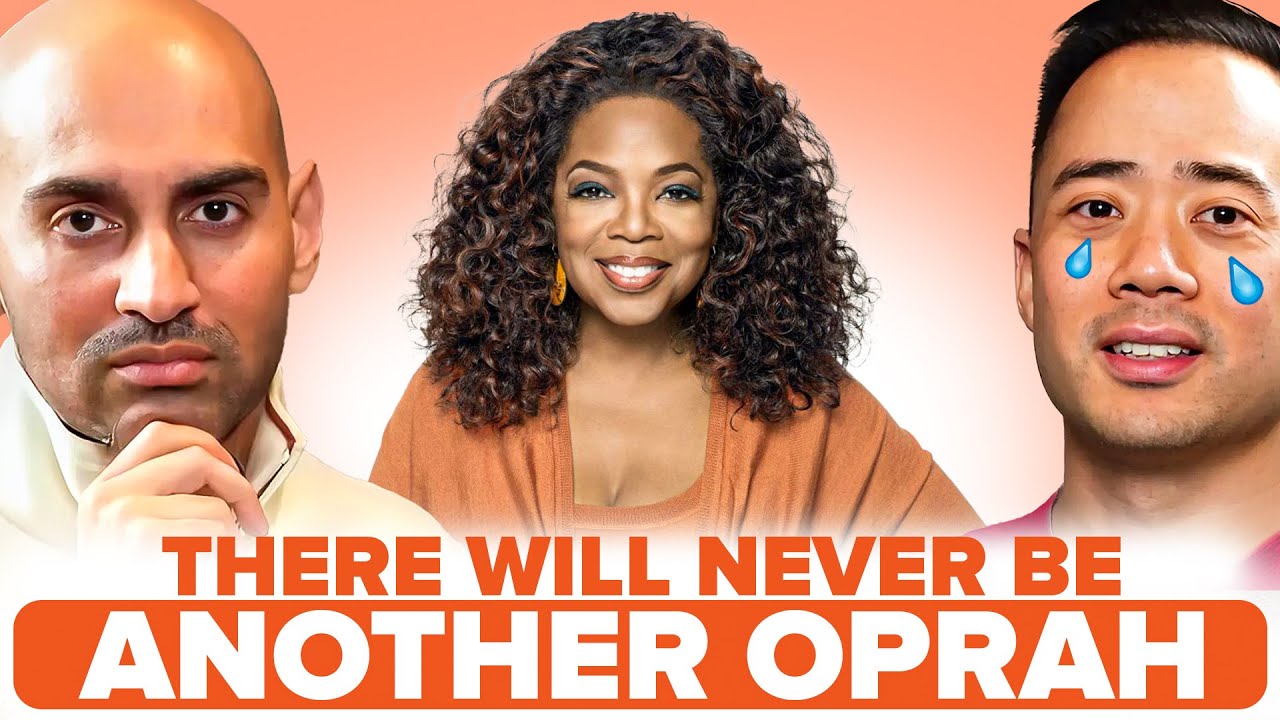
Eric Siu and Neil Patel discuss why constant reinvention is now required for fame. They cover CEO leadership trade-offs, hiring 10x employees, and lessons from Frame.io's founder on the product decisions that led to Adobe's $1.3B acquisition.
Chapters
You know, I was listening to a podcast with Tim Ferriss. I think he did it with Kevin Rose. And he said this a couple of times, but he said that there will never be another Oprah because the half-life of fame is going to come down so much. Meaning that, you know, because of TikTok, because of Instagram, because of YouTube, there's a quick rise of people, but then there's always going to be someone else that rises up. It's quick up and down, up and down, up and down. And so like Oprah, a lot of these people back in the day, it was just a couple of channels, right? And then you have cable that came out, but like they monopolized the attention and that's how you became someone like an Oprah. And so, you know, that reinforces the need to work with these influencers as they come up and down because you just don't know. So, you're almost going to need to have someone on your team that's a good talent spotter for these influencers that knows who's coming up and then what kind of deal to negotiate with them.
Well, back in the day, it would take a while for Oprah to build up her brand. With the adoption of technology, just like you discussed earlier on how long it took for electricity to get around the world and for everyone to really adopt it, it took— what did you say? 40, 50 years?
40, 45, 50 years. 50 years for electricity. And then color TV is like 20, 30 years, I think. Yeah. And the smartphone was very, I don't know, smartphone was maybe you got to 75% penetration in maybe like 10-ish years or so.
AI penetration in like a year or two?
AI penetration in the US, it's already reached 130, 125 million people or something. So that's a third of the population.
Yeah.
Yeah.
It's kind of crazy. And I also think there's more people who are leveraging AI, but they're just not counted because they're using platforms that have AI like Google.
Yeah.
And they just don't know.
Yeah.
Yeah. But if you look at influencers now, right, because of technology and mass distribution, they're actually growing way faster than Oprah grew.
They're growing way faster. But the problem is, because it's more democratized, nobody can hold all the attention for that long anymore, which I think is good. It's a good thing. Because all the— keep in mind, everyone, like, all the attention with media, like Fox News, CNBC, I don't care where you lean politically, they had distribution and they could actually— like my parents used to say, shh, when they're watching the news all the time, as if it's the most important thing in the world. But now, because of the democratization of news, of information, we can all make decisions for ourselves, right? And we're not trying to get political here.
And you can get the news whenever you want on demand.
Yeah.
Yeah, I definitely say, and then the other thing that you end up seeing is it's not only that these brands grow and they can fade really quickly, they're also not the hot thing anymore. And I'll give you an example. Remember when Uber came out? It was a hot thing for a while. Same with Warby Parker. Same with Pinterest. But now Pinterest is still a legitimate big company. And this happens with both personal and corporate brands. No one talks about a lot of these companies as much as they did in the past.
You know what the key is? You have to keep reinventing yourself. So like when you look at The Rock, right? The Rock, even in WWE Rock, there's so many versions of The Rock. I don't know if you watch this, but like, you know, there was The Nation Rock, then there was a Hollywood Rock, right?
Please explain these. I don't know what The Nation Rock is.
The Rock, I mean, he had an evolution in the WWE, right? Like first he started out, nobody liked him, and then he joined a group called The Nation, right? And then later he became like the Corporate Rock where he joined like Vince McMahon and Stephanie McMahon and Anyway, my point is he kept reinventing himself and then he went to Hollywood. Then he actually went to Hollywood and became an actor. Um, he owns like tequila brands now and then now he's back into WWE turning it around. He's, he's the owner of, uh, what's it called again? The, the group TKO?
Uh, uh, MMA group. Part owner of Endeavor.
Yeah, yeah, yeah, yeah.
Right, because WWE is owned by, I think, TKO.
Yeah, so TKO owns which is owned by Endeavor, owns WWE and UFC.
Yes.
And they bought a slapping championship too.
Dude, I've seen that on Instagram.
Yeah, yeah, yeah. And so Dana, I think it's Dana White, right? He's like, oh no, everyone makes fun of it. It's the best thing ever. We're going to make it so big. And anyway, point is, so someone like The Rock, he's constantly reinventing himself. That's why he stays relevant, right? MrBeast, he's gone from spectacle videos, like short videos, quick cuts and everything, to not as many quick cuts. Now there's storytelling. Now there's emotion. There's different formats. Constantly reinventing themselves. Even in this podcast, we've reinvented it. We're having longer conversations now. We're talking about news. And we're going to have to continue to reinvent. Otherwise, people aren't going to listen anymore.
That's right. But that's the only way to end up doing it. But it does get harder. Just look at Single Grain, okay? You guys tried to reinvent yourself this year as an AI-forward agency where you're focusing—
Not really. We're doing a lot of things behind the scenes that I'm doing, but forward-wise, I haven't really.
All right, but either way, you've been running the business for how many years?
I've had the business for six, seven. No, like nine.
Nine years after Sujin.
Yeah, like fully.
So you had nine years.
Nine, ten years.
Yeah. All right. You guys are decent size. You have a good amount of employees.
I was oh yeah yeah go on.
How easy is it for you to continually reinvent yourself to the public each year?
It's hard. Yeah, it's hard. Yeah. How do you, how do you stay relevant? I think the difference now is, if you ask me, okay, how long have you had NP Digital for?
This will be our 7th year.
How many years would you say in those 7 years you were completely focused on NP Digital?
All 7 years.
Okay. So I would say I was probably focused on Single Grain for this year. Now I'm completely focused, maybe the last 2, 3 years or so. So I've probably been really focused on Single Grain for 4 out of the 9 years.
I would give you hardcore focus for like 2 or 3 of the years.
I'll take it. I'll take it.
Because even the other— if you're saying 4, maybe you were, but you were also spending a lot of time on like the ammunition side, uh, yeah, gaming stuff, old people's homes. And, and I'm not saying you weren't more focused on C Moren, but if you look at your last 2, 3 years, you've really cut down on everything and you're just like, no, no, it's getting 110% of my focus. Well, before You were getting more and more focused on Single Grain, but you still had distractions and you slowly cut them down. So instead of being, you know, 30%, it started going 40%, 50%, 60%, 70%. Although I would say year 1, you were probably really focused on it because you were taking—
Single Grain?
Yes.
No. So year 1, that's when I was probably— no, that's when I made it go from bad to worse. We dropped all the way down to 1 person.
Really?
In the first year of Single Grain.
Yeah. I thought you had to clean it all up.
No, no, no. I was trying to, but then I read— I remember I told you I read a book called Let My People Go Surfing, and I took it too literally because the Patagonia co-founder is like, oh yeah, I let my people go surfing at work. So I was like, oh, okay, well, I'm just not gonna show up to the office anymore. And then everything started going downhill. So my fault at the end of the day, but that's what happened.
All right, so the 2-3 years is actually pretty sound.
Yeah, 2-3 years, I would say. But going back to your question again about reinventing yourself, yeah, I think if you're locked in on it, To the outside, you look like you're focused. If you're doing too many things and you're trying to reinvent yourself, you actually look like you're sloppy at the end of the day. And I heard this quote somewhere recently, but it's like, if you want to— and this is from a guy that does really well, I forgot his name— but if you want to operate, you can only operate 1 or 2 things max. If you want to manage, you can manage like up to 6 things and that's it.
Unless you're Elon Musk.
Yeah, he's operating many things.
Yeah.
There's always an exception to the rule.
You know I got rid of my Tesla, right?
Yeah, you told me that for the 3rd time already. And then I saw your driver this morning and I saw your new car. I was like, Phil—
How did you know I had a new car?
How many new cars does he need, right? Yeah, yeah. He just laughed at me.
I go through them like they're Tic Tacs.
Yeah, yeah. So, you know, it's interesting, by the way, it's— you got to know your strengths and weaknesses at the end of the day. One of Neil's weaknesses is he just can't drive, which is a fair— it's a fair weakness.
I'm a terrible driver. Eric is a really good driver.
You know what? It's because interestingly enough, Neil can't focus when he drives. I focus when I drive.
I can't. I just think about work.
Yeah, but your life is on the line. It doesn't make any logic. And you're a logical person. It doesn't make any logical sense.
No, I can't turn off work. That's the problem.
Yeah.
Well, by the way, if you guys haven't seen Eric's car, he has one of the most beautiful cars that I've ever seen. The color is amazing.
Except you haven't seen Neil's cars, which I will not even talk about his cars right now. So, so So Neil has a few very nice cars. We'll just put it that way. They're very nice.
Let's move on to a different topic.
Yeah. All right, everyone. Quick message from the Agency Owners Association. So this is the peer group for agency owners that Neil and I both put together. This is for people that are doing 6 figures, 7 figures, 8 figures, even 9 figures as well. And we're all here to help you grow your agency faster. In this group, we share leads, we share learnings with each other. It's a community where people can ask questions, their most burning questions personally, professionally. We'll share templates, reports, things like that. We're constantly adding more value to the group. I will tell you that the price is continuing to increase. The good news is that there's no long-term commitment, so you can just learn more by going to marketingschool.io/agency. Once again, that's marketingschool.io/agency to learn more, and we hope to see you inside. Here, I got a good one here. So, you know, you know frame.io?
Have you used it? Dude, I've been using frame.io before it was even part of Adobe.
Yeah, well, same here. When did you start using it?
Like probably in the first week that it came out.
When was this?
Long time ago. We've been using it forever.
I've been using it since like 2017.
Yeah, we were an early customer of Frame.
Yeah. Anyway, so they sold for $1.3 billion to Adobe, right? This guy Emory Wells, he tweeted this. So I built and sold Frame.io for $1.3 billion to Adobe. And along the way, I received plenty of advice that turned out to be entirely off the mark. Here's a look at some of the most glaring misdirections. So we're going to go through each one and react to each one, okay? So, number 1, we're going to start with number 1. As CEO, focus on executive business tasks, right? That was the quote. So, he says, this couldn't be further from the truth. The core purpose of any company is the product it offers. As CEO, your primary role is to ensure that this product is the most valuable it can be for your customers. It's not just about overseeing, it's about being integrally involved in delivering quality. Agree or disagree with that?
I totally agree. I don't think CEOs should be Focusing on executive tasks. We always tell our executives, we expect them to be player coaches. If they're not willing to, you know, get their hands dirty, they're not a fit for our business.
As CEO, though?
As a CEO.
Yeah.
We tell everyone, executives and CEO.
I think really what this says to me is, and I think you— so I would say we're both on the same page here because I used to not get involved with the details around the product and the service. I call it the product. It's the service, right, that we deliver services for our respective agencies. But at the end of the day though, whatever you're selling, whatever you guys are servicing, it's a reflection of you and you have to be somewhat involved in the— you have to be involved in the details, like somewhat at the very least. My mistake in the past was not being involved with them. So, that's the first one, right? So, we agree on that. Number 2, to scale, you need to decentralize decision-making. Do you know what that means?
You can't have all decisions go to you. Yeah.
So, he says, actually, the opposite is often more effective. As organizations grow more complex, Centralized decision-making can slice through red tape and foster quicker action. Even in environments that champion decentralized processes, top-down leadership often proves to be the fastest route, which is what Jensen Huang does, right? He cuts out the direct— the middle managers, 60 direct reports. Let's just get to it.
Yeah, we have it set up the same way. Yeah, it's all centralized for us.
Yep. So what does it look like for, for you guys?
It's me and Mike, and Mike make all the decisions in the company.
Got it. So, and what level?
Important decisions. If something is like five grand, we're not making a decision on or even ten grand.
Okay. So this is like buying another company. This is like making an executive hire, right? Expanding into a country.
Yes.
Yeah, yeah, yeah. Yep. That makes sense. And you guys are how often are you guys talking?
Daily.
Daily, like couple times a day, right?
Yes. Not always together, but we're pretty in sync.
Got it. And and by the way, everyone, these calls aren't scheduled. You guys are just calling.
Yeah, we do ad hoc.
Yeah. All right. Number 3, CEOs shouldn't get caught up in the details. This is a myth. Consider leaders like Steve Jobs, Elon Musk, Mark Zuckerberg, Brian Chesky, and the Collison brothers. All are/were deeply involved in intricacies of their business— of their businesses. Emulating their approach is not misguided. It's a blueprint for hands-on leadership. Remember a couple of weeks ago we talked about how Mark Zuckerberg's like, no, I actually don't really believe in delegation. Like, you have to be very involved. I mean, here, I'll start first. Hey, I drank the holdco Kool-Aid, right? It's like, yeah, you want to hire an operator and CEO and get out of their way as quickly as possible. And I'll tell you what, didn't really work out. And if you want to eat glass for a couple of years, be my guest. So I will say being involved, absolutely be caught up in the details because nobody's going to want to move it as quickly as you want to move it. And nobody's as incentivized as you are to move it forward. Go ahead.
You already know what I'm gonna answer with this one.
So yeah, you're just saying— and by the way, Neil's a very detail-oriented person. We both took a personality test. His detail-oriented is like 99% out of 100. Mine's 6%, just so everyone knows. Yeah. Yep. Okay, we're gonna finish this off. We're gonna do 4 and 5, and then we're gonna wrap it up here.
Really quickly, all my executives and my co-founders are all very detail-oriented as well.
But you didn't design it that way.
No, but I tend to Remember you were talking to me about your Gary Vee interview and you were talking about brands versus— or data versus creativity? Most of my leadership is very similar to me where they're detail-oriented, they're very data-driven.
So they're like you?
In many ways, yes. Interesting.
So mine's the other way where I try to plug my weaknesses, but I think it's good to have a mix of both.
I do focus on plugging the weaknesses, but culturally, if they're not like data-driven, it's a hard fit where I know I'm not going to agree with them in the future.
You're going to hate talking to them.
Exactly.
Yeah, yeah, yeah. So you're plugging your weakness because you realize you can't deal with it.
Correct.
Yeah.
So like, for example, our CEO is amazing at managing. I'm not. Yeah, right. So that's plugging my weakness. And he knows the product and service better than me because he's been doing it for more than 20 years at an agency. And he gets in the, in the weeds. If a client is churning, even if it's $300 grand, which is a very tiny percentage of revenue, he gets pissed off and wants to figure out why and how to fix it so it doesn't happen again.
Yeah, I think the key thing here is you have to understand yourself. If you're trying to take something away from this, you really have to do the work. Like if you need to go talk to your team and figure out your zone of genius, all these things, you need to actually go put in the work and be open to feedback at the end of the day. All right, look, if you're looking to hire additional marketers for your team, there's no better place to look than, well, hiring nearshore, hiring offshore. And we found that we've hired amazing creative people, we've hired amazing people that help with execution on the marketing side. Whatever it is that you're looking for exactly, we are helping with that. We have recruiters from our side. All you have to do is go to marketingschool.io/hire. Once again, it's marketingschool.io/hire. Fill out the information in terms of what you need, and then we'll have our recruiters reach out to you to help you with the placement. And it should be great for you at the end of the day because you're going to save a lot of money and you're going to get the help that you need. So you're going to get help from a cost standpoint and also an execution standpoint as well. So Again, marketingschool.io/hire and we'll see you inside. So, number 4, 10x engineers are a myth and believing in them is harmful. Quite the contrary. In many teams, a small fraction of the workforce often generates the majority of outcomes. Recognizing and nurturing high-performing individuals isn't just realistic, it's crucial.
Yeah, we don't have big engineering teams. We feel that when you add people, just less shit.
But star players, you kind of— with Mike and Mike, right? Those are your star players. They're driving more than a 10x outcome than a regular person. Sure. Yeah.
But they're not engineers. But we also do have amazing engineers.
Yeah.
But we don't have tons of them.
We should just say the 10x employee—
Sure.
Is a myth. Yeah. So in that case, like, yeah, we agree with this guy.
Dude, right before we started recording this podcast, all right, I was talking to my co-founder Mike. My CEO is also named Mike, but my co-founder is named Mike as well.
Yeah.
So I was talking to my co-founder and I was telling him how, you know, we were talking about the CEO and how he spends a lot of time generating new business, right? And working with clients and making sure clients are happy. And we both said we wish we could buy 10 of them, like hire 10 of them. Yeah, buy but hire.
Yeah, wait to hire my AI agents. Remember you said this? I remember you said this. I was like 24, 25 years old. And then you're like, man, it'd be nice if we could have like half an Eric or something. Yeah, this is way back in the day when we first met each other. But I think what we're— just to reinforce this fact. So There are definitely 10x employees that are out there. I would argue that you finding your co-founder, Mike, like, I know for a while you're looking for that 10x partner. And I think once you found Mike, like, that was it right there. And then that was the— that was a big inflection point. Would you agree or disagree with that?
He was able to solve a lot of the stuff I was weak at. Like, he's really good at operations and managing sales teams. Not only does he like learning, which I do too, but He likes getting in the weeds and he pays attention to all the details, but he does it for the stuff I'm weak at.
He's also pretty empathetic too.
Yes.
Yeah, yeah, yeah. He's good at that. Okay, last one. Last but not least, everyone. So the quote here is, you must validate every decision with customer research. Contrary to popular belief, not all successful decisions stem from extensive customer research. Many of my pivotal choices were guided by my own instincts and preferences for the product. Trusting your vision and building a product that you would use yourself can lead to creating something that resonates deeply with your customers. Personal intuition can be a potent tool in product development. I would say that's absolutely true. Because your gut comes from all the experiences that you've developed over the years. And you have your own taste, just like you have your taste, I have mine. You have a certain working style, I have mine. I think one of my biggest mistakes was offloading that to somebody else and thinking that they would figure it out for me.
And then on my end, I would say we do a combo of both. We use our gut, but we also look at data and what other people are saying. And that also guides our decisions. But we do a combination of both. You can't just rely on what other people are doing and the data out there. And the main reason being is, you're only going to be just as good as them if you tried to copy all the same stuff. Sometimes when you just look at stuff, like my team will send me a problem like, this is not usable, fix this and that. And I don't care what the stats or the data shows. You just know, like, why do you need to take 10 clicks when you could have gave it to them in 2 clicks?
Yeah, it's just like when you don't give one of your kids a fork and they go put it in a little socket, right?
Yeah.
It's just one of those things that are— that's intuitive. And so look, I think these were good lessons from the Frame.io founder. And like any advice that you get, always take it with a grain of salt. And he disproved 5 different things over here. And I think if you take advice too literally, like when I read that book, Let My People Go Surfing, it tends to hurt sometimes because anybody's advice comes from their experiences and that's their experiences.
Yes, but you've also learned too. When I first met you, you would read books and you'd usually, depending on the book you read, you would take what you learned And you would implement it and you would take it to heart. And now as you've progressed and we've all made mistakes and we've all learned from experiences, you will now read a book and you'll take concepts you like and implement and ignore the rest or evaluate or maybe discuss 'em with other people. But you don't just go out there and be like, oh, everyone said this book's amazing. Let me just go and implement everything in it.
Yep. It changes over time, right? You, you gain more experience from it. But what I'll say about Neil before we get outta here is going back to Mike really quick. Over the years, Neil was looking for that 10x partner. It took some time to get there, but I think Neil was always reaching out to see who that could be. And I would say those of you that can find that partner, it gets more manageable once you have it. You've always had co-founders around you. That's what I would say. And they take a big load off your shoulders because it does get lonely.
It's also hard to do it by yourself like Eric's doing. And I've never been a CEO. I think that's the crappiest job out there.
It's hard.
A lot of ups and downs. And don't get me wrong, as a co-founder, you still have to deal with a lot of the crap and the ups and downs. But being the CEO is the hardest job. I'm just not good at it. So, I try not to do it.
It's the hardest job. And plus, like, the other thing is you've seen, we talked about this before on the podcast, but you look at a Dharmesh Shah, you look at you, you look at some other people, they're just focused on what they're good at. And they're like, I never want to touch— I'd rather— Dharmesh said that. He's like, I'd rather not be average at something when I can be good at something else, right? I could be world-class at something else. To wrap this up on the CEO piece, we've talked about this but I can go a little deeper here. Nobody's ever going to pat you on the back, right? You're always eating crap. By the way, you're the last one to eat too, right? If things are going bad at the company, you're funding the company. You're not making any money, right? You're dealing with all the people problems. Anything people don't want to do, you're going to do it. You're making the ultimate sacrifice. I think still though, you're going to learn a lot at the end of the day, right? You're going to come out— if you can come out of it, you're going to come out of it stronger. But a lot of people tend to give up and a lot— that's why a lot of people just aren't cut out for it.
So as a CEO or as a founder CEO, what do you spend majority of your day on? If you had to pick one thing, like what's the biggest thing you spend majority of your time on?
Problems.
So just solving different problems?
Yeah, whatever. Like a lot of— by the way, a lot of stuff gets dropped off even though we have this thing called we— if they bring a problem, they have to come up with like 3 or 4 solutions or so and then they need to pick the best one. Even in that situation, sometimes I still need to sit back and figure out how to coach them and say, well, no, this thinking isn't right here. Oh, I'm all over recruiting, all over recruiting. And then I'm all over marketing as well. I have to help with sales sometimes. So, everything, right? It's all the things that people don't want to do. But hey, it is what it is. I'm not complaining, by the way. It's just, it is what it is.
Yeah, no, it's tough when you get told—
It is rewarding, I will say that.
So yeah, it's tough when you get pulled into tons of directions. Luckily for me, I don't have to do that. I, you know, it's funny, I don't even spend that much time even on marketing. I spend almost all my time on just strategy. Yeah.
Yeah. M&A strategy. Yep.
All right.
So that is it for today. Go to marketingschool.io/agency to sign up for our Agency Owners Association. The group is continuing to grow. And by the way, we're upping the price every now and then as we continue to increase the value there. So Go check it out if you want to grow your agency faster. Marketingschool.io/agency. Don't forget to rate, view, subscribe. It helps us grow. And thank you for your attention. Check us out on YouTube as well.









