Why You Should Build Communities, Not Audiences with Tony Whatley
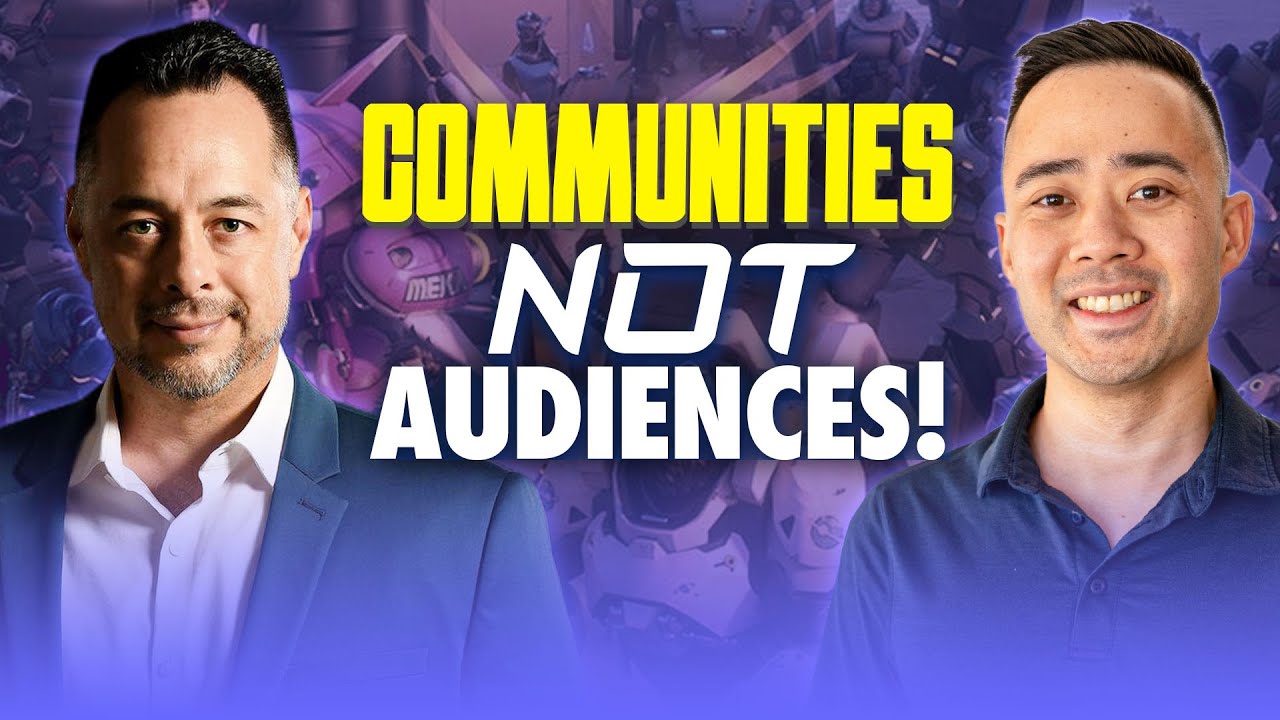
Tony Whatley built massive automotive communities before founding 365 Driven, a coaching business with four tiers: a free group, $365/year membership, $6,000 mastermind cohorts, and $36,000 one-on-one coaching. A 2015 racing accident shifted him toward purpose-driven work, and he emphasizes building two-way communities instead of one-way audiences.
Chapters
Tell us a little more about kind of the, maybe the previous company that you had and you exited and why you decided to kind of go into the quote-unquote coaching business.
Well, I sold the first company in 2007 for a multiple 7-figure exit. And that was an automotive community that I built starting in 2001, which was based around General Motors performance cars. So anything was Cadillac, Chevrolet, Pontiac back then. And we grew this and it became the number one community on the internet based on General Motors performance cars. So it grew to over 300,000 registered members. And I took that same business model And applied it to a performance trucks community called performancetrucks.net. We grew that same business model with the core values, the leadership, the team, the knowledge, the experience, and the network. And that one grew to over 280,000 registered members. So I was able to duplicate the process. But at heart, I'd say I'm a community builder at the massive scale, and that's what my superpower is. And nowadays, I just decided I got to come out of the shadows in 2015 after a near-death experience racing cars. And I decided that I needed to go make more impact and purpose in this world. And the best way for me to do so was talk about the things I have a lot of passion for, which is entrepreneurship, something that you have in common with.
So what happened with that accident and why do you think you had that perspective shift all of a sudden?
Well, kind of going through this is that when I was in the middle of the race and I was approaching a concrete wall at 130 miles per hour, I really thought in that moment I was going to die. And I even said to myself, I still remember it clear as day, as I said, well, here I go. And obviously, I survived. Spoiler alert, here I am still speaking. I'm not a ghost by any means right now being interviewed. And it just started to go through this period or series of questions in my mind. And the first one was, why am I still here? I mean, the car was literally destroyed and wheels were off the car and every single body panel in this car was caved in except for where I was sitting. And understanding that, it's like, man, I just survived a miraculous accident and I don't know why. And I started thinking about what if I would have died tonight? And then the next question that leads to that is, How would I have been remembered? And then I started thinking about my friends who had passed away in recent years, maybe from the same thing, the cars and the motorcycle scene. It was always the same thing. It was always so-and-so was a nice guy, so-and-so, you know, cool guy, nice cars. You know, and really, that is something that sounds superficial because I knew that it was more in me, more potential within me. And I've always been someone that's been a high achiever and trying to push myself, but I was really afraid of being on camera. I didn't like being interviewed. I had stage fright. And all those insecurities that go along with that. So, I just always made convenient excuses for not helping people on a massive scale because although I've helped former staff and friends build 7 to 9-figure companies of their own, they were always telling me, you should be doing this full-time, you should be doing this full-time. And I just avoided that. I said, I got a career, I got a kid, I got companies to run. I don't need to do that. I don't have time for that. But it was really just me avoiding that. But after that accident, I realized that this is what I was meant to do and I need to go own that and become the right person to carry that story.
Got it. And so, you know, this is one random thought that just popped into my head. I mean, you know, a lot of people go through, um, you know, different moments, whether it's, um, you know, maybe a, you know, racing accident, or it could be something else, right? Where it's like the light— their life flashes before their eyes. And I'm just wondering if they're at one point, you know, we can have that type of, um— yeah, this is just a totally random thought. You go through VR and you, you almost go for that experience to see what you would think in that moment.
Yeah.
just to pull that insight out, right? What are your thoughts on that? 'Cause this is a totally random idea.
I mean, I think that, yeah, we've seen some of the VR type games really make people like fall over and actually freak out. We've seen people like get scared. You've seen the videos that crack me up, but it's almost like it becomes so real that they don't even know that they're conscious anymore.
Yeah, 'cause there's a wiring that just happened in your mind at that moment to get you to really think about that, right? So I'm just wondering if we can somehow do that without putting people at risk. And it's just, to me, it's like a little program that you can add into your head and then change you a little bit. But anyway, we'll leave that alone for right now. When you build that, let me know.
We can get into that.
Yeah. So, okay, let's talk about 365. Let's talk about the coaching business that you have now. So, how does it work? How do you guys make money?
So, I think that the coaching for me, like I said, I've been privately coaching people for 15 years, got excellent results. So, I had the confidence in the process and repeatability from my own experience, but I also got to see from the sidelines, I was watching a lot of people just coaching that never achieved anything in their lives. Maybe they become successful just by coaching people to coach. And I always thought, you know, I'm a very kind of a high-level skepticism type thing. I built companies, exited those like you said. And I said, you know, there's, there's, there needs to be more people out there doing things based on the experience they have, just like you have and the people you surround yourself with, Eric. You guys have accomplished things before you decided to go out and coach things or write books about things. And I find that Although I love that people have the heart and they want to mentor people and they want to coach people, I think that's a great characteristic to have. They should still go demonstrate their abilities and get some success and results before they step into the coaching arena. And I think that out there, there's too many people out there doing things that they haven't achieved before. And so I decided, you know what, this is the best way I'm going to go serve is just by teaching the people to do what I've achieved and helped other people achieve. And that's what I'm doing. And I think with the 365 Driven, it's more of an entrepreneurship society.
Yeah.
that I'm growing because I'm a community builder at heart. I want to build a movement at entrepreneurship. I'm going to scale this out to millions of people. I try to not make it a transactional relationship for people. I try not to make maximum profit on everybody I meet. I want lifetime value. I want to build something that's going to be— some people are proud of being a member of. And we have that community. It's got about 3,800 members right now, and it's growing and it's growing. And the content all kind of feeds into that. All the social media, the podcast, the books, all that kind of feeds into the knowledge base. People People like yourself, you've been on the show as well and you contribute your knowledge to the audience and that's what I love about this business.
Cool. And so, how do you guys make money exactly? And then, what kind of numbers can you share around the business? Whatever you're comfortable sharing, growth rates, employees, revenues. But yeah, first, you know, how much do people have to pay to get into this community?
Okay. So, I've got different tiers of entry levels. I have a free group which is thousands of members. That's kind of the end of the funnel from people that read the book or listen to the podcast, they end up there. And then we have a paid group that's about 200 people right now, and it's $365 a year, really low dollar, dollar a day kind of scenario. But that's a good way to filter out the people who are going to be the warm leads and people actually want to raise their hands to do more, have a little bit more access. I answer questions in those groups, provide them special content. I do live interviews in there of the guests and stuff like that. Now we start to move the next— the mid-tier is what I would call that, which is the live mastermind groups. We have 6 to 8 people groups that I'm growing out, and I've got 2 of those right now. They're paying $6,000 a year to be a part of that. We meet every other week, and that's going to be opened up every quarter. I'll add new groups in, and I'm also bringing on new trainers to run those and facilitate those groups.
And then finally, the one-on-one coaching, which I got about 12 clients right now.
It's about $40,000 a year, just $36,000 to be accurate. And that's the— that's— it takes a lot of my time and it doesn't scale, but I love doing that. And typically my clients are 7 and 8-figure business earners versus owners.
Got it. I love that. And so, those of you that are listening to this, I mean, it's mostly a tech audience, right? I think there might be some skepticism towards the coaching industry. But, you know, what I will say is, you know, I've worked in tech, I've worked in software, and even though we have a lot of those customers and we have our own software, I think, you know, to me, one good aspect around kind of coaching and education or training is that the cash flows from the business, I think of it as a funding mechanism. I think of it as my angel checks every year. It's funding from my customers and I can go build on top of it without having to give up, you know, a good chunk of my company, right? So I think those of you that, if you can just look at things from a different perspective, understand that there are legit people in this industry, one, but two, it's a great cash flow business. Just like the reason I took over Single Grain, great cash flow business, and now I just redeploy it into more exponential sources of revenue. So what are you doing with that income? How are you thinking about that? It doesn't matter if you take it, you know, into just, you know, run a great lifestyle, or are you looking to do other stuff with it right now?
Man, I'll tell you, I go rent these Lamborghinis and I pose shirtless in front of them and pop bottles and I shoot fireworks in the background.
And you know, that really works.
I'm just kidding, you know that. But here's the thing is that I actually started doing more live events. I kicked that off last year. I did a live event in Utah. We rented out a very, very awesome facility at the mouth of Zion National Park. It was a high-level mastermind, 32 people that could fit. We've sold out every seat and, you know, that's about a $4,000 investment for the weekend and, you know, it filled out. And that's what I love to do is live events. I started to speak on these big stages with thousands of people. And while that is a good adrenaline rush and it feeds your ego a little bit, it doesn't really build a lot of connections. And I'm a community builder, guys. I got to get people off their keyboards and go visit each other in person. And that way we spend a whole weekend together, 3 days. We did hiking, we did yoga, we did sound bath meditation, we had an array of awesome speakers. And that's what I love is the event side of things. And that the stuff I'm making now from the coaching, it goes back to the events, which goes to just building the circular type relationship. And I love that you asked that.
Yep. No, I think that's great. And I like that you keep talking about community because, you know, when you think about audience, it's everyone kind of looking up to that one person, but community is all about fostering connections. And you've done it not once, but you've done it a couple of times now. So what do you think has been the secret for you to building these communities? Because it's clear that you have a process kind of worked out in your head.
And I love this question because a lot of times people nowadays in social media, they think about followers and they confuse that with community. Just like you said, there's a distinct difference between the two. I would rather have a massive community than a massive amount of followers. And the difference is that the chains of communication are existing between the members of your community, where if you have a follower base, let's say you had 300,000 followers on Instagram, the communication really is just one way. It's from you to them. You're on a pedestal, you're on a stage, and you're speaking down, and it's one-way communication. Now, you may have comments on your post that may be engagement, but that's not really communication between the community. So as a community leader, it's my duty to facilitate opportunities for those people in my community to become lifelong friends. And this has been the case. I've had people get married, I've had people get divorced, I've had people do all kinds of things, build businesses together, members of the community. 'Cause if they find those strong relationships that are established in that community, they're gonna keep coming back because that's where they find the value. And they're always gonna remember where they met and they're gonna tell the gospel about it and they're gonna share it with their friends 'cause they're getting that. So, I always felt if I just be a humble, involved leader, be accessible, be an active member of that community, it grows really strong because everybody knows who the owner is. Everybody knows who's the leader, but you don't have to put yourself on a pedestal and act like you're better than them and go, I'm just super important. You can't contact me unless you go through my VA who's got a VA who's got a VA, and then you finally get to me. And I just embed myself and immerse myself in that community. I'm just Tony. I'm another dude. They know who I am, the owner. But, you know, that's what I like to do. The difference that I see at other companies, they just kind of fail at that.
And so, you know, you've done this a couple of times with communities. I mean, What are some key hires that people need to make once the community starts to get rolling? What are the must-haves in your opinion?
I think you start to look for the character traits of what we call the super moderator type formats. We see this a little bit on Clubhouse, the people that can deliver value and really monitor the crowd, engage the interest and energy level of the crowd. You still do that with any online community, whether that's a Facebook group or a forum or any of those formats. You just find the people who are really invested in your core values that are all along on your mission that you can see these people because they've showed up consistently over a period of time. Now, you're going to find that people are— that come into your community that are super hyped initially, and they like your content, or, hey, Eric, I read your book and listened to your last 5 podcasts. You're like, hey, cool. I get you're excited. It's kind of the honeymoon phase. But those people come and go pretty quickly, and they last maybe 3 or 4 months. But the people that have been there 6 months, 12 months, 18 months, 2 years that are consistently doing it, those are the ones you need to start to promote and recognize and supporting the things that they do. Because I don't think you can become successful unless you can help other people become successful.
And I love to take people on that journey.
So, what I'm hearing is, you're basically observing within your community and then you're kind of saying, hey, the ones that stick around for 6 to 12 months, you probably reach out to them and you say, hey, do you want to do something that maybe is a little more formal and then we can do some type of paid arrangement? Is that what it is?
It could be paid arrangements or it could just be a little bit of a perk. You know, like in the automotive communities, I had no paid engagements. I had 75 people on my staff but they had hookups by getting discounts on parts or even some magazine press type situations because, hey, you know, they're already involved in the hobby.
They love being there.
They love contributing. We got them to basically get their hobby for free. Maybe they get some free parts doing some how-to, you know, get them on TV, all kinds of stuff that was interesting.
Cool. So, I mean, you might not necessarily say, hey, this is a paid engagement, but we're going to give you some free stuff. Just continue to do what you're doing.
That's it. Maybe if you have live events, you give them VIP access, you know.
Got it. I love that. So, talk about, you know, community and how that relates to Clubhouse right now. And how many hours are you spending a week on Clubhouse right now?
I would say I would commit to about 2 hours a day on Clubhouse, like, and focused and answering questions. And the rest of the time I might be just hanging out on the stage and popping in and listening in the background.
Got it. Yeah. It's, you know, I mean, so that's 14 hours a week of focused time, right? That's like doing, you know, a ton of webinars right there. And so, you know, I don't know about me. I looked at my phone in the past and, you know, my screen time was 30 hours on it. I think that was probably the high point, but I don't know if I was fully engaged. Right. So, hey, I mean, let's talk about, How— what Clubhouse has done for your business and why you're hanging out in there so much?
Well, I think as an early adopter of any kind of platform that you should be jumping in when the wave is just before it gets to the crest, because right now it's still closed down to Android users. So 50% of the cell phone users don't even have access to it. And we're starting to build a lot of followers in there. You and I are like 20-something thousand plus, and we've only been there a month and a half, 2 months at the tops. So you understand that we're getting a lot of momentum built and we're starting to build some authority and a name for ourselves on a platform of people that we're didn't even know. Like, I didn't— like, all the people we hanging out with, like today you and I were in a room and we're hanging out with the, you know, Rob with the orange head, you know, I'll give him a shout out. But there's a lot of people in UK and the Australia sector that we weren't even familiar with. And we're hanging out with people globally in this platform, which is incredible because it's really opened up the world of the influencers and the business coaches and these people doing amazing things around the world where you and I probably had mostly our focus in the United States just because we are inundated by those. And that's the people we surround ourselves with. So I think that I love the networking opportunities and that's what most people miss. And I think that if you're going to use Clubhouse, you need to try to find ways to the stage. And if you can't get yourself on the stage, you need to go create your own rooms and build your own stage because you don't gain a lot from just being a spectator if you're trying to build your audience.
Yeah, it's tough. I mean, you can definitely farm followers and just sit there and I've done that, but it just, it's not as much as, you know, speaking and actually being active. I think that's how you truly build relationships when people can get a sense of whether they want to know, like, or trust you. And so, you know, with Clubhouse, I mean, what has it done for your business? Because I think for people in the coaching sector, they definitely get— it feels like they definitely get value from it. I can speak for me, the real value I got was the relationships. And, you know, the book launched yesterday, I got on 40 podcasts. It wasn't like I was asking for it. But I don't have a coaching funnel to put people through, right? So in terms of business value, probably not much, but relationship value off the charts. And then the podcast, it was kind of an additional benefit. So, what has it done for your business?
You know, the relational value alone is just incredible. And I've actually got a couple paid speaking invites to come take on this year just from people listening in the audience that weren't on stage. They're like, hey, I heard what you said and I need you in front of my corporate entity. Can you come speak in September and October? I'm like, cool. Yeah, I might be able to do this. So, you're getting some opportunities. I think from the coaching, I've closed about $46,000 in the last month and a half of coaching and services, things like that. I don't pitch. You guys hear me. I go on the Clubhouse. I don't pitch.
I don't say—
I don't even have a call to action in my bio. It just has my Instagram and my website. It doesn't say like, DM me for this or sign up for this free thing. I don't do that. I just— that's not who I am. And it's still creating those kind of results. But like you said, the network and the lifelong network, because I think about lifetime value. Like, you and I know each other, we're connected, we're going to be lifelong buds, already can tell. And that's the kind of things I try to focus on. I mean, some of my clients, my one-on-one clients right now, I've known for 20 years. They knew me from the original businesses. They were members of that community. And they're like, dude, I'm making enough money now to finally be able to get into that ranks and I wanna work with you. So, I love these long-term relationships, dude.
Yeah. I love what you say about that because, I mean, you know, Neal and I debate this on the Marketing School Podcast. He's like, you focus on your business, whatever. But, you know, at the end of the day, if business is all about relationships, then, you know, you can make the argument that it makes sense to focus on this. And, you know, for me, I tend to spend most of my time off hours or early in the morning. I'll wake up and pop in and, you know, I'll pop in where I can. But to your point, You know, when a new social platform like this pops out, the organic reach is off the charts. I don't know if it's going to be Clubhouse that wins, Twitter Spaces, or Facebook, whatever they're doing, but I do think the format is here to stay because now when you have downtime, you just pop into Clubhouse, add some value, and then pop out. Um, or you can do your room, make it a little more, you know, uh, you can extend it out, right? So I, I just think it's great. Um, so I think that's amazing too. You mentioned $46,000, um, and, you know, these paid speaking gigs too. So there is monetary value, but to Tony's point, Not trying to focus on a monetary value, understanding that it is the long game and that these relationships, the relationship value is going to be worth a lot more. Um, what else are you doing around Clubhouse before we move on to the next topic?
And I think about Clubhouse is that I like the groups and I like to also support, support the people in my community. So I actually will go create a room once a week on Saturday evenings that I just invite people that are inside my paid community to come be on the stage because they don't always get the opportunities to be on the big stages like you and I because the network we built from our podcast and the content we've created out there and I get that there's a slight unfair advantage. So, I create a safe place for them to come out and contribute, get some courage, and get some experience, and get some reps, and start to build their notoriety. And they love that because it's like, hey dude, we got this guy as a leader and he's like, he could be in the big room right now but he's supporting us. And I love to give back like that.
Got it. I love that. Yeah. So, getting your community involved, it's not all about you. I love that. So, what else are you doing right now to grow the coaching business? Because I know a lot of people, you know, they're running ads and yesterday, We had Tanner Chidester speak at our event and he just talked about his DM funnel, right? So, you know, what are you doing exactly? And I just want people to get a sense of how this works. Because again, guys, this to me is a great funding mechanism, if not a great business for yourself, right? Or it can even go beyond that. But yeah, please go for it.
I think we actually just started running ads 2 weeks ago. Actually, I've created a 1-hour webinar on how to get web, you know, get followers on Clubhouse because that's the buzzing trend. You gotta stay where the energy's at. And I had 5,000 followers in the first week. And I said, you know what, I'm going to do a webinar on how I got 5,000 followers in the 5 days. And I had 3 different tiers of how to get those followers. And some of them was, like you said, camping on the big stages. Some of them was multi-device. Some of them was just learning how to be a better speaker and having the courage to raise your hand and say, drop value. And, you know, we're in a room this morning with about 1,700 people in the room. And I could tell if I was just hanging out and just doing little comments, I would get maybe, you know, 10, 20 followers here and there. But if I raised my opinion and I gave some of it, Like, dude, Instagram, I'd get like 200 followers like instantly just from like a 1-minute blurb on that room. So this is the kind of thing you gotta understand is like you just gotta go where the momentum, where the energy is, and how do you monetize it? And coaches just run ads, do something that's hot. I did the webinar, it's selling for $37 and we're only spending $6 on an enrollment. So that's a $31 net on just a simple webinar that is a hot relevant topic at the time.
That's fantastic. And you know, like one thing I noticed with Clubhouse, this is Interesting. The people that are long-winded actually win, right? So in my personality test, there's a print survey. Um, for me, this is just how I'm wired. I actually can't stand long-winded people. Um, it's just me, right? So you see the way I talk, I try to keep it very succinct. Um, but that's actually not good in Clubhouse. The people that have the monologues, those are the ones that gain the most followers. That's what I've seen. I don't know about you.
Yeah, I agree. And I think that though, I've kind of grown a little bit tired of some of those millionaire-type mindset rooms.
Oh yeah.
Is people hog up the microphone because it'll be— there'll be like 60 of us on the stage. You and I will be like winking at each other on the stage, but there's like 4 people talking the entire time. Like, do they not recognize that they have that level of self-awareness that there's other people on that stage that have far more expertise in the subject that's being asked, but they got to have their ego put in the way and just keep talking and keep talking? It's like, drives me nuts. And I think that— I think the audience kind of senses that as well.
I mean, I think, look, it's— and I've talked about this in other rooms, so I'll hop into other rooms. I think, look, there's good things to learn from affiliate and internet marketers, and there's good things to learn from tech people as well. And so what I found from the internet marketing world, affiliate marketing world, which is in my early career, that's kind of what I grew up in, I understood that, hey, it's all about me, me, me, short-term, short-term, short-term profits. It's about the Lamborghinis. Look at me, look at me, right? And that actually translates to onstage where they just can't stop talking about themselves, right? It's not about serving. So, you know, to your point, I think those people will eventually get exposed and we've seen this happen actually. And so, you know, you and I aren't really in those rooms anymore, And so, you know, again, I mean, I think at the end of the day, you can throw your own rooms, there's going to be some misinformation. This is like real life, right? And then hopefully you get to choose, you know, the right people that you get your information from. So—
Now, I would point out is that a lot of times there's conversations going on in the backgrounds and the DMs and Instagram, and you may see that there's a dozen of us on stage, but a lot of times we're in the back doing a group chat, having a conversation in the background while someone's speaking. And we're like, hey, that's a good tip, or hey, you should expand here, hey, keep it shorter.
We're having this commentary going on in the background.
And if you wanna get on those stages, you create the DM culture. You have to be willing to raise your hand and go, hey, I see you're on the stage. I got these things that I would like to bullet point out there that I could add some value to the thing. Would you invite me to the stage? So, don't be shy. If you're shy, you'll never get the— answer is always no if you don't ask, right?
It's huge. Yeah, absolutely. It's asking. And by the way, what I'll say is, you know, my behavior previously was I would actually never engage with people on Instagram. People would DM me, I would just— it's just too much. I wouldn't like— I'm not saying I get thousands of messages a day. I'm just like, but now I find myself engaging more. I find myself DMing DMing people a lot more. So I'm engaging a lot more by default from Clubhouse because I'm, I've invested so much time. Um, and so look, you know, Tony and I are talking a lot about Clubhouse right now, but the overarching thing here is that it's just building relationships. Right. Um, do you want to add anything else before we move on?
No, let's roll.
Cool. So on the, you know, what do you think is your grand, uh, mission? Right. You got a lot of stuff going on. You've got the mastermind, you've got the free stuff, you've got the, you know, you've got the paid coaching, you've got You know, the, the live events. I'm assuming the masterminds are at the, you know, highest price point. Um, what are you trying to do with this long-term? Are you just, are you trying to keep it? Um, what is the mission here?
Yeah, I'm trying to keep this. This is going to be my legacy business. And I think that I bring a lot to the world of just teaching people confidence and business principles and just having really strong core values and ethics and trying to be well-rounded. I don't believe in the whole 24/7 hustle and grind. I did that in a period of my life when I was in university and I was working 3 jobs and broke and stressed out and high anxiety and suffering grades and relationships. So even the cornerstones of my show are health, wealth, mindset, and relationships. So I'm looking for entrepreneurs who try to excel at all areas of their life. And I don't believe in the whole work-life balance. I think that kind of shifts depending on the workload or what's involved in the projects. Sometimes you're front-heavy to build that time on the back end. So I just kind of just try to help people become better individuals.
I love that. And so So, I do want to talk, I mean, obviously, you know, those that can see the video right now, 365 Driven. I mean, driven, that's one piece of racing and you have a wheel, right? So, what has racing or cars in general taught you about kind of life and business?
Man, I think that the cars for me is an adrenaline fix. You know, I've always been the stunt kid. I was the kid that would put the extra bricks under the wood ramp and convince my friends to lay in front of it and jump over as many as I can without hitting the last guy sometimes. But I was always that stunt kid and I was always thinking about adrenaline. So, for me, driving over 200 miles per hour and cars with over thousands of horsepower at the rear wheels. I enjoy that part and it made me very competitive. I also used to be a competitive 9-ball billiard champion in university. So, I got the mindset from when I was young. I was 18 to 22 and I was going against people in their 40s and 50s and 60s that had really strong mindsets and a competitive range. And I got to be able to compete at a high level against those people and learn a lot about mindset early into my age, which helped me in my corporate career and entrepreneurship and navigating all different things. So, I've had a lot of mindset mentors along the way and just doing things. And I think that, you know, the cars is just an adrenaline fix to me and I just love cars. I don't know why I was the kid that would draw cars in the back of my coloring books instead of coloring in the book. So, I just, that's who I've always been.
I love it. It's kind of like the, it's what I got from gaming, you got from racing and cars and adrenaline. I love that. And I'll just call it pool because I can't even say billiards. But so, working towards wrapping up here, what do you think would be your favorite business book that you'd recommend to everyone?
Oh, wow.
Mine, obviously that one changed my life, Side Hustle Millionaire. But I would say that business books, man, that's a tough one. I've read so many. I've kind of finished a book a month. I'm going to pitch your book, dude. That's the love I'm going to give you. So the Leveling Up book right here, Eric, this just showed up in my box last night. Thank you for putting this out. I can't wait to get into it, man.
I appreciate that. You know, usually, so I'm still gonna push you on getting one business book in. It could be the first one that comes to mind, right? Like everyone on the podcast says The Hard Thing About Hard Things. You can even just stare at your back, your library over there and just tell, just give the audience one.
Okay.
I'll pull up my list real quick. I keep them all on my Amazon verified account. I would say that outside of business, I think communication is key. I'd say my favorite book would be Dale Carnegie's How to Win Friends and Influence People in the Digital Age. It's a newer version of this. original book, but it incorporates social media and email communication. So, it's got a blue cover, but very, very powerful. I wish I would have read this when I was 16. I think it would have helped my life. And I think that the next business book scrolling down, honestly, Grant Cardone's 10X Rule for me, that's number 10 on my list. And it's still on that list because it talks about just overdelivering on your actions. And then, if you come up short, you're still way ahead of what your original goal was.
You know what they say? I mean, that was his first book, I think. They say your first book is usually your best one.
I don't know. We'll see.
You know, you and I have a long way to go.
I think that's his best book.
I haven't read the other one, so I wouldn't know. But how about favorite business tool?
Oh, man. I think that the simplest thing I use that most people have access to would be just the Gmail calendar. You'd be surprised how many people do not live on a day-to-day schedule. And I just have a Gmail calendar that's on my phone and it's on my computer and all my Calendly links to it, all my Zooms link to it, everything links to that thing. If you want to, if you're struggling with anxiety out there in your business right now, understand that if you're probably not living a scheduled life and every successful person I know knows exactly what they're doing, not even in the hourly, maybe 15-minute increments.
I love it. Well, Tony, this has been great. What's the best way for people to find you online?
Eric, it's been fun to be on your show and I love to connect. And my website is 365driven.com and from there, you'll find links to my book, my podcast, and all the social channels. And find us on Clubhouse and follow Eric and I will, we'll, we'll show you some cool rooms to hang out in.
All right, Tony, thanks so much for doing this.
Thanks, Eric.
Don't forget to check out the next video over there. Okay. Over there. And before we go, open a new tab, levelingup.com to learn more about the book. We may or may not have other goodies tied to this book. All right. levelingup.com in a new tab. You can check out the next video first in a new tab, and we'll see you later.









