Yeezy's $0 Super Bowl ad, Super Bowl vs MrBeast Ads, 2024 Election deepfakes, and more
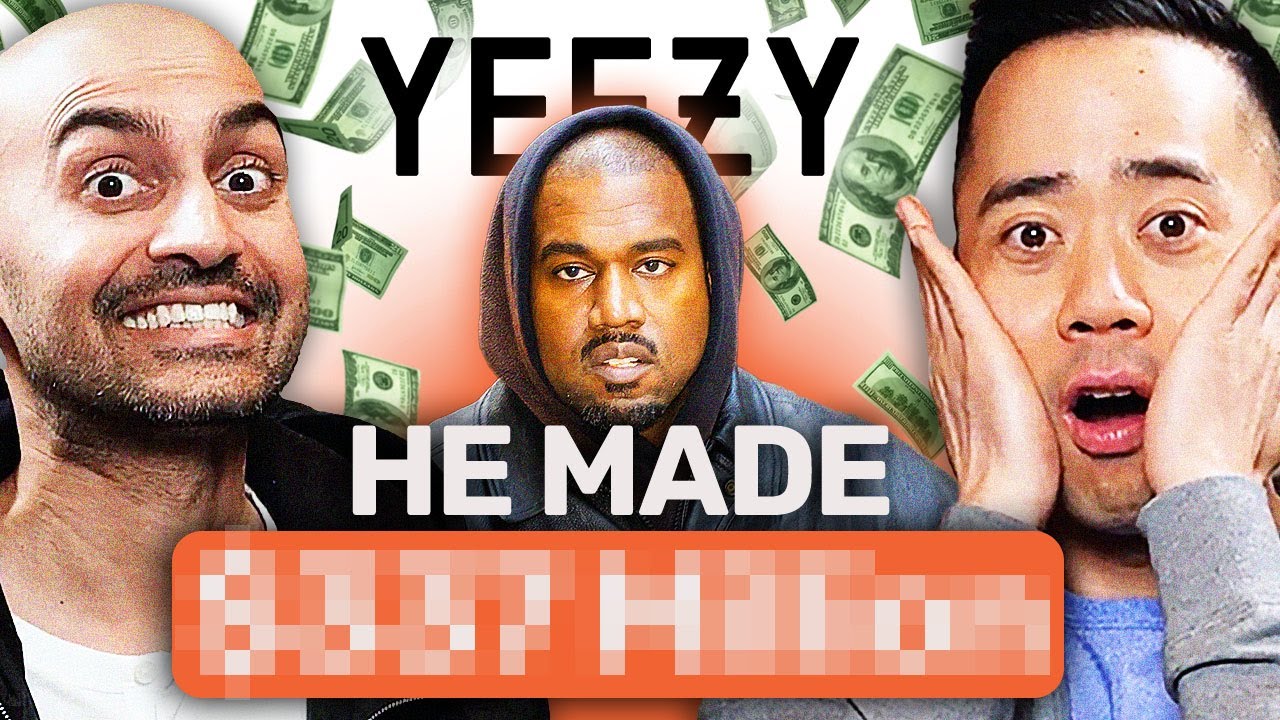
Eric Siu and Neil Patel compare Super Bowl ads to creator-driven channels like MrBeast, breaking down Kanye's $0 Super Bowl spot and its sales impact. They cover the rise of low-production viral content, a $25M deepfake fraud case, and how agencies should handle election-related deepfakes and cyber security.
Chapters
People are talking about the— so Super Bowl passed like a week ago or so. And basically, so Super Bowl 58 was the most watched television show ever with 123 million viewers. And so this guy tweets, Adam Singer, he says, MrBeast has 2x the number of YouTube subscribers and his videos, which he publishes weekly, greatly surpasses these numbers. The only reason marketers spend so much on ads here are for religious reasons. Our sector claims it's data-driven, but mostly it isn't. No one talks about any of this. Let's react to this.
Wait, he's saying the only reason marketers spend money on Super Bowl is because of religion?
Religious reason, meaning that like people are tied to like, oh, you should spend money on Super Bowl ads. That's what it means.
But not religion like—
Not religion, not like, you know, not this religion.
Not like praying religion.
No, yeah, yeah.
I look at it as a time of the year for marketers to showcase their work and get awards for it. It's not about ROI. I agree with this person. I don't know who ended up saying this, but—
Adam Singer.
Yeah, dude, I ended up releasing a tweet about the Super Bowl. Because people are wasting like $233,000 a second. Ends up being roughly $7 million a commercial. And then from there, you're going to end up spending at least $7 more million on ad buys because this is Olympic year. And typically they try to get you to buy a spot there.
Is it? Uh-huh, 2024.
Oh, that's fast. And then they also—
2020 got pushed to 2021, then 2024 back to normal.
Yes. And then they try to get you to buy spots for, let's say, the Olympics. Or whatever other, you know, events that they may have going on. So if you're spending $7 million for the Super Bowl, they want you to buy $14 million in ad spots.
You're spending like $20 million plus, and then plus not even including the creative.
Yeah, the creative isn't that expensive. Production for most of these commercials, you can do for under a million bucks. Yeah. The expensive part of the commercial is paying the celebrities. So if you add that in, maybe you spend another $7 million. All in, like you said, you're spending $21 million. Yeah. So you think about that. Is there great ROI? No. Is it great branding? Yes. But you're better off getting your branding from Facebook ads, TikTok ads, Google ads. And by the way, they also produce a higher ROI. I would also do CTV, you know, and these channels are more trackable and you can burn way less money to get that revenue generation and get as much brand awareness.
Yeah, I just think if you're going to spend on something, if you have money, If you're gonna spend on traditional, the Super Bowl's the place to do it. And it's hard to find a place where you're gonna get 100 million eyeballs. And here's the other thing, when people go to the Super Bowl, it's not, a lot of people, they're going there to do business, right? It's like a giant conference now because it's become so like corporate. And so like, which is fine, right? And so it's like, you know, that is, it's still a valuable thing to do. I'm not saying MrBeast is like bad or anything. It's like, it's just a different type of viewer and they're in a different type of mindset too. Speaking of which, the Kanye, so he spent $7 million on a Super Bowl ad and he just recorded, did you see the ad?
Yeah.
He just recorded a thing. He's like, yo, just like go over here and just go to— and then like what, 250,000 purchases? And I think it was $19 million in revenue. Some people are saying $19 million in profit. Did you see that?
I don't know if it was profit. I know he—
Let's say revenue, still good.
Yes. But then he charged so much lower for his products. He then had to email everyone else or he put out a statement saying, if you paid like $200 for this product and now it's $20, just shoot a note to X, Y, and Z email and we'll refund the difference.
Yeah, but I think the fact that like he had the guts to just record it like that off the cuff, it's like, that's pretty cool, you know? But also that's like years and years of building your brand.
Not just years and years of building your brand. Us as consumers, we're used to it. If you look at TikTok and Instagram and YouTube Shorts, it's UGC. Yes. And a lot of people are just busting out their phone talking and then it's producing a high ROI. And I released a tweet about this Maybe less than a month ago, because a lot of people are like, oh, if you don't do crazy production, you're not going to get a high ROI, you're not going to get as many views and engagement. From the data we analyzed, more than 70% of the videos that were popular had no fancy production. So the majority of the videos that were getting the engagement on social media didn't have high-quality production. It just goes to show you probably don't need that for the Super Bowl either.
By the way, Neil and I have an agency owners group called the Agency Owners Association. All you have to do, just go to marketingschool.io/agency. Once again, it's marketingschool.io/agency to learn more. And now back to the show.
Microsoft, OpenAI, Google, and others agree to combat election-related deepfakes. You see the article?
No.
So they're pretty much just making a pact saying that, hey, we know this is election year, at least in the United States, and we're going to make a pact to stop AI from creating all these deepfakes, which could potentially cause people to sway one way or another in election.
I wonder, I mean, how, you know?
I don't know how, and I don't think it's gonna end up working. I think you're gonna see tons of deepfakes. Maybe people will say, oh, this one's real, this one's fake, or whatever, and start analyzing. But like, they didn't stop the Taylor Swift deepfake.
No. And then did you see the company that lost $25 million to a deepfake too?
No.
There's a— yeah, I think we talked about a CFO a while back, but I don't know if this is related to it. But a company lost $25 million, and I think it's like I think it's probably the CFO that released a bunch of money and I thought it was like the CEO or something. It was, it was pretty elaborate. But by the way, I don't know if— so here's the crazy thing. Someone, so a scammer was messaging my team yesterday and they've got everyone's phone numbers. They got their emails and their phone numbers. So I don't know. I don't like, I'm just like, that is pretty sophisticated.
Do you have an internal security team?
We don't, but we all know, like, we've, we've made it a point to everyone, like, I will never ask you for anything. Um, so I'm not gonna ask you for like to send me money or gift cards or anything. So yeah.
2 things you should actually consider is When we didn't have as many people in the organization, you can pay outside companies as a consultant for X amount of hours a month just to help with security. Eventually, as you scale up and you have more people, you'll have to hire a full-time person for security.
Yeah. What would the title be?
I don't know, but I know on our end, Tracy ends up running it with whoever. She's in charge of that department or person or people. And then the other thing that you can do is you can get insurance for— We have that.
We have cyber insurance.
Yeah.
Yeah, dude. I mean, you just remind me, I'm gonna email my friend right now. He ran security at Mozilla and Uber and we played drums in high school. I'm gonna hit him up right now.
Mozilla and Uber?
Yeah, he ran security there.
Yeah, dude, it's worth it. I remember, oh, 3 years ago, 2 years ago, we had someone do a fake email. So, we were paying a contractor to run TV ads on CNBC, Bloomberg, and all the financial sites and more so on their television networks, right? So, not the sites but the actual— TV during their airtime. And someone got access to the company that we're sending the money to because they have email addresses as well, emailed us, and we ended up sending the money to a different place based on the email. And we got ripped off. It wasn't much. It was like $100,000 to $200,000.
Who's we?
NP Digital, my company.
Oh, wow.
But we had insurance and insurance covered 90-ish percent of it. It was something like that.
What happened to the 10%?
The 10% is the deductible or whatever you want to call it. It was somewhere, it came from somewhere. I don't know if it was their end or our end. I believe it was their end, but it was so long ago. But insurance ended up investigating. We hired someone to investigate as well and we got 90 cents on the dollar.
Did your premium go up?
Probably, but I wanted my 90 cents on the dollar.
That's good. So I didn't care. Yep. All right. So that is it for today. Please don't forget to rate, review, and subscribe. Marketingschool.io/agency to learn more about our agency Agency Owners Association, and we'll see you tomorrow.
Thank you.









