Yellow fever (Why Whole Foods had to sell), $700M crypto deal, and more
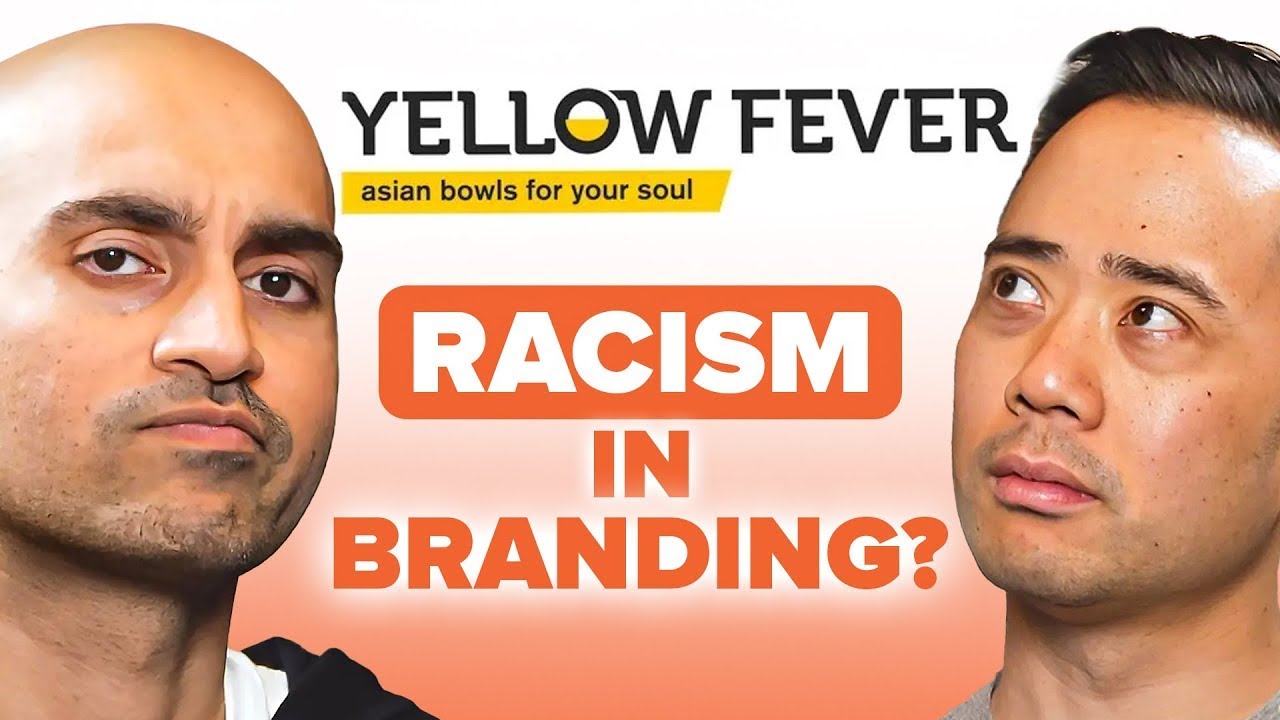
This content was created by Eric Siu. This content was uploaded by Eric Siu. This is a YouTube episode titled "Yellow fever (Why Whole Foods had to sell), $700M crypto deal, and more" (created 2024-03-29). It’s a conversational, podcast-style discussion between Eric Siu and Neil Patel covering: the Whole Foods "Yellow Fever" branding controversy and its shutdown, anecdotes about Jeremy Lin and offensive headlines, the $700M Crypto.com Arena naming-rights deal and startup spending mistakes, plus practical marketing advice (Performance Max tips, influencer/micro-influencer marketing, AI-generated content caveats, programmatic SEO, and content strategy). They also promote their offerings (marketingschool.io/agency and NP Digital).
Chapters
Have you heard about the Whole Foods debacle before?
No.
Okay. So, Whole Foods had this one brand that someone, an executive in their company started. It was Asian-inspired food, okay? Now, what happened with this Asian-inspired food was that the restaurant was named something that probably wasn't very politically correct. What do you think the name of the company— well, you already see the title, so let me just tell you the company. name, the restaurant name. The Whole Foods Asian-inspired restaurant name is called Yellow Fever. Okay. This is part of the reason why Whole Foods sold to Amazon and why Tony Hsieh of Zappos, Tony Hsieh, who's yellow like me, right? Tony, he's passed away. Rest in peace. Um, but Tony Hsieh, the first thing he did when Amazon bought Whole Foods was he shut down Yellow Fever, all of it. And I think he fired everyone involved.
Oh, that was his company, Tony's?
No, Tony started Zappos and sold to Amazon and he was still working at Amazon. And one of the first orders of business once Whole Foods was taken over by Amazon, Jeff Bezos said, hey, like, go help with this Whole Foods thing.
Tony said— they said that to Tony, so he was involved in Whole Foods.
Yeah. And then so Tony was the one that was responsible for shutting down Yellow Fever.
I get it. You don't want to have any products that make fun of a specific race.
Yeah. I mean, you just got to be smart about how you brand your stuff at the end of the day. Like, I remember one time there was, um, Remember Jeremy Lin? Linsanity?
Yeah.
So Jeremy Lin, excuse me. So he played basketball for the Knicks. He was like on fire.
Lakers too?
Lakers too. He played for a lot of different teams eventually, like Brooklyn Nets as well, I think. But so Jeremy Lin, I think once he started like not doing so well anymore—
Well, Melo got injured.
He started not playing well anymore. So he started not playing well. Linsanity was fading away.
To go back for anyone who doesn't know what happened with Linsanity, he was playing for the Knicks. Melo was injured.
Carmelo Anthony, their star player, got injured and then he took off.
Yes. And he was just shooting and he was hit after hit. He was scoring amazing points per game. And I remember they interviewed Kobe Bryant during— they're like, oh, what do you think of Jeremy Lin? And he's like, what?
Who? And I'll give you the real story. So when Lin Zhanyi was taking off, they went to interview Kobe Bryant, right? And then to your point, so it was like, okay, so hey, so what do you think about Lin Zhanyi? He's like, what? He's like, what do you think about Jeremy Lin? He's like, never heard of her. That's why I use that line so much now. I was like, when someone asks me some guy's name, I'm like, never heard of her. And then anyway, so going back to Linsanity real quick, one ESPN or I think one sports reporter wrote something. The headline for the post was a chink in the armor, right? And by the way, a kink you mean? No.
No. Oh.
Yeah, you can't say that, right? And by the way, I'm Chinese everyone. Before you call me a racist. Anyway, so it all comes down to semantics. It all comes down to how you name things. And when you— I don't even know how yellow fever gets approved like that. Um, but that is a big reason why Whole Foods had to sell.
Well, what's funny is it's like, uh, uh, I, I don't know how it— I don't know who creates it. Like, whoever's creating this, if you're Asian or not Asian, What goes through your head to come up with ideas like this? On the flip side, it's just like, if your product lasts a little bit, eventually because of this, it'll get crushed. If you want to play upon words, do it in a funny, clever way, not something that could be offensive. A great example of this is Manscaped, right? Manscaped, have you seen their TV commercials? Yeah.
Yeah.
And the reason that they do well is they're talking about how it's to groom your private parts, right? And they played upon that name, but it's not offensive. But on the other end, Yellow Fever, which is what this says right here, I'm not trying to, you know, call anyone out.
Yeah.
That's offensive. Like, you cannot name a company that. I don't know, like, why would Whole Foods even sell it in the first place? That's just so offensive.
By the way, Neil and I have an agency owners group called the Agency Owners All you have to do, just go to marketingschool.io/agency. Once again, it's marketingschool.io/agency to learn more. And now back to the show. So that's a dumb business deal. Let's talk about another dumb business deal. The Crypto.com Arena. Do you know how much Crypto.com paid for that?
Was it $200 million?
$700 million.
No!
$700 million. The deal's done for over the next like 7 years or something.
Aren't the Lakers talking about changing locations eventually as well?
Maybe. Dude, I actually, I was hanging out with someone that worked for Crypto.com last week. And so she was like, Crypto.com, they underpay all their employees. So people were really upset when they did a $700 million, um, what do you call it, naming rights deal to the former Staples Center.
Wait, what happened with, um, Crypto.com as a company?
I think they're still around.
They're just not doing as well.
They're just not doing as well.
So they burned way too much.
Yeah, yeah. Oh, speaking of which, I will tell you after. Continue.
No, no, keep going. Tell me now.
I can't. No, no, I should tell you after. This is better for you after.
Yeah, no, the $700 million for arena. Dude, we work with so many large corporations, still do and have in the past. And it's funny, we get some of these startups. And when I say startups, they're not really startups, they could have raised like $1 billion or $2 billion. And at that point, I don't really consider you a startup. Yeah. And they're like, oh my God, we're gonna go, you know, buy all these advertisements and get these arenas and name them after everything. And—
Idiotic.
We're gonna build the biggest company. And you know what I always Awesome. I'm like, so what are some of the big companies out there that you know? And they're like, oh, Apple and Microsoft, you know, and they keep naming them like Nvidia, Google, Facebook, and the list goes on and on. I'm like, okay. So we've worked with some of them, like, and I always ask people, do you think they're smart? You know, these are now trillion-plus-dollar companies. They're like, yeah, they're really smart. Okay. Do you think they have issues with cash and they have any shortage of money? Like, no, some of them spit off like $20+ billion a quarter. I'm like, all right. $10, $20 billion a quarter in profit, whatever the number is, it doesn't seem like they're struggling for cash. They're like, yeah. So I'm like, if that business knew that they could spend a dollar, for every dollar they spent, it would create another dollar in profit, not revenue, it would create more revenue, but at least a dollar in profit or some sort of profit, they would recuperate all their money plus they'd get more. Do you think they would do it? They're like, yeah. I'm like, do you think they would scale as much as they can? I'm like, yeah. And I'm like, you know how many sports teams and arenas are out there? I'm like, don't you think they would try to name all of them after them if it worked that well? They're like, oh yeah, you make a good point. And that's probably around 5% of the conversations. The other 95% said, no, they don't know what they're doing. And I'm like, okay, you may think that they don't know what they're doing, but they built a $1 to $2 trillion market.
It's like you're smarter than them.
Yeah. It's like me saying, dude, I'm smarter than everyone. I'm going to tell you that AI is not going to affect agencies. Bullshit. I'm not that smart. I'm not going to be the one to tell Elon Musk or Sam Altman that AI is going to be smarter or dumber than a human. I do believe generally AI will be way more knowledgeable than any human because they have the index of the whole web. But there may be certain circumstances where a human or a specific human more particularly is better at one specific thing over AI.
You know, there's always trade-offs, right? Like, okay, who's better at swimming than us? Dolphins? Sharks, right?
Exactly.
Who has more strength than us? Like polar bears, right? It's like there's trade-offs to everything. Like Thomas Sowell, who's like an economist, he's also— he's always said this, like, there are no solutions, only trade-offs. I want to take a second to tell you about my podcast co-host's agency. So NP Digital, so Neil Patel Digital. What they do is they do a whole host of marketing services, and they are global. They're worldwide. They have SMB services as well. They have mid-market to enterprise services as well. They cover the entire gamut. So you can just go to mpdigital.com to learn more about it. And now back to the episode.
All right. So, dude, okay, you and I both get a ton of calls. Do you still do tons of calls?
When people want to pick my brain?
Yes.
I'll tell them to pick something anyway. So go ahead.
So I used to do a ton of calls. I know you used to do a ton of calls as well.
Yeah, I'll do it if it's a friend or if it's a referral.
Yes. And we don't care for money. We just will just do it.
I've never been paid on these calls.
Yeah. So, you know, I decided to do a post on X going over some of the most common questions I get and just the answers. Do you want to go over some of the ones that you get? Or do you want me to go first? Yes, you go first. All right.
So yeah, founders want to pick your— pick our brain? No need.
Yes. So There's a lot of things that people end up discussing with me and there's a few that I've just found that, you know, there's no need for. 80, let's see. Number 1, I always tell companies, a lot of them ask me about PMax or Performance Max and they're not doing as well as they could. If you're in B2B and you're optimizing for conversion, you have a long sales cycle, it won't work. You have to go more top of funnel and you need to only pass in the good leads, like a qualified lead. So for example, if I have 5 conversions, you need more volume than that though, but if I have 5 conversions and 3 were really good and 2 sucked, I wouldn't pass the 2 that sucked as a lead into PMax as a conversion. I would just let them disappear. I would note on my backend, but for Performance Max, I'd only show them 3 conversions from the really good ones. So they fine-tune and only get me really good leads. Another one that I've learned over the years that I've seen and experienced, one of the best paid ad channel is influencer marketing and micro influencers. Do really, really well. There's just not enough people who go after micro-influencers. 86% of the time, more traffic doesn't mean more revenue. Focus on the bottom line. We did a whole study and we saw that. AI-created content, you can see that from the latest update, that doesn't include EAT, is most likely going to screw up your overall site's rankings, especially in the long run. Another one was content isn't king, high-quality content is. And dude, you and I have both seen this. There's like over 4 billion pieces of content that are being published on the web on a daily basis, which just screws up the idea of if you create content, people will come. No, that's not the case. Even if you create great content, it doesn't mean people will come. Another one is, is people believe that leveraging a few social platforms is enough and you don't need to do much more than that. Dude, that's so false. According to DemandStage, the average person's on 6.6 social networks and being on multiple social networks, which you see yourself, It's not a distraction. They accept the same silly content formats. Just take the same one and post it on all of them.
Yep.
Right? And the funnest one that I have, and this is for the companies that raise a lot of money, they believe that spending— a lot of them— that if they just outspend their competition on ads, they'll win. And I'm like, that's not the case. You were just talking in our latest episode, or was it this episode, on the Google engineer? No, that was the last one.
Yep.
Talking about losing to OpenAI. Just because you have more money doesn't mean you're going to beat someone.
By the way, um, you know, you talked about it taking 10 or so years to build up your brand. Just that you also have to create the right type of content too. Just because your idea TAM is really big and you're getting all the highlights and you're getting millions of views, that's not necessarily leading to more conversions. And people are like, oh, I should try to get hundreds of millions of views a month. No, like that's, that might be a gigantic waste of your time and resources.
Yep. So what are some of the lessons that you've shared with people from all the calls that you've done?
Recently, there's been a lot of calls around programmatic SEO. So the one thing I can speak to there, and like a lot of people are getting torched on it right now, their sites are getting deindexed. And so it actually aligns with what you're putting out. It's like, as long as you're putting out quality content, you're not going to get like— we didn't get affected, right? And our clients didn't get affected either. And so if you're putting out high quality content, and you're also quality controlling your content, then you're fine.
You're good.
Because you have to do it at scale too, because you have to do hundreds and thousands of pages. The other thing is like, To your point over here, it's like you can't just pump out AI content. It has to be— you have to have a human in the loop, at least for these next 3 to 5 years. I believe you have to have a human in the loop. You can't just say, oh, just go do it for me. That's lazy. Yep.
So that's it for this episode. Make sure you go to marketingschool.io/agency.
/agency.
And we look forward to seeing you in person in a few months.
In a few months.
See ya.
Goodbye.









