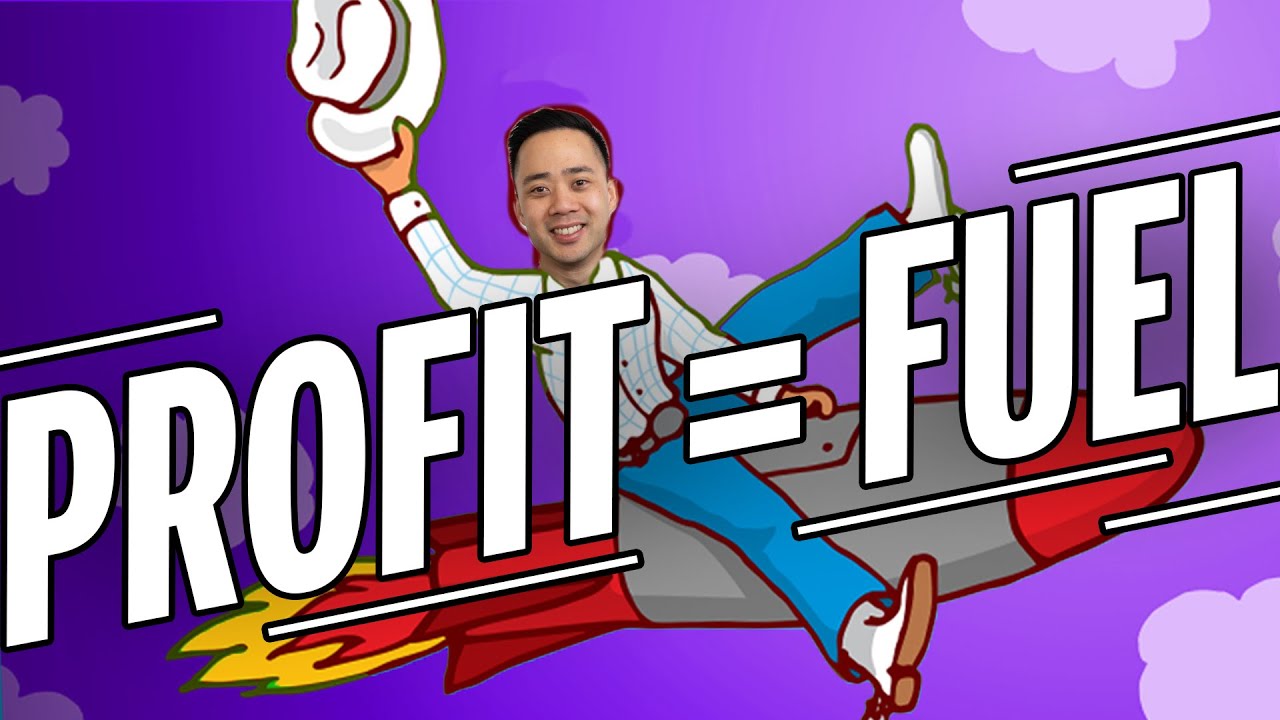
Eric Siu argues that taking regular profits kills wealth building through taxes and lost compounding. Instead, reinvest into your business, defer compensation, and think like an investor. Warren Buffett and Charlie Munger built fortunes this way.
Chapters
Okay everyone, today we're gonna talk about a fun subject. The fun subject is if you decide to take a profit, you will not get rich. That's kind of a scary thing to think about, right? So I was watching something the other day and it was with this investor. He's a billionaire, name's Rob Baron. And one of the guys on the show, CNBC, was saying, you know, at the end of the day, you know, nobody ever got, nobody ever got poor taking a profit, right? And then his counterpoint was, but at the same time, nobody gets rich while taking a profit because of all the tax implications that you have there, right? So this is coming from an investor's point of view. And so, you know, when you think about it, the Warren Buffetts of the world, the Charlie Mungers of the world, I do remember reading something. I think it was The Tale of Charlie Munger, who's— and Charlie, by the way, is Warren's right-hand man. They've been partners for years and years. And, you know, at the end of the day, they talk about how Berkshire Hathaway is a great business and all they do is they just reinvest the profits into, into into other businesses. And really there's not a ton of tax implications there because you're redeploying what you're bringing in and you are putting it into either reinvesting back into the business if it's a really good business and the business is growing a lot, uh, or you are potentially acquiring other businesses too, or putting the investments elsewhere, right? If you're continuing to do that, your tax implications are going to be lower. For example, let's say I have a business that does, $1 million a year, okay? And, you know, $200,000 of that is profit. And you might be thinking, okay, $200,000 of that is, you know, that's a lot of money, you should be taking that profit. Well, you know, think about it this way. If you decide on the $200,000, if you decide it, if you live in California, for example, you're probably gonna get taxed half of that, right? The tax rate, you know, federal taxes are 37% in the United States and then another 13% in California. So boom, automatically that $200,000, it gets cut. cut in half because, well, you decided to take a profit and the government needs to get its share because the government needs taxes to, well, you know, help with infrastructure, right? And so the logic here is that you got to pay taxes. Most people got to pay taxes because, you know, at the end of the day, most people wouldn't know what to do with that money. This is why when, when, you know, working full-time for people in the past, you know, my taxes automatically get taken out of my paycheck because people know, the government knows that you You're probably not gonna be reliable, right? We're just gonna take our share first, you go do whatever you want with it afterwards. And at the same time, you know, if you decide to take a profit, the government's like, okay, you probably don't really know what to do with that money, so, you know, we're gonna take— we're gonna take that and we're gonna reinvest it into infrastructure. Now, if you are, you know, a motivated individual, let's say you're self-employed or you're an entrepreneur, chances are you probably know what to do with that money in order to even make a bigger impact on society. Bigger impact for society would be if you decide to start another bit— other business, you are going to employ more people, okay? You're gonna add more value, you're gonna be paying more money, you're gonna be paying, you're gonna be paying, you know, other people for goods and services as well. And then you're just growing the overall pie, you're helping the economy grow. So if you're a smart, motivated entrepreneur, you're watching this right now, or a marketer, you're trying to get better and better, chances are you're a learner, you're fast-paced, and you are going to be a better investor, a better capital allocator. Capital could be, you know, financial capital, or it could be human capital. You are gonna know what to do with that better than giving that money to the government, right? If you can, if you do not have, you know, a family to worry about— I'm just painting a really simple picture. Let's say hypothetically, you know, you don't have a family to worry about, you don't have a spouse right now, you can take shots, you can afford to take shots. Well, you know, my argument here is that you have these world-class investors, you have billionaires talking about, hey, like, look, tax liability is really not much because we're constantly reinvesting it. You might be thinking, oh my God, I need to, you know, protect myself. And you should, you know, you want to have at least 12 months of expenses, right? Emergency expenses saved up, emergency funds so you can cover, you know, whatever it is, um, you know, cover your own lifestyle, cover your rent, cover your food, right? So you don't have to worry about that. And then, um, you know, ideally what would be even better, and I did, I talked about in another video, is that you have a launchpad business. A launchpad business is a foundational business, a bedrock business that will protect you. Maybe it's generating $100,000 or $200,000 a year for, for you to take home. And it's— I'm making it sound easy. It's gonna take you time to get there. But once you establish that, once you establish, you know, kind of a shield around you too for emergency funds, then what you can do is you just, you just constantly reinvest. You constantly reinvest. And, you know, a lot of these investors talk about, you know, cash is trash, cash is trash, right? You want to redeploy the money. And for them, they redeploy a lot of it into, into into stocks, into other types of, you know, financial assets. Um, but for you, let's say you're running a business, you can redeploy that money into ads. You can redeploy that money into hiring amazing people to grow the business even faster, increase your growth rate even more. In the past, I've talked about, you know, the case for deferring your compensation because you can wait, especially if you're younger. Um, you can wait longer. Now, you know, you have to weigh your own situation, right? If you have a family, if you have kids, um, if you have a mortgage to worry about, yes, there are more costs involved there. But the younger you are, the more shots you get to take and the more that you decide to be patient, the greater you're going to have a compounding effect. And then by the time you get, let's say you get into your 50s, boom, things start to really, really explode. Right? And plus the discipline and the patience and the mindset that that builds when you're constantly just thinking, okay, I bring in these additional resources, how can I redeploy that capital? Whether it's into my team, whether it's, you know, giving people raises, whether it's hiring more, hiring more amazing people, buying specific technologies, or, you know, again, taking that capital. If this business is not growing that quickly, I'm going to redeploy it somewhere else. And then you just, you keep that, that snowball effect going. And, um, before you know it, you know, let's say 10 years goes by and you're just like, boom, I don't know how I created all these assets. That's how you should be looking at things. You should be looking at things, um, from the lens of an investor. And most people can't do that because most people, they don't have a long-term outlook on life. Investors do. When you think about Warren Buffett and you think about Charlie Munger, they're like, they like, they prefer to buy stocks and just hold it, right? This other guy, Rob Baron, he likes to buy and, and he does like to, you know, hold businesses for the long term. Um, and that's what you should be looking at because when you, when you are thinking about starting a business or buying a business, it's not just that you're looking to for a quick buck, right? Wall Street is, they operate on a quarterly basis and the incentives are misaligned because it's like, you know, what happened for me in the last 90 days? Dude, that's, that's too quick. When you look at things from like a A 10-year horizon, 20, 30, 40, 50-year horizon, and you just let things sit there, it's a lot less anxiety for you. And it's just easier to have a long-term mindset. And most people are too short-term focused. They think about the dollars. At the end of the day, really ask yourself, even if you make a lot of money in the short term, what are you gonna do with that money, right? You're better off thinking about, okay, you are a steward of society or the capital, right? And you're gonna make society better. Yeah. And, you know, you're gonna collect a good piece for yourself, you're gonna make some good money from it, but at the end of the day, it's the net— the net value that you've brought to society and that's what really matters. Most people don't think that way. When I was in my 20s, you know, I was conditioned to think, once I make a lot of money, I'm gonna go buy a really nice car, okay? That's gonna depreciate, right? It's a liability. Oh, I should go buy a house to live in. You know, people are gonna argue with me on this, but, you know, to me, buying a house and living in it, that is a liability. But if you're buying houses and you're cash flowing and you're buying multifamily and you're renting it out to people, that's a different story. That's an investment. Once you start to think longer term, you start to think like an investor, the playbook opens up for you. It's like, oh, maybe that business, if I buy that one, that'll plug in with the audience that I have for this business. And I buy that business, that will plug in with this other business. And then maybe, maybe, you know, the team from that business can help our team. That'll become, you know, 1 1 4. And so you start to do all these things and it becomes a nice game that you're playing. Because everything starts to stack, everything starts to compound, and it's just fun. But when it— when you have to— you have all the schizophrenia thinking about, you know, I'm gonna sell this business over here, you know, next quarter I'm gonna make this, and it just becomes like over and over and over again, and you can't really get anything going, right? Because I like to use this analogy: success is like a sphere, right? And so if you start out in the middle and, you know, you start to— you know, on the edges, that's success, right? But you start out in the middle and you start to go up a little bit. Oh, Oh, I'm gonna change. I'm gonna change gears. Oh, I'm gonna change gears. I'm gonna change gears. And what happens is you never reach any of the edges because you couldn't focus. You couldn't just boom hit one. Okay, now I'm gonna start a new one. Boom hit that one, right? But it's just like this, and you're just stuck. You're just stuck. And it's like small little wins, small little wins, right? Because I'm so focused on money. All I want to do is make money, right? Money is not the right target, okay? It's the impact on society that's the right target, in my opinion. It's just my opinion. Think about the impact you can make. The money will follow no matter what. I guarantee it. All right. So let me know what you think in the comments. Don't forget to like, don't forget to also subscribe as well. And if you're coming from the podcast, don't forget to rate, review, and subscribe because it helps us grow. And we'll see you in the next video. Thank you.









