Erin Banks’ Ureaplasma Journey – Natural Fertility Over 35 & Unexplained Infertility Solutions
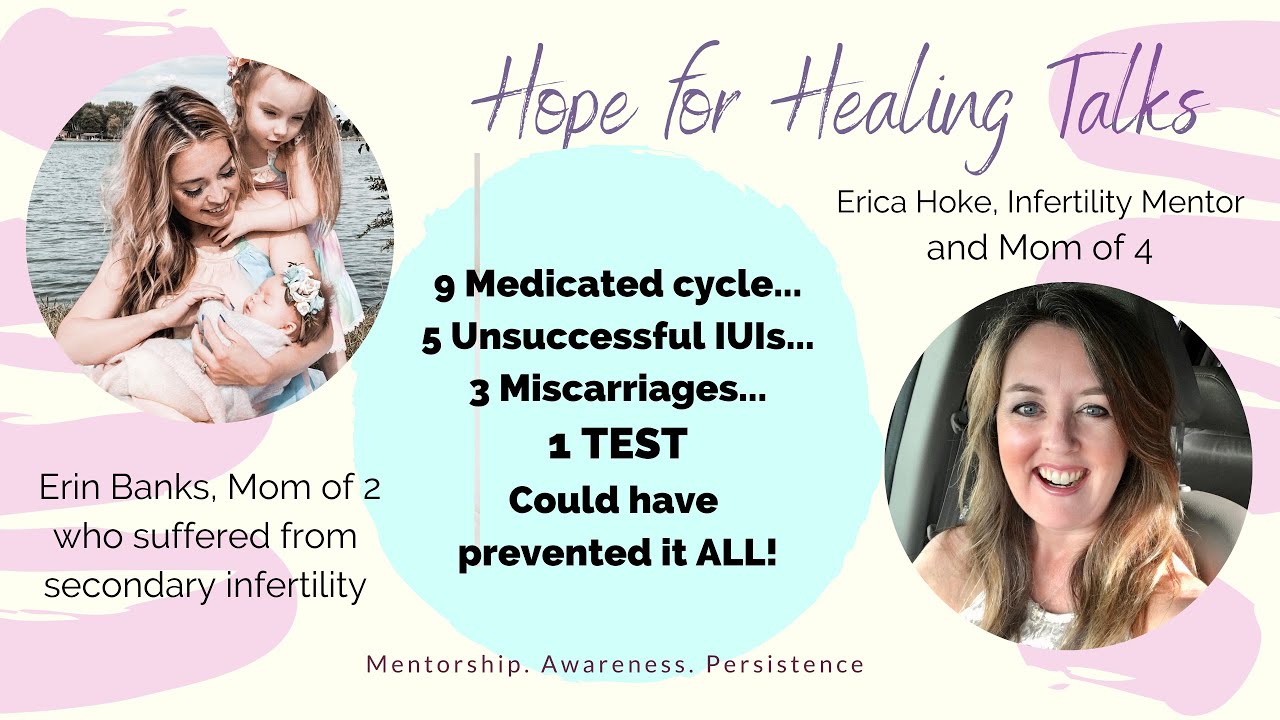
This content was created by Erica Hoke. This content was uploaded by Erica Hoke. This is a YouTube video titled 'Erin Banks’ Ureaplasma Journey – Natural Fertility Over 35 & Unexplained Infertility Solutions' (published April 29, 2021). It is an English interview-style conversation between host Erica Hoke (infertility mentor and health/wellness coach) and guest Erin Banks (mom and ultrasound tech) about Erin’s multi-year infertility and chronic urinary symptoms that were repeatedly misdiagnosed. Erin recounts multiple IUIs, diagnostic tests (including semen analysis, NK cells, DNA fragmentation), treatments (Femara/letrozole, prednisone, tamoxifen, antibiotics), and finally discovering a mycoplasma/ureaplasma infection that was treated with azithromycin/doxycycline and coincided with a successful pregnancy. The discussion highlights gaps in fertility care, the importance of second opinions and patient advocacy, and practical takeaways for clinicians and patients.
Chapters
Hey everyone, I am Erica Hoke. I am a health and wellness, um, coach and an infertility Me check my video here. Alright, let's see if we can get this thing going. So, Erin, just so you know, we've got a little bit of feedback. So if there's a delay, we've got a little bit of a delay going on here. So just FYI. All right, guys, sorry about that. Technology does not like us today either. So— Okay, Erin, I'm gonna try one thing, okay?
Okay.
All right, we're still live. All right, let's see if that's better. All right, perfect. I love when I can fix my own problems. All right, we're here with Erin Banks today. She is an amazing mom of two. She's an infertility warrior. She battled through advocating for herself for several different years. She's going to tell you about it with something that is little known in the infertility world, and it should be, it should be because it's got to be pretty common and can definitely cause infertility and is overlooked and misdiagnosed. As you know, I'm Erica Hoke. I'm an infertility mentor and health and wellness coach. Um, if you're watching on YouTube, go ahead and hit that like and subscribe button if you want more content like this, because we're just here trying to give you the best information to advocate for yourself on your infertility journey and be the 1%er, right? Just because your doctor tells you that you can't get— that they can't help you, does not mean that you cannot get pregnant. So if you don't know my story, go look my story up. I am a mom of 4, and again, Erin is a mom of 2, and she's going to tell you a little bit about her journey today. So thank you so much, Erin, for being here. And just tell us a little bit about— more about yourself and a little bit more about your infertility journey.
Hello, thank you for having me, Erica Hoke. I'm excited to be here, and I think what I went through, um, may not be someone else's answer, but it may give you hope as you're watching and like, you know, help you realize, you know, the biggest thing is to advocate for yourself always and always get another opinion. I am 36 years old. I am a mom of 2 girls and 3 dogs. I am an ultrasound tech in high-risk OB and also a photographer specializing in children's photography. I had my first baby at 31. I had the Mirena IUD removed in July of 2015, having no idea, you know, how long it would take us to get pregnant. We were lucky enough to get a positive pregnancy test 4 weeks later. We had our baby girl in May 2016. Healthy baby. I nursed her for over a year. So in June of 2017 was kind of the beginning of my infertility journey when I didn't know it was. I still had the, an IUD in. So after I had her, IUD put back in, the Mirena. So 2017, my baby was 11 months old and we were still breastfeeding. At that point, I had started weaning her. So we were nursing, I think, twice a day maybe. I had gotten a UTI and that was weird for me. I barely ever got those, but I thought, no big deal, you know, just a UTI. So I thought. So I went to the doctor. They said, yes, you have a UTI. I was treated. 2 weeks later, my symptoms came back just like a UTI. It was burning, felt like I had to use the restroom a lot. I went back to the doctor and they said, "You don't have a UTI." I said, "Well, this doesn't make sense because my symptoms are the same." So they said, "Let me go." I dealt with this burning for a while. I didn't have a yeast infection. I didn't have anything else going on. So I dealt with that. Until probably September of 2017, and we were ready to start trying for our second baby. And I went and had my Mirena removed, and I also asked for an ultrasound because I was nervous about that burning sensation I had, which they told me wasn't a UTI. So I had an ultrasound. It was normal. So we started trying for a baby, and That was the beginning of the— I say it's the worst journey of my life, but now that I have her, I'm so thankful for that journey because if there hadn't been a weight, she wouldn't be who she is. So the weight that killed me also gave me her.
It grew you, right? I mean, ultimately it grows us into the moms and the women that we need to be, right? Oh, yes. The journey.
Yeah. So actually, after the IUD was removed, we went through— we had a positive pregnancy test in November, so that was a month and a half. And I'm like, well, okay, another one easily. Well, I watched— I had started doing pregnancy tests and I watched the line fade away. And I called my doctor. They did an HCG. It was zero. But at that point, I had already started bleeding. So that was my first chemical pregnancy, miscarriage. And I didn't know what I was about to start on was going to be such a wretched journey.
Right, because your first was pretty much one month, one cycle, pregnant right away. Yes. And then, right.
No miscarriages. So I went back to my doctor after that and I still had these burning symptoms and she said, "You don't have a UTI." I said, "I want checked for everything. I want you to check me for every STD." Every infection you know of, it came back clean. So I asked her, kind of with my career, I kind of have some background and, you know, the doctors that I work for can help. And they recommended I just start doxycycline just to wipe anything out that could be atypical. So the doctor, and she agreed she would give me doxycycline. I had started being in and out of, out of urgent care because of these symptoms. And they would check me and say I didn't have a UTI or that nothing grew on culture. So, um, so let me stop you there.
So you would go to the urgent care center and they would just— I mean, they would check you, but they would kind of dismiss you?
Yes, because nothing. So, so they said—
what was your pain level at that point? Like, you're, you're in a significant amount of pain because you're, you're going to walk-ins at this point?
Yes. It was like a UTI that wasn't a UTI, but I had the symptoms and they would get worse because it wasn't pain. It just wasn't slight that I would feel it here and there. It was pretty constant. I would go to urgent care, I think starting in October, and they did call in an antibiotic in the meantime before they got the culture back. They said, "We may change your antibiotic when something grows on culture once we know the right antibiotic." But then they call and say nothing grew on culture, so I didn't get another antibiotic. When I was on the doxycycline, I was in a lot of pain on doxycycline. I was spiking fevers. I had abdominal pain. I went to the emergency room. They took a ton of labs. They did blood work, checked my urine. They couldn't find anything. They sent everything off to be cultured. They did an ultrasound. Everything was fine. So I then, just doing research, I decided, well, I'm going to cut out gluten. Maybe I have some type of inflammatory response. So I cut out gluten. I actually got better for about 2 months. Um, I couldn't— hadn't did— I wasn't having gluten. And then it was around March or April 2018, my symptoms were back and they were pretty bad. So April 2018, I went to my doctor. She said, "You don't have a UTI." I kind of figured. She's like, "This sounds more like the bladder. I want to refer you to a urologist." And then I went on by saying, "I am really worried about not being able to get pregnant." And she said, "Well, you're not at a year yet. You're not 35. It's normal to take over a year to get pregnant." And she's like, "We can revisit this in August." track your cycles, track ovulation. These were things I was already doing. I'm like, okay. I continued on. I had my appointment with the urologist in June of 2018. He basically did not check me for anything. He said, I think you have interstitial cystitis and you need to change your diet. Gave me a sheet saying, follow these diet guidelines. And I was like, I mentioned to him, like, I also can't get pregnant. And I did not have these symptoms when I was trying for my first baby and I got pregnant right away. And now I have these symptoms and I can't get pregnant. So to me, right.
So how did you feel when you left the urologist's office with a sheet and like no answers?
I knew I needed a second opinion.
Yeah.
So I went to a urogynecologist in July, and he did a scope, and he did not think I had interstitial cystitis. He said, he didn't— he said, you know, you could have made diet changes and kind of worked your way out of it, but I was still having the symptoms. So I did a clean catch with a catheter, caught my urine, and sent it, and nothing grew on culture from the urine. So I basically was like, I have this chronic burning.
And it's a terrible feeling.
Yeah. Treat me. I thought that those— I thought whatever was wrong, I thought I had cancer. I had no idea. But every time I felt that way, it reminded me of the negative pregnancy tests and it reminded me this. This is why I know it's why, but no one's listening. So August of 2018, I'm about at a year of trying. So my doctor Ordered my husband to get a semen analysis, and then she did the procedure where they checked my tubes. In my mind, I thought my tubes are blocked because I have this weird infection or something. Right, right.
You're like—
they were fine. So my tubes weren't blocked. She— the semen analysis came back and his morphology was 3. He had a really good count. Everything else was good, but his morphology was— isn't really the best, but it's not zero. It's not— so she had called an REI that she knows and was going to give me Clomid, but he told her with her husband having an REI or a morphology of 3, they should probably come be seen by us and you probably should not prescribe her Clomid right now. So she did refer me to my first REI office. My appointment was going to be October of 2018. September of 2018, I had another positive pregnancy test, and I called them. I got, um, HCGs done. My HCG was 25, and I watched that line on the pregnancy test disappear again. So another chemical pregnancy miscarriage. I had my appointment with the REI October of 2018. My husband went with me. I told them my story. I told them about the burning, the type of UTI, how I don't have a UTI but I feel like I do. They dismissed it. They didn't care. They said, that's not a big deal, that would not be why you're not getting pregnant. No, I told them I didn't feel this way when I was trying for my daughter, so they didn't check me for anything. They just were like, no, the big picture is here. You need to ovulate better. I was ovulating around day 23, day 25 of my cycle, but that was the same with my daughter that I had conceived fine. I have always ovulated a little bit later, so they wanted to improve ovulation. And so they said, with the morphology of 3, we recommend IUI. So our IUI journey began in January of 2019. Going in for our first IUI, I was on Femara. I was on a low dose. Femara is— I think I was on Letrozole, a generic of Femara. They had me on a low dose. They had done a bunch of blood work, ruled me out for all kinds of— They checked my thyroid. They checked the 20 tubes that they draw of blood when you first—
Right.
So they did the first IUI and it was unsuccessful. My ovaries had cysts on them after the IUI, so we couldn't go in next cycle for another IUI. Had to have a break. And I think I took birth control pills to try to shrink the cysts. And so maybe March was our next IUI. They increased the Femara. Now I was ovulating on Femara and I was follicles. So I would have 1 or 2 good follicles, and I'm an ultrasound tech, so I could see this, and they would increase the Femara.
So you're verifying this in your own mind yourself. You're seeing the ultrasound screen and you're able to— My own eyes. Yeah.
Yeah. Yep. So I knew I had good follicles. So third IUI, a month after that, and it was unsuccessful. And they said, we want to check you for some other things. And I said, well, wait a minute, I just had 3 unsuccessful IUIs and you want to check me for more things now? I just paid for 3 expensive procedures. We had no coverage whatsoever. I had taken time off work. My vacation hours were diminishing. Time away from my daughter, time on hormones that aren't good for your body. So they said they wanted to check me for natural killer cells. They said natural killer cells can— your body, if they're elevated, your body can fight the pregnancy and cause implantation not to happen. So I'm like, oh my gosh, I know something's wrong with my body. I know I'm fighting something. I probably have that.
And you're like asking yourself, I'm sure, like, why are you doing this now?
Right?
Like, I just spent, you know, all the money.
They actually thought they checked me for that, but for whatever reason it wasn't drawn because I do remember them saying, oh, that was supposed to be drawn. We need to look at that. Yeah, I'm like, what was that before? So then it did come back elevated and they also checked me for high metals and they said my— are those high metals? My— one of the high metals was a little elevated. I think I was an 8 and they want you like under a 4. They had me taking some type of activated charcoal for a while. So then when they found out my natural killer cells were elevated, they wanted me to start prednisone, which is a steroid. And I started that, I believe it was the time shortly after the IUI, I started that kind of around that 2-week wait time. So, um, fourth IUI, I had the letrozole, um, and I was on metformin at this point, not because they thought I had diabetes, but they thought that, or that I had PCOS. They just thought clinical picture, let's throw some in and see if this helps. And then the prednisone after ovulation. Fourth IUI was unsuccessful. I went to see my— I went and changed doctors, GYNs, had a new OB-GYN, and he was actually the doctor who delivered my first baby because he was on call. So I kind of remembered him and had a relationship with him, and he had an infertility background but did not practice that anymore. And I thought, I just want to see someone who is on my same level, who can maybe help me, who has that background. I went to see him and told him my story. And he checked, like, did a swab and said that I had bacterial vaginosis. And I said, well, what is that? I've never had that before. So I was treated. And I had to have several rounds of antibiotics to be treated and to have it go away. At that point, I thought, well, maybe that was what my symptoms were all along, but why didn't my doctor catch something so simple like that before?
Right.
So he suggested that my husband then see a male infertility specialist. My husband had an advanced semen analysis when they had checked me for the natural killer cells.
Mm-hmm.
Something called DNA fragmentation that was elevated. He was a level 25. Under 20 is considered normal and fertile. Over 30 is considered not fertile, and it can cause early miscarriages, problems with the sperm when it meets the egg. And so we were referred to go see a male specialist, and he told us he sees people conceive all the time with a level of 25. He was not worried about that. He checked my husband for some other things and put him on a very low dose of Clomid. I think he took one Clomid, the lowest dose, once every 2 days. So very little bit. So we go for our 5th IUI in June and it was unsuccessful.
And this is June of 2019, right?
Yep. I had this after the 3rd IUI. My lining on ultrasound was not thick around the time of ovulation because they would check my follicles and say, oh, you have a great follicle. You have a great 2 or 3 follicles, it's time to do the Ovidrel, which the, you know, the injections. Right. And I said, well, my lining's thin. Like, I don't like that. My lining is 6 millimeters. And they said it meets criteria. It's fine. Well, my knowledge and my background, I was trained that the endometrium lining of the uterus should be at least 8 to 10 millimeters to be able to sustain implantation. They were fine with it. So same thing happened with 5th IUI. I said, my lining is 6 millimeters. I don't like this. They were fine with it. So I'm like, okay, they're the experts. I just need to let go. I just need to trust them. So of course, the 5th IUI was unsuccessful. Next month, they were going to— we were going to do another IUI. They increased the Femara again. So I'm on a really— I'm on a pretty high Femara, but I'm ovulating and I'm ovulating day 12, 14, sometimes even 10. So pretty quickly, you know, several good follicles. So I went in for my check at ovulation time and my lining was 5. And I said, I am not doing an IUI. I'm not like, I'm not. This is— I am wasting, throwing it down the drain. So they said, well, we'll put you on a Strace and see if it thickens your lining up. They didn't check to see if it was thickening my lining up. They just gave me a strace and sent me on my way. We didn't get pregnant. So I had a follow-up with that REI in August of 2019. He told me at this point, you know, we cannot do any more IUIs. And I said, I'm still having this burning symptom. Is there something we can look at with that? And he said no, he wasn't concerned about it. I said, is there anything else we can try? Like, maybe the Femara is not working with my body. Can we try something else? And he said, no, like, there's no other medicines we can try. You need IVF. You need IVF with ICSI, which has to do with something with how they actually— it's the more expensive type of IVF that they actually go in and I think pick— it's something that has to do with the fertilization part to optimize that, like, $25,000 procedure. Right. And to me, we didn't have that kind of money. We didn't have that kind of loan we could take out. And I have a daughter who is 3 and a half years old who, if I'm going to spend $25,000 on a procedure that might not work, I can— if I had that kind of money, I could put that back for college for her. Like, of course, that's amazing. But in my mind, what was going on with my body was my body's not ready. There's something, and then IVF's not even going to work.
Yeah.
So they told me there's nothing else they could look at, nothing else they could do. They showed me a sheet of our chances that IVF would be successful for us, showing we'd have like 75%, 78% positive rate to conceive with IVF. I had made a phone call to a new REI, and that appointment was going to be early September of 2019. And it was someone my new OB-GYN recommended. It was a bit of a drive. We had to drive. We drove an hour to see them. So I went to see him, and this was a big— it was a big turning point for me because I was hoping that he would be interested in some of the things I had to say and see things the way I did and the symptoms I was having. Before I went to see him, I developed high blood pressure. When I was going to the first REI and they would check my blood pressure, it was 160s over 110s. And it, you know, they would tell me, well, you, you know, you need to relax. This is why you're not getting pregnant. But at home it was not that way. It was just anger and my frustration with this first office who wasn't listening to me, and probably the steroids they had me on too.
Yeah, and all the, all the other hormones, right?
Yep. High dose Femara, right? So I saw the new REI in September, early September, and he looked at— I took everything. I took lab work, I took all my— they had all my ultrasound pictures from the IUIs. He had everything and he reviewed everything. First thing he said was, your lining was too thin for any of those IUIs. I wouldn't have done one of them. And in my mind I was like, oh, like someone's listening to me.
Like, but still so frustrating, right? Like in hindsight. But at least you felt like you had a cosigner, you know? Yeah, big part.
And he, um, so he said, I would have maybe done the first IUI but none of the others. He said, the thing that surprises me is they didn't change anything in your protocol. The only thing they did was increase your Femara, which in turn was thinning out your lining. Your body didn't have time from when the Femara stopped to let those hormones replicate and thicken your lining up. You would just ovulate with a thin lining because while you're on Femara, your lining is thin. And it doesn't always have the time to thicken up. So he said, I cannot—
you knew, you knew intuitively, you were telling them.
Yep, yep, yep.
That gut check, you know.
He said, I cannot give you Clomid because it's going to do the same thing. Actually, he said Clomid can even do it a little worse than what Femara can. He wanted me on something because he did think I needed to ovulate a little bit better. He said, "There's one more drug we can try, and it's called tamoxifen." I know with my background, tamoxifen is something cancer patients have— breast cancer patients have gone through and take after. I was like, "Really? Tell me about this." He said, "Well, it works great for ovulation. Not as good as Femara." He said, "You're ovulating, so we are just trying to optimize it a little bit." He said, "But it also thickens your lining." I said, "Okay." He still thought IUI would be our best chances. I started the tamoxifen and I ended up back—
This was number 7, right?
This was going to be, yes, the 7th medicated cycle.
Right.
It was 6 IUIs. He said— He had me come in for ovulation. It was actually a different REI because he was out of town. Um, or he was off, I don't know. And that REI checked my lining and I could see it with my eyes and I saw it was 6. And I— she said, you can do an IUI. I said, I'm not doing that. Why? I want my doctor to look at my lining.
Yeah.
So called me a few days later and said, yeah, your lining is thin, we're not doing an IUI, but I want you to come in, I want you to do Avodril, and I want you to come in at, you know, 2 days after or something when he was expecting ovulation would be. It was 8 millimeters. He was trying to get an idea. He was looking at the lining, seeing what it was doing, which no one else had done before. I think this is going to get better. I think the more— next cycle after you've had the tamoxifen, we'll try tamoxifen again. I, at this point, end of September, I was doing tons of research about infections and inflammation in the body. Groups I'm part of for infertility, I came across this post that said, I had this infection. No one checks for it unless you ask. I was treated. I got pregnant. And she said it was called ureaplasma. U-R-E-A-P-L-A-S-M-A. I was looking at the comments under her post and tons were posting pictures of their new babies saying, I had this exact same "Same infection. I was treated. I got pregnant. Exact same." I mean, there was tons of comments. I'm thinking, what in the world? So I started doing research and I came across a paper that a patient had wrote, and it was entitled "Ureaplasma: The Treatable Infection the Fertility Industry Doesn't Want You to Know You Have." Her story was my story. I read her words and I cried. She had miscarriages. She had— she couldn't get pregnant. She had the symptoms I had. She had bacterial vaginosis. She had burning. She— it was— she— no one would listen to her. She went through the same thing, and she finally went to see an acupuncturist, and she told her about the infection, and she was being treated with azithromycin. I don't know how her journey ended. I'm hoping she had success. I called my fertility doctor right away and I said, "I think I have ureaplasma." I thought they were going to laugh at me, but they didn't. The nurse said, "If you think you have it, you need to be treated." I said, "I do think I have it. I think I've had it a long time." I said, "Can you check me for that?" She said, "I don't know that we have the tools we need to check you for that, but I'm going to get a hold of your doctor and we're going to call you back." She called me back that day. She said, he called you in as a throw my son and we want you to take that. And I had talked to them about wanting to be on tamoxifen but not doing an IUI at this point. I was just spent. I emotionally was— well, I felt like I was getting answers. I just— I was— I was stressed. I was so not happy. I couldn't handle another failed IUI. I couldn't handle Another miscarriage. I don't think I mentioned that I had a miscarriage right before we saw— I had one September of 2018 and then another one end of October '18. I had another one of those chemical pregnancies right when I was going to see the new fertility or the first fertility doctor. I had asked them, "Can I be on tamoxifen but not do IUI?" They said, "Yes, if you want to do that for a few cycles, you can." So I was doing tamoxifen. I had the azithromycin. They told me that it's very hard to check for ureaplasma. It's very hard to treat for. A lot of times you can have it, but nothing will grow when they're checking for that, or it takes several months to grow. So I then called— I had my azithromycin. I called my OB-GYN and I said, is there a way you can check for this? And even though I knew I had treatment, I was like, well, what if this treatment doesn't work because it's so hard to treat?
Right, right.
Have it.
And plus, didn't you just want confirmation? Didn't you just want somebody to tell you, no, this is what you've been having this whole time, right? You could be like, hello.
Yes. So I, um, called my, my new OB-GYN I did not have when the fertility start— infertility started. They told me you should have had a test in the beginning of your fertility journey called a post-coital test. And it's done at ovulation and you're supposed to have intercourse and then 4 hours later go in and they check like the cervical mucus. And I guess from that they can kind of get an idea of if it's optimal for, you know, conception or not. So that was like within a week or two I went to him and had that test done and he said, you have great cervical mucus, but you have a ton of white blood cells. I said, what does that mean? And he said, "Infection." And I said, "What kind of infection?" He said, "Mycoplasma." I said, "Is ureaplasma a type of mycoplasma?" I had kind of read that in my research and he said, "Yes, it is." He said, "It doesn't matter what type of it you have. It's still a mycoplasma infection and it's treated the same way." But it can be hard to know exactly what type. And when I was reading about ureaplasma, it actually can start from a UTI. Now this is read. And this, you know, so I'm not a medical, you know, I'm not a doctor, but a lot of things I had read, ureaplasma is a normal bacteria in a certain part of your body, should not be in like the genital tract, but it can get in there from a UTI, which explains why I had a UTI. But then I kept having symptoms come back. So he said, you know, you need to treat it with azithromycin, which I told him, well, the fertility office is doing that. I had several weeks of azithromycin and my husband had— I think they had him do like one, one strong dose or something.
Okay, so let's not gloss over this because I want to make sure that everybody hears this too. They treated your partner, they treated your husband as well. Yes, which is—
that's, that's a big part because back in December, remember I said I want a round of doxycycline, I want anything atypical, you know, gone. And doxycycline is a medication that will treat mycoplasma, and I got better for a few months, but my husband never had it.
Right.
And can transfer this, this type of bacteria back and forth. Um, so we were both treated at the— you know, a few weeks before this, I had started praying for peace. I had started praying for God to teach me how to let everything go. I was not enjoying time with my daughter. I was constantly on my phone researching. I was missing out on that little 3-year-old and the things moms should be doing with a little 3-year-old. I was completely consumed, and I couldn't, I couldn't do it anymore. Like, she was probably like, why is Mommy always holding that phone? So I, I knew I had to give up, even though I had— I started praying before I had the answer of you know, the mycoplasma infection. But I had prayed. I knew I had to give up. I wasn't healthy. And but I couldn't give up on my own. I needed God to show me how. I couldn't have regret years from now saying, oh, I should have kept trying. I should have kept fighting when I was unhealthy, when I had super crazy blood pressures. So I prayed for peace. I prayed for God to teach me how to be happy with one child while I needed to heal my soul. And December 3rd, 2019, we had a positive pregnancy test and that line didn't fade away. And my doctor, when he found the mycoplasma infection, he said, "I want to give you doxycycline, but if you're pregnant—" because they do this test at ovulation, so I could have— I was in the 2-week wait. He's like, "I want to know that you're not pregnant." 'And then we'll do doxycycline if this hasn't cleared up.' I don't know if the azithromycin had, you know, it makes me think it did its job and we had a healthy pregnancy and I had her July 30th of 2020. It just, it, you know, I didn't need IVF. I didn't need IUI. I needed a $10 antibiotic. And, you know, my doctor told me, you know, this is a very common infection. He said a lot of women don't have symptoms like you do with the burning. Most women, their only symptom is infertility, and they don't know they have this infection unless they get someone to check them. And I said, well, why? Why was I ever checked for this? And he said, well, unfortunately, $10 antibiotic doesn't pay the bills. IVF, IUI, right? Like, you know, I'm sad to say that this is what the industry has turned to, but it's worth a try. You know, if you have infertility, if you, you know, or even just infertility and you've gone through early miscarriages or implantation problems or just can't get pregnant, you know, it's, it's a simple thing to try. I mean, azithromycin is antibiotic. They call in all the time for people, right?
For almost anything. Almost anything, right?
Yes. Yes. Yeah. A few people I have told my story to have then gone to their doctors and are kind of getting the same thing I did. Just, no, that's not— mycoplasma is not real. Mycoplasma doesn't cause infertility. Um, I just think there's so much more that needs to be looked at, and I have found stories of— there are physicians out there trying to get the word across about how mycoplasma does play a role in infertility. And I don't know if that's your answer, but why I tell my story is the second opinion. It is changing doctors. Get a new doctor. I mean, I was thrown around by my first OB-GYN, just not— just not getting what I needed, and she just wasn't intuitive to me. And I mean, that second OB-GYN, he was a huge part of it. The second REI was huge, you know, listen to me. So when you have a doctor telling you you need IVF or you're not going to get pregnant, or I don't think you have this, your gut, your gut is right. You, you know your body better than anybody else.
Yeah. So many women, the thing about that though is so many women just take that and then go and crawl in a hole and then they never come out. Like it's the worst. I feel like it's the worst crime in medicine because not everybody has the strength that you have to continue down that road, and not everybody has the strength to advocate. So it's amazing that you're sharing, um, you know, that you're passionately sharing your story with people to give them that courage to speak up for themselves and to advocate. I mean, infertility aside, let's just say this, A UTI symptom for 2 years, uh, pretty much sucks. Let's just say that, right? Like aside from the infertility part, like say you weren't even trying to get pregnant, just being heard in that part of the arena and getting yourself taken care of as a woman, you should not have had to go to 4 doctors to do that, right?
Oh no. I just, I can't believe, and then for my doctor to say it's common. And, you know, then he said a lot of women either go on to IVF or go— or give up, or they give up. And, you know, when they're already broke, right? Yes. It's just torturing. It's disgusting. It's deceitful. It's disrespectful. Um, I just don't understand why it has to be the way it is and why some doctors can't be more open to going on.
Well, I haven't quite figured out how I'm gonna do it, but I'm gonna change the system because I, I'm serious. Like, they should have to have some kind of protocol. These REIs should have to have a mandatory protocol to rule out any other possible, you know, factor. And a lot— so here's the thing, I, I want to ask you this. Don't you think the that people already think that that's in place. Yes, I thought it was.
Yeah. And, you know, I had asked my doctor, you know, when we were talking about the mycoplasma infection, I said, what is it that it's not? You know what he said? That mucus with all the white blood cells in that infection, or if the husband has it, it can make the sperm sick so they cannot get to the egg. Or if they get to the egg, they can't— it doesn't fertilize well and be like an early miscarriage, not be able to implant. Um, you know, too, that infection was causing my natural killer cells to be elevated. Now, the second REI did not think that. He's like— he said though I did not need to be on prednisone. I forgot to mention that. He did not think levels were at an insane amount. He said some doctors will put you on everything under the sun, but they're missing the big picture, right?
So the spaghetti model, right? Throw the spaghetti at the wall and see what sticks, because then at least you feel like they're trying to treat you for something, right? But they're not really doing a good job treating you as an individual. It's like, well, this is what we're going to do because this is what we do. Not right. Erin has these symptoms, so let's do this because this is what Erin needs. Right, right.
And I kind of wonder, you know, if we had done IVF, would it have worked with that infection in my body, with the inflammation that I'm sure I had after having that for 2 years, not knowing? Right, right.
Yeah. Yeah. So what— well, one of the things I feel like there's so many remarkable pieces to your story. I feel like we could almost do a part 2, like, but I think one of the remarkable things is the fact that they did additional rounds of IUI for you, because I know a lot of women get, you know, a hard no after that third failed IUI. So They let you do— they let you— you paid for out of pocket, um, 5, right? 5, yeah. Right. So how, how did— let's talk about that a minute because so many women get to— I, I had an interview with another woman who, um, her 4th IUI was successful and they let her go for the 4th IUI just because they felt like she was, you know, a good candidate. But most of the time women get stopped at 3. So let's, let's kind of pull that apart a little bit because I want to talk about that.
Um, about why they continued letting me do IUI?
Yeah, yeah, just that part of your story. Did you advocate for yourself or was that your doctor's switch and they were like, well, we're gonna—
they, um, But after the third, I think it was because they had then found the natural killer cells and then they had said, well, let's throw prednisone in and see if some can work. I think that that's why I was able to do 2 more, but I don't know for sure.
Yeah. Yeah. If you want to include a special guest with us today, I have no problem with that.
I have to get her.
Yeah, no problem.
So this is my miracle.
She's precious. What's her name? Her name is Coralie. Hi, baby girl. You wanna say hi? Okay. Say hi to social media land. Hi.
I would not have her if I had given up. Yeah.
And that's the bottom line, you know, and it's the most wonderful thing. And for those of you watching that are still in the throes of it and just wondering when you should give up, you know, I don't think Erin or I have an answer for you. But keep advocating for yourself as long as you feel like you can, right? Wouldn't that be what you would say to people?
Oh yeah, absolutely. 4 opinions if you need 4 opinions. Yeah. Ask your doctor, hey, what do you think's going on? Until they listen and they check you for that and do that. Right. I had to pray because I didn't know how else to let go. Yeah. And I do believe strongly in that, that, that faith over fear, and that he would lead me the right way and lead me not necessarily to give up, but lead me to the right practitioners, um, who could help me, or just give me that peace of mind that, that I'm gonna be in the right place.
Right, right. And give your doctors wisdom as well. Yeah. One of the things that you said that I think is key, that, that second, I think it was your second REI. And this is something that I've done a previous video on too, is knowing your own, knowing your own test levels and having a good, if not understanding, at least know what you've been tested for and ask the questions. Most of the blood tests now come with the range and you can see for yourself if you're on the low, medium, or high range of it, because not all these doctors are as thorough as that second REI who looked at everything across the board, which is what you want any good doctor to do, right? But they don't, they don't all do that. Some of them don't even really like pay attention to your blood work or what you've been tested for before or any of that, right?
Right. Or like the lining, you know, they were telling me the lining meets criteria at 6. Well, It's not working for me. It's not working for my body. So let's do something different to optimize the chances. Even with medications, you know, or a lab result. This lab result's normal, but maybe it's on a gray area with thyroid. Well, maybe you need a little thyroid medicine just because your body needs, you know, that.
Yeah, that's something that I talk a lot about. For myself, that was very much the case. So I, historically, I went back to my history of my thyroid levels for my, um, for my physicals pre-hypothyroidism. And that was what led me to have them increase my thyroid medicine to a higher normal range because I was also symptomatic still. And so when I dialed that in to my pre, um, to my historical level, my pre- disease level, that's when I got pregnant every single time. That was one of the keys to being able to get pregnant. So you really do have to take some personal responsibility for digging into your own blood work and that sort of thing. And of course, Aaron has a medical, somewhat medical background being an ultrasound tech and myself just being an avid researcher. That's how I ended up with my babies, you know. Um, you can do it too, you know. Um, advocating for yourself and getting the care that you need from your doctor is, um, is sometimes up to you and your responsibility. Well, um, I see you've got a little wiggly worm, and I really appreciate your time today. No computer glitches. Yay! We had really bad connection last time, you guys. So Erin has been nice enough to come on here so that we had a nice clean file for everybody to see. Do you have anything else to say to the ladies out there that, you know, are just at the end of their rope and they—
Yes. Yes. Um, It's a wicked place to be in, and I kept it in and I didn't talk to anyone about it for a long time. And when I started talking to people about it, because I didn't— I was embarrassed. I felt like a failure. I felt like my body couldn't do the one thing it's supposed to do. Um, and I think when you talk about it, it helps teach you, it helps teach somebody else. You never know whose story you're gonna like that girl who made that post, like, thank goodness I saw that post. Thank goodness she talked about it. Yeah. So I tell my story now because you never know who is going to need to hear it and who, you know, it's going to become a survival guide for somebody. It's going to be, you know, she was at the end, she kept going, this is what she did, you know, this could be my answer, or just the hope to, you know, keep trying and to fight and advocate and, you know, research, you know, that it can become someone else's survival guide. And you telling your story can really help somebody else and get the word out about, you know, what was your answer. And that could have been somebody else's answer and help another family. Yeah. Yeah.
It literally could be the next thing that you try. You know, I see so much frustration in the communities. People have tried this and they've tried that for 6 months, but our bodies are all unique. And, you know, a lot of people, a lot of people have been going through the process for a really long time, but a lot of people get frustrated really early after 6 months of trying something, not realizing that they've been, you know, they've had an unhealthy environment in their body for a long time and now they're trying to make massive changes to it. So there is a certain amount of time and effort that goes into it and just trying, you know, trying something else, um, switching REIs, switching GYNs, switching fertility acupuncturists, um, you know, which was really helpful for me and just, you know, listening to your body and then your gut, right? Right.
Oh yeah, for sure. Don't, you know, don't let your, you know, your gut, if you feel like you need to run away, just, um, Run to another.
Trust that. Yeah, trust that big time, right?
Yep. Just run to another opinion. Don't let a doctor bring you down so much that you give up and walk away from everything. Yeah. Because I think there's a lot of answers rather than— I know there are some answers sometimes to where there's no sperm or the egg quality, and they're telling you and you have that, but we have unexpected unexplained infertility, right? I don't, I don't believe that it's unexplained.
Yeah, 7 years after we were told we had a 1% chance because of my low AMH and a lot of other things, we had our last child. 7 years after we were told we would need donor eggs. That's a long time.
Yes, very long. Yeah, long time.
So if you have questions, um, for Erin or myself, just drop them in the comments. Um, we will be back with another soon for the Hope for Healing Talks. Erin, thank you so much. And Cora— Cora Lee, or Cora? Yeah, Cora Lee, thank you for making the guest appearance and your beautiful little face. So I hope that you have a fantastic day with that beauty, and thanks again for your patience. Thank you everybody for watching. Health and blessings to you.
Thank you
More from Erica

The 90 Day Fertility WIndow: Why What You Do Know Matters MORE Than What You Already Tried






Women over 35 are told to “be patient” when what they really need is direction


Even with unexplained infertility, even if you’re over 35 even if you have multiple diagnoses like I
