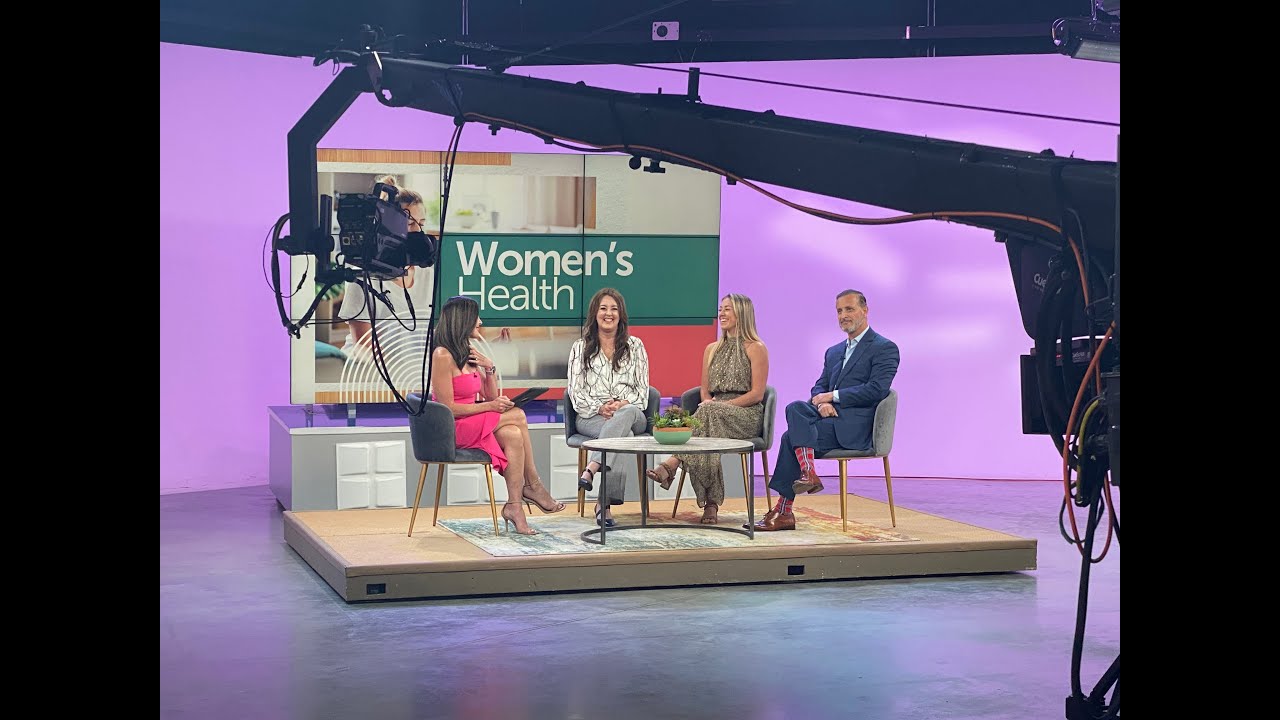
This content was created by Erica Hoke. This content was uploaded by Erica Hoke. This is a YouTube episode titled "Gut Health & Fertility Over 35 🌱 | How Your Microbiome Impacts Infertility Success | WFLA Bloom" (published May 25, 2024). It is a hosted health segment on Bloom presented by Lifeguard Imaging featuring host Gayle Guyardo, chiropractic physician Dr. Rachel Wolff, and fertility coach/author Erica Hoke. The discussion focuses on how gut health (including leaky gut), immune function, and whole-body healing impact fertility and IVF success, includes Erica Hoke's personal infertility-to-four-children story and mentions resources on BloomTampaBay.com and upcoming expert segments she organized.
Chapters
I'm Gayle Guyardo. Welcome to Bloom presented by Lifeguard Imaging. 1 in 6 people globally are affected by infertility, and even if you're not trying to have a baby, what you'll learn today will change your health for the better. Because here's the thing, medical interventions Intention is only a small part of the equation. Couples spend tens of thousands of dollars on IVF, or in vitro fertilization, but without addressing other health concerns, the chances of conceiving decrease. So today we're turning to the experts for medical advice that will help you whether you're trying to have a baby or not. Joining me now is chiropractic physician Dr. Rachel Wolff and fertility coach and the author of Her Infertility Success series, Erica Hoke. Ladies, Thank you both for being here today.
Oh, thank you, Gayle.
Thank you for having us.
So Erica has set up a great show for us today.
I—
we've collaborated now for months putting this together. You're bringing us the experts because you found out through your own personal journey how much it can help to get whole body healing.
Yes, absolutely. You know, I was not a candidate for IVF at 35. I was told that I didn't have enough eggs, I couldn't they couldn't do a retrieval, and that I had less than a 1% chance of getting pregnant. So the things that I teach and the people that are here today are the people, the type of people that I collaborated with in order to change my health and address the root cause issues for a lot of my diagnosis and diseases. I had 7 different diagnosis. I think that's important to, to mention because some people think, oh, well, she was only 35, that was her only problem when it comes to infertility, but I also had endometriosis, I had fibroids, I had thyroid issues, I had Factor V Leiden, I had a lot of different things going on, but I still was able to change my health and get pregnant not one time, but four.
Which is incredible. So doctor, talk to me about things as simple as a leaky gut, which so many Americans have. You know, our gut health is in shambles.
Yes.
And you say there's a direct link to infertility. Fertility.
Yes, absolutely. Leaky gut is something— so first, to understand the concept more of leaky gut, it's when the integrity of the intestinal lining becomes compromised. So our bodies are very smart, and we should have a very strong intestinal lining full of mucus. But what happens is when we are continually exposed to chronic stress and toxicity and chemicals in our environment and medications and things like that, the integrity of that gut lining becomes compromised, and where we should have these cells that are very close together, they should be linked so that there's not really room for anything to go in between. With the stress that I mentioned, those cells start to swell. So as those cells start to swell up, it ends up opening up gaps right between those cells. Hence the name leaky gut. That's where you now have kind of a, like a leaky channel in between those cells. And so for example, let's say we're eating like a steak, right? And if we're not breaking down the protein in the steak, as well as we should be, we now have an opening in the intestinal lining that allows those food particles to slide right through. And that is where it enters the bloodstream. And that's where food allergies actually come from. Our immune system's designed to attack anything that looks foreign, right? So in the bloodstream, if all of a sudden we have these food proteins that shouldn't belong there because they should not have came through to begin with, now the immune system's creating antibodies after antibodies, essentially attacking it thinking it's something that's a threat to the body and is trying to get rid of it by causing inflammation. So by eating these foods, even if they're healthy foods, we could be continually really disrupting the immune system and causing this heightened response. And now we end up with autoimmunity.
And, and I want to reiterate for this show, because if you're watching today and you're thinking to yourself, hey, I'm not even trying to have a kid, what's really important to remember here is that Healing the body, everything that you would do on your journey towards fertility is gonna, you say you're in better health today, Erica, than you were before you tried to conceive for your 4 kids.
Yeah, absolutely. You know, if I didn't heal myself in order to get pregnant, I wouldn't be able to help my children have a healthier lifestyle. You know, I would be a much sicker person. I think that you can see that with my 7 diagnoses already. That I was on my way to a path of being on a lot of prescriptions potentially and not very good health, so.
And Dr. Wolff, you must see this day in and day out with your patients.
Mm-hmm, we do. It is becoming so, so common. And I think gut health sometimes gets looked past when a lot of times we wanna blame the hormones or, you know, something else causing the infertility. But if we don't assess the gut health first, that's our true foundation. For overall health and especially the immune system. And when it comes to fertility and really sustaining and creating a healthy pregnancy, the immune system has to be in tip-top shape. And if there is that hyperactive response, that's where a lot of couples end up struggling to conceive.
Is this something that patients should start thinking about before trying to conceive?
Absolutely. I think if we all took a more proactive, preventative approach to health in general, the infertility statistics could be so, so different today. But I think so many times it is a reactive approach that's taken with health, where until we realize that a couple may be struggling or anyone is struggling with a health issue, that's when we go to try to fix it and figure it out. But if we do start educating women and men even very much younger, I think we could prevent a lot of couples from going through so much heartache and so much struggle with conceiving.
Well, I really, first of all, I really appreciate you taking time out of your schedule to, you know, be with us today. Erica Hoke, I know you've lined up all of these incredible experts that we're going to be talking to that will help us along for those who are trying to conceive. But again, this show is for everybody because it's going to help your overall health. We're going to share Dr. Wolff's advice on BloomTampaBay.com.