Hope for Healing: After 8 Miscarriages and 13 Years, a Diagnosis Brings New Hope
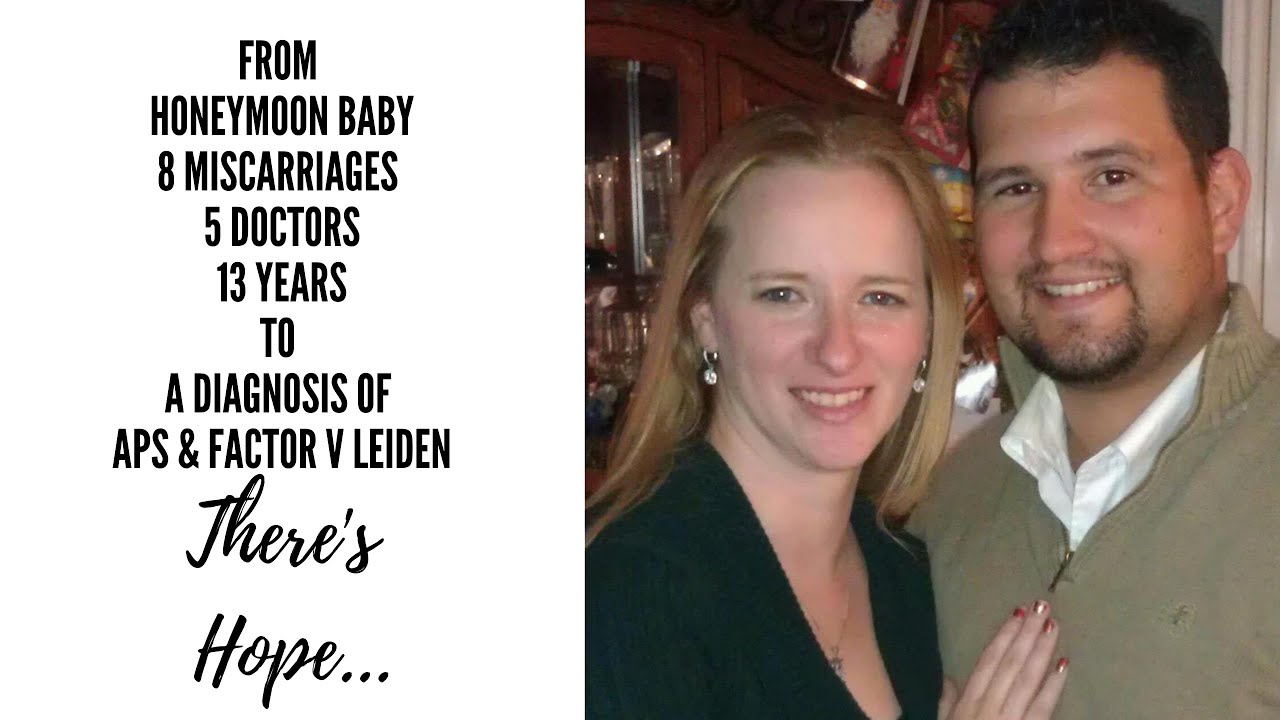
This content was created by Erica Hoke. This content was uploaded by Erica Hoke. This is a YouTube live/video titled "Hope for Healing: After 8 Miscarriages and 13 Years, a Diagnosis Brings New Hope" (recorded 2020-11-18). It is a recorded livestream conversation hosted by Erica Hoke with guest Tracy. The discussion is a personal, medical and advocacy-focused talk about Tracy's long fertility journey, multiple miscarriages (including chemical pregnancies), her eventual diagnoses of Factor V Leiden and antiphospholipid antibody syndrome (APS), treatment approaches (aspirin, Lovenox, progesterone, supplements), emotional impact, faith, and encouragement for other women to self-advocate and seek proper testing and care.
Chapters
Does it on mine?
Meeting is now streaming on Facebook.
Yeah, yeah, yes it does. Can you see it?
Let me refresh the group real quick. It's not showing up on my computer. It is.
Okay, we are good. Hi guys, sorry about all that technology stuff. Thanks for joining us tonight. We had a little glitch, so we wanted to make sure that we You're good. And I am here with Tracy tonight. Thanks for joining us. She's going to talk to us tonight about Factor V Leiden, also her experience with it, and also APS, anti-phospholipid antibody syndrome. Okay. That thing. Okay. That thing. We're going to talk about that tonight. So thank you so much for your time tonight. And we're just going to get started with a little history. So tell us like, the beginning of your fertility journey?
Okay, so my journey started 13 years ago. Um, I got pregnant on my honeymoon. I got pregnant 2 days after I got married. I was 23 at the time. Sadly, that pregnancy, like all of my pregnancies at this point, have ended in miscarriage. I had an ectopic pregnancy. Um, afterwards, my doctor diagnosed me with PCOS, polycystic ovarian syndrome. At the time, it didn't fit, but I didn't know enough about it to really fight with my doctor. So a couple of months later, I got a new doctor. I've now gone through 4 at this point. I'm on my 5th doctor, and 13 years later, I have a diagnosis. But it took 7 pregnancies. I lost 8 babies along the way to finally find the right doctor willing to get to the root of it. I'd gone through a long history of doctors dismissing me because of my age. I was 23, 24, 25 at the time, going through my first 4 doctors. Um, and they told me, you're young, don't worry about it, you got plenty of time to have babies, you're 25 years old, what are you worried about? At 25 years old, I'd already gone through 4 miscarriages. I should have had diagnosis at that point. The standard in America, at least, is after 3 miscarriages, you're supposed to have a blood clotting panel run for different blood clotting disorders. I have them. I have Factor V Leiden and I have APS, antiphospholipid antibody syndrome. So I have a double whammy working against me because they work in different ways. Factor V Leiden makes your blood more sticky. You're more prone to blood clot— oh my goodness, more prone to blood clots.
Yeah.
And antiphospholipid antibody syndrome, APS for short, causes, at least in pregnancy, the placenta to form clots, and it will detach from the uterine wall, which causes your miscarriages. Um, so it took a long time. It took 10 years before I found a doctor who was willing to fight on my behalf. I had advocated before that, but it got to the point where I couldn't take it any longer. I had to stop trying to conceive because my heart couldn't go through another loss. Awesome.
Right, right. And when you say that you had, um, 7 miscarriages, right?
Yes, yes.
But that was actually 7 diagnosed miscarriages, correct? You talked about the fact that you actually feel, and your, um, your doctor now, right, feels like that you had a lot more than that, correct?
And I know you went through this as well. I had potentially dozens of chemical pregnancies. And what a chemical pregnancy is, is it's a really early pregnancy. It's a pregnancy that you lose before the 4-week mark when you would have your period again. So you go through all the symptoms, at least in that early stages of having a pregnancy. You've got sore boobs, you potentially have nausea, you've got the bloating, you have all of the pregnancy symptoms, but then you test and it comes back negative, or potentially take a test, get an early positive, just to find out a couple of days later that you've miscarried again. Um, my doctor, while he was going through my cycle— because I have a very regular cycle, my cycle is 27, 28 days, my period is very normal, I've got 2 moderate days and 2 light days and that's it, so anything past that is outside the norm for my cycle— so if I have a really heavy period, if I have a period that has a lot of clots in it, if I have an early or late period, right, through my cycle. And was like, you've got 2, 3, maybe 4 dozen times where your period wasn't normal. And he felt like those were early chemical pregnancies.
Yeah, and that's just heartbreaking to hear. Um, it is, you know. Yeah. And so I know that a lot of women watching this, um, their ears are going to prick up and there's going to be some light bulb moments for you guys because We all know that we have those months where, like Tracy said, that you get all the symptoms of pregnancy and you're just absolutely certain that this is going to be the month. And then it's just even more devastating because you never get that positive pregnancy test. Or like Tracy said, you get a positive, an early positive, and then it just disappears, you know? Yeah. And, um, and I think that the most heartbreaking thing for both of us, like, we're really passionate about this if you can't tell, um, is that it's so preventable. We feel like it's preventable. And so we're just trying to spare women the heartache that we've gone through, right?
Yep. I told my husband, I told my whole family when I got diagnosed, if I could help one other woman in this journey to get diagnosed, to get a treatment, all of the pain would be worth it. And I still stand by that. If I can help a person, this thing, all 13 years, will be worth it. Yeah.
And so how do you feel? How do you feel now that you have your diagnosis?
It was really relieving. I had fought for so many years and I'd gone through so much heartbreak to have a diagnosis, even though at the time I got diagnosed 3 years ago, I wasn't ready to do anything at that point. My heart wasn't healed. I hadn't let go of all the grief and I will still grieve for my babies my entire life. Last week would have been my twins' 13th birthday. Wow. Oh, that's still— that's still—
every anniversary marker is a marker of the loss of your babies, right?
Yeah. I will never forget the day that I miscarried, at least that first one. And without going back through my journals, I couldn't tell you the dates on all of them, but to this day, I can still tell you the date of my first one. I can tell you my due date. I know how old they would have been, and I will carry that with me forever. Um, I never let go of that, but I let go of that gut-wrenching, awful grief just recently, and I wasn't ready to move on with the journey until I could let go of that. We talked about it before, we're both women of faith, and I was in church in a, in a service one Sunday that I knew my journey wasn't over yet. At that time, we closed the doors on trying to conceive. I just wasn't in the cards for us, I felt like. I felt like And it was true up until then that God had closed the door. We weren't ready for it. But we had this really amazing service one day in my parents' church, which isn't where I live. I was visiting them. And that was the moment that I knew that the door was open. And God promised us that service that he was going to give us a child. And I realized that I wanted it, that I wanted to fight for this, and that it was a journey worth fighting for.
Yeah. So you got your diagnosis and— sorry, I just want to say, like, before we talk about medication and all that kind of good stuff, you know, like, thank you so much for sharing your heart and, you know, being so vulnerable about what God laid on your heart and just being open to, to walk that path again and just to help other women, you know, with your story.
So, you know, it wasn't something that I was willing to be open with for a long time. I didn't even tell my family other than my husband and my parents a lot of what we had been through. I was very, very private about it. And I think a lot of women are like that. But with October now being Pregnancy and Infant Loss Awareness Month, yes, That kind of opened my eyes to the platform that I had to talk to women, and it was something I was really passionate about. I wanted to do it and I wanted to share my story. I didn't want to be private with my babies. I wanted to share their lives, as short as they were, with other people, and so that other people could experience that and share in their love for my babies.
Yeah, yeah, that's amazing.
But I wanted to use this platform that I was given to reach out to other women that have gone through the same thing, to let them know You're not alone. There are plenty of other women in this community that have been through it. And if you need that shoulder, metaphorically speaking, on the internet, you got a lot of women around you that can support you.
Yeah. Yeah. And, and just to know that there's, there's hope and there's, there's possibility there.
Exactly. Exactly.
And it affects so many women. When we saw the geneticist after our oldest son was born, Um, she told us that up to 80% of women are carriers, up to 80% of the population are carriers. It just is never expressed or it's expressed later in age, um, with a blood clot during surgery. And then they attribute it just to being older. Well, maybe, but maybe it's Factor V and they just not never got a diagnosis. Right.
Exactly.
Yeah. So let's talk about, um, medication. Um, so part of your healing and your hope and your, um, your path forward is that now I know that you have a diagnosis, you're on some different medications, and let's, let's talk about that a little bit. Okay.
So I'm on a vast regimen of medicine now. Some of it I take for life regardless of trying to conceive. That's going to be baby aspirin is what most women are given when they're diagnosed. Because I have two different blood clotting disorders, I'm actually on a full dose aspirin, which is 325 milligrams.
Okay.
In addition to that, I'm on 40 milligrams of Levanox that I inject every day. Um, well, once you're pregnant, you inject it every day. Most women start with their positive pregnancy test. Because I have such a long history of chemical pregnancies and miscarriages, my doctor actually recommended starting it at ovulation the day after. So I inject myself every month for 2 weeks regardless that I'm pregnant. That was really hard to hear when I first got diagnosed. I have a really strong phobia of needles, and those first probably week of injections, I was in tears injecting myself.
And it's really hard in the beginning. It is not just sugarcoated. It's hard to give yourself an injection. Some of you guys already know that from your IVF, um, journey and, uh, story. But, um, I don't, I don't think there's anybody on the planet that, you know, starts having a party when they find out that that's, that's going to be part of the regimen. It does get easier, but, um, it's not fun.
No.
Yeah.
And my husband offered to do it, but my husband works a variable schedule and I'm a control freak. I, I will freely admit that. So having my husband inject me was not something that I can do with. Um, a couple of tips that I thought of that I didn't talk about the first time Um, is don't inject yourself if it hurts.
Find another, right? Start over.
Yeah, there are spots that don't hurt, so take that needle and just touch it against your skin. If it hurts, move on. Don't do it. And inject the air bubble. I didn't know that at first. Inject air bubble.
Yeah, so I ran over. Yeah, so some doctors, uh, there's a lot of So you get a diagnosis and then you have to go through the doctor drama of will they give me Lovenox injections? Because there's such a wide swing in the hematology community and then the maternal fetal medicine. I can never say that right off the bat out of the box. MFM. That they really— there's a lot of varying opinion about that. So some of them really feel strongly that you only need a baby aspirin now. Tracy and I, I think, uh, are on the same page on this with the Lovenox because there's so many women on our, on our other Facebook pages for Factor V that have had like Tracy, a dozen or so miscarriages and then go full term just being on Lovenox. So it's kind of hard to rule that out when you see that over and over and over again. So what I would say to you, and what I know Tracy would say to you too, is if you run up against that, if you get a diagnosis and then they won't give you your medication, find another doctor, find another doctor, um, advocate for yourself. Um, yeah.
And my doctor warned me after being diagnosed, even being on the aspirin, the Lovanox, I'm on progesterone as well, because my doctor was concerned that my progesterone was just suddenly plummeting. So just as a preventative, he put me on it. Um, I'm also on additional folic acid. That was the one I couldn't think of earlier. But he warned me, even being on all of those, there is still a chance for miscarriage. There's a chance he's going to have to adjust the medicine, to increase the Lovenox. They might have to add in Plaquenil. They might have to change things. So don't be discouraged if you get pregnant, you're on Lovenox, and you still miscarry. There is still that chance they might have to change things.
Right, right. And there's a lot of other things that can come into play too. Um, exactly. I have a resource on Um, if you haven't gotten it already, drop it in the comments and I'll email you my resource of tests that your doctor might have overlooked, um, having to do with your thyroid and all manner of things in addition to the, the Factor V Leiden and the APS. So any, um, anything else that you wanted to say tonight, Tracy, or how do you, how do you feel about your future now for the next, the next few months?
I'm really hopeful. So we just went through this really big move. We currently haven't started trying to conceive again. We're about to, but we just went through a really big move and I'm really hopeful for the future. I'm really hopeful for 2021. 2020 was a really tough year, I know, for a lot of people. But my last thoughts would be, advocate for yourself. Don't be afraid to fight for yourself. And if you're discouraged, if you're having a bad day, if you're just feeling hopeless in this trying to conceive journey, There are so many women out there. Erica's a wonderful resource. I know she would love to talk to you. Feel free to send messages. I would be happy to talk to you more about my journey. And just being a shoulder to listen to, someone to talk to if you need that. If you don't have someone in your immediate circle that you can be open about this. In my immediate circle, there's not a lot that know that I'm currently trying to conceive because I am a little older. I'm 37. Scary time in my life to be trying, but I have hope for the future. I know that God has promised our family this child, and I'm going to do whatever it takes to get there. But don't, don't give up. You got so many people out there fighting for you and rooting for you on your journey.
Yeah, absolutely. And that's when I had my first two, so we're right, right in step in that way. So, um, thanks for joining us tonight. If you made it to the end and you liked what you saw and you're watching on Facebook, Think about hopping over to my YouTube channel, hitting the subscribe, like, subscribe button and the bell so that you get notifications when I go live again. And maybe we'll have Tracy back for a round 2. Thanks so much for everyone's time tonight and health and blessings to everyone. Thanks, Tracy.
Thanks.
Bye, guys.
More from Erica

The 90 Day Fertility WIndow: Why What You Do Know Matters MORE Than What You Already Tried






Women over 35 are told to “be patient” when what they really need is direction


Even with unexplained infertility, even if you’re over 35 even if you have multiple diagnoses like I
