How Sexual Abuse and Trauma Can Trigger Infertility — Healing the Hidden Connection
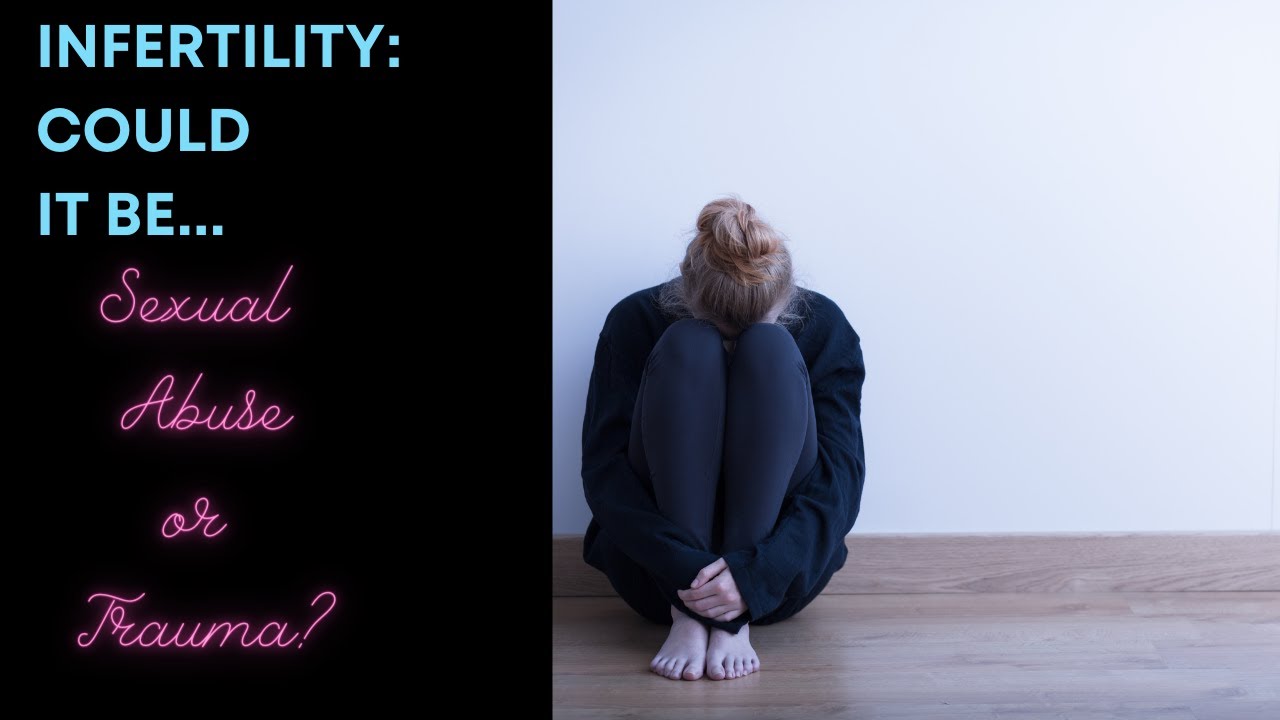
This content was created by Erica Hoke. This content was uploaded by Erica Hoke. This is a YouTube interview titled "How Sexual Abuse and Trauma Can Trigger Infertility — Healing the Hidden Connection" (posted 2020-11-04). The excerpt is a conversational interview between a host (labeled SPEAKER B) and Erica Hoke. Erica shares her personal infertility journey (stage 4 endometriosis, fibroids, PCOS, Factor V Leiden, MTHFR mutation, thyroid disease), discusses how childhood sexual abuse and chronic trauma can dysregulate stress hormones (cortisol) and disrupt reproductive function, and describes healing approaches she used and recommends (talk therapy, acupuncture, Reiki, diet, lymphatic support, addressing body/mind/spirit). She also recounts pregnancy outcomes and practical advice for people struggling with infertility and trauma.
Chapters
Here we go. I'm just gonna make sure that it's—
Alrighty. Hello, everybody. Today we're talking about how trauma can be linked later in life to infertility. So I have Erica here with me today, and her specialty is working with women who are dealing with infertility and they don't really know why. So Erica, if you would like to give us a little bit of your background and we'll go from there.
Yeah. Hi, thanks for having me. So I, where do I begin? I started later in life with my fertility journey and it wasn't, it wasn't a surprise to me that it was difficult for us to get pregnant. And I'll tell you why, because I had almost every infertility problem known to man. So I kind of knew, I kind of, you know, knew going into our pregnancy journey that it might be an issue. So I had endometriosis, which was a stage 4, it's pretty advanced endometriosis. I had uterine fibroids, I had PCOS, I had something called Factor V Leiden, which I'm really passionate about sharing. Unbeknownst to me at the time, I had a double mutation for MTHFR. I also had thyroid disease. Um, so I had a lot of strikes against me. And I guess in the back of my mind, uh, like a lot of women, I just assumed that if we couldn't get pregnant on our own, that we would go to an infertility doctor and I would get some medication and I would do IVF. Or whatever it took, um, to get pregnant. And when we got to that point of seeing a specialist after trying for a year, um, the magical year number that so many of us know, right? Um, I was told that I was not a candidate for IVF. Um, I was already hyperovulating, was 35 at the time, I was already hyperovulating, so, um, the drugs like to stimulate you for IVF retrieval would not have worked for me because I was already maxed out in those hormone levels. So they did give us the option of doing IUI, but because my chances of that were so low, our chances of that were so low, we just decided that that was not going to be— we didn't have any male infertility issues. We just decided that that was not going to be a path that we were going to go on. And so I just started researching all the things that affect your fertility and how, how, what, what is in your control, what affects your fertility, what's in your control. And, um, just researching what I could do about it.
So yeah. Uh, when I was on my journey, it was really surprising to me how much they don't teach in public education. Like, they, they just brush the top of the subject and they don't really, they don't really talk about anything, right?
So most women don't have a good working knowledge of how their cycle works, what to expect, what the phases are, and things like that. And that's unfortunate.
Yeah, I, I was on a big learning curve.
Yeah, for sure.
Um, so, um, we, we know that emotions are stored in our body. How does that translate to, um, infertility?
Yeah, so, um, part of my journey, and, um, I know, um, that this is true for you. Part of my journey is a history of abuse, sexual abuse as a child. And, you know, it's funny how things work out because while I was going through my infertility journey, I was also doing talk therapy. I was also just being led, is how I like to look at it, to all the things that I would need. To heal myself. So it hasn't been until recently that I've truly understood what that connection is in the body for the trauma and how what I was already doing was helping it. So the connection is really, you know, so many times and I, you know, so, so many times people will look at people, women going through the infertility journey and say, 'Oh, just relax. If you would just not, you know, stress out, then you would just get pregnant.' And that, that's not what we're talking about. I wanted— I want to put that elephant out there in the room to bed. We're not talking about telling you, 'Oh, just relax and you'll get pregnant.' However, when you experience trauma on— at any age, but especially as, as a child, it puts you into a constant state of fight or flight, which raises your cortisol levels, which raises all kinds of— messes all kinds of things up in your body. Let's just say that. I'm not a doctor. I don't want to try to explain it to you like on a doctor level, but it basically causes your stress response to be intensified constantly, which leads to all kinds of other problems in your body. So Your liver is where a lot of your hormones are processed. And, um, and so it causes, I don't, I don't want to even like say like liver dysfunction, but it causes your liver not to be able to do its job as well as it could. Um, like in your case, I know that you shared with me you had cycle problems. That was never a problem for me. Um, I had a regular cycle. But a lot of times the, um, that's a first line indicator, um, that you've had trauma, um, and that you're in a constant state of fight or flight is that your cycle will be very irregular. So one of the things that I did do, um, to help with that and to help with my liver was acupuncture. Oh, um, that was, um, a huge tool for me.
Yeah. Um, When I was growing up, I had— oh, there was a time around 8th grade where my cycle was so irregular, I was having more than one in a 30-day span, and they were really hard to, um, predict. Like, I couldn't, I couldn't count on a calendar and circle a date and keep track of it that way. Um, it was, it was awful.
Yeah, when you're at least— when you're a young woman and you can't predict when you're going to get your cycle and you're constantly in that heightened state of awareness, I mean, that alone would be a lot of stress for a young girl, right?
So, um, I was on birth control pills for like 10 years and those have their own, their own set of issues that they can cause. So yeah, I had—
I mean, so many times that's a doctor's first line of defense, right? If your cycle is not regular, then they just put you on birth control. Um, I always say like, you know, if you're not getting your, your cycle, like I've had friends that I've referred to, um, my acupuncturist that were not getting their cycle and she was able to get their cycle regular. Now that's something that Western medicine can't address. So some of the other ways that the trauma can be introduced into fertility problems, it's a cascade, right? So you have the trauma and if you haven't dealt with the trauma, then you might use other coping mechanisms like food, right? Which can lead to the PCOS or aggravation of PCOS, aggravation of endometriosis. So you might go to food, you might go to drugs, you might go to alcohol. So the stress, it's the trauma and creating the stress then creates this cascade of coping mechanisms., that can affect your fertility and affect your hormone levels, affect your liver, and things like that. Um, uh, I'm just looking at my notes here. Um, oh, the other thing that I, uh, wanted to mention that's really interesting is that having a high state of cortisol all the time from that fight or flight, um, actually shuts down your unnecessary system. So that's where the disruption of your reproductive cycle comes in where you're not having regular periods. It's from that cortisol spike of constantly being like stressed, you know, when people say, oh, just relax, you know, um, it's not untrue, but it's also not helpful. So, um, yeah. Uh, so the cortisol is actually shutting down your cycle and it's actually shutting down any unnecessary systems because you're in that constant, like, you know, state of fear, or— yeah, your body is at least, right?
Yeah. And I can say from a health coach perspective that the heightened state of cortisol also slows down your digestion like crazy. Um, so you're not digesting your food and absorbing the nutrients from your food as well as you could be as well, right?
So And there's all kinds of things.
There's all kinds of things.
Enzymes and yeah, lots of things.
So, um, maybe just share with us now, um, the, the flip side. So you were, you were struggling and maybe just give us a little bit of the happy ending.
Yeah. So, um, I'll cut, I'll cut to the, I'll ruin the ending for you. I have 4 healthy boys. And, you know, my first was conceived at 35. Excuse me. And then when we went to try again and saw it, you know, just kind of see where things were, hormone levels and things like that, my hormone levels were so bad that they said, well, first of all, they said that we would have like less than a 1% chance of conceiving my, my oldest son. Then when we went back, they said, you have better chances of winning the lottery than getting pregnant, and you're probably going to have— don't need donor eggs. And by the way, here's your pink slip. And they kicked us out of the practice. So one of the things that some people don't know about fertility doctors is that they get graded on their success rate. So if you're not a good candidate, for them to have a successful outcome, then they will, they'll get rid of you, right? Because it messes with their, their statistics. So they kicked us out. And within 2 months, I had actually, I went on a leave of absence from my job, which was very stressful at the time. And within 2 months of doing all that, was pregnant with my twins. Wow. Yeah. So then fast forward a couple of years later, I actually lost a set of twins after that. And then my last son was born when I was 43. And yeah, so sorry, I got a little off track there talking about my boys. But the things that I did, like I said, acupuncture not only helps your body, release some of that stored cortisol. It helps with the lymphatic system. It helps your kidneys and your liver process your hormones better. If you're having irregular cycles, it helps with that. It can help put your cycles back on track. If you're doing IVF, it can help with that as well and companion with that. So I really can't say enough good things about acupuncture for fertility. Um, it helped me tremendously. And, um, I was gonna say something else. Um, I didn't like needles. I really hated needles. Um, yeah, like the idea, like, like everybody, you know, you say, oh, go see an acupuncturist, and everyone's like, um, maybe not, maybe I won't do that, you know? Yeah, I don't think so. Yeah. So, you know, you get to a point where you're just willing to do or try whatever it's going to take. And, you know, I had gotten to that point.
Oh yeah.
What I will tell you about acupuncture is the needles are smaller than a strand of hair. I don't want to say they don't hurt, but everybody always equates it with a shot. It does not feel like a shot at all. And in terms of pain level, Um, it's not like having your blood drawn. It's not like getting a shot or anything like that. It's actually more relaxing than a massage once you just get used to the process and, um, you know, can kind of relax while the process is taking place. The needles are being put in instead of, you know, tensing up and then, you know, you can't even get them into the point. So, um, so I did some acupuncture. I told you I was doing some therapy. Um, so I, I recommend, and from all the research that I've done and just my own personal experience, You know, it's like anything else, you have to address it body, mind, and spirit. So, you know, the acupuncture is the mind maybe, or the body. So other things that might help with that are things like lymphatic massage might also help with that. Diet, of course, you know, we all know that diet is super important. Getting those coping mechanisms out of the way and feeding your body, you know, good fuel, um, and not putting extra burden on your body. Let's say that. So some people will say it's only a fill in the blank. It's only a cup of coffee. It's only a glass of wine. It's only a donut. It's only a whatever, right? But the fact of the matter is, is your body is struggling. You're not getting pregnant. Your cycle is not regular, whatever your problem is, your body is struggling. Your body is telling you like, I'm struggling. So to add any extra burden or any extra chemicals or any extra alcohol or caffeine really, um, is a little bit of a soapbox for me because caffeine really impedes mineral absorption, you know? So when your body is trying to regulate itself or reproductive, reproductive purposes, you know, that's important. And then just addressing spiritual health, because let's face it, you know, trauma comes with a lot of, a lot of emotional and internal pain, you know, and those things are not going to go away. What I'm saying to you is, if you're fortunate enough to get pregnant without addressing those, motherhood will bring those right to the surface. Oh, right.
So fast.
Oh yeah, really fast. Um, so you're not gonna get away from it. Um, and so do whatever it's gonna take for you to work through that, you know, on all the different levels, um, is what I would recommend because, um, you know, the trauma is, um, it's, you know, a part of you until it's not, right? Until it's addressed. So yeah.
And I just want to add that, um, for those of us who have struggled with chronic cramping, period cramps and ovulation cramps, doctors like to tell you that those are normal They're not, right? It's your body telling you that there's something off and you need to listen to it and figure out what the issue is. Um, for myself, I like fetal position, breathe through it like a contraction.
Yeah.
Um, absolutely.
Yeah.
But like I've, I've figured out what was lacking in my body. So now I don't have cramping at all for anything. So yeah, there's that.
Yeah. I mean, I think that a lot of pain is normalized in our society, right? I mean, even, um, you know, like I'm post-menopausal now and even my sister said to me yesterday, oh, you're having all the hot flashes and everything. And I was like, no, I did not sign up for that. Nope. And it's not normal. It's something that's been ingrained in us that that's normal and that's what the next step of the process is. But it's really not.
It's really not.
One of the things that I wanted to say, and I'm trying to think of how to best frame this, is that because it's so sensitive. So, so, you know, when you're sexually abused as a child, and even as a young adult, there's a lot of coping mentally that you have put in place. And I don't want to get off of here without saying this because I really hope that it will help somebody. So for me, I remembered not initially, but I don't have a lot of, thank God, a lot of flashbacks or, you know, actual memory, um, like, you know, real-time memories. Um, but one of the things I did remember was, um, oh my gosh, I don't want to get pregnant, I don't want to get pregnant, I don't want to get pregnant, I don't want to get pregnant. Like, just praying that what was happening to me would not make me pregnant. And so, um, when that happens and you are trying to get pregnant, if you don't deal with that stuckness in your body. I don't know how else to put it. You have to reset your brain to allow yourself to realize that you are safe and everything is OK, right? One of the things for me, and I am a Christian, I don't know, you know, not everybody is, but I went to a Reiki healer kind of not knowing what I was getting myself into. You know what I mean? Like, I didn't know what that meant. I actually just went for a massage and she was like, yeah, You know, like, I'm just being honest with you. She's like, yeah, like, I'm a Reiki healer. And I was like, oh, that feels— and I said, well, what is it like? Do you turn it— is it like turning it off and on, you know, kind of thing? And she's like, no, you know, if I give you a massage, then, you know, hands-on, Reiki on is what she said to me. But the interesting part of the story that I'm telling you is that she was able to tell me something about my abuse. That unlocked something for me that allowed me to process it and allowed me to move past it. Oh, wow. So yeah. Um, and I, I really believe that it was integral in my healing. So, um, you know, I think that there's a lot of things that can, um, come into play to help you, um, discover and identify, um, you know, ways to help yourself heal.
Yeah, um, well, I don't see any questions in the comments, so if anybody has any questions when they are watching this, just pop them in the comments and I will forward them to Erica Hoke so she can answer anything if I'm unable to answer it. Um, yeah, so thank you so much for joining me. And, uh, thank you. We'll, uh, we'll be talking soon.
Okay, see you next time.
Bye.
More from Erica

The 90 Day Fertility WIndow: Why What You Do Know Matters MORE Than What You Already Tried






Women over 35 are told to “be patient” when what they really need is direction


Even with unexplained infertility, even if you’re over 35 even if you have multiple diagnoses like I
