Protein & Fertility After 35: The Key to Transforming Your TTC Journey w/ Lienna May
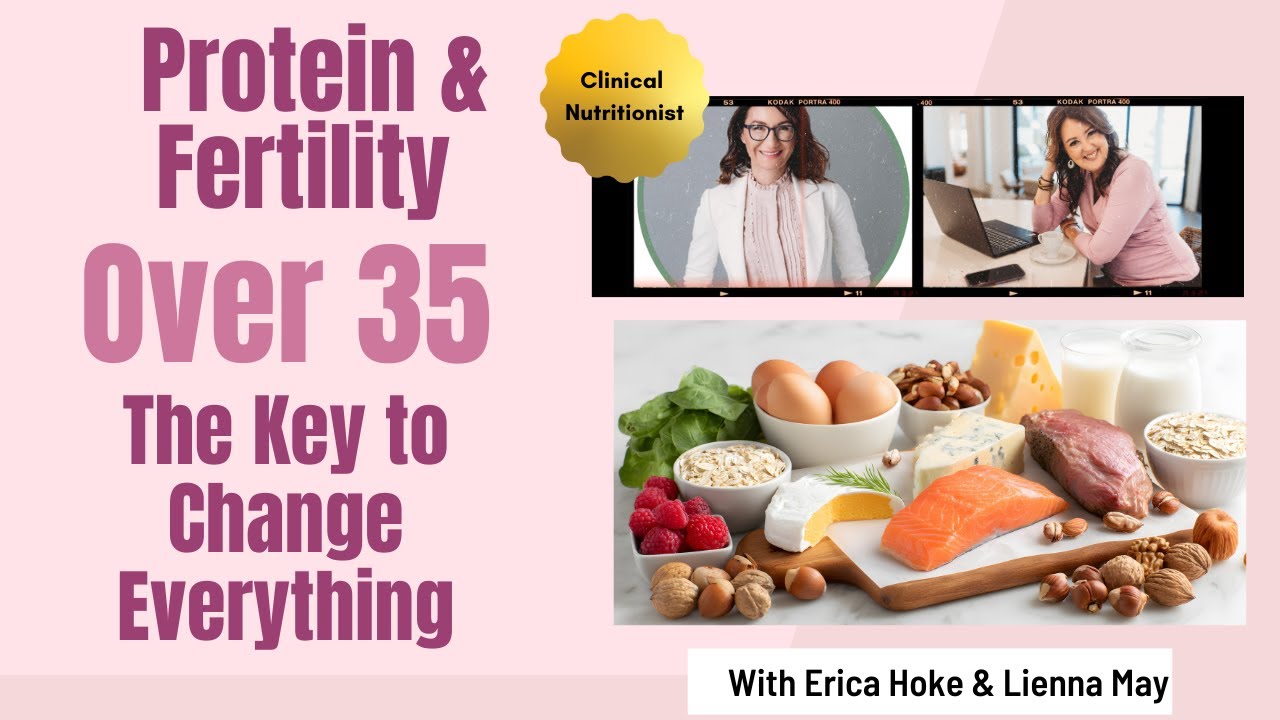
This content was created by Erica Hoke. This content was uploaded by Erica Hoke. This is a YouTube interview/video titled "Protein & Fertility After 35: The Key to Transforming Your TTC Journey w/ Lienna May" (posted 2025-11-27). It is an episode of a fertility/wellness series (Hope and Healing) in which host Erica Hoke interviews certified clinical nutritionist Leanna May about the role of dietary protein in fertility for women over 35. The discussion covers why amino acids and protein support egg quality, hormone balance, implantation and metabolic health; practical guidance (aiming for ~1 gram of protein per pound of body weight, targeting 25–30 g protein per meal, prioritizing a high-protein breakfast); recommendations for clean protein sources (organic, wild-caught seafood, high-quality protein powders, collagen, hemp, dairy if tolerated, beans, eggs, seafood, nuts/seeds); and how improving protein intake can lower cortisol, improve blood sugar and gut health, and potentially boost IVF/ conception outcomes. The excerpt is in English and aimed at people trying to conceive, especially women over 35.
Chapters
Hello everyone, thank you for joining us for another Hope and Healing episode. I have with me today certified clinical nutritionist Leanna May, and if you have unexplained infertility, well, you know, around here we say unexplained simply means unexplored, and the unexplored portion that we're looking at today is protein and how it comes into play, especially if you're over 35, in getting pregnant, making sure that you have enough protein so that your body can do what it needs to do and that you can conceive. So thank you for joining me today, Liana. I'm so excited to have this conversation with you. Um, welcome, and tell us a little bit about yourself.
Yeah, thank you so much for having me, Erica. I'm happy to be here. I am a licensed clinical nutritionist Actually now in multiple states: Florida, Massachusetts, Minnesota, and Illinois. Um, I love, um, work in this field of which you've mentioned, really exploring what is the root cause behind health issues. So we're not just putting kind of like that slap of we don't know what's going on. A lot of times we're just like you said, we haven't explored or haven't had a chance to dig deeper or run more in-depth labs and all of that. So that's my passion with nutrition, looking at everyone as a whole person. What can we do to optimize their nutrition, health, weight, gut health, fertility, those type of things, and find, um, how can someone, um, have wonderful health and like be in that optimal health and thrive even if you're older too.
Yeah, so that just jumps right into— thank you for that— and Um, if you've been around for a minute, you know that Leanna is a contributing partner for, um, the Nurture Path Fertility Incubator program. Um, so women over 35 are often told that their infertility is just age-related. Can you, um, talk for a minute about how protein comes into play for egg quality and for, um, hormone support and production and, and all of that?
Yeah, great question. Protein is really key when we're thinking about that, because really, when we think of protein, it's made out of amino acids, which are literally the building blocks in everything our body does. And our eggs are made from protein. You know, we need protein to help us support healthy fertilization, implantation. We need those amino acids to make optimal levels of hormones. We need those amino acids, protein essentially, to help us later grow a baby, because, you know, your body's gonna go through so much to be able to use so many amino acids. So this is really like a crucial element for healthy fertility and implantation. And especially if someone who is struggling with infertility too, that's one of the components we want to look at. Are they getting enough protein for their body?
Yeah. I mean, so often clients come to me— I'm sure that this happens with you too— where the doctor has told them, either their OB-GYN or their reproductive endocrinologist, that the protein— not just protein, but their diet— doesn't matter, that they can't improve their egg quality. Um, they've been told that their labs look normal? And, um, how, how does increasing protein uncover those metabolic or inflammatory issues that standard testing kind of misses?
Yeah, uh, so one of the biggest things too, as you mentioned, with age we will have a little bit of that sometimes slight decline, right, progesterone or estrogen, and that's when we need those amino acids to help support support quality. We also need those optimal amino acids. I forgot to mention the first question for healthy eggs, right? Because they need to be nourished, they need to be striving. We don't want them to be depleted. And that's where, you know, someone says nutrition doesn't play any role, I would say run away because that's so far from the truth. We need those amino acids, antioxidants, healthy nutrition to nourish those aging eggs. Of course, we can't reverse the aging, but we can really give optimal levels of protein. And the other side of it too, as we age a little bit, we have more higher chance of some of that insulin resistance, especially someone who might have PCOS, um, you know, some of those other issues. With adding optimal levels of protein, it's going to help support better blood sugar balance, metabolic health. It's going to reduce oxidative damage and essentially inflammation that can create some of that, you know, issues with imbalanced hormones, gut health, type 2 diabetes, or someone who's maybe in pre-diabetic range. Because, um, and what happens is a lot of times we add in more protein, the person starts having better balanced blood sugar, they may be able to lose weight or maintain it better, their, um, you know, metabolic health improves. You know, the other side of it, we need lots of protein for optimal gut health and hormones. So that's going to support that. If someone's having hormonal issues, you know, we need to give them more protein because that's going to help regulate their cortisol. You know, they're going to help them balance hormones, give them better metabolic response. The other side of it, a lot of times people might be having gut issues and they're often linked to fertility and gut microbiome. They've done some research even this year where they found out if there is a lot of gut imbalances, that's going to impact fertility and vaginal health, all of that. So protein is going to help also regulate these hormones and give the nutrients it needs. For some people, sometimes they're overly stressed. You know, we're kind of like, women tend to get up, you know, get coffee and go take the kids to school. And we're really running on stress hormones. And here we want our body to prioritize fertility, where that optimal protein is going to help regulate that cortisol too and help the body more into that healing, repairing, restorative mode where body is kind of prioritizing fertility versus it's thinking, no, I'm so stressed, I'm running away from the bear, I'm constantly in that fight and flight mode. It's not where it's really focused at that point on fertility too.
Yeah, so many good points in there. I, I I have so many questions.
Um, please. Yes.
But, you know, I think that the biggest takeaway from what you said is that you're making your eggs healthier. Like, so many women come to me and they say, well, I got a lot of eggs. I just worked with a client the other day. She had 25 eggs for her first retrieval, but they only got 2 that were healthy enough for transfer. And then neither of those you know, stuck. Um, so what we're talking about, what Leanna and I are talking about, is helping your body get into a rest and digest, get out of that fight or flight mode, increase the, um, increasing the protein lowers the cortisol, right? And helps, helps everything all the way around. So, um, again, you're, you know, We want to support the clients so that this big investment that they have for IVF, it— their chances are maximized, right?
Exactly.
Yeah. So, and there's definitely a lot in your control, which we've talked about. All right, so everyone wants to know, like, let's talk about the numbers. How much, especially a woman over 35 trying to conceive, how much protein is enough?
Yeah, that's a great question, and I always try to personalize it with someone who would be sitting in front of me, but we do want some general guidelines. I always try to aim for at least 1 gram per pound of body weight. So let's say someone is 150 pounds, we want to get 150 grams of protein per day, which I know sounds a lot. Or for someone who might be thinking like, you know, my doctor wants me to lose some weight And let's say they're 175, their ideal goal is 145. I always say go for that ideal weight goal in, in grams in protein. So then they would aim for 145 grams. And then that even goes up if someone does get pregnant, even the first trimester, because we need glycine, we need lots of collagen, all of these things. We're growing a baby too. Where you need extra protein to, to consume, which I know sounds a lot and people are like, oh no. And then a lot of times women don't track and it's some— I've had someone the other day, it was like 50 grams per day, you know, and it's so low and they don't even realize it.
That is such a good point because I think as women, we are not prone to be carnivores. We are not like heavy protein eaters. And I think most women, I think probably when I was trying to get pregnant also, I would have said, oh, I, I think I'm getting enough. I think that that's a reasonable amount. I eat a little bit of protein with each meal, but you know, if you're experiencing infertility and especially if you're over 35, you, your body is telling you that that is not enough, you know? And so tracking this, not in a perfection way, but just in noticing and taking baby steps and increasing that protein, Um, so we don't want our clients to feel overwhelmed. How, how do you go about adding good clean proteins to your diet? Especially, let's just say, for the woman who doesn't love meat, what do— how do you help them through that?
Yeah, that's a great question too. And I really, uh, try to kind of, you know, almost like eliminate that overwhelm where you think of it let's aim for at least like 25 to 30 grams of protein with every meal, you know, breakfast, lunch, dinner. Then if we add one or two protein-rich snacks or smoothies or protein, then you really easily hit that goal, you know, uh, with that in mind. And I really teach my clients, if you look at your plate, let's kind of start with protein first and then build lots of veggies, some complex carbs, healthy fats around it, so that way we're getting optimal protein. We're starting with that, but we're adding a ton of antioxidants, fibers, all of the good things like complex carbs, like sweet potatoes, something like that. That's also going to help us boost fertility too. You know, it's great to— it doesn't always necessarily have to be, like you said, the big piece of chicken or steak, right? Yeah. You know, it could be like for breakfast, some eggs and cottage cheese, you know, or Greek yogurt for a snack that gives you the serving, 15 grams of protein. Yeah, if you add like walnuts or pumpkin seeds on it, some berries, you kind of hit your fiber. And with that snack, you easily hit 20 grams of protein. For us as women, I do like to add sometimes collagen or protein powder to coffee or tea just because it's easier again to boost it like another 15, 20 grams where you don't feel like you're eating the chicken all day.
A whole chicken a day, right?
Yes. And sometimes even something simple like Again, seafood sometimes, uh, with, you know, salmon or whitefish or a little bit of tuna. Could be like a tuna snack with some crackers and avocados. Sprinkle a little bit of pumpkin seeds or nutritional yeast that has 5 grams of protein. Beans, you know, quinoa has some too. Edamame for a snack, you know. So, um, And again, dairy, if you can tolerate it, that's a great source with even something like mozzarella sticks on the go. Or— and I do like high-quality protein powder too, right? That can be easily added to like a smoothie or something just to help. Because again, if you're on the go and you feel like, oh my goodness, I, you know, I'm going to skip a meal, that's going to support healthy, balanced blood sugar and help you kind of hit those goals easier.
Yeah, but let's talk about that because it has to be— we're talking about protein, but really the caveat to this is clean protein. Like, yes, especially for protein, I tell my clients to prioritize their proteins as organic to their best of their ability. If you're eating seafood, you want wild-caught salmon. You do not want farmed.
It's a whole—
that could be a whole video in itself. I know, you know. Um, and for the protein powders, you know, there's If somebody is not actively consuming protein powders, where would you tell them to start with that? Like, what's your— not necessarily brand, but like, what is your favorite clean protein powder? Let's just say, especially if somebody wants to avoid dairy, what would you recommend to them for that?
Yeah, that's a great question too. I know people really overwhelmed because there are so many, like if they go to the gym, their fitness trainer might say you should do this one. And there's like thousands of them on the market. I do like to look at, like you said, whether it's organic, clean. And a lot of times too, we have to think about what a lot of people don't know about a lot of the plant-based proteins, which I'm for, but they use hexane to process and extract protein, which is chemicals. So we— or if it's like brown rice or something, we also have to think about like arsenic and some of the heavy metal toxicity. I really love something that has 3, 4 ingredients. I personally use— it's organic beef-based from Swedish cows type of protein. It has vanilla, monk fruit, and sea salt. Very simple ingredients. It gets you 23 grams of protein. So looking at the ingredients, you're right, it has to be organic. Does it have a lot of unpronounceable Ingredients, right? All of that. You do want to find like the cleanest version possible. So we're not adding some questionable things too.
Yeah. How do you feel about— I like hemp protein. How do you—
Yeah. No, I love hemp protein. Yeah, that's great. Especially like you said, if someone's vegan or vegetarian, you get a plant-based. Yeah. No, I love it. That's a great source. And, and even just hemp hearts, like you said, on a salad with yogurt just to get extra protein too, as a, like, a little toppings too.
That's great tips. Yeah, I love that. All right, well, just one last question. If somebody— what, what can somebody— sorry, what is the one thing that somebody can do this week to, to increase their protein and improve, improve their fertility because of that?
Erica, I love that question because that's something I cover all the time. For women, I would say start with high protein for breakfast. And there's a couple of different reasons. Don't just do coffee, go through Starbucks drive-through, because that's gonna just jack up a lot of that stress hormones. You need that protein to calm your nervous system, regulate your hormones. And we— our body can use protein the most in the morning. It has the highest bioavailability for ourselves to take it. So that's why we don't want to skip on it. And if you don't have time, just get a little bit of Greek yogurt, you know, some berries, top it up. Or grab a shake, protein shake, you know. If you have more time, maybe like egg bites and some scrambled eggs, or, you know, like a breakfast wrap, something like that. But don't miss on that protein for breakfast because that's going to help regulate your hormones. It's going to turn off hunger hormones. It's going to help regulate blood sugar. And, and again, if you are doing IVF or actively trying to get pregnant, we want you to kind of already go into pregnancy or treatments not depleted, right? We want everybody to be like well-nourished. And even the other point you brought up, I think in one of your Instagram posts, that a lot of times people don't look at thyroid, full thyroid markers. We need those iron and amino acids to make optimal thyroid levels, thyroid hormones. It's all really connected, right? So if work on that. We're gonna help optimize eggs and implantation, kind of give your body the fuel and nutrients it needs to strive and do what it's supposed to do, right, with pregnancy and fertility, really, and boost all of that.
Yeah, that's so great. And thank you for that tip about breakfast in the morning. I think that, again, as women, you know, that would probably be something that we would not prioritize. And yeah, I'm all about like simplifying and making things easy. So, you know, if you make breakfast on the weekend, make some extra, throw some egg bites in the, in the oven, you know, um, so that you can just grab them out, throw them, you know, throw them in the microwave or in a pan and heat them up, and, and then you can, you know, hit the road. Yeah, that's great, that's great. Thank you so much for being on here and talking about the importance of protein. Um, if you got any good tips out of this, please like and subscribe. And in the comments section, I'll link, uh, Liana's website if you'd like to reach out to her about more nutritional support. Thank you so much, Liana.
Oh, thanks for having me. Can't wait to do more. Thank you, Erica Hoke.
Okay, bye-bye.
More from Erica

The 90 Day Fertility WIndow: Why What You Do Know Matters MORE Than What You Already Tried






Women over 35 are told to “be patient” when what they really need is direction


Even with unexplained infertility, even if you’re over 35 even if you have multiple diagnoses like I
