From Diplomat to Whole Again: Amanda’s Leap into the Unknown
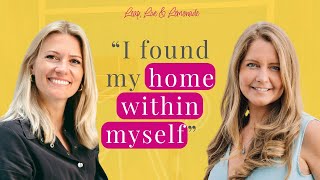
A Leap Live & Lemonade podcast episode (host Eszter Gódor) interviewing Amanda Maxim, a former Dutch diplomat who left a seven-year diplomatic career to become a life coach for high‑achieving expats. The conversation covers Amanda’s international background, the reasons she left diplomacy (boredom, misfit with bureaucratic systems), setbacks (bereavements, COVID lockdowns), practical business lessons (focus, delegation, weekly reviews), and embodied coaching practices she uses with clients (future‑self visualizations; an eight‑segment “Wheel of Expert Life” exercise).
Questions this video answers
Exactly three years (as of the recording).
Almost seven years with the Dutch government.
Over eight years.
She left in December 2021.
This Expert Life.
Chapters
Hey there. Welcome back to Leap Live and Lemonade. Or welcome if this is the very first episode you are watching. Listening to this was one of the very first ones I have recorded. When the whole idea of this podcast came up and when we finished recording, I was like, oh my God, how did I deserve having such amazing people right at the start of this podcast? This is incredible. I don't even deserve this. But yeah, it looks like I do and you do. So here is a fantastic episode with Amanda Maxim, who is a life coach for high achieving experts and she's also the host of the this Expert Life podcast. Amanda is truly incredible and so is her story. She has shared with me how she left behind a prestigious career in diplomacy, which honestly, many of us would think of as a total dream job. And how she left all that to step into uncertainty for building a life and building a business that truly aligned with her values. We went into how she already embodied her herself as a coach when she was still a diplomat and she already handed out business cards. How she manages uncertainty or even loss as an entrepreneur. And how can you keep your your mental balance when you don't have the security of a job? Or how you even manage that moment when you decide to step out of all that and leave it all behind for for the unknown. But my ever favorite part is where Amanda shares how we bring ourselves everywhere and how a major job change or even changing country sometimes doesn't fix what's not working because we might still go back into old patterns. This totally resonated with me as that's exactly what happened to me or for me back in 2013. And I think Amanda's tools for managing that situation are simply incredible. So if you have ever felt stuck between the security you might have now and stepping out into the unknown to create something that truly, that truly is you, that is in true alignment with your values, then this episode is for you. Are you ready? Let's dive in. This is the Leap Live and Laminate Podcast. Hi, I'm your host, Esther Godor. Twelve years ago, I took a bold leap. I left my corporate role, I moved to a new country and I built a business from scratch in my fifth language. This podcast is for new and aspiring entrepreneurs who are ready and eager to turn their ideas into something real and thriving while making a lasting impact. Whether you are contemplating on leaving your nine to five or you are already on your entrepreneurial journey, this is your go to place for honest stories, actionable strategies and real talk around building a business and life you love. Your Best life and success story are still ahead. Let's write them together. Hey, Amanda. Welcome. How are you?
Thank you, Esther. I'm great. How are you?
I'm good. I'm super excited to have you, and I'm really grateful. You are one of my first guests, and I saw it, I heard it on your podcast, that your podcast started in a way that you were having someone as a. As a guest who. Who did a leap of faith for you. Yes. You are really new, and thank you so much for taking a leap of faith for me and doing this episode with me.
Well, thank you for this invitation, and I always love paying it forward when I've been helped by other people before. So I'm very happy.
Yeah, that sounded amazing. I was like, wow, she's doing it. All right, let's jump right into it. Please share with us what you do and why you do it.
Yes. Okay. So I'm a life coach for high achieving expats. I've been doing this for exactly three years as we are recording it. And the reason that I'm coaching expats is, well, twofold, actually. One is because I had an interest in personal development for a long time already, and. And I had already decided to quit my job to become a coach and entrepreneur when I hit, like, a perfect storm, and everything changed around me, and I really learned to find a home within myself, and I realized how important personal growth really is. And the other reason is that as a life coach, it helps to have a niche or as any, I think, freelancer or service provider. And so when I thought of the people that I wanted to coach, I thought right away, okay, I want to work with expats because they are adventurous, they are ambitious, especially the ones that I coach. They're independent, and I know them really well because I was an expat myself for over eight years. I was working as a diplomat for the Dutch government for almost seven years before I quit my job. And prior to that, I had also lived in Argentina, Ecuador, London, Sweden. So I know this life abroad and I don't know balancing ambition and adventure very well. So this is why I started to combine the two. My love for personal growth, and also this click that I have with living abroad and the people that I now coach.
What brought you to your job that you quit in the end? Where do you come from? What kind of upbringing? Family? Where are you from?
If we go in there? Okay, so I am from the Netherlands and I now live in the Hague, which is on the coast. But I'm not Really from this town. And I remember I did an internship when I was studying my bachelor's degree in the Netherlands. I did an internship at the Dutch embassy in Argentina for six months. And I really liked that. And the person who was guiding me in internship, she was really nice and normal and young and really kind. And that's when I realized, oh, I too could become a diplomat. It's not just for like the super high achievers or the ones who only have the good grades and the good connections and. And that's when I got interested in the job. But I figured I wanted to have some corporate experience as well. So I actually moved to London to study my master's degree in Latin American politics. And after that I stayed another year and a half in London to work in total two companies because I really felt it was so important for me to get some more experience rather than becoming a civil servant right away after graduation. And when I was in that last job, I almost actually hit a burnout. And then I applied for the diplomacy track back in the Netherlands. That was always the plan, but I felt it was more necessary more than ever, and I got accepted. So that's when I moved back to the Hague and became a diplomat, which I did for seven years. Now my family is not international at all. My entire family, from both my father and my mother's side, come from the same town or the neighboring town. I never lived abroad as a kid, but I always had an interest in other cultures and traveling and that I really have from my parents as well. They traveled quite, not incredibly much, but more than average and further than average at that time. And actually since When I was 19, I was studying law in the Netherlands, my bachelor's degree. I quit my studies to travel by myself. And I knew instantly it has to be South America. I had no real reason why I wanted to go there, but everyone was already going to Asia and Australia. And I thought, I'm different, I want something cooler. So I was 19, blonder than I am now, spoke like three words of Spanish, and I booked a one way ticket to Argentina. And in the end I stayed a year and a half in South America, and mostly in Argentina and Ecuador actually. And I had such a blast. And this really opened my eyes even more, like, okay, I really want to live this international life or do something with other cultures and other countries. And so always in my studies and then my career, I had this international aspect. I actually never had a job that was just focused on a domestic market in one country. So I think that is really what sets me apart. And also one of the reasons why I now decide to work with expats. But it was a very deliberate choice for me, or actually choices upon choices. You know, it started with that decision to travel as a student and it ended up here. But it was not something of my upbringing or anything.
And so when you describe it, it's like the perfect life. And to many people who hear this, it might sound like, yeah, if you ever have this, you never want to let go of it.
Yes.
There was something though, that told you to quit and, and leave it all. What made you, you leave it.
Yeah. A lot of people think it's the perfect life. And actually this is one thing that expats, or ambitious expats especially have to fight against sometimes, because when they struggle with something, it's very hard to find real understanding with the people back home. Especially if you live in a country that is like a holiday destination and because on paper you've got everything. So why are you complaining? I realized quickly on in my diplomacy career that this wasn't for me in the long term. So my first year, you started the ministry, the headquarters for two years before you get sent to an embassy. And the first year was absolutely amazing. I had such a cool manager. He gave me so much responsibility. I got, you know, a colleague of mine got ill, so I took over some of his work. And it was actually more than, yeah, what's the word? Then my level, I was a junior diplomat, he was a bit more senior, so that was really cool. But then in the second year, I got another manager. I had to give back some of the work I have been taking on and ages got so boring. I was working at a department that was working a lot and relationships with other European countries. But the content, it was, had nothing to do with the EU really. It was just about these countries. But because we had another department focusing on the EU content, what was left was really like coordinating visits, coordinating with other ministries for the policies regarding that country, maintaining bilateral ties. And it was just, it was so internal and so process oriented. And I'm someone who's very external. I'm very outcome oriented and I'm fast and this work was very slow. So in year two, I realized, I don't think this is for me, and I started to have symptoms like headaches every day. I didn't sleep well, my eyes were twitching all the time. And I thought, hey, I recognize these symptoms from my sort of almost burnout in London when I was really, really stressed. But I am not stressed at all. I'm actually really bored. And that's when I went to the, to our organization's doctor and he said, it looks like you have a board out. And so I got a coach. I asked for a coach to help me deal with that. And the coach and I were talking and I, I decided to, to confide in him early on. And I said, I'm actually not sure if this is what I want. And I've always dreamt of like starting something for myself and helping people. And at the time I didn't know I wanted to become a coach. I had like a vague idea, but I had more ideas. And thanks to these conversations with him, I realized, okay, this is just really not for me in the long term. But then this was just before I was moving to my second posting at an embassy. And I figured, you know, I worked so hard to get here, I really want to do this part of the job as well. So I moved to Brazil and this was initially for two years in the capital, Brasilia. And there also the first couple of months were a bit boring. But then a lot of cool things started to happen and we had some changes and the work really interesting and I noticed it was much more suitable for me because at an embassy you have much more freedom, it's more concrete, you go out much more, you have more control over what you can do. And that suited me much more. But that feeling I still knew like, okay, in the long term, this isn't for me, but I just want to enjoy it to the fullest. And then my two year period got extended to three years. So I stayed there one more year and when I returned home, I knew, okay, now I'm going to quit my job and start something for myself. Because you asked about this perfect life and you know, it's a golden cage. You make a lot of money, you meet amazing people, you work with really smart people. You get to do things that like the majority of people will never even see or get to do. You live a really privileged life being able to work in different countries every couple of years. So it's, it's really cool. The perks are amazing and the life that you get to live is really exciting and adventurous. But on the inside it wasn't fulfilling for me because I was trapped in an organization. This is how it felt to me that it just. Not that they kept me small, it wasn't on purpose, but it just didn't bring out the best in me in this slow, bureaucratic organization. And so I thought, okay, either I choose the golden cage and, and the fun and put aside my heart. But I have never been able to do that. You know, I quit my job, sorry, my studies as well. I was doing something a bit more prestigious at the time, like a selected group during my bachelor's program. And I quit it because I thought I'm not happy here at the moment and I will lose my spot if I quit it. But, well, that's then the consequence. So I've never been able to really push aside what my heart wants and, you know, just mind over matter. I have never been able to do that. And so I knew, also knew if I really want to feel happy, I need to quit and follow my heart. And there was a bit of fear for a little bit. And one of the fears was, oh, but then I won't be able to live abroad again. And I thought, what? That's insane. I have lived more years abroad by myself than with the ministry, than as a diplomat. So, you know, it's. It's funny how limiting beliefs or fear comes up as like, arguments that aren't even valid. And so I decided, okay, if I do want to quit my job to follow my heart and my. And to pursue my dream, I do want it on my terms. So that means I want to continue having an international job because I love working with other cultures. I want to have the freedom to work in different places, to have that international aspect as well. And I want to make enough money to enjoy the life that I lived before. And so from the beginning, I have been focusing on that. So I intentionally chose to work with expats in the beginning. I spent a lot of time and money on building systems in place so that when people book a call with me, it's all automated. It doesn't matter where we are. We don't need to email back and forth. Most of my work is done online, so I can work from anywhere. And the money aspect, well, my business is growing and I'm still working on that, but I'm not shy to talk about it. And I'm pretty ambitious about my goals and I. I go for it relentlessly. I don't want to keep myself small anymore. So there were some pillars that I decided from the start. Like, this is important to me and if I'm going to give up something I've worked for, then the dream must be nice and fulfilling, but it must also meet a few of my other criteria that I find important.
Yeah. So does it mean that you left your career and you didn't even keep Any doors open? Was it like never. Never going to return?
So when I left, I thought I didn't have any doors open, but actually, just when I was leaving, they changed their policies, and they said that if you leave for seven years from that moment, you can apply to the yearly rounds of postings. Now, I didn't know that at the time I was quitting, so I really quit with all the doors closed. In my experience, and officially I have that paper that I could. It's not a guarantee that you can come back, but it's a guarantee that you can apply. But there's no way of knowing what jobs are becoming available every summer if you're not in the system or if you don't have friends in the system. So they. They give you that, but you still have to do a lot of effort and work to. If you want to get in again. It's. It's possible, but I'm. It's not a possibility for me. I'm. I've closed that door. Yeah.
All right. In. In one of your episodes on your podcast, which is called this Expert Life. Yeah. Yes. Yeah. Yes. You mentioned that there is so much you do in vain in diplomacy. And it made me. It reminded me of my job. I spent seven or eight years in corporate before I left everything. And so many times people say, I won't start my own stuff because what if it's all in vain? What if it's not gonna work out?
Yeah.
What was your plan B for? What if it's not gonna work out?
Yeah, good question. I think my plan B was, then I'll just find another job. It's very simple. Like, a lot of people, including some family members, they were a little bit worried about my plan, and they told me, amanda, like, are you sure this is the right way? Why don't you take a sabbatical, an official sabbatical, so that you still maintain your contract? You know, that was another possibility, But I told them, but it's not just about starting my business. I'm also unhappy in this current job. So even if my business. Business doesn't work out, I don't want to go back here. So that made it very easy for me to close that specific door and the plan B. I know myself. I have started over so often in so many different countries. I built quite some resilience in my childhood with two alcoholic parents, and I lived in foster families in my teenage years. I have always worked since I was 15. I am very independent also financially, and I knew, okay, I might not have Something concrete to see that I can hold on to. But what I can rely on is my experience, my skills and my personality. And I know myself, and I see all the evidence in my entire life of being able to land on my feet somewhere again. So if this doesn't work out, I'll use those skills and that personality to make it work for me again and I'll just find another job. So instead of trying to see something concretely in the future, like if you're thinking about the future and it's already failing, then you also need to see something that will prevent you from falling. Right. I really decided I'm not going to search for that because that's just fear coming up. But I will see what I have in the here and now. And that is something that I have on the inside. And the, the outside will, will come. You know, it's not an economic crisis. There are jobs available. If it's really difficult, I'll just go to healthcare or something. And it's something I enjoyed doing as a student. I was working in a home for the elderly. You know, there's always people needed in those places. If that's really the case, I'll just do that. Like, I don't feel good enough to do that kind of job. So that was my plan B. But I also decided plan A is going to work. So I was going 100% in from the start.
Yeah. And this perspective I think most of us have when we get started. And later on, were there any moments when you started doubting this whole plan? Any moment when you felt like this, this wasn't the best decision?
No, I never had any doubts. I did have some setbacks. I did have some like, oh, when is it going to take off? Those kind of feelings. But there were never any doubts because the, the alternative was even less appealing. Not that this wasn't appealing. It was very appealing. But I. I really didn't want to go to any alternatives. The alternatives of working for a boss. Again, no way. And so I thought, I'll just make it work. But I can give you some examples. Like when I moved back from Brazil to the Netherlands, I thought, okay, I'm going to quit my job soon. So now that I have a permanent fixed contract, let's buy a house. Like, let's be smart. Let's make sure that when I start, I do have a plan. I have a financial buffer and I have some things in place that I can maybe only get if I have a permanent, a fixed contract. So I did that. And my Plan was then to quit my job in like six months later or something. So I came back in August. I was going to start a coaching training in September. And then I thought, six, seven, eight months later, I'll quit. However, when I came back and I moved into my newly bought home, a week later, my dad unexpectedly died. And that was a huge setback. And it was at the same time that there were lockdowns. I just came back from an international move, started a new job at the Ministry. There's so much. There were more things going on in that whole period. This is when I said that perfect storm. It all came together and it really, really transformed me. And I'm grateful that it has happened, actually, because I'm a different person now. However, it also meant that I had to postpone my plans a little bit because I was not in the right state to start a business. So a year later, I eventually I told my manager, I'm going to quit my job. I'm going to give you a few months extra so that you can find a replacement. And then in December 2021, I left. And when I was starting, you know, I. I actually needed a couple of months, the first months that I was working, but I also took a nap every single day. Like, I wasn't working as hard as I could. I think I was really tired.
I still do that. I live in Spain.
Yeah, I mean, I still take naps too, but it's. It's very different now. Back then I was just like, oh, like two hours of work and then I'm done, you know, But I think I was still really tired from that whole year and a half of grief and lockdowns and everything. And. And then it got a little. It got better and better, and I was really into my business. My personal life was much better again. And then in the summer of 2022, my mom unexpectedly died. And that was also very hard and complex. And that was one setback that I had. Like, there's no way I can properly work now, but to not have anything at all. Like, I need something to do to at least keep me going through the days. So I decided to focus on following a course and really creating something that had no pressure. So there were setbacks that didn't make me question, am I on the right track? But it did slow down my momentum for sure. And so I found ways to work with that, to still keep going, but to not be so hard on myself and to put less pressure on it all. And there are also some moments that you work so hard. And I think that's a trap for many starting entrepreneurs. Like, you put in all the effort and it's not generating the outcome that you think should come with all that work. I had those moments very often and, and occasionally I still do, and it never defeated me, but it did exhaust me at times. So I think it was, Was it last year? Yeah, last year in October or something. I just felt so, so tired and so not excited when I woke up. And this was also because my relationship had just ended and it was autumn in the Netherlands and I just felt like, oh, I don't, I don't want to be here anymore. I've been here for three years and I'm really trying to create a home base in the Netherlands and it's working out for me with so many people dying and, and what I did then, I was working so hard but not getting the outcome that I, I, I realized if I continue, I'm going to work myself into a burnout. So with the advice from a business coach I had at the time, I decided to take a step back, focus on one offer, one channel, nothing else. And I really had to sit on my hands because I'm someone who likes to do a lot. I get excited. Like, I don't need anyone to get me excited. Like, I motivate myself all the time. But I really had to tell myself, no, you're not going to do a podcast now. No, you're not going to send an email newsletter. You're only going to focus on selling your one on one coaching and only on LinkedIn. Because I needed that space to recover a little bit my energy and my, yeah, my mood. And that worked out. And it actually, later I realized, okay, actually having so much focus really started helping my business as well. And that's a couple of months later, I had my best month and best quarter ever out of the blue.
So.
I already forgot your question. I think in that period I realized, oh, yeah, when is it going to take off? I'm putting in so much, you know, and I just realized, okay, I just need to find my way. What works for me for, like, me personally, but also in my business and with my clients. And nowadays I don't attach so much to the outcome anymore. I just see it as data. Like, if I get no sales, if that ever happens, I'll see it as, okay, I just need to tweak my messaging. If I realize I have a really full day ahead with three or four coaching sessions and I, I don't feel like it. I See this data? Okay, I need to reduce the number of coach in a week and I need to be smarter with my offer. So yeah, I see it all as, not as it means anything, what is happening in my business, but really as, okay, this is just a fact now what can I do to make this better? And that attitude really helps. And it never, never caused me to doubt if I was on the right track.
Yeah, that's amazing. It, it's, it's fantastic how you managed to detach your person yourself from the, from the outcome. There was actually something about personality shift and, and attaching yourself to where you are or where, where you will be. I, I remember you talking in your show about when you were still in your, in your job, in your diplomacy job. You already connected with your future coach personality to the level that you created business cards and stuff. Can you share a little bit about how you, how you connect to your future self and how you did that in that specific situation? Like, like, wasn't there anything that held you back? Like, is, isn't it like, how, how is this different from fake it till you make it? Like, yes. How do you find a true connection?
Yes. Oh, I love that question. Okay. Yeah. So what I was doing, and I think this is also my biggest tip for anyone who's listening and wants to get started with momentum as well, is to really learn to see your future self where you want to go. That is the first step. I think most people don't allow themselves to dream. At least, at least the people in my circle, let's put it that way. They're very used to following the expectations they have of themselves, other people have of them, society has of them, and they're really good in that ambition within the framework of expectations. But when it comes to their true authentic self and what they want, they held themselves, they hold themselves back. Just this week I heard from two people who said, oh, but I can't have it all. Like, I can't possibly desire anything I want, right? Because that's not possible to have it all. And I'm like, who tells you it's not possible? Like, if you are already not allowing yourself to dream the things that you want to have, then it's really not going to work out for you. So even just before starting, just allow yourself to dream about the things that you want to have and reduce those limiting beliefs of. This is too much to ask for. So really, I think it all starts with the dreaming. And I, at the moment, I'm doing it on a daily basis. So I have a future self visualization freestyle. You know, I put on a song, I listen, I close my eyes and I just allow myself to get transported to the future. And whatever comes up for me, I just allow it to come up and I really soak in it. So I see how what I'm doing there, I see how I'm feeling there, I see how I'm different there. And from there I then decide, okay, this is what I need to do to get there. So a lot of people decide from here the current situation, okay, I need to do ABC to get to my end result. But it's much nicer, much more fun, much more light if you go to the end result first and then from there feeling who this new person is. Give yourself advice of what you need to do. And this might be very surprising advice. You know, maybe it has nothing to do with the end result, but your future self will tell you like, oh, but this is what you should be focusing on this week and the fake it till you make it. I think. I mean, it's very similar. I think the difference is all only a nuance maybe, but you're right. I think the difference is really in that true connection to the future self and not just seeing, okay, this is what I need to do to get to that end result. So I'm just going to start doing it. Basically, you want to embody the version of you, the future version of you. You want to be that person already and that goes. That's the first step. The doing is the second step. But the energy that you radiate, the beliefs you have about yourself in the world, the thoughts that you think on a daily basis, it starts there. And I think the true connection is there. And so when I was a diplomat, you know, that's an environment where you really have to. It's hard to really be yourself because it's a very. Yeah, it's an environment where it's really like, this is how it's done here. There's a lot of protocol, you know, like seniority, hierarchy. So it's a bit different there. And so I didn't show up at work as like, here's my business card as a coach. I didn't do that, but I did, you know, when I. This was, I think in the last six months or so. Yeah, or even more. Before I quit my job, I was creating my website already. It was already live. I was printing those business cards, but, you know, yeah, I gave them only to a few people, but I thought, okay, I already have it. And I started telling everyone, except for the people at my work because they didn't know yet that I was going to quit my job and that I was going to quit my job. And I was starting as a coach and I really started to embody that identity already with the people that I felt safe with and then also with strangers. Um, and by the time I told my colleagues, I'm leaving, I felt so confident in that story that they were right away like, oh, wow, that's so cool. Whereas a lot of people will be like, why are you giving up your diplomacy career for coaching? But because I really was so excited about it and so confident, know everyone's like, wow, that's cool. So if you are, if you are thinking you, you want to make a big identity change or at least like have a 180 degree kind of change in your life, allow yourself to dream who. That future version of you who already has that goal achieved, who that person is and how, who she is being or he and how they're thinking, feeling, doing, and simply start doing those things in your daily life. And it really starts with embodying that person. So thinking as that person, acting as a person, using different words, dressing differently, and then start doing the things that come naturally to that person. If you want to be a marathon runner, I use this example for myself many times because I'm not, I'm a, like, I love running, but sometimes I need motivation to go outside. If I think from the here and now I want to run a marathon, I think, okay, I need to train four times a week, so I need to go out now. It's storming, it's raining here in the Netherlands. I'm not excited. And if I go, it's based on willpower. If I go to my future self who already is a marathon runner and really embody that energy, then I would naturally go outside right now, because I'm a marathon runner, of course I'm going to train even if it's raining. And that's a whole different energy. And that is, I think, a much more sustainable way to achieve your goals rather than just relying on willpower.
Wow. I, I love this analogy. I tried to do that with my, with my gym routine.
Yes.
What would they do? And, and I try not to think. And yeah. A few days ago I was already there when I realized I didn't feel like going. It's so cool that I did it because.
Yes, exactly.
Work.
Yes.
Yeah. About these identity shift. It's not just that you, you, you changed everything, literally everything. About your life. It's also. You came from a very prestigious job to a coach job, which. Which can equally be as shiny and beautiful, but when you start out, nobody knows you. Yeah, wasn't it. Didn't you ever miss that? Like you had the power, you were someone and now you are.
Nobody. Yeah, yeah, absolutely. I have absolutely had that. And occasionally I still have it. Especially in the beginning, I introduced myself still as like, oh, I'm a coach, but I was a former diplomat. I am a former diplomat. You know, it was really important for me the first couple of months to say that. And I was. It was difficult for me to really embrace the identity of a coach. It took. Took me three or four months. So even. It was funny because even on the inside I had already embraced it. But still I met some resistance within myself when I was. Yeah. Showing it as my identity to the outside because I thought it doesn't say the whole. Doesn't tell the. The whole story. You know, I'm not just. It was hard. I'm going to be honest. I think like being a diplomat, you are often met with like, oh, wow. At parties when you introduce yourself, even though the job itself can be really boring. And a coach is more like, oh, especially here in the Netherlands, we have so many coaches. Like, oh, another person who had a burnout and turned into a coach. You know, like, oh, and so you get a lot of rolling eye. I mean, I mean, that's what I expected. And. And that was hard for me because I thought, I'm not just a coach. I'm actually really ambitious and I'm like a global player. I know lots about geopolitics, I care about the world. I lived in so many countries. Just introducing myself as a life coach really didn't cover who I truly was. And so in the beginning I struggled with that. And then I don't know why, but somehow I had a breakthrough and I realized, no, I am going all in on the coaching.
And. And.
Sometimes I still find it hard. Like what I miss is some of the perks. Sometimes I really miss the corporate vibes, like even just how I dress and not being in my living room all the time. I mean, I travel a lot and I work from other places, but when I'm home, like I usually work from home. And I miss. Just sometimes I miss being surrounded by other really smart people who are super caring about the world and who are doing really good work to achieve the shared goals that we have. And for me, it's just, I work by myself. So it's just my goals and I help people and, and that's really rewarding because I didn't have that fulfillment in my diplomat job. You know, you do something and you just hope you will ever one day see the results here. I see it directly, so that's incredibly rewarding. But it's just me in their life a little bit on, on the side, you know, and sometimes I miss that more high level corporate environment, I have to admit. But you know, for me, I always think I can be happy with my choice and miss certain aspects. It's not an either or. It's not black and white. The world is full of colors and nuances and so I'm happy with what I do. And sometimes I miss my diplomacy job, but it's more the perks and the environment that I miss than the job itself.
Yeah, yeah, I totally relate to that. And from, from this perspective and also from many other aspects, it's such an amazing thing that we have communities we can belong to. We are both in James Wedmore's business by design and next level. And when I, when I go to those meetings, when I meet those people, it brings those times back, right?
It does. And even better.
Yeah, it's way better.
Because I don't know about you, but I really feel like, oh my God, I found my tribe, these are my people. I get to be my full self and people think I'm normal.
Yeah. It's like I don't even want to go home.
Yes.
The difficult part is when, when you are back. At least for me. When you are back. Yes.
Here. I'm glad that you raised this, this topic of environment because I lived in so many different places. Right. And I really see how. Has an impact on me and how I'm feeling. So here in the Hague, it's a cozy small town or a small city on the coast. It's quiet, I really like it. But if I don't watch out, I bore myself to sleep here. And I need like, okay, I'm living a global life. I'm a part of something bigger than myself. So I need to leave every couple of months or weeks actually. And if you are someone listening and you need that identity shift to start your business, don't forget about the importance of your environment. Because if you stay in exactly the same environment, and I don't mean location necessarily, it's going to be very hard or it can help you to shift your environment if you also want to shift something in your identity and the outcome. Because if you surround yourself with different People who are also entrepreneurs, you're going to embody what they already have. If you continue surrounding yourself with people who are worried about your next step, like I had, like their doubts will get into your head. So just be really mindful of who you're surrounding yourself with, but also in terms of like direct environment. So maybe not. You know, it could be the city that it's not inspiring to you, but like, I don't get. I work pretty okay in my small office here, but it's not the office that I dream of. I have something in my head that I feel like, okay, I'm going to work today and that is not that little room. And so if for some time I worked in a co working space, beautifully designed. And that really enabled me to have more focus, to think more business wise. So if you feel like you are just not getting where you want to be, something is holding you back. Change your environment. Go work in a cafe, go to another city, go on a workation, Find new friends. This is really helpful.
Quick sip of a lemonade. Time. Do you ever catch yourself wondering what the actual F I'm doing? Same happens to me at times. That's why I created a secret podcast series to get you out of the chaos and back into. I got this energy in just five days. It's cozy, it's actionable, and it will reconnect you to the version of you who already figured it out. Grab it for free@esthergoldor.com WTF or click the link in the show notes. And now back to our episode. Yeah, like the saying says, you are the average of the five people you spend the most time with.
Yes.
At some point, to be honest, I almost had to swap my husband. But then I decided to change him. And we only realized this year that he totally changed. I think it was always in him. I don't think you can. You can do a full change just by outside influence. But at some point when I was telling him that I didn't think being an entrepreneur is this hard and he said, being an entrepreneur sucks. Just get used to it. And I'm like, no, this is not my way of being an entrepreneur. I totally reject this being my reality for the next 30 years. Yes. And. And we managed to. So he was kind of in that period. He was pulling me down. But we managed to turn that around and he's now totally in it with me. Tonight we actually have our yearly company Christmas din dinner. Two of us.
Oh, that's nice.
Yeah, my sister told me. Yeah, we are recording this before.
Yeah.
I don't know when it's gonna come out. It's gonna be probably January. My sister told me, how come you have a company dinner when you're not even working for a company? But I said, come on, we do have companies.
Yes.
So we got it.
That is such a great idea.
Serve it.
Yes. I love this idea. And wonderful, by the way, to hear that, that you both got out of that and turn it all around, because it's not easy to change relationship dynamics if they're already settled and one person changes. So it's amazing that your husband changed in that way as well and that you're both now supporting each other. It sounds like.
Yeah. I mean, to him, it wasn't a huge surprise. I met him when I left everything without even speaking my Spanish and came to Spain to start something I had no idea of. So he started with someone like that. So he shouldn't have been surprised that.
Yeah.
That I constantly, like. I think you mentioned somewhere you love New Beginnings, and I love New Beginnings. Sometimes I have to, like, what's. What I. What I totally love about my husband is that he is able to keep me grounded. And I stopped being like, I. I loved New Beginnings so much that I think I still have three or four domains of the. Each new start each year that I'm. That I'm doing. I'm. I'm doing a New beginning now. Yes. Podcast as well.
But.
But at this moment, it's somehow controlled. And I'm also kind of a decent adult. Not like a crazy little girl, but I don't think I will ever want to shut down or up that crazy little girl that comes almost every day.
Effy.
Yeah.
You need to turn it into, like, a good force. But there's always. With every quality, there's always a trap. So too much of it, it becomes a trap. And I really. It really resonates with me, what you're saying. I'm addicted to New Beginnings also now, the start of a new year that is coming very close as we're recording. It's like, oh, my God, I get to do everything new and fresh, and that's not how life is. But I always love the idea of that. But I really learned this year the value of rinse and repeat instead of doing something new. So last year, I was creating so many new things. Every time I had a new idea, I would create something new. Every time the sales wouldn't be as fantastic as I hoped, I thought, okay, it must be the offer. So I have to change Something. And this year I've been. No, I know my offer. It's proven rinse and repeat. And now I just started a second offer, a group program, and I'm also rinsing and repeating that. And I never thought I would say this, but it's actually quite nice to have that repetition because a lot of freedom, actually. Much more than starting over again and again.
Yeah, it's. It's so, so important. And with. With all the things that we want to do in life, if we don't ever get to the rinse and repeat phase, it's just gonna be running after those. I don't know. Just being in the hustle cycle.
Yeah, exactly. Hustling and running after things. Yeah. And instead of receiving and it coming to you, and also you are harvesting something, so. Or, sorry, planting seeds. And it takes time to harvest, but if you always just plant new seeds and you walk away, you'll never get to that harvesting stage. So. Yeah, it's really important to wait for that.
Yeah. You mentioned a new beginning with the new year, and you have. Oh, how did you call it? I think 360. When you are reviewing the areas of your life.
Yes, the wheel of Expert life.
Yeah. And if you. Are you okay to share that with my followers? Can we put that into the show notes? Is that.
Absolutely. Yeah, absolutely. This exercise is specified for expats, but, you know, it applies to anyone, really. So what it is is that you draw a circle, you divide it in eight, and I've got that freebie where it's already written. And each area of your life, you are going to score that from 1 to 10 as it is now or the last couple of weeks. So you very visually see what needs a bit of an upgrade for you to feel better. And then I've listed some. Some following steps and questions for you to dive a bit deeper into. Okay, what are these next steps then?
So when you. I'm curious, and I don't know if you want to share this, but when you did it last time, what was the. The most surprising thing that you found out about yourself? Was this something that really hit you that you didn't think of on a daily basis? And when you did the review, it was like, wow.
Yeah. Okay, good question. So I do this exercise usually two or three times a year, but I am continuously, like, reviewing myself all the time. I'm a coach, so it's naturally something that I focus on. But I journal a lot and I just think a lot about. You know, I'm very intentional with My life and where I want to go. And so I think when I did this exercise last time, I came back from Rio, and I don't think it really surprised me, but it was a kick in my butt. So what I saw was that there were, Let me think. Well, at least two areas that I wasn't really happy with. It was my health and my social life. And the social life was a bit surprising, but it was something I had already realized two weeks before, because my social life is never really an issue. Like, I have enough friends, I have some family. I mean, I'm always traveling, meeting people. It's. It's fine. I have more issues with my love life and other things. And the social life was never an issue. But in Rio, I didn't invest enough in local friends that stayed. So I had friends there, but they left. And I was traveling a lot too, or I was launching something, so. And just working a lot. And so there was one period that I was working a lot. I got ill and I really. For two, three weeks, I really didn't feel good to go out and meet new people. But I also didn't have those friends to call that I, you know, that you feel super comfortable with just lying on the couch and chilling. I didn't have those close friends. Yeah, exactly. I didn't have those close friends there. And because I wasn't feeling physically very well, and I wasn't having that social energy and meeting people, I started to feel mentally also a bit like I'm not in my best phase. And when I came back from Rio, so I was living there for six months, I came back to the Hague and I did this exercise. It was really like a four or something. And this is when I thought, okay, I've never had to really work so hard on this, but it needs to happen now. And the other one was health, because I had. It took me actually six months or seven months to find out what I had. But my health also wasn't great. So when I came back, I really said to myself, okay, those two areas are four or five, and I really want to make them a seven again. And I prioritize them. So even basically, I said yes to every social invitation if I had a week. You know, I live by myself, I don't have colleagues. It's really important for me to schedule in social time because otherwise I don't see a lot of people. And I really made sure I put that in, even though sometimes or often, and I still do feel the urge to work. So I'd Rather, sometimes.
Always.
Yes. I mean, I prefer to work. Like, I have so many things to do. I'm so enthusiastic about my ideas and I really told myself, no, Amanda, you're not going to work now. You're going to see your friend and meet her for a coffee. And that really helped. So now I have to say my social life is like an eight at the moment. So it worked.
Wow, that's fantastic. Yeah, I gotta add that so many times it feels like, oh, I don't have time for the gym or for meeting up with friends or calling family, like I have family abroad. But then when you do it, whichever one of these things we are talking about, you realize how much it actually adds to, to everything else, to even the work. Like when you just keep working. Oh, hello, kitten.
This is my Brazilian cat who's joining the video.
So when you just keep working, your efficiency goes lower and lower. And when you break that routine or that cycle with something different, then you come back with so much stronger, more creative energies and way greater ideas come from people who we meet at those either social gatherings or travel or just calling someone, sometimes even to listen to yourself. It helps a lot.
Exactly. No, I fully agree. And I think it's so important to fill your cup first as an entrepreneur and not just with work. And I fell in that trap so often because I love what I do. And in Rio, I really learned a hard lesson. Oh yeah, My health is not good, my social life is not good. I am not feeling great here. I'm not as happy as I thought I would be. And I really learned that lesson and I was working. But you know, and it was good what I did and I, I delivered and I got my results. But it could have been way better with a different energy, with much more creativity, which, with much more fun, enlightened. And now the last couple of months, I think in two months I went to like six different countries. I traveled so much, I say yes to every social invitation. So I went like, I had a whole Euro trip and I went to Arizona for our next level meeting or BPD Life actually. And my business was doing better than or the same actually as when I was working so hard and I wasn't putting in all the hours, but I was just having so much fun and really feeling supported by my friends and being part of a community and that energy showed in my work and that's what attracts people to you. So this is so important. And if you're an entrepreneur, you're in it for the long run. So you need to think of your health, you need to be, I wouldn't say peak performance, but you need to be in a solid place. Also physically, if you wake up day after day and you're feeling tired because you didn't sleep well because of stress, you know, that happens to me sometimes. You're not going to deliver your best work. And you chose to quit your job to become an entrepreneur because you wanted to have more freedom and do the things that you love. So you also need to make space to feel that love and fun that you thought you were going to have. And that is just so important. So you need to think about your own mental and emotional and physical health first.
I'd say, yeah, definitely. We mentioned this. If we are not careful, we keep on going with just the work stuff. I. I had this realization when I left my corporate job. I originally expected the change, the beautiful new life from the mere change of job. Like, okay, now I'm not an employee. I'm. I'm running my own business. And my. One of my reasons for leaving corporate was overwhelmed. So it wasn't. It wasn't what? What did you say? Bored.
Bored out. Bored out. Yeah.
Yeah. Mine was definitely a full burnout. But shortly I realized that even though a few months later I was running my own business in a new country, I started feeling exactly the same because my way of dealing with things didn't change. I used to answer my boss's emails on a Saturday night, if I got them on a Saturday night, although nobody ever told me to. And then in my own business, I started answering parents messages because I was running a language school for kids. I started answering parents messages in the middle of the night on a Saturday and a Sunday in full resentment. And then I realized, shit, I'm. I'm doing the same. And this is why I left. So it's not, it's not the circumstances, it's not the job that makes the change. I am responsible for setting those boundaries. Was there something like this that you realized, oh, it didn't magically change by leaving diplomacy and being a coach. Was this something you still carried with yourself, that you had absolutely careful about?
Absolutely. And you know, your story, I resonates with me because you bring yourself wherever you go so you can go to a new country, you can start a business, you bring yourself so you will repeat the same patterns until you learn about them. And I think I bring with me a pattern of chaos. So in my job as a diplomat, I, I traveled a lot and I was always, you know, especially in Brazil. And there's always something going on. And when I started my own business, you know, the chaos got even worse because now I didn't have that structure of the, of the organization. I definitely, there were times as a diplomat that, you know, I was working on Brexit. There was the evacuation in Afghanistan. There were other things going on that really, you know, asked to work for me at night or on Sundays or even I pulled an all nighter one day, one time. And I'm not pulling all nighters, but maybe a year ago I would work from, maybe from 9 to 6 and then in the evening, oh, there's still something to do. And I would answer that email or, or, or just work on a little project that I had or a sales page. And now I just don't do that anymore. But it also took me some time to learn. Like, oh yeah, I'm, I'm repeating myself. And it's not just about the job. The chaos lives within me. The wanting to work lives within me. And so if I don't change, it's going to repeat itself. So I'm, I'm really, I've really learned this year to put boundaries on myself and set up a structure for myself so that I can experience more freedom actually in daily life instead of like wanting to do everything and having no structure at all. And that really helped me.
That's beautiful. I love it. Just soaking it in. You also mentioned at some point somewhere in your podcast, I've been listening to it the last few days that you do a review every Monday about your previous week. And what stuck with me is you said whatever doesn't feel great or whatever. I feel like I shouldn't be doing it or doing it that way. I either stop doing it or I delegate it.
Yeah.
When, when did this come for you to not think that you have to do everything by yourself? Or were you like that from the start? Have you always asked for help?
Okay, I see this as two things. One is stopping and one is delegating. And the stopping, I have done it. I do it all the time from when I was a teenager. Like, if I thought, okay, this is really not setting my heart on fire anymore, I quit it. And a lot of people are more like, no, but it's good to, to just finish it because they're very fear based or focused on security. And I'm like, whatever, I don't like it. So the stopping, it comes easy to me. The delegating is not. So I do a lot by myself. I know I can get things Done very quickly. I'm also not used to asking for help. I don't want to be a burden to other people. So I was with a few other women just before our event. I was in Sedona with them for a couple days and we were going to. I said to them, oh, I'd love to be here for a full week by myself and just do like a proper business review. And one of them said, can't you do that with us? Like you can ask us for help, like we can think with you. It didn't even come as an option for me. I thought I need to be by myself. And so I still struggle with asking for help and taking up my space. But I've learned to do it much more. And yeah, I mean, I still struggle. Like, I. I don't always stop or delegate. There are still some things, like some small admin kind of things in the behind the scenes of my business in the back end, like setting up zoom links and sending out the replays and uploading a podcast that I still do myself because I know I need to find a VA virtual assistant for this. But there's so many loose tasks in so many different softwares and some being in Dutch and others in English and I'm like, ah, it's just easier if I do it. But I have a goal for myself that before the end of the year I've hired a VA again so that I will, even just for these small tasks, find someone. So it's a continuous process. I'm not, not that good with delegating, with stopping. I'm better. But I think this is one of the main lessons that every entrepreneur has to learn. Because we're so used. We quit our job because we don't want to do it our own ways and because we can make things happen and it's just faster if we do it ourselves because it's all in our head. And teaching someone to do it and reviewing it takes time. But the long term reward is definitely bigger than the investment. And I know that, but I still need to practice it sometimes.
Yeah, need that reminder. You mentioned that some of your stuff or platforms you use are in Dutch, some are in English. Your work is in English. Have you ever had this doubt of, can I run my business in my second language? Is English your second language or did you grow up with English as well?
It is my second language. But when I was 11, I had au pairs for a couple of years from Hungary and we spoke, yeah, we spoke English with them in the house, but their English was not flawless, so there were some mistakes. So I learned it a bit in a weird way, but I lived for two and a half years in London and as you know, it's funny, I speak a lot in my sleep. I talk all the time. And I had this app for a while that I recorded myself. And when I was living in Brazil, it was all always in English.
Oh, really?
Yeah. So in my subconscious, especially when I'm somewhere else, I speak in English. No, I never had any doubts about this. Never like it. I just feel. I know I make mistakes all the time, but I feel so confident in English and it feels like a language that feels like at home for me, you know?
Yeah. This makes me remember this expression you are. You are using. Create a home within. What does this mean for you?
Yeah. So I think it started with my own transformation in that Perfect Storm because I very briefly mentioned that I had alcoholic parents, that I grew up in foster families, I had au pairs. There was a lot going on in my childhood and rationally I could always understand that and I could share why I was the way that I am. But I realized in the Perfect Storm that when I had no place to go to because there was a lockdown and there was too much pain for me going on with my dad dying and the relationship ending, that I was just crying night after night. And I was also at the same time starting my coaching training. So, you know, you really dive deeper, deep into yourself and it's not very fun and it's very painful. But I realized later on that by doing that, by finally making space for my emotions, I was able also to look at the emotions I was carrying with me from my childhood and not just understand everything rationally, but to really feel it and to really embrace myself with everything that I had been bringing along and making space for. Those emotions shifted so much inside of me that I really felt like, okay, I found my home within myself. And it's very hard to give words to this, but it just means a deep inner trust and a deep. Just feel like I feel so at home with my. With me being me. And I don't have to rely on my head all the time to make life work for me or I don't have to overthink or plan or be 10 steps ahead. I. I make space for whatever I bring with me. And that is that inner home concept that I talk about.
Wow. This is new for me. I love it. I. Do you have something about specifically this? I would love to.
That's my one on one Coaching? Yeah. I help high achieving experts. So the ones that are very good with their head and doing and getting results, I help them to get to know themselves on a deeper level where they can make space for their emotions and patterns from their childhood, maybe as well, or probably and to make connection with their body again. Because these people are like walking heads. They don't even feel their body signals anymore. I used to be that person, and just today I was helping someone, coaching someone. We had one session a couple of weeks ago at the first session, and she said, Amanda, that session was quite transformative because all of a sudden I'm realizing I'm much more than my mind. And I had always relied on it to make life work for me. And now she's like, I'm learning to feel my emotions. I'm learning to feel my body. I was like, wow, that's really beautiful after just one session. And that is something you take with you wherever you go. Like, I coach people some more, slightly more practical stuff, but I like to go deep because that's the real value of my coaching there. This is not for you to find a new job or to feel better in the here and now. I really want you to learn things about yourself that you can take with you on the rest of life's journey and that you can rely on. Like, oh, yeah, that's that fear again. Oh, I know where this is coming from. I got myself in this. I can support myself.
Yeah. Wow, this is. This is so cool. I. I know. I realize that I, I am able to connect with my, with my body and my soul, but not as often as I want to. Like, I, I'm. I have been working a lot on this in the past few years and, and more in the last two years, but it's kind of like, do you think it's possible to be able to live at that level, like, constant connection, or is it more like we should strive for it more, like, to be more often?
Yeah, I mean, I guess theoretically it's possible. And there are people who live that way. We saw Michael backwards in our lives.
Like, not in the caves.
Yeah, exactly. So we saw Michael Beckwith right at the stage at our event that we attended.
I didn't go, okay, but he was there last year. Yeah, I can't wait to get the replays.
Yeah, he was amazing. And I think he's someone who is living that connection all the time. I am definitely not. Like, I am still. I'm a work in progress, but I've learned to read the signs of my body more quickly. But also, you know, I struggle with relationships sometimes. I mean, everyone does. But I have a certain pattern that keeps coming up. And instead of like, I used to respond from that pattern and now I can really see, okay, this is just my fear that's coming up that I developed when I was 6 and my mom left for a rehab and I got abandoned. And now when a guy, when I think he's leaving, it, it brings out this panic in me. And I used to respond from that panic, trying to keep the person close. And nowadays I'm just like, I can really support myself in it and I can feel the fear and I can make contact with it and I can give that little girl inside of me that needs to have that support and love. And. And I think that is just really key. And I am not striving for connection all the time, but I am striving for like becoming self aware, more self aware. So I can really lead myself from an authentic place and not driven unconsciously by fear or something else, shame or anger, whatever comes up for people, but to really be like, okay, this is what I've bring what I'm bringing with me and I can work with it and really support myself in it. And that's the kind of connection I personally strive to. And I also work with my coaches on that.
Beautiful. You, you mentioned this real authentic being, being your most authentic self, living an authentic life. When you work with your clients who are experts and are supposedly not wanting to leave that life, do you think it can still be authentic like the life you were living before? Could it be authentic for someone else?
Good question. And yes, I think so. Because being authentic doesn't mean that you have to change everything altogether and live life on your own terms fully. But it does mean authentic relationships. So instead of, let's use my example, instead of responding from fear, I really bring it in. Like I feel that I'm really scared about that you're leaving. And it brings up a lot of panic for me. What I need right now is X, Y, Z. And so instead of a lot of people, we mask ourselves because we're not even understanding certain parts of ourselves or we're not not wanting to see those parts. And we push so much of ourselves away. And so when I say an authentic life, I really mean bring it all in and make a change from there. So it could mean authentic relationships, it could mean changing family dynamics. But also, if I now think back of my previous career and if I am the person I am today, back then I Thought I was being myself, but I really wasn't. I was fitting a mold and I was really looking at how is it done here so that I can adapt to make sure I fit in. And I think who I am today, I will be much more. You know, at work I used to be pretty serious and, and when people got to know me, really, really, they would be like, oh my God, you're actually so funny and, and fast and I didn't know this about you. And at work I was very quiet and in my personal life I'm very chatty and I think nowadays I would show up much more as myself in that role. Obviously you still need to change yourself. Not change, but you need to. There's a mold that you structure that you need to fit into. You can't just be your authentic self all the time everywhere. But I've been definitely feel more authentic in who I was being there. And so I helped that with my coaches as well. So I had a coachee who struggled being a woman in a male dominated industry. So it's also about authenticity there and to really embrace the feminine parts of her and not just appear as another man there or, or hide those feminine parts. I'm not talking about body parts by the way. It's just about more like qualities and stuff. And yeah, the relationships was one I mentioned, but a lot of times it's often just being authentic with themselves, just really accepting, okay, this what I dream of. This is what I fear. This is what a lot of people have wants and desires and then they feel guilty about them because I want to live abroad but my mother wants me to come home. Or I feel guilty for striving for more because I feel like they will tell me I, I will never have enough, you know. And so it's really about embracing those parts of yourself as well that you desire to something and it comes with guilt. But let's work on that so authentic life can, can happen in the smallest nuanced way.
Yeah, so true.
Yeah.
Thank you for, for this and thanks for sharing so openly and and vulnerably. As a closing question, if you are okay to share with, share this with us. You talked about connecting with your future self and making decisions with the head self from the place your future self is at. Who is your future self now in your head?
Oh, I like that question a lot. She is someone who is so much more calm and confident on the inside, even more than I am now because I still feel chaos and the fast space is so part of me and she feels so at the right place and she know life is working out in her favor. I feel that already. But that one, that girl has really got it embodied and she is living a location, independent life and she has at least two houses in different countries with a business that's thriving and a supportive husband by her side. So I see that picture all the time. And. And it involves a lot of travel still. Yeah. And it's.
It. It.
Sometimes I see more like the house aspects or the husband, and other times it's more the business that comes up. But overall, I have that image and she is taking up her space. So I. I can share vulnerably here. You know, I. I appear pretty confident and I've got it covered maybe, or I've got it sorted. I don't mind taking up my space, but I am still learning how I can be bigger. I'm still keeping myself small somewhat. And I want to say out loud this ambition of. I want to help thousands of expats worldwide to live their authentic lives, not just, you know, the 15 ongoing that I have. I want to create an impact for thousands and I want to serve them. And I think that is still my. My main growth line for the coming years.
Wow. This gave me goosebumps. I can totally see that person. You are very much already embodying it for me. Oh, thank you. And I wish you all the very, very best to have it already grasping it like there's this saying you can. I think it's Bob Proctor. If you can hold it in your hand, you can hold it in your hand. So that's what I wish for you.
You thank. Well, thank you. That's really sweet and it's very nice to hear. And I also want to say thank you for the beautiful questions and allowing this conversation to flow and to go into depth. Yeah. It was really nice being here on your podcast.
Thank you. I've had an amazing time and I trust that whoever needs to hear this is. It's getting to them and most on your audience. My audience. I appreciate you. Thank you so much.
Thank you so much, Esther. Thank you.
More from Eszter
She Had NO Evidence It Would Work — But She Manifested It Anyway | Mindset & Law of Assumption
They Said It Would Take 20 Years — I Said We're Doing It in 2" | Big Vision vs Small Thinking
I Left the US, Got Certified & Made $35K on a Product I Hadn't Even Created Yet