From Full-Time Job to Full-Time Business — Without Burning the Boats
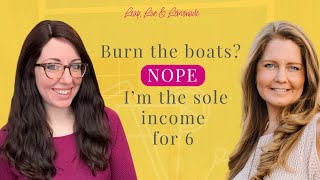
Ruheli Berry left a six-figure coaching business to build Get the Tech Out of Here, a membership for non-tech coaches. She's keeping her full-time job while growing to 100 members on Systeme.io's $47/month plan, aiming to quit by her birthday in September 2025.
Questions this video answers
Four (all age 10 and under mentioned collectively as 'four kids').
About 100 members.
Approximately $20,000–$25,000 per launch.
About 5–10 hours per week.
Systeme.io, on the $47/month plan.
Chapters
Today's guest is someone I've been quietly watching and cheering on for months now. Ruheli Berry is a systems wizard, a mama of four and the powerhouse behind get the Tech out of Here. She helps non techie coaches and course creators finally launch their businesses without the tech headaches. And she does it all by working a full time job and having her kids homeschooling. Difficult. I mean, talk about next level time management magic. But what stayed with me the most from our conversation was just because something is working, it doesn't mean it's right for you. I mean, how often do we stay in something in a job, in a business, in a version of success, in a relationship just because we have already put so much energy into it and just because it works on paper. In this episode, the Ruheli gets real about what it took to shut down a successful business, redefine her purpose and rebuild from alignment. It's one of the most honest, empowering stories I have heard and I can't wait for you to listen. Let's get started. This is the Leap Live and Laminate podcast. Hi, I'm your host, Esther Godor. Twelve years ago I took a big leap. I left my corporate job, I moved into a new country and started a business from scratch in my fifth language. Today I run a boutique launch and systems agency helping ambitious entrepreneurs build smart and scalable digital businesses on Kajabi without having to do everything by themselves. This is your go to place with honest stories, actionable strategies and real talk around building a business and life you love. Your best life and success story are still ahead. Let's write them together. Hey there. Hi Ruheli, how are you?
Hi Esther. I'm doing great. Thank you so much for having me on.
It's a pleasure. Thanks so much for your time and willingness to joining me on the show today. I have been watching you over the last few months amazed and I'm and I've been waiting for this this episode. I'm very excited to hear the what's behind what's behind the scenes. Ruheli, let's start with a little intro. Tell us, tell our listeners viewers what do you do and why you do what you do. Sure.
So I'm Raheli Berry. I am the founder of Guest get the Tech out of Here which is a company that I created to help coaches and course creators build simple, affordable and scalable systems for their online business but without the tech headaches. And so I give people plug and play templates and custom AI tools that I've built for them to make everything easier and literally click by click tutorials to basically take someone who has no technical knowledge or background and get them into the online business world, which is obviously something that takes a quite, quite a bit of tech. And this is something that I started because my background is in software engineering. And so for me it was a really natural way to use my skills to help more people that are out in the world. Helping more people. Because we all know the world needs all the help it can get right now.
Yeah. How did this whole story start for you? Okay, so you are a software engineer, but it's not necessarily the same path for everyone. When did you change? When did that come to life?
Sure. So about five years ago, I actually started my own online coaching business. And what I was doing at the time was helping women get remote roles in the tech industry like I did. And so this is not something that I have a degree in. I don't have a degree in computer science. And I was coming from a more traditional kind of manufacturing background and switched into the tech industry on my own by teaching myself a whole bunch of stuff after I had my first kid because I wanted a role that was more flexible and I found one and I was working remotely and it was amazing. And so I did that for several years. And then I had so many people asking me how I got the job that I got that I was like, what if I just turn this into a business? And so I started a career coaching business where I had a course and a membership helping women transition whatever experience they had into the online remote tech industry world. And I was running that business while I was still working full time and in the middle of the pandemic. So it's really crazy.
Wow.
But in about the five to ten hours a week that I had to create that business, I took it from nothing to consistent multi five figure launches. So 20, $25,000 per launch. And I was only working five to 10 hours a week, which is pretty amazing. But I actually ended up shutting that business down. Down. Because I decided that the tech industry is an incredible industry, but it's not something I want to be doing forever. And so I was helping people get into an industry that I was kind of trying to get out of and it fell out of alignment. And so I actually ended up closing that business down. But I had so many people that watched me scale that business so quickly that were reaching out to me and like, hey, you're a tech person, you built this online business, so you know what you're doing. Can you help me with the tech side of my business? And so it was people that we were running in similar business circles and they were just reaching out to me, like totally unsolicited for help and for advice. And they were paying me for my time very well. And so I started doing one on one done for you tech services for people helping them get their businesses online. And it was a really interesting experience cause on one hand, like it was really great money and I enjoyed watching people like go from not having a business to having a business over the course of our VIP week working together. But at the same time I didn't like having to be like completely fully on for like a full day or a full week at a time. Like just non stop client work. Like that was really hard for me, especially because I was still working in my job and still, you know, I have four little kids at home that we homeschool. And so I didn't really have time to like dedicate to one on one work that way in a way that was going to be like a business I could scale. And so at the beginning of 2024 I had this idea of like, I don't really like doing this one on one work right now, but there's something here and like it's something that a lot of people need. So how do I take what I've been doing with all of my one on one done for you clients and really find a way to package it and condense it down so that I can help more people with less of my time. And that was how get the tech out of Here was started. And so I actually started it as a membership and ran it as a membership all last year and recently went through a restructure where we now have a front end course with all of my templates and tutorials and AI tools and. And then we have a support membership that is separate and that's where we're at today. And we have about a hundred people that are part of our membership right now. And we're in the process of launching again. So we're going to be welcoming some more people in the doors soon and it's really exciting. It's been a crazy year.
Amazing. Just listening to this is like, wow, it all sounds so simple, but it also sounds like, oh my God, you've gotten so, so, so much done. So let's unpack it a little bit. You quickly mentioned that you had four kids homeschooled at home. So how does someone manage all this with a big Family.
Yeah. And I'm still working full time right now. You know, the eventual goal is to be out of my job and working on my business instead. But right now I'm working full time and we've got four kids that are homeschooled and I'm building this business and it's a little crazy. I'm not gonna lie. It's. It's definitely something that I could not do on my own. I'm very fortunate to have a very supportive husband who is the primary homeschooler. And so he's, you know, he definitely has the harder job out of the two of us in terms of being fully on with the kids all day long.
For sure.
He's incredible with them. And so that takes a huge load off of me, knowing that he's got the family and he's got the house and he's like, really taking care of things well there, you know, obviously I try to participate in the homeschool experience as much as I can with, like, field trips or projects or things like that. He's definitely the primary homeschooler. Um, but it's still, it's still definitely, you know, a juggling act in terms of we've got these four kids, 10 and under, that we're homeschooling, and we've got my nine to five job and my business and finding time for all these different things, plus, like, I don't know, my relationship with my husband. And it's, it's a challenge. But I think one of the things that's really helped me is becoming super clear on what my priorities are for each of the different things going on in my life. And so for homeschool with my kids, I know what my primary contributions are each week before the week starts. And for my business, I know what my three to five priorities for the week are before the week starts. And for my job, like, I know what my main focus is for my job. And so it's really, really clear to me whether or not I'm accomplishing the things that I want to be accomplishing and making progress towards the goals that I've set for myself based off of whether or not I hit those priority things each week. And I really don't let myself have like these five page long to do lists. It's something that's very easy for me to fall into because I. I like to get stuff done. Like, it's very natural for me. But I know that if I have really, really long to do lists that I'll put off the stuff that actually makes a difference. And so I really limit myself to like, you know, three to five things per week for each of these, you know, main buckets of my life to make sure that I'm actually doing the things that are going to make progress for each of these areas.
Wow, that's, that's a fantastic way to, to tackle everything. And, and I wanted to ask you, like, how can you, how can you even build something while you have a job and the kids. And you mentioned it was five to 10 hours with the previous business and with this one as well. So that must be one of the key elements like not being, not being lost in the, in the to do list. But tell me more about that. How is it possible to build a business in five to ten hours? Like I, I work on my business full time. I don't have kids. We only have my, my husband's stepdaughter who is 18 this year. So definitely doesn't need much attention.
Yeah.
From me. But some. Sometimes I still feel like, oh my God, I would, I would need triple the time. So how does someone do that in five to ten hours a week?
I. Part of it is like, I could definitely fill a full time calendar with my business and I know that I don't have that time right now. And so for me, again, going back to those priorities of like, I'm ruthless with what actually makes it onto my planner for my business. And it's really only the things that I know are going to grow the business. And so there's a lot of stuff I want to do with my business that I haven't gotten around to yet because I just don't have the bandwidth for it at this point in time because I know that I've got these other priorities that are really important to me that I'm not willing to sacrifice at this moment.
Right.
And so that's definitely part of it is like I, I am so ruthless with what makes it onto my calendar and into my schedule and onto my docket for the week. And that's, that's definitely a huge part of it, that prioritization. Another part of it is like, I am very blessed to have a very flexible 9 to 5 job. Right. It's not, you know, strictly 9 to 5. I work remotely. Like I'm in a co working space, but I work remotely. Um, and so I do have the flexibility on my lunch breaks or before or after work to like sneak in an hour here and there. And that's totally fine because I'm not in an office all day long. So that's definitely a big part of it for me. And, you know, if I decide I want to hop on a podcast in the morning, then I just work an extra hour in the evening and it's not a huge deal. I'm very fortunate to have a very flexible job, so that's a piece of it too. But I think also, you know, having the family support has been really, really invaluable because in those seasons that do get a little busier than those five to 10 hours a week, for example, I'm launching on Monday, right? And so it's been really crazy this week. And in that, in that season of like, it's been on the 10 hours side of things and not on the five hour side of things, which again, 10 hours on top of a full time job and on top of homeschooling, it means that I'm not around my family as much this week as I'm getting ready for that launch. But they know what it is that I'm doing and they're really, really supportive. And so that makes a huge difference.
You mentioned that you only, you only set priorities, you only work on things that grow your business. How do you know? How do you know which thing will grow your business and which thing won't?
Yeah, so it's basically looking at the things that, like, is this going to immediately make me money or is this going to make me money in the near future?
Right.
It's like one of those two questions. The third possible option is like, is this something I just really want to do and I'm really passionate about and it's going to give me energy to do those other things, Right? So sometimes it'll have things like, for example, hopping on a podcast with a friend that it's like, this isn't going to necessarily lead to money right now and not necessarily even in the future, but it's something I really enjoy doing. And so now I'm going to be lit up the rest of the day. And when we have that energy that we can carry forward into everything else, that's really valuable too. But for me, a lot of it is around systems. Like, my membership is called the Simple System Society. So, like, I'm really big on systems. I actually have a degree in systems engineering. Like, that's my original degree was in systems and manufacturing. And so I literally have a degree in making things more efficient, which is really, really useful. And so for me, it's like, how can I look at what it is I need to get Done and figure out the most effective, most streamlined way to do that. And then I only do it once. Like, if I know I'm going to have to do something more than one time, I record myself doing it and I document each step and I hand it off to a VA because I don't have time to do things that are repetitive. So if it's something that only is gonna be done once in my business, then I will do it. But if it's something that I know is gonna have to happen more than once, I record it, I document it, and I hand it off. Because that's part of me protecting my time, since I only have those five to 10 hours. And so most of my time is spent either on fulfilling with my clients, either inside our membership, on our live Q and A calls, or sometimes on, you know, one on one work that my members will hire me for, or it's planning on how to get more people in the door, whether it's planning my workshop or working on my funnels, things like that. And again, anything that I do that I know I'm going to have to do more than once is recorded and outsourced afterwards.
Wow, that sounds super efficient. I'm just thinking of, I. I was thinking of it today. I was listening to something and I'm like, my God, how many times I record the same thing for a client? Because I'm like, it's not the same verbiage, but it could be. It easily could be. So I definitely, I definitely have to get more on, on that path. You mentioned va, did you, you get help? Did you ask for help straight from the start or how did, how did that first step of having someone help you happen in this whole process?
Yeah. So when I originally started my career coaching business, it took me way too long to actually do the VA thing. I should have done it way sooner. But I'm very fortunate now this time around, I just reached out to my old VA and I was like, hey, do you want to work together again? And she was like, yeah, of course. So from the very beginning this time around, like, even before I was making money in my business, I had her helping me because I knew that I would make money faster if she was taking stuff off of my plate that I did not need to be doing. And so she's been with me, you know, for almost five years now, which is crazy. And then I also recently hired a second VA that is helping me actually deliver some of the tech support inside of my group, which has been super helpful because now people get answers from two of us and it happens even faster. So it's good for me because it's less on my plate. It's good for them because they get even quicker answers. And so that's been really amazing. And I'm in the process of probably hiring two more VAs over the course of the next couple of months.
Wow, that's. That's a growing team. And you also had the, you just had the live event not long ago, right?
I did. We had our first live event two weeks ago, which was really fun. It was just two of us or two, two of my customers and myself, so three of us total. But it was like an experiment. I just wanted to see what would happen because it's something that again, lights me up. Like working with people face to face really lights me up. And so I was like, well, I wonder if anyone would be willing to like, come to Las Vegas for two days and just get, get their tech done. And I had two incredible clients from my membership that were like, sign me up. And so they came to Las Vegas and we were in a little conference room here in the co working space for two days straight and they walked out with like a completely finished funnel, like opt in page, sales page, thank you page, emails, automations, like all completely done in two days. And they were like so thrilled, which was amazing. And I'm really looking forward to doing it again because it was a lot of fun for me also just to have that energy of people in the same space and have that energy of like instant feedback from the people that I'm helping and working with. And they obviously got a lot out of it also. So I'm thinking July is probably going to be my next one and I'm hoping to make it a little bigger. So we'll see.
Fantastic. You really, I can see you really light up when you talk about this. And I want to go back a little bit to how you got to the realization of this is what you want to do. These are the people you want to do it with. Yeah. When you, you mentioned that your previous business was also working pretty well, but you were moving out of that world. But still, when, when things are working well, it might be difficult to, to even acknowledge or, or see that, that you want something different or even when you feel it, especially with, with the family finances, you might be feeling like, oh, I can't just move away from this. This is working. So what gave you the clarity, the strength to, to make that change and, and come up with this obviously amazingly aligned project?
Yeah, it was definitely a process. I probably should have shut that career coaching business down about a year earlier than I actually did. So I, I can't say I'm the expert at figuring out the right moment to make that pivot, but for me it was just, it was this feeling of it was getting harder and harder to show up and do what I needed to do from, for my business, for my clients. Like launching got harder and harder. It's just energetically, it felt very, very off for me. And it took probably, you know, six months of like reflecting on, I could shut this down. Do I want to shut this down? Is that what feels right? Like, how do I, if I do want to shut it down, how do I do that in a way that's aligned with my integrity that I've like set forward with my clients and the commitments that I've made to them. And so it was definitely a whole process to get to the point where like, no, I, I actually do need to move on from this because it's making my whole life feel heavier than it needs to be right now. And so how do I do that? And so there was a lot of, a lot of warning. I gave people a lot of warning. I made sure that they kept access to everything that they had paid for and I downloaded it all into a Dropbox so they could just grab it and have the copies of everything for the rest of forever. And like the people who had paid for the annual version of the membership I was running, I had one on one calls with, to kind of move in the right direction before we shut the membership down so that they felt like they weren't being abandoned. Right. But it was a really hard transition. It was a really, it was a really hard call to make. But as soon as I did it, I knew I did the right thing. I instantly felt that weight like coming off of my shoulders. I didn't do anything online, business wise for about a year after that. Like I needed to just let myself kind of recenter and resettle and like the one on one tech work found me naturally after that. And so even when I was doing the one on one tech work, like there was definitely still this period where I wasn't sure if that's what I wanted to be doing. There's, you know, I also have a very spiritual and very, you know, coaching oriented bend to me. And so there's definitely always been this part of me that's like, oh, but tech is just tech. Like I could be doing something so much deeper and so much More meaningful. And that was something that I really struggled with for. For a while. You know, I would say the end of 2023, I spent like three or four months going back and forth, like, do I want to do something that's more coaching or spiritual, or do I want to do something that's tech related? And, like, what does that look like? But for me, it was realizing that what I'm here to do isn't tied to this specific thing that I'm doing. And that was a huge realization for me. And so, you know, who we are and how we show up in the world doesn't necessarily have to do with, like, the day to day of what business we're running. And so for me, what I realized is, like, I'm here to show people what's possible. Like, that's my dharma. That's my mission. That's like my whole reason for existence. That's my purpose is to just show people what is possible for them and for their businesses and for the world. Right. And so there's different ways to do that. And I still do stuff on the spiritual side of things. I still do some. I have a. I have my own little podcast that's like just me rambling about spiritual stuff. And I have classes that I teach locally that are more spiritually oriented, and I still do that sort of thing. But my business is showing people what's possible in their business, showing people what's possible in the online business world.
Right?
And so I think as long as I'm tapped into my purpose, which is really showing people what's possible, that can take a whole bunch of different forms. And once I got really clear on, like, oh, it's not like my purpose is this business. It's like, no, my purpose is bigger than that. Like, I have a bigger mission that I'm working towards. And that clarity really helped me realize that I have all of these other outlets for the spiritual side already. But there's so many people that need the help that I can offer with the tech side of things. And how many people are out there that have such incredible gifts and such incredible insights that the world really, really needs right now that are, like, stuck because they're banging their head against the wall because of technology. And, like, the fact that I could do something about that is like, that's a huge purpose for me is like, helping people help more people. Helping people get out into the world so they can use the gifts that they have, showing them what's possible for their business. Like, one of my clients that was here for TechCamp. Just reported back that she had her biggest launch ever after that tech camp. And, like, that lights me up because she's doing incredible work. And now I get to watch that ripple effect happen. And that is so cool. And so I really feel that even though there was definitely a part of me for a long time that was like, oh, you're just gonna do tech stuff? Really? Like, no. This really is a really deep expression of my bigger purpose and my bigger mission, but I had to get really real with myself to figure that out.
Yeah. I love this, what you just said. You help people see what's possible for them and what's possible out there. And I truly believe in it not just being the tech. If you just build something and they wouldn't be taking the whole. This whole vibe that you carry, if you just put that stuff out there, it probably wouldn't result in an amazing launch. I'm sure you are touching their whole way of showing up for their clients just by this work. Like, listening to you, it makes me light up. I imagine the same would happen with a client who might be pretty desperate when they come to you, because if everything goes well and they figure stuff out by themselves, they wouldn't come to you. They probably come to you when it's like, oh, my God, I'm never gonna figure this out by myself. Yeah. So. So even though it's just the tech, there is definitely a part of us. Like, I also work with people on the tech side of their business, but it's always. It's always the soul behind it. The how they show up, their. Their whole messaging and everything. It affects it. Yeah. It. It's not just the engine that we put behind.
Yeah. And on our weekly calls, like, the conversations are largely tech related, but I would say at least twice a month, there's someone that comes on the call and just doesn't need tech help. They need, like, mindset help. Right. They need to hear that it's possible. They need to hear that they should keep going. They need to hear that their dreams are not this crazy thing that's never going to happen. And they need to know that what they have to offer is something that people actually need, and that's way beyond the tech side of things. And it's something that I'm, you know, I feel really blessed to be able to bring to them because of my own business history. Like, I. This isn't my first business rodeo. Right. And so even though this business is relatively new, I've been in the online business world for almost six years now. And I have that experience of starting and scaling a business that I'm able to bring to my clients also. And, and you'll see their faces like slowly relax on these calls as I'm walking them back off the cliff of like, this is all normal. Everything you're experiencing is a normal part of the online business world. All the things that you're feeling are totally normal and you can do this. It's actually possible for you.
Yeah. And there are people out there who are going through the same thing. Sometimes we feel like, oh my God, I'm so alone in this entrepreneurial journey. Not me, because I have you and I have a whole bunch of people that are, that we are connected with in a, in a beautiful community. But when I started out, it was definitely a very, very lonely, solitary journey for the first couple of years. And it's definitely really nice when someone can finally have your back. If someone listening to us is now in a 9 to 5 job and they are wondering how to even get started. And I'm, and I'm also thinking of you said the company you work for is really flexible. How can somebody go about this when they are about to start something? Would they keep it as a secret? Totally. Would they mention it? How to even go about it inside the, let's say the, their existing job with their colleagues, with their boss and where to squeeze in the time. Would you say like do it in the mornings, do it at night or just pick one day of the week when, when you can get the time for it, how to get started with this whole project.
Yeah, so I guess we'll start with the, the first, maybe I'll start with the last piece actually. Like when to do it. Like there's, there's a book called when by Daniel Pink that talks a lot.
About.
What times your body works best on. And it's obviously different for everyone. Right. I am not a morning person. If I tried to do the 5am club and build my business at 5am, it would not be happening. So my, my brain, my brain turns on at around like 11am and so like for me to like actually be getting stuff done in my business, I know for me the best time is after work. And that means that after work I like take a 30 minute break to clear my head and then I sit down on my other computer and get my work done. And for me that's the best time. And you know, sometimes that means like when you're first building things out, I think it's important to keep in mind that when you're first building things, it's. It takes a lot more effort and a lot more time and a lot more energy then once it's already built and you're maintaining it. Right. And so when I was first building out my membership and all of the content that's inside my membership, like got like 75 hours worth of tutorials inside my membership, like, it was a lot of content and I was doing like chunks of like two to three hours a night for months at a time, right. And it was, it was a bit of a content slog getting all of that stuff done. But I knew going into it that there was a light at the end of the tunnel, right. And that once all of that stuff was recorded, it was recorded and it like, it's tech. So do I need to update things every once in a while? Yes, I need to update things every once in a while. But it's like an hour here or 30 minutes there, right. And it's not a huge deal. And now I'm just working with people right now I'm just helping people. I'm on the Q and A calls, I'm in my group, I'm on these workshops and I'm like bringing people into my world and it's more people oriented and less like me just like plugging away on my computer trying to get stuff done, right? So that, that's a big shift that happens that needs to be kept in mind at the beginning. Because at the beginning it's kind of hard to like see past that. But one of the things that I do that our mutual mentor recommends that I highly recommend to all of my clients as well, is don't wait until that's completely built out before you sell your thing. Just launch it. Right. And so when I started this membership a year ago, I had nothing. I had no content. Literally all I had was a sales page explaining what I did. And I ran a live workshop about tech and how it can help your business. And I sold the membership that didn't exist yet. And people knew that the membership didn't exist yet and I had no content. But I was offering it for 50% off for those people who jumped in and told them basically, like, look, you're going to help me decide what goes in here and what should be included. And you're going to get so much of my personal attention that people aren't going to get down the line as being part of my founding members crew. And I had 12 people take me up on that and so I built the membership with them, right. And I think when we're first getting started, it's really tempting to kind of stay in this, like, you know, in the zone of trying to figure out what we're doing. But a lot of times, like, we can't figure that out on our own. We have to figure it out with the people that we want to be serving. And so finding some sort of offer that we can put in front of the people we know we want to be helping and just try it out, try it out whether it's like a live four week course that you want to do, right, but you don't have it built yet. And you're like, hey, I'm going to do this thing. I've never done this before. So you're getting it for 25% of what I'm going to be charging a year from now and find someone that's going to take you up on it. And it also allows us to validate what we want to offer instead of taking the time to build a whole course and then no one wants it at the end, which is the most disheartening thing ever. And I totally did that for my first business, was not making that state that mistake again this time around. But I think if you're working full time and you only have five to 10 hours a week, it's getting really clear on who you want to help, how you want to help them, and then just go do it. Like, don't wait for, like it to be perfect, don't wait for your site to be perfect, don't wait for your product to be perfect. Like, like literally just start sharing about what it is that you're passionate about and you want to be helping people with and then get the offer in front of people. And even if it's like the first time you do it, you're just saying, hey, I'm going to do a workshop. It's going to be a paid workshop and you can get it for $27 instead of $97. And if that's the first time you've ever sold anything online, it's still a huge deal to get people in the door for that $27 workshop. And then you're building momentum, you're getting to learn and interact with the people that you want to be helping. And then you take that and you integrate that and you make that into the next offer that you make. Or you do it again and you relaunch it and you make it even bigger. And there's Just we put so much pressure on ourselves, I think, to like, get it right the first time and get perfect the first time. And I think especially when you're building this on the side of a 9 to 5 business or when you're building this on the side of running a family or. Right, we don't have time to make it perfect, we just gotta get it done. And so for me, I live by done is better than perfect. I live by that phrase and my clients hear it from me over and over. Like, everyone in my membership has heard me say that like literally hundreds of times. Because that's how I run my business, that's how I run my life, is get it done. You can always iterate later. Like, I'm coming from the software world, we ship the MVP and then we iterate. This is version one, this is version two, this is version three. And that's how the world works, right? And for some reason, when it comes to our own personal brands and our own personal businesses, I think we put so much pressure to get it right the first time instead of realizing, like, we have the ability to iterate.
Yeah, I learned it the hard way too. And then with, with my latest course, it was built through three live beta iterations and then the final product came out, but it was so different from what I originally thought it. It would be. I love what you said about the, about the selling point at the start because people would, People are sometimes like, it's fake, I can't sell it. There is nothing. But your key selling point in this case was your time, your personal time, which has the biggest value. It's worth so much more than, than just getting a prerecorded course, which in the end, when it, when it's already the final product, it probably resonates a lot and it helps. It's also amazing help. But if we can show people that actually they are in an exceptional position being the first ones being able to shape what's going to come out of here, I think that's a huge selling point. And that's the main thing we gotta show at the right, definitely.
Because if you're passionate about what you do and you know you can help people and you go up to someone and you're like, hey, I know I can help you with this, but I've never done it in this format before. So here's the deal. We're going to try something new. You're going to get my time for a quarter of what it would normally cost in exchange for you helping me figure out how to best package this as a group.
Right.
I've only done one on one and now I want to do it in a group settings. Y' all are going to help me figure this out. And therefore, you get what you want because you're getting the content that you're demanding, because I'm creating it for you instead of having, like, just random content for someone else. You get to tell me what it is you want and you get more of my time and more of my personal attention and more of my personal feedback.
Right.
And so it really is a win win. And I think I personally love being part of people's betas because again, you get that special attention from whoever's creating the course. And, you know, I've found that my founding members, like most of my founding members are still around a year later and they, they're still loving it. They're still showing up and they're still active because they know that they've gotten so much from this process and they really did help shape everything that I do, which is really, you know, a win, win situation for sure.
Yeah, it definitely is. And about the, the employer part, did you run into any issues? Like, can you talk about this?
Sure. So you definitely have to check like your contract for moonlighting clauses in your contract when you're, when you're doing this as an employee. For me personally, the moonlighting clause in my contract was you can't be in the, in a competing industry. Right. Meaning, so I can't be doing something for my business that would be like, at all competitive with my 9 to 5. But there is no clause against me having a business. Right. And so I'm not doing anything that breaks that contract by running a business because it's in a totally different, like, I'm helping online coaches and course creators. It's totally different from what I do in my software job 9 to 5. And so you definitely have to check and make sure that you're not, like, crossing any legal boundaries. I don't post about my business all over LinkedIn because that's where my employer lives and that's where they are. And, you know, that may change once I'm out of my nine to five. So it's not like I'm actively hiding it. Someone could go search my name and they're gonna find all my stuff.
Yeah.
Right. So if I had a co worker that goes and search my, searches my name on Google, they're gonna find my business. Right. I'm not hiding it, but I'm also not like Blatantly advertising it to the people that I work with. So it's kind of, you know, it's kind of this in between stage of being, you know, having a little bit of discretion, making sure you're obviously not breaking any of your contracts that you've signed with your employer. But as long as you're still doing your job really well, right, you're not sacrificing your job in your 9 to 5 and like, your performance is not slipping there and it's not against your contract. Like, what are they going to say if they find out that how you use your free time is instead of you go rock climbing, you build a business? That's how you use your free time. Right? It's your free time. And so, you know, I'm not, I'm not overly worried about it. And if someone from my job came up to me was like, I can't believe you're doing this, I'd be like, here are all my performance reviews. Do you have a problem? Like, I'm doing my job great. I'm great at what I do and my work has not suffered, my hours have not suffered. And you know, it does take some, again, some balancing and prioritization in terms of making sure that all of those things are happening simultaneously in a way that doesn't jeopardize anything. But I think for me it's been like, this is what lights me up, this is what gets me excited. And so this is my hobby outside of work. Right. It's is running this business.
And would, would this be your, your full time job one day or that's not what is the plan? Is there like a. If I have this many members, then I leave or how do you approach that?
Yeah, so for me it's interesting. There's a lot of burn the boats, burn the bridges kind of like rhetoric that gets thrown around in the online business world of like, don't give yourself an plan B, like, make this the only option. And the second you're all in, stuff's gonna. Money's just gonna fall from the sky. And like, that's cute. That is not for me though. Like, I am the sole provider for a family of six. And so I am not burning any bridges. I am not like destroying those boats once I get to the island. And so for me, like, is the goal to be out of my 9 to 5 and focused solely on my business and my family? Yes, absolutely, that is the goal. And it's the goal by the end of 2025 for that to happen. But I am not rushing that. I'm fortunate to have a job that I, you know, I'm very good at and is very flexible and that most of the time I enjoy pretty well. And so that's, that's a pretty lucky situation that I, that I'm in that I know is a privilege compared to what the situations that a lot of people are dealing with. But that means that I'm not in a rush. Right. I'm not urgently, desperately trying to get out of my, My job. Yeah, it's definitely until it works. Yeah. I'm going to, I'm going to wait until, until I find something that, that works and that is replacing that income before, before I take that jump. Because I just can't jeopardize my family. Right. I'm the sole income. I can't. I can't burn those bridges until I'm ready. So the goal is by the end of this year, yeah, to transition out of my 9 to 5 and fully into my business. But I've built my career in a way that allows. And this wasn't always the case. Like previous jobs that I had were not as flexible. And I specifically shifted my career into a direction that would allow me to do this on the side as well.
Yeah, that's. That's amazing. Somehow, everything aligning and.
Yeah.
Lining up for you. That's great. What would you say was your most difficult moment over the years that you've. You've been an entrepreneur?
Most difficult moment. I really do think that shutting my business down or the decision to shut my business down was probably the most difficult moment because on one hand, I was helping a lot of people, and I knew that I was helping a lot of people and I was making money in my business and things were going well. And so there was definitely this very logical, reasonable part of me screaming at myself that I'm being stupid, shutting this business down. And it was a really like a, you know, we call it like an ego death or shamanic death for me of like, realizing that just because something is successful and on paper it looks good, doesn't mean it's the right thing for you. And that was a really. You know, I'm an engineer. I'm all about logic and reason and just efficiency and following the right processes. That's my background. Right. And so for me to be able to look at something on paper that looks good and still be able to listen to my feelings and my intuition and say, something's not right here, that was a big, hard process for me. Of like letting go of all of that reason and all that logic and leaning into what fear felt like, what I needed to be doing. And that was hard. That was a really, that was a really difficult transition for me to make. I don't know if it would be as difficult for other people. But again, like, my background is all like, you do what makes sense, you do what's responsible, you do it. You know, what lines up with the, where the numbers line up. That's where you go. Like, my whole career is built off of that. So that was a really challenging period of time for me leading up to making that decision. But like I said, once I made it, once I actually did it, things got like instantly lighter in my life. Yeah, I think the other, the other challenging piece is something that every online business owner runs into, and that's the trolls and the haters and the nasty comments and emails that you get every once in a while that the more.
Visible you are, you get them with your current one.
I do, yeah.
Why would someone hate on this?
Yeah. So there, there are people who say what I'm doing must be a scam because it's too affordable. So you get that side of things. Um, and then there are people that for whatever reason read my entire sales page where I very explicitly say what it is that they're getting and then they buy and then they're upset with me and nasty emails. And as you're growing your business, it just happens sometimes. And learning how to regulate myself and focus on the people, the hundred people in my membership that are super happy with everything that they're getting, you know, that's, that's obviously, you know, I think the human reaction is like our hackles raise and we get like this kind of response that we need to talk ourselves back off of. But also like, you know, when you start running ads, you get all sorts of crazies that see your stuff. And we actually had someone that kept emailing us that was like very stalkerish for a little while. And that was a challenge to navigate. It's. I feel like all sorts of weird stuff happens when you're running an online business and being able to find your center and recenter yourself really quickly becomes more and more important as your business grows. Like, the more visible you are, the more you're out in front of people, the more members you have, the more people on your team, stuff just happens. Right. And like, if we take it all personally and we take it all like as the end of the world, which is what our, you know, subconscious Ego's voice is trying to. Everything's falling apart. Everything's like terrible. If we listen to that and we're not able to recenter ourselves, then everything falls apart and becomes terrible.
Right.
And it really is this like learning process of figuring out how to tap back into our center and our purpose and recover from those little things that happen quicker and quicker as we get better and better at what we do and as our business grows. But that's, that's always a challenge.
What would you say helps you recenter in those moments?
Yeah, so I love the outdoors. I live in Las Vegas and I'm very fortunate to have like year round outdoors access. So we've got. I'm literally looking at the mountains out my window right now. So we've got mountains that are very close and I can just drive out there and ground myself in the middle of nowhere and I love that. So that always works for me.
Also journey walks in Sedona.
Yeah, Sedona was amazing. So nature and getting out of my little bubble always, always helps. But also journaling I've found to be really effective because sometimes we're thinking something and it seems like so important and so real, but you put it on paper, walk away from it for 15 minutes and then come back and read it and you're like, actually, I'm fine. It's really not that big of a deal when you go back and you read it after you, after you journal it out and walk away for a little bit. So that's been really, really helpful for me too.
It's great. I tend not even to read it again, just get it out. And I think just writing stuff down is like talking about it, telling someone, sharing with someone and yeah, sometimes even that takes the weight off.
Yeah. I mean, especially if it's something that we're feeling like shame or guilt about. Right. Like those emotions don't live in the light, they only exist in the darkness, like Brene Brown says. And so if it's something like, oh, I feel so guilty about this, or like feeling like a little embarrassed or something, just talking it out is the easiest way to get rid of it. Because second you talk it out, it's in the light and it can't exist anymore.
Yeah, definitely. Tell me a little bit about the actual, the tech that you work with. I know it's system that IO that you work with, Right? Yeah. I'm a Kajabi expert and so in this sense we are doing similar work. But I don't know, I don't know your Platform. Yeah, I would be interested. And I know you previously were on Kajabi.
I was on Kajabi and we hear.
That people come and go between these platforms. And my approach is always, even though I'm also a Kajabi partner, my approach is always that people should find the best platform for themselves, for their situation, for where they are on their journey, for what kind of business they are building. So what kind of businesses, in what phase does your, does the System IO platform do you think work best and who are the people who typically find you? Tell us more about that. Sure.
So I will say that most of the people that I'm working with are on the newer end of business. Some of them have been around for a while, but most of them are on the newer end of business and they're feeling so overwhelmed with all the different options out there and how much all of these different options cost that they like are frozen in their business. And so one of the things that I love about System IO is that it's a really low barrier to entry. Like they have a free plan that you can get your website, you can actually make sales on their free plan and never pay them a dime until you're actually making money, which is incredible. And so for beginners, that's really, really valuable. But even as you scale, like I'm running my whole business on Systeme and it's, I'm on their $47 a month plan, which is crazy to me because I was paying, I was saying so much more before. And like, Kajabi is really an incredible platform for people who are really established or for people who need the flexibility of having that mobile app. For example, sometimes people will come to me from Kajabi and say, should I switch? Should I not switch? And one of the first things that I talk about is how important is it for you to have your clients with a mobile app access to everything that you do. And if it's really important, stay with Kajabi. That's one of the things that makes Kajabi really special is that mobile app access.
Mm.
And the fact that their community is really, really a built out feature at this point too is really great for me. I think for a lot of online coaches and course creators, that may not be an essential piece of things. And you have to decide, is it worth the extra investment at this stage in the game or can I do without it right now for what I do? People are always on their computers when they're watching what I do because they, they're doing computer Stuff. Right. So no one's ever on the phone. So for me that was like a no brainer, like not a big deal. But for some people, having that mobile app is really important. I would definitely say like Systeme doesn't have that right now, so you need to keep that in mind when you're looking at what platform. But for what actually pushed me over the edge was I was actually looking at click funnels instead of Kajabi. I was on Kajabi and I was looking to switch to something else because I wasn't happy with the checkout process was basically it. I have a lot of templates that are one click upsell or order bumps and I just wanted a lot more customization than I was able to do myself on Kajabi. And so I was looking at click funnels actually. And Systeme came up as an alternative to clickfunnels. And I honestly didn't believe it was a real thing because of the price point was so low. And so I spent like 6 months testing out Systeme before I moved my entire business off of Kajabi over to Systeme. Cause I wanted to make sure it could actually do what I needed it to do. And I've been super happy with it and it really allows me to help my clients really easily because there's no import export process. Like I have hundreds of templates that I give people and I just give them a link and they click the link and it gets imported into their account automatically and that's it. And so for me, like I'm helping non techie coaches and course creators, I'm helping people that get easily overwhelmed by technology. And so having a platform that is affordable for beginners and not overwhelming in terms of me helping them with their technology. Those are my two priorities. Right. And so for me, Systeme is the perfect fit for that. Where they're able to hop in for free before they've made money and then I tell them when to upgrade based off of what they need. And then I'm able to help them with just these one click template imports where they can come into my world and within the first 15 minutes of joining my program they have their website, their opt in funnel, their nurture sequence, their sales funnel and their course or membership platform templates all imported into their account within 15 minutes. And like that's like a game changer for so many people.
That's amazing. Yeah. Would you say that your, your clients are typically learning to do it themselves or, or you teach them in a way that they would Ask for help from a VA from the start. What's the typical approach there?
Yeah, so I. I actually talk about hiring a VA in the last module of my program because I. My program is built broken out into three phases, which is Design Build scale. That's actually the name of the program, Design Build Scale. And so part of the scale phase is hiring and outsourcing things. And sometimes it's we're outsourcing to AI, and sometimes we're outsourcing to VAs and to team members. And so I actually talk about hiring in that last phase of our program. So I do think it's really important. And the way that our program is structured, I am totally fine with people handing off logins to VAs once they hire them. And I definitely have clients that are doing that. I think most clients, when they first join, they're on their own. And so when I'm walking them through things inside the program, I am walking them through click by click, because I know they're not a techie and I know they're figuring this out for the first time by themselves. And so they're watching over my shoulder in all of these tutorials, as I literally say, click here, then do this, then click here. And so they're pausing and then doing it and then replaying and rewinding 15 seconds and they're like watching the whole process. Right. And so I make it like, so super, super simple for people who are doing it on their own and also totally fine to hand off your login to your va, because I encourage that as you start getting familiar with your business and the online business systems and you start hiring and scaling a little bit more, like, yeah, absolutely. Find someone that can do it for you and hand them the login.
I love that you are so focused even with the name of the program. What did you say? Design build and scale, was it?
Or Design build Scale.
Yeah, you see, I still remember. It's like so much to the point. No sugar coating, no fluff. And I can see this in everything you do. And I think that's a key to keeping things simple. Like not trying to come up with. Even with these metaphoric names. It's like, yeah, this is what we.
Do in this program and my membership also. It's the Simple System Society. Yeah, the alliteration. The alliteration is cute, but it's very obvious what it is that we're doing in there.
That's so cool. I tend to. I tend to come up with names that are super metaphoric. Like my last program was called Jump. And then it was like, where do we jump? What do we do? But then in the end, one of my clients came up with an explanation on why it was. To me, it was jumping because it was. I'm very much a bridge burner person, so I would say let's jump out of the plane and let's just do it and it will work. But yeah, I, I also learned it repeatedly the hard way that you don't always have to burn those bridges. Yeah, but yeah, then, then my client said it. It's like working with you. It's like jumping out of a plane but then having a parachute. So at least we got an explanation that even for that program, such a to the point name could have made it so much easier to sell it to. To promote it. Can. I can totally see that. And what's your. Yeah, you mentioned that your plan for the year is to. Is to get a lot more or. Or more members and to. By the. Did you say by the end of 2025, leaving your.
My hairy scary goal is by my birthday in September. That's my hairy scary goal. My actual goal is for sure by the end of 2025. Yeah.
Okay. All right. How do you see yourself as that person? Lately I've been trying to connect a lot with my future self. And yeah, I want to. I want to hear your perspective on what will Ruheli be like when. When that happens.
Yeah. So we do a lot of visualizations in the business circles that we're both part of. That's something that. That visualizing your future self is something that I. I go back to and I use definitely as a recentering tool when I'm out in the middle of nowhere in the mountains. That's. That's typically what I'm doing out there is. Is tapping back into that vision of what I want my life to look like at the end of 2025, allowing myself to re anchor in that place that I can make decisions from that place. And so when we talk about the prioritization of picking the top three to five things each week, that's not me looking at a to do list from last week and picking which of those I want to do this week, that is me every single Sunday, re anchoring into that vision of my future self and saying what does that version of myself need to get done this week to get there? Right. And so I'm very much making decisions from that future place already. That's what's helping me figure out, like, what are the things that I should be focusing on what's actually going to move my business forward, what's actually going to take me to the next level. It's anchoring in that place. And so every Sunday when I'm sitting down and making those decisions about what's actually going to be on my to do list this week, it's from that place of being anchored in December of 2025 where I'm already out of my job.
Right.
And so if it doesn't make that cut, then it doesn't make that cut. And that's part of the reason that I'm so ruthless is like I'm able to look back from December 2025 and be like, no, that didn't actually matter. That thing that I was obsessing over that I spent so much time on, that didn't actually matter. What actually mattered was getting my program restructured and relaunching it in a live workshop and blah, blah, blah, blah. Right. And so that's where I'm working from, is from that place of like every single week tapping back into that end of 2025 version of myself. It's not always easy to stay there all week long, but at least when I'm planning my week, that's where I am. Um, and if I'm, you know, if I'm getting flustered, if I'm getting distracted and unfocused, then I'll take a few minutes and just like do some deep breathing and recenter myself again. And I like these, these are my things on my to do list because I know this is what's going to get me to 2025. Focus. Just focus. Right. And so that's been a really, a really valuable tool for me.
Yeah. I love that. I love that you are able to catch yourself and stop yourself in that moment.
And it does not always, but I try.
It sounds like. So it means that most of the time. Wow, that's beautiful. I. I wish all the very best for you in, in this all working out. And I. And I know that you are on the, on the best track from what I've seen from you over, over these months that I've been following your path. Amazing. One more thing where, where can people find you if. If somebody is in that. Exactly in that moment where they are like they, they have been wanting to start, but they have been held back by the tech.
Yeah.
And they would, they would be happily reaching out to you. What's the best way to find you?
Yeah. So if you go to my website, which is getthetechoutofhere.com I'm still obsessed with his name a year later. So if you go to get the tech out of here.com you'll find a link to whatever upcoming workshop I have that you can register in. That workshop is really where I give you the big picture vision of like what your tech is actually supposed to be doing for you. And I walk you through my design, build, scale, process so that you can really understand what you where you should be focusing first and how to do this without all of the tech headaches and overwhelm. And then I also have some free templates that are available on my website for people who want to try out Systeme and see if it's the right fit for them. You can download one of my free templates and play around with that. But obviously those workshops and those templates are a great place to start. And you can also use my contact form or reach out to me on Instagram. Get the tech out of here on Instagram also. And I'm happy to chat about it anytime.
Perfect. I'll add all the links to the show notes so people can find you. And anybody who has any questions, feel free to ask me and I will. I will connect you with Khairi. Thank you so much. Thank you.
Thank you. This has been so fun.
This was amazing. Thank you for your time. Listening to your, to your schedule. I appreciate it even more. It's an honor that you could squeeze this episode into your, into your week. Thank you, Ruheli.
Of course. My pleasure. Thanks so much for having me, Esther. Thank you.
More from Eszter
She Had NO Evidence It Would Work — But She Manifested It Anyway | Mindset & Law of Assumption
They Said It Would Take 20 Years — I Said We're Doing It in 2" | Big Vision vs Small Thinking
I Left the US, Got Certified & Made $35K on a Product I Hadn't Even Created Yet