How to Know When It’s Time to Leave Your 9–5 (Even If You’re Winning)
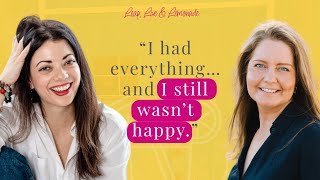
Alicia Ayala walked away from a VP track after 22 years in corporate leadership because her definition of success changed. She and host Eszter Gódor discuss how to know when it's time to leave, using core values and personal vision as guides, plus the identity shift that comes with leaving.
Questions this video answers
22 years.
She walked away when offered the VP role she had been pursuing.
LinkedIn — profile name: Alicia Ayala.
A 19-page reflection guide (free).
First quarter of 2025 (host notes this timing in closing).
Chapters
Hey there. Welcome back to Leap Live and Laminate. In this episode, my guest will be Alicia Ayala. Alicia is a transformation coach with 22 years of experience in corporate leadership who decided to walk away from it. And to top that, she decided to walk away from it right when she was offered the VP role that. That she had spent years fighting for. Why? Because she realized it wasn't her dream anymore. And this is what stuck with me the most during this conversation. This quiet, gut wrenching clarity that sneaks in, creeps in, but one day it might hit you really hard when you have achieved the dream, but it no longer feels like you. And I felt it so deeply. I had that happen to me a couple of times. And I have always felt guilty about this. And during this episode, I realized it was normal. This episode is an honest conversation about navigating change and claiming success. Whether you stay in corporate or you leap into something different. Let's get into it. This is the Leap Live and Laminate podcast. Hi, I'm your host, Esther Goldar. Twelve years ago, I took a bold leap. I left my corporate role, I moved to a new country, and I built a business from scratch in my fifth language. This podcast is for new and aspiring entrepreneurs who are ready and eager to turn their ideas into something real and thriving while making a lasting impact. Whether you are contemplating on leaving your nine to five or you are already on your entrepreneurial journey, this is your go to place for honest stories, actionable strategies, and real talk around building a business and life you love. Your best life and success story are still ahead. Let's write them together. Hey, Alicia, thank you for joining me today. How are you?
I'm good. How are you, Esther?
I'm good. It's funny. Just sharing with our viewers and listeners. Hi everybody. Before we came into this room, we were talking about where each one of us should look so that this looks natural on. On the recording. And yeah, I've started to. I've started to ask this question very recently because I had an episode where I looked at the wrong place the whole time and it was a 70 minute episode.
Oh my goodness. But I think that's probably happened to so many people and nobody ever talks about it, so. So I'm so happy that you asked me because I was thinking this this morning while I was getting ready. I'm like, I hope I know where I'm supposed to look, which seems like such a strange thing. But in this setup, it really is a valid question.
And the funny thing is, it's not like you Have a one static place, and it's always that place. It could be a different place based on how the system where you are, whether it's zoom or another platform where it's placing you, where you have your camera, what angle? Yeah, I don't know why I'm. I'm just asking this now because previously it was always like, oh, I don't know where to look. So I'm looking everywhere. Yeah. Okay, cool. And what I wanted to. What I wanted to share with you, Alicia, is that the. The reason I started to look into this and actually ask is that I've been working recently with Tracy Goodwin on my voice, on appearing, on being on camera. And, yeah, she actually asks this question when we are with her in the zoom, when it's like four or five of us and she's coaching. She's like, am I looking at you guys or am I looking at. Is that weird? And then that's how. That's how it came to me.
I have a real quick thought on this, though. I think sometimes we don't ask, like, the simplest of questions because we're afraid that, like, oh, I must be the only one. But here.
Oh, I'm so sure I'm the only one. Even now I'm like, does this make sense to anyone else or is just us? But shit, it's everybody else.
It is, it is. So I love that we're opening with this because, like, the theme that we're not saying, and this goes like, we could take this so deep. Right? The things that we are not saying are the things that are potentially affecting everything. Right? So this podcast, we're talking about something very specific, but our goal right, in this podcast would be for, like, this to be very flowy, but, like, if you didn't want to ask that question. So I think it's so beautiful that you asked it.
Yeah. Okay, let's.
To everybody else.
Yeah. Let's make it our focus today. If anything comes up that we are like, oh, I don't know if I should share this now. Let's go ahead and do that. All right, let's. Let's get started. Alicia, please tell me. Tell our viewers, listeners a little bit about yourself. Maybe tell us what you do and why you have chosen to do that. That's. That's my favorite question to start with. Yeah.
So a little bit about myself and what I do. So I. I was in corporate for 22. Well, probably more than 22 years, but 22 years building in a leadership role. I was, you know, climbing the Corporate ladder, became a mom and you know, have two girls. And I was faced like the first big chunk of. And this ties into who I help. So the first big, big thing that I faced after having kids, I mean, so many things that you face after having kids, but in a corporate space and climbing the corporate ladder, it's like this, how do I, and I hate to use the word balance, but it is, you know, balance, integration, harmony. People like have issues with these words, but it is balance, in my opinion. But it's figuring out like, how do I, as an ambitious person who has goals, who has dreams, who has aspirations, how do I balance that with, oh my goodness, I'm a mother. And this was a huge struggle for me because I had career ambitions and I like, I couldn't let it go. And I, and I wanted to because I was, I had these beautiful children and I'm like, how do I balance this? You know? And so for the first year, I, like, I didn't, I gave, you know, I gave everything to one or the other. And then I just felt like not myself. I was either giving everything to being a mom, but then I wasn't pursuing career aspirations that I had. And so this was my big test. My second child was six months old, my second daughter. And I remember sitting on the floor with her and this was such a pivotal moment for me because I'd been giving everything to being a mom. But I was so unhappy. And I was so just like, what is wrong with me that I can't just be grateful in this moment for this beautiful, like, because it's everything that I wanted. Like, I had everything that I ever wanted. And I'm like, what's wrong with me that I can't be happy? And I wasn't happy. And so I'm sitting on the floor and I'm my little six month old. She's cooing at me and she's gurgling. And I realize in this moment, like I am, she's looking up to me and I just have to pursue what's important to me. And it's both. And so it was like in this moment that I'm just like, I have to find my way back to happy. And that's literally the sentence I said. And I was like, I don't know what that means. And so for like the next five months, I did everything to figure out how do I become happy at this version of me. And that's something that nobody tells you. Like, you're ch. You change, your identity is shifting. But you don't necessarily associate yourself in that way. And it feels so awkward. So I spent like six months, like, trying to figure out who I was during this time. I was like, oh, my gosh, like, it's the career part of me that I've not been pursuing. And so I went for a director role, got the role, but then fast forward, I'm in a different struggle. I'm giving everything to my career, and now I'm like, missing snuggle time and I'm missing bedtime and I'm feeling terrible, and I'm like, what is wrong with me? Now? It's like I leaned the other way. But I truly believe so this ties into, like, what do I do? You know? So for I finally figured out how to create this balance for myself, and it felt amazing. And then I started coaching women just naturally on career growth, how to find their voice in a corporate space. Because many I was in technology, so it was very male dominant. And so helping other women find their voice in a. In a. In a group, in a department where a lot of times women sit back not because they aren't talented, not because they don't want more, but because they feel like they can't. And so naturally, I just started coaching women as I had gained this confidence, and I just kept climbing the corporate ladder. And so then I found myself in this beautiful place of. I had been working towards. I had found this balance, but my next step was vp. And I'm like, this is what I want. And so I went after that. I was finally up for my coveted dream of vp. And I had fought for it, which is a long story. I had fought for this for like a year. And so then I'm up for this. I'm in the office with my boss, and we're having the discussion. And I saw the next 10 years of my life, and I just realized that that is not that. Like, it was. No. At some point, my dream had changed, and that's not what I wanted to do. And so I decided to leave corporate. And I really just wanted to help working women. I wanted to help professional women because I think it's really easy in that space to lose yourself. I think it's easy for any woman to lose herself and get on autopilot. And I wanted to share. Like, I had done all these things that didn't work, and I had found some things that did work. And I'm like, why am I not sharing these things? And so I help ambitious working women and as you know, figuring out your niche in this space and how you want to help is like a really hard thing. You know, I knew it was working women, but I didn't know exactly. And it actually, I had a pivotal moment back in December that really brought me full circle, that it's, you know, ambitious working women who really do want both. And there is this belief that you can't. And I think even in the last four years, there has been a big push. A lot of people, online, influencers, saying, like, you can't have balance. And I just disagree with that. I think that you can, but you also have to fight for it.
It's a constant work. It's not like you find your balance and it stays like that forever. Is that what you mean?
Yeah, it is. Like, in everyday moments, choosing, choosing, like, what is the most important thing, choosing. But you have to be really aligned to who you are and what's important to you. And I think it's so easy for any of us to get on autopilot. And we. We attract, like, we collect, I feel like other people's values, other people's ideas of success, because we're just not evaluating for ourselves. Like, what does success mean to me? And so one of the key things that I think is important is this. What is your success plan for yourself? What does that look like? What does success actually mean to you, if you were to get really clear? Because for me, for a very long time, success for me was, well, climbing to the VP status, nothing else. And even after I had kids, I never paused to evaluate that. But it had changed. And so once I got the bonus and once I got the salary that I had been dreaming of, and once I had the house and I had the car, none of it mattered because my definition of success had shifted. I wanted to have a career where I provided value and. And a career where I was giving and helping and serving. But I also equally wanted to be a great mom. And again, what's the definition of a great mom? Like what? You know, again, if you don't define it for yourself, the world will define it for you. And so then it was like, okay, well, what does a great mom look like? Well, for me, it's. It was like. And I. I literally defined it when I was in corporate. I wanted to be home three mornings out of the week, having breakfast with my kids, getting them ready. I wanted to. I didn't have to make snuggle time every night. That didn't make me a good mom, because I needed to have time and space for myself. But snuggle time a couple times a week, three times a week, you know, So I really defined what that meant. No phones from this time to this time. So for me it was really being present when I was with my family. And like again, your success plan is what you define, not what you see that other people have. But we don't take the time to really define it for ourselves and make that conscious effort like, oh wait, this is what success means to me. And that's why I believe so many people get to whatever it is that they were shooting for and it's like, oh, all right. Well, I don't know that I feel any different.
Yeah, I think it. It's also funny because when I was in corporate, I was in corporate for seven years, eight years actually, and then I left 12 years ago. I thought that these things that you mentioned, like we are not looking into what we really want, what we really stand for, who we really are or want to be. I thought once I left, all of that will figure itself out, but that work didn't actually stop. Or I also thought like in corporate, I was, I was stressed. I felt like I had to be always present, I had to always respond. And then in my entrepreneurial journey, I felt the same. So I also realized that it isn't just the job, but it's you. Like what you are saying right now, if you don't define the rules or your role or who you are or want to be, your surroundings, the market, your clients, your family, your neighbors, your friends will define it for you. But it's still so. Whenever, for example, you work with a coach and when the coach says, I'm not gonna tell you what to do, that's sometimes the most like, shit, I thought he will give me the steps or she will tell me what to do. Again, I have to figure this out. That's actually, I think the most time tiring. One of the most tiring things about being, living a balanced or whatever we call it, life, that it's. It's actually hard work on, on this element. It is.
And you know, I. What you said is exactly, was exactly my experience leaving corporate here. I had figured it out, but that's one context. When your context changes, you still have to now figure it out because your context has shift shifted. Whether it's a new role in corporate or a new. When you become a mom of two or a mom of three, context is shifting. So therefore you have to shift. You have to redefine those things for yourself. And so when I left corporate, same thing I'M like, I've got this figured out, right? I did not redefine. And it was a struggle as multiple things happened over the last four years of like, I became a caregiver, guardian, conservator, advocate for my youngest sister. I sort of underestimated. Like, this is new context. My identity and role in my life is shifting. Right. It's almost like having another child. But I didn't. I kept thinking like, well, my life will go back to the way it was once things are situated or settled or we get through this big issue. And it just. It never like it was my new normal. So I had to define, okay, what does success look like for me in this role? Because it's a. There is a lot to it. But then you have that my kids have gotten older, so they're in. One is in middle school. So like, everything shifted again as, as working, I think as moms, people in general, women in general. But as moms, like your kids are growing and the context continues to shift. As a mom, as a working professional, your context continues to shift because you take on new roles, you have different desires and aspirations. All of it continues to ebb and flow and you have to constantly be evaluating, okay, well now what does success look like for me? Because again, something else will define it if you don't.
Yeah, exactly. In your experience. And you did leave corporate. I did leave corporate, but from what I understand from what you're saying, not everybody has to leave corporate. Not everybody has to leave their job. How do. If, let's say one of our listeners is. Has been in corporate for almost a decade and they are feeling like they are meant for more, they want to change. How do they know in your experience what change they need? Whether it's a promotion, whether it's a sideways move within the same company, whether it's a similar job in a different company, or whether they should leave that whole world and start something on their own, or maybe a third option? I don't know. How do you. How. What would be the first steps to figure that out?
Yeah, I think in my experience, and I think just, you know, we. We find ourselves in this place at various points in our lives of something doesn't feel right. I need more. And it is this like, okay, well, what is more? I think. And it's. It's kind of like the answer that most coaches give. I feel like when you said, you know, you. You have to figure it out for yourself, like, but I think how. How can you figure it out for yourself? I think it Comes down to like, there's three things that I really highly recommend that everybody has, I think. One, it's knowing your core values. So your core values are these values that rarely shift, but they're what is, they're your guiding posts. And knowing your core values helps you to understand why you might feel unhappy in your role in your, you know, with your family situation, whatever it is, or whether you need more work, like a different type of role, more responsibility or the same like I think core values, it's one of those tools that is so simple. There's a tons of, you know, resources out there to figure it out, but it's something we rarely spend time doing in. Knowing your core values can really bring you really close closer to what it is you want and desire because you can look at those core values and go, oh, I really understand why I'm so frustrated with my current role. Like I worked with a client who very successful woman, she was like, something's wrong with me, I just need to quit my job. But one week after we did core Values, one of the what she, she came to this huge realization. Her core values and her leaders core values were misaligned. And so her issues were less about her role. She didn't realize that until we had worked together. But her issues were less about her role and more about, oh, my leader's asking me to do something that is completely misaligned with who I am as a person. And so shifting leaders in that case was like, oh, this is like a no brainer. I think the second thing that's really important is understanding what your personal vision is. What is your personal vision for your life? When I was studying neuroscience, this was such an aha moment for me when I listened to this speaker, Richard boyatsis, who had 30 years of experience of collecting data and studying this, that if you have a personal vision and I don't remember what the percentage is, but it increases your percentage exponentially of achieving whatever it is that you want. Because your personal vision becomes the GPS for your brain. We have the reticular activating system. And I don't mean to get into like technical terms, but we have this cool part of our brain that actually helps to guide us to what we want. Our brain will focus where we tell it to, but many of us, and me included at the time, I didn't know what my personal vision was. And updating that personal vision on a regular basis, it's like entering in GPS coordinates to like what you actually want in your life. And your brain will Then show you opportunities to get there. And I think the third thing which I already alluded to is like knowing what your success plan looks like to you. And this is taking like the core pillars of life and underneath those core pillars, really understand what would success look like. Because when we are out of balance in our pillars of what success looks like, we can feel really out of balance. And a lot of times where we look first is our career. We're like, oh, it must be the job. I just need to go get a new job. That feels like the easiest thing, the hardest thing is to face our own self and understand what's happening. It feels easier even though it's not. I'm just going to go get a new job. There were plenty of times I did that in my career instead of doing those three things that I just laid out. But like if you have a career that feels okay, but let's just say your health is declining, well, success for you might be maintain the job that I have, continue to add value there. But oh my goodness, I'm feeling like crap because I'm not focusing on my self care and taking care of myself enough. So what would it look like and how would it feel if I was taking better care of myself?
Yeah, yeah. It's the different shades of success and what it means really to me where, where I'm at. It's interesting you, you mentioned this, this whole identity thing. Like, like we, I think we try to avoid looking at ourselves until everything else, until we do everything else. And it's kind of the last, the very last, like, oh my God, I'm so desperate. What else is left? And then it's like facing who you are, want to be who, who you haven't been and all that. What was your, what was your experience with the, with the identity shift? Because it's one thing that you leave a job, you leave a world. Like in, when you leave corporate, you leave a whole universe. But if nothing changes around you like the people you surround yourself with, then it's, it's very difficult. Like, like I left once and, and I stayed in the exact same circles of people. I lived at the same place. And within nine months I found myself again in a very similar role at a different company. Although I didn't want to, but it just, it just sucked me in again. And then a year later I left again. And then I changed countries and that was my way of completing this shift. Because when I was still surrounded by the same circumstances and I'm not just saying people, it's not that anybody wanted anything bad for me or it was bad for me, but I couldn't fully 100% complete this shift just because everything else didn't change and it was still surrounding me. But when I changed countries, I also, like, didn't log into LinkedIn for two years because I was still receiving, you know, invitations. So even in a different country, in a totally different world, I was receiving invitations from the similar companies or same company for similar roles. Do we need such a drastic change or is there a way to, let's say, stay in the same city, country with the same people, but make sure that we can embody this new personality or whatever it is?
Yeah, it's such an interesting question because similarly, I moved as well. I don't think you have to move, I think, but I do. You know, I want to point something out and then I'll come back to that question. I think I really underestimated, like leaving corporate and pursuing entrepreneurship. I underestimated the change. In my mind, I'm successful, I'm confident, I have all of the skills to go do this. But what I underestimated is that, and this has just been my experience, the corporate space has built in ego boosts. The corporate space has people. The corporate space is providing so many things that you don't realize. And then when you're in go into entrepreneurship, all of that changes. And so, you know, I suddenly, for example, you don't have a place to go every day unless you give yourself a place to go every day. Suddenly those ego boosts are replaced with likes or people interacting with you on social media or, you know, what's happening in the online space, which is so fickle that's not even real. Suddenly it's replaced by all of in these different ways. Because in some ways you've become like those have become part of your life without you knowing it. And so it's like you replace these external motivators with a different external motivator again without even realizing it. So, like, I think that I really underestimated, like, oh, I needed my friends more as an example. I needed entrepreneurs who were doing the same thing that I was because my friends were like, did not understand what I was doing, you know, and nothing. You know, I think also I didn't want to share with them because maybe they would tell me that it was crazy and I don't want anybody to tell me it was crazy. So suddenly I found myself feeling very offset, like off centered, you know, just not centered, not grounded. And so I we moved to the middle of nowhere in rural Wisconsin in the woods. We had like, it was, it was an amazing experience and we lived there for three years and we moved just a couple of years ago back to the cities. But I don't think that you have to move. I do think that you have to be really grounded with what success looks like to you. Like, had I done that in for this context, I truly believe that that could have helped me. I think that you have to really ground into like, what is your identity. So for me, I still associated myself as a corporate professional, like losing that identity or shifting that identity to an online entrepreneur as an example. Like, it didn't. I think it took me at least three years for me to. To realize again, my context had shifted, but I, like, mentally had not shifted, you know, and even like an online entrepreneur, honestly, like, did not like, I think James uses the term, you know, digital CEO. That felt very masculine to me, so I had to redefine it for myself. Like, I am like, I really, I want to let go of a lot of the masculine wheeze of in which I've shown up, which was all of my corporate experience. And it was like this feminine, softer side of me was really wanting to break through and, and maybe had always been trying to break through as I became a mom and this nurturing side. But I think it's really like we can say, like, what is the identity that most suits us? And then we are becoming that identity, but we have to identify it. And so for me, even like in the corporate setting for a long time, I still, and looking, this is me looking back. I, After I had kids, my identity, like, mentally I had never shifted. Even though my context had changed, I was still a hard working, resilient, working corporate leader. And like, that is what I wore. Had I shifted to, I am a mother and I'm an ambitious working woman. How I even make decisions then is different. Even saying I'm a mother first is a very, A different. Has a different feel. And so I think that we can shift our identity, but it is an active process of like, who am I now in this context? And what feels the most aligned to me and trying those different, I would say identities on can be helpful.
Yeah, I, I totally feel that. And now thinking back to what the way I managed it is, I, you know, when I, when I did this whole change, I think I needed to do the country change because I was too ashamed of not being able to give people explanations on what's gonna happen. While I was also super Excited about everything, being open and full of opportunities. At least that's how you start until there are some really difficult moments. But what I'm also realizing is that when I left corporate at that moment or before that my whole identity was my job, my success there, being able to lead, the number of people I led, getting all the recognitions for that, the travels, the trips, anything. I don't think we posted that much, but people knew that I could, I can travel around the world and it's so cool, you know, the pay and all that, that was, that was me. And when I left the whole thing, I was like, who the hell am I? But I don't think I was asking myself at that point. And then I was still trying to grab onto, onto things. And you said it lasted for three years in your case. I think I'm still in the process because last year when we were looking into, I don't know, it was one of the calls within bbd and the James you mentioned is James Wedmore, who we both are working with. If someone doesn't figure what we were talking about was, oh, let me, let me get back to that. That thought that I just had. Oh my God. How did, how did I want to approach this? So I realized in this call it was about selling, like how do you feel about making a sale? And I realized that when I'm selling something, half of my activity is working on Kajabi sites. I'm a Kajabi service provider. And when I'm selling something that is tied to Kajabi, I feel at ease selling it because there's a huge company behind my back. But when I sell my own stuff, which is my invention, my way of helping people through my own experience, it's like, you know, sometimes it creeps in. Luckily not all the time because then I wouldn't be able to do it. But sometimes it creeps in like, is this even legit? Am I just a fraud? Is this real? But when you have that company behind you, it's like, of course it's real. Of course I am the person I am and this is my identity. And when it's my own stuff, it requires so much more self confidence or whatever it is to be able to stand your ground, to be able to say, yes, this is who I am, this is my identity, this is part of me. I'm proud of it because, because like there is no such a huge. Yeah, brand or whatever behind it. But I should be so much more proud that oh my God, I made this. It's not someone else. You made it successful. And I'm just a tiny little piece in the machine. I made this, this is my machine. And I should be like a thousand percent more relaxed about this and happy and proud than about the other thing. But it's still sometimes not that way.
That's such a good distinction. You know that when you have, like when you're with a company and you're growing within a company, you can be, you know, you can, and you're getting the accolades and the bonus and, and the salary, right? Like that is reinforcing your worth. But then when you go out on your own again, if you have a company that's supporting you or you're underneath somebody, or you're, whatever the case may be. But if, when you switch to like, I am the brand, I am, you know, the product is like my, my years of experience, which, again, I don't know why this happens in our brain. But yes, I've had the same experience where it's like, I have 22 years of corporate experience in leadership, but then the context shifts and I'm, I'm my brand on my own. And it's like, oh, well, is 22 years enough? Maybe I need more, you know, but I have that experience. I've been where my clients are. I know how to navigate those discussions. I know how to, I don't want to say, you know, trick the system, but I know how the system works, you know, so. But why. And so I hear you, because I think we, we all feel this way. And I'm sure you felt this way in corporate before you got had enough, you know, experience that then like, somehow write those years of experience in corporate gives you the, well, I've been doing this right for X number of years. And I heard something really interesting. It's like, as entrepreneurs in the online space, we expect success to happen in like the first one or two years. Otherwise we feel, you know, like we've failed yet for any role where you're having to learn and go to school, doctors, lawyers, right, it's six, seven years of schooling plus additional. Right. And then you're on the job, so it might be 10 years. But as entrepreneurs, we sort of expect this really, we have these really high expectations for ourselves. And maybe it's because most entrepreneurs are high achievers, I don't know. But it was so, it so resonated with me. It was like you expect a doctor to go to school for that long, but as an online entrepreneur, somehow you expect, expect you're going to learn Everything in like one to two years and be this like, overnight success. Yeah, but it doesn't work that way. There's. There's things to learn, there's things to overcome. There's. You know, I do think in a lot of people in this space talk about it. Going into entrepreneurship is such a journey of self discovery.
Oh, it is. It totally is. To top that, what you just said, that we don't realize how much we have to learn or how long the process can take. I didn't even think that I have to learn anything. I thought that you just have to jump into it with your entire heart and soul and just start doing what you love doing and it will all magically figure itself out and it will just work. So for the first two years, I would say, yeah, I started 2013, 2014, and until 2017, I didn't ask for any help. And those years were so excruciatingly painful. And I. And it took me three years even just to figure out that shit, I need to learn this stuff. And then I started asking for help. I found communities I could be in where I could share. I did go to some local communities, but, you know, I'm in Spain, so it was even in the entrepreneurship communities. It was more about like, bitching about how difficult it is to be an entrepreneur in Spain and that only crazy people do. That didn't help much. So. So yeah, it took me three years even to even to realize that you could learn this stuff. But you need to find the people you. You want to learn from. It doesn't just happen to you.
Yeah, that, you know. Oh my gosh, so true. The people. The people are really important. I think finding community and similar to you. Like, I did a, like I looked a variety of places, you know, like, I was like, oh, we've got these like local chapters of like leaders. I'm trying to think what they're called, but I was like, oh, maybe I join a rotary club. Like Rotary clubs we have in the US that are like these lead, you know, you've got leaders, local, but they all have. And then there's like, I don't know, there's another group too, but they're all in different types of business. And while that was great and like, maybe it could have been helpful, it didn't feel aligned with like, what I was doing specifically. And I think that there is a lot of value in finding a community that is really aligned to what you're doing, exactly what you're doing, because they know the pain points that you're experiencing. I also think finding groups because then I found groups that were online entrepreneurs but then like the way they operated or their value system wasn't aligned to my own. And while there are, there are a ton of people out there groups, not all of them, I would say feel energetically aligned. And so like it was such a process of finding the right community. I don't want to sit and complain about things either. Like, I really want to just like I believe in the possibilities. I'm a super hopeful person and I want to be around other people, I guess, that have that same energy versus complaining about it.
Yeah. Wow. This, this makes me. It brought up so many painful memories this whole period. That's why I went a bit silent for a moment.
Yeah, I, I agree. I also think that there are just. There are. And I think it's important to mention this. I. Oh. And I don't know if this was your experience, but I also have found that there are not everybody in the like in the online space are here to do good. You know, there are people that are looking to make like a quick buck and I think there are some people that I would say prey on newer people getting into the space, you know. And so I think it's important to mention because like I did not realize that. So like for the first year I found a group that I joined. I thought I was joining like a mastermind, but that's not what it was. And it was just this super strange experience. And I realized it was less about helping you and it was more about like the group profiting from you.
Them selling.
It was a very strange experience. And then nobody wanted to leave and tell the person that owned the group like that they wanted to leave. So people, I was like, oh my gosh, I'm so I'm done. But after that experience it was like, I only want. It was like I really was calling in like I am looking for heart centered people. I am looking for a community of people who want to do good and that are truly wanting to like make the world a better place. And I think when you can again call in, like have that personal vision of what you're looking for, you will find it. And I think we've found a beautiful community in the James Wedmore group.
Oh, definitely.
You know, which is wonderful. Like everybody I've connected with, it's just like you just, you want to help and support and you just want to be around those people. So I think finding that is really important.
Yeah, it definitely filters out the not so Great intentions. So people who get in there, they are mostly really like on the same page as us. That's how I feel. Quick sip of a lemonade. Time. Do you ever catch yourself wondering what the actual f I'm doing? Same happens to me at times. That's why I created a secret podcast series to get you out of the chaos and back into. I got this energy in just five days. It's cozy, it's actionable, and it will reconnect you to the version of you who already figured it out. Grab it for free@esthergoldor.com WTF? Or click the link in the show notes. And now back to our episode. It works both ways. Not only with the people I accept or choose to help me, but also my clients. I kind of now have the same filter, which I didn't have at the start. I thought you had to take on everybody and anybody. All money is money. Whatever price they pay, I'll just take everybody on. And then that was painful as well. So what you said about a coach or a guide or a community. We choose, their values have to match ours, and then our clients values have to match ours. And I think that's when the whole thing gets to be enjoyable, right?
Yeah, when it feels. It feels good.
Yeah. You know, at some point, at some point in this entrepreneurship, I remember. Oh, I still remember. I remember where we were, which year, what day. We were at the. At the door of our house, entering, and I told my husband how much I hated this whole entrepreneurship. And I was, I was telling him I needed to make a change because this, it can't be this hard. And he said, it is this hard. Just accept it. Just get on with it and, and keep going. And we talked about it a few days ago, and that happened like seven years ago, six years ago. And he now says, you know what? You were right, I was wrong. It didn't have to be that freaking excruciatingly painful. There are, there are great ways to do this, but it takes time to figure out your way. But I would say, I would tell myself that, girl, you gotta find that way, that it's not. It's not that. It's not bad.
I mean, I think that, like, with any role that we have, there's always the good and the things that, you know, the things that we love to do and we want more of that. And there's always the things that we're like, oh, I. I don't love that. And then it's about, okay, how do you take those things that you don't love. And then, you know, outsource. Get help, you know, or find it a way to not feel so heavy. And I think that's something I'm still figuring out. Like, how do I take these things that I don't love? And I, you know, and I think as a. An achiever and, you know, there's this, like, well, I should know how to do it all. And I think that is where. Oh, that is where, you know, where you have to pause. Like, you don't have to know it all. You have to know enough, I think, to be able to outsource it and know how you want to have it done. And that still is something that I'm figuring out, you know, how do I take these things and what part of them, too? Because sometimes, like, it's not the whole thing that you dislike. It's like a piece of.
Yeah.
And it's really, you know, understanding that I want to go something back to something that you said because it was. I resonated with it so much. You said when you first started. Because I think a lot of people feel this way, and I just wanted to call it out. You're like. It's like you think all you have to do is. Is just go for it and love it. And I felt the exact same way. I'm like, I just want to go coach women. Like I was. So there's a bit of naivety. Right. That kind of comes into play. I didn't know what I needed to learn either. And it wasn't until, like, probably the first year, I really understood, like, oh, in order for me to coach people, I need to learn marketing, I need to learn content, I need to learn selling, I need to learn. Like, there's all these little pieces. I had no idea. I really didn't. I was also very much like, I just want to. I just want to serve women, you know, and sort of left without a net. So I. I feel that. But I also think that those people that have that on their heart, they will fight, you know, to figure it out.
Yeah. You. You somehow get the power. If you are meant to do this, you. You get the power to push through. If you are comfortable with sharing that. What would you say was your most difficult moment in this whole entrepreneurial journey? Was there ever a moment where you almost went back to a job? I'm not saying it's failure or something. We do go back and forth. But what. What was your. What was your most difficult moment and how. What helped you get through it?
Yeah. Oh, my God. Well, I. You know, admittedly, like, this has been the hardest thing that I've ever done. And again, I don't know if I'm making it hard. And I do think that there is a level of that, as you said, like, I do think that's legitimate. Like, we make things harder than they need to be.
Oh, yeah, we do.
Yeah. So there is an aspect of that, but it is hard. And so I'm trying to think, like, what have been my hardest moments? You know, I think for me, the last four years have been really interesting because at the same time that I. I put in my notice, and then the day that I left, I had a whole bunch of things sort of blow up in my life that was unavoidable. And so over the last four years, it's like my context has continued to change and trying to find myself in that context shift, right? It's like my life just kept changing in these really big ways where I was like, oh, my. Like, am I really, really whatever you believe in, like, God, universe? Like, do I really need another wave? Like, because is hard enough on its own, but then having, you know. But I've also heard, you know, other people say, right, like, stuff like life happens. We can't, like, prevent it because our job, our role, or we've decided to pursue our dream, you know? And so I think the hardest part for me has been how do you. In the midst of life changing and having a lot of hardship, how do you manage your own self in. Within that?
Right?
How do you. I would say it's the mindset. How do you manage the mindset and the thoughts? How do you get really good? I call it thought catching. Like, catching your thoughts and being able to go, okay, pause. Like, almost like pausing the video. How, okay, is this thought true? Is this thought supporting me?
Is this thought.
And even then, right. It doesn't mean that you're able to circumvent it, but can you get really good at thought catching and changing your state? Because it's the thought that creates the emotional state that then prevents the action. And so I think getting really good at catching your own thoughts and going, okay, pause. We're gonna explore that and we're going to assess that. So for me, I think the hardest part, there wasn't a moment. It's just been a lot of moments. Moments of hard, hard things or, like, managing. Like, last year we moved. We've moved three times in the last four years. So moving a family of four is a lot of work. And I often underestimate. I take on a lot without realizing it. And so I joined a master. The mastermind that we were in. I was moving. I had signed a contract to do three speaking opportunities at ups, and I had these, like, really big goals for myself last year. And then also I had put on the list, like, we're gonna travel. Travel. And we traveled, like, 10, 10 times last year. So I'm like, oh, I didn't really give myself space to do much of anything else. And so December was a big year of catching my thoughts and going, oh, okay, like, you did a lot last year, but they weren't focused on your business, like, on the. The thing that I wanted to bring to fruition last year. You know, you did different things. And so I think, like, last year was a big year for me of, like, reflecting and getting really clear on, okay, I'm not just going to accept everything. Even, you know, I'm not going to accept everything that gets brought my way. Getting really clear on my own vision of, like, what am I really here to do? Because there's so many things as entrepreneurs that come into. Like, there's lots of opportunities that come in in different ways, and it's easy to go. I want to do that, and I want to do that, and I've got freedom, so I can travel, which was great. But, like, that didn't give me space in a year where we were moving to create some of the things that I wanted to create. So I think it was all good in the sense that I was like, okay, I take on too much. That's something to note. As a high achiever, I need to take on less, be very focused on my vision and what I'm here to do. I don't have to say yes to everything and find the things that I really love to do.
Mm. All right. Just taking it all in for a moment when I will need this, because I know it. It comes and goes. Yeah, now I'm in a good place. But for example, two weeks ago, I was in a not so good place, and I should have needed this recording from you.
It is. And I think that is an important note. It is this ebb and flow of, like, I, oh, my gosh, what's happening? And it could be in a day, you know, And I think it's about finding the things that help you. For me, getting out in nature is so important to me. And there have been times when I, like, tie myself to a desk and I'm like, I've been out of corporate for Four years. Even in corporate, I didn't need to be tied to a desk, but, like, I don't need to be tied to my desk. Why am I doing this to myself? This is like where sometimes we make it harder because, like, no, go out for a walk, get into nature. Go meditate. Like, do the things that can, you know, reset you.
Yeah. Sometimes it's difficult to. To do them when you are in a state of, oh, nothing is working out, nothing is. Nothing is coming my way, the way I want it. I. I had this two weeks ago when I was. Yeah. Sick for two weeks. And it also mentally affected me a little bit. And, and like the. The two main things that. That finally took me out of it was actually going for a walk each day and then hydrating enough and these tiny little things when you, when you are like, oh, my, I should rearrange my whole company. I should come up with something totally different. I should. I don't know, something separate from my husband. I haven't had that lately, but years ago, even that, like, is it my husband or is it the house? Is it my friend? And then it's just, do you drink enough water? So crazy.
Go back, go back to the basics first, you know, something else that just. I was, you know, one of the mantras I've been saying, I've heard it somewhere. It's not my own, but like, I am always being taken care of. A plan bigger than my own is unfolding that is more powerful than I can imagine and more abundant. And so I've been saying this mantra. And I had a, like a couple weeks ago, had this moment of like, where fear came in and I sat down to meditate and I was using, I think it's called Insight Timer. And the perfect meditation popped up and I just clicked it and it gave me this real. And I normally just listen to music or beats. Nothing ever guided. But this happened to be. I happened to click on something that was guided. And this was really helpful for me, so I wanted to share it. And it was like when you have these moments of whether it's fear or it's panic or it's anxiety, whatever it is for you, and maybe those feel the same for me. It's like it can be panicky. It's like in my chest. And it was this. In this meditation, it was just like, can you look your panic in the eyes and can you just ask it, what is it trying to tell you? Because everything that is happening in our body is happening for us. But often our first response Is like, anything that doesn't feel good, we sort of want to push it away. And that was what I was trying to do. And so this. This, like, walked you through, and it was really beautiful. It's like, okay, panic. I don't want to push you away. I just want to know what message you're here to share with me, and I won't push you away. Going forward, I will honor that you're coming here to tell me something that I need. What is it that you want to share with me and to actually ask it. And I would have never thought to do that, but it was interesting because my panic gave me an answer. And so your fear, your anxiety or whatever is happening, right? These, you know, these parts of ourselves that we are like, oh, you're not a good parts, So I don't want to talk to you. I don't want to be around you. But really, what if they're not bad and they're really just there to share something with us, and if we just ask it, then it will go away.
Wow, thanks for sharing this. This is such a. It's such a tangible little thing. I. I will definitely remember this next time something. Something comes at me.
For me, it's so.
I thought it would.
I mean, I think it can help anybody.
Yeah. Beautiful. Wow, this. This has been amazing, Alicia. I. I think I could be continuing for hours, But. But I also want to be respectful of your time. If. If there is someone who has been listening to us and they are, like, really resonating with how you tackle things, and they want to hear more from you, where can they. Where can they find you?
Yes, I am on LinkedIn, mostly. That's where I hang out. And I'm at alicia Ayala on LinkedIn. And that is where.
Put it in the show notes.
Yeah. So that is where I primarily hang out. And you can find me there, posting. I'm always sharing some tidbit, you know, for ambitious working women. You know, whether it's a story, a tool, or, you know, things that we need to. Misconceptions that we need to move beyond.
Mm, perfect. All right, we will edit in. And as a. As a closing question, I like to. I like to finish with this. Where do you see yourself in one to three years? What is your dream, your desire right now?
Yes, my dream and my desire, honestly is I've come back to this place of I am here, and I know I'm here to serve ambitious working women who also are moms and want to have this, want to find the Balance between both, because you can. And. And so where do I see myself in one to three years? A membership, A membership for women, A place, a community. I think had I had a community of other ambitious women who wanted the same things and had that shared the same struggles, I think that I wouldn't have struggled for as long as I did. And I think there's so much value, as we've seen, even as we've talked here in the entrepreneurial community, of finding those people that have the same desires and the same struggles, and so creating a community and a membership where. Where women can come to get to not feel alone, but also to get, you know, monthly. Like a monthly mindset tool. A monthly tool for. How do you reduce your stress? You know what? Like, something tangible that they just know they have a place to go and there will be a tool that they can use right then and there. So that is what I see. And a podcast. A place, again, similar. A place for these women to go to not feel alone and to get a tangible piece of advice that actually could help them tonight when they're struggling with. Do I answer the email or do I go snuggle?
Hmm. Wow. That's amazing. I'm seeing it in front of my eyes for you, and I'm gonna be rooting for you.
Yeah, I'm so excited. One other thing I wanted to share, I do have this reflection guide that I created. It's free and it is 19 pages of goodness. In December, I had this very reflective period, and I often do reflection during the month of December, and I was like, why don't I take my. And share it? And so I created, I think, from this place of, like, if you can remember the moments that. The moments that brought you joy in the last year and put them on paper, right? We're bringing that energy in. But also, like, what are the things that we need to release and let go that we're just, like, not going to carry with us into the next month, into the next week, into the next day? And then the other part of it is really future visioning, right? Like how. What is your success plan? And really bringing in some of these concepts that I talked about today. Did you align your last year with your values? If not, that's okay. But what are those values? And how can you do that now? And I meant this to be at the end of the year, but also you could do it at any moment, because at any moment we can choose to change, to shift, to, you know, adjust. But anyway, that is something that if you find me on LinkedIn that will be available. And I'd love to share this resource because it's been really helpful to let things go.
Yeah, we will definitely put in the link. And this is coming out in the first quarter of 2025, so whoever is listening definitely don't wait until the end of the year with this reflection, especially if you haven't been doing this ever or for a long time. I think that it will be fantastic. I'm also going to check out your guide. So excited to see that. All right. Thank you so much, Alicia. It has been fantastic. Thanks for the for the deep shares. I've had a great time and I'll be looking out for your initiatives and for your new podcast when it's out.
Yes.
And I'll keep an eye out. Thank you so much for your time.
Thank you for having me.
More from Eszter
She Had NO Evidence It Would Work — But She Manifested It Anyway | Mindset & Law of Assumption
They Said It Would Take 20 Years — I Said We're Doing It in 2" | Big Vision vs Small Thinking
I Left the US, Got Certified & Made $35K on a Product I Hadn't Even Created Yet