If You’ve Ever Said ‘I Don’t Get Bitcoin,’ This One’s for You
Kathy Wu, a former pharmacist, explains how she replaced her paycheck with Bitcoin and built college funds for her kids. She breaks down Bitcoin's 21 million supply cap, the halving cycle, and why she sees it differently than stocks. The conversation covers mindset, holding through volatility, and what newcomers actually need to know.
Questions this video answers
Approximately 21 million BTC.
Bitcoin started in 2009; first real-world uses began around 2010 (episode cites an early price of about a quarter of a penny in 2010).
The episode states the last halving was in (around) April 2024.
The episode states the next halving will happen in 2028.
About eight years (she also said she replaced her paycheck in about six years after starting).
Chapters
Hey there.
Welcome back to Leap Live and Lemonade. I'll be honest, when I first considered doing this episode, I wasn't sure about it. I've always been skeptical about bitcoin and crypto. I've had so many objections about it. But as we see it everywhere, governments, major companies, financial institutions getting involved, I realized that whether I choose to invest or not, I can't choose to ignore this whole phenomenon as whether I'm in it or not, it might have an impact on my life in the future or in the very near future. That's why I sat down with Cathy Wu and I didn't just want to keep it to myself. I'm bringing it to you today. Kathy is a former pharmacist turned bitcoin investor who went from being a stay at home mom worried about future tuition for her two teenage kids into completely replacing her paycheck. But not only that, but creating funds for her kids for their future tuition by smart investing. I love how Katie was so patient with me, coming in with total skepticism and very basic questions and her breaking down the truth about how wealth building and financial freedom is not just about how much you earn. And the moment that totally hit me and stuck with me still lingering in my mind was when Kathy explained how.
We, most of us are playing the.
Game of earning money, whereas there is a total different game when money starts making money for you. That completely changes my way of thinking about financial freedom. So whether you are curious about investing or you just want to learn more about this phenomenon that's truly reshaping the whole financial world, this episode is definitely worth watching and listening to. Let's dive in. This is the Leap Live and Laminate Podcast. Hi, I'm your host, Esther Godor. Twelve years ago, I took a bold leap. I left my corporate role, I moved to a new country and I built a business from scratch in my fifth language. This podcast is for new and aspiring entrepreneurs who are ready and eager to turn their ideas into something real and thriving while making a lasting impact. Whether you are contemplating on leaving your nine to five or you are already on your entrepreneurial journey, this is your go to place for honest stories, actionable strategies and real talk around building a business and life you love. Your best life and success story are still ahead. Let's write them together.
Hey everyone. Welcome, Kathy. Hi. How are you? How are you going? I'm good. I'm glad we finally found the record button or I found it. Still going to be.
Welcome. Yes.
Welcome, welcome, welcome. I'm super excited about this episode and about having you. Thank you so much for joining me today.
Yeah, thanks for inviting me. I'm really excited because so much is going on. So I love the opportunity to talk to you about what, what's been happening in my end of the world.
Yeah, it's funny, before we just got into the studio, I went for a tea with my husband and I was like, I couldn't avoid asking him questions. He's in finances and I was already asking him the questions I want to ask you. And then the way he was sharing and we were going through the news, the latest news, and I was like, oh my God, maybe I don't even want to know, but I think it's, it's inevitable. So. So yeah, let's, let's do this. So. So on one side I'm super excited, on the other hand I'm like, oh my God, I'm freaking out. So. So yeah, why don't you just give us a little intro on what you do and why you do what you do. This is what we usually start with here on.
Yeah, thank you. So, first of all, there's nothing to freak out about. There's something new kind of coming in. But when we break it down to things we can already understand, it just tends to sound like, oh, it's just this next inevitable step where it makes a lot of sense. So hopefully that's what this is going to feel like today. When you get a whole bunch, it could feel like an avalanche. But we're not going to try to make it feel like an avalanche. Day will put it together like.
It'S.
The next logical step. So thank you for inviting me. My name is Kathy and I am, I started out just being a stay at home mom, trying to figure out how to replace the paycheck that I left when I became a stay at home mom. Basically, I had a career as a pharmacist. I loved it and it was a really nice paycheck. And suddenly we ended up having kids that needed medical attention. So I suddenly had to stay home. And then we had another child. And then I was like, oh, okay, well, they're getting better. But in the US we're constantly thinking about, okay, what's the next step for these kids? I don't know how in Europe how hard it is to think about education. I think it was maybe a little bit easier out in Europe, but in the US you're just kind of on your own. You're going to take out loans and a college degree. Now a four year college degree In a public school is something like 60 to $80,000 per child. So now I was a stay at home mom with three kids and suddenly needing to come up with something like 200k or something to make sure that these kids get the proper education and all of that kind of stuff. And that was how do I do that without an extra paycheck because I'm at home. And then with their medical issues, I still didn't feel comfortable going back to work. So I tried investing. I don't know, you've tried investing your husband probably into it. We all do what we are told to do. You know, stocks, bonds, mutual funds. And it, for me it didn't work. It was like a flat line maybe a little bit. And I could just tell. So in the stock market they'll tell you the rule of 72. You take 72 divided by whatever your growth is and that's how many years you're going to require that your money doubles. Okay, so when we go to that, When we do that, I realized the stock market was going to take me, was going to require that I have at least 80 to $100,000 on hand in order to get my kids to college. That was never going to work. Like I didn't have 100k. I don't know how many people do, but I didn't. So I just had to find something that would grow so much faster. And I fell into bitcoin at the time and in about six years I was able to replace my paycheck put and get into the situation where my kids will be able to go to college, all of them debt free. And I'm currently on my way now, I've been in bitcoin for eight years and you had mentioned this before, would you be able to retire your spouse? So in eight years, currently and growing, I've been able to hit those milestones where I know that all of those things are going to be set. Now that's an amazing feat for going from, I don't even know if my investments are going to make it to over, like over exceeding what I need. And so I know a lot of people will hear bitcoin or cryptocurrency, oh my God, that's a scam. So I will preface it with a lot of cryptocurrencies are scams, but bitcoin's not one of them. And so what you had said about talking to your husband, with all the news that's going on, we can talk today about the headlines that are really substantial and Significant as to why bitcoin is probably where most people, most investors are really going to want to take a look at, especially in the next few years, but probably sooner rather than later.
It's. It's funny. I'm going to be totally honest about this. When, when we first talked about possibly having this episode, I, I first told you, let's. I'm not sure about doing this because I have so many objections, so many reservations that I don't even know if I, if I'm okay with bringing this topic on the podcast. But then I, yeah, like you said, I'm seeing the news that the governments are looking into putting funds into Bitcoin and I'm like, and I'm like, okay, so if whole country's money is going to be put into this, then even if I'm still not sure, even if I'm still totally with objections up until here, I need to have a level of understanding of this because whether I, whether I do anything with it or not, it's going to affect me. Yeah. Even though, even though I'm on the other side of the world, we know it's all connected, so, so I do want to get better understanding. But we, before we go into this, let's talk a little bit about investing in general because also there's this notion that I'm coming to understand. And this is after 10 years of entrepreneurship and 10 years of earning my money with different businesses and some years not going so well, some other years going amazingly well. I only recently started to understand that my financial freedom doesn't come from earning a lot of money. Even in years when I make a lot of money, I could be totally broke because my financial freedom actually comes from what I do with the money I earn and how I behave with the money I earned. And this is what comes to, this is what it brings to, brings me to, to investments. And, and I, I gotta tell you, I haven't been doing, haven't been consciously doing anything around investments. Like when my, when a friend of mine offered me years and years ago, like investment into life insurance, I would go with them because that was their business. So almost like helping them do well with, with what they just started thinking that it will be good for me as well. Then some of those worked out well, some others worked out really not well. Then I do have some, you know, like, like family inheritance, like, like, how do you say, real estate. Sorry, I was looking for the word real estate investment, but I'm really not sitting here with a great knowledge of, of what Options. I have what my best options are. And, and it's really like I'm at a, I'm at a level and there, it feels like there's another level of people who know there is another level where, where people, people play a very different game than, than what I'm playing. So I'm, I'm playing now at the level of this is the money I can earn. I can, I can, I know ways on how to earn more. But my, but in my head, my way of growing my wealth is all connected to growing my business. Like having more clients or finding ways to charge more for projects or, or creating a product. Yeah. So it's always tied to, to putting out more value into the world. But, but I understand that there is also a world where it's not about creating another product or it's not about putting in more hours. So how does one start who is, who has zero knowledge of investing in whatsoever? Because I, I listened to your webinar and you start with, oh, you must have tried investing in stocks. You must be familiar with how that works. No, I haven't. So, so how does someone start understanding this world who has never invested in stocks and maybe maybe did some real estate or bought maybe an apartment and sold it or has it rented or has their money sitting in a bank and just really not doing much or knowing much about this world at all?
Yeah. So you brought up so many good points and let me know if I missed any, but one of the first things I wanted to, that I heard you say is, hey, I'm doing all these things for my business. I know how to make money, but I haven't been investing. And so that's actually one of the things that are really important that nobody tells us about, nobody really explains to us. And it's kind of like, I don't know, I don't know about, like when you guys finish college in Spain and Europe, like what they tell you about money? For us, one finances is not anywhere.
Mostly nothing.
Yeah. Okay, so it's about the same. Finances are not really in our education. And you go to work.
I studied.
Sorry. To start, I studied economics. My degree is economics. And I still have, I would say I feel like I learned nothing in, in high school or college about the actual how money actually works in the world and how we should go about managing our, our wealth.
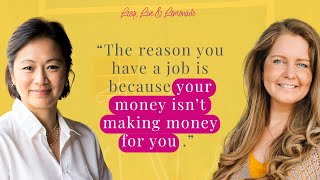
Bitcoin's actually going to be beautiful for you on so many levels, truly. So one. So when, when we get to this stage, oh, I'm a grown up. I have A real job. Now what do I do with this money thing? Since nobody told us, everyone just assumes that everybody else knows, so then we don't even talk about it to each other. And it's like the secret that everybody thinks everybody else knows, but actually nobody knows the answer, or at least very, very few people do. So don't beat yourself over the head if you're like, oh, my God, I'm this old. And I still don't know because like so many things, it's a skill. So like when people, when you're 16 or 17, you get a job making a few bucks an hour, people put money in your hand, you think, oh, I know how to use money. But if all we're doing is that transactional, just like you said, job, job, work, make money, spend it. That is how we use money, but it's not how we make money make money for us. So somebody said this, and the first time I heard it was a little triggering and I was like, oh, that hit. That hit. And the phrase was, the reason you have a 9 to 5 job is because you haven't figured out how to make money make money for you. Right? That hits because the next thought is, oh, if I made my money make money, I wouldn't need a job. Yeah, your money would be making money for you, which would free up your time, which would free you to do whatever, whatever your heart is calling you to do in your life. Maybe it is in your business, but maybe it's something else. For any of our viewers out there, if they're in a job that they don't, if they, that they aren't in love with, a way to get out of that is to find a job you love or to make your money make money for you so you don't have to continue doing it. So now you're like, okay, well, that's why I would invest, right? I'm trying to make my money make money for me. But then you end up like one of the first things I had mentioned in the resource that I gave you. And it's also free to any of your viewers if they would like. One of investments that people tend to go to is either stocks, bonds, or real estate. I don't know how easy it is to buy real estate in Europe. In the US Some people can figure out how to buy it, start buying real estate, you know, getting a really large loan and doing a secondary loan and blah, blah, blah. But because of the amount of capital you need to start, a lot of people don't start necessarily with real estate, unless somebody is helping them. So you end up with bonds and stocks or the stock market, because you can buy one or two stocks at a time. Maybe you can start with a few hundred dollars or that sort of thing. It's a little bit easier to do. But here's the thing. With the stock market, at leave in the US stock market, the broad market grows at about 10 to 12% a year on average. Okay. So you have the option, actually you can buy a single stock. You're like, I love Amazon. You guys have Amazon?
Yes, we do.
Okay. I don't know. They probably took over the world, but I didn't know. I wasn't sure.
Yeah.
Or, or one of, you know, a car company that you enjoy.
But I have, I know Amazon is present in Europe, but I have zero idea if I want it today. If I could buy Amazon stock. I have no idea of that. Before anyone is like, oh, you're, you're saying silly.
So, so you can. So in the stock market, you can buy a single stock of a company that you know or enjoy or whatever like that, and you can start investing that way. When that company grows, then your share also grows, and that's how your money starts making money. So Amazon actually has been growing a lot. I don't know off the top of my head what the percentage is, but say over the last 10 years, they easily more than doubled in the last 10 years. So in the last 10 years, if they were growing at, I don't know, 20% a year, it only takes them like four or five years to double. Right. Where if you had gotten. You can buy something like an index fund. An index fund is. It's almost like buying a share of stock, but it's of, of a basket of lots of different companies. So instead of buying one stock of one company, you're buying one share of a whole group of companies. Now, those index funds, they are created by money managers. And those money managers decide what's in that basket. But at least in the U.S. there's also an index fund that you could buy that is the top 500 companies. So the S&P 500 or the top 2000 companies, the Russell 2000, things like that. And the reason why you might want that is because if you buy stocks of a single company, if it goes up, that's really great. But if it goes down, then you're stuck with just that company where, if it's index funds, if you think within that whole basket, different companies are going to grow, other companies are not. But you're buying the top 500, whichever companies those are, then you're thinking over time, that's going to grow over time, and it's not related to any one company. So some people like that. You have diversity diversification in your one share of that index fund. So those are some options you have when you buy a single stock. There might be a fee when you trade to buy or sell. When you buy an index fund, there is often a fee to buy and sell, but there's also a yearly fee, even if you hold it for years. There could also be an extra annual fee for the entity that's managing the fund, deciding which stocks go in, which stocks go out, how much to buy of which company, that sort of thing. So on one end you get diversification, lots of different stocks, but there's an extra fee. The other end you can buy just your favorite stocks, whatever you like. But there may be more ups and downs, more volatility, because you're talking about single entities. So that's how you would think about the stock market. The broad stock market over the last decade at least in the US grew about 12.5%. Okay, so with that rule of 72 as I previously talked about, divide that dividend 72 by 12 and a half, you're going to get somewhere like 7, which means like in seven years your money would double. Okay, but if you have maybe Amazon was growing at 25%, 72 divided by 25, you're talking about 3ish years. Put your money in Amazon. The Amazon numbers I'm kind of making up, I don't know it off the top of my head, but if those were true, that means you put your money in Amazon and in three ish years, three and a half years, ish, then your money would double. So you can see that over time investing does take time. But over time, the more growth you get and get, or the higher percentage growth per year that's sustainable is the faster your money will double. Does that make sense?
Yes.
Okay, so when it's higher growth, your money doubles quicker, you're making more money. So if you were an entrepreneur like yourself, or somebody with a part time job or somebody at home just trying to have some money coming in or money so it will be set aside for future use, you're trying to make your money double and make more money as fast as you possibly can, does that make sense?
Yes.
But my first objection question comes the faster it can grow, the faster I can lose it, right? The more, the more I go towards options where it can grow very fast, the bigger the risk of losing it all. So that's why, especially for people like me, who know close to nothing, experts recommend that you start with, with options that have a very low risk. Right.
So let me differentiate what you're saying just to make sure we're all on the same page. Okay. So in the world of investing, when you say options, there's something called option trading.
I didn't mean, and I'm assuming, I'm assuming the this or that as obviously.
That'S what I'm making sure. Okay. Because options trading, it is pretty risky as well. But I do understand what you're trying. What, what is the norm thinking that if something grows really fast, therefore there has to be a trade off, it has to be more risky.
Yeah.
And before, before I found Bitcoin, I thought that was true as well. Because if you just look at, so the, where I started learning investing was the US Stock market. And for me, if I looked at, I don't know, Coca Cola, for example, Coca Cola has been around forever in a day. And it grows steadily, right? Maybe it's growing, I don't know. I would be making up numbers if I did pull, but it'd be just like out of my head, 3 or 4%, something like that per year. But rarely does Coca Cola go down unless the whole market goes down. So I would think when it goes up, it goes up a little bit. When it goes down, it goes down a little bit. So therefore I believe that my risk to the downside is small, smaller than Amazon, which I know goes up 20%, but it also can go down more than Coca Cola. Okay. In the stock market, that looks like. So it looks like growth and risk are correlated, right? The higher the growth, the higher the risk. That's what it looks like most of the time. However, what I learned was there's a difference between volatility and risk. So volatility is actually the amount of a price going up or down. And when they say something's very volatile, that means its average price. The, the, it goes up and down away from its average price much further than, than something that is not volatile. So for example, bonds are not volatile, right? They kind of grow at this steady pace like this. And so there's going to be two thoughts we're going to have related to this right here. One, there is a difference between risk and volatility. And volatility, risk is what you talked about, the possibility of downside compared to the possibility of upside. Okay? Now. The stock market, the Broad stock market say it grew, it went up 12% a year approximately over the last decade. And when it would go down, it would go down, I don't know, 25%, possibly. But then it would recover. And the average over the decade was 12 and a half percent. So even the downsides, you calculate all that together, it calculates out over the decade. Each year, on average, was growing 12%. Okay, now that's going to be compared to, say, Bitcoin growth is 50% a year on average. 5, 0, 50%. Now, again, that includes the downside. But when bitcoin would go up, bitcoin couldn't go up 2000% in a year. And when it would go down, it might go down 75%. But the average, if you stay in long enough to get the average, the average, the ups, including the downs, would still average out 50% a year on average, if you had stayed in for the decade. Okay, so you can argue several things. One, you can argue I put my money in and I don't look for an entire decade, and at the end, I'm getting 50% a year on average compared to 12% a year on average. Would I be able to do that? Right, you could argue that. But also remember that there was a difference between the risk and volatility. So this is my argument. When the price of anything goes down, you go to a grocery store. If your favorite fruits or vegetables are on sale, you're like, I'm gonna buy a truckload. They're on sale. I'm just gonna have a party today and buy a. And you can buy a whole bunch. In investing, we almost never do that. Most people don't do that. Most people, when they see this price of something go down, they're like, oh, I have to sell. So they end up selling low. And then when something goes up, they're like, oh, everybody else is getting in. They fomo fear of missing out. They end up buying, buying, buying when it's high. And then, because most things do not go up, go straight up in a line. When there's volatility, they're buying high. And when it goes down, they get scared and they sell low. Now, they've done the exact opposite of what Warren Buffett and a whole bunch of people in finance tell you to do, which is they'll tell you the way to make money is to buy low and sell high. But because of emotions, everybody or a lot of people end up buying high and selling low. And that's why it's hard. Some people say it's hard to make money in investing. So what we do when we invest is we can wait. When it goes low, it's like on sale. When we're finally convinced that something is a really good buy, we buy a whole bunch low. Since we're already buying low, the probability that it's going to go even lower is actually small, but the probability that it's going to come back up is actually higher. That's what we'll call an asymmetric bet. We actually have a lot more possibility of upside than downside risk if we're buying when it's low. Conversely, if you wait and listen to the news, oh, my God, look at bitcoin. It's going up, it's going up. It's going to look, everybody's buying, everybody's buying. And then that's when you get in between here and here, which was the low. Now you actually have a lot of risk possible because you bought when everybody else was buying. And if the market turns, you actually have a far way to go down because you should have been buying here when nobody else was paying attention. So that's how I found. Now it works for any asset. But there is a caveat. There is a caveat because there's a possibility that it goes up and it doesn't come. And after it goes down, it's actually on its way further down. Right? That's, that's, that's the, that's the fear. Well, how do I know it's going to come back up? And that's when. That's, that's what divides the people who are just playing in this, in the stock market, playing and investing, and people who are actually investors who learned what they are investing in. So the first time I got into bitcoin, I didn't know what it was either. I was like, oh, there's this new thing. It sounds kind of cool. I put in a few hundred dollars to see what would happen and it shot. It just happened to be that it started, like going up and down for a little bit, and then it started shooting up like a rock rocket. I thought I was a genius. Oh, my God, look at me. I knew so much. I knew nothing. I was just watching their eyes. But this is what, like most people who just started investing do. They're like, oh, I made a lucky guess.
Yeah.
And bitcoin, at that time, it went up to like 20,000. When I. It was, when I had first started looking at it, it was like a few thousand. It went up to 20,000. Right. So more than 5x what I had put in. And I thought it was a genius. And then it started going down and I didn't know why it was going down. I figured it would come back up again. But it went down for a straight year and it was down so low, I thought I lost all that money. I'm such an idiot. And the lucky thing is I didn't sell.
So you still didn't sell any of it?
I didn't sell it. But the reason why I didn't sell it is because I was so crushed. I was like, it's just dead. I just lost it. I can't even. I can't even look at it. I'm so disappointed in myself. Okay. And then about a year later, a friend just gave me a call. I didn't even know her very well, but we knew each other enough that we knew we were in crypto. She's like, go look at your bitcoin. Click. So I looked at it and it was coming up again and I was like, I'm going to sell it so I can get my money back. But the idea, the, the what came into my head was, how do you know that it's not going right back up again? And if you sell now, you actually just missed the profit of all the pain that you just lived through. And the thing is, if you don't know what you're buying, you do not know that you don't know why it's going back up. I didn't know why it had gone down in the first place because I didn't know. And so that's why now when people tell me they want to invest, I try to explain Bitcoin first. And so what I realized in that I ended up keeping it of course, and buying more. But what I realized is people think bitcoin is like a stock. It's just this thing you invest in like a company. And what is actually very different is bitcoin is more likened as an example to gold. So you'll hear it being referred to as digital gold. And bitcoin is also referred to as a technology, a all consuming like pivotal type of technology like the Internet. And the reason why they are com are compared that way is bitcoin is a scarce asset. So gold has value just being as it is even without using it for jewelry. It's just because people want it, it has some value that humans believe that because it's scarce that somebody else is going to want to buy it from you. And within that transaction, you will maintain your Value. That's how it's been for thousands of years. Thousands, thousands years. Roman Empire, Spanish armadas and all of that kind of stuff. Over the years, people have been trying to find gold, having it hold its hold their will, because it's scarce. So bitcoin is likened to gold because bitcoin is also scarce. So bitcoin will only have 21 million bitcoin ever. Now, that number some of your listeners may have heard about. So what exactly how much is that? Approximately 21 million. It sounds like a lot for one person, but for an entire world of 8 billion people, if we were to divide bitcoin amongst everybody, that means people would get 0.0026 approximately Bitcoin. So that is something like a quarter, so a quarter of 1% if everybody had bitcoin. But you know what? Not everyone's going to get bitcoin because some has been lost, some are locked away. Companies have bought it and hoarded it early, investors have bought it and hoarded it. Between now, when Bitcoin started in 2009, until now 15, almost 16 years, 20 million, almost 20 million of those 21 million have already been made. They have already been in the hands of somebody. Between now and the next hundred and one hundred and twenty years, the last one million are going to be made. That's how scarce bitcoin is.
Why is that? Is it because whoever started it decided that it would stop at that point? Or what makes it limited?
Great question. So bitcoin is actually a. It's just a computer program. It's a software and the computer. And that program dictates that there's only going to be that many bitcoin that will ever be made. When bitcoin started, it made a whole bunch of Bitcoin. 50 Bitcoin every 10 minutes. Currently it's making 3.125 Bitcoin every 10 minutes. So every four years, the amount of bitcoin that comes into existence, that is created, or what they call minted, gets cut in half. And it's called the halving, the bitcoin halving. So the last time that occurred was in I think April of 2024. And what tends to happen is after the bitcoin halving, the year after the bitcoin halving, up to probably 18 months after, because of that supply shock, because there's so much fewer bitcoin being made being put into the system, buyers and sellers start recognizing, oh, it's harder and harder to get bitcoin. Why? Oh, there was just the having there's less of it. And then when speculators come in and they can drive up the price. So supply and demand, there's a whole bunch more buyers and fewer bitcoin. So have you ever been to, like an auction?
Don't think so.
Okay. Have you seen one TV, like a. Can you give me $50?
Give me.
Okay, 75. Right. It's kind of like that where now you have a whole. A lot less bitcoin, but a whole bunch of buyers, and then the price of bitcoin will go up. I mean, I don't know if think of like vintage Louis Vuitton stuff or. Or like a collectible car. There's just fewer and fewer. They don't make that much more. And so the price of whatever that item in is goes up when more people want it. So then the question is, okay, well, why? Why do more people want it in two. I had told you that Bitcoin started in 2009. In 2010, people started using bitcoin to buy real world things. And at the time, Bitcoin. In 2010, Bitcoin was about a quarter of a penny. A quarter of a penny. And within 15 years now, it's almost $100,000 for one bitcoin.
It.
So over time, the price has just skyrocketed and the word is getting out. And so investors all over the world are like, wait a minute, wait a minute. This thing's growing at 50% a year. Why wouldn't I want some of my money growing at 50% a year? Now, of course, remember, this is average. It's 50% a year on average. So there are two years that go down. But on the years that it goes up, it more than makes up for it. And so you stay in for at least a few years, at least four years to get that average quick sip.
Of a lemonade time. Do you ever catch yourself wondering what the actual f I'm doing? Same happens to me at times. That's why I created a secret podcast series to get you out of the chaos and back into. I got this energy in just five days. It's cozy, it's actionable, and it will reconnect you to the version of you.
Who already figured it out.
Grab it for free@esthergolder.com WTF or click the link in the show notes. And now back to our episode.
When you stay. When you say you got to stay in it for a decade, you got to stay in it for four years, does it mean that, for example, you, for the first four years, got Nothing out of it. Now you say you, you have your kids college taken care of. So that means that you did get money out of it and now it's not in bitcoin. Right.
So my kids are not in college yet. I was investing so that it would grow. So My oldest is 16, so he'll be in college soon. My youngest is 9, so I have a little bit more time with her. But the money that I put in was growing. Now I wish bitcoin just was steady Freddie like this, but it's not between here and here. When I need it up here, it's going to be like this. But notice still, as they say, it goes up and to the right. So it's still growing over time. Right. So as long as. So this is where a lot of people get mixed up. If you're a short term trader or a short term somebody who needs money very, very quickly, depending on the time, I would could give you a guesstimate on whether or not bitcoin was growing or not within that time period, depending on one or two years or whatever. Right. But because like I had said, the bitcoin having the supply goes down, bitcoin will continue growing and over time as it oscillates, it still goes up, up and grows over time. So that in any short period of time, I couldn't tell you with much certainty if you're going to make money in bitcoin over a longer period of time, four years or more, I can tell you with high amount of certainty the likelihood that you're probably going to be making money. How do I know that? Because every time we have gone through the bitcoin having, which is about every four years, bitcoin after the bitcoin having will make a new all time high. So four cycles ago the all time high was like twelve hundred dollars. The next cycle after that the all time high was $20,000. The next cycle after that, the all time high was $69,000.
Mm.
This current cycle, we don't know where the top is because we haven't gotten there yet.
Do you know when that will happen, when the next halving will happen?
The next halving will happen in 2028.
Okay.
But right now, because we're in between the halvings and we're the year after.
The last year still after the last.
One, it's still growing. So actually this year is an amazing year for growth. And that's what we're expecting. Not because we have a crystal ball, but because that's what happened. That's what's happened in the past that the, the year or the 18 months after the having has been tremendous growth with bitcoin. And so we even actually have a lot of extra reasons why we think this halving is going to be amazing. So if you want to, we could get into some of that because I know that you probably talked about that with your husband and that's some of the mind, like the most mind blowing things that I have ever heard in crypto as long as I've been in it. Do you want to.
Yeah. I'm like you, before you go there, one question. You make it sound super easy. If it's this easy and this predictable, why isn't everybody doing it? Why isn't everybody in it?
That's a good question.
I don't think anybody I know is in it or they haven't told me about it.
No, fair question. Fair question. I believe most people are not in it because they don't know enough to be in it. But everybody that I know that actually studied it, studied it, cannot get enough. There is no one I've ever met in crypto that went, I've got enough bitcoin.
Right?
I told you that when I got in it was a few thousand dollars, right? I've met people. So, okay, so four figures. I got in when it was four figures for bitcoin. I know people who got or I know of people who, they got in early enough where it was a few hundred dollars of bitcoin. And from them, there are people who I know of, I don't know them personally, who got in when bitcoin was double digits. And every single one will say, I wish I had bought more. Every single one. Because once you're in bitcoin long enough, you, like I did, you figure out, what in the world is this thing? And then you finally put the time into it and you go, oh my God, it's nothing like we've ever had before. So it's the best part of gold, okay? It's the best part of gold because of its scarcity. It's the best part of stocks because you can buy a little bit at a time and just grow over time. You don't need like real estate, you don't need a whole bunch of cash to buy a house at a time, okay? And like stocks, it's also very liquid. You can buy it, you can sell it, you can buy it, you can sell it. And actually more liquid than stocks, Liquid meaning you can, you can, you can trade in and out to get your currency back. Bitcoin is even faster than stocks because at least in the US Stock market, on weekends, evenings, on weekends, nights and holidays, they're not open. The stock market's not open, Bitcoin's open.
This is operating 24 7.
24 7, so 100% liquid. And then it's also the best part of real estate, because bitcoin is a commodity. It's property. You can now take your Bitcoin from wherever you are. You decide you want to move. You can't take your house, you decide you want to move, but you have Bitcoin, you can take it, put it on your hard drive or not hard drive, but your, your hardware wallet, stick it in your pocket, and you can move to wherever else you want. And you still have however much, I don't know, however much bitcoin you would have, your property moves with you. But unlike real estate, you don't have to deal with insurance and weather conditions and reconstructing and updates and things like that. So it's like the best of almost every single asset we have together in one single asset. And this asset is now catching fire because the US new incoming president Donald Trump, he is now figuring out Bitcoin. And he has surrounded himself with a whole bunch of businessmen who also understand bitcoin billionaires. And they're trying to help him understand how to make bitcoin actually work for the entire country so that we can actually help pay off our debt. And when we pay off our debt, just like a single person paying off their debt, you just become a stronger financial entity. So having bitcoin, if the US Starts buying bitcoin, the word on the street is that he has commissioned some really smart people whose names I forget right now, but Treasury Secretary and then there's a crypto czar and just all of these really smart people who've been in the finance space and know cryptocurrency, they're like, look just like a single person having an asset that's growing. You can get rid of your debt, you can pay off your debt and be a healthier entity financially, well, they're going to try to do that for the country. So if they're going to put billions and billions of dollars, maybe even trillions into bitcoin and they are going to use it to help their finances or it works for a single person also. And so like you had mentioned this before, how do you know that bitcoin is trustworthy? Or why doesn't everybody just know how?
Like, we did see other cryptos disappear, turning out it's a scam, right?
So cryptocurrency, there are lots of scams in cryptocurrency. That's no lie. Why? Because just like bitcoin, it could be just some software that some kid in his mom's basement accept, right? So that's why there are 30 million bitcoin. Sorry, excuse me. So I'm so sorry I said that 30 million other cryptos, there's only one Bitcoin. To get. I would get a little bit in the weeds to tell you what all the differences are. But some of the big differences are that bitcoin is decentralized. There's no company behind it, there's no head saying, oh, we bestow upon you Bitcoin these and these. So it's actually a network of a whole bunch of the people who are, who are participating with bitcoin. And the software has already been written in such. But all of these thousands and thousands of people all over the world each are part of that network. So therefore bitcoin is decentralized. There's not a single entity that is backing up bitcoin. It's like this web of users. Why is that important? The code that was written that says this is how bitcoin acts, this is what it does, that is already out there. And it's called, and it's an open source program, meaning that because it's open source, anybody can go and read the code to see what's in it. And so because thousands and thousands of people have gone in, read the code and they went, and no one's ever found anything malicious in it. And they're like, yep, this is a program pretty straightforward. This is what it does. And so we, and so that's how it became Bitcoin became very trustworthy because people could like look in the hood and see what's in this program. What does it do? Why does it do it? Okay, so then bitcoin became very trustworthy. We would, we knew what it was going to do by how, by how it was written out. And over the last 15 years, it's never missed a beat. It has kept on working, it has kept on trucking, it has kept on holding value, being secure, being decentralized, being able to send value from one person to another, that sort of thing. For 15 years it hasn't made a mistake and it hasn't gone back or broken or anything like that. And so that's why companies are now getting into it. But the reason why individuals, everyday people haven't gotten into bitcoin is because over the last four years, the previous administration actually was very anti crypto, anti bitcoin. And so this administration, they're like, no, it's this new technology and we need to embrace this new technology. This new technology is going to help help make finances and banking and possibly even some litigation and businesses more efficient, more secure, faster and cheaper. So the technology itself is called blockchain. Blockchain is the way, is the type of coding that bitcoin has. So all the other cryptos should also be blockchain. And so that's the technology. But bitcoin is just the biggest of all the blockchain technologies and has the most value locked in it. So the reason why everyday people don't know about it is because for many years there was negative headlines to try to make the people not believe in it. And why did, why did they do that? Like, who would be against bitcoin? If you think about it, bitcoin was initially made to be this system of money.
Outside.
Government systems. It sounds a little rogue, right? So governments, would the governments be happy dappy saying, yeah, go ahead and use this other sort of money? No, they were totally against it because any amount of money that goes outside of their system, they now can't capture it. They want money in their system. So of course they were going to put a negative view on anything that was against their government. Governments don't have any power over bitcoin. They figured out they were not going to win, so now they're just joining. Does that make sense?
Yeah, the way you are describing it, yeah. I'm just still like, wow. So it brings up so many things. One of the things it brings up is. And this could, this could be something about my money mindset. But the first thing I'm thinking of, if I ever put money into this and if I ever get a lot of money out of it, how will I feel about that money? Because for now, and this is what comes up, I would feel about it money, as if I didn't deserve it because I didn't work hard for it. And I'm like, what if, what if the. You know, the typical story of someone who wins the lottery is like, easy come, easy go. How. How do you feel about this? Someone who has been in it for eight years, someone who has been like, you are actually using that money coming out of it. How. How do you make it feel normal? How do you make it feel the same way as if it was not from. And this might not just be crypto or bitcoin. This could be any investment money or any money that comes, let's say easy, or it's how our mind might trick us.
That's a really good question. So what I've noticed, I mostly help women invest, especially in bitcoin. And what I've noticed with a lot of women now, of course it could happen to anybody, but disproportionately women. I think it's the question behind the question. Not just, hey, do I, hey, how do I make money? But the question behind the question ends up being like, like exactly what you just beautifully said, which is like, do I deserve this money? And so I would put it to you as in a different way. A lot of us grew up to believe, and it is a belief if we work hard, we'll get money. And so it feels like a fact I have to work hard in order to make money. But then I wonder if you've ever seen somebody who didn't work hard and got money.
Yeah. And I was even trying to find examples because this is one of the areas we discussed prior to this call with my husband. I was trying to come up with examples in, in my life. Like I, for example, I make affiliate money and it kind of feels like that because I'm not working every single day for that money. I just have a link on my site. But yeah, I did work on the connection with that other entrepreneur or that company I'm affiliating for. I did work on setting up this relationship. I do work on, on actually having a great knowledge of, of it and whatever I'm promoting, I'm. I do put effort into.
So.
But that's the closest I could find or, or inheriting something in my life that happened and that that money felt like, do I even deserve this? Yeah.
Okay, so can I ask if you've ever worked really hard and didn't make any money?
Yeah. Confidence examples.
Okay, so if you can work hard and not make money, then is the sentence, I work hard to make money, is that always true?
No, it isn't.
So sometimes it's not, sometimes it's not. So when you realize that the working hard and making money may not always be true, is it possible then that there could be times where in your life you may not have to work hard and make money because there were other times where you did work hard, you didn't make money. So in which case some people might go, okay, well then together there's a wash, there's an in and out, there's a I. Sowed over here, but I reaped over here. And you can decide how it feels good for you. But it's really hard to make money without working hard. If you believe that that shouldn't happen. And actually, because you mentioned those lottery winners, that's exactly why 70 to 80% of lottery winners five years later are poorer than they were before they won the lottery. They can't. So this is one of the things that I teach in, in my course. Not just how to invest and not just how to invest in Bitcoin, but actually, how do you become that person who knows how to hold wealth? Because like you said, that's just a different mindset. You have to be somebody who knows how to hold wealth in order to hold wealth. Otherwise you end up being exactly like those lottery winners. And remember, 70 to 80% is a vast majority, Vast majority. They will lose all the money. And it's not just lottery winners, right? Celebrities, sports stars, some of them after their career. Like, you're like, what are you doing? Why are you waiting tables? Like, I don't, you know, I don't know exactly.
But.
Again, just like you, Esther, they made money, but they didn't figure out how yet to make the money, make money for them. And so that might be something that. Well, it probably not might be, but it's going to be something that requires more introspection to figure out, well, why do you, why do I think that way? And that's another pillar or that's, that's another part that, that I make sure that we go through, especially with Moon, to go into your money related stress. Because in, when dealing with money brings a stress, a heaviness, an emotional reaction that is, that is negative and not light. Because I have noticed that with a lot of people, myself included, that has to be dealt with. And what ends up being the root of that tends to be your money origin story, how you learned about money and how you learned what to do or not to do with the money, how it relates to you. And so when you get deep down and figure out your money story, what you end up believing about money and you realize, oh, that's why I do that, or that's why I don't do that. That's why I believe that that may be a place to really get insight on how we deal with like what we really believe about money and why we've done what we've done, what we've done with money or not. And it really opens up once you figure that out, it really opens up, oh, well, Is that true anymore or not? If it doesn't serve you anymore, you get to put that away. And that is the secret sauce of now. I can change my money mindset because I realize now what the subconscious was that was holding me back about money. It's really hard to just supersede our subconscious of whatever we believe about money. I have a. One of my sisters trying to tell her about. I tried to help her invest and stuff like that, and they don't do very much about it. And I realize it's because. And this is another one, another fallacy that a lot of people might believe. They believe that money is evil or making money is evil or people with a lot of money. Rich people are not nice people. And so if they therefore believe that they are nice, it actually stops them from making a lot of money.
Yes.
So hopefully that helps.
It definitely does. It definitely does. And I don't feel super strongly about this anymore. If we talked about this a couple of years ago, then, yeah, I would have. But I think I've come a long way. Let me ask you something. If you, if you have, like the way it sounds like it's. You have everything taken care of by, by your investments, why do you have a course? Why. Why do you. Why. Why is it. Why did you create it?
Fair question.
So.
One of the reasons why I am the person I am is because when I was. When I was born. Oh, it's not going to be a long story, though. Don't worry. When I was. My mom was. Was single at the time. She. And she. And she already had my older sister who was just a year old and she was from the Vietnam War. My mom was from Vietnam, moving to France, and so she thought my dad would be there and his family would be there to help support us when we got there. When we got there, nobody was there to support us. She did not have a college degree, she didn't speak French, and she had two infants. I had just been born like I was a month and a half old.
And.
She couldn't take care of us. She didn't have a job and had no support. Like, I don't know what would have happened to us if it weren't for a family who came in and said, so the lady's name is Madame d'. Avalone. And my mom didn't even know her. The lady had just heard of my mom's story and said, I'm going to help support you by paying for another family to take care of your kids for you for a year. While you get your feet on the, you know, under, you go to college, get some sort of training so that you can have a job. And so for me, now, recognizing that I didn't deserve that kind of, that kind of help, that kind of opportunity, but somebody charitably gave it to us. And that allowed my mom to be able to have a job and support us and be able to be a mom. Even though we didn't have a beautiful childhood, that was still, you know, you know, ups and downs and such, but we didn't. We weren't hungry, we weren't on the street. And so that really colored how I see life. And I was given an opportunity, so I was giving a chance at opportunity that I otherwise wouldn't have. And so for me now, I have now learned this thing that has put me in a different position than I was a few years ago. I feel it's my duty to go. Look. Lots of people misunderstand Bitcoin. And if women specifically don't understand or continue to ignore Bitcoin, they're letting this opportunity go buy them because the negative news media didn't give them a chance. And so first I was just out educating people, but I ended up having to answer the same questions over and over and over again. And it would be information about Bitcoin, but not the how do you invest? And after I invest, what happens when it goes up? What happens when you go down? Like, how do I. Like, there was a million things to explain. And so it just seemed like, look, I could help. Like what that other family did for me, given me this opportunity that I didn't deserve, and it changed her life. That I now know something that can help somebody have an opportunity for now their kids, and so that their kids are in a total different situation when they do this. And so that's why I do it. I've been told that the finance course that I give is a ridiculously low price. I need to change it and I need to put it up. But I'm like, no, those are the kinds of people I'm trying to help. I'm not trying to help the rich get richer necessarily. Right. They're probably going to figure it out anyway. But I'm trying to see how many people, how many just regular people can change their life if they're willing to learn about this and do this a different way. And, and you had said previously, okay, well, like, you've been in this X number of years, did it just keep going up like what happened? No, it was painful. Those Ups and downs were incredibly painful the first 3ish years, 3 to 4 years. And so if somebody had known what I now know, I think I would have shortcut those first four years and been able to make more money consistently knowing that's what I try to help give the people that come to me and say, hey, Kathy, how do you do this? I'm giving them the information up front so that they know what to look for and then they invest themselves. I don't invest for anybody. I teach them how to do it. And then they start investing for themselves and then they see the power of what they're doing for their family through bitcoin. And so that's why, that's why we do that. It just, it doesn't make sense to, for anyone to really keep bitcoin all to themselves. The point of bitcoin was for people to have self sovereignty over their money. And now that governments and companies and wealth sovereign funds are trying to get into bitcoin, they're trying to buy truckloads at a time, but it really wasn't made for them. It was really made for everyday people. So the more people, more everyday people that I can help get into, Bitcoin is more bitcoin that stays in the hand of people rather than already the super rich. And if we also think about it. So I heard this statistic a long time ago and somebody reminded me of it recently. Again, there are 50, if I remember correctly, 58 million millionaires in the world if every single one of them went to their financial advisor and said, hey, can you get me a bitcoin? There's already not enough bitcoin to go around for the millionaires. So if we could just get regular everyday people to even buy 0.1 bitcoin, 0.001 bitcoin, that is more bitcoin that will be in the hands of regular people and it will be able to make a difference in their life rather than helping the super ultra wealthy stay ultra wealthy. So that's why we do.
Amazing. Thank you so much for sharing that story. I think it was a beautiful connection between where we started and where we got to. And Kathy, thank you so much for your time. I appreciate you going so deep into it, answering all my questions that were, I don't know, I feel like, oh my God, everybody else must know this, but you reassured me that I'm not the only one. And thank you for bringing this knowledge to us. And I trust that our listeners and viewers got tremendous value out of this, whether they are interested in getting into bitcoin or not. I think in both cases this, this hour and bit and a bit has been so, so informative. So thank you so much. I appreciate your time. And I will have your links under this episode. So if anybody feels like, wow, I want to know more about it, they will, they will be able to reach out and, and get in touch and continue with you.
That'd be wonderful. That, that, that'd be wonderful. Thank you very much. I appreciate that. Yeah, I love, I love helping bring bitcoin to more and more people because I know what it did for me and I really, really hope that it can do the same for everybody else out there listening that's wanting the same.
Let's, let's make it happen for everybody who is ready to jump into it. Thanks, Kerry.
You're welcome.
It's been awesome.
More from Eszter
She Had NO Evidence It Would Work — But She Manifested It Anyway | Mindset & Law of Assumption

They Said It Would Take 20 Years — I Said We're Doing It in 2" | Big Vision vs Small Thinking
I Left the US, Got Certified & Made $35K on a Product I Hadn't Even Created Yet