Ken Westgaard on Building Chill Launches That Actually Convert
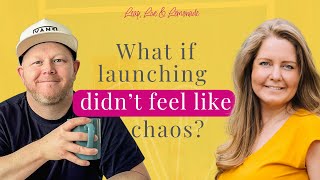
Ken Westgaard moved from design into conversion optimization and now specializes in sales pages that convert without hype. He walks through the structure that works, pricing strategy, guarantees, and why urgency matters less than you think.
Chapters
This week on Leap Live and Lemonade, I'm joined by Ken Westgaard, launch strategist coach, someone who has seen the backend of a lot of six figure launches. And as you might know him, the sales page broke. What I loved most about this conversation weren't the tech strategies, the launch tricks, the sales page segments or blog tricks, although there are tons of them. In this episode it was that Ken shared that for a long time he didn't even like launching. And instead of faking the hype or forcing the formulas, he decided to go a level deeper. He asked himself, what would a launch look like if it actually felt good? If you've ever launched something and you felt burned out, invisible, as if you were just screaming into the void, this one is for you. Ken brings a calm here human first attitude into launching, which honestly just made me breathe easier. I think it will do it for you too. Let's get started. This is the Leap Live and Laminate podcast. Hi, I'm your host, Esther Godor. Twelve years ago I took a big leap. I left my corporate job, I moved into a new country and started a business from scratch in my fifth language. Today I run a boutique launch and systems agency helping ambitious entrepreneurs build smart and scalable digital businesses on Kajabi without having to do everything by themselves. This is your go to place with honest stories, actionable strategies and real talk around building a business and life you love. Your best life and success story are still ahead. Let's write them together.
Foreign.
Hey Ken, how are you?
I'm good, thank you for having me.
Welcome. Nice having you. I'm really excited. I want to find out more about your journey but I'm also so much looking in, looking forward to understanding what you do because I'm super into that stuff lately. So I'm excited for both areas. But let's start with you, introducing you to our listeners. Viewers, what is it that you do and why do you do what you do?
Well, first of all, my name is Ken Wesgar. I'm also known as a sales page pro. So that kind of explains what I do. I work on sales pages, make sure that they are converting nicely and makes it a little bit more easy to create and hopefully that will generate some revenue for you as well. I live in Norway with my wife and two kids and we have two cats and we're looking forward to springtime as it's coming closer every single day now. So yeah, oh my God.
I'm looking forward to it in Spain and I don't even want to Imagine, Right?
Yeah.
What you looking for?
It's cold and sometimes it snows, sometimes it rains. You know, it's. I'm not a big fan. I wish I was in Spain, actually. That would be really nice.
You would be like, you are not. This is summer.
Yeah. I would be wearing shorts and T shirts probably.
Yeah. You know what? Whenever we go to the beach in January, February, and I see someone in the water, I'm like, they must be Scandinavian. Yeah. Not even from. From either western or Eastern Europe. From the north. They must be Swedish or Norwegian or Danish.
Yeah, exactly.
Yeah. How did you end up being the sales page expert? Probably it's not something that. If I asked you as a little kid, like, what do you want to be when you grow up?
Definitely not that. I don't even remember what I wanted to be. Well, I actually wanted to be an archaeologist at some point, probably, you know, excavating things, old things. That was really cool. But, yeah, I know sales pages was definitely not on my radar at all. And, you know, things happen. But it's been a journey for almost not 10 years now, I think, you know, I started back in. I think it was 2014, I started. And then back then it was all about web design, graphic design, those kind of things. But that quickly evolved into focusing a little bit more on conversion optimization, looking into that, like, how can we make the most out of what we have on our websites and stuff like that. And then that involved into email marketing. And then I started looking into launches, because that kind of involved, you know, conversion optimization involves email marketing, involves web design, all that stuff. But then again, launches is like this big, massive thing with a lot of things that needs to work together. And at some point, yeah, so many moving parts. So at some point I felt like, I don't know, this is just too much. Although I know, you know, there are people who are focusing on that, like John Walker, Jeff Walker, I mean, and, you know, he's really great at that. To me, it was like, this is not really my thing. And that was actually just last year, about a year ago, where I kind of felt like, you know what? I don't know. I don't know if this is what I want to do anymore. And at that time, my wife, she had torn her meniscus as well. So basically I was taking care of everything. The house, the kids, their activities, you know, everything. So it felt like a lot at that point. So I was like, I don't know, don't want to quit. They just want to throw in the towel. And say, that's it, I'm done. I don't want to run a business anymore. But I decided to say no and no. Just keep a client, a one client, actually, just one client. And then working with that client throughout the year and just letting things be the way they are and whatever happens, happens, and let things evolve. And by the time of November of last year, 2024, like, something opened up and just showed me, like, this is what you're supposed to do. It was really weird because, you know, it was in the BBD group business by design. And I noticed obviously this is something that's been there all the time, but people started asking for feedback on sales pages, and they've been doing that for a long time, but I just haven't paid attention to it. But this time it's like something clicked. Like, wow, people are really asking about feedback on sales pages. And then it's like, oh, wait a minute, there's a gap in the market here, isn't it? Like, there's nobody who really. I mean, you have people who do done for your services, right? They will build your sales page and they will write your copy and everything.
Copywriters.
Absolutely. Absolutely everything. So you don't really have to do anything on your own. And then on the other side of it, you have, you know, a couple courses here and there and. But that seems to be like, just about it. There's nothing else in between. There's no one really doing working with you to create that sales space. Because that is one of my philosophies or values that we need to collaborate on a sales piece because you know your audience the best, obviously. And, you know, we want to make sure that it all sounds like you. It's important to have that authentic voice. So I don't believe that you can just take. Sure, you can do some research and stuff like that, but you can't just step away from it. You need to be a part of it. So that's why I believe in the collaborate way of building sales patients instead. But ever since November, things have been moving fast. There's been a lot of momentum, and I just really kind of find my purpose with sales pages because it combined a lot of the web design and graphic design that I love from the beginning, and then combine it with messaging, which has been the thing that I've been loving for the past, I don't know, four or five years or something like that. Really digging into the language that we use and how we speak to our audience and all of those kinds of Things because it's not just about what we say, but it's about how we say it as well. It's been a really interesting journey and I think this is probably the shortest way I can explain it, but it's been 10 years in the making, kind of. But I'm happy to be here now.
Yeah. It's amazing how you, what you describe as feeling like this is, this is your true place. I remember, I think seeing the first post of when you, when you realized or when you told the others that, yeah, this is, this is what I'm going to stand for. This is what I'm going to focus on, only on this. And from that moment where you might have been like, oh, yeah, I'm pretty certain. But is this gonna be really. It, Is this gonna work? And now understanding that, that it looks like it really is the thing that's, that's amazing. And yeah, it's like, you know, tip of the iceberg. Ten years in the making is just, yeah, finally one day it happened magically. But it's probably all that, all that, all those trial and error and all those ideas over the last 10 years.
Yeah, I, I believe that, you know, we wouldn't be where we are are unless we haven't gone through what we've gone through. Every mistake, every failure, all of that just leads us towards something that we're meant to do at some point. But it's just a matter of when that will happen. Obviously, like for me, like it took 10 years. For others who might hopefully take a little bit less, but. But you will, but you'll get there.
It's funny, when I started to listen to Jeff Walker In 2017, maybe 2016, and that's when I first heard about how to run it a true or a well working online business. And I was like, shit. From where I am right now, I think it will take me 10 years to, to get to the place where I would love to be listening to this guy. And, and I realized just recently that, oh my God, I'm almost there. Like in 2017, it felt so daunting to think that it might because. Because it was clear for me that the type of experience I wanted to have to be able to teach what I, what I'm teaching now, and I was like, I'm not ready. I will need 10 years for that. And, and now it has been eight years, so, so it was so much better. But when I first understood, I think that was my first moment when I understood that this is not a, not a short term journey. Once you are in it, it's. And even when you find something that works, it's still an evolution, it continues. There are ups and downs, it's always changing and there is nothing steady here in this world. Definitely not before, before that 10 year period did you work for someone else? You didn't do the archaeology thing in the end, but what is it that you left for starting out in the web design yourself?
It's been a couple of things. I've been a store manager for Games up a years before we, before I actually started the business. And you know, I've kept a business on the side for quite a while to be honest, just to kind of make sure that you know, you have a steady income and I could invest in things that I wanted to like courses or programs or coaching or whatever it might be. And honestly it's always been a little bit of a struggle to kind of get the business going because I don't think that I've been, like I said, I didn't find my purpose kind of until now and then it's always been this struggle to kind of get into that business. Yes, you can always create a business but sometimes if your heart is not in it, it's. It's a little bit tough to be honest. And so that's why I always kept like a side hustle or something on the side. So that's been working for the post office and I've been, yeah, I don't remember all of the different things but you know, small things all the time. But just make sure that I have some income anyway because you know we have family and stuff like that. So you want to make sure that yeah, financially you're, you're set.
And with all this struggle that you are articulating now, what would you say that still kept you going? Because we're not talking about two, three years where you could say, yeah, I'm determined. Ten years.
Yeah.
What is it that still kept you going?
I think that's something from way before that as well. Like I had always had this desire to start something on my own. I think I actually, I wanted to start a recording company at some point because I went to some sound tech and sound engineer school. So I went through that and I wanted to start some clothing company at some point because I had this idea of like surfskate snowboarding kind of company. So there's always been a part of me but I never kind of figured out like what that's going to be and definitely not having the guts to take that leap at least. So there's always been a part of me that always wanted to start something, but I don't know, it's. It's hard to explain, but it's just that feeling that you have that you, that you want to do something more than just working a regular 9 to 5. And not that there's anything wrong with that. I totally get that there's. That's right for some people, but for me it never really was. And I feel more fulfilled now that I don't necessarily just work a 9 to 5 when I can kind of decide what I want to do, how I want to do it, when I want to do it, where I want to do it. There's something about that freedom.
Okay, so the, so the freedom. How do we, how did you manage the like the combination of freedom and insecurity, like having a family. You said you, you always had the side hustles, but were there any moments where, where you almost like doubted yourself that this whole thing is ever going to work out and what got you through those moments?
If there were any, I would say it's constantly doubting myself. Like, I think we do that all the time, regardless of where our business is. I mean, and like people say, you know, there's a new level, new devil kind of a thing, so there's always going to be some kind of doubt, but it's just a matter of how you overcome those doubts and how you work through those fears that you might have instead of just letting that take over. Obviously. But I think at least after I met James Wedmore in the Business by Design program, I remember when we're getting in there, I remember I bought it because he was talking about you get all these processes and how you can build your business. Stuff like that. Yes, perfect. Exactly what I need. And then I jump in and the first module is about working on yourself. It's like, oh, okay, I've never done this. That was like kind of a little bit weird. But turns out like that's been the most life changing part of the whole program is to start actually working on yourself. And after that it's, you know, dive into personal development and mindset and habits and all that stuff. Not everything sticks, obviously, but you try out things and you accept how you are or the beliefs you have and you try to change it and work with it. And yeah, so it's been an interesting journey on that side of, of the.
Business when, when you did the work on yourself or since you've been doing it, because that's an ongoing action as well, an ongoing process. What is it that surprised you the most amongst those findings that came out of actually spending time on working on yourself?
Hmm, that's a good question. I would say all of the beliefs that you have, that's been basically programmed since you were a kid. Like most of the things that you believe in as an adult is something that you took with you from your childhood. And what I've noticed when talking to a lot of people is that, you know, there's also some kind of child childhood trauma that you went through. Probably don't even remember or even aware of that you kind of took with you. And for me, it was a lot about feeling insecure and being afraid of stepping into the part of, you know, being seen and building a business today, you know, with social media and stuff like that, that's obviously a huge part of it. You have to be seen, you have to be visual in so many ways. So that was a huge thing for me to. I would say I'm probably not wholly over it yet, but I know how to kind of work through it, obviously. But yeah, that was, that was a big thing of just being on camera, talking about things, just not caring about what people think of you or how they judge you.
And yeah, okay, for me, when you, when I see you on camera, I've. I've been following your, your latest ones. It feels like, wow, he's so natural.
Well, thank you.
The work is, is working.
Oh, that's good. That's good.
That's great. How, how would you say your approach is now different now that you have found the area that is now your hundred percent mission, then when you were trying to do various things in your own business and maybe with the side hustle, what is different about a week, a month, the same period of time?
Oh, it's definitely different in that sense that I obviously enjoy what I do a lot more. It's easier to create things and, and not just, at least you know, just helping people with it as well. When I first came across all this, the sales page concept of helping people went into the BBW group and just wanted to test things out and see how people responded to it and, you know, doing it for free. And a lot of the conversations around their sales pages was like, to me it was so easy to do, but for them it was like, wow, this is eye opening. This is amazing. Why didn't I think of this? And like, so that really shifted my perspective too as well, just to kind of understand that, wow, things can actually Be easy when you find the true purpose that you want to do. And obviously, you know, I've been doing this for 10 years now, obviously not necessarily specifically on sales pages, but it was the combination of design and messaging and all that stuff that I've been working on has culminated into. Into the sales pages aspect of it. So that made it a lot more easy, obviously. But it's fun when you get to sit there and be the expert and people value the. The things that you share with them and help them see that, you know, we can make things better on your sales page. And that again, you know, helps them build their business, grow their business, and they can help other people. So it's this ripple effect, obviously, of me helping them so they can help others.
Yeah, it's an interesting notion of when we find something that's really easy for us, and then sometimes we don't even realize how difficult it might be for others, but when we do and we do help them, to me, it's, for example, more difficult to charge the right amount for that because it's like, oh, so easy. That ever happened to you that you were like, can I?
Yeah, absolutely. And I probably still struggle a little bit with that. And obviously, when you're starting out with a new concept or whatever they say you do, you always want to. You feel like you got to start low because, you know, I'm not sure how this is working. I don't know if I can help people and all that stuff.
But let's test it. Let's test it and then we get stuck there.
Yeah, these athletes, it's important to just kind of, you know, make sure that they pay for the value that you provide them. But I feel like I've gotten a lot better on that as well. But I. Yeah, I totally. I remember starting out like it was a race with web and graphic designed to be the cheapest one and offer the cheapest deal. Like, and that's kind of why I stared away from it as well at that point, because I didn't feel like I don't want to be a part of that. I don't want to be, you know, fighting for being the cheapest one to offer a website or whatever. So. So definitely. But that is. Yeah, pricing has also been a journey where you kind of make sure that you price what you're actually worth. And that's. That's a whole.
On its own, especially that we are talking here about mostly. Or I don't know how much you have scaled it, but it sounds like it's Mostly one to one, project by project, at least for now, be the cheapest in that area.
It's.
It sounds insane. Like it's giving your actual time cheaper, whereas if it's on something more scaled, you are like, okay, I'm gonna go cheaper and I'm gonna bring in more people, but selling the same hour for less. It's always. At least now that I've been in it for a couple of years, that's always the area where I draw a line. Yeah. Because then I know sometimes there is the temptation, but I know how much I will regret it if I do it.
Yeah. And we always assume, or a lot of times we assume that we know what others are willing to pay or how much they can afford. And that reality is just based on our own assumptions because we don't know. We don't know if they got millions of dollars or if they were willing to invest their last thousand dollars on us. You know, it's. It's crazy how much we plant these ideas inside of our own head when it's had. Has no, no effect in reality. Yeah.
Yeah. It's assumptions that we, that we can't avoid. But yeah, we, we never know. We. We don't know.
No, we don't.
Yeah. Sometimes I'm like sending out an offer and I'm like, oh my God, this guy is not going to pay that money. And it. And I was wrong so many times. And just seeing that person, even without asking more questions, making the first payment, he's like, oh my God. I really shouldn't make any assumption based on like, you know, I'm on service provider platforms where you see how much they have spent or what hourly rate they have paid before. And, and sometimes I'm like, oh, they are gonna think I'm insane. And they just make the payment and I'm like, oh shit. Like two years ago, maybe I wouldn't even have applied or responded to that job based on those assumptions from the profile. And it's, it's crazy how much money I think I, I would leave on the table if I always listen to my, my gut feel about that.
Yeah, I agree.
Yeah. When, when you, when you became clear about this niche or since, since that time, how do you keep. Like, I had my, I've had my attempts on focusing on one area and I, and I know, and I even teach my clients the, you know, the one product, one message, one audience. Um, but to me, it hasn't, it hasn't been the case yet that I, that I would be able to get to the point where it, where it works out also because I would say probably none of the areas felt that, that aligned or at least not for a prolonged period of time. How do you avoid, you know, shiny object syndrome? Or if I come to you and say, hey, I help with my sales page, but I also need a new design, can you just do. Do it both? What. How do you resist?
Yeah, that's hard. Obviously, for me, it's. Over the years, I've done so many things, so there's, you know, it's only natural for me to. Yeah, yeah, sure, I can do that. Yeah, I can do that. No problem. I can fix that for you as well. So there's a. There's a fine line, obviously, from doing just sales pages to helping out with other things as well. But again, you know, the sales pages aspect does include design. So if, you know, we agree on that, maybe design should be updated a little bit. Okay. You know, that's part of what I do. I can help you with that, obviously. So. And you know, the technical side of it. Okay. Is it on Kaabi? Is it on, you know, Insta Pages, Leads pages? Is it a WordPress site? You know, I, I can help you with that because, you know, I know that as well, so it's still part of it. So. But I believe, I mean, at least when I'm working one on one, I'm making sure that it's, you know, the value or what they pay or invest with me obviously reflects that. So I don't end up doing a lot of work that I technically don't get paid for. But, yeah, there's still, you know, I.
Wouldn'T build a separate freebie funnel if there is not a sales page involved. But if it's a sales page job, you would. You. You are okay to do the maybe stuff that's connected to that, but you still want to have that core element. Is that how you define it?
Yeah, I would say so. I mean, I'm happy to give advice on things that is outside of the sales page, but I try really hard not to get into that because there's about building different kind of connections as well. Like, you know, if I know somebody else who can do Facebook ads, because that is definitely not an area that I am good at, so. And I can reference them to someone else or like you mentioned funnels. You're the one who can help out with the funnels. Right. So just better to help them find someone who can really help them who are good at what they do instead of Trying to do everything on my own because that's basically what they've been doing in the past as well. They're coming to me because I'm an expert of sales pages. So let's stay in that lane and not, you know, go out on, on these other roads. That doesn't really help me or the client.
Where do you find your clients? Are they old clients mostly from your design jobs or is it word of mouth? Do you have like, do you use ads? How, what's your process for finding clients?
Well, definitely it's a lot of word of the mouth but I also make sure that I am visual in places like the BBD group because I do know there's a lot of entrepreneurs, entrepreneur there and they do have sales pages obviously. So I want to make sure that they know if they need help with sales pages, I am the guy to go to. So make sure that I do stuff like that as well. But other than that, obviously it's being on social media and doing, you know, creating content and having some freebies, lead magnets, stuff like that as well. Not haven't been done doing so much ads yet. But obviously that is something that needs to need to happen as well because that's the best way to scale. And obviously you can test out a lot of things if you do run ads because then you can get a clearer vision of how things are working a lot faster versus trying to do an organic. But yeah, it will come.
Yeah, it's, I think it's nice that you, that you can, that you have a community of people surrounding you who, who know that the sales page is actually important. And I know we mentioned here sales page a lot of times, but there might be some people listening to us here who are like what, what, what is even is a sales page and, and why is it important? So can you explain why, why you feel sales page is a vital element that could maybe if you, if you are a hundred percent focused on this, I, I would think you think it could make or break your whole conversion numbers, routes, your launches and basically everything.
Yeah, well, sales page obviously is there to sell something, sell something that you offer that's its main purpose. And usually we do this through, you know, running a launch and when it comes to launch, then maybe we're doing Facebook ads in the front end of all this that leads to maybe a webinar or a video series or maybe a three day live launch or whatever it might be. And that from that point you say that, you know, if you want to join this program or this course or membership or whatever, then go to this page and then you can buy access for it. And usually that is the sales page. So it's usually a. Sales pages are usually part of a funnel or a launch or whatever. And the great thing about sales pages is if you do write and you're really good at and you nail down the messaging and you have like a grade offer and all that, you can take everything from the sales page and put it into the webinar and create content around whatever it is that you offer. You're not giving it all away, but you're giving a taste of it, like a piece of it, and maybe solve a problem. And then you can also use that messaging to create the Facebook ads so that you have this consistent message throughout your funnel from the Facebook ad to the webinar to the sales page. And by doing that, you make sure that, you know, whenever they get to the sales page, they already are familiar with what's going to be on the sales page. And it kind of just helps them make an informed decision, helps them push themselves over the edge, kind of just to make sure that, you know, they see the value in it and they will buy. But obviously if you screw this up and you know the offer is bad, the messaging is terrible, it looks, the design is awful, then it really doesn't matter almost how much you do in the front end, because then that poor messaging is going to evolve into the webinar and the Facebook ads as well, and that's not going to lead people to buy. So I think sales page is an essential part of the funnel or part of the launch if you're doing anything. But obviously it depends. I mean, I'm not going to be sitting here saying that you have to have a sales page or anything like that, because sometimes you can sell without a sales page. There's no doubt about it. I've seen people do launches and just have, you know, some posts on social media and that's it. And they, people, you know, just buy from that or hit them up in the DMs or something like that. So there's definitely other ways. But I do feel if you're doing a launch or you have a funnel and the last app is the sales page, then definitely make sure that you put in the work and get the messaging right and make sure you have a really solid, irresistible offer and take him on the journey. Yeah.
When working on a, on a new project, when someone comes to you and they, they have maybe none of the process built yet, but they, they already have an idea on what the offer is. Would it be the sales page where you get started, or would it be the, the freebie part, the, the first part of the funnel? What's, what's the best way to build it? Like, you mentioned that you would want to bring a lot of content from the sales page into a webinar. So, so I, I, I have the feeling that you might suggest we start with that and then build the rest backwards. Is that how you prefer working?
That's exactly how I would prefer to do it. Because you have everything that you need on the sales page and if it is a specific offer that you want to promote, then obviously you have everything you need on that sales page. The, all the messaging you have the offer, you know what it's, you know, the benefits are from joining that program, of course, a membership. And that makes it a lot easier just to create something out of that because then you can tie it into it and it makes the messaging consistent like I mentioned earlier as well. So yeah, start in with the end in mind, as James would say, and you know, work your way backwards from.
From the sales page makes so much sense. But sometimes we, I don't know, I, I listen to the same thing all the time. And I just realized that with my, with my latest, with my membership now I'm working on the freebie and I haven't done anything on the offer yet.
Right.
This is a reminder for me.
Exactly.
Yeah. So important, what do you say about, I, I work with clients on, on their sales pages as part of my, my projects sometimes or most of the time. And I work with a set elements that I always want to have on my, on my, on the sales pages I would build, but sometimes people are like, no, no, no, no, no. I don't want to make the page that long because people will get bored and no one will buy. What's your take on that?
Well, that's a conversation that I see like all the time. Like, should I have a long sales page? Should I have a short sales page? I don't know. Long feels like people aren't going to read everything. And my take on it is that, well, first of all, there's been several studies on long page, long sales pages and short sales pages and long pages, sales pages, they outperform the short ones. So there's that, you know, there's statistics that supports that. I believe that, you know, a longer page kind of addresses more people in terms of like, there's always going to be someone who knows that they want to buy, so they'll just click on the button, buy. Don't even have to think about it because they've been through the webinar or whatever and thought like, this is awesome. I'm going to join you. Give me the link. And then you have people who are more like me who, okay, this was interesting. How much does it cost? I want to know that. So I usually skim through the whole page, find the price, and then just kind of skim through the rest of the page. And then at, at some point, I start looking a little bit more at the details and then I make my decision. And then there's people who needs every single detail. They will read every single word on your page. But it's great because it's right there. The danger of having a too short sales page, obviously, is that you will not accommodate to all these types of people and then you'll lose them. That being said, there are times and places for a shorter sales page, and I would say that that is, you know, when you have a warmer audience who, you know, they've been following you for a long time. They watch YouTubes, they've maybe listened to your podcast, they're on the email list, so they're a little bit more warm. And if you didn't combine that with a low ticket offer, then you probably don't need to have like this excessive long sales page. But in general, long sales pages work better, but there's templates for short ones as well.
What is your take on displaying the value and the price? There is this common trade in online marketing that I would say most of the coaches are suggesting or recommending that the value of what you are offering would be 10 times, but at least multiples of what, of the price tag you are putting on that in the end. But there are, and I followed this approach because I honestly pack that value for real into whatever I'm selling. But sometimes people see this as a, and I mean, my clients, who we are building the sales page for, they see this as something as if we were trying to trick people, people into buying and would be inflating the, the value. What, what do you think of, of this? What's the best approach? And how would you, how would you deal with, with this if someone says, no, no, no, no, no, this is the price and this is the value. I'm not moving from here. I'm not putting any other numbers out there. Even if it has, like I'm telling them, oh my God, just this service in itself is worth 500 more. This other one for a whole year is like 2000. Like, you are giving this all away and not even. You're not even mentioning it. And I feel like we are leaving money on the table, but with. With some. It's just. It just stops there.
Yeah.
What do you think?
It definitely comes back to, like, value positioning and showing the value of your offer. And I think, personally, I like to put it there. I understand that people have some hesitations, and that is probably because we do. See, like you mentioned a lot of people just inflating the price and just putting just a random price there just to kind of, oh, this is, you know, you're getting something that's really expensive, but, you know, just for the tenth of the price. But that being said, obviously if you were giving this away or selling it, you would actually put a price on it. So why not do that on the sales page as well if you just sold it separately? So I think it has some sort of value just to do that, but it needs to be rooted in some kind of reality as well. Like, we don't just throw out a price just to throw up a price. And then obviously there's things that are kind of hard to set a price on. If you have a Facebook group, you know, the community there, to some, that is priceless. How do you set a price on that? I don't know. You know, you.
So, yeah, and some people actually put the word priceless there. I just tried to put a number.
Yeah.
But yeah, it's difficult.
So it's hard. And then it kind of ties back to what we talked about earlier as well. Like, you know, setting the price and feeling what it's worth for us as well. It's. It's hard and I get that. But in the end, you know, I think we. If we do it the right way, we show the them that, you know, you're getting actually a lot of value here. And yes, I am selling it at a cheaper price, but that is because we're doing it this kind of way where we might have a group setting of it or, you know, you. You spent years and years on gaining all this knowledge and sharing that your expertise, knowledge that has a value, too. It's not just like someone just stepped in a month ago and, oh, I can do the same, because I can. So there's that side of it as well. But I get that it's hard, and I get that it's might feel a little bit weird, but I think people, when they see that it has a value and you're actually getting more value than it's worth. It kind of helps position the offer in a different perspective than versus not doing it. But you know, what I like to say about Sales Page is regardless of what I say and what my opinion is, test it, like, see what happens. If you do put value prices on your offers and see what happens. It does it, you know, increase your conversions. Great. Keep them, you know, but if it decreases the conversions, cut them, take them out, don't have them there. Right. So yeah, if you're testing just that one specific thing, then we'll. Then you'll learn how it works.
Yeah. You mentioned increasing, decreasing conversion. When we are starting out with something new, what conversion should we be looking at? What's a good conversion?
That's a great question as well. And it really depends a little bit on whether you are serving a cold audience, a warm audience or hot audience even. I would say if it is cold audience, you would probably typically see maybe around 1 to 2% at the most. And there's nothing wrong with that. That is a good number to work with. The warmer your audience is, the higher the conversion rate is going to be. So let's say it's a relatively warm audience, then maybe you can expect something between, you know, 5 to 10%. And if it's a really hot audience that you've been nurturing for a long time and you know, they're always rated by their fans, then you can probably expect somewhere between 10 and 20%. So it's not unheard of in that aspect as well. But yeah, I mean, don't get totally bummed out if you're just getting a couple of percentage on the conversion rate. But you know, always aim to improve that. And the only way to figure this out is to test things and not test too many, too many things at once, obviously, because then you don't know what's affecting your conversion rate. But test one on one thing, obviously at a time and then you'll figure out like what is working, what is not working. Regardless, it's a lesson, you know, don't take it so hard even if you lose the conversion at some point, but just take a lesson from it and say, okay, I'm not going to do that. Let's get back on track and try something else.
When you say 1 or 2% with a colder or yeah, not so warm audience, do you calculate that number from the people who sold the freebie or is it the actual visitors to the sales page? So out of everyone that sold the sales Page. How many bold. How do you calculate that number?
I calculate that by the views on sales page. That's the only thing that matters. I mean, yes, you can have a lot of traffic that kind of falls out somewhere and that's not going to give you at least not for the sales page conversion rate. Obviously the launch conversion rate, you need to look a little bit further down the line. But for the sales page, just look at the views, how many people viewed my page, how many people bought, and that will tell you how it's performing.
Okay, that, that's interesting. Yeah. Because conversion might be very different for the actual sales page than for. For an entire funnel.
Yeah, absol. And you can have, let's say you have a really good conversion rate on your Facebook ads. Like there's a lot of people signing up for your webinar or whatever. And then, you know, people go on your webinar and once they come to sales page, everything just falls flat. You know, nothing is working. You have terrible conversions. Not a people buying that will tell you obviously where in the funnel the problem is. So you can start actually, okay, everything else is performing pretty good, but the sales page is not. So I need to work on that. If it been the other way around, then obviously you know, the sales page converting excellent. Then you can start looking at, okay, maybe I can do something in the Facebook ads to get more people in or higher qualified people maybe, or you know, maybe you take a look at the webinar. Maybe I'm not explaining things well enough, blah, blah, so I can get some more people convinced that this is the right thing to do. But yeah, I, at least for the sales page, I look at the views versus how many people buy.
Would you ever drive paid traffic to a sales page directly?
You can absolutely do that. Yeah. Obviously then like I said, I'm not a Facebook expert, but if you're retargeting, you know, your audience, your email list, obviously, then you can take them to a sales page with a higher ticket offer, obviously. And they will are more likely to buy. But if you're doing it with a.
Reaching out to people who have already interacted with you.
Exactly. Yeah. So.
So in that case, we are talking about this a little warmer audience, right?
Audience, yes. And then it, you know, high ticket offer is easier to sell, but with a cold audience, that could prove to be harder. Not impossible by any means, but it could be harder. And I think with a low ticket offer, then it's probably easier to just go from Facebook ad to directly to a sales page. And you can get people to buy. And as long as you, you know, you make more money than you spend on ads, then you can just put more more money on the ads and you make more money. So that's a great way to, to do it.
When it comes to the, the payment options, it's also. It also often happens that, that people want to put like four or five options there. And I'm always trying to, to guide them towards having two options. But it's because for me, if I have too many options, I would go away and, and would be like, okay, I have to come back to even understand what's going on here. But if it's two options or if it's, or if it's just one option, like do you want this or not? That's the question. I tend to buy more or purchase more things with, with those kind of offers. Is, is this something you, you would have a preference on?
Definitely. Like you mentioned, if you have just one price that leads them to do you want to buy yes or no and no. Some people say yes, some people say no. If you have two price options, there's the, the question doesn't become do you want to buy? Is because you want to buy this or you want to buy that. So that makes a buying decision. And obviously having those side by side and letting people compare them like what am I getting with this? What am I getting with that? That also helps them kind of see the difference in, in the value. I think I've heard at some point that, you know, having between two and three options is what's considered the best. Because if you have like a really. Let's say you have. But we just talked about two. But if you have three options and you have the option that is the cheapest and you have the option that is the most expensive and then you have something in between and people will tend to lean towards the middle offer because it looks so good between those two offers that they will go for the middle offer. I think it's not like that. And that just goes back to like psychology of how we behave and interact with things. So buyer psychology basically. But it's interesting. But I definitely Recommend at least 2 and maybe 3. But above that it just becomes a little bit messy like you said.
Yeah. From what you've seen with, with sales pages and, and you have probably seen a lot and you are looking at them with different eyes than the rest of us. What would you say is the most typical thing that people forget about including in the sales page and they are missing out because it's so important.
That's a good question. I think a lot of times I do think that people leave out a guarantee too often, and that's just about make sure that we show them that you're not taking any risk by joining this. And, and I know a lot of people are hesitant to like set a guarantee because they think that, oh no, what if people actually, you know, let's say you cancel and cancel or you can refund or whatever it might be. Obviously we don't want that. But I promise you, like in probably 99% of the cases, people do not ask for a refund because either they know that they haven't done the things they need to do in order to get the results, or they're not going to even bother going through the hassle of, you know, asking for the refund because maybe you said that you have to put in the work, show me the work that you've done and you know, they can't. So. But obviously there's going to be, you know, maybe a couple here, there that asks for the refund and, you know, happily give them the refund because we don't want unhappy customers. Obviously we want to help people, we want to help them get the results. But I think just having that guarantee is going to help people make that decision that, you know, okay, I'm not taking any risk here. I can ask for refund within 30 days, that's fine. But most people probably won't. And if you're running a membership, most people will just cancel. They're not going to ask for a refund for the first 30 days. Yeah, they didn't find any value. That's definitely one of the things that people should, you know, embrace a little bit more. But, and obviously, you know, testimonials is a huge thing showing that, you know, there's other people who've gone through the same and they've had some great results. And obviously that can be a little bit harder when you starting out. But let's say you create a new offer and you don't have any testimonies for that offer. That doesn't mean you can't put testimonials on that page. I mean, you probably still have worked with people one on one or help people get some kind of results. And it's, even though it's not the same offer is probably not that far away from it. You know, it's still relevant, I would say, so I would still put that out there. And you know, the best testimonies obviously, the ones who can speak to a specific results that people want. And I like to use the images of the people who give the testimonies because that makes a little bit personal the name, maybe what they do, what company they are with or something like that. I mean, the more specific it gets, the better it is, obviously. But you want to get beyond just the praise testimonies where they just say, oh, it's so great to work with Ken or you know, whatever. But when we get into the results of what they actually achieved with the, with the offer that you had.
Yeah, but it's still so much better to actually have something there about how is it working with you rather than nothing?
Yes, absolutely.
What's your view on the approach that on a sales page people should be able to understand the whole picture, even if they don't look at the rest of the. What you have out there, like your, your story, why you decided to build this. Sometimes people are like, yeah, but they have it on the about page or they have it or I mentioned it in an email and stuff like that. Is it important to, to still recap on all of that or should we just stick to like the offer and everything that's, that's strictly connected to the offer?
I, I like to see like the an about you section in the sales page where. And it typically. I would like to see it. You know, let's say you go through a sales, but you have the headline. You talk about some pain that they're going through, the problems they're experiencing, and then you talk about the transformation that they get. And then you present yourself because then you set yourself up as the guide, the, the expert that can help them get that transformation. And it's not about making it so technical. And you know, look at all the diplomas I have and the degrees I have, but more of showing them that, you know, I've been through this or I've helped people through this. I'm here to help you. And you know, this is the thing that we see in all kinds of storytelling as well. Like, there's always going to be, you know, the main character that struggles with something and at some point it meets someone who can help them get to, you know, the end goal that that is in the story. So I think that is just as important with sales pitch because with the salesforce, we're telling a story, we're taking them on a journey and they are the main character and we want to present ourselves as the guide who can help them. So I think it's definitely a place for, for that as well.
Okay, what's your take on the. The actual menu on, on the top of the. The. On the top of a sales page? Should we have no menu at all or is it okay to have it? Should we have social links at the bottom or should it all be about this is the offer. Do you want it or not?
Definitely it should be about the offer. Any links that leads to something external is going to make them leave the page and maybe they'll not come back, maybe they'll forget, whatever. So we want to make sure that the focus is on the sales page and the offer that you have. However, I do have seen people use like a menu for the sales page itself. So you can go skip to specific sections within the sales page, which is really a nice way to help people who don't want to go through the entire page. So let's say you have one that says price or pricing. Perfect. Click on that. I get straight down to the pricing area. Okay, cool. Now I know what it costs. Well, let's go back and check. You know, the rest of this is if this is interesting to me at all. But. So that's one of the ways I see a menu being used. But a menu for your entire website or social media, sort of stuff like that. Don't do it. Shouldn't be there. Only thing that should be there is, you know, privacy policy and terms and terms and conditions or whatever. Those are the kind of things that should be there. But other than that, it's the call to action the button to click in to the checkout page.
When it comes to writing the actual content, the copy, what's your, what's your approach on AI? If we, if we ask the right questions, I would say ChatGPT or other tools would, would create pretty awesome copy for a, for a sales page. But then after a while, they all have. They all might seem not identical, but very, very similar. Do you use it at all? Do you recommend using AI? And how can we still make sure that. That our page remains unique and our language or our personality or whatever we want to stand for gets transmitted?
Yeah, that's a big thing, obviously. But I personally love using ChatGPT and AI, but everything has its limits. And it's like you say, it's going to, you know, come up with things that might look similar to other things because it is getting information from, you know, the Internet and from other people's responses from before. It's, you know, you got to use it wisely in terms of making sure that you put your human aspect on it. You can't just copy and paste it and hope that that will work. It might, obviously, but it's going to lose you in the end. It's not going to have the, your exact tone of voice. But obviously it's a lot about what you ask for. You know, what you put in is what you're going to get out. So if you put in, you're going to get shit out. Yeah, it's really that simple. So the better you structure your prompts with the AI, obviously it's going to give you better answers and it's also about how you set it up and how you describe what it should be working as. But I love to use it and I'll make sure that I go through it every time I, I do something like that. But, and that's where I think is also important to. Even if you, you, you know, maybe you don't write that much copy or your messaging is not your thing, learn a little bit about it. Learn a little bit about the psychology of the words that we use and the way we say things. And I mean, and there that, and that's the thing. It's gonna be similar to others either way because there are things that we've learned from these people in marketing way back. Like none of the things that we're experiencing today is something that came up today. It's usually something that goes back 50 years, 60 years, maybe even more because there's principles that we use today as well. So learning a little bit about messaging and copywriting and stuff like that, I think it's important. But you don't have to be an expert on it. But that gives you at least the ability to take a look at what chat GPT gives you and say, oh, well, I don't know, that didn't sound right. And then maybe you can tweak on it or something. But at least it's a good way to kind of get a draft going and, you know, maybe get some ideas and brainstorm a little bit. If you're stuck instead of just trying to come up with everything on your.
Own, obviously where, where would you say we gotta go to learn about this? You know, sometimes you see things floating around. Don't use prices that end in a seven because that's outdated with round it up and go with that number or then others go with angel numbers like 1 1, 1 1. And that's the, I think that's the easiest, easily accessible kind of like, like these little tips. But Where. Where did you learn that? Where would someone go who is like, yeah, I want to understand more about. About messaging and how to not manipulate people, but actually truly transmit what I have in here and. And get my message across and have it come across in a way that I truly mean it.
Yeah. Well, mine, one of my personal favorites is Brandon Lucero. He is the expert of messaging, and I, you know, just the person he is, you know, that that is not about manipulating at all. And I think messaging is not about manipulating. It's about maybe influencing. That's probably the strongest word we could use that I would say is the point of it, because we want to influence them to make the right decision. But in the end, you know, it's their decision. But we want to make sure that, you know, we at least use some of the words so that it triggers something subconsciously, obviously, because that is. That's where we make, you know, a lot of decisions, comes from this subconscious mind that we're not even thinking about, but it's about using the right words and, you know, presenting things in the right way. Yeah, definitely. Brandon Lucero. And I, you know, don't remember who wrote the book, but Slate of Mouth is a great book that is worth checking out as well. But, you know, and James Watermore has a lot of great stuff around messaging as well. So I think it's more about just staying true to yourself. And, you know, you mentioned the things with pricing as well, like, yeah, the. Sure, there are. There's a reason why we use 99 at the end of 97 or something like that. But I had a conversation with someone the other day, and we talked about she using angel numbers. And I was like, I love that. It's great. You don't have to use 97, 99. You can use angel numbers. You can use round numbers. And I think people are getting so sophisticated now that they kind of understand that, like, oh, yeah, sure, we know that is 300 is not 297. I get that. But again, you know, if you use.
Team 97, all my prices.
Yeah, exactly. But I mean, if your audience is into angel numbers and you're a spiritual kind of person and you do those kind of things, it makes sense to use those kind of numbers. I mean, use what makes sense for you. And I mean, if you want to price it at 500, 497, then go ahead and do it. But again, like I mentioned earlier, test it, see what happens. Like, do you get more sales for 497 versus 500? I don't know. Maybe you get more sales for 555. You know, who knows?
Yeah, sometimes that happens because when we go too low, people might be like, this does. Does this even have value? Yeah, right. Or at least I get suspicious when something is. Is too cheap. I was too good to be true. I was looking at knitting patterns the other day, right? And. And there was an amazing one, but it. It was $1.80. And I'm like, oh, wow, this one must be fake, because the usual price is like 8, 10 dollars, 12. And those are really good quality patterns. But when it's 180, I. I have the feeling that it's just someone taking a. A knitting magazine from the 70s, making pictures of the pages and then selling that. That's my. And I think that might be applied to higher levels or different products or industries as well. But sometimes I'm just like, I love this picture, but I'm not gonna buy it. It's just too cheap. I'm gonna go for something more expensive. Yeah.
Yeah.
It's funny how I. How our brain works.
It is. It is.
What's your suggestion on when we. I don't know if you. If you advise people on pricing at all, but if you do, there is often this hesitation around when I make something, have a payment plan option and making it. Making that option more expensive. And some people would say that's not fair because to you it costs the same. Which to me, it's not even true because there is so much more to do with four payments than one payment. But what's your suggestion on this one?
Well, I agree on that. There is more work. I mean. Yeah, it doesn't take you much time. I mean, probably it's automated too, when you know the next payment is due, but when you start having multiple payments, then suddenly, oh, the payment didn't go through. That's when you start, you know, spending more time on, okay, why didn't it go through? I need to send it out again, test it out, or, you know, reach out to this person, or maybe they end up not paying at all. So you're taking a huge risk by, you know, having those payments, obviously, versus paying in full. Because if you pay in full, you get all the money up front. You're done. Nothing more to do with that. So I think that if we do payment plans, then it. Yeah, it should be a little bit more expensive because we are taking on a little bit more risk because there are people who won't, you know, fill up their end of the agreement and Pay everything or you have to, you know, follow up with them because they didn't pay or maybe come up with a new payment plan or. Yeah, so I totally agree with you. There's no job with it.
Okay. So it makes sense.
It makes sense. It does, yeah.
All right. When it comes to your work, do you prefer working on something from scratch or do you prefer an already working system where you have some numbers already and working on improving that?
I prefer starting on something that's already there. So even if that is, you know, just a draft almost, that's totally fine. But at least we have something to start off with. And obviously the best ones are the ones that already been through maybe a couple of launches, because then we have some numbers, we have some data to it. Yeah, we know how it's performing, which means that we know that whatever we do, it could improve. Because if you're starting with the first page, then you basically don't know how it's going to perform. You might have an idea, but still you just be guessing pretty much. So it's good to have something that's already been through some couple of launches to kind of guide you of where this page is at currently and know where we can take it.
What would you say are the worst examples that you have seen out there when it comes, when it comes to a sales page?
Ooh, good question. I mean, for it to be a really bad sales page, you have to, you know, fail on every level. And I look at a sales page through my click the cash system, which is, you know, we look at first and foremost, you know, copy. We want to make sure that copy converts, obviously. And if it doesn't, it's, you know, a huge part of your sales page. I would say it's probably the most important thing of your sales page because you can sell probably anything. If your copy is good, the messaging is good, but obviously you can tell more if the other parts are working as well. But messaging, huge part. And then the second part is obviously the offer. It needs to be an irresistible offer that stands out. If it's not, then it's going to be hard to sell something that people don't really want, obviously. And then third party is, you know, the visual part of the sales page. It needs to have a certain structure, needs to guide people through the. The story or the journey. And obviously if it looks nice, it helps. Right? But I mean, you can still sell things with a terrible design. I know that that still happens. But if you terrible design, your offer is not good and your Messaging is falling flat. Sorry, but you're going to be a struggle to, to sell anything. To be honest.
It was the second time now that you mentioned irresistible offer. How do we do that? What, what does it mean? What makes it irresistible?
Well, it definitely needs to solve a problem that people want to have solved and obviously not all the time. They're going to be totally aware of it. But that comes into, you know, how you nurture people, what content you create before that. But it needs to solve a problem that it want to have solved. That is probably the most important thing. And I think the second part of that is that is also combined with something that you want to help them with because it doesn't really help you to create a offer that people want to buy, but you don't really want to help them with that problem. I mean it's going to be hard to kind of help people through that. So there needs to be this combination of the love for the offer and it needs to also solve a problem for, for, for your audience and then you can, you know, spice it up a little bit by putting some offer amplifiers as a call. You add some bonuses, you add some guarantee scarcity or urgency to it. So just making it a little bit more juicy, basically adding more value to it.
What do you think of scarcity? Elements like deadline, funnel, timeline funnel, those are very much debated, debated tactics to those who are not familiar with this. These tools create scarcity based on when the person arrived into our world. So it's not like I have an offer or I'm raising my prices at the end of this month, from the 1st of March or April, my prices are going up for everyone. They work based on the like the life cycle of the client. So they might offer you something if you are new but not offer it if you are recurring or a repeat visitor.
Yeah, I mean I am not a huge fan of those, those kind of funnels where you basically everything is tied up to your IP address. So you know the clock starts as soon as you get into patient. You have 50 minutes to make a decision. It's like okay. But that being said, they do work. I mean there are different reasons. So obviously they do work. But not a huge fan personally but I mean you can definitely use them. But I feel like if you're going to use urgency, scarcity there should be some real urgency, some real scarcity in, in those areas because if it's not then you're just using it to manipulate people and that doesn't really work. So yeah, I would shy away from that. But make sure that it, it is something that is authentic, that is, you know, you do have limited spots because you're doing this one on one. So obviously you can't have 100 people. You can only have 10. And, you know, I'm only opening this now and I'll be shutting the doors and opening up again in three months. You know, make it real. And if you do that, then I think there's a place for it. But. Yeah, but either way, it still works. So like I said, you know, use it however you want to. But that's just my personal opinion.
Yeah. If someone is listening now and they are like, oh, I, I would love to know more about this, or I would love to work with Ken, or I would love to have Ken have a look at my sales page. Where can they find you? What's the best way for them to reach out to, to you?
The best way is on Instagram. You can just send me a dm, just search for the sales page pro and you'll find me. So that's the best place to find me.
Cool. And I would encourage people because when, when I first heard of what you are doing, I thought, okay, that, that must be a service that starts at like 5,000 because it's totally tailored. And so I, I would say, guys, check it out. There are different, there are different levels. It's not like someone has to like hire you right at the start for something huge. Yeah. Do I understand it correctly that you have different levels depending on how much of support someone wants you to.
Yes, there's definitely, definitely different levels of support. It doesn't have to be. We don't have to go do a full makeover on your sales page. Obviously there's other ways to start. You can start by, you know, getting a 50 minute review of your page, which is, you know, just 100 bucks, which is, you know, you get the essential, the most important aspect of. And then we obviously don't have time to dive deep into it, but it gives you, you know, a little head start. And then obviously you can do a lot more. We can have an hour session where we go through your entire page and we'll look at everything that you could refine and you get a nationalist of the things that you can make changes. Obviously you're left on your own by implementing this, but you'll get my expert opinion on your sales page. And then obviously we can go up to, you know, working on specific pieces of your pages as well. And then unless we have full makeover yeah, different levels.
That's fantastic. Because I think sometimes people are afraid, like, oh.
Yeah, it doesn't have to thousands of dollars to be honest, to get started.
Of course, others, others might be like, I don't care. Just go through the whole thing as deep as it has to be. Let's do this. I'm all in. Yeah, we have, we have all kinds of approaches. Now back to you. A little bit into your entrepreneurial journey. Where do you see yourself in a year's time or in three years time with this, with this new space that you are creating and taking up in the world of online businesses? What's your dream?
Well, my vision is to become the sales page pro and be known as the guy to go to for fixing your sales page. Just like we have Jeff Walker with launches, we have Stu McLaren who does membership and Lucero that I talked about, that does messaging. I want to be that guy for sales pages. So that's like the big mission, obviously, you know, year from now, three years from now. I hope that I'm well on my way to get there, hopefully. I've been on James Wedmore's podcast, baby, or get to be on stage on BBD Live or, you know, stuff like that. And I think it's all within the reach because this is a market that is pretty much untouched. I don't feel like I've seen anybody take up that space at all. So I think there's a market for that. And, and, you know, as we talked about throughout this entire interview is, you know, people use sales pages for the launches, so it's not going away anytime soon.
So, yeah, yeah, everybody needs one or.
A couple probably, you know, everyone for every single offer they have.
So, yeah, yeah, this is fantastic. I'm rooting for you on, on this all coming, coming true. And I trust that, that being on this show is one step closer to that. And I think we brought amazing value to our listeners, even to those who didn't even ever, haven't even ever thought of the importance of their sales page and to those that have already multiple sales pages. But I'm sure we have been able to make them sync and, and gave them ideas on how to actually improve and take it to the next level. Thank you so much, Ken.
Thank you for having me.
I appreciate you.
More from Eszter
She Had NO Evidence It Would Work — But She Manifested It Anyway | Mindset & Law of Assumption
They Said It Would Take 20 Years — I Said We're Doing It in 2" | Big Vision vs Small Thinking
I Left the US, Got Certified & Made $35K on a Product I Hadn't Even Created Yet