She Didn’t Fully Quit - But She Did Go All In on Her Dream
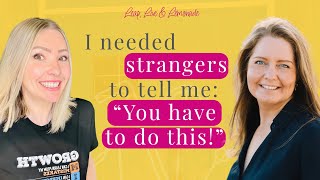
Michelle Blay left 16 years of teaching to launch Brave Wired, a program for high-achieving kids who freeze when things get hard. She teaches parents the strategies instead of just working with children, and rebranded after realizing her original name didn't match what she actually does. Her mission: help a thousand kids find their bravery.
Chapters
I help parents, a lot of kids who were just so capable and they had so much going for them, but they were afraid, just freeze up when things get challenging, when things get hard, and they're afraid to put themselves out there.
Michelle Blay, or Ms. Blay, as her students call her, is an educator and the founder of Brave Wired, where she helps parents raise resilient and confident kids. We talk about brave pivots, messy middles, and what it takes to follow a dream before it's truly formed.
If I had had somebody when I was little, like, imagine where I would be right now. And I realized one thing. I can help 25 kids per year, or I could help thousands of kids if I could relay this information to their parents.
This conversation is the best example showing that we don't have to wait until everything is figured out to start. Whether you are raising kids, building a business, or trying to bounce back from your own inner perfectionist, this one is for you. Let's get started. Hey, Michelle. Welcome.
I'm so happy to be here.
Nice to have you. Thank you for devoting this time to me and my listeners. Viewers. How have you been? How's everything?
Yeah, everything's good. I mean, I'm over here in Canada, so it's pretty cold, so I'm all like, in my cozy sweater. But, yeah, all good here.
Yeah, same here in Spain. But I would, I would consider cold as I think it's nothing for you.
Yeah, I've, I've, I lived in Spain for a little while, so I'll call you on that.
Yeah, if you want to come over.
Yeah. Oh, totally. I definitely would. I'll trade you.
Yeah. Like, my, My husband sometimes says when. When we are thinking of how the world is gonna be in these coming years, like, should we move to Canada? I'm like, definitely not. I moved here for the sunshine.
Yeah. I mean, if you're a weather person, I think you're in a good spot.
Yeah. Although, you know, they say create your own weather inside, create your own sunshine, but I'm very much still depending on the actual weather.
I'm working on it. I'm working on creating my own sunshine over here.
I think you very much have your own sunshine from what I've seen from you so far. You know what? I, you know, I ran a school for kids, an English school for kids for eight years. And when I was looking at your stuff, I was like, oh, my God, it would have been amazing to have you work with me in that school, because it was all about encouraging the kids and showing them that, that you, you can really do everything and anything you set your mind to.
So.
So, yes, it's a bit nostalgic, I know.
Well, and I think we were meant to meet, so we met now. So, yeah, definitely connect.
Yeah. So to tell our, our viewers, listeners, to give them an idea, the first question I usually ask my guests is, what is it that you do and why do you do what you do? Let's start with this.
I help parents of really capable kids who just freeze up when things get challenging, when things get hard and they're afraid to put themselves out there. So I work with their parents to help their kids build brave and build their confidence. And the reason I do what I do, it's a long story, but I'll start with when I started teaching. I first started off teaching in an inner city school. There was a lot of needs going on. And then after a few years, I loved the school. It was great. I really had some great students I worked with and families. It was very, very high needs. And then I moved to the suburbs in a school there, and I thought, okay, the needs are going to be less. And when I got there, I was absolutely shocked that the needs were not less in this suburban school. The needs were just different. Like, there were these kids, like a lot of kids who were just so capable and so they had so much going for them, but they were afraid they would not put up their hand unless they were a hundred percent, like, sure that they were going to get the answer right. They wouldn't try something if it was like, you know, a challenge question. They wouldn't even try it. Like, some of them would just burst into tears. And I connected with these kids right away. And it was not actually until I was teaching for a couple years that I actually realized why I connected so much to these kids. And it was because it was me as a little kid. I, like, did pretty well in school, and I was the oldest in my family. I was the good kid. And so as far as teachers could tell, like, I was doing fine, but inside I was not fine. I was like, this has to be perfect. This has to just be so. So, yeah, it's essentially these are like the little Michelles. And I've spent my whole adult life working through all of this and changing my mindset. And it's like, oh, my gosh, if I had had somebody when I was little, like, imagine where I would be right now, right? Like, I know everything happens in time. And I worked through it as an adult, partially working with These kids, I worked through my own stuff. But like, what if I had had someone when I was a kid? And so that became my thing. I did all of the, like, I actually did some training through psychologist Dr. Carol Dweck, who coined the term growth mindset. I got a grant and did some training through her organization. I did like all of, all of the learning on emotional regulation. I did all of the courses and that became my thing. Like, I'm a teacher because I help kids. Yes, I teach them reading, writing, math, but I help kids with this. I help them like let their sparkle out and, you know, get over their fear of trying new things. And so for 16 years I taught in the school and I made huge gains with these kids. Like I would say huge improvements. But 16 years is a long time to teach. And now I've reconnected with old students and, you know, families. And I realized one thing, that the kids who made all these gains and you know, all of this improvement, the kids who are doing well now, like 10 years later, 12 years later, are the kids whose parents came to me and was like, tell me the strategies. And they were doing the same things at home. Whereas the kiddos whose, you know, I had them for that year, but their parents never implemented the strategies at home. They didn't know the strategies. A lot of those kids regressed and kind of went back and became even almost more anxious the older they got. Yeah, the reason I, I had that realization in 2023 when my mom passed away, I was kind of forced to take a little bit of time. And in that time it kind of makes you reflect on, okay, what's the impact I'm going to make? What is my impact? And it came to me like, I can help 25 kids per year and hopefully they'll like continue to thrive, but maybe they'll regress. I'm not their teacher next year. I can't follow them. Or I could help thousands of kids if I could relay this information to their parents because they're not going to get a new parent next year. They'll get a new teacher, but their parents are with them throughout. So that was how I was like, I'm going to start this business. I just did it. I still teach part time, but my full time work is working with parents now. And then I get my kid fix a couple days a week. I still go into schools to get my kiddo fix.
How did you. It all sounds so simple that you felt the, you felt the calling and you just started it. Was it that simple? To even manage it with. With your like reducing the hours or switching to a different role. How did you go about this period when the whole thing started? How did. How did you even. Even put the word out there that you are doing this? Because in people's mind you were the. The teacher. Was it. Was it an easy switch in people's minds or. Or are your clients to totally different from anyone who lives nearby as it can be all done online, how should we imagine that starting period?
Yeah, that's a. Actually, nobody's ever asked me that and I love that you asked me that because it was not necessarily an easy switch. So I'll. Well, I'll tell you exactly how it happened. I. So as a teacher for the school board that I taught with, it's in our contract that you cannot earn an income using any knowledge you could have gained through teaching or it's a fireable fit. So essentially, like, even if I wasn't, of course I wouldn't be marketing to my students. But even if it was totally separate, it's like a fireable offense. So I knew that I couldn't really start a business while working full time. So I had this desire in my heart to start a business. And there was a business conference in the US I think. You know the same conference I'm talking about. Yeah, I went to the conference. I booked a couple of personal days off work. At this point, I had an Instagram account with no name. Like, no name, no picture, nothing. I would just post tips for parents, like, boost your child's confidence from this anonymous person who. Right, like no picture. So I go to this business conference by myself and I didn't tell anyone where I was going. I was just like, I'm taking these days off. I paid for my own substitute. I need it. I need a few days off. And at the conference, I stood up and asked a question because I am so new to business. So I put up my hand and I asked a question. And the guy on the stage said, okay, well, tell me about your business. And I said, I don't have a business yet. I'm a teacher and this is what I want to help kids and parents with. And I kid you not. The whole audience stood up and started like cheering and clapping and I burst into tears. And for the rest of those days that I was at that conference, people kept coming up to me and they said, you're that teacher, right? You're the teacher that asked the question. I just want you to know that you have to do this. You have to start this business because my kid needs that. So many kids need that. So I went back to school and I told one of my really good friends who was a teacher, I said, okay, I totally lied. Like, I didn't just need a couple days off. I flew to the US to go to a business conference. And now I think I'm quitting after June. Like, now I think I'm quitting in June and starting this. And she's like, oh, my God, like, what? So that was the spark. And I knew that. I just knew that I couldn't. I couldn't start this if I was full time. When. When you're part time and you're a substitute teacher, they don't mind. Mind what you do. So the desire to do it and the knowing it was the right thing was not hard. The actual implementing. So I did. I quit in June and I went to substitute teaching. But a lot comes along with that, like, such as my husband being like, he works for himself. Like, don't quit your job. You. You have the benefits for our family. Right. You have this amount. We need to count on this income. And so that was tough. And I was like, I will not be happy if I don't do this. Like, I have to do this. And the other real life situation is that, yes, I know this is what I meant to do. Yes. Like, I'm going to help thousands and thousands of families. It's been, I guess, two years and, like, have I replaced my teaching income? No, I haven't. When you factor in all the benefits. Right. So I think it's an important conversation of, like, following that passion. But also there's the real life stuff that comes with it. Would I change it? Absolutely not. I'm so grateful that I took this path. Was it. Has it been harder than I expected? Yeah, it really has been. I know that it's what I meant to do, but, yeah, if somebody asked me, should I quit my job right now and dive right in, I would say, yes, you should eventually do that. But definitely, like, look at it from all angles, right. So that you're prepared for everything.
Wow, thanks so much for sharing so openly and transparently. You know, I talk to our listeners sometimes, and there is someone I've been inviting on the show and. And they went like, all the people on your show are such, like, they have everything figured out and I'm not ready. I need more time to be able to get on that podcast and tell them all about my. My successes. But this podcast is about the whole journey. This podcast is here for people to understand, entrepreneurs who are also on the journey to understand that you are not alone. Not everybody has it all totally figured out yet. We are, but we can all do this together. The entrepreneurial journey is so lonely sometimes. And what you just shared about you being there at BBD Live, I guess it was BBD Live. I think I was actually there in the room. Is that possible?
Probably it was. Yeah.
I remember this.
You probably were. It was during the nighttime coaching. Yeah.
Yeah. I remember this moment. And imagine you never bought that flight ticket and you never get that encouragement and reassurance from all those amazing people in that room. You might still be just dreaming or you might have started but gone back. I give so much of the drive, the fire, the energy I have in me. It's due to those connections I have with people who share with dishonesty just like you. So I can understand that this is okay. It doesn't all have to happen in the first year. It's not like it either works out within a few months or you leave it. It's like once you feel the desire, the passion, and you are set on that dream, you just need to keep going.
Definitely everything will line up. And I think that it all lined up the way that it did. I'm like, oh, like, you literally cannot do this and keep your job. Like, I just think it had to be all or nothing for me in that moment. And I did need that big push. I needed those people to come up to me and say, my child is like this. Like, I. That is what I personally needed. And did I think that my desire to help was enough and that it was just gonna all work out? Yeah, like. Like, I. And I. It is. It is working out, and it is going to work out. But I think that I just. What I needed in that moment was that, like, blind following the faith in this. In this idea. And did I need to experience, like, putting it out there? Like, I didn't get as many people in as I wanted to. Did I need to experience all of that? Yeah, 100%. Because I'm supposed to be helping kids build their resilience and get up when they fall and do something when they're afraid. And so, like, how much better is the story of the person helping them if, like, I actually have roadblocks along the way? Right. If I, like. Like when I go back to. I go back and I teach at the school I used to teach at, and they always ask me about my business. How's your business, Mrs. Blake? And like, When I went back, you know, those first six months, I would go in and it was the first six months after, at the beginning of school. How's your business, Mrs. Blay? And I would say it's really hard, actually. I love what I do, but it's really hard. I like, you know, put out a presentation and guess what? Like, hardly anyone even came. And I would tell them because it's like, hey, guys, I'm not just like talking the talk, right? I'm not just telling you it's okay if things don't go the way you want it and you need to get back up. It's like I'm walking the walk, right? And I want them to know that adults don't just have it all figured out automatically because they're adults and things are just easy. It's like there's always challenges, but it's how you get up from those challenges and keep going. So I fully believe now that it was all supposed to be a part of my journey. Because if it was super easy and I had the vision and I started it and you know, a thousand people signed up in the first six months. It's like, wow, great story. But not a great story of perseverance and resilience, right? It's not walking the walk. So. Yeah.
How do you know what even to put out there? Did you have any idea on. Was it clear that you needed to talk to the parents and not the kids? How did you know where to start? There was this account which was anonymous. Did you continue with that? Is your current account the continuation of that?
Yeah, it is. So I, at that conference at BBD Live, I was like, I'm gonna, like, I'm gonna add some pictures to it. So I, like, added some photos.
Yes.
Did I block every single person that I knew from teaching? I did, but I put myself out there, like with my name, my real name and my face, because I was like, I'm putting myself out there. So. But I knew, I knew that I had done what I was meant to do with the kids and that the missing piece was their parents. That is what came to me was that these kids whose parents, like, came to me when I was their teacher and I shared the strategies and they're like, hey, we're doing this at home. I have seen those kids thrive. And I have also seen what happens when nobody implements these things at home and they get a new teacher. A new teacher. A new teacher. So I, I was a hundred percent and still am 100% convicted in that the missing Puzzle piece is the parents. And so sometimes people come to me and they say, well I just want you to work with my child. Like can you just work with my child? And it's like I offer that I can come and I can work with your whole family. Like we can do something like that. I can put together a package where I work with your whole family but the parent needs to be the main person. Yes, I'll work with your child and I will also teach you how to work with your child because I, I can't like I'm not going to move in with you.
Yeah.
Oh right. Like the parent needs to be a part of it. So I have said no to families when they've asked will you just work with my child? It's like no. It really like you're the missing piece. Yeah.
What has been the evolution of what you started with? So that was roughly. So you have been doing this for two years now?
Yeah, I launched it in February 2000. February 2024. So two years. Yeah. So when I started it off it was a pre recorded program and it was, it was small, like it was like I wanted to keep it digestible but yeah, it was digestible but as time has gone on I was like oh my goodness, there's a more that needs to be a part of this. So it really has expanded and so currently what it is is I do it live with, with families. So it's eight weeks, once a week is a different topic that we dive into live and then they get all of the recordings. But it really has grown a lot from like this pre recorded program to, to like eight weeks of really diving in. And I've also created a program that complements it which is all about emotional nervous system regulation. So that also is a another huge component about it. So yeah, it's really has evolved. Eventually I might re record it again so that people have access to it at their own. But right now it's just always continuing to evolve and also with who is in it, you know, with the people that sign up, I like to be able to tailor it to them and what they need, what the group needs. Also it's always been called Raising Resilience. That's always been what it's called and I've actually updated the name to Brave Wired. So that's going to be the new name. So that's also an evolution which is kind of exciting.
Both sound pretty awesome.
Yeah, I think I was like with Raising Resilience I do really like it but I found that you Know, there are, like, other programs out there with that same name. It was a little more generic, and I felt like Brave Wired was more. Yeah, that's what we're really doing is we're kind of rewiring them. We're rewiring them to, like, come into their Brave. So it just resonates a little more with me right now. And at the end of the day, I don't really think it matters what the name is. It's what's behind it, but it's kind of an exciting little evolution.
Yeah. And it sounds like it's more unique, and it's yours. And so you can become known for Brave Wired.
Yeah, definitely. Yeah, for sure.
How did you go about the tech part? We often. Or at least when I. When I wasn't running my own business, I thought, oh, it's just. You just toss around these ideas and then you go with the one you love, and then things just happen for you.
Yeah.
Which, yes, it happens. But we do have to do a. There are moments in an entrepreneur's journey where you have to do a lot yourself or you have to ask for help. What was your strategy?
So, yeah, it's interesting. You have this desire, and you're like, the desire to help is enough. And then you're like, oh, my goodness. Yeah, I need a platform to put this on. I need all of this stuff. So it was a lot of learning. Also, I did eventually ask for help, so I joined another entrepreneur. She is a part of bbd. She has a tech membership. And so I joined her membership where she has calls each month and she helps go through. Okay, here's your landing page. You know, here's how you do it. And she works with the specific platform I use, System IO. And she specifically targets that platform. So she knows. Is it. Yeah, it is.
I had her on the podcast.
Amazing. Okay, so everyone. Yes, if tech is. If tech is something that's stressing you out, go to Raheli. Yes, she is, like, amazing. So they can message me and I'll give them all the details. She has really helped me, but it was the realization of, like, I can do this all on my own, but it's gonna take way longer. Like, it's not gonna get out there to the people who need it if I don't ask for some help. So, yes, I'm still doing it all myself in that, you know, I'm the one logging in. I'm the one creating the landing pages, but I've got some help with it, so. But yeah, it's one of those things. It's like, I'm not a. Like, tech is not something that has been a strength of mine. Even as a teacher. Like, I was like, the one who's like, smart board would do something weird, and I'd be like, getting one of the kids to help me fix the smart board. Right. I'd be like, what happened with the smart board? And they'd be like, you just clicked the wrong spot. Right. So, like, as a whole, even as a teacher was like, something I was working on. Yeah.
But this shows that if. If you are really determined, you can. You can get through that phase. I think it's so important that you. You ask for. For help at the. At the start or close to the initial phase, because it can, like you said, it can slow down the whole process if you constantly get stuck with, okay, I don't even know how to connect my email to the automation or I don't know how to set up this confirmation page or where to upload those videos I'm recording. You can get held back for years, and you might need to put a pose on your dream for years. And. And it looks like. Or it sounds like you've already. You've already been past that. There might be still challenges, but. But it's so nice that you. That you recognize this early on that if you get some help, maybe not someone putting together those pages for you, but Ruheli can give you, like, strategic insight or even just getting clear on what platform. There are people out there who. Who spend years on, oh, I don't know what platform to go with. It doesn't matter. Just start with one and get your thing out there. Right?
Just start. Yeah. And that's the thing too, that I found is like, you know, everything didn't just get, like, suddenly handed to me instantly as soon as I had the desire, but everything always came to me when I needed it. So, you know, when I needed help figuring out the tech, then I suddenly met Raheli right when I needed a certain type of coaching, I found this coach or that coach. So as I would have been going on in this journey, it's like I always got what I needed when I needed it. Was it always, like, the easiest way? Maybe, maybe not. But I kind of always got what I need when I needed it in order to help me move forward. So it's like I met Richelie at the exact right time when I was, like, so overwhelmed with the tech, and then suddenly she's like, oh, hey, guess what? I do. And I was like, oh, my goodness. You appear in front of my face. Yes. I'm for sure gonna work with you. Yeah.
Amazing.
Yeah.
What would you say was. Looking back at these two years, what would you say were your highest and lowest moments of this journey?
I think the highest. Highest moments is when I've worked, you know, being on those calls with these moms, and something hits and they're like, this. This is it. Like, this is gonna change things. I'm gonna try this. And then they go off and they try it, and getting those messages of, like, I tried what you suggested, and this is what happened. And, you know, things are changing. So I think that for sure, the highs have been when I'm actually working with the moms in, like, on those calls. Right. And you have those conversations. That's definitely the top and the lows have just been, I think, when you are so excited about something and you put it out there, like, having masterclasses that I've offered, and, like, people sign up and then nobody attends. Like, I've had masterclasses where nobody. Nobody showed up. And you're just like, have this feeling of, like, I have this message to share, but nobody even heard the message. Like, nobody was even there to hear the message. And so I think those kind of moments have been the hardest of, like, I'm doing this for a reason. I know I'm doing this for a reason. But, like, you know, there's been times where I've been, like, come on, universe. Just, like, let people be there to hear it. And if they don't like the message, like, that's okay. It's not. It's not for everyone. But those feelings of, like, just bring me people to, like, even hear what I have to say. So I think a lot of times, like, we do. We get. You know, we get stuck in the Instagram algorithm where we put something from our hearts out there and nobody is there to hear it, or it feels like nobody's there to hear it, or, you know, we offer something out into the world, and we just want to share. And, you know, it doesn't get out there to the audience. We want it to get out there to, like, we know our people are out there, but how do we reach them? So I think those have been the lowest, right, where I've had moments where I've been, like, come on, universe, you made me quit my job. You clearly think I have a message to share. Can you kind of, like, help me get it out there? Right? Like, I've definitely had moments of Those. And those have been the hardest, right?
Of like, yeah, how do you. Do you get out of the funk in such a moment? How do you. Do you try to move on? Do you digest it? Is there. Are there any strategies, tactics that you use when such things happen?
So I think, like, really early on, right, I would, like, get pretty down about it and kind of like, I've always gotten back up, you know, fairly quickly and in putting things out there, but, like, maybe it would take me out for like a week where I, like, wouldn't be putting anything out there and I would just be, you know, kind of retreated. And I find what I. What I often do is I go back to teaching more often, right? So that's kind of like, I love teaching. I love kids. And it's also exhausting. So I'd be like, oh, my gosh, okay, like, I'm gonna go into the schools for, like, so for the next month, I would, you know, be teaching every day in the schools, which is. I love it and I love being with the kids, but it takes a lot of emotional energy. So when you're teaching every single day with kids for the whole day, when you come home in the evening, you don't necessarily have as much to give to your business, right? Because you've poured into these kids all day. So that also in the beginning was kind of a pattern where I would, like, not launch again for a couple months, like, not put it out there again and go back to teaching. Now I found that there really does need to be a balance to stay consistent. Like, I'm always going to want to be with the kids, I'm always going to want to be teaching, and also I need to be consistent in my business regardless. So a friend of mine, actually, she's in bbd, we have a deal right now. We have a minimum amount that we need to post on Instagram, a minimum amount of emails we send to our email list, and if we don't for one week meet the minimum, we have to pay each other a hundred dollars.
Okay, this is serious.
It is really serious because it's like I need, like, I needed that accountability to, like, okay, find the balance. So what I did is I said, you know what? When I've got all the energy in the world, this is how many times I'm going to post. But when I don't have as much energy, when, you know, the flow isn't really feeling there, like, what's the minimum? The minimum I can post. So my minimum is twice a week. So regardless of How I'm feeling. I post twice a week or I pay my friend a hundred dollars and it really, it really works because that's the thing. Like there's always ups and downs and emotionally and what's on going. Going on in your personal life. Like there's always ups and downs. But I've realized like you still need to be consistent and putting your stuff out there. So decide what your minimum is that you can handle regardless. And when things are tough, you do the minimum. And when things are, you know, amazing and the ideas are flowing, you do the maximum. But that's really helped me. So I would highly suggest that finding a friend who's gonna make you pay them or in action, that's so cool. I. I'm happy to report neither of us have collected. Neither of us have collected.
Yeah, I didn't want to ask how much you.
Yeah, no, we haven't, we haven't yet.
You have been able to keep up with it.
I also think sometimes what people do though is like when they're feeling really energetic and they're like setting their targets and everything and they're like, I'm gonna post seven days a week or five days a week. Like they say set the target really, really high and it's almost like, oh like when they feel like they can't do it, it's all or nothing, they kind of like crash because it gets to be too much and they crash and then they don't do it at all for a few weeks. So I think it's better to have like set your minimum and your maximum and regardless, you stick to that minimum either way and it's manageable. I mean, two days out of seven is manageable for me. So regardless of what's going on, that's fantastic.
And it always gives you a, like a. It's a go to as well. It's not like, yeah, I, I tend to be the one who sets those super ambitious goals and then when they are not met, I, I would like be resentful of why. And I love this method come up or maybe I join your crew.
Yeah, totally join in.
I love it.
Yeah.
How about the actual families that you are working with? You said yes. Sometimes it happens or it happened that you put out there something. You poured your heart and soul into it and then no one shows up. When people do show up, did you. Have you been able to connect with the right people from the start or did you have to fine tune your messaging at all since you started?
Great question. Yeah, very interestingly, the Whole way along, I've been, like, refining and rethinking, you know, who. Who really is it like, that I'm working with? In the beginning, I think I was trying to speak to every parent of every child because do I believe. Like, part of me believes that every parent and every child does need this. Like, who doesn't need more confidence, right. And to be able to put themselves out there, like, every child does need that in some capacity. But I was trying to speak to everyone, and it really, like, it rings true how people say, I didn't believe it in the beginning, but it's true. Like, when you try to speak to everyone, you end up speaking to no one. You know, like, your message doesn't really resonate with that person because you're trying to speak to everyone. So I have had, you know, people join and. And over time, working with families, it became very clear of, like, okay, you are the one, like, that I'm really meant to work with. Like, it's you and it's your child. So definitely I've had people who were, like, kind of a good fit and they got something out of it. But now I've actually even just recently, in recent months, even narrowed it down even more. Right. I think in the beginning, I wanted to help all kids. And so people would say, could you help my kid? My kid, my kid? And I'd be like, yes, yes, yes, I can. And, yes, they can all make progress, for sure. But recently, I've come back to that little avatar in my mind of, like, it's really that little Michelle. It's really the child that seems like everything is okay and going well, but it's not inside that's really who has my heart. Because I also think sometimes these kids get overlooked, right? Because it seems like, you know, if you. As a public school teacher, myself, right. They have so much going on in their class. There is so much going on. So when this parent of a child who is getting good grades, who is, like, appears to be listening in class, appears fine, and their parent comes to you and says, oh, my child, you know, is really struggling. This public school teacher who has 25 kids in the class, and, like, one of them is throwing chairs and one of them is running away, and one of them is doing this, like, they're gonna say, I think your child's okay. And so I think what happens is people think, oh, they're okay. Oh, they're okay because they present as okay. But who is the one who's advocating for them when they're not okay inside. And oftentimes their parents see that they're not okay inside. Their parents see that and maybe even try to relay it to the school and to the teacher, but they don't have the capacity to really get it because it's not in their. So yeah, it's actually been in recent months that I've come back to, yes, this benefits all kids, but there's this certain group of kids who my heart is really speaking to and it's those kids who, who I just mentioned. And I think part of it was giving myself permission to say that because I think for so long it was like I felt like if I said it was these kids I wanted to help, that maybe I was excluding other kids. And that's not the case. It's just like in my messaging now, I'm speaking about those kids and I'm speaking to the parents of those kids. And if somebody wanted to join my program and that wasn't exactly their kid, but something else resonated with them, of course, of course I would work with them and it would have benefit to them. But giving myself permission to like have the, the one child in my mind that this is really for. Yeah.
If someone is listening now and they're like, would my kid need something like this? How do I know it, it all looks okay. But you said that the parent would feel when something is off, what is it in this case that would, what are the signs that would give away that there is work to be done or yes, we can do something about it. So to take a weight off their shoulders.
Yeah, I think that it starts with that low key perfectionism. Right. They're like drawing a picture and they're like crumpling it up if it's not perfect. Or they're like writing something and they're erasing it and erasing it and erasing it because their printing isn't perfect. Or you like, as a parent, you know that their abilities, you know that they're capable in certain areas. But the teacher might say something like, like she doesn't really raise her hand or you know, and you're like, I know she knows the information. So those early signs of perfectionism, of worrying too much, that everything's just so.
Of.
Not, you know, they can do it. But their teacher's saying, well, they're just not, not doing it in class. Right. They're, they're not even trying the, you know, the challenge questions in math when you're like, oh my goodness, I know that, that he or she knows this. So Those can be signs that. That perfectionism is setting in.
What can someone do before reaching out to you? What can they do about such a situation? When you see a kid, like, knowing it but not having the courage to say it out loud, even in an environment which they know because it's their class, what can a parent do about this? As a very first step, As a.
Very first step, normalizing that mistakes are okay. So I think sometimes our kids look at adults, at the teacher, at their parents, as, like, we've got it all figured out and, you know, everything's easy for us. But starting to normalize that, like, mistakes are actually where you learn. And so sharing some of your own mistakes, right? Like sharing when things are hard for you. So saying, you know what? Oh, I have a presentation at work tomorrow, and actually, I'm really nervous about it. You know, I have to do something like stand up in front of my co workers, and I'm feeling a little bit scared. This is something that is outside of my comfort zone. And just sharing that authentically so that they can see you, you know, doing things that are uncomfortable for you and. And doing it anyways, and you don't have to pretend like, oh, you know, I'm a little bit nervous to present in front of my colleagues, but I'm just gonna stand up and I'm just gonna do it, and it's gonna be fine. Like, being a little bit real with them and saying, you know what? Like, I actually, like, didn't sleep so well last night because my nerves were creeping in. But you know what? I know it's gonna be okay. So being a little bit real of, like, things actually are hard sometimes, and I actually have to work to get past it, right? And then when things don't go right, you know what? I did my presentation, and at one part of my presentation, I, like, knocked over my water glass. Like, whatever happened, right, I knocked over my water glass, and we had to, like, stop and clean it up. And it was kind of embarrassing. But, hey, I'm still here, right? I knocked over the water glass, I got embarrassed, and I'm still here. So I think sometimes parents want to hide that from their kids, right? They want them to think they've got it all together and that, like, they're modeling for them that they have it all together, but actually modeling the reality to some extent that things can be hard, but we can do hard things and we can be okay.
I love that, like, showing vulnerability is. It definitely does the trick. It's funny. I have an 18 year old stepdaughter. And she had to make some very important choices in the last few, few years about, okay, what direction she's taking, like, what university she's applying for. And it was funny at one point she said to us, because first she wanted to do art, and now she is studying chemistry. So she couldn't be further. Further off from what she originally intended. But she, but she had the calling in for it came in form of a. A super inspiring teacher. And then she totally got into. Into chemistry at some point last year. She said to us, like, having, having lunch. She said, what if this was the wrong decision? I don't even know if this is what I. This is what I really want to do. And then what came out of me was, hey, I'm 43 and sometimes I don't know if. If this is what I really want to do. You are definitely not late. But sharing our, Sharing our own stories. Yeah, I have the experience that it helps. And I also see another side where parents sometimes are hesitant to share their flaws. So the kids don't worry about, about them or they feel secure that, yes, my, my parents know how to, how to figure things out. And it's. I think it's. It's important to, to be that figure. But. But showing the, showing the other side too is so empowering.
I think it's like a little bit of controlled vulnerability. Like you're choosing when, when and how you're gonna model that for them. So it's not like, you know, they, of course, they really do need to know that to some extent you've got a handle on things and they're safe and everything. So they do need.
So I'm like, I don't know how to pay the bills.
Yeah, right. So you're not like confessing to your child, like, melting down. I'm losing it. I don't know what tomorrow's gonna bring. Like, definitely not that. But like in controlled situations where there's like something that is making you nervous but like, you know, you can handle it and you can come back and tell this story about that. So definitely, like, yeah, not just like an open book telling them all your. All your problems. They don't need to hear that.
What is the typical age of children? Age? The parent of whom you, you are working with, is it. Is it like smaller children or are they teenagers or. It's all ages.
The kids that I've worked with have been between the ages of 4 to 12 or 13 is my area of expertise. The kids that I've Worked most closely with being like an elementary school teacher. Will this work with younger kids? Yes, I've actually had especially the emotional regulation piece. I've had some of like my most successful clients with the emotional regulation piece have been of little kids because they soak it up so quickly. I actually had a mom who came to work with me and she stayed at home and then it came time to put her three year old son in preschool and she had been working on the emotional regulation piece with him and she dropped him off at preschool and he was cry, like crying when she left. And then the teacher texted her about half an hour later and said, you know what, he cried right away when you left and then he went off to the side and he started doing some breathing and he brought himself back to the group and she's like, she sent me a message saying oh my goodness, like he's using these tools that I've been working with him. So he was very little. But because, because they're so young, they, with some repetition, they're still at that like super sponge stage. So they like soak it up. So with the emotional regulation piece, like the younger, the younger the better. And do I know that this also works with kids older than 12? Yes, I do. My experience though, like the research says it, that these strategies do work, but my personal experience have been with kids like 13 and under. So you know, I don't like to like put it out there that it's for older kids until I've actually, you know, spent a significant amount of time working with older kids. But research shows that these strategies do help older kids too. But yeah, 4 to 12 is kind of like my like area, my like sweet spot of kids that I love working with.
Yeah. Would you say that with the, with the age group of 3, 4, 5, it makes sense for even for every parent to consider this regardless of what they see with the kid. Because I understand that when, when someone comes to you with an 8 year old, a 10 year old, that child has already experienced so much over kindergarten years. School, different communities, different people to deal with when it's, when it starts at the young age, you might even save all the struggles or we probably can't save them from everything but. But it sounds like if you get into it with the right mindset, like that example where the little one was able to regulate themselves through, through. That's incredible. Like they are, they are using it from the get go.
Yeah. Well, it's interesting. That's part of like as a business owner where like my Belief kind of led me astray in a way, because I do believe in my heart, I do believe that every single parent. Every single parent should do this, right? If you're pregnant, come to me and I'll, like, teach these strategies. But in my business, that sort of led me to try to speak to everyone, you know, which. Which kind of, I guess maybe diluted the message. But, yeah, if I'm. If I'm gonna be honest, what I really do think is that every parent needs this.
I'm really.
Because I've seen it, right? Like, I've seen what happens. And some kids, when they're really. Well, actually, I wasn't gonna go here, but kids are not born anxious and they're not born afraid to try things. Like, it. It happens as they get older and as they write, they go to school. School. And they get exposed to other people. And, like, interestingly enough, I connect to that little Michelle who, you know, was anxious inside in class. But I had this realization that before I was that Michelle, I was actually a super brave little kid. Like, I was super brave. Like, I was looking through old photos and I felt found. I found a photo of me in grade two standing on a stage in the school play. I was, like, the lead in the school play. I found another picture from grade two where I was standing on stage singing a solo. The same kid who sang a solo in grade 2. Lip Sync O Canada. Like, would not sing O Canada in class from the age of, like, 10 up because I thought I had a bad voice. So when we had to sing oh, Canada, I would, like, fake that I was singing because I thought I had a bad voice. And there was another picture of me wearing, like, pink bunny ears. And I had, like, organized a parade for my whole neighborhood. I knocked on, like, all the doors, got all the neighbors to watch this parade, and I was dressed in pink bunny ears and, like, my gymnastics outfit. And I was this little mini leader of all of these kids. So before I was this little Michelle that I, you know, who was, like, afraid to try and, like, kept to herself. I was, like, this, like, wild little, like, firecracker of a little kid until the age of grade three. So, like, truthfully, and the research shows it, too, like, kids are not born anxious. They become anxious as a result of, like, the things that happen to them. Like, yeah, it wasn't, like, big traumas or things that happened to me, but stuff happened. You know, like a teacher. I was proud of a poem, and a teacher told me that I copied it, and, like, there's going to be all these things that are going to happen to your kids in their life. There's going to be people they're exposed to. There's going to be social comparison. All this stuff is going. Going to happen. And if we're not preparing them, like, what often happens is kids lose their confidence. Like, have you ever seen a baby ever who was, like, born and then just was like, oh, walking's too hard, right? Like, they fall down once or twice, and it's like, no, walking's too hard. I'm just not gonna keep trying. Like, I'm just not gonna walk. No. Like, we're born. We're born to try. We're born to persevere in the beginning, and then that gets taken from us. So, yes, yes. I think every parent needs this also. I recognize that sometimes. Well, most of the times, parents have a lot going on. There's a lot, like, happening all the time. Sometimes you don't take an action until you start to see those signs that something is wrong. Right. And my hope is that at least, you know, when the signs are early, you know, that I'll find them and they'll. We'll find each other when the signs are early. Yeah. But, yeah, it's interesting. I wasn't gonna share the whole, like, brave thing, but, yeah, I like, thank you for sharing. It's like this little mini brave. You know what else I used to do is I used to organize the kids in my block to go around people's yards and pick their flower and make them into bouquets. We would wrap them in tin foil, and we would go on the street corner and we would sell these bouquets to the neighbors. We would, like, pick their flowers and then sell them back to them. Like, how audacious is that? Right? But I was right. This little firecracker of, like, yeah, I picked your flowers, and now I'm gonna sell them back to you.
You just went with it.
How did that become the same. The same kid who's now 10 and 11 and is, like, quiet and, like, afraid to make a mistake. But. But it happened, right? Just. Yeah. Yes. Yes.
Wow. You make me go back in time to when I. Because I. I know I got to a period in my life where I very much became the perfectionist. Like, I would only talk if I knew the whole answer and it needed to. But. But I. I don't know. It would be interesting to go back to when or what. What made me become that kind of a person. It took me so much work to. To get out of that place. And I was already working in corporate when I finally managed to get out of there because I realized that if I waited until I had the perfect answer, I will never be noticed, I will never be recognized. So then I went reckless, like starting to talk even when I didn't know what I was talking about. It did work out. I. It did hit a brick wall a couple of times, but so many other times it did work in my favor, but it was such a, such a difficult time to push through. And it would have been so much nicer to have tools for managing it way before. And I think it would have saved me a lot of, like, anxious times, especially in high school. So it would have been so useful.
Sometimes it's very subtle, things that happen over a period of many years and oftentimes it's unintentional. But when there are kids that are bright, you know, we call them smart, we praise them for like following the rules, for being smart. And they kind of develop this identity of like, I'm the smart kid, I'm the smart kid. And then they want to protect themselves from things that might show that they're not smart. Right. So then they, they don't try something in case they could fail because, well, would that mean I'm not smart then? So I think some of it happens over the years through the language that we're using and things that we're trying to do to build the kids up unintentionally builds this identity that they feel that they have to keep up. And so, yeah, it's not always those big moments that happen where, you know, something happens in your life with a teacher that's like sticks in your mind that sometimes it's subtle things over time where your identity just gets reinforced. Yeah, part of what I do work on in the Brave Wired is we work on adjusting our language, you know, that language that can unintentionally reinforce. Reinforce an identity. We work on adjusting our language to a more like effort based versus identity.
If someone is listening to us now and they are like, wow, I really love this, I would love to discover more. Where is the best place to follow your teachings, to reach out to you? What is it that you have coming in the next months?
Yeah, so I'm on Instagram, mostly on Instagram. So it's at Ms. Shell mindset and you can find me there at least twice a week or else I'll have to pay my friend. Twice a week I'm posting on Instagram. So Ms. Shell Mindset, I'm actually Ms. Shell Mindset everywhere like Facebook, Instagram, TikTok, mostly Instagram though. And my website is Ms. Shell Mindset. I also do have a masterclass that I'm putting out on February 18th and it's going to be all about, about this. So when, when capable kids freeze, how can we support them? So I can send you the link to that if anybody wants to sign up and hang out with me a bit more.
Yeah, we'll definitely include that in the show notes and I think this will definitely come out before that. So whoever is listening before that date, they can add straight there or if they are listening later then you will still be there twice a week as minimum.
Totally twice a week. Minimum. Yeah. I do also work with families in, in different capacities too depending on, on what they need. But yeah, I've got my, my programs but then also I can always put together a, a package that works for, for your family too.
And if we, if we look into your dreams. This is what I also ask all my guests to, to finish with is where do you see yourself in three years time and this whole initiative in this whole community.
My vision is within three years time I want to have helped a thousand kids. Help a thousand kids. I mean, I don't know, there's no time frame on it so I shouldn't say you suggested three years time. But my vision is to help a thousand children find their brave and find their sparkle and put themselves out there.
Fantastic. I have no doubt it will happen. I'm so happy that in that moment in the BBD live session, you were the brave Rishael.
Yeah.
Because that definitely wasn't the girl who just listens to others and doesn't, doesn't put up her hand. There were a lot of people and to speak up and share your story there that you definitely reached back to the original brave, to the feisty little.
Like flower seller girl.
Yeah.
I'm very grateful.
That's what will take you to those thousand kids as well. Amazing. I wish you all of this come true and I'm so happy for all those families, the lives of whom you are going to be touching. Your work is inspiring and very much needed. Thank you so much for your time.
Thank you for having me. This has been so lovely chatting with you.
More from Eszter
She Had NO Evidence It Would Work — But She Manifested It Anyway | Mindset & Law of Assumption
They Said It Would Take 20 Years — I Said We're Doing It in 2" | Big Vision vs Small Thinking
I Left the US, Got Certified & Made $35K on a Product I Hadn't Even Created Yet