Chuck Kuhn: JK Moving Services, JK Land Holdings, CapRelo
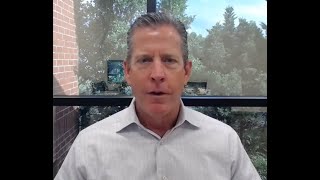
Chuck Kuhn built JK Moving Services into a company with thousands of employees while investing in land that he sold to Microsoft for $466 million. He talks about how his definition of success changed over 43 years, the culture he created, and why he focuses on sustainability and giving back.
Chapters
So Chuck, you were 16 years old when you started JK moving 1982. It's been 43 years. And since then you have grown JK into the largest independent moving company in North America. You also have nine children and 13 grandchildren. You're now building one of the most incredible land investment companies, which we'll talk about later. And you're also extremely philanthropic, donating over 1 million pounds of food from your own farm. My question to you is, how has your definition of success evolved from when you started JK as a 16 year old to now?
Great question, Ethan. And I would say it's changed dramatically over 43 years. When I was first starting JK Moving Services, it was a bootstrapped operation and literally it was a ground up startup with no outside funding whatsoever. So my vision of success when I was first starting 43 years ago was to build a business that would be sustainable and build a business that could feed me at the time and ultimately my family. As the business grew, as time moved on and the business evolved, it became about a lot more than just me and trying to feed myself and my family and build a sustainable business. And I wanted to build a business that could be impactful in our industry. I wanted to build a business that could employ others and make sure that the business was sustainable not only for us and for the community, but for those employees and over time, over 43 years of time, we have approximately 12 to 1300 full time employees today at JK Moving Services and our relocation company, Caprelo. So that was critical to us to make sure that the business had opportunities for the employees and that the business was strong enough and healthy enough to support their families as well. Advancing further on, it became kind of the standard that we would build a sustainable business that was impactful to the industry, impactful to the community, that could provide career opportunities for a lifetime of people here at jk. But then giving back to the community became more possible as the business evolved and got more substantial. But it also became a really important part of our fabric, of our core values. And giving back in the community was critical to us and critical to our employees. We formed the JK Community Farm. The JK Community Farm is a farm that is in Loudoun County, Virginia. It's approximately 150 acres. My daughter Samantha is the director and really the founder of it. And that community farm today has grown to be the largest community farm in the nation. And it is truly making an impact on the community. It's making an impact on food scarcity in our region. And it's become a very important part of our organization and our employees focus. So the definition of success has changed greatly from one trying to survive to trying to give back and have true impacts on the industry, on the community and our employees.
Everyone listening to this has most likely moved at some point in their life. You founded JK Moving Storage 43 years ago, 1982. You were 16 years old and you grew it into the largest independent moving company in North America. Reports that I found say that you moved over 500,000 customers, including multiple presidents of the United States, in and out of the White House. And more importantly, you have thousands of employees. How do you build a strong cohesive culture?
Building, building a large team, building a cohesive team, building a high performance team, probably been the biggest focus and the biggest challenge I've had in 43 years of operating JK Moving Services. It's everything. It's everything to me, it's everything to the organization, it's everything to our employees. And it takes tremendous care and feeding. A lot of it is being very, very careful who you select to bring onto the team, making sure you give those teammates an opportunity to grow and prevail. Having clearly defined core values in the organization, we have seven core values that we truly live by and focus on daily. We have a brand promise that you'll be treated with care and respect. So anyone representing our brands is to be treated with care and respect every day. Everyone representing our brand is to treat others with care and respect. And one thing we found is treating someone with care and respect costs nothing. It means you have to think a little bit before you act, you have to think a little bit before you respond. It means you have to think about how you want to be treated, how you'd want to be treated if you're on the other side of the situation that you're interacting with. But being treated with care and respect is a big part of our fabric, a big part of our culture. We also have a brand purpose and that's stress free. Moving is one of the most stressful things a family can do. People are moving for a number of different reasons. It might be a very positive situation of a new job or moving up into a new home, or it could be the result of a death, a divorce or losing a job. So we're walking into people's castle at a very stressful time for them. And making sure that we're focused on taking that stress out of our customers lives is very important to the customer. It's very important to us. Training Development, giving back to the employees. Making sure that the employees know how important they are to me, to the organization and to our customers. And making sure that we retain our top talent. And not everybody is made for our organization. This is not a great fit for everyone. If it's a great fit, we want to make sure we retain them, help them grow and be successful in the organization. And if it's not a good fit for them, we understand it. We need to let them move on as quickly as possible. But it's truly been the largest and most important challenge I've had for 43 years.
Chuck, you have made a large impact. You employ thousands of people. You have nine children, 13 grandchildren. You've donated and put over 22,000 acres of land into conservation easement across the United States. You've donated over a million pounds of food from your farm. And you've also started one of the largest, excuse me, the largest independent moving and storage company in North America, moving 500,000 plus customers, including multiple US presidents in and out of the White House. And I also really look up to you, Chuck. When people look back at the impact of. Chuck. Hugh, what do you hope that they remember the most?
When people look back and look at my career and look at the impact that I've made, looking back, I hope they feel that I made a difference, that I truly had an impact. I had an impact on the industries that we represent, that I had an impact, a positive impact on our community, a positive impact on my family, and that we've left everything we found in a better place. And I think it all goes back to balance and making sure that we're giving back more than we're taking out, whether it be in farming and you want to make sure you're putting more into the soil than you're taking out of the soil or whether it's your community. And making sure that we're putting more back in the community than we're taking out of the community. I want to make sure that the kids and the grandchildren that we're raising are better citizens than I was, that they understand the importance of being responsible, being respectful and giving back in the community. So I want to make sure that my time, my short time on this planted is recognized as positive and that we're giving more than we're taking.
Chuck, you have been getting into land investment deals and you've been doing this for quite a while. I read online that you bought a site for $47 million and you sold it to Microsoft for $466 million. Can you walk us through that deal and what did you see early on that others didn't?
Sure. So JK Land holdings does. Does quite a bit of land development and also land preservation and conservation. JK Land holdings has, has purchased and placed approximately 22,000 acres in the conservation easement around the country, with a primary focus of being in Virginia. JK Land holdings also does a fair bit of what I call responsible development. And we build warehouses, we build and operate data centers in the community, and we do land development primarily focused around commercial, light industrial or data center development. The transaction you're talking about was a land acquisition in Prince William county. And it's kind of a neat story. We purchased a large industrial tract of ground in Prince William County, Virginia. The land was highly contaminated, and we worked together with the seller of the property to work together with the epa, and we did a multimillion dollar cleanup of the ground. This ground was so polluted that it was affecting the groundwater and, and the surrounding areas and affecting the groundwater in businesses and residential developments nearby. So we took the better part of two years cleaning up the soil, removing soil, and long story short, at the end of our EPA cleanup, the EPA issued us a letter of residential clean soils on the ground, meaning we took a site that was condemned for really any purpose and cleaned it up to the point that they felt that the ground and the groundwater was clean enough for a residential development to take place. So that was one major accomplishment with that site. We also, in the spirit of data center development, felt that this was a great area for data center development. There was large buffers between this property and any residential property. It was already in an area that was zoned for commercial and industrial use. And data centers like data center neighbors and this property had data centers nearby. So we worked together with the, with the electric company to bring power to the site. We worked together with the fiber company to bring. And over a course of a couple years, we created a site that was highly sought after by the data center community for data center development. We took the site to market, we had a number of interested parties, we put it out to bid, essentially, and we ultimately went with Microsoft on that project. And it turned out to be a real win win, in my opinion. We took dirt that was not being productive for the county or the state in any way, and, and we brought in employment, we brought in tax revenue. We cleaned it up from an EPA standpoint, and today it's a highly successful data center operation that I think the community could be proud of.
More from Ethan

Legacy Finance Meets Crypto: I Asked CEO Austin Diamond Who Will Drive the Next Crypto Boom

a16z Backed CEO Explains How To Earn Trust In A Space Where People Instinctively Fear AI



The President of Auth0 predicts the Identity Perimeter over the next 3 years

Why This a16z-Backed CEO Believes Passive Crypto Index Products Still Matter

Scott Dietzen says data-infrastructure and AI-native companies are blurring; I asked if convergence.


I asked George Cheng if his police AI could contribute to over-policing marginalized communities now

I asked CEO Scott Dietzen which underrated skill separates good leaders from truly great ones today!

George Cheng, 19, ditched MIT after YC to build Code Four; a moment spurred him toward risk ahead