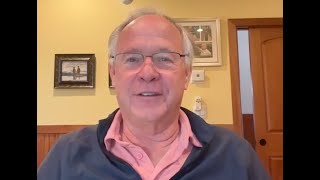
In this interview, Ethan Lockshin speaks with Joe, a former senior partner and chair of North America at Boston Consulting Group (BCG) and current venture investor. Joe shares three core insights from his three‑decade BCG career. First, he explains how, during the COVID‑19 pandemic, a leader can authentically connect with thousands of employees by using video tools (Zoom), looking directly into the camera, and speaking from the heart, proving that sincere, heart‑centered communication scales to 5‑7 000 people. Second, he describes his personal habit of running almost every day since age 13, which he credits as the daily practice that keeps him mentally sharp and balanced. Third, he recounts a leadership communication innovation he observed in Joaquin Duato, CEO of Johnson & Johnson, who routinely tests how his messages are actually heard by asking teams to paraphrase his words and then adjusts his language to match employee perception, thereby reducing mis‑alignment. The conversation also touches on Joe’s recent book, “The Generous Leader,” and invites a story of generous leadership, underscoring the theme that leadership at scale is built on authentic connection, personal discipline, and listening to how messages are received.
Chapters
So, Joe, you have led thousands of people at Boston Consulting Group in the past. You were there for over 30 years. You were the chair of North America. You co founded the Boston consulting group, Washington D.C. office, and you've invested in the future through V Capital Group, a very prominent venture capital fund, and you were the vice chairman there. What is the biggest lesson you've learned about leadership at scale?
I think then probably the thing I'd say, of course there's many lessons, but during COVID when so many people, if you recall, needed to and wanted to connect with each other and with their leadership and the like, what I did learn is you actually. I mean, I had 7,000 or 5,000, grew to 7,000 roughly in that time. You actually can connect with 5 to 7,000 people if you do a couple things. I mean, you got to use the different tools we have, which now we know with zoom, you can do that. If you, if you actually use the camera well and look into the camera and actually speak from your heart to their heart, you know, you can. So you. And you know, that's. So connecting with people is essential, especially as a leader, and connecting them with the way they want to connect is possible. And when you really bring your heart into the conversation and pour that through that little camera there, it works. And you think, oh, my gosh, I can't get this many hundreds of people or, or thousands. But you can. You can if you're really sincere, if you're heartfelt, if you're thinking about the messages, if you're thinking about the people on the other side. That's probably one lesson I learned, that it is doable to truly connect with everybody.
I love that. That's awesome. Thank you. So you've had a long, high impact career. You were at Boston Consulting group for over 30 years. You were part of the leadership team that brought Super Bowl 50 to San Francisco. You've co authored a book. You played a key role in many. What is something that you do daily or weekly that you swear by to stay sharp and balanced?
First off, I wrote the book. I didn't co author it, but that's okay. I'll let that go now. That one's very simple for me. I am a runner, not a marathoner, but, you know, and I have run since I was 13. I'm 67 now. Maybe not every day anymore, but absolutely almost nearly every day. And whether it's 2 miles or my younger days, 5 or 10 miles, that's the thing I swear by. You know, it's. It's for me, there's so many benefits. Obviously, the exercise gets you away from everything. And I run outside. I don't think you can think the same on a treadmill. Now, if you want to run a treadmill, I'm not going to begrudge you. But for me, without question, running was my go to. To stay sharp and balanced, to step away. You know, everyone's got to find their own thing. Whatever you do find, make sure then you do it.
Why you have seen so much. You invested in the future at B Capital Group. You were a senior partner at Boston Consulting group for over 30 years. You have seen a lot. What is a business transformation or innovation that you've seen recently that has truly impressed you and why I might cheat.
A little bit on this one, Ethan, I'm going to tell you a leadership innovation, and maybe it's not innovation, but really impressed me. Joaquin Duato, the CEO of JJ, works very hard to connect with his 100,000 employees where they are. And essentially, he told me a story that what he tried, he learned very quickly. His words that he says and what he thinks they mean may not be what they think he means. You know, what they're hearing. And he had two innovations I thought were cool. One, he will ask someone on his team, you know, I'm saying this or that. What are people saying? What are people hearing? And it's funny, he said, three months into the role when he became CEO, said, you know, what are people saying about me? They said, well, you want to cut costs as your priority. Said, I never said that. I said, reduce complexity and streamline because it's too complex here. And he said, yeah, that's what they heard. Cut costs. He said, I didn't say that. But for him, it was huge innovation or a huge insight. So one thing he does I thought was very cool, he'll get a group of people together if he's going to give a big talk or speech, and he'll practice it with this group of people, you know, people that work for him. And then he'll say, okay, play back what I said. And, you know, he might say the word transformation and they come, play back, change. So he then uses the words that they heard, not the words he used. Or then he'll ask them, if you were to tell your spouse at dinner tonight, around the table, or your partner, whatever, what did I say? Tell me what I said. He'd think, ah, I thought I was saying this. They heard that. And he would innovate, he would change his talk. So it's Not. I don't know if it's innovation, but it really impressed me. Here's a leader of 100,000 people looking for a way to connect with what they're hearing so that the messages come out. And actually taking. Spending his time to take steps to engage with people in advance and prepare. I thought that was pretty powerful. It's more of a leadership than a business transformation, but I thought it was quite powerful.
Yeah, that's great. Well, I didn't. I really liked that a lot. Okay, so last one. Joe, you recently wrote a book called the Generous Leader, which is about giving of yourself. And I'm curious, what is one generous leadership moment that you've witnessed that really stuck with you?
So, yeah, let me tell you a story that a colleague told me, I thought was very powerful about giving of yourself. So he was describing one day, he was in the conference room at bcg and they were reviewing the people they'd interviewed, the BCG or the people they'd interviewed that day. Each person gets three interviews. First person came up, the results were off the charts. They got the offer. Next person, great interviews, pretty good interview scores. Okay grades, so. So put aside, the third person came up and the person had perfect interview scores. Top score across all the people that talked to him. And the room was, wow, this is incredible. And someone said, wait a minute, this person has a mid 2.0 GPA. You know, we don't take that GPA, BCG. I mean, it might, but you know, the track record is they won't make it. And the room got heated, went back, but look what we saw today. You know, he's exceptional. Went back and forth and the mood was swinging to no offer. And this friend, my friend of mine said, you know, everybody, I gotta tell you something I've never told anyone before. I had those grades. He said, what can I say? I screwed, goofed around, didn't take it seriously. I got out, got my act together, got into business school, got hired at bcg, made senior partner, and in fact, now I'm the head of this office. What do you say we give this person a chance also? You know, it was powerful story and his vulnerability in there and you know, he gave of himself and he didn't have to do that. There are a lot of candidates. He didn't have to go out of his way for this candidate, but he chose to give of himself in that moment to ensure and share a huge vulnerability, to ensure that kid had a chance. I just thought that was incredible. And he had not told anyone this for, like, 12 years. I thought that was a wonderful story of someone giving themselves for another.