3 Hours of Money Lessons Most People Learn Too Late
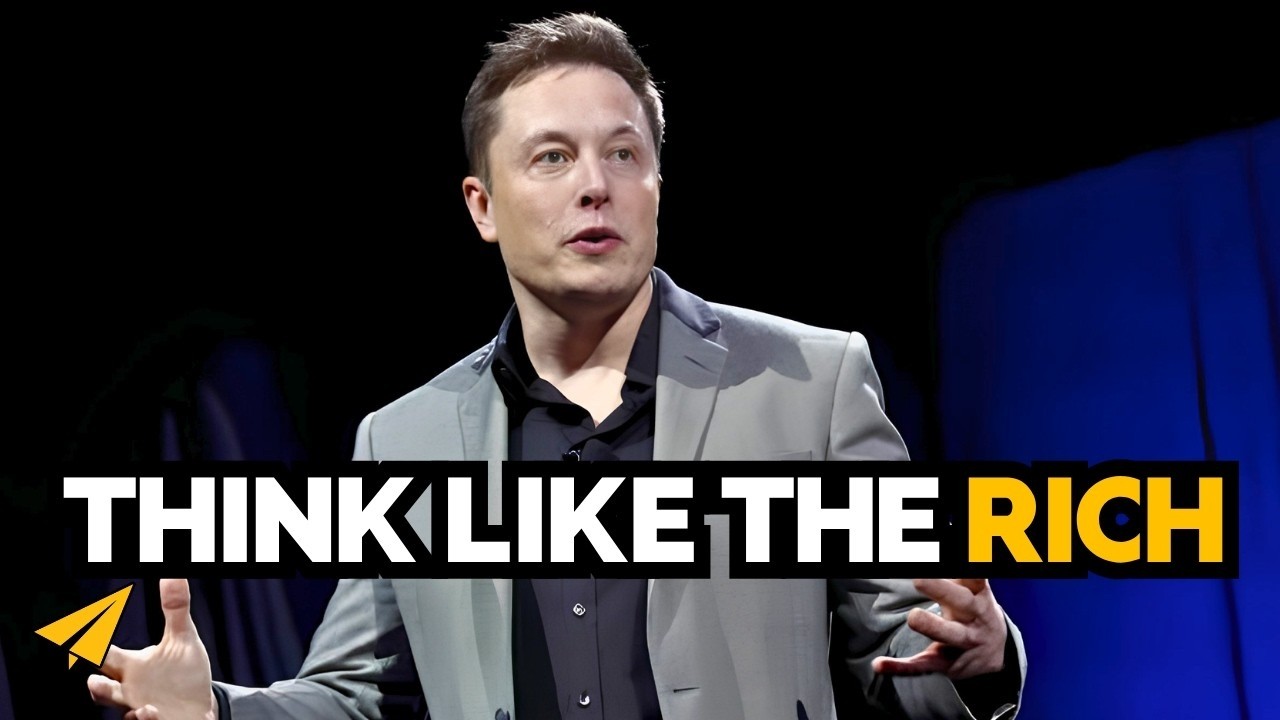
In this three‑hour compilation, Evan Carmichael delivers a marathon of personal‑finance and wealth‑building lessons aimed at parents, entrepreneurs, and anyone who wants to escape the common money traps that keep most people poor. He begins by stressing that parents are ultimately responsible for teaching their children about money, using the Rothschild family as a historic example of how education, not inheritance, creates lasting wealth. He then introduces the core "asset vs. liability" rule, explains how to turn a household into a tiny family bank, and shows how paying children commissions for real work builds a work ethic and financial literacy. The video shifts to a practical toolbox, outlining five high‑income skills for 2024 (AI integration, data analytics, digital marketing, persuasive storytelling, cybersecurity) and ten "money traps" that sabotage wealth. Carmichael follows with ten "laws of money"—responsibility, serving before earning, spending less and investing, multiple income streams, speed, persistence, modeling masters, continuous self‑education, purpose beyond money, and networking. Throughout, he peppers the narrative with stories of Elon Musk, Jeff Bezos, Warren Buffett, Robert Kiyosaki, and his own personal failures and breakthroughs, urging viewers to take immediate, concrete actions such as tracking cash flow, building assets, and adopting a growth mindset. The overall purpose is to equip viewers with a mindset shift, concrete habits, and actionable strategies so they can build wealth from scratch without needing a trust fund.
Chapters
Most people don't have a money problem, they have a money education problem. Colleges are basically for fun and to prove you can do your chores, but they're not for learning. As a general matter, as one piece of specific finance— financial advice, I would say, you know, avoid credit cards. Just forget about them. If you start revolving debt on credit cards, you're going to be paying 18% or 20%, and you can't make progress in your financial life Going around borrowing money at 18 or 20%. You can work hard your entire life, make more money every year, and still never build real wealth if nobody teaches you what to do with it. I buy anything I want, basically, but I can't buy time. And so to have time is the most precious thing you can have. I better be careful with it. There's no way I will be able to buy more time. Saving money is not smart. It used to be smart. It has not been smart for 50 years. And if you wait until you finally make enough without learning how money works, you will spend years making money without ever building any real freedom. So in the next 3 hours, you'll learn the money lessons successful people use to build wealth, make smarter financial decisions, and make their money work for them. If you've been here before, drop a hashtag believe in the comments below so I can feature you here in a future video. And if you're new, welcome to Believe Nation, the only channel that helps you believe in yourself daily, one video at a time. Nobody ever taught you money, and that's why it causes so much stress in your life. Our school systems teach us nothing about money. Nothing. It's pathetic. Money's just numbers in and numbers out, isn't it? See, that's what people get thrown off, I think. I think that's the root of a lot of financial problems for amateurs and professionals. When the Finra Foundation quizzed more than 25,000 American adults on 7 basic money questions, only 27% of them could get 5 of them right. If you want to be rich— forget rich. If you just want to have basic financial security, you have to pay yourself first. There's 3 basic parts to a financial statement: income statement, balance sheet, statement of cash flow. You can teach a monkey that, but our schools don't teach that. Understanding how money works decides what you can say yes to, what you get to walk away from, and how much of your life actually belongs to you. Most of us don't speak the language of finance, and I think that's on purpose. I think people in finance do not want you to know the secrets to wealth because that makes it easier for them to keep it. In 1992, Daymond John was living with his mom in Queens. He didn't have investors, no degree in business. He had $40 to his name. His mother had taught him how to sew, so he spent that $40 on fabric and made a few dozen tie-top hats. I go to the store, get $40 worth of fabric. I come home, I give my mother the stuff to sew the hats, and she says, I'm not sewing this. You're sewing this. I said, oh crap, now I got to work at this? I sew the hats and then all of a sudden, I have all these hats and only one head. So he took them to a street corner and sold every single one of them in a day for $800. That's when I went out and sold those hats outside on that Good Friday, and I sold $800 worth of hats in 1 hour. The hats worked, so he expanded into shirts and jerseys. Then I would start going to the Black Expos where there was like basically a flea market on the road, and I would try to sell shirts there. His mom believed in it enough to mortgage the house they lived in for $100,000, and they turned half the house into a factory. She said, this is all we have. Why don't I go out and I take a loan on the house and, you know, you manufacture, deliver the clothes, and put the money back in? Then he took samples to the Magic Apparel Show in Las Vegas and walked out with $300,000 in orders. I went to the Magic Trade Show, the trade show of the fashion industry, and I wrote $300,000 worth of orders. But here's how that business actually works. The stores don't hand you money at the show. They order, then they pay you 30, 60, 90 days after you deliver. Meanwhile, you buy the fabric upfront and you have to pay the people who were sewing it. So Daymond had $300,000 of orders and nothing coming in for months. The $100,000 from the house went into the fabric and the, and the employees. He got around $75,000 of the orders made, and 4 months later that money was gone and the stores still hadn't paid him yet. So he went to a bank, they said no. He went to another bank, they said no. He went to 27 banks and every single one of them turned him down. I went to 27 banks, I got turned down. The orders kept coming in the whole time until he had about $1 million of them. Sitting there and he couldn't fulfill them. His mother took what was left of their money and put an ad in the newspaper. It said, $1 million in orders need financing. 33 people called. And then mom again comes to the rescue and says, I have an idea. She takes out an ad in the newspaper for, uh, says something like, $1 million in orders need financing. And 33 people call that ad. One of them was a textile division of Samsung. who wanted to test the urban market. One was Samsung's textile division. They agreed to pay to get his orders made, but they had one condition. He had to do $5 million in sales within 3 years. He did $30 million in 3 months. And by 1998, FUBU was doing over $350 million a year in worldwide sales. Orders aren't money. You can have a lot of sales and still have nothing in your bank account. Now, a lot of people think, okay, this doesn't apply to me because I may not have a business or I'm not making enough money yet. For any of this to matter. You're thinking money stuff starts once there's money, but you don't need a business for any of this. If you get paid and you pay bills, you're already making these decisions every month. You're just making them without knowing the rules of money, and it costs you real money. If you're carrying a credit card balance at 20%, that's costing you today whether or not you ever learn about what compound interest is. All progress begins with telling the truth. So here's the truth. You're not bad with money. You were just never taught about it, and you can learn it. So here's how money actually works start to finish. Money is a skill, not a personality. So you've probably said at some point, "I'm just not a numbers person." Only 27% of adults got five of seven basic money questions right. That's not about who's good with numbers; it's about what nobody actually teaches you. So being leads to doing. If you decide you're the person who understands money, you'll start opening the bank app instead of avoiding it. You'll start reading the statements instead of just. You've been waiting until you feel ready to look at your money. It doesn't work that way. It works the other way around. You look at it and then it stops being scary every time. So once a week for 20 minutes, you look at 3 things: what came in, what went out, and what is actually left. That's it. Don't worry yet about budgeting or giant spreadsheets with 400 rows. Just looking on purpose every week until it stops scaring you. And you know when the best time to start is? Right now. How about right now? Open the app while I keep talking. The number in there is the number whether you look at it or not. Looking doesn't cost you anything. Learn your three numbers before anything else. Almost every money disaster comes from mixing up revenue, profit, and cash flow. So revenue is what comes in, profit is what's left over, and mixing those two up is how somebody with a busy business ends up with an empty bank account. The third one is cash flow, and this is about timing, and this is the one that actually kills a lot of businesses. You can run a profitable business and still go broke because the money you're owed arrives later than the bills you have to pay. Let's look at a real example. Let's look. Look at a dance studio. On the year, the business was profitable. Looks great. But I pulled in his last 3 months, month by month. October was negative $5,300. November was positive $2,500. December was negative $900. So across the quarter, he was down $3,700 while believing he was doing fine. His fixed costs were about $20,000 a month before anything else happened. $11,000 of rent, $2,000 of insurance, instructor pay, software, cleaning. So the only question that matters is how much he has to bring in that month to cover it. $20,000 keeps the door open. So he set his target at $25,000, so there's something left at the end. Now he's not guessing anymore. He has a number to target. You have that number too, whether you're running a company or just your household. Add up what has to go out every month no matter what. That's the floor. Once you know that, you know exactly what the month has to bring in. And if that number scares you, that's exactly why you need to know what it is. You can't cut a cost that you've never written down. So put every expense on one page before you decide anything. Then take what's actually in the account and divide that by your monthly floor. So if you got $30,000 sitting there and you need $10,000 a month, You have three months. That's your runway. With runway, you can say no. Without it, you say yes to anything because you need the cash. Somebody with six months of runway can walk away from a bad client. Somebody with three weeks says yes to everything, including the work that's going to make the next three weeks worse for you. If your runway is under three months, that's the number to fix before anything else in this video. Your income problem is usually a price problem. If you want more money and you're an owner, the fastest change isn't cutting your expenses; it's what you charge. And I'll show you my. Own numbers so this isn't just some theory. So my mastermind is $50,000 a year. My growth strategy coaching program is $15,000 for 4 months. If somebody can't do that, we have smaller versions that people can join. I said those in that order on purpose. It's called price anchoring. When the first number somebody hears is $50,000 and the $15,000 sounds reasonable and ones after that sound like a bargain. If I started with the lowest price first, nobody would ever pay me more than that. And when you do raise your price, raise it on the next new client, not the ones you already have. You get the new number without a single Awkward conversation with existing clients. And you don't get paid for the hours, you get paid for the result. Somebody selling 6 coaching sessions is selling time. Somebody selling, I'm going to add $200,000 to your revenue this year, is selling an outcome. And an outcome can be worth 10 times the price of the time. Selling to a smaller number of people at a serious price is also just easier to run. Low-ticket offers at $50 a month needs thousands of customers, a marketing machine, and a support team. That's a real business, but it's a much harder one to build first. Make a list of 50 people. So here's what I'd do if I had to rebuild my income starting Monday with no ads and no audience. I'd write down 50 names, not 5,000 followers, 50 specific people who could each spend $50,000 with me in a year or send me 3 people who will. Real names, real companies, real people who already have the money and a problem that I know how to solve. Then I wouldn't pitch a single one of them. I'd start a show and invite them on as a guest. An invite is the easiest yes in business because you're offering somebody 45 minutes to talk about their own work. You're leading with a give instead of an ask. And after the recording, when the relationship is warm and real, you offer them a second opinion on something they're working on at no cost. You look at it, you tell them the truth, you give them your actual thinking from your expert opinion. And some of those turn into clients. Some send you 3 clients each. One of my clients works with home service businesses doing $10 million or more, where a normal client is worth $40,000 to $100,000 a year, and one platform-level deal is worth $1 million a year. At that size, you don't need 50 wins, you need 2. And if you don't have a business yet, this still works. Write down 50 people who could hire you, who could promote you, or who could hand you the opportunity that changes your entire year. You're not asking any of them for anything upfront. You're making yourself useful to 50 people who could hire you one conversation at a time. Your 50 will look different than mine. Cool. Write it anyway. It's the single highest value document in your business, and it costs you an afternoon of work. Start with 10 names tonight. 10 is enough to tell you whether this list is something that can be real or not, or whether you've been just guessing about who your customer actually is. Pay yourself like an owner. So a job pays you, takes a tax, and hands you what's left over, right? A company earns, pays its costs, and then you choose how the money reaches you. That choice is worth a lot of money. So in Canada, where I am, money left inside a corporation is taxed at roughly 19 to 20%, while a big personal salary can hit at around 50%. So pulling out every dollar the second it comes in is one of the most expensive habits an owner can have. I pay myself a small, steady salary, so I have a clean personal record for things like the mortgage, and the rest stays inside working in the business. There are legitimate costs a business can carry too. If you work from home, a share of the mortgage interest, the utilities, the internet can be a business expense because that's generally where the work happens. It usually gets worked out by space. So if your office is 1 room out of 8, that's about 12% of your house. So about 12% of those bills is a business cost. Keep the receipts. Let your accountant run the actual numbers. Your country's rules are going to be different than mine, and I am not your accountant. So take this to a good one, but go with the right question. Don't walk in asking, how do I just pay less tax? Walk in asking how to structure what you pay yourself. That's now an owner's question and mindset, and it's worth thousands or tens of thousands a year. Buy your time back. Eliminate, automate, delegate. So buying your time back is how you make more money. So do it in this order: eliminate, Automate, delegate. Eliminate first because it's free. So go through your week and find what nobody actually needs. So I used to write up minutes after every mastermind meeting. It took me real time. And one day I realized nobody was reading them, not one person. So I stopped. And what happened? Nothing happened. Nobody cared. You've got something in your week right now that nobody is reading either. So write down everything that you did last week. The parts that nobody would miss are the parts that you cut out. Automate is second. So anything repeatable that follows the same steps every time should be handled by software or AI instead of you and can be done at 11 PM. Delegate last and start much smaller than you think. You can hire somebody for an hour a day. That, that's it. That's how I started. It's cheap enough that it won't hurt you if it goes badly. And it teaches you the real skill. The skill isn't hiring, it's handing work off and then letting somebody do it their way. So do it in that order. You'll want to jump straight to delegate. And then you're paying somebody to do work that you should have deleted, Or should be handed off to automation. And there's a number underneath all of this that you can actually calculate. Take what you want to earn in a year and then divide it by about 2,000 working hours. So if you want $200,000, your time is worth roughly $100 an hour. Now look at what you filled your last week. If you spent 6 hours on something you could hand off for $25 an hour, you spent $600 of your own time to avoid paying $150. So you lost $450 and it felt like you were being strategic and careful. Then make the rest of it boring. So once you're earning money and keeping money, growing it should be the most boring part. For the first 10 years, compounding barely does anything. Then it does almost everything. So take $10,000 growing at 5% a year. After 10 years, it's worth about $16,000. Give it 30 years, it's worth $43,000. The $10,000 earned around $6,000 in its first decade and around $27,000 in the last 20 years. The extra 20 years did that, not a bigger return. That's why waiting is so costly. The last 20 years are where the money actually grows. If you wait to start, those are the years that you're giving up. Put it in an index fund that holds the whole market and just leave it there. You don't have to go and research individual stocks, not because you couldn't learn, but because those hours are hours you're not putting into your own business or career. And that's what actually changes your income. And leaving it all in cash isn't actually safe. Prices in America are roughly 22.5% higher than before 2020. So money sitting still has been losing real value this entire time. One more thing. Compounding works against you too. And it works a lot faster. So credit card rates are sitting around 20% and new card offers are often higher than that. Compounding works on debt as well, and at 20%, it grows faster than any investment you're going to own. There is no investment you're going to find that reliably beats paying off a balance at 20%. So if you have a balance on your credit card, clear it before you invest a dollar. It's the best guaranteed return you'll ever get. You can learn this faster than you think. Nobody taught you any of this and it isn't your fault. What you do now, though, is, is up to you. Daymond John didn't have a finance degree when he took those hats out to that street corner. He learned it the hard way. And the worst of it came after the mortgage money ran out with about $1 million in orders that he just couldn't fill and 27 banks saying no. A bird sitting on a tree isn't afraid of the branch breaking because her trust isn't in the branch, it's in her wings. So if you have the ability, then you have the responsibility and you have the ability. The businesses that actually make people rich are almost never the ones that people brag about at parties. According to the U.S. Small Business Administration, the typical self-employed family in America has a median net worth of $380,000, over 4 times the $90,000 of a family who only works a regular job. So the boring little business that you'd be too embarrassed to tell your friends about could be the exact thing that changes your entire family tree. So let me tell you about a guy named Nick Huber. Nick went to Cornell, one of the best schools in the country. He could have walked into any shiny tech job or startup that he wanted, but instead While he was still in college, he started a business helping students store their stuff over the summer. Not glamorous, just picking up boxes and mini fridges and keeping them safe until fall. That little idea grew into a company called Storage Squad, and in 2020, he sold it for $1.65 million. But this is where it gets really good. He took what he learned and went all in on the most boring business you can imagine, self-storage units. Metal boxes in a parking lot that people rent to hold their junk. And today his company Bolt Storage owns around 1.9 million square feet of storage across 62 locations in 11 states. Nick built a fortune out of the kind of business you'd normally drive past without a glance, and he says it out loud. He started a whole platform called the Sweaty Startup because he believes the Shark Tank and tech world has poisoned people into thinking that you need a genius idea to get rich. You don't. You need a real business that solves a real problem and throws off real cash. The unsexier the better, because nobody wants to compete with you. When everyone else is chasing the same trendy app idea, the field is crowded and it's pretty brutal. But how many of your friends are racing to start a storage facility or a bin cleaning route? None. That empty field, that's where the money is. Your purpose comes from your pain, and Nick's whole message is that the unglamorous grind everyone avoids is exactly where the wealth has been hiding for you the whole Mm-hmm. He could have chased status. He chose cash flow, and cash flow is what ultimately set him free. Now, here's what you might be thinking. Those businesses sound boring, and you didn't dream about cleaning gutters or scooping dog poop when you imagined being successful. And I get it, but that feeling is exactly why these businesses become so profitable. The reason nobody starts them is the reason they pay so well. When a job sounds unglamorous, the competition, it goes away, it vanishes, disappears. The customers can't shop you around, and you get to charge what you're worth. Rich people don't chase what looks impressive. They chase what puts cash in their pocket every single month. And a lot of these you can start for a few hundred dollars on the weekend while you keep your current job if that's your situation. So let go of the idea that your business has to look cool. It has to work. Let me show you exactly what I mean. The boxes and machines that pay you while you sleep. Start with the businesses that basically run themselves once they're set Self-storage, like Nick Huber built, runs at 30 to 45% profit margins with an average occupancy rate of around 92% across the country. People pay every month and mostly forget that they're paying. Then there are laundromats. A guy named Dave Menz bought a beat-up, struggling laundromat on Craigslist for $85,000. Everybody thought he was crazy. Today, his company, Queen City Laundry, runs 4 locations in Cincinnati with 250 machines and brings in well over $1.8 million a year at close to 40% margins. A single machine can make you around $90,000 a year. And then there's vending. Adam Hill started Hill Vending by himself with zero experience in 2014. He now runs over 100 machines across more than 40 locations, pulls in about $700,000 a year, and does it working roughly 2 days a week. 2 days a week. ATM routes are another one worth a serious look. Here you place cash machines in busy shops and bars and you collect a small fee on every withdrawal. A single well-placed machine can bring in $300 to $500 a month for almost no work, and you can start with just a few machines and grow from there. These businesses share one beautiful trait: the machine does the selling. You're not trading every hour for a dollar. You set it up, you service it, and it keeps ringing that register while you're at your kid's soccer game. That's the difference between a job and an asset. And these are the assets you can actually afford to buy. You don't need to invent anything. You just need to own the box, plug it into the spot where people are already spending money, and let it do the work for years. The recurring money routes nobody talks about. The real magic word in business is recurring. That means the customer Customers pay you again and again without you having to sell them again and again. So look for the boring jobs people need done on a schedule forever. Trash bin cleaning is a perfect example. You show up after trash day with a hot water rig and sanitize people's disgusting garbage cans. You can start it for as little as $400 to $800, charge $25 to $35 a month per household, and run 35 to 50% profit margins. One operator running a tight route 35 stops a day can pull in over $1,000 in a single day. Pet waste removal is the same story, just with dog yards. Startup costs under $2,000 for a solo operator. You charge $85 to $150 a month per yard to scoop. And if you do the work yourself, margins run 70 to 80%. There are companies doing millions a year picking up dog poop. Draft beer line cleaning is another one that could be awesome. Every bar has to clean its beer lines every couple of weeks or the beer tastes terrible. So you show up on a schedule and you charge a flat fee per visit, 35 to 50% margins. Junk removal belongs here too. People always have a garage, a basement, an estate full of stuff they need gone, and they pay $150 to $600 a load to just make it disappear. You can start with a truck and a strong back, right? And scale into multiple crews. Add in pressure washing where you blast the grime off driveways and decks and house sidings for a few hundred dollars a job with margins over 50%. And you've got another simple rote business. See the pattern? None of these are one-time jobs. You land the customer once and they pay you month after month, year after year. That's how you build income that shows up even if you don't. The ick factor businesses that print money. So here's a rule that will make you rich. The more disgusting or uncomfortable the job, the fewer people will do it and the more you get to charge. Grave care is a beautiful example. Families move away and can't tend to their loved ones' headstones. And cemeteries only mow the grass. So you clean and maintain grave sites. You can start for $3,000 to $10,000, charge $100 to $300 per cleaning. And because your material cost is almost nothing, margins run 60 to 80%. Luxury restroom trailers are another one. Nobody wants to rent a nasty plastic porta-potty at a wedding. So high-end mobile bathrooms rent for $1,200 to $2,000 per event at 40 to 50% profit margins. A small fleet in a growing city can throw off a quarter million a year in owner's cash flow. Even something as simple as dryer vent cleaning fits here. Clogged dryer vents are a leading cause of house fires. So homeowners and apartment managers pay $100 to $300 for a job that takes under an hour, and margins are north of 60%. Portable toilet rentals for construction sites work the same way. It's not pretty, but every job site needs them. They rent by the month, and one route can throw off serious recurring money. The thing that they all have in common is they make people a little uncomfortable to think about. That discomfort is your profit margin. While everyone else is fighting over the pretty businesses, You get a quiet lane all to yourself where you can charge your premium and barely have any competition. The businesses the law forces customers to buy. Now, this is one of the strongest kind of boring businesses of all, the ones that the law requires. So when a customer is legally required to hire you, you never have to convince them. So take commercial kitchen exhaust hood cleaning. Fire codes force every restaurant, every school, every hospital kitchen to deep clean their exhaust systems on a schedule. Or they get shut down. So you work overnight when the kitchen is closed, charge $500 to $2,000 a job, run 40 to 60% margins. A solo operator with one helper can bring in $10,000 to $30,000 a month. Chimney sweeping is the same. Safety codes call for annual inspections of anything that burns wood. So it's steady repeat business at $120 to $390 a sweep. And it's so reliable that big investors are now buying up chimney companies. That's not a joke. There are private equity firms rolling up chimney sweeps. Commercial fire inspection, backflow testing on water systems, dryer vent cleaning in apartment buildings. All of it is driven by rules that never go away. The customer isn't buying because they want to, they're buying because they have to. And that makes your income about as stable as it gets. So you're not at the mercy of trends or the economy or an algorithm or whatever's popular this year. You're riding on a rule that isn't going anywhere. And rules like these usually get stricter over time, not looser. That means your customer list only grows. Once you become the reliable person a building manager can call, you often keep the account for years and they refer you to every other manager that they know if you do a good job. The skilled trades you can run out of a van. You don't need a storefront as well to get rich. Some of the best boring businesses fit in the back of a van and go straight to the customer's driveway. Asphalt seal coating is a great one. So driveways and parking lots need to be resealed every couple of years. And you can start with a basic setup for under $3,300. Pros charge $100 to $250 an hour, run 40 to 60% margins, and a single parking lot can pay for your whole starter kit. Mobile auto glass paired with mobile sensor calibration is another. When someone cracks a windshield today, replacing it and recalibrating the car's cameras runs $800 to $1,500 a job, and one mobile technician can do $150,000 to $200,000 a year. Mobile car detailing is another easy one. You bring the soap, the water, vacuum right to someone's driveway and hand back a car that looks brand new, charging $150, $300 a vehicle with very little overhead. Even mobile bike repair, fixing bikes in people's driveways can hit 6 figures in year 1 because you skip the expensive shop rent that everyone else is paying. So notice what all these have in common. The customer stays home, you come to them, and that convenience alone lets you charge more than the guy with the fixed location. So the lesson here is pretty simple. A skill plus a van plus a phone number beats a fancy office every time. Your customers don't care where you're based. They care that you show up. That you did the work and you made their problem go away. Deliver that and you'll never run out of people who are willing to pay you. The businesses you can start from your kitchen table. So not every boring business needs a van or a machine. Some of the best ones you can run from a laptop with almost no money down. Virtual bookkeeping is a quiet giant here. Every business on earth needs clean books. Most owners hate doing the books and good bookkeepers are in short supply. You can learn the software, charge businesses a monthly retainer, And stack up recurring clients from your spare room. Accounting firms are so desperate for reliable help that they'll pay a premium for it. Commercial cleaning is another one that you can start lean, just you and a vacuum cleaning offices at night when everyone else has gone home. Small operators run at healthy margins doing $50,000 to $60,000 a month before they even hire a team. And here's one that's built for right now, in-home senior tech support. Older people are getting left behind by phones and apps and passwords, and their families live too far away to help. You go to their home, you patiently set things up for them, you answer their questions and teach them, charging around $75 an hour. You can start it for under $1,000. The point is, if you've got a skill and a little bit of patience, you can begin with almost no money at all. The one thing you truly need is just your first customer. Land one, do incredible work, ask them who else they know, and let that snowball effect carry you. How the smart ones turn boring into a future. So here's the final piece, and it's how the truly wealthy play the game. It's not enough to run one boring business. The real money comes from owning them and then combining them. So a single small business like an accounting firm or a chimney company might sell for around 5 to 7 times its yearly profit. But if you buy up 30 or 40 of them, put them under one name, one back office, one system, the whole bundle can sell for 13 times profit or more. Same businesses, but worth almost double just because you organize them together. Big investors will pay a premium because they'd rather write one big check than chase 40 of these small ones. And that gap, buying at 6 times profit and selling at 13 times, Is where generational wealth gets made. And it's happening right now in the most boring industries you can name: plumbing, HVAC, uh, pest control, uh, landscaping, chimney sweeps. So think bigger than a job that you own. Start one boring business, get it running without you, then buy or start another and another. And each one is a building block. Being leads to doing here. So the day you start thinking like an owner instead of an operator is the day that the whole game starts to change for you. You don't have to do all of this at once. You just have to start with one, prove that it works, and let it teach you the rest. That's a great start, and it's within reach for you starting this week. Your unfair advantage. So the businesses I just walked you through, they're not going to impress anybody at a dinner partner. That's the point. While everyone else is chasing the shiny new idea, you can steadily build real cash flow with your laundromat, your van, or route that nobody else You don't need to be a genius. You just need to be willing to do the boring but valuable work that other people are too proud to do. Ready isn't real, so don't wait around to feel ready. Pick one, start small today, and let it grow. You will never build real freedom from a salary alone. You're not going to get rich renting out your time. You must own equity, a piece of a business, to gain your financial freedom. Profits are better. Wages make you a living, which is fine. Profits make you a fortune, which is super fine. Gallup found that only 31% of American workers are actually engaged at their jobs, the lowest level in over a decade. This is about more than money. It's about whether you spend your one life building a machine that pays you or renting out your best hours to build a machine for someone else. Let me tell you about a man who figured this out as a teenager. Teenager with almost no money in his pocket. His name was Fred DeLuca. Back in 1965, Fred was just 17 years old and stressed about how he was going to pay for college. He wanted to become a doctor, but the money wasn't there. He didn't have it. So at a backyard barbecue, a family friend named Pete handed him an idea and a $1,000 loan: open a sandwich shop. That summer, Fred opened one tiny sandwich shop in Bridgeport, Connecticut. It was not glamorous And that first shop barely made any money. But Fred didn't want to just run a sandwich shop for the rest of his life. He wanted to understand the system behind it so he could repeat it. He got obsessed with the process— how to make the sandwich fast, how to run the store lean, how to teach a total stranger to do it exactly the same way he did. And once he had a system that actually worked, he did something incredible. He didn't open store number 2 by himself. He taught other people to run his system and let them open the stores so the whole thing could grow without Fred standing behind every single counter. That one idea, turning a shop into a repeatable system other people could run, grew Subway into more than 40,000 locations around the world. Fred DeLuca started with a $1,000 loan and one little store and built a machine that paid him whether or not he ever made another Another sandwich himself. He didn't get rich from a salary or from working more hours than everyone else. He got rich by building a system that other people could run and then owning it. Now you might be thinking, okay, that's great for Fred DeLuca, but you can't exactly go build a 40,000-store empire from your kitchen table. You've got a schedule, a boss, a job. So how does any of this help you on a random Tuesday morning? The system isn't about a fast food chain. A system is just any repeatable way of producing income that doesn't depend on you showing up every hour to trade your time for money. It can be small, it can start on the side. At night with almost no money. The point isn't to build a 40,000-store empire tomorrow. The point is to stop thinking like someone who only earns when they clock in and start thinking like someone who's building something on the side that earns on its own. So you don't need permission to do this. You don't need to feel ready. Let me show you exactly how to start thinking in systems instead of salaries. Be a killer at one thing before you chase 10. So I need to warn you about something because the internet is full of bad advice on this. You've probably heard that rich people have 7 streams of income. So you go and try to create all 7 things at once. A little store here, some crypto there, a bit of dropshipping, a side gig, and you spread yourself so thin that every single one of them stays small. That's the fastest way to burn out and end up with nothing. Here's what actually works. The path to real wealth, especially in the beginning, is not using multiple streams. It's being an absolute killer at one thing. Pick one skill, one business, one problem that you can solve better than almost anyone else and pour everything into it until it's genuinely great. Depth beats scatter every single time. When you try a bunch of things that you don't understand and you do them all badly, the market can smell it and you won't make any money. Fred DeLuca didn't run 7 different kinds of businesses. He ran one sandwich shop and he became obsessed with getting that single system perfect. The exact way to build a sandwich, how fast the line moved, how to train a brand new person to do it the same way every time. He drilled that one thing until it was flawless, and only then did he multiply. That's the order that works. Master one thing, then systemize it, then scale it. The multiple streams comes later, and when they come, they'll mostly flow out of that one thing that you mastered first. So stop trying to do 10 mediocre things at once. Build one boat that actually floats and make it the best boat on the water. Here's a simple test to find your one thing. What can you do that people already come to you for? What do your friends ask you for help with? What could you happily work on at 11 at night and not notice the time? That intersection, the thing that you're good at and drawn to, and that other people will pay you for is where you start to plant your flag. Then commit to it for real, not just for one weekend. Give it a year of full focus before you ever think about starting the second thing. Almost everyone quits their one thing right before it was about to work, and they jump to a new shiny idea and start the clock over again from zero. Don't restart the clock. Stack your years on one thing and let it compound. Turn yourself into a system, then step out of it. So right now, if you own a small business or you're self-employed, there's a good chance that you don't really own a business. You own a job that you can never quit because the whole thing lives inside, you know, right here, lives inside your head and stops the second that you stop. That's not freedom, that you've just built yourself a job. You have your own form of prison. The fix is to turn what you do into a system that exists outside of you. So you start by writing down every single thing that you do to make money step by Step, like you're writing instructions for a complete stranger. How do you find a customer? How do you talk to them? How do you actually deliver the work? How do you get paid? It's boring, but it's powerful because the moment that it's written down, it stops being just you and it starts becoming a process. And a process can be taught, it can be improved, can be handed off to somebody else, can be repeated without you. This is exactly what Fred DeLuca did with Subway. He didn't just hope that each new shop would turn out okay, right? He built a simple repeatable system for making the sandwich and running the store so that someone Brand new could open a location and get the same result that he got in his first one. He removed himself from the outcome by building a system that carried the standard for him through every store. You can do the same thing just at your scale, right? Once the process is on paper, you could train someone to run a part of it, then another part. Every piece that you successfully hand off buys you back a little bit more of your time and your life. The goal that you're aiming at is simple, and it's. It's, I think, pretty huge. Build the thing so well that it can run without you because a business that can run without you is an asset and a business that can't is just an extra stressful job that has your name on it, right? So start with the task that you do most often, the one that eats your biggest chunk of your week. Write down exactly how you do it, every step, and then the next time it comes up, follow your own instructions and fix anything that's unclear. Do that a few times and you'll have an actual playbook. Not just some idea that lives in your head. Then find the one task that you hate most or waste the best hours, and make that the first thing you train someone else to handle using your playbook. You don't have to hire a full-time employee to start; it can be a few hours a week from one person. What matters is that you prove to yourself the work can happen without your hands on everything. Once you feel it for the first time, you get hooked because you just watched your income keep moving while you stepped a little bit away, and that feeling is the whole point of building. Stop being an employee of your own money. This one is more of a mindset shift, and it just starts to change how you see the, the whole game. You stop thinking like a person who gets a paycheck and you start thinking like a corporation, like an owner. A worker earns money, pays taxes on all of it, and spends whatever's left over. A smart business does it in the exact opposite order. It earns, it keeps the money working inside the system, and it reinvests to grow. And is built to be efficient with what it owes. The difference repeated for years becomes the difference between just running on a treadmill constantly and actually, you know, climbing the staircase towards success. You don't need to be huge to start thinking this way. When your one thing starts making real money, get proper advice about setting it up the right way so more of what you earn stays inside your system doing work instead of leaking out to somebody else. A business that's structured well can pay for the tools that it uses, The space that it needs, the help that it hires, all before the tax ever gets counted. Well, an employee pays for every one of those things with money that's already been taxed. That's not some loophole. That's the entire way that the system's been designed to help people who build and own instead of the ones who just earn and spend. So keep money working in the business to buy tools and assets and help that make you more money. Pay yourself in a smart, planned way instead of grabbing every dollar that comes a second it lands, because every dollar that you leave working in the business, in the machine, is helping build the machine and the business bigger. The rich don't treat their income like it's just this paycheck that they can go off and spend. They treat it like it's food for the machine, and they keep feeding that machine until it's strong enough to feed them for the rest of their lives. Own the thing that does the earning. So a salary pays you for showing up and doing the work. An asset pays you for existing. The whole leap from thinking in salaries to thinking in systems comes down to just one idea. Stop only selling your time and start owning things that produce income on their own. So if we go back and think about what Fred DeLuca really owned, it wasn't one sandwich shop that needed him to be behind the counter. He owned the system and the brand behind tens of thousands of shops, and that system paid him a piece of every store in every city, whether he showed up or not. The person running one shop earned from the hours that they put in. Fred earned from the entire network all day long, everywhere at the same time. He owned the thing that did the earning, not a job inside of the thing. You wanna build your life the same way at whatever size that you're at right now. Own a piece of the business, not just a spot on his payroll. When you help a company grow, ask for a slice of it instead of a flat fee so you keep getting paid long after the work is actually done. Package your skills into a product that sells while you sleep instead of only trading your time for money. Put your surplus into assets that send you money back month after month, long after you did the work to buy them. Every dollar you move from your hands into the machine, into an engine, is a dollar that never has to be earned by hand again. Every one of those moves does the same thing for you. It separates your income from the hours. The employee is stuck in this simple, brutal equation. No hours, no money. Get sick, no money. Take a vacation, no money. The owner breaks that equation on purpose so that the earning keeps happening even when they're at their kid's game or vacation or sleeping. That's what it really means to think in systems instead of salaries. You build or buy the engine and the engine keeps working for you. And you don't have to own something enormous for this to completely change your life. Owning even one small income-producing thing starts to change how you see the whole world. The first time money shows up in your account from something that you build rather than an hour of you trading your time, something changes. You stop asking, how many hours can I sell? And start asking, how many engines can I build? And that question asked over and over for years becomes the whole difference between a person who retires exhausted and a person who is genuinely free. So start with one small engine, then continue to build. Use leverage so the machine outlives your energy. This advice allows the system to grow far past what you could ever do on your own. Leverage. Leverage just means you're using something other than your own raw effort and money to get the work done. So there are 3 kinds that you can start using right now. no matter how small you are. The first is other people. So you'll never scale by being the only worker in your business. The moment you can, you hand off tasks that don't need you so your time goes to the things that actually move the needle forward. The second system is tools. A good piece of software, AI, simple automated process can do the work of several people all day without lunch break or days off. And the third is other people's attention and audiences. So partnering with someone who already has the customers you want can grow you faster than years of just grinding by yourself. It's actually what saved my first company. When I was dead broke and about to quit, I was making $300 a month and staring at giving up. And what saved me was I stopped trying to do everything myself and started building partnerships instead, borrowing other people's reach instead of trying to build everything by myself from scratch. One of those partnerships led straight to my first deal, a great deal for me at the time, and that one deal kept the whole dream alive. I didn't outwork my problem; I just created leverage towards solving it. Leverage is how a system keeps producing even when your personal energy might run out because your energy always runs out eventually. So you're one person with 24 hours. A machine built on leverage doesn't get tired, it doesn't sleep, doesn't cap out at a number of hours in your day. And if you have the ability to build something that serves people while you rest, then I think you have the responsibility to go and build it. If you can, then you must. So don't wait for permission. Don't wait to feel ready. And you know when the best time to start is? Right now. How about right now? You were built to own not just a clock, You were never meant to spend your whole life renting out your hours. So start with one thing, make it great, turn it into a system, own the engine, and use leverage to let it grow beyond you. Being leads to doing. So decide today that you are a builder of systems and let the action follow. Your purpose comes from your pain, and every frustrating hour that you have traded for a paycheck can become a fire inside you that builds something that finally pays you back. The money decisions you make in your first 90 days will decide whether you still have a business in 5 years. The SBA's Office of Advocacy puts the first 5-year survival rate for new business at 49.2% and the 10-year rate at 33.9%. You're going to end up in one of those 2 numbers, and the money decisions you make in your first year are what put you there. In the 1980s, Patagonia was the business that everybody wanted. Yvon Chouinard's company was compounding 30 to 50% a year. The clothes sold themselves. The culture was famous. Yvon was a climber who started by making pitons out of a chicken coop in Burbank, and now he was running one of the most admired brands in America. So he did what a business does when the line goes up— he planned for another huge year. Patagonia loaded up on inventory, expanded the staff, and leaned on a bank line of credit to carry All of it. Then 1991 arrived. The recession hit, sales went flat, and the profit went down a cliff. All that inventory had to be dumped below cost, and the bank, looking at a company that had bet everything on growth that stopped, clamped down on the credit line. On a day the company still calls Black Wednesday in July of 1991, Patagonia laid off 120 people. That was about 20% of everybody who worked there. Yvon had to look at people who'd built the place with him and tell them that there He later said the company had been on a suicide course. This is the most important part here. Patagonia wasn't a bad business. The products were great. The customers loved them. The brand became iconic. The finance was the problem. They funded fast growth with borrowed money and inventory. And when one quarter went sideways, the borrowed money is what nearly finished them. So Yvon rebuilt the company around the growth rate it could actually pay for out of its own pocket. And Patagonia is still here 35 years later. Later because of that decision. Now you might be thinking, okay, Evan, I mean, I don't have inventory and I don't have a bank line. I've got a laptop and an idea for a business. This doesn't apply to me. And I'd say it applies to you more because you have less room to be wrong. Patagonia had a decade of profit banked before it got into trouble. You have your savings and some patience, and both of those can run out faster than you think. This pattern with finances repeats at every size. A company with 500 employees and the person with a Both die the same way on the same day of the month for the same reason. The only difference is how big it is when it happens. Every business that dies dies usually for the same reason: it runs out of money before it figures itself out. Everything else is just the story that people tell afterwards: bad idea, bad market, bad timing, bad partner. Underneath all of them is a bank balance that hits zero on a Tuesday. So I'm going to give you the money rules I'd want somebody to sit me down and explain before I had started. Not accounting, not spreadsheets, the decisions that decide whether you're still standing in year 5. Rule number 1, your first 90 days belong to one paying customer. Everything you want to spend money on right now is a way of avoiding the thing that's actually hard. You wanna do the logo, the website, the business cards, the LLC, the branded notebook, the studio. All of it feels really productive, right? You're starting the business the day someone hands you money and Not one day before. So for the first 90 days, the rule is pretty simple. Talk to people and get a customer. That's the job. You can spend $70,000 on beautiful thought leadership content and finish the year with $0 in sales if there's no path from that content to a transaction. And people do this every single year. I've seen entrepreneurs drop $1 million on a studio before they ever pressed record. Now, some of them can afford it, and awesome, good for them. But if you're starting from zero, Copying a billionaire's opening move is how you go broke in 8 months with beautiful lighting on you. CB Insights went back through hundreds of startups postmortem and found that 38% of them died because they just ran out of cash, not because the product was wrong, because the money ran out while they were still figuring the product out. So here's your actual first 90-day budget, whatever it costs to reach humans and nothing else, right? A phone, a calendar link, a way to take money. Maybe $200 in software. Then you go have 100 conversations, not 100 posts, conversations. If 100 real conversations with your ideal customers produce zero sales, you just save yourself $70,000 in a year of your life and you learn something that no branding agency could have told you. Rule number 2, start at the top of the market and work your way down. So everybody starts cheap because cheap feels safe, but it's actually the most expensive decision that you make. So look at how Tesla did it. They opened in 2008 with the Roadster. That was a $109,000 sports car. Built for people who could write that check without flinching. Those buyers funded the engineering, the factory, the supply chain. Then came the Model S, then the Model 3 at around $35,000 for everybody else. High end first, then down the ladder with the rich customers paying for the learning curve. So do the same thing at your scale. If you're a consultant, don't launch a $49 course. Launch a $5,000 done-with-you engagement with 3 clients. You'll learn more in 90 days serving 3 people closely than you'd learn in 2 years selling 400 people a video library. And you'll actually have money coming in while you learn. And there's a second reason why this works. And it has nothing to do with just the money. 3 clients paying $5,000 will tell you the truth. They'll call you, they'll complain to you, they'll tell you exactly where your service is breaking because they've got real money on the table. 400 people who paid $49 will just stop opening your emails and you'll never find out why. Now let's look at the math. To make $10,000 a month at $50 a customer, you need 200 customers. 200 support emails, 200 chances to get a refund request. At $5,000, you need 2. You already know 2 people who might say yes. You don't know 200. Rule number 3, put a bigger number next to your number. Price is a comparison. So nobody knows what $15,000 means just on its own in a vacuum. They only know what it means next to something else. So I run my own business this way. My top offer is a $50,000 YouTube mastermind. Underneath that sits a $15,000 Growth Strategist package. When you see the $50,000 first, the $15,000 stops sounding expensive and starts sounding like a, a smart choice. That's not manipulation. Both are real, both deliver, both have lots of value, but, and plenty of people choose the $50,000 mastermind, but the $50K makes the $15K easier to say yes to. So build 3 tiers, a premium one that you genuinely wanna sell, a middle one where you expect people to land, and an entry point that can get somebody in the door. Always show the expensive one first. Now, one warning on the entry tier, keep it small and keep it simple because a cheap product with heavy delivery is the worst business on earth. A $650 a year service that takes 40 hours to deliver is not a business. It's a hobby with a lot of paperwork. If your low tier can't be delivered without you, then it doesn't belong on the menu. And understand what you're really selling at any price. What they're buying is confidence in a result. If you can't explain your price without without, you know, your voice going up at the end, they won't be confident that you'll deliver because you just told them that you aren't confident. Rule number 4, charge for the result you deliver. So the hour is the worst unit you could possibly sell because it caps your income, right? It punishes you for getting faster and it invites your clients to compare you against anyone else who is billing by the hour. I coach a therapist who was once doing life-changing work with kids and charging $250 an He was terrified to raise it. I told him, go to $400 and to start with the clients he liked the least. So the downside was small. He did. Nobody blinked. Not one person left. That's the pattern almost every time. The price just lives in your head far more than it lives in your customer's head. So ask what the outcome is worth to them. If you save a business owner 10 hours a week, that's 500 hours a year. If their time is worth $200 an hour, you just handed them $100 grand in value. So charging $2,000 a month for that is not expensive. It's not. It's a, it's a deal. It's a bargain. It's a rounding error in what they're getting. So run the test that he ran. Take your next 3 prospects and quote 40% more than you charge today. Not your existing clients, your next 3. If all 3 say yes, you were too cheap and you just found out for free. If one says no, then you're probably priced right. If all 3 say no, you've learned something real about your market in a week instead of guessing about it for a year. Rule number 5, pull your money forward. You can be a profitable business and still go bankrupt. bankrupt. And people don't understand that at the beginning, and it's killed more companies than bad products have. It happens when your expenses come faster than your payments do, right? So, uh, if we walk through an example, right, a dance studio nets about $100,000 a year. On paper, that could be a healthy business, and the owner feels great about it, but the money doesn't arrive in 12 equal pieces. Maybe October is $5,300 in the red because the annual insurance premium lands in October And December runs another $900 negative because enrollment maybe drops over the holidays. The year is fine, but 2 months out of it are not. And you only need one of those months to catch you with an empty bank account that crushes your business. Then September comes in and is strong and the owner wants a $15,000 speaker system, right? That one purchase made in the best month is what runs the business out of money by December. So profit is— you want to look at it on the year, but cash is a factor. In fact, like right now today, you can be right about the year and still be unable to make payroll on the 15th of the month. And that's the one that ends you. So here's the rule. Pull your money forward and push the expenses back. Sell an annual instead of a monthly, or offer a discount for paying quarterly or upfront. Get a deposit before you start work, not after you finish. And before you spend a dollar of a great month, map out your next 12 months on one page with every lumpy expense you might have on there, right? So think insurance, taxes. Uh, software renewals, the slow season, cover those first. Then you can spend what's left over and only what's left over. And separate your money physically because willpower loses, right, to the bank account. So run 3 accounts: an operating, tax, and profit. Every time money comes in, move the tax portion out of the same day and never look at it again. The number in your operating account then is the only number you get to spend, and it's finally telling you the truth of what you have. Rule number 6, keep your equity. I worked in venture capital, so let me save you some time. Do not go raise money for this. Somebody with an idea and no revenue goes looking for $50K and the investor takes half the company because at that stage you're pure risk and they're pricing it honestly. Now you own 50% of something that you have to spend the next 8 years building, and the day it gets hard, you look at that number and lose your motivation. That's the actual danger, and it has nothing to do with just numbers on a spreadsheet. There's a second cost too that people don't often warn you about. Raising money becomes a full-time job. You'll spend 6 months building a deck, taking meetings, following up with people who were never gonna say yes anyway. And every one of those hours was an hour that you weren't building your business and selling. Businesses die that way while looking extremely busy. Only take outside money under one condition. You already have a machine that works where every dollar in reliably produces several dollars out, and you just wanna run it hard. If you don't plan to go public or get acquired, finance the whole thing out of your own sales. Your customers are the best investors you'll ever have, and they never ask for board seats. Now, there's a version of funding that doesn't cost you anything, and almost nobody uses it: your customers. A presale, a deposit, a founding member price for the first 10 people who'll pay before the thing exists—that's capital in with no interest, no equity, no board seats, no meetings. And it proves the demand is real for your thing before you build it, which is the one thing that no investor check can do for you. Rule number 7: Hire late and hire green. Payroll is the fastest way to turn a flexible business into a really scary one. Every hire converts variable cost into fixed cost, and fixed costs are what turn a slow quarter into an emergency. Go back to Patagonia in 1991. Hire when you're genuinely bottlenecked by low-dollar work. That's blocking you from selling, not when you're tired, not when, uh, you'd feel more legitimate if you have a team. When you do hire, think about green over pedigree. Young and hungry beats a 20-year veteran in a field that's changed 3 times in the last 5 years because you can teach skills, but you can't untrain habits. And run a real process. Write a long, messy job post and bury one specific instruction in the middle of it. Something like having your favorite entrepreneur in the first line of the message. Anybody who misses it is out, eliminated, because you just tested attention to detail for free. Then pay your shortlist for a small trial project, up to 5 hours of real work. Pay everyone, even the ones who don't make it. You'll learn from those 5 hours paid than from 5 interviews, and you'll find the person who catches a mistake that you didn't. I know what a bad hierarchy costs you because it's never just the money. It's not just a salary. It's a salary, but plus 3 years spent training them, plus the work that didn't get done, plus the customers who had a bad experience, plus The 6 weeks it takes to hire again on a $60,000 role, that's easily a 6-figure mistake. So hiring slowly isn't cheap. It's the only version of this that you can't afford to get wrong. Now, one last thing. If you hate managing people, don't build a team that needs 50 people. That's useful information, so use it. Build a version of this that actually fits the life that you want to live. Start before you're ready. You don't need a perfect model at the beginning. You need a customer, a price you can say out loud confidently, and enough cash to still be here in 12 months. So don't wait for permission. Don't wait to feel ready because ready shows up after you start and never once before. The paper airplane here, right on my logo, isn't supposed to break the sound barrier either. And doing the impossible is exactly why you're here. This is the first moment in history where one person with a laptop can outearn an entire company. AI is real and it is going to change every industry. Generative AI is on track to add up to $4.4 trillion a year to the global economy, according to McKinsey. And that number is a window into the biggest wealth shift of your lifetime. The ability to use these tools is both fun and empowering. And the people who step through it in the next 12 months are going to look back on this year as the year that everything changed for them. Let me tell you about a guy named Tony Dinh. He was a software engineer with a safe 6-figure job at a big tech company. Good money, good title, the kind of job you're supposed to feel lucky to have. But he wanted to build his own thing, and so he walked away from it and started shipping 90 products that he built on his own, building in public where the whole internet could watch him either win or fall on his face. Then the AI wave hit, and he built a tool called Typing Mind. It's a faster, cleaner, more powerful way to use AI chat with a better interface and extra features that the heavy users really love. One specific problem with one clean solution. And here's the best part: he runs the entire business completely alone. No employees, no office, no team, just him and a laptop, often working while he travels the world. And that one tool pulls in over $130,000 a month. He posts his exact numbers in public. So it's not just a rumor, you can go and check for yourself. He didn't raise millions from different investors. He didn't hire 50 people. He found one expensive problem, pointed AI at it, and let the technology do most of the heavy lifting that he used to then build his whole company. That is the AI business model that is making Making millionaires right now. One person, one specific problem, AI doing the work of an entire team. Now here's where your brain often goes and tries to fight. You're thinking, that's great, but Tony, he's a coder. I'm not technical. I can't build a tool like that. I wouldn't even know where to start. And this is where we got to relax because we need to shift the thinking. The model is not about coding. Tony built a product, but the exact same model works as a service, and the service version doesn't need you to write a single line of code. You bring the relationships and you bring your judgment. AI does the work. You can deliver the work that used to take a whole agency for a handful of clients and keep the money because you don't have the team to pay. The tools have gotten so good that the only thing standing between you and this is a decision just to start. So let me show you exactly how it works step by step. Step 1, pick one specific expensive problem. The biggest mistake people make is trying to help everybody with everything. They want to be a general AI consultant who does a little of this and a little of That, that never works. The money is in being laser specific. So Tony Dinh didn't build a tool that does 100 different things. He built one tool that solves one problem really well, making AI chat faster and easier for the people who live in it all day long. That's it. One specific painful problem that people pay real money already to solve. So your job is to find your version of that. Pick one type of person and one expensive headache that they might have right now. Maybe it's a small law firm when they need their client intake handled. Maybe it's a real estate agent need their listings written up and their follow-up emails sent off. Maybe it's local restaurants that need their social media run, right? The keyword is expensive. You want a problem where people are already spending money because that means demand is already proven. You're not creating a brand new market, you're entering one that already exists and doing it faster and cheaper with AI. So here's a quick test to find your problem. Look at what businesses around you are already hiring people to do that is boring, that is repetitive, and that is time consuming. Writing product descriptions, answering the same customer questions over and over, editing videos, building simple reports, following up with leads. Every one of those is a task that AI can now do in a fraction of the time. And every one of those is something a business is already paying real money for. That is the opening for you. The line between what you do and who you serve has to be completely straight. When you try to serve everyone, you connect with no one. When you go all in on one specific person with one specific problem, then you become the obvious choice to work with. So before you go do anything else, get super clear on this. Who do you help and what's one expensive problem you do solve for them? Write it down in one sentence. If you can't say it in one sentence, you're still too broad. Keep narrowing down until it's sharp. Step 2, start high, not cheap. This is where so many entrepreneurs sabotage themselves. They think the way to start is to sell something cheap, a $20 ebook, a $50 mini course, a small digital download. And I'm telling you, that's the slow road to go to nowhere, right? When you sell cheap stuff, you need thousands and thousands of customers just to make a living. And finding thousands of customers takes a massive, expensive marketing machine that you don't have yet. So just switch the math, go high ticket from day one. So let's look at how easy the numbers can get. So imagine you charge $2,000 a month to deliver an AI-powered service. You only need 4 clients to hit $96,000 a year. 4 clients. You can manage 4 clients from your kitchen table. Now picture 8 clients, and now you're nearly at $200,000 a year, still working alone. That's the power of starting high. A small number of clients who pay real money is 100 times easier to manage than a huge crowd of people who are paying you pennies. And high ticket does something else for you. People actually take it more seriously. When someone pays you $2,000 a month, month. They show up, they do the work, they get results, and they refer their friends. So don't be scared to charge what the work is worth. The AI does a lot of the heavy lifting on delivery, which means your margins are huge. You're not paying a team, you keep almost everything. But there's also one more reason why high ticket wins. With a small number of clients, you can give each one an incredible experience. You know their names, their businesses, their goals, you answer quickly, you overdeliver. That kind of care is impossible when you're just drowning in thousands of low-paying customers. And it's exactly what turns a client into somebody who stays for years and sends you everyone they know. So start high, serve a few people incredibly well, and let that fund everything you build next. Step number 3, let AI do the work a team used to do. So this is the engine that makes the whole thing run. The reason one person can now do what used to take 20 people is that AI handles most of the actual labor. So your job is to build a simple system where the machine does the repetitive work and you do the thinking. Run everything through 3 filters. First, eliminate. Look at your day and cut anything that actually doesn't move the needle forward. I used to write detailed notes for a group of mine that I later found out nobody ever read, so I cut it out completely. Be honest about what's just busywork. Second, automate. Anything repetitive, give it to AI. Turning a single long-form video into 20 short clips, transcribing every call so that you never lose an idea. Drafting your outreach messages, writing your first drafts of your client work, organizing your research. AI can do all of that in minutes. Third, delegate. For a few things AI can't do and shouldn't do, you get help. You can hire a part-time assistant for 5 to 10 hours a week to start so you learn to lead without the weight of having a full-time salary. When you stack these 3 things together, something pretty wild happens. You start delivering professional-level work at a speed that looks impossible for your clients. They think you have a whole team behind you and it's just you and your AI. Now let's look a simple client. So say you land a client who needs 30 social media posts a month, a weekly newsletter, and all of their customer emails answered. A few years ago, that's 3 completely different hires. Today, you sit down with AI, you feed it their brain and their voice, and you generate first drafts of it all in an afternoon. You spend the rest of your time editing, adding a human touch, your taste, and making sure that it's excellent and you're proud of. The client sees agency-level output. Your actual cost is a few dollars in AI and a couple hours of your undivided attention. And the gap here between what you can deliver and what you have to pay is where the millionaires are being made right now. Step 4, build relationships, not an audience. So a lot of people think that you need to go viral first, right? You think you need a million followers before you can make money. So you spend a year chasing views and end up broke and burned out. You don't need a giant audience for this model to work. You just need the right relationship. So let me give you a model that I teach my Movement Maker clients. Make a list of 50 people who could each be worth 6 or 7 figures to your business, not customers, connectors, people who already have the audience or the network that you really want to reach. I call it the Money 50 list. Then instead of asking them for anything, you give first, invite them to be a guest on a simple show or podcast that you run. You record the conversation. You make them look great and you build a real relationship. I've had clients build 7-figure businesses off of a channel with fewer than 50 targeted subscribers because they owned the relationships that mattered instead of chasing strangers and just views. And the give-first move works because it changes your whole relationship dynamic. Everyone else is sliding into people's DMs and inboxes asking for their time, their money, their attention, a favor. You show up offering to make them look good. And put a light on their story. You're the only one giving instead of taking at the start, and that makes it different and unforgettable for them. I had a client who did a version of this by simply offering free coaching on Instagram Live just to show off what he knew. And in 2 weeks, he went from signing up 2 people to 55 in his high-ticket program and scaled past $1 million in just a few months. He didn't have a huge following. He led with value and just let the right people come to him. So stop obsessing about your follower Picked a handful of people who can change your business, serve them, connect with them, and watch what happens. Quality relationships beats a giant audience every single time. Step number 5, stay lean on purpose. Here's something that nobody actually talks about. The goal is not to build the biggest company. The goal is to keep the most money and the most freedom. So when you grow a giant team, you create a giant set of problems as well, right? Payroll management, drama, overhead. The whole magic of this AI model is that you can make a fortune while staying small. That's the freedom of this model. You get to design a business around the life you actually want. You don't need a fancy office, you don't need a perfect website, you don't need a finished logo or a big brand to begin. Multi-million dollar businesses have been launched with none of that. What you need is one clear offer, AI doing a ton of the work, and a few great clients. Keep your costs near zero, keep your team tiny or non-existent, and let the technology be your Lean is not the limitation here. Lean is your entire advantage. Think about what that actually buys you: no two investors to answer to, no staff meetings, no rent, no payroll deadline hanging over your head every two weeks. When your costs are nearly nothing, you can survive a slow month. You can take a real risk. You can survive a client who says no or is not a fit for you anymore because you're not desperate to cover this giant overhead. That freedom is its own. Own special kind of wealth, and it's only possible because AI lets one person carry the load that used to need an entire team of employees. The smaller the machine is that you build, the more money you get to keep at the end of the day. Step 6, start before you're ready. Now this is the one that actually decides who wins. You can know all of these 5 steps above and still do nothing because you're waiting, waiting to learn more, waiting for the perfect idea, waiting until you feel qualified. And while you wait, someone less talented than you is starting Messy and figuring it out as they go. Tony Din didn't wait until everything was perfect. He left a safe, high-paying job and started shipping small products in public one after another, learning from each one as he went. He didn't get it right on the first try. He kept going and getting it going is what eventually got it right. So here's, here's your assignment this week, not someday, this week. Pick your one problem, write down your one offer, and have one real conversation with one person who might pay you for it. That's the whole start. Not a website, not a logo, not a business plan, not more research. One offer and one conversation. The AI tools are sitting there right now, more powerful than anything a billion-dollar company had even just a few years ago. And they're free or nearly free, free to use today. The only thing missing is deciding to move. The window where this is wide open and uncrowded is right now. A year from now, a lot more people would have figured all of this The advantage belongs to the person who starts before it's obvious, and that person can be you. So the door's open right now and it will not stay open forever. The people who win this won't be the ones with the most money or the best degree. They'll be the ones who actually started while everyone else was sitting around wondering if it was real. Pick one expensive problem, charge real money to solve it. Let AI do the work of the team, build a few key relationships and stay lean. You do not need permission and you do not need to feel ready because ready isn't real. You just need to start today. Today, right where you are and with what you have. If you're broke right now, it's not because you're lazy or because you're not smart enough. It's because the game was designed for you to lose and nobody ever handed you the real playbook. The Federal Reserve's own data shows the bottom 50% of Americans own just 2.5% of the wealth in the entire country, which means half the people in the richest nation on Earth are fighting over crumbs. But 500 Years ago, a ruthless Italian named Machiavelli wrote down the cold, brutal strategies that the powerful were using to win and keep winning. And today I'm handing you ten of them because the day you stop playing fair with a system that was never fair to you is the day everything starts to change. Let me tell you about a man named Ronald Reed. He grew up dirt poor on a farm in Vermont, so poor that he hitchhiked and walked miles just to get to school. He came home from the war and spent about 25 years. Years pumping gas at a gas station, and then he worked as a janitor at JCPenney sweeping floors for another 17 years. He never made much money in his life. He wore the same old flannel coat held together with safety pins and drove a beat-up secondhand car. So when Ronald Reed died in 2014 at 92 years old, the people in his small town got the shock of their lives. This quiet janitor had left behind an estate worth almost $8 million. He gave $4.8 million to his local hospital and $1.2 million to the library? How does a gas station attendant and a janitor die richer than most doctors? He spent less than he earned. He bought shares of boring, solid companies, and then he did the hardest thing of all— he waited for decades. He let his money quietly multiply while everyone around them spent theirs on stuff that fell apart. He wasn't lucky. He wasn't a genius. He was patient. He was disciplined. And that combination Beats a giant paycheck every single time. Now you might be thinking, okay, that's great for Ronald, but I'm living paycheck to paycheck. I can barely cover my rent. So how am I supposed to build wealth from nothing left over at the end of the month? Here's what's important to understand: building wealth on a low income was never about how much you make; it's about strategy. And strategy is the one weapon that doesn't cost you a single dollar. A high income with no strategy goes away. You've watched broke celebrities and bankrupt lottery winners. Has proved that 100 times over. But a low income with brutal discipline strategy compounds into actual real freedom. The amount you start with matters far less than the rules that you're playing by. And most people never learn the rules because the people who profit from you being broke don't want you to. So let me give you the 10 moves Machiavelli would hand you if he were sitting here with you today. And fair warning, they're gonna feel uncomfortable because comfort is the thing that's been keeping people broke. Number 1, bet on your skill, never on your luck. So Machiavelli split the whole world into 2 forces. There's fortuna, which is luck, the random chaos that you don't control. And he said it rules maybe half of your life. And then there's virtue, the— your skill, your foresight, your decisive action. And that's the half that you do control. Broke people spend their whole lives praying to fortuna. They wait for the lottery ticket, the inheritance, Mm-hmm. The lucky break that's gonna save them. The strategist does the opposite. You pour everything into virtue and take command of what actually is in your hands. And the very first thing in your hands is information. So start tracking every single dollar that comes in and every single dollar that goes out starting today. Most people who are broke generally have no idea where their money disappears to, and you cannot command an army that you cannot even see. That when you log every transaction for 30 days, you'll find the leaks, the subscriptions you forgot about, the little daily spends that quietly are bleeding you dry. Plugging those leaks is the easiest money that you'll ever make, and it costs you nothing but a little bit of honesty. All progress begins with telling the truth, and that includes telling the truth about your money. And foresight is the part of virtue too. The strategist doesn't just react to the month, he plays the long game. Sees the moves 3 years out and acts on it today while everyone else is only thinking about Friday night. You don't control whether you got dealt a bad hand, but you absolutely do control how you play it. Number 2, see the game exactly as it is. Machiavelli's most powerful rule was to deal with the world as it actually is, not as you wish it were. So here is a cold reality: the financial system is not on your side. It is engineered to keep you spending and borrowing because your debt is somebody else's income. Buy now, pay later, 0% financing, credit card minimum payments— these things are all designed to look harmless while they quietly drain you for years. So you fight back with what I call rich math. Never ever judge a purchase by its monthly payment. Judge it by its full total real cost. The system trains you to ask, well, what's the monthly payment, because that little number, it hides the damage. The wealthy ask, what does this actually cost me in total, and what could that same money become if I invested it instead? And then you hunt down your high-interest debt and you destroy it like your future depends on it. Every dollar you pay in interest is a soldier that is fighting for the other side. Take those soldiers back. Number 3, build walls of discipline, not willpower. So a brutal truth about human beings that Machiavelli understood 500 years ago is that people are weak under pressure. Your willpower will absolutely collapse the moment when something gets hard, and life always gets hard. That's why he never trusted good intentions. He trusted strong walls. So stop relying on motivation to save money because motivation is the most unreliable thing that you can do on your own. Build the wall instead. The very moment that money hits your account, automate a transfer. Transfer that pulls a set amount into a separate savings account before you can even think about it. Then make that account painful to reach. No debit card attached to it. Delete the app off your phone. The goal is to make saving completely automatic and make spending that money a genuine hassle. You pay yourself first before a single bill, before a night out. When the structure does the work, your weak moments can't sabotage you anymore. Number 4, move in complete silence. Machiavelli knew that the moment that you reveal your strength, you paint a target on your own back. The same thing is true with money. The second that people around you, they sense that you've got some, they all want a piece of it. Family starts asking for loans, friends expect you to grab every check, and worst of all, you feel this pressure to prove it with a new car or flashy wardrobe. So you do the opposite Of what your ego wants, you build your wealth in total silence. You let your money be present but completely invisible. Drive the modest car for a few more years. Keep the quiet apartment. Wear the regular clothes. Let your bank account grow while your lifestyle barely changes. The broke person spends to look rich. The strategist looks ordinary on purpose and gets rich for real. Think about Ronald Reed again. The whole town thought he was just a poor old janitor right up until the day he died, and that invisibility—that was a superpower. Because nobody ever came asking for a handout and nobody ever pressured him to keep up. Every dollar you don't spend impressing strangers is a dollar that stands guard growing your army. Let them underestimate you. The quiet ones are the ones who win. Number 5, seize assets, don't rent out your hours. The 99% trade their time for money, and that's exactly why 99% of people don't get rich. There are only 24 hours in a day. Everybody has the same 24 hours. So when you sell your hours, your income has a hard ceiling no matter how hard you're working. Machiavelli respected those who seized territory and held it. And in the money game, your territory is assets, the things you own that make money whether you show up or not. So shares of solid companies like Ronald Read bought, a small piece of real estate down the road, a digital product you build once and sell 1,000 times. This is where the pay yourself first money goes, not into savings account to rot, but into ownership. So stop thinking like a worker who rents out your hours and start thinking like an owner who buys things that pay you. Every dollar you put into an asset is another soldier you send out to work 24 hours a day. And unlike you, that soldier never sleeps and never quits. Number 6, be ruthless about your generosity. This one might sting, but you might need it. Machiavelli warned that generosity given carelessly will bankrupt the giver and breed entitlement in everyone around them. So when you're building wealth or on a low income, you simply can't be the personal bank account for your entire circle. Giving money out of guilt drains your reserves and also trains people to depend on you instead of building things for themselves. So you give with strategy, not with guilt. Give when it actually builds something, when it lifts someone to Towards standing up on their own, not when you're being pressured into doing it. Protect your capital the way that the general guards a treasury that funds the entire war, because the thing that people don't say is staying broke so that you can rescue everybody else doesn't actually help anybody. Get strong first. A wealthy you can help 100 people for the rest of your life. A broke you can't even help yourself, and it definitely can't help them. So it's that put your own oxygen mask on first before trying to save the whole plane. Number 7, build the machine, then master one thing first. So the wise don't chase money around all day. They build a machine that commands money to come to them. Ronald Read built a quiet machine out of dividend stocks that paid him whether he was awake or asleep. So the goal becomes to build an automated income that doesn't depend on your sweat. But listen to this carefully because a lot of people get this this wrong. So don't try to build 5 machines at once when you're starting out. The path to wealth is almost never multiple streams of income. It's not. Look at people's stories. It's not. It's becoming absolutely killer at one single thing. The people who chase 5 side hustles all at the same time usually do 5 of them really badly and burn out with nothing to show for themselves. So pick one skill, one asset, one stream, and you master it until it actually pays you. Then and only then you can take that money and start building the next machine. Like the expression goes, one blade sharpened to a razor's edge beats 10 dull blades every single time. Number 8, pay for speed. Here's a strategy that feels completely backwards when money is tight, but it's actually how achievers win. Achievers pay for speed. So when you're broke, your instinct is to figure everything out for yourself for free, but figuring out alone can cost you years and a mountain of actually expensive The single smartest investment a low-income person can ever make on their own is into skills and knowledge, is into yourself, because your ability to earn is the one asset that no stock market crash can wipe you out and no thief can ever steal from you. A $30 book or an online course that teaches you a skill which raises your income for the rest of your life is the highest return you can make on earth. It's not even close. Look at it this way: if you spend 3 years struggling alone to learn something an expert could have taught you in 3 months. That lost time isn't free. It's the most expensive thing that you'll ever buy, and you paid for it with time out of your life. So before you try to invest in anything else, invest in your own earning power first. Sharpen the one tool that produces all the others, which is you. Number 9, speak like someone who selects, not someone who begs. Machiavelli understood that power is established by how you carry yourself. So show weakness and dependency, and the world will exploit you every time. So watch how you speak about money. Broke people speak like applicants, hoping, asking, begging for a shot. Wealthy people speak like they select, like they're the prize choosing who gets access to them. You have to retrain your own thinking and language. When you sit down to negotiate a salary, a rate, a price, a deal, you communicate from a place of authority and calm value. Even if you don't have a ton of money in your bank account, so stop saying I was hoping for and start saying well my rate is. Stop apologizing for your prices. Learn to say a number and then go completely silent and let it sit there because the person who speaks first in negotiation usually loses. People will always pay more to someone who carries themselves like they're worth more. And remember, raising your income is the single fastest accelerant on this entire list, and it very often starts with nothing. Nothing more than how you talk about your own worth. Number 10, strike now while everyone else is hesitating. Machiavelli said fortune favors the bold and that wealth grows in the exact spot where hesitation dies. The number one reason people stay broke for their whole life isn't a lack of money. It's waiting, waiting for more money to start, waiting for more time to start, waiting for the perfect moment that is never ever coming. So let me Let me be as clear as I can on this. Don't wait for permission. Don't wait to feel ready because ready is fake. You start with whatever you have in your hands right now. Invest $20 this week. Open the account today. Track your first dollar tonight. Here's how it works. You get rich slowly and then you get rich suddenly because the slow part only ever begins the moment you decide to start. The best time they say, right, to plant the seed was 20 years ago. The second best time is is now? How about right now? The story they'll tell about you. The fact that you're starting with less isn't the thing that disqualifies you. It's actually the thing that's going to make your story pretty remarkable. Ronald Read proved that a quiet janitor can outbuild a millionaire. And if a man with a safety pin that holds his coat together can do it, so can you. You have the ability, so now you have the responsibility to actually use it. Wealthy parents raise their kids to run money like a Your children are learning about the world through you, and more through your actions than through your words. You know, from the moment they're born, you're their— you're their natural teacher. Should I tell my little beautiful girl, 6, 7 years old, should I keep telling her that one day her glass slipper is gonna fall off and a prince is going to rescue her, or a prince is gonna slay a dragon and rescue her? I want to teach my kids Teach that they're gonna have to be their own heroes. her how to sell glass slippers or make them for her friends or own the slipper factory. And I want the prince to go, damn, who owns this factory? A University of Cambridge study found that your money habits are mostly locked in by the age of 7. When that goes down in value, this will naturally— the real estate will naturally go up in value. So that's why I tell you, don't lose my property if something happens to Papa. Okay, do not lose it. Take care of the property. I'm not the dad who just brings home presents when my kids want something. It's like, okay, how are you going to earn it? I've tried to make it so that they understand that in order to get something, you have to work for it. So the lessons you teach at your own dinner table this year will still be steering your family's decisions 40 years from now in the hands of people who aren't even born yet. The government is not responsible You are responsible for educating your children, okay? Neither are the celebrities, the rappers, or the media. It's not their job to teach your kids anything. Even trying to teach my oldest girls— I have 3 girls— about money, I realized that I didn't teach them the right— I taught them some lessons. You want to— you want a car? Go work. I will match that. I was teaching her work ethic, which is great. Back in the 1760s, a young man named Mayer Amschel Rothschild was running a tiny coin and trading business out of a cramped house in the Frankfurt ghetto. He had almost nothing— no connections, no fortune, no family name that opened doors for him. What he had was 5 sons and a single obsession: he was going to teach those boys how money actually moves through the world. So he did something that nobody had done before. As each son grew up, he sent them out to a different city. Amschel stayed in Frankfurt. Nathan went to London. James went to Paris. Solomon went to Vienna. Carl went to Naples. 5 sons, 5 cities, one system. He didn't hand them money and wish them, you know, good luck. He taught them to run banks, to lend, to move cash across borders faster than anyone alive, and to share every piece of information with each other so the whole family got smarter together. In 1810, In 1710, he made it official and signed his 3 oldest sons into a formal partnership. The family crest became 5 arrows held together, one for each brother, because his rule was simple: alone you snap, together you hold. And the Rothschild family stayed wealthy for more than 200 years, 2 centuries, through wars and crashes and revolutions that wiped out almost every other rich family of the time. It wasn't the gold that lasted, because gold gets spent. It was the education. Mayer Amschel didn't leave his kids a pile of money. He left them the ability to make it, to keep it, and to grow it. And that ability got handed down like a family heirloom. Now you might be thinking, okay, well, that's a nice story about a banking dynasty, but you don't have a trust fund or family bank sitting in the other room. You're just trying to raise good kids and pay your own bills. But here's the thing, the Rothschilds weren't powerful because they had money and then they taught their kids. They taught their kids, and that's how the money showed up and stayed in the family. The lessons came first, and every single lesson I'm about to give to you right now in this video costs you nothing. You don't need to be rich to teach your kids how the rich think. You need a few dollars, a kitchen table, and the willingness to have conversations your own parents probably were too scared to have. If you can do that, then you have a responsibility to do it because your kids are learning about money right now, whether you're teaching them on purpose or not. So let's make sure that they are learning the right things right now with this video. Teach them the one money rule school will never mention. So here's the first thing wealthy families drill into their kids, and it's so simple that a 6-year-old can get it. An asset is anything that puts money into your pocket. A liability is anything that takes money out of your pocket. That's it. That's the whole Simple game. And the reason that matters so much is that the school system and most of the world will teach your kids the exact opposite. You'll hear people call a fancy car an asset. You'll hear people say your house is your biggest asset, but walk your kid through it. Does the car put money in your pocket every month or does it take money out for gas and insurance and repairs? It takes money out. So under this rule, it's a liability. Even the family home, as long as you're the one living in it and paying Paying that mortgage is pulling cash out of your pocket every single month for the bank. It's actually the bank's asset because you're the one sending them a payment every month. This one idea rewires how a kid sees the entire world. Teach them to spend their life filling up the asset columns first. Things that pay them— a few shares of a solid company, a little side business, a skill people will pay for. Make it real for them. Say your kid saves up $200. One kid spends it on a video game, which is fun for a week and then just sits There. Another kid spends $200 on a used lawnmower and starts cutting 3 neighbors' lawns for $25 each. By the end of the summer, the second kid has earned back their $200 many times over, and they still own the mower. Same $200. One choice fed them, the other choice ate itself. When a kid can see the difference with their own eyes, it starts to stick with them for life. And once those assets are big enough to throw off real cash, the fancy stuff can come paid for by the asset instead of their pay Your purpose comes from your pain. That's what I believe. And a lot of grown adults are in financial pain right now for one reason. Nobody ever taught them the difference between something that feeds them and something that eats them. So give your kid that one rule and you've already put them ahead of most adults walking around today. Pay commissions, not allowances. So a set allowance every week for doing basically nothing teaches a kid That money just shows up. Cash flow teaches the opposite. Money comes when you create value. So turn your home into a tiny business. There's a great framework called the three E's. Expectations are the things you do for free because you're part of the family, like making your bed, clearing your plate. Nobody gets paid for those expenses. Are things a kid now pays for themselves out of their own money, like their own toys and games and weekend outings? And that shift is powerful because. Because now they have a real reason to earn instead of just asking you. And extra pay is the money they earn by doing real jobs above and beyond. So those jobs come in 2 flavors. Action gigs are physical work like, uh, cleaning the garage, pulling weeds, reorganizing the pantry. Brain gigs are thinking work like planning the family's next trip on a strict budget, uh, learning a new language, or hunting down, uh, every subscription the family's paying for and canceling the dead ones. See what that does. One kid learns to work with their hands and the other learns to solve problems and save the household real money. Both are earning. Neither is waiting for a handout. In our YouTube mastermind group, we have a member called Dr. Shana. She was a doctor who took this to another level. She was working 100 hours a week at a hospital with 5 young kids, and instead of an allowance, she put her children on commission, ages 5, 7, and 8. She paid them $10 every time she closed a new client. So they had a reason to stay quiet and helpful during her sales calls. She paid them $10 for every book that they read. So those kids grew up fascinated by the business, and today they help run it with her. She didn't just raise kids, she raised them to be business partners. That's a great start. And you can start even smaller than she did. Pay your kids for the lemonade stand, the car wash, the little gig. What you're really teaching is that they are the ones who turn effort into income for the rest of their lives. Build a family bank instead of handing out cash. Okay, so this is a move that kept the Rothschilds rich for 200 years, and you can run a tiny version of it in your own home. So when your kid needs money for something big, uh, a first car, first business, uh, first apartment deposit, don't just give it to them and don't just send them straight to a credit card company at 20% interest. Become their bank. Loan them the money with a real written simple agreement and charge them a fair interest rate. Here's why this becomes so powerful. When your kid borrows $10,000 from a bank and pays back $2,000 interest, that $2,000 walks out of your family forever. When they borrow it from you and pay you that $2,000, the money stays inside your family and you can lend it out again. Rich families do this on purpose so the interest keeps circling back home instead of feeding an outside bank. Run the math out and it starts to get wild. If a family keeps around $185,000 of interest inside the family instead of paying it to outside banks and lets that grow at 6% for 20 years, it turns into $600,000. That's money the grandkids can borrow from someday. day, built entirely out of the interest the family would've handed to strangers. And they attach one more thing to it, accountability. The Rothschilds had a rule that family members had to show up to the family meetings, and if you didn't show up, you got locked out of the family bank. No conversation, no capital. So you're teaching your kid that money and responsibilities go together. Always being leads to doing. So when a kid starts to see themselves as someone who borrows smart, pays back on time, and keeps their word, they start acting like that person in every part of their life too. Turn your kids into a tax-free employee. If you own any kind of business, even a really small side hustle, this one is huge and almost nobody uses it. You're allowed to hire your own kids for real legitimate work— filming your videos, handling social media, stuffing envelopes, cleaning your rental apartment— and you can pay them a real wage that a tax deduction for your business and up to a certain amount each year, completely tax-free for them. So the same dollar that would've been taxed on its way to you goes to your kid instead, tax-free, while teaching them to actually work. Then take it one step further. Have them put some of those earnings into a custodial retirement account. A kid who starts investing even a few hundred dollars at age 10 has something an adult can never buy back— decades of compounding. Time is the one asset you cannot make more of, and your kid has more of it than anyone. Ready isn't real, so don't wait for them to be older or for the amount to be bigger. A 10-year-old earning $15 an hour to help you learning to save and invest a piece of it is getting a real financial education that a $60,000 college degree won't give them. And there's an awesome hidden lesson inside it that matters even more than the money. Your kid gets to watch you treat them like a real contributor, someone whose work actually has value. That does something to a child. They start to carry themselves like a person who builds, not somebody who's begging for money. The paycheck might be small, but what it does to their self-belief is not. Raise a steward, not a spender. Warren Buffett is worth over $100 billion, and he decided long ago that his kids would get almost none of it. He famously said that the perfect amount to leave your children is enough that they feel they can do anything But not so much that they can do nothing. He wasn't trying to be cold there; he just understood something that has a lot of data behind it. A researcher named Thomas Stanley, who studied thousands of millionaires, found that adult kids who get regular financial handouts from their parents end up with about 57% of the net worth of kids who don't. I'll say it again: the more that you hand them, the less they build. The gift becomes a thing that actually holds them back. So the wealthy raise their kids as stewards. A steward doesn't think this money is mine to burn. A steward thinks I'm the caretaker of this, and my job is to hand it to the next generation bigger and stronger than I got it. That's a completely different identity, and identity here is everything. There's a phrase for this: average families do estate planning, which just means getting the money ready for the kids. Wealthy families do heritage planning, which means getting the kids ready for the money. They start young; they go slow. And they build the skill before they ever transfer the wealth to them. So teach your kid that whatever they build isn't only for them, it's a responsibility they carry for the people who come after them. That's how you raise someone who protects and grows what they touch instead of someone who's always sitting around waiting for the next payday or allowance. And you don't have to be a billionaire to raise a steward. You just have to keep pointing your kids past themselves and towards the people their choices will one day take Talk about money out loud. This is one of the most common quiet mistakes that sinks really good families. Money becomes a secret. The parents whisper about it, argue about it behind closed doors, and never actually explain it because they're afraid or they're embarrassed. And the kid grows up with a knot in their stomach every time the subject of money comes up, and they're totally unprepared. Wealthy families, they do the opposite. They put money on the table and talk about it in the open. Open on purpose. One of my favorite examples is a writer named J.L. Collins. He wanted his teenage daughter to understand money, but she told him she didn't want to spend her life thinking about it. So he wrote her letters, simple, honest letters about saving, investing, and what he called FU money, which means having enough money saved that you can always say no to anything you don't want to do. Those letters became a book that has now helped millions people. He turned a scary subject into a gift, just one honest conversation letter at a time. You don't need to be an expert to do this. You just need to be honest and you need to let your kids see how you actually think about money, including the mistakes that you've made. Your fumbles are some of the best lessons that they will ever get so they don't make the same mistakes too. So you can start the same kind of thing tonight. My son Hayden, we have a ritual where every year he writes a letter to his future self, uh, since he was 7 or 8. Oh, that's so cool. In my house, there's also a rule. You can't just bring me a problem. You have to bring me a problem and a possible solution. Even when his answer is completely wrong, it forces him to think it through instead of waiting for someone to come and rescue him. And that becomes the real inheritance, not just some number in a bank account, but a kid who can think clearly, talk about money without fear, and solve their own problems. And so if you have the ability to teach that, then you have the responsibility to teach it too. None of this requires you to be rich. It requires you to be intentional. You don't have to hand your kids a giant fortune. You get to hand them something better—the exact same skills the wealthiest families on Earth have passed down for centuries. So start with one lesson this week, just one, because the best time to plant the seeds was when they were five, and the second best time is right now. Right? How about right now? You will never become a billionaire or even a millionaire by following the advice of the middle class. Most people think that extreme wealth comes from luck or inheritance or being in the right place at the right time, but the truth is it comes from having the guts to concentrate your bets when everyone else is diversifying to protect their ignorance. If you keep spreading your focus, your energy, and your money across a dozen different safe options because you are afraid of losing, you will guarantee that you end up with a life of mediocrity. And never reach the massive potential that you were built for. In 2008, Elon Musk was facing the worst year of his life. He had made $180 million from selling PayPal, a fortune that would set most people up for life on a private island. But Musk isn't most people. He had poured almost all of that money into 2 companies that looked like they were about to die: Tesla and SpaceX. SpaceX had 3 failed rocket launches in a row. Tesla Tesla was running out of cash and couldn't make payroll. Musk had about $40 million left. He had a choice. He could put all the money into one company to save it, but that would mean the other would definitely die. Or he could split the money between them to try to keep both alive, but risk running out of cash for both and losing absolutely everything. Most people would have walked away. They would have kept the $40 million and lived like a king. Musk chose the hardest path. He split the money. He went all in on both. He literally had to borrow money from friends to pay his rent because he had zero liquid cash left. On Christmas Eve 2008, at the very last hour, a financing round came through for Tesla. Days later, NASA awarded SpaceX a contract. He risked $180 million to get to zero just to have a shot at changing the world. Today, he's the richest man on the planet. So right now you're probably telling yourself, But Evan, I don't have $180 million like Elon Musk. And that's not the point. It's not about the amount of money. It's about the habit of your mind. You're playing small with the $1,000 the same way you'd play small with $10 million. If you cannot bet on yourself when you have nothing to lose, you will never bet on yourself when you have everything to lose. So today we're going to break down the actual blueprint. I analyzed 50 billionaires to find out what what they actually have in common, and it's not what you think. The trap of diversification. The first thing you need to understand is that billionaires do not get rich by diversifying. You have been told your whole life, don't put all your eggs in one basket. That is great advice if your goal is to preserve wealth. It's terrible advice if your goal is to create wealth and build an empire. Warren Buffett, one of the greatest investors of all time, calls diversification Protection against ignorance. He says it makes very little sense for anyone who knows what they are doing. If you know how to analyze a business, if you know your market, if you know your value, why would you put your money into your 20th best idea instead of your top idea? When you look at the portfolios of the ultra wealthy, you see extreme concentration. They find one thing they believe in, usually a company they built themselves or an investment they know inside. Inside and out, and they push all their chips into the middle of the table. Bill Gates didn't diversify into real estate and gold when he was starting Microsoft; he was 100% Microsoft. Jeff Bezos wasn't buying stocks in other retailers in 1999; he was 100% Amazon. And the data backs us up. There's a study by Acadian Asset Management that looked at concentrated portfolio managers versus diversified ones. They found that the managers who had the courage to bet big on their best ideas, their top five. 5 to 10 stocks significantly outperformed the ones who spread their bets thin. The managers who concentrated their portfolios generated higher returns because they were betting on their conviction, not their fear. You are hurting your own growth by trying to do too many things at once. You have a side hustle and a main job, and you're thinking about crypto, and you're trying to start a YouTube channel, and you're learning Spanish. You are diversifying your energy because you are afraid that if you pick just one thing, it might fail. But by doing 5 things at 20% effort, you are guaranteeing that all 5 of them fail. You need to find your wonderful business. Buffett says if you can find just 3 wonderful businesses in your life, you will get very rich. You don't need 50, you need one. You need to become an expert in one area. You need to know more about your specific niche than anyone else in the room. When you have that level of knowledge, you don't need to diversify to protect yourself. Your knowledge is your protection. So stop trying to be okay at everything and give yourself permission to be a genius at one thing. Put your eggs in one basket and then watch that basket very closely, like Andrew Carnegie used to say. The power of disagreeableness. If you want to be a billionaire, you have to stop caring what other people think. I don't mean you should be a jerk. I mean you must possess a psychological trait known as low agreeableness. Researchers from the Socioeconomic Panel in Germany analyzed the personality traits of millionaires and billionaires. They used the Big Five personality model. They found a consistent pattern. Wealthy people score very high on conscientiousness. They are disciplined and they're organized. They score high in openness. They like new ideas, but they score significantly lower than the average person on agreeableness. This means they are not afraid of conflict. They're not afraid to swim against the tide. They do not need social harmony to feel good about themselves. When you are building something massive, people are going to tell you that you are crazy. They are going to tell you that it cannot be done. They are going to tell you that you are wrong. If you have high agreeableness, this, you will listen to them. You will try to fit in. You will compromise your vision to make everyone feel comfortable. Billionaires don't do that. They are non-conformists. Look at Steve Jobs. He was famous for his reality distortion field. He would demand things that his engineers said were impossible. He wasn't trying to be their friend. He wasn't trying to be agreeable. He was trying to change the world. He didn't care if people thought that he was difficult. He cared about the vision. You have to be willing to be misunderstood. You have to fight for your idea when no one else sees it. You have to be the one who says yes when the whole world says no. This is why so many billionaires are entrepreneurs. You cannot climb the corporate ladder if you are highly disagreeable. The corporate world rewards people who follow the rules and play nice. The entrepreneurial world rewards people who break the rules and create new realities. So you can ask yourself today, where are you compromising your dream just to avoid an awkward conversation? Where are you saying okay when you want to scream no? Stop trying to please everyone. You are not pizza. You are a leader. Lead. The obsession with speed. Speed is the ultimate weapon. If you look at the daily habits of billionaires, they do not waste time. They understand that time is the only asset that they can never buy back. There is a concept called return on time investment, or ROTI. Billionaires are obsessed with this. They aggressively use leverage— other people's money, other people's time, systems, and technology— to make sure that their personal time is spent only on the highest value tasks. When I analyze successful people on my channel, I see this pattern over and over. They don't just work hard. They work fast. Tom Bilyeu, friend of the channel, has a strict routine. He gets up, he works out to build discipline, he meditates to clear his mind, and then he attacks his most important tasks immediately. He doesn't check email first. He doesn't scroll social media. He calls it thinkitating, using his brainpower to solve complex problems before the world can distract him. Most people are moving too slow. You have an idea for a business, you spend 6 months researching a You want to start a podcast and you spend 3 weeks looking for the perfect microphone to buy, right? You're using preparation as an excuse to hide. If you wait until you feel ready, you will be waiting for the rest of your life. Billionaires act on information immediately. When Elon Musk faced that crisis in 2008, he didn't take a month off to think about it. He was on the phone, flying around the world, negotiating deals, moving money, literally working 24/7. Hours a day to save his companies. The speed of his decisions saved him. You need to shorten the gap between the idea and the execution. If you have an idea right now, do something about it in the next 10 minutes. Send the email, buy the domain, post a video, call the client. Stop overthinking. Your brain is designed to keep you safe, not to make you rich. Safety is slow, wealth is fast. The billionaire mindset is about shrinking time If you think a goal will take you 10 years, ask yourself, how can I achieve this in 6 months? Even if you fail, you will be further ahead than if you stuck to the 10-year plan. So a lot of you are waiting for permission. You're waiting for someone to tell you that you are good enough. You're waiting for the perfect time. There is no perfect time. The perfect time was yesterday. The second best time is right now. The ability to handle crisis. You will never reach the top without facing a moment that threatens to destroy everything that you have built. This is the existential crisis phase. Every single billionaire that I've studied has gone through a moment where it looked like it was all over. We talked about Elon Musk in 2008, but look at Jeff Bezos. In the dot-com crash of 2001, Amazon lost 90% of its value. 90%! Imagine looking at your net worth and seeing it drop by 90%. Most CEOs panicked. They folded. They went bankrupt. Bezos didn't panic. He focused on the math. He focused on one single metric: the cash conversion cycle. He realized that if he could get cash from customers before he had to pay his suppliers, he could fund his own growth without needing banks or investors. He turned Amazon into a cash-generating machine during the worst crash in the history of the internet. He didn't just survive the crisis, he used the crisis to become stronger. This is what Nassim Taleb calls being antifragile. It's not just about resilience, which is bouncing back to where you were. It's about getting better because of the stress. When you are building your business, you are going to get hit. You are going to lose a big client. Your star employee is going to quit on you. The economy is going to tank. Pandemic is going to shut down the world. If you crumble when things get hard, you are not ready for this level of success yet. Billionaires look at crisis as a puzzle to be Solved, not a sign that they need to stop. They maintain an internal locus of control. They believe that no matter how bad the external situation is, they have the power to fix it. They don't blame the economy. They don't blame the government. They don't blame their team. They take extreme ownership. So when bad things happen to you, do you play the victim or do you become the architect of your own rescue? Your pain is your training ground. The struggles that you're facing right now. now are not there to stop you. They are there to prepare you for the weight of the success you are asking for. If you can't handle the pressure of a $10,000 problem, life will never trust you with a $10 million problem. So embrace the crisis. It is the fire that forges the steel. They solve the biggest problems. Perhaps the most important thing billionaires have in common is the scale of the problems that they solve. So you are paid in direct proportion to the difficulty of the problems that you solve. If you solve a small problem for a few people, you make a little bit of money. If you solve a massive problem for millions of people, you become a billionaire. So look at the billionaires that we've talked about. Elon Musk is trying to solve the problem of fossil fuels with Tesla and the problem of human extinction with SpaceX. Pretty big problems. Bill Gates solved the problem of putting a computer on every desk in every home. Jeff Bezos solved the problem of getting anything that you want delivered to your door in 2 days. These are not small problems. Most entrepreneurs aim too low. They start a business just to make money. They want to just pay their bills. They want a nice car. And there's nothing wrong with that, but it won't make you a billionaire. You have to fall in love with the problem. And to go to the next level, you have to expand your vision. You have to ask, how can I help more people? How can I serve deeper? You need to find your one word. You need to find Find the core value that drives you because when things get hard, and they will get hard, money will not be enough motivation to keep you going. You need a mission. If you're just chasing paper, you will burn out. If you are chasing a purpose, you will be unstoppable. So the billionaires I know, the ones I studied, they're not sitting around counting their money. They are working harder than you and me. Why? Because they're obsessed with the problem they are solving. They are built to serve. So if you want to join their ranks, Stop asking, how can I make a billion dollars? And start asking, how can I help a billion people? The money is just a byproduct of the value that you create. Focus on the value. Focus on the service. Focus on the impact. You have Michael Jordan-level talent at something. You have a genius inside of you that is waiting to be unlocked, but you are keeping it small because you don't believe in yourself enough to tackle the big problems. The world is waiting for you to step step up. The world has huge problems that need your specific genius to solve, so don't deprive us of your contribution because you're afraid to fail. Go bigger. Ready to discover the skills that could skyrocket your success this year? These aren't academic theories, they're practical, in-demand abilities that you can learn without a formal degree. Each skill taps into emerging market needs, offers entrepreneurial leverage, and has scalable impact. Let's dive in and Imagine the possibilities each one opens up for your business and income. Skill number 1, AI integration and automation, turning intelligence into income. Okay, so what is it? Here we're going to leverage AI and automation tools to streamline operations, create smarter products, or even launch AI-driven services. It's using machines to do the heavy thinking or doing for you, from chatbots that handle customer inquiries to AI systems that optimize your marketing or inventory in real time. Here's why it matters this year. The AI revolution isn't coming. It's right here now, and it's rewriting the rules of business. By 2024, 70% of organizations reported using AI in some capacity, up from just 55% the year before. Companies are pouring investments into AI at record levels, over $109 billion in the US in 2024, with nearly $34 billion globally into generative AI. And they desperately need people who can make it work. The catch? There's a huge talent gap. 94% of business leaders say they face AI-related skill shortages on their teams, with 1 in 3 reporting massive gaps in critical AI roles. What does that mean? Demand is way bigger than supply, and that means opportunities for you. Entrepreneurs who are AI savvy can step in and command premium prices for their solutions. This isn't just for tech companies either. From healthcare to finance, AI is being woven into daily operations. Even the FDA has approved hundreds of AI-enabled medical devices, and self-driving cars are logging thousands of rides right now. The world is racing to adopt AI, and those who can ride that wave stand to reap huge rewards. So how can entrepreneurs profit? Think of AI as a force multiplier for your business. An entrepreneur with AI skills can automate super boring processes, freeing up time to scale faster. You can make smarter products with better features. You can offer AI consulting and integration services to companies who are willing to pay for help. So for example, a small e-commerce founder might use AI to personalize their shopping experience for each customer automatically, leading to happier customers and higher sales. Or maybe you're launching a micro SaaS tool that uses AI, like an AI scheduling assistant or content generator, even a one One person business can serve thousands of customers when AI is doing most of the work. The evidence is everywhere. Companies using AI report higher productivity and lower costs, and many have seen AI-driven projects boost their bottom line. One entrepreneur created an AI-powered copywriting service and landed hundreds of clients globally, essentially earning money 24/7 as the AI works for them. The key is that AI is practical and learnable. With countless online courses and tools, you can start applying AI even if you're not a programmer. Many AI platforms are actually plug and play. So this year, knowing how to harness AI is like having a superpower. It's not just about efficiency; it's about unlocking new income streams. From automating your marketing to building the next ChatGPT-like app for a niche industry, AI integration is a skill that can pay off almost immediately. So embrace it, and you ride the the biggest tech wave of our era straight towards profit. Now, AI might be the brains, but data is the backbone. So next, let's look at the skills that turn raw numbers into gold. Skill number 2, data analytics and business intelligence, profiting from big data. Okay, so what is it? It's the skill of collecting, analyzing, and drawing smart insights from data to drive business decisions. So data analytics is like having x-ray vision for your business. It lets you see the patterns and trends that normal people's eyes would miss. So business intelligence or BI goes hand in hand focusing on those who are using insights to make strategic calls. This skill isn't about math genius, it's about knowing which numbers matter and how to translate them into action. So why it matters right now in this year, we live in a world that has tons of data. Every click, every purchase, every interaction, it can be tracked. But few people know how to turn that ocean of information into actual real value. And that's where you can come in. Companies have realized that gut instinct isn't enough. 81% of businesses now believe data should be at the heart of all decision-making, and they're willing to pay handsomely for those who can deliver results. Why? Because data-driven businesses simply perform better. They're more productive and more profitable on average than their less data-savvy peers. Companies that truly embrace analytics have seen efficiencies boost as high as 60 80% in operations. It's not just about giant corporations. Even small startups benefit when they can quickly identify which product feature is a hit or which marketing channel brings the best ROI. And this is a very clear trend. The global big data analytics market is massive. It's over $270 billion in value and still growing. And there's a shortage of professionals who can wrangle data effectively. Executives are literally hungry for insights. A recent survey found 88% of business leaders rank data analytics as a top priority for upskilling in the organization. So this year, being fluent in data is like having a secret weapon in your market. You base decisions on facts, not guesses, which is a recipe for winning. So how can entrepreneurs use it? Data analytics can make you rich in 2 ways. First, by applying it to your own business, you can pinpoint your most profitable customers, you can find inefficiencies to cut, you can test pricing strategies with actual hard For example, Netflix famously used data analytics to save $1 billion a year by recommending exactly what viewers wanted. So imagine bringing that kind of insight into your business decisions. Secondly, you can sell this skill as a service to others. Many companies, especially smaller ones, they drown in data but have no idea what to do with it. You could come in as a freelance analyst or consultant, turn their data into a clear action plan, and charge premium fees for delivering growth or savings. So picture telling your client, I found a way to boost your sales 20% by analyzing your customer behavior and then actually doing it. There are real case studies of entrepreneurs doing just this. One startup founder used business intelligence tools to optimize her inventory and eliminated over $100,000 in annual waste, directly padding her profits. Another built a consulting agency that helps local businesses set up simple dashboards and KPIs, and within a year he was booking 5-figure contracts. Regularly. The bottom line is data analytics is practical and learnable. There's tons of online courses, YouTube videos, tools that are now drag and drop. Master it and you can either supercharge your own business or become the go-to data guru who turns others' confusion into cash. So in this year, data, it's a new oil, and knowing how to drill for it is an extremely high-income skill. Now, having great data is pointless if you can't attract customers. That's where our next skill comes in. It's time to cash in on the art of getting noticed. Skill number 3, digital marketing and growth hacking, scaling visibility into wealth. So what is it? Digital marketing is a skill of getting customers for people's businesses online through channels like social media, through search engines, through email, through LLMs, and more. Growth hacking is a trendy way to say creative, fast-paced marketing experimentation, right? So to finding clever, low-cost tactics to drive growth or sales for your business or other people's. This skill is about making your business impossible to ignore on the internet and turning that attention into revenue. So it covers everything from running targeted ads, optimizing a website to rank on Google or GPT, crafting viral content, analyzing campaign data to tweak for better results, making YouTube videos to spread your message. Why it matters this year is you could have the best product or service in the world, but if nobody knows about it, you don't make a dime. This year, digital marketing remains one of the highest skills for entrepreneurs because online attention is the currency of our kingdom. Just look at the numbers. Global digital ad spending is projected to hit $843 billion. Yes, with a B. Companies large and small are pouring money into Facebook ads, Google searches, TikTok videos, wherever their audience lives online, and they need experts who know how to navigate this landscape. The job outlook also reflects that demand. Marketing roles are expected to grow by 10%, faster than the average for all careers. And in particular, there's surging demand for people skilled in areas like marketing analytics, content creation, and SEO/SEM, because every business wants to rank number one on Google and decode the algorithms of ChatGPT. The beauty of digital marketing is that it's practical and learnable. No MBA required, just practice, creativity, and keeping up with the trends. We're also seeing new frontiers like AI driven marketing. Over 50% of businesses are already using generative AI to improve their operations. All this means that entrepreneurial marketers who stay sharp can outhustle their bigger competitors. So in this year, if you know how to get the right message to the right people at the right time online, you basically have a license to print money. So how can you use it as an entrepreneur? Digital marketing is often the make-or-break skill that determines if you scale or if you stay stuck. And so if you master it and you can acquire customers on demand, you enter new markets quickly. You can even build a personal brand that multiplies all of your opportunities. Take, for example, an online fitness coach who leverages social media marketing by mastering YouTube and Instagram. She grows her audience to hundreds of thousands and launches a fitness app that earns 7 figures online. Or think of a small local business owner who uses savvy Google search ads and SEO to dominate local search traffic, right? Their store goes from unknown known to the go-to place in town. And these aren't hypotheticals. These things are happening right now all around us. As an entrepreneur, you can also sell digital marketing expertise. If you're great at, say, SEO or Facebook ads, you can freelance or start an agency. Businesses are eager to pay because they've seen the ROI. For every dollar spent on email marketing can yield $36 in return, as various studies have shown. So a skilled email marketer is worth their weight in gold. Real-world use case: an entrepreneur growth hacked his startup by creating a referral program that went viral. So think Dropbox's free storage for referral strategy, acquiring millions of users without a massive ad budget. That's growth hacking in action. So digital marketing lets you scale up quickly. An ad campaign can reach millions of people overnight. A piece of content that catches fire can bring in floods of traffic. You're not limited by your local area or your storefront. And with Analytics tools, you can measure every penny and double down on what works. Like truly data-driven marketing. And the emotional side—it's pretty thrilling to see your business blow up because of a campaign that you created. The control is right here; it's in your hands. With consumer attention shifting every year, today it might be YouTube or LinkedIn newsletters; tomorrow, who knows? Entrepreneurs who have the skill will ride each wave and outpace their competition. Digital marketing and growth hacking are high. Income skills because they directly drive revenue, and mastering them means you can virtually write your own success story in this digital age. So now you've got the customer's attention. Now we need to convince them to open their wallets. The next skill is all about the art of persuasion, and it's one of the oldest and most profitable tricks in the book. Skill number 4, persuasive communication and storytelling. Selling anything to Anyone. So what is it? This is the skill of conveying ideas in a compelling way. So that's through sales pitches and marketing copy, or even everyday networking conversations. It includes sales and negotiation, right? Convincing a customer or partner to say yes. Copywriting, which is writing words that sell from ads to landing pages, and storytelling, crafting a narrative that hooks people in emotionally. It's how to talk or write so people. Listen, trust you, and feel motivated to act, like clicking the buy now or signing a contract. Why it matters this year is no matter how advanced technology gets, the power of a good story and genuine connection never goes out of style. In fact, as automation rises, those human-centered skills become more valuable. This year's marketplace is hyperstimulated. Consumers see thousands of ads and posts a day, so the ability to cut through that noise with a resonant message is pure gold. 68% of consumers say that a brand's story influences their buying decisions. People remember stories up to 22 times more than plain facts. That's huge for entrepreneurs trying to build a memorable brand or pitch to investors. And yes, we see evidence that storytelling and communication translate to better results. Marketing campaigns built around a narrative can boost conversion rates by 30% or more. On the sales side, companies are actively looking for leaders with strong social influence and communication skills. Even the World Economic Forum highlighted leadership and social influence as a top skill for the future. Why? Because a person who can rally a team, win over a client, negotiate a profitable deal, they are invaluable. Also, let's talk money. Jobs like sales executives or copywriters are often high paying because they directly bring in revenue. A top-performing tech sales rep, for example, can earn a 6-figure base salary plus another 6 figures in commissions. Copywriters who crack the code of persuasion are similarly rewarded. Many freelance copywriters charge $100+ an hour, and businesses happily pay because one killer sales page or email sequence can generate hundreds of thousands in sales. Words are powerful, and this year, those who can wield that power expertly will find that it translates into serious income. So how can you use it as an entrepreneur? You're always selling, not just your products, but your vision, your brand, even selling yourself as a trustworthy partner, persuasive communication turns this into a superpower. Mastering storytelling means you can craft a brand narrative that makes customers feel something and remember you. So for example, instead of just saying, our shoe is comfortable, you share the story of a customer who, thanks to your shoe, ran their first marathon pain-free to honor a loved one, right? Now you're not just selling a shoe, You're selling inspiration, you're selling identity. That's the difference that makes people lifetime fans. On a more practical side, entrepreneurs skilled in communication, they'll just close more deals. So imagine you're negotiating with a supplier or an investor. If you can clearly articulate your value and persuade them effectively, you'll likely get better terms, maybe tens of thousands saved or gained in one conversation. If you sell services or high-ticket products, strong sales techniques like consultative selling or solutions-based selling is key. Today's customers expect you to understand their needs and tailor your offer. Being able to do that can literally double or triple your closing rate. So for example, you can monetize a skill by offering freelance copywriting or sales consulting. Great copywriters are in short supply, even with AI writing tools around, because someone has to give the AI the right emotional direction. Businesses will pay top dollar for emails and ads that actually convert. Convert. One excellent sales page can be worth millions to a company. So paying a writer $10,000 a craft, it's a no-brainer for some companies. Skilled copywriters routinely earn over $150,000 a year once they built a reputation. And don't forget content creators and influencers. They are essentially storytellers too, turning authentic communication into followers and income from ads and sponsorships or product sales. Emotions drive decisions. And if you can tap into emotions with genuine you can drive decisions in your favor. So this year, mastering persuasive communication and storytelling isn't just a nice-to-have. It's often the difference between a business that just fizzles out and one that actually becomes a phenomenon. We've covered brains, data, marketing, charm. Our final skill might not sound as glamorous, but it's a massive moneymaker in today's world. It's all about protecting the wealth that you're building. Yeah. Skill number 5, cybersecurity and data protection, guarding the digital gold mine. Okay, so what is it? Cybersecurity is the skill of keeping data software systems safe from hackers and breaches. It's being the digital bodyguard for businesses. This includes understanding how to prevent attacks. So think malware, phishing, ransomware, knowing how to plug vulnerabilities in network or websites and making sure that companies follow best practices so sensitive information like consumer data is not stolen or compromised. It's deeply technical for those who specialize, but at a high level, it's very learn-by-doing, problem-solving field, and you don't need a PhD to get good at it, just solid training and experience and a curious mind. Data protection goes hand in hand, so think dealing with proper handling and compliance like the laws of the land. So for an entrepreneur, having cybersecurity skills skills means that you can both protect your own venture, but also potentially offer security solutions to other people as a business. So why does it matter this year? One word, risk. As businesses digitize every aspect of their operations, the risk of cyberattacks have skyrocketed and so have the costs. The average cost of a single data breach hit an eye-watering $4.9 million globally. So for a small or mid-sized company, that kind of hit can be fatal. Fatal. That's why firms are desperate for cybersecurity expertise and why it's become a high-income skill, high-demand skill. We're in a situation where there aren't nearly enough cybersecurity pros to go around. The global cybersecurity workforce is millions short. One recent study showed about 4.8 million cybersecurity roles are unfulfilled worldwide. There are millions of openings and not enough people with the skills, a gap that widened by 19% in just one year. So talent shortage is actually the number one obstacle companies face in securing their systems. This kind of supply-demand mismatch is exactly what drives up incomes for those who have the skill. So companies have even started to prioritize this in budgets because they simply cannot afford the alternative. Companies without adequate security staff end up paying on average $1.76 million more per breach due to slower response and damage control. But just beyond like corporate IT departments. Every entrepreneur with an online presence needs at least basic cybersecurity savviness. Cyber threats this year are more sophisticated. Yes, hackers are using AI too. So on top of that, customer trust and regulations require more solid data protection. You don't want to be that startup that leaked user data and lost credibility overnight. So from ransomware attacks shutting down hospitals to small businesses getting scammed from phishing, the threat is universal. This urgency is driving a huge market for cybersecurity products and consultants. Global spending on cybersecurity is rising every year, tens of billions of dollars annually, as businesses effectively say, please take our money and keep us safe. If you can step in with the skills to do so, you will be richly rewarded. So as some evidence, top freelance cybersecurity experts report rates of $200 to $300 an hour, and experienced security consultants can make over $500,000 a year by serving multiple clients. So it's no surprise that when the stakes are this high, companies are willing to pay for peace of mind. So how can entrepreneurs use it? If you're building your own company, cybersecurity skills are like an insurance policy and a selling point. You can save a ton of money by implementing security measures yourself instead of hiring some expensive firms and avoid disaster that could derail your business. But also, being more security-minded from day one can be a competitive advantage. You can use that in your marketing. Customers and partners will feel safer dealing with you. So for example, e-commerce entrepreneur who knows how to secure their payment systems and protect customer data not only avoids costly breaches but can market their store as ultra secure, which gains more customer trust and extra sales in an era of privacy concerns. On the other side, cybersecurity is also an amazing service and a business opportunity. So given that huge talent gap, you could. Start a consultancy or freelance as a virtual CISO, as Chief Information Security Officer, for multiple small companies that can't afford one in-house. They get your expertise part-time, you get a hefty paycheck. Some entrepreneurs are launching cybersecurity startups. So whether that's developing a niche security software tool or you're offering specialized training, there's even demand for things like ethical hackers who companies pay to test their defenses. We've seen solo consultants charge retainers in the thousands per month per client just to be on call for security incidents. And with new data privacy laws popping up all the time, like Europe's GDPR and others, businesses are scrambling for guidance, which is another avenue for advisory services you could offer if you're well-versed in compliance. So the key point is this, threats are growing and talent is scarce. If you equip yourself with this skill, you become part of a highly sought-after elite group of people. Not only can you command higher fees because preventing a multimillion-dollar breach is essentially worth a high payout, but you also carry the confidence that you can protect the empire that you're building too. In a time where a single hack can wipe out years of effort, the entrepreneurs who understand cybersecurity will safeguard their wealth and even turn security into a profitable service for others. It's truly a high-impact, high-income skill for today's age. So each of these 5 skills, AI integration, data analytics, digital marketing, persuasive communication, and cybersecurity hits the sweet spot of being practical, learnable, and immediately valuable this year. They align with the biggest technology shifts and market needs that we are seeing right now. AI is everywhere, data is the king, online growth is non-negotiable, human connection still seals a deal, and security underpins it all. The best part is you don't need a fancy degree to get started with any of these. There YouTube videos, bootcamps, online courses, communities for each skill that you can start learning right now. Entrepreneurs who invest time in mastering even one or two of these will position themselves to generate wealth in the short term. We're talking within a year or two, not decades. And it's all backed by trends and numbers that I've already cited throughout this entire video. The market is hungry for these abilities. So ask yourself, which of these skills speaks to you right now. The entrepreneurs getting rich this year aren't necessarily the ones with the most funding or the fanciest ideas. Often they're the ones who have the right skills at the right time and execute relentlessly. Now you know 5 of those right skills. It's time to choose, learn, and leap. Here's to your success, because this year might be the year your hard work and high-income skills make you the next great success story. You're not broke because of the economy or bad luck. You're broke because you keep stepping into the same 10 money traps. While other entrepreneurs are quietly getting rich by avoiding these mistakes, you might be repeating them without even realizing it. And if you don't fix this, a year from now you'll still be stressed about money, hustling hard with nothing to show for it, wondering why you're not winning. Just look at the proof. Ever hear about lottery winners going bankrupt? Roughly 70% of big lottery winners end up broke within a few years. Jack Whittaker won a $115 million Powerball jackpot and lost it all in a few years. He even said the money destroyed his life. Why? Because money isn't the answer if you haven't fixed the habits that keep people poor. If you got $1 million today but carried on with the same bad behaviors, that money would vanish. I had to learn this myself the hard way. When I was 19, I had my first company. I was making $300 a month. Imagine working more than full-time and not being Even able to afford rent, that was me. I felt worthless. I hit my breaking point at a family event, and I told my business partner I quit. I broke down crying, snot-nosed, uncontrollable tears because I felt like I just didn't have what it takes. But the very next morning, I woke up and something snapped. I realized I hadn't earned the right to quit because I hadn't tried everything. I thought, has someone figured this out before? And turns out Bill Gates had built. A software company from nothing. So I decided to model how he did it. I stopped feeling sorry for myself and started learning from someone who'd already won. And you know what? Within a short time, I closed a $13,500 deal, jumping from $300 a month to a $13.5K check. In my head, I felt like a millionaire. But more importantly, I had proof that if I changed my approach, I could change my results. I went from almost giving up to finally getting momentum. Now, maybe you're thinking, Evan, it's not me, it's just, uh, it's a tough market, or I already know this stuff. Wrong. That thinking is a trap by itself. I've coached thousands of entrepreneurs, and the ones who stay broke always point fingers at the economy, their competition, anything but themselves. The winners, they take responsibility. They look in the mirror and they fix what's holding them back. So drop the excuses, at least for this video, and really listen. Even if you think you've heard it all, I guarantee there's at least one trap on this list you're caught in right now. And if you could eliminate it, it could mean the difference between scraping by and actually building real wealth. So let's do this. Here are 10 money traps that will keep you poor and how to break out of each one. Trap number 1, scarcity mindset. This is the fear of spending money or taking risks, the impulse to hoard every dollar. You tell You can't afford to invest in growth, so you do nothing. And ironically, that guarantees you'll always be short on money. Here is your truth: money is a tool, not a trophy to tuck under your mattress. If you're too afraid to use it, you'll never have more of it. Think about it. If a farmer refuses to plant seeds because he's afraid of losing them, he'll never get a harvest. It's the same with your money. Sitting on it due to fear is a sure way to stay broke. Successful entrepreneurs have an abundance of money. Abundance mindset. They invest in themselves and their business confidently. Even when I was struggling, I forced myself to invest in help. I hired someone for just an hour a day to take over tasks that he was better than me at, so I could focus on higher value work. Did it cost money I felt I didn't have? Yes. But freeing up that hour led to more growth and more money. The scarcity-minded you would never have done that. That you stays stuck. So here's your action step: next time you're scared to spend. On something that could grow your business— a course, a tool, an employee. Remember, avoiding calculated risks is the riskiest move of all. If you want this year to be different, you have to loosen the grip. Invest in your growth or remain forever a servant to pennies. Trap number 2: believing money is not important. I don't care about money. I do it for passion. It sounds noble, right? It's also a recipe for staying poor. I'm all about Mission. My channel exists to spread belief, but if you don't make money, you can't keep going. Some entrepreneurs wear burnout and poverty like a badge of honor, as if making money would taint their purity. That's nonsense. Money is oxygen for your business. If you ignore it, your dream dies. I had this blind spot myself at a mastermind. My peers told me, Evan, we want to pay you more, but you haven't given us away. It hit me that I was so focused. Focused on service. I hadn't built monetization into my mission. And I used to say, I'll do it for free if I have to. And I meant it, but that mindset was holding me back from scaling my impact. I learned that money can't be your number one motivation, but it must be in your top 5. If your mission really matters, you owe it to yourself to fund it properly. Think of money as the fuel or your gasoline that you have on your fire. More fuel, bigger fire. Does running on fumes make you a martyr? No, it makes you a struggling amateur who might have to quit their dream and go back to a day job. So your action step is start respecting money. Charge what you're worth. Create offers and products that bring in revenue, not because you're greedy, but because revenue equals longevity, equals impact. Money in your pocket means you get to keep serving, keep improving, keep living your purpose. Breathe life into your business by embracing profit not as the goal, but as the means Trap number 3, the get-rich-quick illusion. This one is deadly because it seduces you with flashy promises. Crypto schemes, meme stocks, guaranteed 6 figures in 30 days courses. If you're chasing those, you're running on this hamster wheel, right? The reality is almost nobody wins that game. Studies show that over 97% of day traders lose money over time. Did you hear that again? You think you're the exception? The odds say that you're not. That's right. Trying to get rich quick is like trying to sprint in a marathon. You burn out or collapse financially. Wealth built fast rarely lasts. Look at the dot-com bust. Look at the crypto crashes. Fortunes made in months disappeared overnight for those who didn't have solid fundamentals. And psychologically, the more you chase instant rewards, the more you wire your brain for short-term thinking. Remember the famous Stanford marshmallow experiment? Kids who resisted eating one marshmallow immediately to get 2 later ended up with better grades, better jobs, and way more success decades later. Why? Because delayed gratification is a superpower. It means you can sacrifice now for a greater payoff later. If you lack that, you'll always snatch at pennies and miss out on dollars. So your action step: commit to the long game. If you catch yourself saying, why am I not rich yet? I need a shortcut. Slap yourself, right? Figuratively decide to get rich for sure, but not to get rich quick. Build real value. Develop Put in the reps. It might take longer, but when you get there, you'll stay rich. Every overnight success you admire took years of unseen work. Keep that in mind every time you're tempted by the next hot opportunity. Trap number 4, stagnating your learning. The moment you think you've arrived or I know enough, you're done. The world is changing faster than ever. This year will belong to the innovators, the learners, the learners, the adapters, the tinkerers. If you're not obsessed with learning, you will be left behind. Maybe you've got a degree or some experience and you think that's enough. I'll tell you what I discovered. My business degree was practically useless when it came to real entrepreneurship. In my senior year at University of Toronto, I finally got a class on entrepreneurship, on small business, and the professor had never even run a business himself. While my classmates played it safe with case studies about fake coffee shops, shops. I was out there running a real company at the time and struggling, and none of my professors could help me. I learned more from YouTube shows than an entire semester of lectures. That's how out of touch formal education was with entrepreneurship. And guess what? Today, the best teachers are on YouTube or podcasts or forums— people actually in the game sharing their up-to-the-minute insights. If you're not tapping into that, you're choosing ignorance. Meanwhile, technology is exploding. AI, social platforms, shifting trends. You can't rely on what worked in 2016 or 2023. You need to be upskilling constantly. Read books, take courses, follow industry leaders, watch YouTube videos, experiment with new tools. The top CEOs read dozens of books a year, always hunting for one idea that gives them an edge. So your action step: schedule daily learning. Yes, daily. Even 30 minutes of reading or watching a YouTube video or tutorial. Adopt a beginner's mindset. Assume that there's always something that you don't know, because there is. This year, ignorance will cost you more than ever. But if you keep learning, you won't just make more money, you'll future-proof your success. Trap number 5, lifestyle inflation and looking rich. This trap is sneaky because society will clap for you while you fall into it. You make a bit of money and you immediately upgrade your lifestyle— bigger apartment, nicer car, expensive gadgets to look successful. After all, you deserve it, right? Here's the problem. When your income goes up, if your spending matches it, you're not growing wealth. You're just on a nicer treadmill. Now, I've seen entrepreneurs make $100,000 in revenue and spend $110K trying to appear like ballers. The math doesn't work. Even multimillionaires go broke from this. 78% of NFL players are either bankrupt or under serious financial stress within 2 years of retirement. These are people who earned millions per year, and 60% of NBA players are broke within five years of leaving the league. How is that possible? Lifestyle inflation. They felt like they had to flex Lamborghinis and jewelry, spend like kings, help every second cousin and old friend who asked, and they blew their money. Wealth is silent; poverty is loud. If you're spending money to prove to others that you have money, that's a fool's. Real millionaires are investing into assets, not liabilities to stunt on Instagram. They're not buying depreciating toys on credit. They're reinvesting in their business and stocks and real estate, things that make money while they sleep. Meanwhile, the pretenders stay one hiccup away from complete disaster. So your action step, cap your lifestyle, pick a modest baseline and stick to it as your income grows. Instead of a fancy car, get a fancy investment portfolio. Let your results do the talking, not your Gucci belt. This year, economic ups and downs will hit the flashy spenders hardest. Be smart now so you're not selling your luxury junk later to pay your rent. Remember, you're building empires, not trying to look like a king for a day. Trap number six: Doing everything yourself. The one-person army, the solopreneur who refuses to delegate—that mentality will keep you. Broke and exhausted. You might think you're saving money by not hiring, not outsourcing, not partnering, but you're actually stealing from your own future. Why? Because you're capping your growth to the hours that you personally can work. There are only so many hours in a day, and if you insist on being the hero who does it all, you will burn out before you ever build real wealth. I'll share a quick story. I met a YouTuber with six million subscribers, had a huge. And he had just hired his first virtual assistant because until then he'd been doing everything himself, the editing, the thumbnails, the emails, all of it. This guy was a rockstar on the outside, but behind the scenes he was drowning in busywork. It blew my mind and it reinforced one of my core beliefs. You have to build a team if you want to go from just hustling to actual enterprise. And I get it. Nobody does it as good as you, right? And paying others feels like a luxury when money's tight, but not hiring help when you're overloaded is a trap. Think about it. If you spend 10 hours a week doing $10 an hour tasks, that's $100 of value. If you paid someone $10 an hour to do it, that's $100 out of your pocket. But those 10 hours could be used to generate $1,000 of value or $10,000 doing higher-level strategy, sales, product development. So action step, identify the one task that consumes your time and someone else could do at half your rate or better. Outsource it. This month, even for a trial run. Start small if you have to. Hire a freelancer for 5 hours a week. Your future self will thank you as you find yourself with more time to make real money. Remember, businesses are built by teams, not lone heroes. You're not just an entrepreneur. Become a leader of people, even if it's one part-timer to start. Trap number 7: never asking for help or advice. Pride, fear of looking stupid, I have to figure it out on own. These attitudes will silently rob you of your success. Listen, every great entrepreneur that you admire had mentors, coaches, advisors guiding them. Steve Jobs had Bill Campbell. Zuckerberg had Steve Jobs. Gates had Buffett in his corner. Meanwhile, you're over there Googling or ChatGPTing for hours, just flailing in silence because you're too proud or too shy to ask someone who's been there for help. And I struggled with this too. I'm an introvert. I don't like bothering people. For years, asking for help was my Biggest weakness, probably still is. I thought I had to do everything myself. Back to chapter number six. But once I started seeking guidance, everything started to change. I joined the mastermind group. I reached out to entrepreneurs I looked up to, and very often people are willing to help. Eighty-four percent of CEOs say that having mentors prevented them from making costly mistakes, and sixty-nine percent of them made more profitable decisions thanks to mentor guidance. That's data. Even the top of the top lean on mentors to fast-track their. Learning. If the highest performers can benefit from advice, why on earth would you try to wing it alone? It's pure ego or ignorance. Both will keep you broke. So action step: swallow your pride and actively seek out mentorship. This could mean reaching out to someone in your field that, that you respect with a specific question, joining a local entrepreneur mastermind or meetup group, or even just posting your challenge in a community of your peers. Not asking is a guaranteed No, the worst that can happen is someone says they're too busy. So what? Move on to the next. When I was stuck early on, I could have saved so much time if I had just asked someone who'd already built a business for advice instead of assuming the bank would help me or suffering in isolation. Don't let your pride or your fear keep you ignorant this year. Make it a rule: if you don't know, ask. Save yourself years of trial and. Your net worth will often depend on your network, so start building one that can guide and inspire you. Trap number 8, waiting for the savior or a sign. This one's a bit counterintuitive. It's when you wait for an outsider to rescue you— a bank loan, an investor, the perfect moment— instead of creating momentum yourself. It's the mindset of, if only I had X, then I would succeed. And I see entrepreneurs fall into this trap all the time. They think a big investor is going to suddenly appear or write them a check, or a bank will just toss them tons of money because they had the courage to start a business. I made this mistake myself at 19. I walked into a bank, my head was held high, and I said, hi, I'm starting a business. How can you help me? Expecting them to be as excited as I was. And the banker basically laughed me out of the door. They told me no loan without 3 years of history or huge collateral. I left feeling crushed, like, oh my God, I'm going to fail. This is ridiculous. For a minute, I thought maybe that was it. Maybe I wasn't meant to be an entrepreneur if even the bank didn't believe in me. But here's what I realized. Nobody's coming to save you. That rejection was actually a gift because it forced me to get creative. Many people would have quit right there. In fact, a lot of new entrepreneurs do quit after their first big rejection or failure. They take it as a sign that it wasn't meant to be. That's the trap. The truth is setbacks are normal. Rejection is normal. Waiting around for perfect conditions or someone else's money is a loser's game. If I had waited for an investor or kept begging banks, I'd still be waiting. Instead, I bootstrapped. I cut expenses. I hustled for sales. We made alliances. Remember the idea of modeling Bill Gates' partnership strategy? Eventually, I didn't need the bank's money. My business funded itself. So your action step, whatever you're waiting for, stop waiting. Start doing. If you think you need funding, challenge yourself to launch a smaller version of your idea with whatever resources that you have right now. Prove that it works. Get some traction. If you're waiting for the economy to improve, find a way to serve people in this economy right now. If you're waiting for permission or validation from some expert, give yourself permission. This video is your permission. The only savior you need is the person in the mirror. No more Waiting for someday or someone, successful people start before they're ready, and they trust that they'll find out what they need along the way—not upfront. Trap number nine: Not managing your money. Look, it doesn't matter how much you make if you can't manage what you have. Plenty of entrepreneurs have high income and still end up broke because they don't know where their money is going. Ignoring your finances is a huge. trap. Maybe you find it boring— spreadsheets, budgets, taxes— so you avoid it, or you assume your cash flow is fine because sales are coming in. That's a big mistake. According to a US Bank study, 82% of businesses fail due to poor cash flow management. That means almost 8 out of 10 businesses don't die from lack of ideas or even lack of customers. They die because the owners weren't on top of the money moving in went out. They run out of cash and boom, game over. You must know your numbers, your monthly expenses, your revenue, your profit margins, your, your burn rate, if you're burning savings, all of it. When I started making a bit of money, I hated accounting. So you know what I did? I didn't ignore it. I delegated it. One of the first things I let go of was doing my own books because I knew if I tried to handle it while hating it, I'd probably screw it up. I used Microsoft Money, software to automate what I could. And as soon as I could, I hired a part-time bookkeeper. I kept an eye on everything, but I left someone who loves numbers handle the details. So that key point is I respected the numbers. You need to respect your numbers too. If you're not a finance person, fine. But the excuse, I'm not good at math, doesn't fly when your business goes under. So action step today, make a simple financial dashboard for yourself. Track your monthly income, the expenses, your net profit. At the very least, you can use a spreadsheet, an app, I don't care. Just have visibility on it. Set a weekly date with yourself, Money Mondays, for example, to review and update your finances. Find one expense to cut or optimize and one area to potentially invest more in. And please separate your personal and your business finances, right? Pay yourself a salary or draw so you're not constantly mixing your funds and losing track of what's what. When you know your numbers, you can control them. They don't control you. Master this and you won't wake up one day surprised that you're out of cash. Instead, you'll wake up building true wealth systematically. And shot number 10, quitting too soon. The only guaranteed way to fail is to give up, right? Cliché, maybe, but it's cliché for a reason. It's true, and most people still don't get it. Quitting Quitting early is the ultimate wealth killer. Every entrepreneur faces pain and doubt and darkness on the road to success. Those who push through eventually see light. Those who quit stay in the dark forever. And I nearly fell into this trap myself. As I told you, I almost quit my business in the first year when nothing was working. If I had stayed— quit, you probably wouldn't know my name. I'd be working some job that I hate right now, and none of the impact I've had would exist. I was this close to that reality, and it scares me how many people's success stories end early because they walked away right before the breakthrough. It's digging for gold. Most people stop three feet from gold because it's taking longer than they thought. I say keep digging. Often the breakthrough comes just when you're at your lowest and ready to quit. If you give it one more big push, after I decided to stick with my business and model Bill Gates, our first win—that thirteen and a half thousand dollar deal—it came in not long. After that wasn't a coincidence; it was my persistence being rewarded, and it taught me that a failure is just an event. It's not the end unless you make it the end by quitting. I try now to use my almost quit story to coach others that quantity leads to quality. You have to put in the reps to churn through the failures to get to the success. If you bail after a handful of tries, you never develop mastery. You never hit the tipping point where it starts to rain money. So your action step is make a commitment this year that you. You won't quit on anything important out of frustration or fear. If you're going to quit something, quit making excuses, but don't quit on your dream. Whenever you feel like giving up, remember why you started and picture yourself 1 year from now if you keep going versus if you stop. And use the pain of potential regret as fuel, because if you persist through 10 failures, you might find success on number 11. But if you quit after 3, you've guaranteed failure. So keep going, adjust your strategy, learn from the setbacks, reread chat number 7 about asking for help, but keep going. Persistence is undefeated in the long run. Winners are just ex-losers who refuse to quit. And most importantly, don't just watch this video passively. Do the work to call yourself out and improve. Most people won't even admit they have flaws to fix. You are. That already sets you apart from the masses who will just let another year go by and live in the reruns of the same mistakes. Now it's on you to take action. Knowing these traps is step Doing something about them is step 2. You've got this opportunity right now to set new habits, a new standard for how you handle money and success. So take it. Getting rich isn't luck, it's law. Break the laws of money and you stay broke. Obey them and you get rich. Most people wander through life making excuses about why they can't build wealth. Meanwhile, a small minority decide to learn the rules and act on them. If you keep ignoring how money really works, the years will pass, and one day you'll wake up with nothing but regret. There's nothing worse than being old and realizing you missed your shot. Here's a brutal example: Ronald Wayne. He co-founded Apple with Steve Jobs and Steve Wozniak. Just 12 days in, he panicked. He sold his 10% stake for only $800. Why? He was afraid. Afraid Apple's debts would ruin him. Today. that same stake would be worth over $300 billion. Let that sink in for a second. One decision driven by fear cost him unimaginable wealth. He felt the pressure of potential failure so intensely that he quit. Now think about you when you hesitate to invest in yourself, to start that business, to step out your comfort zone because you're scared to lose what little you have. That is the same fear that made Ronald Wayne give up a fortune. I felt that pressure too. At 19, I quit the safe path to chase my dream. I left a high-paying banking job opportunity to start a company, went from being able to earn a comfortable salary to $300 a month and eating beans for lunch. I was working every single day and nothing was working. I was so ashamed of being broke, I stopped hanging out with my friends. And in a moment of despair, I told my partner that I quit. That night I couldn't sleep because I knew I'd hate myself forever if I gave up. So I came I came back and I thought, if Bill Gates could build Microsoft from a garage, I can learn from him. I studied how Gates did it, every strategy, all his moves, and we modeled his success. And finally something clicked. We landed a $13,500 deal, exploding from $300 a month to me to a real business. Modeling success saved my company. My worst days turned into a win because I refused to stay down. Now maybe you're thinking That's great for you, Evan, but I'm not Bill Gates. I'm just a normal person with bills and doubts. Exactly. 88% of millionaires are self-made. They weren't born rich. They were normal people who built wealth by following the right principles. Nearly 9 out of 10 millionaires started with nothing, no inheritance. What they did have is the willingness to learn and to act. So if you've got that willingness, then why not you? The only thing between you and your wealth is the story you're telling yourself. It's time to stop believing that. You don't need to be a genius. You don't need a trust fund. You need a belief and a plan. And I'm going to give you that plan right now. Let's break it down. Here are the 10 laws of money you must follow to get rich. And yes, these will work even if you're starting from zero. Law number 1, money is your responsibility. No more blaming the economy, your family, or anyone else. Your wealth is 100% your responsibility. The moment you accept that, you gain power. Remember, most millionaires didn't start rich; they made themselves rich. They took ownership of their financial future. You have to do the same. Stop waiting for a lottery, a bailout, or some guru to save you. No one is coming. It's on you to learn and to act. And this is empowering when you realize that wealth is a skill, something you can learn. You stop seeing money as this random accident that. It happens to people and you start seeing opportunities everywhere. Nearly 9 in 10 millionaires are self-made, which means they started exactly where you are and decided to climb. So ask yourself, are you going to be a victim of your finances or the hero of your story? Decide right now that you're in control. The divide between rich and poor will grow, but you don't have to be on the losing side. Make the decision that you will learn whatever it Do whatever it takes to create wealth. When you take responsibility, you unlock your ability to actually create change. Law number 2, serve before you earn. Money follows value. It's that simple. The most successful people never just chase money. They chase being useful. Money is a byproduct of the value that you create. So if you want to get rich, stop asking, how can I make more money? And start asking, how can I help more people solve problems, ease pain, make life easier, happier, or better for other people? That is what people pay for. As Zig Ziglar famously said, you can have everything in life you want if you will just help enough other people get what they want. Listen to that again. Tattoo it on your brain. Wealth is an exchange. You receive dollars in proportion to the value that you deliver. Want a million dollars? Deliver a million dollars worth of value. Law number 3, spend less, invest more. This is basic but non-negotiable. Live below your means and invest the difference. You must pay yourself first before you buy gadgets or nights out. Put aside money for investments, assets that will grow your wealth. Why? Compound interest. Albert Einstein called it the 8th wonder of the world. Money you invest wisely can snowball into a fortune over time. So for example, if you invest even a few hundred dollars every month starting now, you could have millions in the future thanks to compounding. But a dollar spent on junk today is gone forever. Wealthy people understand this. The point isn't what you earn, it's what you keep and what you grow. Law number 4, multiply your income streams. Never rely on a single source of income. One paycheck One client, one trick—that's a recipe for vulnerability, not wealth. The average millionaire has multiple streams of income. Think of income like a table: one leg and it can fall over; multiple legs and it's rock solid. If you lose your job or one business fails, you don't want your entire financial life crashing. Diversify how money flows to you. This could mean a side hustle, investments that pay dividends or interest, rental income, royalties, online businesses. There are endless possibilities. But important, diversify but stay focused. This isn't a license to recklessly chase 10 things at once and master none of them. Build one solid stream first, then the next. Each should have a purpose. Law number 5, move fast and learn. Speed trumps perfection. One of the biggest wealth killers is waiting, waiting for the right time, waiting until you know everything, waiting for perfection. No, money loves speed. Speed. Opportunities are like sunrises. If you wait too long, you miss them. And I learned this the hard way. Early in my career, I wasted an entire summer obsessing over having the perfect business plan. I wanted everything to be just right before launching. And guess what? While I was planning, a competitor of ours was doing. And a big company came in looking to buy a business in our industry, and it came down to us and that competitor. We lost. They got acquired for $40 million, and I got nothing. Wow. Why? Because I was stuck in planning paralysis. That $40 million was a slap in the face because a half-baked plan that you execute today will beat a perfect plan that you postpone indefinitely. I could have been the 22-year-old who sold this company for $40 million, but I hesitated and I'm trying to never make that mistake by always moving before I feel ready. Law number 6, never give up. Persist through pain. Persistence is undefeated. The only guaranteed way to fail is to quit. Every wealthy person you admire has one thing in common. They kept going. When others got discouraged and they stopped, they found a reason to press on. Most people quit right before the miracle happens. They give up on the 10th try, not realizing success was waiting on the 11th. But not you, right? You will be the one who stays in the game. Remember Colonel Sanders from KFC? He was rejected 1,009 times trying to sell his chicken recipe. 1,009 nos before he got a single yes. He was in his 60s sleeping in his car, living on $105 Social Security checks. He could have said, I'm too old for this, or maybe it's not meant to be, but he didn't. Try 1,010, hit, and KFC was born. Imagine if he quit on the 100th rejection or the 500th or the 1,008th. We wouldn't be talking about him now, would we? Persistence beats resistance every single time. Law number 7, model the masters. Success leaves clues. Whatever your financial goal is, someone out there has already achieved something similar. Why reinvent the wheel? Learn from the best. Find mentors, study the greats, pick apart the strategies of people who are doing what you want to do. When I was at rock bottom in my business, what pulled me out was modeling Bill Gates. I literally said, how did Bill Gates build Microsoft into a $100 billion plus empire? And I broke it down step by step for myself. Clues, especially that first million. I applied those strategies to my tiny startup, and that led directly to our first big victory. I borrowed Bill Gates's knowledge because I didn't have my own yet. This is the shortcut that isn't cheating. Learn from others' decades of experience instead of burning decades yourself making the same mistakes. Law number 8, invest in your own growth. You are the ultimate asset. The more valuable you become, the more you can earn and create. So the wealthy continually invest and improve in themselves, their knowledge, their skills, their mindset. Benjamin Franklin famously said, an investment in knowledge pays the best interest. He was right in 1776 and he's still right today. You have to continually upgrade you, read books on money, watch YouTube videos on money and success. When was the last time you finished one? Take courses, learn that high skill income, attend the workshop or call conference, hire a coach if you can. These aren't expenses, they're investments, and they appreciate in value. The $20 book that you read today could spark an idea that makes you $20,000 or $200,000 or $2 million. The course you take could qualify you for a job that pays double. The mentor you hire could reveal a strategy that saves you 5 years of struggle. This is real. I wouldn't be here talking to you if I hadn't devoured biographies and strategies of entrepreneurs in my earlier days. And then still now, Today, this was my education, and it became my lifeline. Law number nine: Find your why beyond money. This one might surprise you, but it's crucial. Don't make money your number one motivation. You heard me right. Money as a goal by itself will eventually feel hollow or become discouraging. You need a mission, a purpose bigger than just I want to make a lot of money. Maybe you want freedom for your family, or you want to travel the world, or build schools. Schools in poor communities, or to prove something to yourself. Maybe you simply love the game of business or the craft that you are mastering. That deeper why is what motivates you through the grind. In my case, my mission is to help other entrepreneurs not struggle as much as I did when I was getting started. My purpose comes from my pain. The money is a byproduct and a tool to further that mission. I could go retire on a beach after all these years, but I won't because the Matters more than a margarita by the pool. I also don't like just sitting by the pool. And ironically, when you have a mission, you also tend to make more money because you pour your heart into it and people can feel the connection you have to the work that you're doing. And law number ten: Take care of your network. Relationships are riches. We've talked about multiple income streams, but here's an often overlooked stream. Your network, the relationships that you build, can become an accelerator for your wealth. No one succeeds alone. The richest opportunities often come from who you know and who knows you. A strong network can open doors that skills alone can't. This isn't about schmoozing or making fake friendships. It's about genuinely connecting, providing value to others, and building trust. People like to do business and help those they know. Know, like, and trust. Every major breakthrough in my career came through relationships. My first big partnership got my software company off the ground. My YouTube channel growth exploded when I started asking for help. Even you watching this, we're building a relationship right now. If you drop a hashtag believe in the comments, I try to remember people's names. We become connected. That's how community grows. You made it this far, which means you're serious about your knowledge, and knowledge is power, but only when you use it. So use Use these laws starting today. Take one step, even a small one, for each law and watch how fast things start to change for you. I'm proud of you for investing in you this way. In 1985, Robert Kiyosaki and his wife hit rock bottom. They were homeless, living out of a beat-up brown Toyota with exhausted credit cards and just a few dollars to their name. Each night, those car seats were their bed, and every morning they faced the gnawing fear of an uncertain future. Their situation was so desperate that a friend eventually offered them a basement room, and they lived in that tiny basement for nine months just to get back on their feet. Imagine the pressure: mid-thirties, penniless, feeling like a complete failure. Kiyosaki's dream of becoming rich was on the line, and the easy choice would have been to give up. But here's what happened next. By 1989, just four years later, Robert and Kim Kiyosaki were selling. self-made millionaires thanks to smart investments in a booming real estate market. And by 1994, at ages 47 and 37, they never had to work another day in their lives. He went from living in a car to achieving financial freedom in under a decade. Maybe you're thinking, sure, but Robert got lucky. He had a once-in-a-lifetime real estate boom. He wrote a bestselling book. He's not me. Stop. Luck didn't make him rich. His mindset and his choices did. He wasn't born into wealth or connections. 80% of millionaires are first generation and earn their wealth on their own. The difference is that he refused to accept being broke as a life sentence. Kiyosaki likes to say, broke is temporary, poor is eternal. He treated his broke state as a temporary challenge, not his identity. He focused on changing his situation, not complaining about it. And he followed principles that anyone can follow regardless of their background, including you. The only thing that separates you from the Robert Kiyosakis of the world is a story that you're telling yourself, and we're about to change that story right now. Here's how Robert Kiyosaki built wealth from absolutely nothing and how you can too. Let's break it down. Develop a wealthy mindset. Decide you won't stay broke. Every self-made success starts with a decision. Long before the money came, Kiyosaki made a decision that he would be rich. As a young man, he absorbed 2 very different mindsets from his rich dad and his poor dad. One taught him to chase opportunity, the other to cling to security. He chose the rich mindset. He learned that how you think about money matters more than how much you have right now. This is where you need to start. Decide that being broke is a temporary state, not who you are. Kiyosaki believed fiercely that he would become wealthy even when he was sleeping in that car. That belief shaped his decisions instead of his fear. He ignored the naysayers, including that little voice of doubt, and kept his eyes on a wealthy future. As he famously said, poor dad lived in fear and never escaped the rat race, while rich dad taught him that the poor and middle class work for money, but the rich have money work for them. That mindset shift from earning to creating wealth starts with you deciding to adopt it. Remember, 80% of millionaires. started with nothing. The ones who made it simply believed that they could. Kiyosaki himself warns that the one thing that holds all of us back is some degree of self-doubt. So ask yourself, are you going to let that self-doubt win, or will you choose right now to believe that you deserve to be wealthy and start thinking like a rich person? Commit to the wealthy mindset. That decision costs $0, but it's the foundation for every dollar you'll ever earn. Invest in financial education and mentors. Knowledge is the new money. When you have no money, knowledge is your greatest asset. Robert Kiyosaki didn't stumble into wealth blindly. He sought out mentors and education early. As a kid, he had his best friend's father— that's his rich dad— teach him lessons about money that school never did. He learned how the wealthy think about taxes, assets, and investing while other kids were just thinking about their next next allowance. That gave him a huge head start. But here's the key. You don't need a personal rich dad to start your financial education. We live in a time when the world's knowledge is available at your fingertips. Books, videos like this, courses— use them. Kiyosaki often says money without financial intelligence is money soon gone. In other words, if you somehow get rich quick but lack financial savvy, you will lose it. He knew that earning money money was pointless if he didn't know how to keep and grow it. So he devoured financial education. He learned accounting basics, studied real estate, and soaked up advice from self-made millionaires. If you're starting from zero, commit to learning every single day. It costs you nothing. Read Rich Dad Poor Dad to start shifting your perspectives on money. Read other personal finance classics. You can study entrepreneurs who built themselves up. We feature them a lot on this channel. I often share how mentorship changed my life. Without a Without a mentor or model, I failed. With them, I succeeded. In fact, I spent 5 years struggling in my YouTube business until I found a mentor who had built companies before, and that's when everything exploded. Model success. If you can't sit down with a multimillionaire in person, do it through books and videos. Make self-education your daily ritual. A well-known study found that 80% of millionaires read at least 50 books a year, many of them about business or self-improvement. They never stop learning because every new piece of wisdom is a tool that can make you money. So start thinking of knowledge as your currency. Kiyosaki built his fortune on ideas and strategies that he learned over decades. What you know will determine how far you go. And if you're truly committed, find a real mentor or community. Surround yourself with people who have done what you want to do. And remember, the best investments when you're broke is not stocks or crypto, it's in your own mind. So fill it with knowledge that can make you Start small and seize opportunities. Use creativity, not cash. Don't have the money? Then you need to get creative and resourceful. When Robert Kiyosaki had little, he didn't sit around waiting for a miracle check. He started where he was. His very first business idea came from noticing a simple problem at the beach. He saw that surfers had no good place to keep their wallets while they were surfing. So at age 30, he started a company to make nylon Velcro surfer wallets. The product took off. It even got featured in Playboy and Newsweek and made him a millionaire on paper by age 30. The business eventually failed, and we'll get to that later, but the lesson is priceless. He acted on an opportunity he saw with basically no money down. He didn't overthink it or wait until he had a trust fund. He identified a need and moved quickly. How many opportunities are you missing because you think, I have no money, so I can't. The truth is, when you're starting from nothing, your hustle and your creativity are your capital. So maybe you can't buy a rental property yet, but you can find someone who needs help selling their product and take a commission. Maybe you can't launch a factory, but you can start an online side hustle with just your phone. The opportunities are there, but you have to train yourself to see them and grab them. Kiyosaki teaches that The faster you can make a decision, the more likely you'll seize opportunities before someone else does. Successful entrepreneurs aren't necessarily the smartest or the richest starting out. They're the ones who take action while others sit on the sidelines. Even science agrees that being proactive matters. Research shows that people who actively pursue goals and opportunities tend to create more luck for themselves through their network. Work and efforts. So challenge yourself to start right now with what you have. Ask, what value can I create today with my current resources and skills? Kiyosaki began with a simple product idea. Maybe your start is offering a service or freelancing or selling your items from your closet to get some initial cash, something to get in the game and use OPM, other people's money and other people's resources when possible. When Kiyosaki later moved into real estate investing, He often used loans and investor money to acquire new properties. He proved the concept: it doesn't take money to make money; it takes courage to move and a keen eye for value. So stop saying I can't afford it, and start asking how can I afford it? That simple change in question opens your brain to solutions. The world is full of opportunities disguised as problems. So start small, start smart, and start right now. Money follows momentum. You create that momentum by seizing opportunities. Not by waiting for the perfect conditions. Persevere through failures. Turn setbacks into motivation. Robert Kiyosaki's journey was filled with failures. Remember those surfer wallets that made him a young millionaire at 30? That company went bankrupt shortly after because he hadn't secured his patents. He had to watch his early success crumble. Did he quit? No. He started a new business licensing rock band t-shirts, and that company went bankrupt too. He tried his hand at investments and ended up nearly. $1 million in debt in the 1980s. By the time he was sleeping in that car, he had failed multiple times in business. Most people would've thrown in the towel right there, but Kiyosaki didn't. He later said that being broke and desperate taught him more than any fancy education could. He was learning from every failure, and this perseverance is a trait of virtually every self-made millionaire. In fact, studies show that grit, which is the ability to persevere towards long-term goals is a better predictor of success than IQ or talent. Psychologist Angela Duckworth found that those who stick it out through setbacks outrank the quitters, even if they aren't as gifted on paper. And Kiyosaki embodies this grit. He once said, each push is life saying, wake up, there's something I want you to learn. Every time life knocked him down, he asked, what's the lesson? Instead of, why me? That's the mindset you need when you face failure. And you will face failure. Look at any successful entrepreneur's track record and you'll usually find bankruptcy Bankruptcies, broken deals, false starts. It's said the average millionaire goes bankrupt 3.5 times in their life. Think about that. The difference between those millionaires and everyone else is that they didn't stop on failure number one. They treated failure as a data point, not a dead end for them. Kiyosaki is a prime example. He failed fast. He learned fast. When his businesses collapsed, he analyzed what went wrong— lack of patents, wrong partnerships, etc.— and he adjusted. He didn't let those failures define him or steal his belief. And eventually his persistence paid off pretty spectacularly. He likes to say, the size of your success is measured by the strength of your desire, the size of your dream, and how you handle disappointment along the way. So ask yourself, how are you handling disappointment? Do you retreat or do you use it as motivation? When your project flops or your idea gets rejected, You have 2 choices. You give up, or you do what Kiyosaki did and come back smarter. Learn the lesson and try again. This is how you build the resilience muscle. And here's the beautiful thing: every failure that you go through makes you a little less afraid for the next round. You realize that failure won't kill you, but quitting will kill your dream. Kiyosaki failed forward. Each mistake brought him closer to the strategy that worked. You must do the same. Embrace the setbacks as part of the process. Remember, people who avoid failure also avoid success. Make money work for you. Build assets and passive income. The ultimate key to how Kiyosaki built lasting wealth is this: he stopped trading time for money and started making money work for him. When you're broke, you initially trade time for money to survive. You get a job, you grind. Kiyosaki did that as a young man in the Marines and later in sales, but he realized that a job alone would never make him rich. Which was his goal. It would just pay the bills. So he shifted focus to building assets, things that generate income even when he isn't personally working. In the late 1980s, with very little capital, Robert and Kim began investing in real estate. They started small with 1 or 2 properties during a time when the market was down. And over the next few years, as the real estate market boomed, those properties appreciated and threw off rental income. By 1989, the Kiyosakis were officially millionaires from their real estate Investments. How did they do it? They reinvested every spare dollar into buying more assets, more apartment units, more property instead of splurging on luxuries. They lived cheaply. Remember, they even lived in a friend's basement for nine months just to save money so they could pour money into their investments. This is what Kiyosaki means by pay yourself first. Invest in assets before you pay everyone else. Here's a simple definition that he gives: An asset puts money in my pocket. pocket. A liability takes money out of my pocket. So he doubled down on acquiring assets and cut out his liabilities. He didn't buy a fancy car or big house until those assets could pay for them on autopilot. By 1994, their passive income from assets was exceeding their living expenses, which meant financial freedom. Kiyosaki never had to work again if he didn't want to because his money was now doing the work for him. You need to aim for the same thing. It won't happen overnight. overnight, but you can start today, no matter how small. Start building your asset column. Now, maybe that means saving up a few thousand and buying a vending machine that generates $200 a month, or investing in dividend stocks, or creating a digital product that you can sell online. The idea is to create sources of income that aren't tied to your hours worked. Kiyosaki expanded beyond real estate too. He created the Rich Dad brand, wrote books, and even a game called Cashflow, all of which became assets generating royalties and income streams. He even turned his books into high-ticket seminar businesses to further multiply his income. The takeaway for you isn't to run out and start a seminar company. It's to think about how you can monetize your knowledge and your skills in more scalable ways. So could you start a YouTube channel or an online course in your expertise? Could you partner in a business where you own equity? Always ask, is there something that can make money for me even Even when I'm sleeping, and if it's yes, that's an asset to build. If not, find a way to turn it into one. And remember Kiyosaki's fundamental lesson from Rich Dad Poor Dad: the rich buy assets; the poor buy liabilities. Every time you get a dollar, you face a choice: invest it into something that will bring more dollars in, or spend it on something that won't. Kiyosaki built wealth from nothing by consistently choosing to invest in his future. Rather than inflate his lifestyle prematurely right now, do the same. Even if you're starting with ten dollars, allocate part of it to your future wealth. Put it in a stock index fund. Use it to launch a small side hustle. Anything that grows, and over time these small seeds become a forest. This is how you escape the paycheck to paycheck trap. The goal is passive income exceeding your expenses. When you hit that, work then becomes optional. Kiyosaki hit it and never looked back. It's not magic; it's a formula. Spend less than you earn, and. invest the difference consistently into assets. If you can master that discipline, even when you have very little, you'll gradually snowball your wealth. Money will start flowing to you from your investments, not just your labor. That's when you truly go from nothing to something big. As Kiyosaki puts it, once a dollar goes into your asset column, it becomes your employee. The best thing about money is that it works 24 hours a day and can work for generations. Start putting your money to work for you, no matter how small the amount, and one day you'll wake up to a fortune that you created. Your turn. From nothing to something. You've just followed the journey of a man who started with nothing and created a life of wealth. And now it's about you. The difference between just watching this video and living the life of your dreams comes down to one word: action. You showed up today, you learned, and that already sets you apart from your friends. Now keep that momentum going. Apply these lessons with conviction. Remember that every legendary success story, including yours, starts with a single step forward in faith. So I want to acknowledge you for being here and doing the work. It proves that you are the type of person who won't let excuses define your future. Keep going, keep believing, and congratulations, you're one video closer. To learn the rules that quietly create millionaires, check the video right there next to me. I think you'll love it. Continue to believe, and I'll see you there. I think there's also a lot of opportunity that is unrealized because people aren't, uh, maybe as willing to take risks. Keep avoiding them and you'll keep getting average results no matter how hard you work.
More from Evan




How the Biggest Mistake in History Created A Trillion-Dollar Empire | Sergey Brin



9 Machiavelli Principles That Force People To Respect You | Machiavellian Philosophy



The First 10 Words That Instantly Ruin A Sales Conversation | Vanessa Van Edwards