7 Essential Time-Saving Tips for Part-Time Entrepreneurs - Maximize Your Impact!
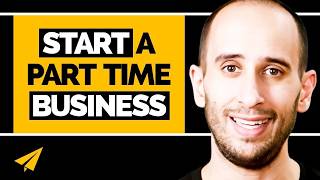
In this motivational business‑advice video, Evan Carmichael addresses his "Believe Nation" audience and shares seven practical, time‑saving strategies for launching a part‑time business while keeping a full‑time job. He begins by emphasizing belief in the viewer’s potential and the value of starting a venture on the side. The seven tips are: (1) schedule dedicated entrepreneur time each day (30‑60 minutes) and protect it from other demands; (2) decide on a business model that aligns with personal passion and market interest, favoring service‑based ideas; (3) honestly assess current skills, identify gaps, and invest in learning before charging customers; (4) engage potential customers early to validate problems and shape the offering; (5) prioritize exceptional customer service and word‑of‑mouth referrals over flashy marketing; (6) set the immediate financial goal of reaching a "survival" income that covers basic expenses, using it as a stepping stone to full‑time entrepreneurship; (7) maintain daily consistency, taking small actions to build momentum. Throughout, Evan uses personal anecdotes (e.g., mentoring Lily) and urges viewers to comment, vote on future topics, and check a special “one‑word” video. He ends with a shout‑out to a team member and a reminder to believe in oneself.
Chapters
What's up, Believe Nation? It's Evan. My one word is believe, and I believe in you. I believe that you've got some insane potential inside you that I want to see burst out into the world to have a big impact for you, your family, your community, and everybody around you. So to help you on your journey today, I'm going to talk about 7 ways to start a part-time business. So I don't believe that you have to quit your job and go all in on your business, especially at the beginning. I'm a big fan of starting part-time, building something up on the side, and then as it starts to build momentum, you can shift more focus towards it. But the key part is starting and actually doing something about it. So today I'm going to share with you my 7 tips on how to get your part-time business started. Tip number 1 is schedule entrepreneur time. You need to schedule it into your calendar. You need to put a barrier around your calendar so that at least 30 to 30 to 60 minutes every single day is spent building your company. That doesn't sound like a lot of time, and in the grand scheme of things, it's not. Like, you're not spending 5, 6, 7, 8, 10, 14 hours a day. But what often happens to a lot of entrepreneurs when they're first getting started is that they don't allow for momentum to build up. You need to put in daily work, even as little as 30 to 60 minutes every single day, to allow for that momentum to keep going. We all have so many things happen in our life, especially if you have a full-time job working for somebody else. You got the job, you got family, you know, spouse, kids, whatever other responsibilities that you might have, you gotta deal with that, and those are real. Or school, or whatever problems you have, whatever else is taking demands on your time, right? Most people aren't just sitting home all day and saying, "Ah, I've got all this free time, what do I do?" Right? There's a lot of demands for your time from other commitments that you've made and for other people who want a piece of you, right? It's really hard to stay consistent in carving out time for yourself to build your business, and this is where a lot of people will fall down. They have a great idea for a new business, they have great intention to want to do it, they want to, you know, have a big impact and they're doing it for the right reasons. They just don't spend the time doing it. And so the key is you need to carve out some time, whatever makes the most sense for your calendar. If it's in the morning, if it's over lunch, if it's in the evening or late evening or whatever it is, carve out that time. That is your entrepreneur time. Nothing touches that time unless it's a massive emergency. And every single day you are making some progress towards achieving your entrepreneurial dreams. Once a week is not going to be enough. You need 30 to 60 minutes every single day. Step number 2 is determine what kind of business you want to start. You know, you have to have an idea, you got to have a plan, you got to know what kind of company you want to build. A service-based business is a great place to start because it's only your time. You don't need to tinker and tool away and create a product, and you never know if you're getting feedback from the customer, if it's going to work out or not. But starting with what is the thing that makes you excited, what is your big idea, what are you passionate about, and how can you combine that with something that can help others. So if you just are excited by something and you're really passionate about it but nobody cares about it, you have a hobby. That's not something that you're gonna ever make money off of, but it might fulfill you. You might love painting Smurfs, but if nobody wants to buy that Smurf, then you just have a hobby for yourself. If you're only chasing the opportunities, like here's where people are making a lot of money, you open up Inc. magazine is the hottest 50 companies to start next year. If that's all you're doing but you don't have a passion for it, you're going to lose because the people who love those businesses will crush you. You know, if YouTube is a hot business to start, the people who love doing YouTube will crush you if you're only doing it because you think it's a hot opportunity. So you need to have both. You got to find the thing that you love doing where there's also an interest from people who will care about it. Once you find that, those are the seeds of starting a great business. So you've got to figure out what kind of company you're going to start. Step number 3 is honestly assess your skills. You got to figure out, am I good enough to do this thing yet? This business that I want to start, this service I want to provide, this product I want to create, can I actually make something that is going to be good enough for the market? Can I make something that people will pay me for? So you may want to go off and create this kind of business, but if you don't have the skills to do it yet, then you need to learn the skills. It's not that it's not possible, you just need to improve your skills to be able to get to that point. When I started working with Lily as part of her Unlocking Lily series, right, I invested in Lily, I'm mentoring and training her to become a speaker. It's her lifelong goal to be a speaker. She wasn't a great speaker at the start, right? Is there a market? Yes. You know, can you get paid to have that as a business? Yes. Can we build a million-dollar business off of that? 100%. But not yet, because you suck at speaking, right? That's okay. Now we need to work on that skill set. We have to build it up. So at the beginning, all of her speeches were free, right? She's speaking at local events, she's speaking at a TEDx talk. She drove to different states to practice her speaking gigs when people gave her opportunities, and she's not charging yet for speaking because she needs to get better, she needs to improve, she needs to put in the work, put in the hours, hone her skills so that she can start getting paid to speak. And so it's honestly assessing where you're at with your skill set. Is what you're doing valuable enough that somebody will pay for it? And if not, then hustle as hard as you can to improve your skills, work with some clients, build up your abilities to the point where you can start charging. Step number 4 is to start talking to customers as soon as you can. You want to start talking to potential customers. This is one of the biggest mistakes that entrepreneurs make. They come up with an idea, they're really excited about it, and they just tinker and they tool, and they're by themselves, and they're coming up with all sorts of different crazy ideas, which is great and exciting, but you're never actually testing it against the market, right? That example before, I said it's got to combine what you love doing with what people are willing to pay you for. If you spend all your time out here thinking you're doing something great and you never talk to the people who will actually pay you to do the thing that you want to do, you're never going to build a business. And too many entrepreneurs spend so much time on that thing, on that idea, working by themselves in their home, in their apartment, in their condo, in their basement, without ever actually testing it, and you can go down the wrong path. I made this mistake in my first business. You know, I spent an entire summer working on a business plan and thinking what I thought would be amazing, and I came out like, this is the best thing ever. And then we started talking to customers, and I realized that some of what I thought was true was actually true, and some of it wasn't what they cared about at all. And if I just talked to my customers or potential customers first then I could build a better solution for them. Instead of wasting an entire summer working on that, I could have made a lot more progress. So think about who your ideal customers are, who you're going to be selling this product or service to, and as soon as possible, go start talking to them. You may not have a product or service to sell yet. That's okay. Say, here's what I'm thinking about doing. Tell me about your problems, right? If they have a problem, that's an opportunity for you. Problems for other people are opportunities for entrepreneurs. And so if you're talking to customers and they have a big enough pain point, a big enough problem, that's when you know you have an opportunity to go in and solve it. So as soon as possible in the process, as you're building your product or service up, start talking to people to get their feedback and build it around them and you. Tip number 5 is focus on service. Focus, focus, focus, focus on your customer service. This will be the most important way to build your business, especially at the beginning. Don't worry about social media. Don't worry about posting all over the place. Don't worry about taking out advertisements. You'll get distracted. If you have a limited amount of time every single day to focus on your business, what you want to do is get as close to your customers as possible and then service their needs as best you can. What you want is your customers telling other people about the great work that you do. And if your focus is spread across so many different things— as much as I love social media, as much as I love YouTube, If somebody's just getting started in business, I would not recommend going all in on social. I'd be looking at how do I get as close as possible to my customers, how to provide them an amazing service to the point where they would want to tell somebody else about me. Do that, because you need word of mouth as an entrepreneur. You're not going to have the budget to go off and buy huge commercials and take up big ad spends. You need people talking about you, and that comes from providing the best possible service. Especially at the beginning, because you're still learning how to do the thing that you're doing. You haven't provided the perfect product or service yet. And so understanding where you're falling short, understanding how you can help them more— people are willing to be forgiving and understanding if they feel like you really care. And so if you want people to care about you, then you got to show it first. Care about them, help them in as many ways as possible, design the best possible experience for them, and try to help them in ways beyond just what you were hired to do. You do that, then you stand out, and they will tell their friends, and that kickstarts the referral marketing for you. Step number 6 is make it your goal to get to survival. It's great to have an amazing goal, right? We have a big vision, we want to change the world, we want to make lots of money, want to have a huge impact, we want to touch tons of lives. It's great. You definitely need that big picture thinking, and you need to act small, like your next step is to just get to the point where you can survive. The goal for any part-time business owner is to get to the point where that part-time business is making you enough money to survive so that you can spend more time with it. If you are making enough money part-time to be able to survive, pay your bills— I'm not talking about getting new cars, it's, it's paying the internet bills, paying for food, right? Like basics to survive. If you can do that while working part-time, then it'll allow you to quit your job or however else you're making money right now, and go full-time, right? You go full-time when you're making enough money from your part-time job to survive. That should be your first goal. And then you keep going, right? Like, yes, my longer-term goal, my 5-year plan or 10-year plan or whatever it looks like, is to have this global impact and make a huge difference. I love it. Yes, keep doing it. But what happens a lot of times is entrepreneurs get stuck in the dream world, like the final vision of what they want to do, and then they don't take any immediate action. Like they're waiting for a big deal to happen, they're waiting for the venture capital funding to come in, they're waiting for the government to change the laws, they're waiting, they're waiting, they're waiting, they're waiting, and like nothing happens. Don't be that person. Think big, act small. Start getting going, right? Get your part-time business to the point where you're making enough money to survive. That's your first goal. Then you can quit your job and go all in on your company. And tip number 7 is be consistent. And this ties back to the first rule about scheduling it in. You need to be consistent. People just give up too soon. So many entrepreneurs quit. One, because they just picked the wrong thing, they're just chasing opportunity, they're not interested in it, they don't love it. That's fine. But if you love it, you can't quit on it, right? Because you're gonna look back on your life when you're 80, 90, 100, 200 years old and say like, "I should have, I could have done more. I should have done more. I regret that." That's a lifetime of regret that's ahead of you if you don't just give it your all and you don't be consistent. A lot of entrepreneurship is just following through and every day doing one more thing and one more thing and putting one foot in front of the other. If you look at the successful careers of most entrepreneurs, it's not these giant leaps forward. It looks like an overnight success and some big huge thing happened, But to get there was a lot of these tiny little steps that people just took consistently. A lot of these tiny little steps that on their own seem like nothing, but it led to the next step and led to the next step and led to the next step. And doing that on a daily basis, you look back, you say, wow, I accomplished so much that month, I accomplished so much that week, but each individual day wasn't that much. That's the key— not giving up. Every single day, taking some kind of small action to move forward. And if you allow that to happen, momentum starts to build, people start to talk, and all of a sudden some huge things start taking off for you, but it's as a result of being consistent every single day, 30 to 60 minutes, no excuses, keep going, keep driving, be consistent, it's the key. So those are my 7 suggestions on how to get started part-time. I made this video because Saad asked me to. If there's a topic you'd like me to cover in a future 7 Ways video, check out the link in the description. You can go and cast your vote. And hopefully I'll make one for you coming up soon. I'd love to know what did you think of this video? Which of the 7 resonated the most with you? Is there an 8, 9, 10 that you wanna add to the list? Let me know, leave in the comments below. I look forward to hearing what you have to say. I also wanna give a quick shout out to Ray on my team. Ray, thank you so much for picking up a copy of my book, Your One Word, and posting it to your Facebook account. I really, really appreciate the support. I love your one word of focus, and thank you for sharing this with us. As well. Thank you guys again for watching. I believe in you. I hope you continue to believe in yourself and whatever your one word is. Much love. I'll see you soon. So let me give you the one word secret to happiness. One word. This is all you need to be happy. The most important word ever. If you had to think of one word that's most important to you, or that sums you up, or that would be kind of like a little beacon, Hey Believe Nation, if you want to know what the most important one word is for Tony Robbins, Gary Vaynerchuk, Oprah Winfrey, will.i.am, and Howard Schultz, I have a very special secret video for you. Check the description for details.
More from Evan




How the Biggest Mistake in History Created A Trillion-Dollar Empire | Sergey Brin



9 Machiavelli Principles That Force People To Respect You | Machiavellian Philosophy



The First 10 Words That Instantly Ruin A Sales Conversation | Vanessa Van Edwards