96 Ways to Improve Your Life From Billionaires, Entrepreneurs & Productivity Experts
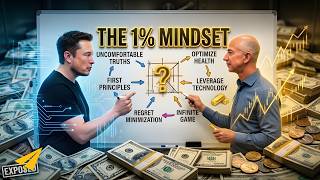
In this extensive segment, Evan Carmichael shares a blend of personal anecdotes, productivity principles, and entrepreneurial frameworks designed to help viewers transform their habits, mindset, and business ideas into tangible results. He introduces a series of "laws"—such as the Law of Deep Learning, the Law of Attention Residue, the Law of Purpose & Stamina, and the Law of Early Planning—that explain why continuous learning, focused work, clear purpose, and proactive scheduling are essential for high performance. He then shifts to strategic thinking, advocating first‑principles reasoning over analogy‑based copying, and outlines the five core elements of any business (value creation, marketing, sales, value delivery, finance). The discussion expands to Hamilton Helmer’s seven powers of strategy (scale economies, network effects, counter‑positioning, switching costs, branding, cornered resources, process power) and how to leverage them. Carmichael stresses belief, grit, and the psychological barriers that hold people back, offering concrete steps to overcome perfectionism and fear. He provides a step‑by‑step roadmap for turning a hobby into a career, especially for students, covering idea generation (ikigai, problem‑first approach), market research, unique value proposition (Blue Ocean), MVP testing, iterative refinement, and relentless execution. Throughout, he interweaves stories of Elon Musk, Jeff Bezos, Mark Zuckerberg, and his own experiences to illustrate each point, urging viewers to act now, stay persistent, and build supportive networks.
Chapters
You keep telling yourself you just need more time, more money, more luck. But billionaires started with the same fear you have right now. The difference is they acted when everything looked like it would collapse. I had to make a choice then that either I took all of the capital that I had and invest that in Tesla, or Tesla would die. In 2008, Elon Musk risked his last $40 million after 3 failed rockets and a bankrupt Tesla. While most people would have walked away rich and safe, I invested all the money I had. Literally, I had to borrow money from friends to pay the rent. Maybe you felt that same doubt, staring at your dream and wondering if you're crazy for even trying. The people who are crazy enough to think they can change the world are the ones who do. But if you keep playing small, spreading your effort everywhere, you will wake up years from now realizing you built a safe life instead of a meaningful one. I knew that when I was 80, I was not going to regret having tried this, but I knew the one thing I might regret is not ever having tried. In the next 3 hours, you'll discover the hidden ways that separate billionaires from everyone else and how to start using them today. If you've been here before, drop a hashtag #believe in the comments below so I can feature you here in a future video. And if you're new, welcome to Believe Nation, the only channel that helps you believe in yourself daily, one video at a time. You will never become a billionaire or even a millionaire by following the advice of the middle class. Most people think that extreme wealth comes from luck or inheritance or being in the right place at the right time. But the truth is, it comes from having the guts to concentrate your bets when everyone else is diversifying to protect their ignorance. If you keep spreading your focus, your energy, and your money across a dozen different safe options because you are afraid of losing, you will guarantee that you end up with a life of mediocrity and never reach the massive potential that you were built for. In 2008, Elon Musk was facing the worst year of his life. He had made $180 million from selling PayPal, a fortune that would set most people up for life on a private island. But Musk isn't most people. He had poured almost all of that money into two companies that looked like they were about to die, Tesla and SpaceX. SpaceX had three failed rocket launches in a row. Tesla was running outta cash and couldn't make payroll. Musk had about $40 million left. He had a choice. He could put all the money into one company to save it, but that would mean the other would definitely die. Or he could split the money between them to try to keep both alive, but risk running out of cash for both and losing absolutely everything. Most people would've walked away. They would've kept the $40 million and lived like a king. Musk chose the hardest path. He split the money. He went all in on both. He literally had to borrow money from friends to pay his rent because he had zero liquid cash left. On Christmas Eve 2008, at the very last hour, a financing round came through for Tesla. Days later, NASA awarded SpaceX a contract. He risked $180 million to get to zero just to have a shot at changing the world. Today, he's the richest man on the planet. So right now you're probably telling yourself, but Evan, I don't have $180 million like Elon Musk. And that's not the point. It's not about the amount of money, it's about the habit of your mind. You're playing small with the $1,000 the same way you'd play small with $10 If you cannot bet on yourself when you have nothing to lose, you will never bet on yourself when you have everything to lose. So today we're going to break down the actual blueprint. I analyzed 50 billionaires to find out what they actually have in common. And it's not what you think. The trap of diversification. The first thing you need to understand is that billionaires do not get rich by diversifying. You have been told your whole life, don't put all your eggs in one basket. That is great advice if your goal is to preserve wealth. It's terrible advice if your goal is to create wealth and build an empire. Warren Buffett, one of the greatest investors of all time, calls diversification protection against ignorance. He says it makes very little sense for anyone who knows what they are doing. If you know how to analyze a business, if you know your market, if you know your value, why would you put your money into your 20th best idea instead of your top idea? When you look at the portfolios of the ultra-wealthy, wealthy, you see extreme concentration. They find one thing they believe in, usually a company they built themselves or an investment they know inside and out, and they push all their chips into the middle of the table. Bill Gates didn't diversify into real estate and gold when he was starting Microsoft. He was 100% Microsoft. Jeff Bezos wasn't buying stocks and other retailers in 1999. He was 100% Amazon. And the data backs this up. There's a study by Acadian Asset Management that looked at concentrated portfolio managers versus diversified ones. They found that the managers who had the courage to bet big on their best ideas, their top 5 to 10 stocks significantly outperformed the ones who spread their bets thin. The managers who concentrated their portfolios generated higher returns because they were betting on their conviction, not their fear. You are hurting your own growth by trying to do too many things at once. You have a side hustle and a main job, and you're thinking about crypto, and you're trying to start a YouTube channel, and you're learning Spanish. You are diversifying your energy because you are afraid that if you pick just one thing, it might fail. But by doing 5 things at 20% effort, you are guaranteeing that all 5 of them fail. You need to find your wonderful business. Buffett says if you can find just 3 wonderful businesses in your life, you will get very rich. You don't need 50, you need 1. You need to become an expert in one area. You need to know more about your specific niche than anyone else in the room. When you have that level of knowledge, you don't need to diversify to protect yourself. Your knowledge is your protection. So stop trying to be okay at everything and give yourself permission to be a genius at one thing. Put your eggs in one basket and then watch that basket very closely. Like Andrew Carnegie used to say, the power of disagreeableness. If you want to be a billionaire, you have to stop caring what other people think. I don't mean you should be a jerk. I mean, you must possess a psychological trait known as low agreeableness. Researchers from the Socioeconomic Panel in Germany analyzed the personality traits of millionaires and billionaires. Billionaires. They use the Big Five personality model. They found a consistent pattern. Wealthy people score very high on conscientiousness. They are disciplined and they're organized. They score high in openness. They like new ideas, but they score significantly lower than the average person on agreeableness. This means they are not afraid of conflict. They are not afraid to swim against the tide. They do not need social harmony to feel good about themselves. When you are building something massive, people are going to tell you that you are crazy. They are going to tell you that it cannot be done. They are going to tell you that you are wrong. If you have high agreeableness, you will listen to them. You will try to fit in. You will compromise your vision to make everyone feel comfortable. Billionaires don't do that. They are nonconformists. Look at Steve Jobs. He was famous for his reality distortion field. He would demand things that his engineers said were impossible. He wasn't trying to be their friend. He wasn't trying to be agreeable. Disagreeable. He was trying to change the world. He didn't care if people thought that he was difficult. He cared about the vision. You have to be willing to be misunderstood. You have to fight for your idea when no one else sees it. You have to be the one who says yes when the whole world says no. This is why so many billionaires are entrepreneurs. You cannot climb the corporate ladder if you are highly disagreeable. The corporate world rewards people who follow the rules and play nice. The entrepreneurial world rewards people who break the rules and create new realities. So You can ask yourself today, where are you compromising your dream just to avoid an awkward conversation? Where are you saying okay when you want to scream no? Stop trying to please everyone. You are not pizza. You are a leader. Lead. The obsession with speed. Speed is the ultimate weapon. If you look at the daily habits of billionaires, they do not waste time. They understand that time is the only asset that they can never buy back. There is a concept called return on Return on Time Investment, or ROTI. Billionaires are obsessed with this. They aggressively use leverage— other people's money, other people's time, systems, and technology— to make sure that their personal time is spent only on the highest value tasks. When I analyze successful people on my channel, I see this pattern over and over. They don't just work hard, they work fast. Tom Bilyeu, friend of the channel, has a strict routine. He gets up, he works out to build discipline, he meditates to clear his mind, and then he attacks his most important tasks immediately. He doesn't check email first. He doesn't scroll social media. He calls it thinkitating, using his brainpower to solve complex problems before the world can distract him. Most people are moving too slow. You have an idea for a business. You spend 6 months researching a logo. You want to start a podcast and you spend 3 weeks looking for the perfect microphone to buy, right? You're using preparation as an excuse to hide. If you wait until you feel ready, you will be waiting for the rest of your life. Billionaires act on information immediately. When Elon Musk faced that crisis in 2008, he didn't take a month off to think about it. He was on the phone, flying around the world, negotiating deals, moving money, literally working 20 hours a day to save his companies. The speed of his decisions saved him. You need to shorten the gap between the idea and the execution. If you have an idea right now, do something about it in the next 10 minutes. Send the email, buy the domain, Post a video. Call the client. Stop overthinking. Your brain is designed to keep you safe, not to make you rich. Safety is slow. Wealth is fast. The billionaire mindset is about shrinking timelines. If you think a goal will take you 10 years, ask yourself, how can I achieve this in 6 months? Even if you fail, you will be further ahead than if you stuck to the 10-year plan. So a lot of you are waiting for permission. You're waiting for someone to tell you that you are good enough. You're waiting for the perfect time. There is no perfect time. The perfect time was yesterday. The second best time is right now. The ability to handle crisis. You will never reach the top without facing a moment that threatens to destroy everything that you have built. This is the existential crisis phase. Every single billionaire that I've studied has gone through a moment where it looked like it was all over. We talk about Elon Musk in 2008, but look at Jeff Bezos in the dot-com crash of 2001. Amazon lost 90% of its value. 90%. Imagine looking at your net worth and seeing it drop by 90%. Most CEOs panicked. They folded. They went bankrupt. Bezos didn't panic. He focused on the math. He focused on one single metric, the cash conversion cycle. He realized that if he could get cash from customers before he had to pay his suppliers, he could fund his own growth without needing banks or investors. He turned Amazon into a cash-generating machine during the worst crash in the history of the internet. He didn't just survive the crisis. He used the crisis to become stronger. This is what Nassim Taleb calls being antifragile. Fragile. It's not just about resilience, which is bouncing back to where you were. It's about getting better because of the stress. When you are building your business, you are going to get hit. You are going to lose a big client. Your star employee is going to quit on you. The economy is going to tank. Uh, pandemic is going to shut down the world. If you crumble when things get hard, you are not ready for this level of success. Yet billionaires look at crisis as a puzzle to be solved, not a sign that they need to stop. They maintain an internal locus of control. They believe that no matter how bad no matter what the external situation is, they have the power to fix it. They don't blame the economy. They don't blame the government. They don't blame their team. They take extreme ownership. So when bad things happen to you, do you play the victim or do you become the architect of your own rescue? Your pain is your training ground. The struggles that you're facing right now are not there to stop you. They are there to prepare you for the weight of the success you are asking for. If you can't handle the pressure of a $10,000 problem, life will never trust you with a $10 million problem. Problem. So embrace the crisis. It is the fire that forges the steel. They solve the biggest problems. Perhaps the most important thing billionaires have in common is the scale of the problems that they solve. So you are paid in direct proportion to the difficulty of the problems that you solve. If you solve a small problem for a few people, you make a little bit of money. If you solve a massive problem for millions of people, you become a billionaire. So look at the billionaires that we've talked about. Elon Musk is trying to solve the problem of fossil fuels with Tesla and the problem of human extinction with SpaceX. Pretty big problems. Bill Gates solved the problem of putting a computer on every desk in every home. Jeff Bezos solved the problem of getting anything that you want delivered to your door in 2 days. These are not small problems. Most entrepreneurs aim too low. They start a business just to make money. They want to just pay their bills. They want a nice car. And there's nothing wrong with that. But it won't make you a billionaire. You have to fall in love with the problem. And to go to the next level, you have to expand your vision. You have to ask, how can I help more people? How can I serve deeper? You need to find your one word. You need to find the core value that drives you. Because when things get hard and they will get hard, money will not be enough motivation to keep you going. You need a mission. If you're just chasing paper, you will burn out. If you are chasing a purpose, you will be unstoppable. So the billionaires I know, the ones I studied, they're not sitting around counting their money. They are working harder than you and me. Why? Why? Because they're obsessed with the problem they are solving. They are built to serve. So if you want to join their ranks, stop asking, how can I make a billion dollars? And start asking, how can I help a billion people? The money is just a byproduct of the value that you create. Focus on the value, focus on the service, focus on the impact. You have Michael Jordan-level talent at something. You have a genius inside of you that is waiting to be unlocked, but you are keeping it small because you don't believe in yourself enough to tackle the big problems. The world is waiting for you to step up. The world has huge problems that need your specific genius to solve. So don't deprive us of your contribution because you're afraid to fail. Go bigger. Ready to discover the skills that could skyrocket your success this year? These aren't academic theories. They're practical, in-demand abilities that you can learn without a formal degree. Each skill taps into emerging market needs offers entrepreneurial leverage, and has scalable impact. Let's dive in and imagine the possibilities each one opens up for your business and income. Skill number 1, AI integration and automation, turning intelligence into income. Okay, so what is it? Here we're gonna leverage AI and automation tools to streamline operations, create smarter products, or even launch AI-driven services. It's using machines to do the heavy thinking or doing for you from from chatbots that handle customer inquiries to AI systems that optimize your marketing or inventory in real time. Here's why it matters this year. The AI revolution isn't coming. It's right here now, and it's rewriting the rules of business. By 2024, 70% of organizations reported using AI in some capacity, up from just 55% the year before. Companies are pouring investments in the AI at record levels, over $109 billion in the US in 2024, with nearly $34 billion globally into generative AI. And they desperately need people. People who can make it work. The catch? There's a huge talent gap. 94% of business leaders say they face AI-related skill shortages on their teams, with 1 in 3 reporting massive gaps in critical AI roles. What does that mean? Demand is way bigger than supply, and that means opportunities for you. Entrepreneurs who are AI-savvy can step in and command premium prices for their solutions. This isn't just for tech companies either. From healthcare to finance, AI is being woven into daily operations. Even the FDA, has approved hundreds of AI-enabled medical devices, and self-driving cars are logging thousands of rides right now. The world is racing to adopt AI, and those who can ride that wave stand to reap huge rewards. So how can entrepreneurs profit? Think of AI as a force multiplier for your business. An entrepreneur with AI skills can automate super boring processes, freeing up time to scale faster. You can make smarter products with better features. You can offer AI consulting and integration services to companies who are willing to pay for help. So, for example, a small e-commerce founder might use AI to personalize their shopping experience for each customer automatically, leading to happier customers and higher sales. Or maybe you're launching a micro SaaS tool that uses AI like an AI scheduling assistant or content generator. Even a one-person business can serve thousands of customers when AI is doing most of the work. The evidence is everywhere. Companies using AI report higher productivity and lower costs. And many have seen AI-driven projects boost their bottom line. One entrepreneur created an AI-powered copywriting service and landed hundreds of clients globally, essentially earning money 24/7 as the AI works for them. The key is that AI is practical and learnable. With countless online courses and tools, you can start applying AI even if you're not a programmer. Many AI platforms are actually plug and play. So this year, knowing how to harness AI is like having a superpower. It's not just about efficiency. It's about unlocking new income streams. From automating your marketing to building the next ChatGPT-like app for a niche industry, AI integration is a skill that can pay off almost immediately. So embrace it and you ride the biggest tech wave of our era straight towards profit. Now, AI might be the brains, but data is the backbone. So next, let's look at the skills that turn raw numbers into gold. Skill number 2: data analytics and business intelligence. Profiting from big data. Okay, so what is it? It's the skill of collecting, analyzing, and drawing smart insights from data to drive business decisions. So data analytics is like having x-ray vision for your business. It lets you see the patterns and trends that normal people's eyes would miss. So business intelligence, or BI, goes hand in hand, focusing on those who are using insights to make strategic calls. This skill isn't about math genius, it's about knowing which numbers matter and how to translate them into action. So why it matters right now in this year, we live in a world that has tons of data. Every click, every purchase, every interaction, it can be tracked. But few people know how to turn that ocean of information into actual real value. And that's where you can come in. Companies have realized that gut instinct isn't enough. 81% of businesses now believe data should be at the heart of all decision-making, and they're willing to pay handsomely for those who can deliver results. Why? Because data-driven businesses simply perform better. They're more productive and more profitable on average than their less data-savvy peers. Companies that truly embrace analytics have seen efficiencies boost as high as 60 to 80% in operations. It's not just about giant corporations. Even small startups benefit when they can quickly identify which product feature is a hit or which marketing channel brings the best ROI. And this is a very clear trend. The global big data analytics market is massive. It's over $270 billion in value and still growing. And there's a shortage of professionals who can wrangle data effectively. Executives are literally hungry for insights. A recent survey found 88% of business leaders rank data analytics as a top priority for upskilling in the organization. So this year, being fluent in data is like having a secret weapon in your market. You base decisions on facts, not guesses, which is a recipe for winning. So how can entrepreneurs use it? Data analytics can make you rich in two ways. First, by applying it to your own business, you can pinpoint your most profitable customers. You can find inefficiencies to cut. You can test pricing strategies with actual hard evidence. For example, Netflix famously used data analytics to save $1 billion a year by recommending exactly what viewers wanted. So imagine bringing that kind of insight into your business decisions. Secondly, you can sell this skill as a service to others. Many companies, especially smaller ones, they drown in data but have no idea what to do with it. You could come in as a freelance analyst or consultant, turn their data into a clear action plan, and charge premium fees for delivering growth growth or savings. So picture telling your client, I found a way to boost your sales 20% by analyzing your customer behavior, and then actually doing it. There are real case studies of entrepreneurs doing just this. One startup founder used business intelligence tools to optimize her inventory and eliminated over $100,000 in annual waste, directly padding her profits. Another built a consulting agency that helps local businesses set up simple dashboards and KPIs, and within a year he was booking 5-figure contracts regularly. The bottom line is data analytics is practical and learnable. There's tons of online courses, YouTube videos, tools that are now drag and drop. Master it and you can either supercharge your own business or become the go-to data guru who turns others' confusion into cash. So in this year, data, it's the new oil, and knowing how to drill for it is an extremely high income skill. Now, having great data is pointless if you can't attract customers. That's where our next skill comes in. It's time to cash in on the art of getting noticed. Skill number 3: digital marketing and growth hacking. Scaling visibility into wealth. So what is it? Digital marketing is a skill of getting customers for people's businesses online through channels like social media, through search engines, through email, through LLMs, and more. Growth hacking is a trendy way to say creative, fast-paced marketing experimentation, right? So finding clever, low-cost tactics to drive growth or sales for your business or other people's. This skill is about making your business impossible to ignore on the internet and turning that attention into revenue. So covers everything from running targeted ads, optimizing a website to rank on Google or GPT, crafting viral content, analyzing campaign data to tweak for better results, making YouTube videos to spread your message. Why it matters this year is you could have the best product or service in the world, but if nobody knows about it, you don't make a dime. This year, digital marketing remains one of the highest skills for entrepreneurs because online attention is the currency of our kingdom. Just look at the numbers. Global digital ad spending is projected to hit $843 billion. Yes, with a B. Companies large and small are pouring money into Facebook ads, Google searches, TikTok videos, wherever their audience lives online. And they need experts who know how to navigate this landscape. The job outlook also reflects that demand. Marketing roles are expected to grow by 10%, faster than the average for all careers. And in particular, there's surging demand for people skilled in areas like marketing analytics, content creation and SEO, SEM, because every business wants to rank number one on Google and decode the algorithms of ChatGPT. The beauty of digital marketing is that it's practical and learnable. No MBA required, just practice, creativity, and keeping up with the trends. We're also seeing new frontiers like AI-driven marketing. Over 50% of businesses are already using generative AI to improve their operations. All this means that entrepreneurial marketers who stay sharp can out-hustle their bigger competitors. So in this year, if you know how to get the right message to the right people at the right time online, you basically have a license to print money. So how can you use it as an entrepreneur? Digital marketing is often the make or break skill that determines if you scale or if you stay stuck. And so if you master it and you can acquire customers on demand, you can enter new markets quickly. You can even build a personal brand that multiplies all of your opportunities. Take, for example, an online fitness coach who leverages social media marketing. By mastering YouTube and Instagram, she grows her audience to hundreds of thousands and launches a fitness app that earns 7 figures online. Or think of a small local business owner who uses savvy Google search ads and SEO to dominate local search traffic, right? Their store goes from unknown to the go-to place in town. And these aren't hypotheticals. These things are happening right now all around us. As an entrepreneur, you can also sell digital marketing expertise. If you're great at, say, SEO or Facebook ads, you can freelance or start an agency. Businesses are eager to pay because they've seen the ROI. For every dollar spent on email marketing can yield $36 in return, as various studies have shown. So a skilled email marketer is worth their weight in gold. Another real-world use case: an entrepreneur growth hacked his startup by creating a referral program that went viral. So think Dropbox's free storage for referral strategy. Acquiring millions of users without a massive ad budget. That's growth hacking in action. So digital marketing lets you scale up quickly. An ad campaign can reach millions of people overnight. A piece of content that catches fire can bring in floods of traffic. You're not limited by your local area, your storefront. And with analytics tools, you can measure every penny and double down on what works, like truly data-driven marketing. And the emotional side, it's pretty thrilling to see your business blow up because of a campaign that you created. The control is right here. It's in your hands. With consumer attention shifting every year, today it might be YouTube or LinkedIn newsletters. Tomorrow, who knows? Entrepreneurs who have the skill will ride each wave and outpace their competition. Digital marketing and growth hacking are high-income skills because they directly drive revenue, and mastering them means you can virtually write your own success story in this digital age. So now you've got the customer's attention. Now we need to convince them to open their wallets. The next skill is all about the art of persuasion, and it's one of the oldest and most profitable tricks in the book. Skill number 4: persuasive communication and storytelling. Selling anything to anyone. So what is it? This is the skill of conveying ideas in a compelling way. So that's through sales pitches and marketing copy or even everyday networking conversations. It includes sales and negotiation, right? Convincing a customer or partner to say yes. Copywriting, which is writing words that sell from ads to landing pages and storytelling, crafting a narrative that hooks people in emotionally. It's how to talk or write so people listen, trust you, and feel motivated to act, like clicking the buy now or signing a contract. Why it matters this year is no matter how advanced technology gets, the power of a good story and genuine connection Communication never goes out of style. In fact, as automation rises, those human-centered skills become more valuable. This year's marketplace is hyperstimulated. Consumers see thousands of ads and posts a day, so the ability to cut through that noise with a resonant message is pure gold. 68% of consumers say that a brand story influences their buying decisions. People remember stories up to 22 times more than plain facts. That's huge for entrepreneurs trying to build a memorable brand or pitch to investors. And yes, we see evidence that storytelling and communication translate to better results. Marketing campaigns built around the narrative can boost conversion rates by 30% or more. On the sales side, companies are actively looking for leaders with strong social influence and communication skills. Even the World Economic Forum highlighted leadership and social influence as a top skill for the future. Why? Because a person who can rally a team, win over a client, uh, negotiate a profitable deal, they are invaluable. Also, let's talk money. Jobs like sales executives or copywriters are often high paying because they directly bring in revenue. A top-performing tech sales rep, for example, can earn a 6-figure base salary plus another 6 figures in commissions. Copywriters who crack the code of persuasion are similarly rewarded. Many freelance copywriters charge $100+ an hour, and businesses happily pay because one killer sales page or email sequence can generate hundreds of thousands in sales. Words are powerful, and this year, those who can wield that power expertly will find that it translates into serious income. So how can you use it as an entrepreneur? You're always selling, not just your products, but your vision, your brand, even selling yourself as a trustworthy partner. Persuasive communication turns this into a superpower. Mastering storytelling means you can craft a brand narrative that makes customers feel something and remember you. So for example, instead of just saying, uh, our shoe is comfortable, you share the story of a customer who, thanks to your shoe, ran their first marathon pain-free to honor a loved one. On, right? Now you're not just selling a shoe, you're selling inspiration, you're selling identity. That's the difference that makes people lifetime fans. On a more practical side, entrepreneurs skilled in communication, they'll just close more deals. So imagine you're negotiating with a supplier or an investor. If you can clearly articulate your value and persuade them effectively, you'll likely get better terms, maybe tens of thousands saved or gained in one conversation. If you sell services or high-ticket Strong sales techniques like consultative selling or solutions-based selling is key. Today's customers expect you to understand their needs and tailor your offer. Being able to do that can literally double or triple your closing rate. So for example, you can monetize a skill by offering freelance copywriting or sales consulting. Great copywriters are in short supply, even with AI writing tools around, because someone has to give the AI the right emotional direction. Businesses will pay top dollar for emails and ads that actually convert. One excellent sales page can be worth millions to a company. So paying a writer $10,000 a craft, it's a no-brainer for some companies. Skilled copywriters routinely earn over $150,000 a year once they built a reputation. And don't forget content creators and influencers. They are essentially storytellers too, turning authentic communication into followers and income from ads and sponsorships or product sales. Emotions drive decisions, and if you can tap into emotions with genuine communication, you can drive decisions in your favor. So this year, mastering persuasive communication and storytelling isn't just a nice to have. It's often the difference between the business that just fizzles out and one that actually becomes a phenomenon. We've covered brains, data, marketing, charm. Our final skill might not sound as glamorous, but it's a massive moneymaker in today's world. It's all about protecting the wealth that you're building, and it's an area where demand is exploding. Loading. Skill number 5: cybersecurity and data protection. Guarding the digital gold mine. Okay, so what is it? Cybersecurity is the skill of keeping data, software systems safe from hackers and breaches. It's being the, uh, digital bodyguard for businesses. This includes understanding how to prevent attacks. So think malware, phishing, ransomware. Knowing how to plug vulnerabilities in networks or websites and making sure that companies follow best practices so sensitive information like consumer data is not stolen or compromised. It's deeply technical for those who specialize, but at a high level, it's very learn-by-doing, problem-solving field, and you don't need a PhD to get good at it— just solid training and experience and a curious mind. Data protection goes hand in hand, so think dealing with, uh, proper handling and compliance, like the laws of the land. So for an entrepreneur, having cybersecurity skills means means that you can both protect your own venture but also potentially offer security solutions to other people as a business. So why does it matter this year? One word: risk. As businesses digitize every aspect of their operations, the risk of cyber attacks have skyrocketed, and so have the costs. The average cost of a single data breach hit an eye-watering $4.9 million globally. So for a small or mid-sized company, that kind of hit can be fatal. That's why firms are desperate right, for cybersecurity expertise and why it's become a high-income skill, high-demand skill. We're in a situation where there aren't nearly enough cybersecurity pros to go around. The global cybersecurity workforce is millions short. One recent study showed about 4.8 million cybersecurity roles are unfulfilled worldwide. There are millions of openings and not enough people with the skills, a gap that widened by 19% in just one year. So talent shortage is actually the number one obstacle companies face in securing their system. This kind of supply-demand mismatch is exactly what drives up incomes for those who have the skill. So companies have even started to prioritize this in budgets because they simply cannot afford the alternative. Companies without adequate security staff end up paying on average $1.76 million more per breach due to slower response and damage control. But just beyond like corporate IT departments, every entrepreneur with an online presence needs at least basic cybersecurity savviness. Cyber threats this year are more sophisticated. Yes, hackers are using AI too. So on top of that, customer trust and regulations require more solid data protection. You don't want to be that startup that leaked user data and lost credibility overnight. So from ransomware attacks shutting down hospitals to small businesses getting scammed from phishing, the threat is universal. This urgency is driving a huge market for cybersecurity products and consultants. Global spending on cybersecurity is rising every year, tens of billions of dollars annually, as businesses effectively say Hey, please take our money and keep us safe. If you can step in with the skills to do so, you will be richly rewarded. So as some evidence, top freelance cybersecurity experts report rates of $200 to $300 an hour, and experienced security consultants can make over $500,000 a year by serving multiple clients. So it's no surprise that when the stakes are this high, companies are willing to pay for peace of mind. So how can entrepreneurs use it? If you're building your own company, cybersecurity skills are like an insurance policy and a selling point. You can save a ton of money by implementing security measures yourself instead of hiring some expensive firms and avoid disaster that could derail your business. But also being more security-minded from day one can be a competitive advantage. You can use that in your marketing. Customers and partners will feel safer dealing with you. So for example, uh, e-commerce entrepreneur who knows how to secure their payment systems and protect customer data not only avoids costly breaches but can market their store as ultra secure, which gains more customer trust and extra sales in an era of privacy concerns. On the other side, cybersecurity is also an amazing service and a business opportunity. So given that huge talent gap, you could start a consultancy or freelance as a virtual CISO, as Chief Information Security Officer, for multiple small companies that can't afford one in-house. They get your expertise part-time, you get a hefty paycheck. Some entrepreneurs are launching cybersecurity startups So whether that's developing a niche security software tool or you're offering specialized training, there's even demand for things like ethical hackers who companies pay to test their defenses. We've seen solo consultants charge retainers in the thousands per month per client just to be on call for security incidents. And with new data privacy laws popping up all the time, like Europe's GDPR and others, businesses are scrambling for guidance, which is another avenue for advisory services you could offer. If you're well-versed in compliance. So the key point is this: threats are growing and talent is scarce. If you equip yourself with this skill, you become part of a highly sought-after elite group of people. Not only can you command higher fees, because preventing a multi-million dollar breach is essentially worth a high payout, but you also carry the confidence that you can protect the empire that you're building too. In a time where a single hack can wipe out years of effort, the entrepreneurs who understand cybersecurity will safeguard their wealth and even turn security into a profitable service for It's truly a high-impact, high-income skill for today's age. So each of these 5 skills— AI integration, data analytics, digital marketing, persuasive communication, and cybersecurity— hits the sweet spot of being practical, learnable, and immediately valuable this year. They align with the biggest technology shifts and market needs that we are seeing right now. AI is everywhere. Data is the king. Online growth is non-negotiable. Human connection still seals a deal, and security underpins it all. The best part is you don't need a fancy degree to get started with any of these. There are YouTube videos, boot camps, online courses, communities for each skill that you can start learning right now. Entrepreneurs who invest time in mastering even one or two of these will position themselves to generate wealth in the short term. We're talking within a year or two, not decades, and it's all backed by trends trends and numbers that I've already cited throughout this entire video. The market is hungry for these abilities. So ask yourself, which of these skills speaks to you right now? The entrepreneurs getting rich this year aren't necessarily the ones with the most funding or the fanciest ideas. Often they're the ones who have the right skills at the right time and execute relentlessly. Now you know 5 of those right skills. It's time to choose, learn, and leap. Here's to your success, because this year might be the year your hard work and high-income skills make you the next great success story. Most people waste their 20s and they pay for the rest of their lives. And I'm not saying that to be negative, I'm saying it as a warning. Look around at friends or family in their 40s, 50s, 60s. So many wish they could turn back time and do things differently. They played it safe, they followed the crowd, and now they're filled with what of thoughts. The truth is harsh. If you delay chasing your dreams, you risk waking up one day full of regret. In fact, a palliative care nurse found that the number one regret of dying people was not living true to themselves, not going after what they wanted. Think about that. The biggest regret at the end of life isn't what you did, it's what you didn't do. So don't let that be part of your story, and I refuse to let it be part of mine. So quick story for me. When I was in my early 20s, I was about to graduate university, I had two options: take a six-figure dream job in banking or pursue my own startup making zero money, $300 a month. Sounds like an easy choice, right? Everyone told me, take the safe job, Evan, it's a sure thing. But deep down, I knew that wasn't my path. I imagined myself at 40, an old man. At least that's what I thought as a 21-year-old. I thought 40 was super old. And I asked, would I regret not giving my business a real shot? And the answer was yes. And so I pictured myself, 40-year-old me, looking back and saying, you idiot, why didn't you go for it when you had a chance? And I know I'd rather know and fail than not know at all. So I turned down the big salary and I went for the startup. Why? Because I'm not going to live with regret. I decided I'd rather fail on my own terms than succeed on someone else's. Now maybe you're thinking, okay, easy for you to say, Evan, uh, you're successful now, you don't know how it feels to be me. Oh, I do know how it feels. I've lived that. I went from being a kid who struggled with confidence, you know, heck, in school I B and C students when my sisters got straight A's, to an entrepreneur who almost quit on his dream multiple times. And early on, I was making no money and was too embarrassed to tell anyone about it. I was too shy, too embarrassed. I felt like a failure and I hid that. And that loneliness almost broke me. But that pain that you're feeling, that doubt that's in your head, it can motivate you if you choose to use it. And I learned that doing it all alone was actually a mistake. Like, don't do it all alone because you'll probably fail. You'll quit along the way because it's too devastatingly lonely. The doubt you have is proof that you care. It means your dream matters to you. And if it matters, you owe it to yourself to find a way forward, not run away backwards. So if you're in your 20s or 30s and ambitious, listen, no one is coming to save you. But the good news is you don't need them to. You have everything you need to get started right now. And today I'm going to show you how to turn that early ambition into some real momentum. Now let's dive into the 3 things you must do to capitalize on your ambition. Number 1, embrace your early struggles. Find purpose in the pain. So your 20s and 30s are gonna punch you in the face. Good. That's the training that you need. The early failures, the confusion about who you are or what you're doing, that is literally forging your future purpose. I learned this firsthand. I struggled a lot as a young entrepreneur. At 19, I was eating beans for lunch every day, making $300 a month and feeling totally lost. I actually told my business partner I quit. Quit on the worst day of my life. I felt like I couldn't continue. But that same night, lying in bed staring at the ceiling, I realized I couldn't live with myself if I stopped now. So the next morning, I walked back in and unquit. Said, I can't quit yet. I need to at least know that I gave it everything. And I decided that if someone else out there had figured this out, then I could too. So I swallowed my pride and I looked for mentors. Not in person— I was 19, I had no connections— but by studying people people who did what I wanted to do. So I asked myself, who's got a successful software company? Bill Gates, I thought. So I dove into how Bill Gates started Microsoft, and I discovered Microsoft grew through partnerships. And a light bulb moment went off for me. My company needed a partnership too. So I started messaging people and hustled until I landed my first deal. And boom, I got my first check for $13,500 when I had only been making $300 a month. And that changed everything for me. Not just the money, but it was proof I remember seeing the money come in. It's like, this worked. I can do it again. And in that moment, my identity shifted. I was no longer a wannabe entrepreneur. I was an entrepreneur because I'd proven to myself that I could turn my pain into a result. So the lesson here was don't curse the difficulties of your early journey. Embrace them. That heartbreak when a banker laughs you out of the office or a client rejects you or your family doubts you. That's motivation. I once walked into a bank at 19, all excited, saying, Hi, I started a business. How can you help me? And the banker basically told me to get lost. Come back when you have 3 years of history or some collateral. And I walked out crushed thinking, oh my God, I'm going to fail. This is ridiculous. It felt like a huge punch to the gut and I could have quit right there. And a lot of people do quit at that first big rejection, but I didn't. Why? Because I realized that that's just a data point, right? That's not total failure. It's just an opportunity to learn something. That bank rejection taught me I needed another way, which led me to partnerships. Thanks to studying Bill Gates. So every painful moment in your 20s is teaching you if you're willing to listen. But more importantly, your pain is pointing to your purpose. So I believe your purpose comes from your pain. The struggles that make you feel like the biggest loser right now, those are the very things you will one day help others overcome. And I know this because it happened to me. I felt so hopeless at 19, I wanted to quit entrepreneurship entirely. And what saved me was immersing myself in mentor stories. I read and I watched everything about I thought about Bill Gates and Jeff Bezos and Steve Jobs, whoever I admired, and I told myself, if they can do it, maybe I can too. That gave me belief when I had none. And so fast forward to today, I've actually built a successful business and even wrote a book called Built to Serve, which is all about turning your pain into purpose. And now my whole mission is to be the resource for others that I wish I had at 19. I still make content for 19-year-old Evan and for the millions of of young Evans out there struggling to believe in themselves too. The identity that you're forming right now through your hardships is setting you up to serve other people. So embrace the hardships. They're making you who you're meant to be. So now turn into a real-world tactic. Take a moment to think about the hardest thing that you've gone through or that you're going through right now, and instead of seeing it as something that's holding you back, ask, how is this pain preparing me? Who else out there is going through something similar that I could I can help, even if it's just by sharing my journey. And when you see your struggle as training and as service, it stops feeling like this impossible weight and starts feeling like a mission. And that mindset transforms your identity from a victim to a leader. Leaders are forged in fire. Your fire is your advantage. Build unshakable self-belief one challenge at a time. So ambition is useless if you don't believe in yourself. You can have all the dreams in the world, But if deep down you don't think that you can do it, you'll sabotage yourself every step along the way. So how do you build real self-belief in your 20s and 30s when you might not have a lot of success to lean on yet? The answer is to manufacture wins for yourself every day by doing the hard things on purpose. You build confidence like you build any muscle by pushing outside your comfort zone and by proving to yourself that you're stronger than the temptations and these obstacles that are in your way. So let me share a weird example from my life. If you've seen my videos, you might have noticed a giant unopened bag of Doritos right here behind me on the shelf. And I love Doritos. I could eat that whole bag in one sitting. So why do I keep it in front of me and never touch it? Because it's an exercise that I call "Dan the Doritos." Most people would say, "Evan, if you don't want to eat junk, just remove it from your environment. Get out of the house." But I do the opposite. I leave the temptation right there. There as a daily test of my will. My mouth is watering right now. Every time I look at that bag and don't grab it, I give a little mental high five to myself. Damn it, Doritos, I'm stronger than that bag. It reminds me that I'm in control, that I can do the hard things even when it's hard. I don't rely on crutches like locking junk food away or putting my alarm in another room. No, I want to be the guy who can face temptation head-on. I want to be the guy who does the scary, difficult, hard things, not the guy who just avoids Why? Because every time you resist a temptation or conquer a challenge, you prove something vital to yourself: that you have the strength to stick to your commitments. The unopened bag of Doritos there, it's a symbol for me. It says my self-control, my mission is bigger than a momentary urge, as delicious as it might be. And let me tell you, that feeling, knowing you're stronger than a silly bag of chips, it's actually incredible. It spills over into everything. If I'm strong enough to resist that, that, what else am I strong enough to do? Maybe I'm strong enough to make the next scary phone call, to have that tough conversation, to keep going when it's 2 AM and I'm exhausted. Self-belief grows by doing the hard things, not by avoiding them. So how can you apply this? You don't need Doritos on your desk, but you do need to intentionally stretch your comfort zone every day. Do one difficult thing every day. It could be as small as taking a cold shower or waking up an hour earlier to work on your side muscle, or calling a client that you're afraid to call. Maybe it's hitting the gym when you'd rather watch Netflix, or posting a video sharing your opinion even if you're scared of other people's judgment. Pick your Doritos, the thing that tempts you or scares you, and face it head-on. Because damn the Doritos, every day that you do, you're wiring into your brain evidence that, hey, I showed up, I did something hard. And that evidence becomes your armor against the self-doubt. And don't just take it from me, science backs this Psychologists talk about something called self-efficacy, the belief in your own ability to succeed. How do you build it? By accumulating small wins. Each time you keep a promise to yourself, no matter how tiny, you increase your self-efficacy. It's like laying a brick in the foundation of this unshakable confidence cathedral that we're building. On the other side though, every time you break a promise to yourself, you chip away at that foundation. So you start laying bricks today. You make your bed when you said you would, you finish that chapter you promised yourself you'd read. These little wins, they're not little at all. They are the structure that will support your big wins later. And also guard your environment. If you struggle with believing in yourself, surround yourself with voices that actually lift you up. This is actually pretty crucial. Your friends, your family, the media you consume, they're either fueling your belief or they're draining it. And I'm very protective of what I let into my head. I like to call it building an environment of greatness around you. Around you. So if you don't have inspiring people in your life physically, okay, do it virtually. I did in the early days, and even now I consider people like Steve Jobs and Jeff Bezos and Elon Musk— they're my virtual mentors. How? I watch their interviews, I read their books, I consume their mindset. I still do this every morning. I wake up and I have one of my heroes whispering in my ear to get me going to do the thing. I go on a believe walk every morning, and I have I have something happening in my head. If I start my day hearing about Steve Jobs talking about innovation, guess what that does to my brain? It starts me off believing more is possible. When you're around big thinking every day, suddenly your challenges seem smaller by comparison. So be very intentional with your inputs. So here's your real-world tactic: curate your intake. Make a list of 5 people who inspire you. They can be entrepreneurs, creators, anyone who embodies a confidence and success that you aspire to. And every day, consume something from that list. Watch a YouTube video, read a chapter of their book, listen to their podcast. I have videos every day on this channel. Let them mentor you from afar. At the same time, limit your exposures to the negative Nancys and the dream crushers in your life, right? You know, the ones who always doubt you, belittle you, say your ambitions are worthless. You don't have to cut them out of your life completely if they're close friends or family, but you can set boundaries around your Dream. Protect it. You're building you right now, brick by brick. And as you do these daily challenges and surround yourself with greatness, you'll notice something. The voice in your head that once said, "I can't," will start saying, "Maybe I can," and then, "I will," and then eventually, "I am." That's the transformation from self-doubt to self-belief, and it's life-changing. Stay in the game. Patience, persistence, and pivoting. All right, you have embraced the pain as your teacher, and you're building your self-belief daily. Now let's talk about time, because my friend, success does not happen overnight. I know you know that intellectually, but when you're in your 20s or 30s, hungry to make your mark, it's hard to be patient. You see people on Instagram flexing their success, you compare yourself, and you feel like you're falling behind. So let's try to rip that pressure off your shoulders right now. You are not behind. You're exactly where you need to be, getting the exact lessons you need to learn. The only way to truly fail is to quit. As long as you stay in the game, you're ahead of 99% of people because most people quit on their dreams way too early. I started my YouTube channel when I was 28. Do you know how many subscribers I had one year in? 25. Not 25,000, just 25. After 5 years on YouTube, I had only a couple thousand subscribers. 5 years, 2,000 subscribers. By all external measures, I was failing. People literally asked me, Evan, why haven't you given up on this thing? And here's why: I wasn't measuring myself by other people's metrics. I was focused on impact, not numbers. I told myself, if 25 people are watching, that's 25 human beings I might be helping. That's pretty cool. I made it about them, the people I was serving, instead of about the people I'm not serving and about me and my ego. So if I help one person today, just one, then it was worth it. And that mindset gave me the motivation to keep going every day. And one by one, brick by brick, video by video, the audience grew. And today the YouTube channel has 4 million subscribers and has allowed to build a team, a business, a global Believe movement. But it took years before any of that happened. Those first 5 years, I wasn't winning any awards. I was just grinding because I believed in the mission and in the handful of people who showed up consistently. Never underestimate the power of serving small in the beginning. Your journey might look the same. Maybe you launched the business and you only have a few clients, or you started a podcast, only 30 people listen, or you're building an app and only 5 users are testing it, it's easy to think, this isn't working, I should quit. But realize this is exactly how everyone starts. No one emerges fully formed and successful. Every winner was once the underdog. The difference is the winners kept going. They persisted through the silence when nobody was clapping for them. They learned from every single setback instead of seeing it as this sign or signal that they need to stop. So think of it like, um, you're planting a seed. You water it, you give it sunlight, and for a long time, nothing. No visible growth. It's frustrating, but you don't dig it up in frustration because you know growth is happening unseen. Then one day, a little sprout. Business is the same. Progress is often invisible at first. You're getting better, smarter, stronger, even if the world isn't seeing it yet. So give yourself time to grow. Patience is a weapon. Persistence is your superpower. Now persistence doesn't mean just stubbornly doing the same thing that's not working over and over again. It means keep moving towards the goal but be flexible in your approach. I persisted towards my goal of helping entrepreneurs, but I pivoted how I did it many times. My first business model wasn't working until I found the partnership strategy. My YouTube content evolved dozens of times before it found its groove and started winning. Be willing to adapt, but don't you dare quit on your mission. Also, ask for help when you need it. This is one of the biggest lessons lessons I learned the hard way. Remember how I said it was too embarrassed and tried to do everything alone? That almost broke me. You might think asking for help makes you weak. I did for a long time. But it's actually a sign of strength. Finding a mentor, joining a mastermind, connecting with peers that are on the same path as you, sharing your struggles, not so they can necessarily solve them for you, but even just to remember that you're not alone and that solutions do exist. When I finally opened up about my struggles, I discovered that most entrepreneurs go through through the same early stage pain. That alone made it easier to keep going because I realized I wasn't uniquely cursed or failing. I was just on a normal path of growth. Let me share one more personal story: the lonely phase of my journey. For a long time, I was grinding in silence. My friends had these corporate jobs, steady paychecks, while I was living on peanuts, uh, just trying to get my business off the ground. I was ashamed to admit how hard it was. I thought it would make me look stupid. Stupid or unsuccessful. So I kept it all in, which was a bad move. It amplified my stress. It made me come this close to giving up. And in hindsight, I should have reached out to friends, to mentors, to someone, anybody. When I finally did start sharing a bit, I found that people actually wanted to help. My business mentor, when I finally got one, told me, Evan, you're carrying a huge weight on your own. You know, you don't get extra points for doing it solo. You're not meant to do this alone. Yes, you have to do the work, but you can and should surround yourself with others who believe in you and can guide you. Even just one or two like-minded people in your circle can make a world of difference on those days that you want to quit. So build your support system alongside your business. So the real-world tactic: commit right now that you will not quit on your vision no matter what, as long as your heart still pulls for it. Write it down as an if-then statement. If I feel like quitting, then I will— right? And then fill in that blank with a concrete action. So you will call your mentor, you'll rewatch your favorite motivational video, you will read your positive feedback from customers, you will remind yourself of your why and whatever, whatever keeps you going and lights you up. This is your contingency plan for those dark days. Also, you can set micro goals to measure your progress in the early stages. So for example, instead of only measuring revenue, which might be zero at the beginning, Measure how many people that you've helped. Measure how many pieces of content you've created. Measure how much you've improved your product over time. These are wins that you can celebrate to keep yourself motivated and celebrate them. You should. Every small win. Landed your first client? Awesome. Treat yourself to a dinner. Got through a tough week without giving up? Fantastic. Acknowledge it. By honoring the small wins, you train your brain to love progress, and that builds the momentum that you need to go get the big wins. Also remember this. The hero's journey always includes a phase where the hero is flat on their face, right? They're doubting everything, they fail. That's the good part, because when you rise from that, you become the unstoppable hero. Every rejection, every failure, every lonely night, it's building your story. It's giving you the resilience, the grit you need to not only succeed but to appreciate success when it comes. No grit, no pearl, right? No pressure, no diamond. So stay in the game until you win game. Refocus. So hey, look at you. Most people never even seek out advice like this, let alone stick through and actually apply it. But you're here, you did, you showed up for yourself today, and that alone puts you ahead of the pack. So just acknowledge that. That's a great start. You're hungry, you're committed, and you're willing to do the work, and I respect that a lot. Now, as you close this video, it's time to turn that insight into action. Your ambition here is a It's a gift. You guard it, nurture it, keep feeding it with belief and action every single day. There are going to be days when you crush it and days when you fall flat on your face. That is okay. Keep that vision of 80-year-old you in your mind, the you that will look back and either say, I'm so proud I went for it, or I wish that I had. Every day you decide which story gets written, and today you made a decision. You decided to invest in you. That is huge. So go forward with renewed focus. Embrace the hard times as your training. Challenge yourself daily to build that unstoppable confidence. Persist when others fade, and never let temporary failure make you permanently quit. You've got something special inside you, and I want you to know it. Your 20s and 30s are just your launching pad. What comes next, the life you build, the impact you have, will be beyond anything you can imagine right now if you stay on this path. Your future self is smiling back at you right now saying, thank you for not giving up. Keep going, you've got this. You are not lazy, you are just living a life that doesn't belong to you. Society, your parents, your teachers handed you a script for safety, but that safety is actually a prison that is suffocating your potential and draining your energy every single day. If you don't burn that script right now, you're gonna wake up in 10 years filled with regret that, realizing you spent your best energy building someone else's dream while yours died in the dark. In 2003, the British cycling team was a total joke. In 100 years of Olympic competition, they had won just a single gold medal, and they'd never won the Tour de France. They were so bad that bike manufacturers actually refused to sell them equipment because they were afraid it would hurt their brand image. Then they hired man named Dave Brailsford. He didn't try to change everything overnight. He didn't make a massive scary leap. He believed in the aggregation of marginal gains. He looked for the 1% improvements in tiny areas that nobody else was looking at. They redesigned the bike seats to be more comfortable. They rubbed alcohol on the tires for better grip. They even hired a surgeon to teach the riders the best way to wash their hands to avoid getting cold. They tested different pillows to see which one gave the best sleep. People thought he was crazy focusing on these tiny details, but 5 years later, the British cycling team dominated the road and track cycling events at the 2008 Olympics in Beijing, where they won 60% of the gold medals available. 4 years later in London, they set 9 Olympic records and 7 world records. Small changes when added together create a completely new life. I know what it feels like to look at your life and feel like the gap between where you are and where you want to be is impossible to close. When I was 19, I had to make the hardest decision of my life. I was studying to be a banker, which was the safe, approved path. I had a great job offer, but deep down I wanted to join two friends in a biotech software startup. It made no logical sense. The startup had no money. I would I would have 30% equity of nothing, and I had no idea how to run a business. And I felt this huge pressure to just take the job and be normal. But I used a tool I learned from Jeff Bezos called the regret minimization framework. I imagined myself as an old man. So you go forward, look at 85 years old, look back on your life and ask yourself, would I regret trying this startup and failing? And the answer was no, I'd be proud that I tried. Then I asked, would I regret taking the safe job and never knowing what could could have happened. And the answer was a big yes. I realized I would rather know and fail than not know. So I took the risk. It was messy, it was hard. I struggled for a long time, but it was the first step in actually owning my life. Now you might be thinking, okay, but Evan, you had a business opportunity. I'm just trying to get through the day, or I've messed up too many times to fix it now. The truth is chaos is just energy waiting for direction. The truth is you don't need to be perfect to fix your life. You just need momentum. You fix your life by making one small, bold choice after another until your identity shifts from someone who waits to someone who acts. Here are 31 ways to get your life together starting right now. Number 1: Find your one word. Most people's lives are a mess because they don't have a filter. You have too many options and no direction. You need to find your one word. This is your core value. It is the single most important thing that you stand for. So my word is belief. Every decision I make, every video I film, every person I hire, I ask, does this spread belief? If the answer is no, I don't do it. When you don't have a core value, you say yes to things you hate just to please other people. You take jobs for money instead of a mission. You date people who don't respect you. Finding your one word makes decision-making easy. It gives you a North Star to operate from. Stop trying to be everything to everyone and be one thing to the Number 2: stop checking your phone in the morning. So when you wake up and immediately look at your phone, you are starting your day in reaction mode. You are letting other people's agendas, bad news, and emergencies dictate your emotional state. You're giving your power away before you have even brushed your teeth. Your brain is most suggestible right when you wake up. If you flood it with stress, you will be stressed all day. If you flood it with comparison from social media, You will feel behind all day. Get your life together by reclaiming the first 30 minutes of your day. Create something before you consume. Do something for you before you do something for the world. Number 3: Put your heroes in your ears. I don't have Steve Jobs' phone number. I can't call Elon Musk for advice, but I spend time with them every single morning. How? I listen to their speeches, their interviews, and their stories. I make the videos on my channel first for me. I need to hear their conviction because it helps me reprogram my own brain. You're the average of the 5 people that you spend the most time with. But these people don't have to be in the same room as you. If your physical environment is negative, change your digital environment. Flood your brain with the voices of people who have done what you want to do. It changes what you think is normal. Number 4, the 2-minute rule. Procrastination is usually just you making a task too big in your head. The 2-minute rule says that if a task takes less than 2 minutes to do, do it right right now. Don't write it down. Don't plan it. Just do it. Wash the dish. Send the email. File the paper. When you leave these tiny open loops, they drain your mental battery. Closing them gives you immediate momentum. It teaches your brain that you are a person who takes action. You stop being a person who will do it later and become a person who does it now. Number 5: Clean your physical environment. So your external world is a reflection of your internal world. If your desk is covered in trash, your mind is like is actually full of clutter. You cannot do high-level work in a low-level environment. Now, I'm not asking you to be a minimalist monk. I'm asking you to respect your work enough to give it a clean space. When you clear your physical space, you clear your mental space. It lowers your cortisol and allows you to focus. So take 10 minutes today and just clean one area— your desk, your car, your bedroom. It's a small win that sets the standard for everything else. Number 6: Use the regret minimization framework. So I talked about this earlier on the video. Fear of failure stops you from acting, but fear of regret should terrify you into action. When you're facing a big decision— you're starting the business, you're asking for the sale, you're posting the video— don't ask, what if I fail? Ask, will I regret not doing this when I'm 80? Failure is temporary. Regret lasts forever. Failure teaches you a lesson. Regret haunts you with the what-ifs. So use that framework to make the bold choice that aligns with your future self, not your current fears. Number 7: Expect to suck at the start. The reason you don't start is because you have good taste but your skills aren't there yet. You compare your chapter 1 to someone else's chapter 20. When I started on YouTube, I was shy, I was introverted. I wasn't the guy that you see now. It took me 350 videos before I wasn't completely embarrassed by my own content. 350. It took me 5 years to get to 2,000 subscribers. If I had judged myself on the results of the first year, I would have quit. You have to give yourself permission to be bad so you can eventually become good. Number 8, dame the Doritos. I love Doritos. This is my weakness. But for a long time, I've kept a bag of Doritos sitting behind my desk right there, unopened. Why? To remind myself that I am stronger than the Doritos. Discipline is a muscle. Every time I look at that bag and didn't eat it, I cast a vote in the identity of a disciplined person. My mouth is watering now just thinking about it. You need to find your Doritos. Find the small temptation that controls you and prove to yourself that you are the master of your impulses. It builds self-trust. Number 9, audit your circle. So Jim Rohn said you're the average of the 5 people that you spend the most time with. If your friends are complaining, they're lazy, they're negative, you will be too. It's not because you're weak, it's because humans are social creatures and we mimic our tribe. So you might need to fire some friends. You might need to spend less time with family members who tear you down. And this is hard, but it's necessary. You can't fly like an eagle if you are always surrounded with turkeys. Surround yourself with people who make your impossible look like their normal. Number 10: Do one scary thing every day. Fear, it's a compass. It's a directional signal. It tells you exactly where you need to grow. The things you are afraid to do— you make that call, speak up, launch that product— those are the things that hold your next level of success. You don't get confidence by waiting for it. You get confidence by doing the scary thing and surviving. Screen. So train your nervous system to handle pressure. Start small. Say hi to a stranger. Take a cold shower. Post that YouTube video. Prove to your brain that fear is just a feeling. It's not something that stops you. 11. Schedule your day. If you don't design your day, someone else will. A to-do list is not enough because it doesn't account for time. You need to time block. Give every task a specific home in your calendar. When you treat your time like money, you stop wasting in. Block out time for your deep work. Block out time for your health. If it's not on the calendar, it's not real. This stops you from drifting and keeps you focused on execution. Number 12: Practice gratitude. Rewire your brain. So your brain's designed to look for danger and problems. It's a survival mechanism. To be happy and productive, you have to retrain it to look for opportunity. So as an example, every morning you can write down 3 things you're grateful for. Not just my house or my dog— be specific. I'm grateful for the warm coffee that that I'm drinking right now, right? It trains your reticular activating system, your RAS, to spot the good in your life. When you see more good, you have more energy to attack your goals. Number 13: eliminate, automate, delegate. You are doing things right now that you should not be doing. Look at your task list. First, eliminate. What is on here that just doesn't need to happen? What are you doing out of guilt or habit? Delete it. Second, automate. What can software do for you? Scheduling emails, paying bills, posting content, Third, delegate. If you can't delete it or automate it, who else can do it for you? You need to buy back your time so you can focus on your zone of genius. Number 14, get moving. Motion creates emotion. If you feel stuck, depressed, or low energy, check your body. Are you slumped over? Have you moved today? I use a trampoline, I'm on it right now. I jump on it to change my state. I do salsa dancing. You don't need to run a marathon, just move your body. It releases dopamine and endorphins that you need to solve problems. Solve hard problems. You can't think your way out of a rut, but you can move your way out. 15: Your purpose comes from your pain. You're trying to find a niche or a business idea. Stop looking outside, look inside. What have you struggled with the most? What was the hardest thing you ever overcame? Your purpose is to help the person you used to be. I help entrepreneurs because I struggled as an entrepreneur. I felt alone. I don't want anyone else to feel that way. When you serve the person you used to be, you have unlimited motivation because you care deeply. It's not just a business now for you, it's a mission. Number 16: Stop waiting for permission. Nobody's going to come to your house, knock on your door, and give you a certificate that says you are now ready to be successful, right? That person does not exist. You have to pick yourself. You have to authorize your own success. If you are waiting for an investor, a publisher, or a boss to tell you that you're good enough, you will wait forever. Start the YouTube channel, Write the book, launch the offer, validate yourself through action. Number 17, track your numbers. So you can't improve what you do not measure. This applies to your money, to your health, and to your business. Most people hide from their numbers because they are afraid of the truth. So you can look at your bank account, you can look at your screen time, you can look at your sales calls. The truth might hurt, but the truth allows you to fix it. Ignorance is not bliss. Ignorance is a slow death. So get real with your data so you can get real results. As Dan Sullivan says, all progress begins with telling the truth. Number 18: Say no. Warren Buffett said the difference between successful people and really successful people is that really successful people say no to almost everything. When you are starting, you say yes to everything to get traction, but to get your life together, you have to start start saying no. No to distractions. No to bad clients. No to events that don't align with your mission. Every time you say yes to something minor, you are saying no to something major. Protect your time like it's the most valuable asset, because it is. Number 19: Visualize your success. So Jim Carrey famously wrote himself a check for $10 million for acting services rendered when he was broke. He kept it in his wallet. He looked at it every Years later, he earned exactly that amount for the movie Dumb and Dumber. Visualization is not magic, it's just focus. When you visualize what you want, you prime your brain to see the opportunities that will get you there. You have to see in your mind before you can hold it in your hand. Number 20: Drink more water. This sounds too simple to be on the list, but your brain is 73% water. Even mild dehydration kills your focus, kills your energy, and kills your mood. Mood. Most of us are walking around tired and foggy, trying to fix with caffeine when you really just need water. Get a big bottle, keep it on your desk, drink it. It's the easiest productivity hack in the world. If you can't even drink water for your success, how are you going to do the hard stuff? Number 21, forgive your past self. You can't go forward if you're constantly looking backwards. You've made mistakes, you have wasted time, you have failed. Good. That means you are human. Beating yourself up does not fix the past. It just ruins your present. So forgive the younger version of you who didn't know any better. They did the best they could with what they had. Take the lesson, leave the guilt, and move forward. Guilt is heavy, and to move forward, you need to travel light. Number 22: Focus on who, not how. So when you have a big goal, you usually ask, how do I do this? That's the trap. It leads to overwhelm and procrastination because you don't have the skills skills yet. Instead, you can ask, who knows how to do this? Find a mentor, hire an expert, partner with someone. You don't have to learn every skill yourself. Success becomes a team sport. Stop trying to be the lone wolf and start building your team. Number 23: read biographies. Don't just read how-to books, read the life stories of the people that you admire. You need to see the struggles. You need to see that Steve Jobs got fired from his own company. You need to see that Oprah was fired for her news anchor Biographies humanize success. They show you that the people who changed the world were just like you, full of doubt, facing obstacles, and figuring it out as they went. It gives you permission to struggle and still win. Number 24, the 5-second rule. So Mel Robbins discovered that there is a 5-second window between having an instinct to act and your brain killing it with doubt. So when you have the impulse to speak up, to get out of bed, to introduce yourself, countdown 5, 4, 3, 2, 1, and move. It shuts off the prefrontal cortex part of your brain that overthinks. You have to act before you think yourself out of greatness. Number 25, celebrate small wins. If you only celebrate the giant milestones, you will be miserable for 99% of the journey. Success becomes a game of momentum. So did you film that video? Celebrate. Did you make the sales call? Celebrate. Did you choose the salad? I would celebrate. When you celebrate, you release dopamine. That dopamine makes you want to do the behavior again. You're literally chemically wiring yourself for success. Number 26: Do deep work. We live in an economy of distraction. The ability to focus without distraction now is a superpower. Most people are just skimming the surface of their work. So turn off the notifications, put the phone in a different room, close the tabs, give yourself 1 hour of pure uninterrupted focus on your most important task. You will produce more in that 1 hour than most people do in an entire day. Deep work is rare, which makes it valuable. Number 27: Be consistent. Consistency is the most underrated element of success. It's not about being great once, it's about being good every single day. When I was starting, I wasn't the best speaker, I wasn't the smartest guy, but I was the most consistent. I showed I showed up when nobody was watching. Consistency builds trust, trust with your audience and trust with yourself. You can't rely on motivation. Motivation flies away. You have to rely on your consistency. Number 28, find a mentor. You don't have enough time to make all the mistakes yourself. You need to learn from the mistakes of others. So a mentor can save you 10 years of frustration with one conversation. You don't need to pay millions for this. You can find mentors in books, on YouTube, right here, or by offering value to people in your industry. Be humble enough to ask for help and smart enough to listen when you get it. Number 29, fix your sleep. You cannot hustle if you are dead on your feet. Sleep is where your brain cleans itself. It's when you process emotions and consolidate memories. If you are cutting sleep to work harder, you're actually working dumber. You make bad decisions, you get irritable, and you burn out. So prioritize your sleep like it's a business meeting. Set a bedtime alarm, dark room, cool temperature. Protect your recovery. Number 30: Content creation is service. So stop thinking about content creation as being famous. Think of it as service. If you have an answer to a problem that someone else is suffering from and you don't share it, you're being selfish. Your story can save someone. Your advice can change a life, but only if they hear spirit. Get over your fear of judgment by focusing on your desire to help. When you focus on the person you are serving, the fear of the camera disappears. And number 31: belief. This is the foundation of everything. You have to believe you're capable of more. You have to believe that your past does not equal your future. You have to believe that you have a unique genius inside of you that is waiting to be unleashed. The world will try to beat this belief out of you. It will tell you to be realistic. It will tell you to Don't listen. Guard your belief with your life, because if you don't believe in you, nobody else will. So you have the tools now. You have the roadmap. You have the permission. Now all you need is the action. Stop waiting for the perfect time. The perfect time is a myth. The only time you have is right now. Take one of these 31 ways and do it today. Not tomorrow. Today. Prove to yourself that you are ready for the next level. You are wasting half your life on work work, that does not matter. It's not because you're lazy or you lack ambition, but because you've been trained to mistake busyness for business and simple activity as actual achievement. You don't stop the cycle right now, you will burn out. You'll resent the business that you built, and you'll never reach the level of impact that you were born to make. Look at Mark Burnett. He's one of the most successful TV producers in history. He created Survivor, The Voice, Shark Tank. He's won 4 Emmy Awards, 4 People's Choice Awards. Most people People think someone like that must work 20 hours a day, never sleep, and sacrifice everything to win. But Burnett's success didn't come from doing more manual labor than everyone else. It came from ingenuity. He understood that you have to stop trying to be the person doing the hard work in the trenches and become the person designing the platform. He realized that labor does not equal value. He leveraged systems, teams, and media to multiply his effort. He didn't just work hard, he built a machine that allowed his ideas to scale globally without him having to turn every single screw himself. Now I know this trap well. When I was 19, I was part of a biotech software company. I thought the secret to success was suffering. Thought if I wasn't bleeding for the business, I didn't deserve the win. I was making $300 a month. I was eating bean salad every day because it was the cheapest food that I could buy. I felt like I was trying everything, but nothing was working. I felt useless. I wanted to quit. I told my partner that I quit. I looked at my partner and told him that I couldn't do it anymore. But I woke up one day, the next day after I told him I quit and realized that I just couldn't quit it yet because I would regret it. So I decided to stop trying to invent the path myself. I looked at Bill Gates. I asked, how did he build Microsoft? I saw that he used partnership deals. So I stopped doing all the busy work I thought I had to do, and I just focused on partnerships. And that one shift saved my business. It took me from struggling to surviving to closing deals with major clients. Now you might be thinking, okay, Evan, but I have to grind. I'm just starting out. I don't have a team. I don't have money. I have to do everything myself. And yes, just recognize that's the voice of fear that is keeping you small. You don't need a team to be efficient. You need strategy. You need more time. You need focus. The belief that you have to do everything is exactly why you're here stuck doing everything. So here today are the 10 laws of productivity that will let you cut your work time in half while doubling your results. Law number 1: The Law of Immediate Action. You have to stop getting ready to get ready. So the biggest lie that you tell yourself is that you need more information before you start. You buy the books, you watch the videos, you listen to the podcast, you feel like you are working, you feel productive, you get a little hit of dopamine every time that you learn a new hack or a new strategy but you're not producing anything. You're stuck in a trap of passive learning. Real productivity is not reading about efficiency, it's doing the work. So there's a rule called the 5-minute rule. It says that the hardest part of any task is just starting. It's the activation energy in physics. Newton's first law says an object at rest stays at rest. You are the object. You are heavy. You are stopped. To get moving takes a massive amount of energy, but once you are moving, it's easy to stay moving. Brain. So you need to lower the barrier to start. Tell yourself you're only going to work for 5 minutes. Trick your brain. And once you start, you'll keep going. So when I get an idea, I don't wait. I don't put it in a file to think about for 3 months. I act. When I wanted to write my book Momentum, I didn't plan for it for a year. I got the idea and I started writing immediately. I wrote the book in 5 days. Not because I'm a genius writer, but because I didn't give myself time to doubt. I didn't give myself time to research. How do I write look, I just started. Stop consuming, start creating. If you catch yourself reading another article on how to be productive instead of doing the thing you know you need to do, just stop, close the tab, do the work. Law number 2, the law of the miniature model. So you're trying to build the whole castle before you have laid a single brick. This is the planning trap. You have a big vision, you want to change the world. I love it. You want to build a massive app or a huge company, so you spend weeks or months months or years planning every detail. You try to solve problems you do not even have yet. You're wasting your time on what-ifs. What you need to do is start with a miniature model. You need a proof of concept. And so in the software world, we don't build the whole operating system at once. We build a tiny piece, then you test it and you see if it works. If you want to build an app, don't spend 6 months writing a business plan. Spend 1 or 2 hours researching if the app already exists. Spend 1 day building a very simple version of You start small. When I started my YouTube channel, I didn't have a strategy to get to 4 million subscribers. I didn't have a team. I didn't have fancy lights. I just wanted to help people. I made videos that were terrible. I was shy. I was sweating. I was introverted. I can't even watch them back. But I started. I made a small video. Then I made another one. If you try to plan everything, you will be paralyzed by the size of your own dream because you're thinking so big. So shrink the scope. What is the smallest possible version of your idea that you can execute today? And do that. That. It cuts out the noise, it cuts out the, the speculation, it gives you data that you can start applying right now. Law number 3, the law of daily momentum. You cannot win if you stop every few days. Consistency beats intensity every single time. If you work on a project for 10 hours one day and then you don't touch it for a week, you have lost. Why? Because when you come back a week later, you have to spend hours just just remembering where you were. You have to load the project back into your brain. You've lost the context, you've lost the flow. But if you work on a little bit every single day, even just for 30 minutes, you keep the momentum, you keep the project alive in your subconscious. So it works like compound interest. It seems small at first. You think, what can I do in 30 minutes? You can do a lot if you do it every day for a year. You're keeping the background processor of your brain running even when you're sleeping, even when you're eating, your brain is solving problems for that project because you touched it today. This is how Jerry Seinfeld got good at comedy. He wrote the joke every day. He put that giant X on his calendar. His only goal was not to break the chain. When I was building my channel, it took me 5 years to get a few thousand subscribers, right? It was slow, it was painful. Most people would have quit. The only thing I had going for me was that I just didn't stop. I kept uploading, I kept going. I didn't I didn't need to go viral. I just needed to not stop. If you want to work 50% less, stop starting over. Keep the engine running. Law number 4, the law of routine architecture. So you're wasting your energy deciding when to work. Willpower is a battery. You wake up with a full charge. Every decision you make drains that battery. What to eat, what to wear, which email to answer, when to start the big project. By the time you actually sit down and do the important work, your battery is empty. You're tired, so you go to YouTube or Instagram instead. You need a routine that automates your behavior. So look at Haruki Murakami. He's a famous author. When he's writing a novel, he wakes up at 4 AM. He works for 5 or 6 hours. In the afternoon, he runs or swims. Then he reads. He goes to sleep at 9 o'clock. He does this every single day. He says the repetition is a form of mesmerism. It puts him in a trance. You need to design a routine that protects affects your energy. So for me, Tuesday is YouTube day. I don't wake up on Tuesday and ask, what should I do today? I know what I'm doing. I'm filming. It's on my calendar. I don't have to use willpower to decide. I just execute. I start every morning with what I call a believe walk. I wake up, I put on my earbuds, headphones, I listen to Steve Jobs or Howard Schultz. I let them talk to me. They remind me of what is possible. They remind me of who I want to be. I don't leave it to chance. I engineer my environment to force me to be productive and think bigger. If you want to work less, stop wasting energy on decisions that should be automatic. Law number 5: The Law of Simplicity. You are making things too complicated because you're smart. Smart people love complexity. You see a problem and you want to build a perfect, intricate system to solve it. You want to account for every edge case. You want to the fanciest tools, but complexity is the enemy of execution. Complexity breaks. Complexity requires maintenance. Complexity takes time. You need to apply the KISS principle. Keep it simple, stupid. Also known as Occam's razor. The simplest solution is usually the right one. If you can solve a problem with a spreadsheet, don't build a custom app. If you can solve a problem with a phone call, don't build a giant funnel. When I started branding myself, I struggled. I I had too many ideas. I wanted to help entrepreneurs with marketing and sales and raising capital. It was too much. It was messy. Then I found one word: believe. That's it. One word. It simplified everything. Everything I do, every video, every book, every speech filters through that one word. It makes decisions easy. Is this about belief? Yes, do it. No, don't do it. Stop adding layers, strip them away. What is the core value? Do that and ignore the rest. Law number 6: the law of automation. You are doing work that a machine should be doing. Machines are for working, humans are for thinking. If you're spending your day copying and pasting data or sending the same email over and over or manually checking for errors, you're wasting your human potential. You are a being, not a robot, and you are a very expensive, very slow robot. You have to delegate the boring stuff to technology. So in coding, they continuous integrations, a system where the computer automatically tests the code every time a human writes it. The human doesn't have to stop and check, the machine does it. This frees the human to focus on the creative problem solving. So for you, this might mean scheduling tools. It might mean setting up filters in your email. It might mean using AI to help you draft content. I have a team now, but before I had a team, I used tools. I scheduled my social media posts and I didn't sit there on Twitter all day long. I scheduled it out. Every minute you spend doing a repetitive task is a minute that you are stealing from your future, so automate it. Law number 7: The law of the knowledge multiplier. You think you don't have time to learn? You're wrong. You don't have time not to learn. Productivity is not just about speed, it's about insight. So if you try to solve a problem with brute force, it might take you 100 hours. If you read a book by someone who has already solved that problem, or watch a video, you might learn a trick that lets you solve it in 10 hours. That book or video just saved you 90 hours. That is a 10x return on your time. Knowledge is a multiplier. So when I started my business, I didn't know how to sell. I was scared. So I read, I studied, I learned. I didn't try to figure it all out on my own. I looked for what worked for others. Most people stop learning as soon as they get busy. They say, okay, I'm, I'm just, I'm too busy I'm too busy working to learn or to read, to watch videos. That's like the woodcutter saying, I'm too busy chopping wood to sharpen my ax, right? You're chopping with a dull blade. You're working harder and harder and getting less and less done. You need to feed your brain. You read books, you watch educational videos, you study your craft. You avoid blind decisions. Don't guess. Know. Law number 8, the law of deep learning. Work. Your phone is destroying your dreams. You cannot do high-level work if you are interrupted every 4 minutes. There's a concept called attention residue. When you switch from writing a report to checking a text message, your brain doesn't switch instantly. Part of your attention stays on the text message. It takes about 20 minutes to get your full focus back. If you check your phone every 10 minutes, you never ever reach peak performance. You are operating at 20% capacity. You need to break the habit of constant connection. You have to protect your time. You have to create walls. So when I'm in my deep work mode, I'm unreachable. I'm not checking comments. I'm not checking email. I'm creating. That is how I'm able to produce so much content. It's not because I type faster, right? It's because I don't stop typing to check a notification. Turn off the notifications, put the phone in another room. Close the tabs. Give yourself the gift of focus. You'll be shocked at how much you get done in 2 hours of uninterrupted time. It's worth 8 hours of distracted time. Law number 9: The Law of Purpose and Stamina. You're tired because you're bored. Fatigue is not always physical. Often it is emotional, it's spiritual. And when you're doing work that doesn't matter to you, you get tired fast. You drag your feet, you procrastinate, you end up in quadrant 4, right, doing things that are not urgent and not important, like watching TV or playing games, because you're trying to escape. You need a clear purpose to drive you. Stephen Covey talks about this. You need a personal mission statement. You need a North Star. When you know why you're doing the work, you find energy you didn't know you had. My purpose is to help entrepreneurs believe in themselves. That's That wakes me up. That pushes me through the hard days. But you also need physical stamina. You cannot work 50% less if you are sick or you're exhausted or running on sugar and caffeine all the time. Your brain is an actual physical organ. It needs sleep. It needs food. It needs exercise. If you cheat on sleep, you will pay for it in stupidity, right? You make bad decisions. You will work slower. You have to redo things over and over again. Maintain your machine. Define your purpose. That is the fuel. Law number 10: The law of early planning. You lose the battle before you even step on the field. Most people start their day by checking email. They start their day on defense. They let other people dictate their priorities, right? You spend the whole day putting out fires for other people. You need to plan early. You need to start on offense before you start working. You need to know exactly what you are doing. Doing. You need to break the big scary projects down into small manageable phases. If you want to build a mobile app, you don't just sit down and code. You plan which platform, iOS or Android, what are the features. You map it out. It prevents, uh, scope creep where the project keeps getting bigger and bigger until it just crushes you. So I use my calendar. If it's not on my calendar, it doesn't exist. I plan my days, I plan my weeks. This eliminates a stress of what should I do now? I already decided what I should do. Now I just have to go and do it. This keeps you out of quadrant 1, the crisis mode. If you plan, you don't have crises, you just have tasks. Own your time. Productivity is not about becoming a robot, it is about becoming free. It's about respecting your time enough to stop wasting it on things that do not matter. You have the potential to build something being incredible. You have Michael Jordan-level genius at something, but you will never find it if you are buried in busy work all day. So apply these laws, reclaim your time, pour that time into your passion. Business is not complicated. It's just solving a problem for someone else. Most people fail because they overthink the plan instead of falling in love with the person that they are serving. If you don't shift your focus from your fears to who you can serve, you'll stuck in analysis paralysis forever. Elon Musk didn't build SpaceX by looking at what NASA was doing. He looked at the physics. When he wanted to go to Mars, people said rockets were too expensive. They said a single rocket cost $65 million. That was the industry standard. But Musk didn't accept that. He asked, what is a rocket made of? He broke it down to aerospace-grade aluminum, titanium, copper, and carbon fiber. Then he asked, what is the value of those materials on the commodity market. It turns out the materials were only 2% of the typical price. The rest was inefficiency. By refusing to copy others and reasoning from the ground up, he cut the cost of space travel by a factor of 10. Now I know this feeling because I lived it when I was 19. I had a clear path to a safe, high-paying job at a bank. It was secure, it's what I thought I wanted, is what society said was success. But I also had this crazy idea to join join a biotech software company. Everyone told me I was insane to turn down the bank job. I didn't have experience, I didn't have funding, but I used what Jeff Bezos calls the regret minimization framework. I projected myself forward to age 80. I asked, will I regret trying this and failing? No. Will I regret never trying at all? Absolutely yes. I didn't want to be an old man wondering what if. So I turned down the bank, went to join the company, and we eventually grew to customers in 30 countries and got acquired. But you might You might be thinking, okay, Evan, I don't have a genius idea like Elon Musk, and I don't have the tech skills that you might have had at 19. But the truth is, you don't need to be a genius, and you don't need to have a degree or tons of experience. You just need to stop letting your lack of belief hold you back from seeing the simple truth of how business actually works. Part 1: The Foundation. First principles thinking. The biggest mistake you're making is reasoning by analogy. Reasoning by analogy means you look at what your competitors are doing and you try to do it slightly better. You see a coffee shop, so you open up a coffee shop. You see a YouTuber, so you copy their thumbnails. This can be a trap. When you copy, you are copying their inefficiencies, their fears, and their mistakes. You need to use first principles thinking. This is the physics way of looking at the world and what Elon Musk did. You boil things down to the most fundamental truths and say, what are we sure is true? And and then reason up from there. So if you're starting a business, don't ask, how do I make a product like Apple? Ask, what is the fundamental problem that my customer has? So maybe the problem is that they're tired. The analogy solution is coffee. The first principle solution might be a nap pod, a nutritional supplement, or a better mattress. When Elon Musk looked at battery packs, people said they would always be expensive because they cost $600 per kilowatt hour in the past. He broke it down to the molecular level: cobalt, nickel, aluminum, carbon. He realized if you bought those on the London Metal Exchange, it was only $80 per kilowatt-hour. The gap between $600 and $80 is where the opportunity lives. Stop looking at your competition, look at the truth. Part 2: The 5 elements of every business. You don't need an MBA. In fact, most MBAs teach you how to be an employee, not an entrepreneur. According to Josh Kaufman, author of The Personal MBA, every business in the world, from a lemonade stand to Google, is just 5 things. If you are missing one of these, you don't have a business, you have a hobby. So let's go through the 5. Number 1 is value creation. You must discover what people need or want and then create it. This isn't about what you want to make alone. It's about what they need. It needs to satisfy a core human drive, the drive to acquire, to bond, to learn, defend, or feel. If your product doesn't solve a real problem, nothing else matters. Number 2, marketing. If you build it, they will not come. Marketing is the art of changing beliefs. It is attracting attention and building demand for what you have created. You need to move people from unaware to problem aware to solution aware. Number 3, sales. Marketing attracts them. Sales gets them to commit. This is the process of turning a prospective customer into a paying customer. Sales is not about tricking people. It's about trust. It's about helping your prospect understand why your offer is worth paying for. Number 4, value delivery. You have to actually give them what you promise. This is where your reputation is built. If you sell the dream and deliver a nightmare, you're done. You need to exceed expectations. And number 5 is finance. You need to bring in enough money to keep going and make it worthwhile. You don't need to be an accountant, but you need to understand that if more money goes out than comes in, you are out business. That's it. If you're struggling, one of these 5 things is broken. Diagnose it, fix it, move on. Part 3: Strategy, the 7 powers. So once you have the basics, you need a strategy. Hard work is not enough. If you work 100 hours a week on a bad strategy, you will still lose to someone working 20 hours a week on a great strategy. Strategy is about power. Power is the set of conditions that create the potential for persistent differential results. So what does that mean? Power is what stops your competitors from stealing your profits. Hamilton Helmer identified 7 powers that build an enduring business. You don't need all of them, but you need at least one. So number 1 is scale economies. This is where you get cheaper as you get bigger. So think about Netflix. When they started making original content like House of Cards, they spent $100 million. That sounds like a game gamble, but because they had millions of subscribers, the cost per subscriber was pretty tiny. A smaller competitor could not afford to spend $100 million on one show. Their size became their shield. Number 2: network economies. The value of the product goes up as more people use it. So think about Facebook or LinkedIn. If you leave Facebook, you lose your connection to some of your friends. If you start a new social network, it has zero value because there's no one there. This is why it's so hard to kill a network once it takes off. Number 3: counter-positioning. This is my favorite for new entrepreneurs. This is where you adopt a new business model that your competitor cannot copy because it would hurt their existing business. So example, you can look at Kodak, right? They invented the digital camera in 1975. They knew it was the future, but they made all their money selling film. If they pushed digital, they would kill their own film profits. They were stuck. They couldn't move. Or you can look at Vanguard. They introduced low-cost index funds. The big banks couldn't copy them because the banks made their money on high fees. If the banks lowered their fees to match Vanguard, they would lose all their revenue. So find a way to do business that makes your competitor afraid to copy you. Number 4: switching costs. Make it painful for your customer to leave, not by trapping them, but by integrating so deeply into their that leaving is a hassle. So think about Apple. Once you have an iPhone, a Mac, iPad, iCloud, switching to Android becomes a nightmare. You stay because staying is easier. Number 5, branding. Branding is not just a logo. It is the attribution of higher value to an objectively identical offer. So example, Good Morning America did a test. They bought a diamond ring from Costco for $6,600 and a similar ring from Tiffany for $16,600. An expert appraiser actually said the Costco diamond was better quality, but people still pay $10,000 more for the Tiffany blue box. Why? Because the brand reduces uncertainty. You trust Tiffany. You don't trust Costco for romance. That trust is power. Number 6 is a cornered resource. This is having something no one else can get. It could be a patent, a location, or a team. Pixar had a brain trust of the best storytellers and animators in the world. Disney couldn't replicate it, so they had to buy them. If you have the best of something, you've cornered a resource. And number 7, process power. This is doing something so efficiently that no one can match you. So Toyota developed the Toyota Production System. They were so confident in it that they actually gave tours to their competitors. They showed GM exactly how they built cars, and GM still couldn't copy them. Why? Because the process was embedded in the culture, not just the machines. It was learned by osmosis over decades. Part 4: The psychology beliefs belief and the who. You can have the first principles, you can know the 5 parts, you now have the 7 powers, but if you don't believe in yourself, none of it matters. Belief is the world's biggest problem. I believe everyone has Michael Jordan level genius at something, but we don't do it because we're afraid. We're afraid to fail, we're afraid of judgment, we're afraid to be seen starting small, starting over. You have to realize that your purpose comes from your pain. Whatever you struggled with the most is what you are best equipped to help others with right now. I make videos for entrepreneurs because I was the struggling 19-year-old entrepreneur who needed help. I'm serving my younger self. When you focus on serving, the fear goes away. You stop worrying about how you look and you start worrying about how you can help. And stop obsessing about the how. How do I build the website? How do I get the funding? The how will always change. The how is flexible. You need to be stubborn on the why and the the who. Who are you serving? Why does it matter? If you know who you're serving and why it matters, the how will present itself. You will figure it out. You will learn. You will partner. And money— money is a tool. It's important. You need oxygen to breathe, but you don't live to breathe. You need money to run your business, but you don't live for money. If money is your number one goal, you will quit when it gets hard, and it will get hard. If your goal is service, you'll keep going. You will find a way. Part 5: Execution. Getting started. So where do you start? You start by doing. You start by failing. You have to give yourself permission to produce garbage. My first videos were terrible. I was shy, I was sweating, I looked nervous, but I posted them anyway. If I waited until I was perfect, I would never have started. People say that good is the enemy of great. So if you stay in your comfort zone doing what you're good at, you will never find what you could be great at. You don't need to quit your job today. You don't need to mortgage your house. You can start with 30 minutes a day. You can start by solving one problem for one person. Start small, but start. The only difference between you and the people you look up to is that they started and they kept going when everyone else quit. You have a genius inside of you. You have a problem that you can solve for the world. Don't let the how stop you. Don't let the fear stop you. Use the principles, build the 5 parts, find your power, and most importantly, believe. If you're feeling bold, if you're feeling powerful right now, that's a signal. Follow that feeling, take the next step. Keeping your passion as just a hobby is a waste of your potential. Think about it, most people, they slave away jobs that they hate, suppressing the things they love. No wonder they feel stuck and unhappy. If you never act on your passion, you risk waking up at 80 be with nothing but regret. The regret of knowing that you never even tried. Take Walt Disney as an example. Walt started out drawing cartoons for fun, sketching animated figures in his spare time. At 18, he landed a job as a cartoonist, but he wasn't satisfied with just drawing for someone else. He had a bigger vision. He turned his doodles into an empire, starting his own studio and growing it into the Disney we know today. Imagine if Walt had played it safe and kept art as a side gig, we might not have Mickey Mouse, no Disneyland, none of it. His hobby became his legacy because he had the courage to go all in. Now, a personal story from my own life. Years ago, I fell in love with salsa dancing. I started as the tall, awkward guy with two left feet. I didn't speak Spanish. I was a slow learner, but I kept at it week after week. Salsa wasn't my job. I did it because I loved it, and it changed my life. I met my wife through salsa. Salsa. It became a huge part of who I am. Fast forward a few years later, the owner of my salsa studio decided to move on, and the community we built was at risk. So I couldn't let that happen, so I bought the studio. Yeah, a guy who started as the worst student in class ended up owning Canada's largest salsa dance studio. Why? Because salsa was more than just a hobby. It was a passion that I was willing to invest in, and that little hobby now impacts tens of thousands of people. Even doubles as my film studio for my videos during the day. I turn my hobby into a business that serves my community and brings me joy every single day. So you might be thinking, okay, that, that's great for you, Evan, but my hobby can't pay the bills. Or what if turning it into a job ruins the fun? I hear you. It's scary. That's legitimate. You worry about money, you're about failing, about losing that spark. But what if you never try? What if you keep dragging yourself to a mediocre job and and only dabbling in your passions on the weekends. That's a recipe for a mediocre life. Turning your hobby into your career doesn't kill the passion. It doesn't have to. It can amplify it. Yes, it will be work, and not every day will be amazing and sunshine and rainbows, but it's meaningful work fueled by something that you actually care about. And that beats any soul-sucking job any day of the week. And guess what? People are making it happen every day. If someone else with a camera or an oven or a paintbrush can turn their passion into a thriving business, why not you? The only difference is they said yes to their dreams while others say no. So are you ready to say yes? Let's talk about how to actually do it, how to transform that hobby of yours into a real career step by step. Here we go. Step number 1, stop calling it just a hobby. Shift your mindset. So you have to believe that your hobby can be your career. Step 1, is an identity shift. Stop treating it like a cute little side interest and start treating it like it matters. If you don't take your passion seriously, nobody else will. Think of Alicia Schaefer, a mom of 3 who loved making boho chic designs. She started out crafting in her kitchen at first and selling on Etsy. At first it was just a fun side hustle. Then she had a mindset shift. I decided to stop treating it like a hobby and start treating it like a business, she said. The result: she became Etsy's top seller, pulling in as much as $60,000 to $80,000 a month with her handmade products. That happened because she believed her hobby was worth something and committed to it like a professional. I had to learn this myself. Some of you know my story. I started a website in my 20s of sharing lessons from successful entrepreneurs, and that site started to blow up. We had 100,000+ pages of content, and even big names started writing for us. On paper, it was a success. But I woke up one day and realized I no longer loved it. It had turned into a content factory, just chasing ad dollars, not the mission-driven project that I envisioned. Meanwhile, I was getting more excited about making YouTube videos, reaching people more directly, having more fun with it. So I made a bold decision. I just shut down my big website overnight, and I moved my entire focus to YouTube. People thought I was insane. They said, Evan, you walked away from a sure thing to chase a hobby on YouTube? What are you doing? But I didn't see it as crazy. In my mind, it was more risky to stay stuck doing something that I didn't like anymore. Why keep investing in a business that my heart wasn't in just because it made some money? I'd rather take my shot doing what I love. And I told people, walking away from something you don't like towards something you do is the opposite of risky. And you know what? That decision to treat YouTube, my passion for creating video content, as my real business changed my life. The channel that you're watching now only exists because I had the courage to put my passion first. So step 1 for you is internal. Own the identity. You're not just a hobbyist, you're a baker, an artist, a coder, an educator, whatever your hobby is. Start calling yourself that. Carry yourself like it's already your career. This isn't about fake it until you make it, it's about being it so you can become it. And psychology backs When you identify deeply with a role or mission, you behave differently. You show up with purpose. You keep going when others would quit. And the world needs people who are alive with passion. One of my mom's favorite pieces of wisdom for me was, "If you have the ability, you have the responsibility. If you can, then you must." And I carried that into my mission. If I can help somebody with something I love, then I have to. Your hobby lights you up for a reason. Reason. It's pointing you to your purpose. So embrace it fully. Decide that you're going pro in your passion. That decision alone sets everything else in motion for you. Step number 2: start before you're ready. Overcome perfectionism. So stop waiting for permission or for the perfect plan and just start. This is where so many aspiring entrepreneurs, they fall apart. I know because I stumbled here too. We want everything to be just right. We don't want to launch until the stars align and success is guaranteed, right? Newsflash, that day will never come. Perfect is an illusion, and waiting for perfect is a dream killer. So let me share two quick stories. First, back in my 20s, my software company almost had a huge exit. This deal would have been $40 million to us, life-changing money for me at that age. But guess what? We missed it. Why? Because I was obsessing over details and planning instead of taking action. So I spent an entire summer writing and polishing our business plan. Meanwhile, a competitor, they got out there and they built relationships, and when the big opportunity came, they were ready and we weren't. And that competitor got acquired for $40 million, not us. And I'll be honest, that really stung. I remember saying, I lost a $40 million deal because I was trying to make things perfect. It was a tough pill to swallow, but also an incredibly valuable lesson. And I'm still a recovering perfectionist. And I realized that a half-assed plan that you act on is better than a perfect plan that you never execute. Most of your precious plan is going to be wrong anyway once it meets reality. You've got to get in the game and adapt on the fly. And my perfectionism cost me a once-in-a-lifetime deal. And I vowed to never let fear of not being perfect slow me down again. Second start, my YouTube channel. So fun fact, I created the channel in 2008, but I was so nervous about getting it right that I didn't upload my first video until April 2009. I sat on it for months. Months. Why? Perfectionism. I told myself I needed a professional videographer, a script, the right suit, and I did all that for my first video. It took me an entire day to record— I forget how many minutes— video because I kept overthinking every line. I was so stiff and unnatural trying to be perfect, and looking back, it's cringy. But, but I posted it, and you know what? I had 3 comments in the first year: my mom, my older sister, and some random person. But that experience taught me just to record and post, even if it's ugly. If I hadn't broken through that perfectionism, I'd probably still be sitting here planning my perfect video instead of having 10,000 videos and 4 million subscribers. So I call myself a recovering perfectionist now because that tendency never fully goes away. You just learn to override it with action. So I want you to override your perfectionism starting today. Start before you feel ready. Launch that Etsy shop even if your product line isn't 100% post that video even if your video could be better. Tell your first 5 clients that you are open for business even if you're still figuring things out. Yes, you might stumble. It will definitely be messy, but you'll learn more from one real step forward than 6 months of theory crafting in your living room. Psychologists even have a term for getting stuck in planning mode: analysis paralysis. You think you're being diligent, but really you're just procrastinating because you're scared. Scared. So let's call it what it is: perfectionism is just fear in fancy shoes. You're afraid of being judged or failing, so you dress it up as "I'm not ready yet." So I'm giving you a loving kick forward right now: you are ready enough. You don't need to know everything to begin. You'll figure it out as you go, I promise. Action creates clarity. As you start, you'll refine your strategy in real time. The big company you admire? They started in a garage with a clunky prototype. My first videos were terrible, but you can't get to video number 100 without making a few awkward ones first. So get version 1.0 out there. Embrace the motto: progress over perfection. Your mantra is launch and then adjust. This is how every successful entrepreneur turns a hobby into a career. They start, they launch that Etsy shop, the YouTube channel, the small weekend catering gig. It might flop or it might fly, but either way you learn and you move forward. As the saying goes, goes, you don't have to be great to start, but you have to start to become great. So do it now, do it imperfectly, but do it. Step number 3, share your passion and ask for help. Don't go it alone. Turning your hobby into a business is hard, but doing it alone is almost impossible. You need to build a support network around your passion. So that means sharing your journey. It means connecting with others. Means asking for help when you need it. And this step is both practical and mental. Practical because opportunities come through people. Mental because it forces you to shed the lone wolf mentality that might be holding you back. And I'll admit, this is a tough one for me. I still have a hard time asking for help. I'm an introvert. Reaching out is not my natural tendency. And especially in the early days of my startup, I was too embarrassed to tell anyone that I was struggling. I was making $300 a month, felt I felt like a complete failure, but I kept it all inside. I thought I have to figure this out on my own. And that was a huge mistake. I've said it before, I'll say it again. Don't do it alone because you'll probably fail. You'll quit along the way because it's too devastatingly lonely. And that's the truth. When you're grinding in isolation, every setback hits you harder and every, every doubt becomes louder. I almost quit on my business because I felt so alone in it. The moment that I finally swallowed my pride and I asked for advice from a mentor, things started to turn around. I learned that asking for help is not a weakness, it's actually just a success strategy. So let me give you a quick story to show how important this is. A while back, I was on a flight to Puerto Rico to speak at an event. The guy next to me tried to chat, but I did my usual introvert thing. I put on my headphones and basically sent leave-me-alone vibes. Small talk on a plane is like my worst nightmare. I'm thinking, please don't let this stranger talk to me. So we fly in silence, and when we land, I see the same guy checking in at the hotel for the entrepreneur mastermind that I was speaking at. And turns out he was exactly my kind of person, an entrepreneur headed to the same event, and we could have had a great 2-hour conversation on that flight, sharing ideas, maybe forming a friendship or some kind of partnership, who knows. But I shut the door on that before it even opened. I remember standing there thinking, wow, I literally avoided I avoided a golden opportunity because I was too shy to say hello. So lesson learned. Now I try to engage even just a little because you never know who's sitting next to you. Maybe your future business partner, maybe your next investor, or simply a friend who understands your journey. So what does it mean for you? Find your people. If your hobby is baking cupcakes, join a local bakers club or an online forum for baking entrepreneurs. If you love coding, go to hackathons or meetups. If you're a dancer, start hanging around dance studios or in online dance communities. Get yourself in the mix where others share that passion and then open your mouth, share what you're doing. Tell your friends and family that you're starting a business. Yes, that can be vulnerable. You're effectively saying, "I'm trying something big and I could fail." But you'll be surprised how many people will cheer you on or introduce you to someone or give you that one idea or client that kicks things off off. And please get comfortable asking for help. This is still one of my biggest growth points. Even after I've had some success, I still struggle with asking. But funny story, a few years ago, a friend of the channel, Brendon Burchard, invited me to his mastermind at his house. And I walk in and I'm surrounded by all these legends, people that I look up to, and part of me feels like I didn't belong. And at one point, Brendon noticed that I was being quiet and he called me out in a kind way. And he said, Evan, You give so much to people, you gotta make sure you come up with an ask. What do you need help with? And he pushed me to receive, not just to give. And that was uncomfortable for me, but I did it. And I asked that group for advice on growing my YouTube channel and on my book and dealing with some self-doubts that I had. And guess what? The feedback I got was pure gold. And one idea from that room saved me months of trial and error, and it reinforced reinforced for me that entrepreneurship is a team sport. Even if you're a solo entrepreneur, you need mentors, your peers, your cheerleaders along the way. Don't isolate. Communicate. Show your passion to the world. If you keep it hidden, no one else can help you, and you might miss connections— you will miss connections that will change your life. Collaboration and community will carry you further than you can carry yourself. So ask yourself, who can I reach out to this week for support or for What forum or group can I join? Who out there is doing what I want to do and how can I connect with them? Don't let pride or fear of rejection stop you. Most people love to talk about their shared passions. They'll be happy to help an enthusiastic newbie because it reminds them of why they started too. So send that email, attend that meetup, comment on that fellow creator's post. You never know where one hello might lead. Step number 4: Be patient and persist. Play the long game. Turning your hobby into a full-fledged career will take time. There's almost no way around this. The overnight success is a myth. Most overnight successes were grinding in the dark for years. So commit to the long game. That means staying patient and more importantly, staying persistent when your progress is slow. So reality check from my own journey: people see my YouTube channel now with the millions of subscribers, etc. Camera and think I have some sort of magic touch. They don't see that for years I was shouting into what felt like the void. It took me 5 years on YouTube to crack 2,000 subscribers. 5 years of what some would consider a failure of a number. But in another 5 years, I got to a million. But that's a decade of work to get to what creators can potentially get in a year. And in the first few years, my subscriber growth was so slow that I thought I'd be 90 years old before I'd ever get a gold play button. I remember uploading videos, I got 30 views and 50 views, and it's hard not to compare yourself to others when they're blowing past you. But I just had a mindset shift that saved me. I stopped obsessing over the numbers and started celebrating the people. I told myself, okay, 50 people watch this video, but 50 people took the time out of their day to hear my message. Imagine I was giving a speech at a local library and 50 people showed up to listen. I'd be thrilled. And so that perspective changed everything. I started focusing on who I was serving instead of who I wasn't. So instead of feeling like, oh, only a few dozen views, I felt grateful and energized to help those few dozen people. I focused on serving the audience I did have, not the audience that I didn't. And slowly those 50 turned into 100 and then 1,000 and then a million. And what kept me going in the dark days was purpose and love for the process. So I genuinely enjoy making videos and I was on a mission. To solve a problem that I struggle with myself, lack of belief, and mentorship for entrepreneurs. Even when the external rewards were small, the internal rewards were there. I was growing, I was learning, I was getting better in my, my field, my craft of videos. You must find that same well of patience and persistence. Expect that the first year or two might be slow. That's normal. It's okay. Do not quit your passion just because it's not printing money immediately or because your Etsy shop job, only got a few sales in your first month. If you truly love it and you see even a glimmer of impact, keep going. Adjust your approach maybe, but don't give up on the whole game. I'll give you an example from my own persistence. My salsa business partner Alex, when Alex started as a dance student at my studio, he was awful. I mean it, the guy was the worst student in the class. And we have a system for if you're not ready to move to the next level, you get held back to repeat the level Now it's actually pretty rare, like almost nobody gets that. Less than 1% of students ever get held back, but Alex was held back at almost every level. Can you imagine that? Most people would have been so embarrassed they quit after the first time, but Alex loved dancing. He didn't care if he wasn't a natural. He kept showing up. He actually thanked us for holding him back because it meant that he could continue to improve on his fundamentals of dancing. And that mindset— but Bloomeria was awesome Awesome. Fast forward, after being our most persistently terrible student, Alex eventually improved. He started assisting classes, then teaching, and today Alex is our head instructor who helps run the dance studio. He had a career in sales and he left it to pursue dancing. Talk about turning a hobby into a career. He literally went from the worst in the class to leading the entire school. How? Through grit, through showing up even when it was hard and humbling. That's the power of persistence. And science backs this up too. Psychologists have a term, Grit, coined by Angela Duckworth, which is basically the mix of passion and perseverance. Studies have shown that grit, which is just sticking with something that you care about over the long term, is a better predictor of success than talent or IQ. What does that mean? It means that if you're consistent and you keep improving, you can surpass the naturally talented people who just give up early. Consistency beats intensity every time. I take the everyday hustler over the one-week genius any day. So commit to a process. Give yourself time to succeed. I'm not saying quit your job tomorrow and live in your car while you wait for your hobby business to bloom, right? Be smart financially, build it on the side if you have to, but emotionally you need to give this endeavor some patience. Set a longer horizon. I'm going to give this my all for 3 years instead of 3 weeks. When setbacks happen, and they will, remember why you're doing this. We'll get to that in the next step, but remind yourself that every master was once a disaster. Every pro was once an amateur. Your slow progress is not a sign of failure. It's an indicator that you're on your journey. As long as you don't stop, you're still in the game. And sometimes slow growth is setting you up for explosive growth later. My channel crawled for years, and then boom, it started to take off. And those early years were absolutely necessary to build my foundation, my skills, my content library. If I'd quit in year 3 or year 4, you wouldn't be watching this right now. And one more tip: celebrate those small wins. Did you make your first $100 from your art? Awesome! Take a picture of that PayPal notification. Did you get your first client testimonial? Amazing! Frame it on your wall. Treat these little victories as breadcrumbs that lead you forward. Cherish them. They'll, they'll keep you positive and motivated while you wait for the bigger break to come. Step number 5: stay connected to your why. Why? Make it about purpose, not just profit. So as you turn your hobby into a career, there will be a point where it starts to feel like work. Anytime you monetize something, there's pressure. Now there's deadlines, there's customers, there's finances that enter the mix. And the danger is you can get so caught up in the business side that you forget why you loved it in the first place. So to prevent this burnout and truly succeed, you need to anchor in your purpose. Keep it mission-driven, not just money driven. Don't get me wrong, you absolutely should aim to make money and lots of it. Money is a fantastic servant. It gives you freedom, it validates that you're providing value. But money cannot be the only reason that you're doing this. If it is, the first rough patch, you're gonna quit. When the money is lean or the sales aren't coming in, you'll have no reason to continue. But if you have a deeper why, a mission, you'll push through walls to see it happen. For me, that mission was baked into why I started creating content content for entrepreneurs. Remember my first company struggle, how much pain I went through trying to build a business as a clueless 19-year-old? I felt so alone and so close to quitting so many times that I eventually survived and sold my startup, but it was brutally hard. And that pain became my purpose. I thought, if I can make it even a little bit easier for the next entrepreneur in my shoes, I should. Your purpose comes from your pain. I like to say that the thing that hurt you, uh, or challenged that you overcame is exactly what you can help others with. So my hobby of consuming entrepreneur stories, tips, strategies, that turned into a mission to share those with the world so others don't have to struggle as much. That's what kept me going in those early years of creating content for basically no one. I wasn't driven by ad revenue or fame. I was driven by the thought that maybe one video could save an aspiring entrepreneur from quitting. That meant something to me. And guess what? That's exactly what ended up happening. I started getting emails and comments from people saying things like, Evan, your video kept me from giving up on my business, or this interview inspired me to finally start my dream. And that became motivation for my soul, right? So connect your hobby to service. Ask yourself, how does doing this passion as a career help others or impact the world? Positively. So if you're a musician, maybe your music brings joy or helps people feel seen. If you're making something, your products might bring people comfort or confidence. If you turn your baking hobby into a bakery, you're not just selling cupcakes, you're giving people moments of happiness and celebration. You like tie your work to something that matters. Debbie Fields, who founded Mrs. Fields Cookies, said it perfectly: once you find something you love to do, be the best at doing it. And she also said, the greatest failure is to not try. Her deeper purpose was spreading joy through cookies and proving naysayers wrong, and it drove her to build a cookie empire. Another part of purpose is keeping your own passion alive. So protect the love you have for your hobby. Sometimes when it becomes a business, you might start doing aspects you don't enjoy, like paperwork and marketing, etc. And that's normal. But always make time to reconnect with the fun, the creative part, that made you start in the first place. So I, I like to tell creators, make sure that you're still creating things for you, not just for the algorithm or the market. So in my case, I still make videos on topics I'm personally curious about or struggling with, not just what I think will get views. I thought this was an important video. We'll see how it does, but I wanted to make it 'cause I thought it was important personally. I make content that I need to hear, and it turns out that a lot of people need to hear it too sometimes, and that keeps me engaged and growing me too, personally. It's also okay to evolve your vision as you grow. So maybe your hobby career opens new opportunities. Great, follow the ones that actually excite you. Just always do check-ins. Does this still align with what you care about? If you ever find yourself feeling like your passion business is becoming soulless, pause, refocus, remember why you started. Maybe even write down a mission statement or a simple sentence of why you do what you do and put it on your wall, make it somewhere in front of you. When things get tough or confusing, look at it. That why will help you cut through the noise and reset you on the right path. And one more thing: acknowledge yourself for the courage it takes to do this. Seriously, most people will never even attempt to turn their hobby into a career. It takes guts, it takes belief. By even trying, by putting yourself out there, you're already in the elite minority of people who are trying to live life on their own in real terms. And that is actually something to be really proud of, no matter what stage you're at. So use that as positive reinforcement. You're doing what most only daydream about. So keep going. Your hobby can become your career. And when it does, it's one of the most fulfilling feelings in the world. You wake up excited to work, you give it more energy and love, and that translates into better results. And people will feel that energy. Your customers will sense that you genuinely care about what you're doing, and they'll support want you because of it. And in turn, you're making a living, or maybe even a fortune, doing what you love. And that's the win-win outcome that we're after. You're happy and you're making others happy, or solving their problems too, and you get paid for it along the way. It's a beautiful cycle, and it all starts with the decision to take your hobby seriously and go for it. Now, I've given you a roadmap here: mindset, action, community, patience, purpose. These 5 steps are not one done. You'll revisit them often. But if you follow them, you will be miles ahead of where you are now. So remember Walt Disney, or Alicia Schaefer, or my friend Alex. Their success didn't happen by accident or overnight. It happened because they dared to believe in their little hobbies and stuck with them. You can do the same. Do one thing that moves your dream forward right now. It doesn't matter if it's small. The journey of a thousand miles, right? One step. You've got this. This. It's not going to be easy, but it's going to be worth it. And your future self is already smiling back at you saying, thank you for starting. Thank you for watching, and more importantly, for being the type of person who actually wants to do something with their life. Most people won't even make it this far into a video like this, but you did, which tells me that you're serious. You're building that belief and that knowledge. And now turn that knowledge into action. Every student should start a business. If you got an entrepreneur idea, It's better to try it and fail now than never know. And most people will tell you, wait until you graduate. But if you put this off, you risk becoming yet another person who looks back years later and hates that they played it safe. 85% of entrepreneurs regret not starting earlier, and that regret will eat at your identity, making you wonder who you could have been. So think about Mark Zuckerberg. He launched Facebook from his Harvard dorm room. Dorm room as a sophomore. Within 1 month, half of Harvard students were on his website. By the next year, he dropped out of college to run it full-time. That dorm room project exploded into one of the biggest companies on the planet. Mark was a student with an idea. He started, and the rest is history. Now let me tell you about my own story. In my final year of university, I had a high-paying investment banking job offer waiting for me to say yes to. Dream job, six-figure salary, the works. And then I had an insane opportunity. Join a tiny startup with two other people, take 30% ownership and $300 a month. Everyone thought I was crazy to even consider it. I barely even knew what it meant to run a business, but I did one thing that saved me. I imagined myself at age 40 looking back. I'd realize I'd regret it forever if I didn't take that shot. So I told myself I'd rather know and fail than not know. So I turned down the safe job, took the $300 a month startup deal. It was the hardest decision of my life and the best one I ever made. Now, maybe you're thinking, Evan, this sounds great, but I'm just a student with no money, no experience, no time. How can I start a business now? Isn't it better to wait? I hear you. Let's talk about it. So no money. Okay. As a student, you've learned to be resourceful. You've lived on a shoestring budget. That's the exact perfect mindset for a lean startup that you want to have. You don't have experience. Okay, awesome. You gain experience by doing. School doesn't teach you how to build a company either. Starting one does. And if you have no time, you know what? You find time for what matters, whether it's gaming, social media, hanging out. If building your dream business truly matters to you, you will find an hour here, 2 hours there. Waiting until later is the real trap. The longer you wait, the more life will pile on obligation and fears for you. The truth is this only gets harder the longer you delay. So use what you have now. Use your youthful energy, your fewer responsibilities, your willingness to eat ramen noodles if you have to. Those are advantages, not disadvantages. So if you're in class dreaming about being your own boss, this here, this is your wake-up call. Now is the time. Not after graduation, not someday. Right now. I'm going to show you why and how to do it step by step. Let's go. The best time to start is now. The truth is, you will never have a better time to start a business than when you're a student. Why? Because right now you have built-in advantages that most adults wish they still had. For one, you probably don't have a mortgage, kids, or ton of bills weighing you down. You can survive on your peanut butter sandwiches and coffee, and it's no big deal. That means you can take risks now that would feel impossible later on. Your downside is low and your upside is enormous. As a student, you also have something precious: time. Yes, you busy, you've got classes, exams, maybe a part-time job, but trust me, it only gets busier when you're older. Right now, you can choose to spend your evenings or weekends building your thing. Later on, those same hours might be swallowed up by a demanding job that you're trying to pay the bills with, or family duties. Today, you can pull a late-nighter working on your business plan and still roll into your morning lecture, maybe half awake on caffeine, but still. In 10 years, pulling an all-nighter on your dream might not even be an option. And consider this: access to resources. So universities are gold mines for an aspiring entrepreneur. You have professors who have seen it all. You can go to them and ask for advice. You'd be surprised how willing many are to help a motivated student. You have free internet, libraries, market spaces, maybe even a business incubator or competitions that are on on campus. You have classmates in every field. Potential co-founders and teammates are literally all around you. Do you code but you need a marketer? That kid in your dorm with a marketing major could become your CMO. You need the feedback on your app? Your friends will happily test it. Students love trying new stuff, especially if you get them free pizza. You're surrounded by opportunities to connect and collaborate constantly. Some of the most famous companies in the world were started by college friends teaming Just look at Facebook. Zuckerberg enlisted his college buddies as co-founders. Or Google. Larry Page met Sergey Brin at Stanford as students. Your future co-founder might be sitting next to you in Psych 101 right now. Crazy, right? But most importantly, starting now means you get a head start on learning because every day that you work on your business, you're learning things that no textbook can teach you. When I was at the University of Toronto, I was studying business business, I noticed something weird. In my final year, they finally offered a course on small business management, and the professor teaching it had never even run a business. Meanwhile, I was already running my startup outside of class and learning more from that experience than any lecture. So that's not a knock on school, it's— it was just a reality check for me. Formal education can be useful, but real-world execution, that is your ultimate teacher. Some of the best teachers in the world are on YouTube. I think the best teachers right now in the world are on YouTube. They're sharing exactly how they are building and have built their companies. So why limit yourself to classroom theories? When you start a business as a student, you're turbocharging your education because you get real lessons in leadership and sales and marketing and failure, resilience— the stuff that no exam is actually going to cover. And let's talk about regret one more time. I gave you that stat earlier: 85% of entrepreneurs wish they had started sooner. So imagine yourself 10, 20 years from now, in a stable job that you don't even like, thinking, man, back in college I had this idea. I wonder what would have happened if I had just tried it. That thought is painful. Shiny McIsaac, a CEO who studied thousands of small business owners, said something that really hit me. The risk isn't starting your own business. The real risk is waiting too long to start. Every second you wait is an opportunity ticking away. So start before life ties you down. Start when you're a little naive brave, a little fearless. Start now when you have the best chance to give your dream a running head start. Overcoming fear and doubt. All right, so let's address the elephant in the room: fear. Being a solopreneur sounds scary. I won't lie to you, it is scary. You might fear failing. You might fear looking stupid in front of your friends or family. You might fear that you have no idea what you're doing. And newsflash, none of us did at the start either. These fears are natural but they are not a good enough reason to sit on the sidelines. So I'll share a quick personal moment of fear. I'm 19 years old, I've just started my first business, I feel totally out of my depth. I think, hey, I need help, maybe the bank will help me with a small business loan or something. So I walk into a bank all optimistic, telling them I started a business and asking how they can help. You know what happened? The banker basically shuts me down. He We need to see 3 years of business history or collateral, otherwise I can't do anything for you. And boom, just like that, I'm shown the door. I walked in excited and walked out feeling like absolute garbage. Like, oh my God, I'm going to fail. This is ridiculous. Who was I to think I could do this? And that really, it was a punch to the gut. And for a moment I believed him. I felt that fear take over, the fear that maybe I was too young, I was too inexperienced, that maybe I should quit and take a safer path, go back to that job. But here's what I learned. A no is not the end. That banker's rejection could have been the end of my entrepreneurial story, and for many people it is. They get one big no and that's it. They cancel. They quit. I almost did. I could have said, "Well, I tried. I guess I'll just go get a normal job." But then I thought back to the regret test. I thought about being 40 and telling my kids I gave up because a bank teller didn't believe in me. It's pretty lame, right? I realized I had to find another way. If the bank If a bank wouldn't help, I'd bootstrap. I'd invest profits. I'd do whatever it took. And that moment of doubt sucked, but it didn't stop me. And I don't want anything to stop you either. Your fears will tell you all kinds of lies. What if I fail and everyone laughs? Uh, what if I lose my savings? What if it never works out? But what if you never try and spend the rest of your life knowing you never even gave yourself a chance? Which is worse, a temporary failure or a lifetime of of what if. And I can answer that from experience. Regret is way worse. Failure, it goes away. You learn and you move on. Regret, that haunts you. Remember, failure, it's like, um, it's like a bruise. Regret is a tattoo. Bruises heal. Tattoos of regret stick around forever. And guess what? Failure will happen at some point, and it's okay, especially when you're young. If your first business idea flops, so what? You're out a bit of time, maybe a bit of money, but you gain an MBA's worth of experience in the real world. Then you take those lessons and you build something better. Each failure is not really failure, it's just training you. Thomas Edison failed 1,000 times inventing a light bulb, and when he was asked about it, he basically said he didn't fail. He just discovered 1,000 ways it didn't work. And that mindset, if you adopt it, makes you unstoppable. As a student entrepreneur, you have the luxury to fail small now so you can succeed big later. Now, maybe you're afraid of what people will say, your classmates, your professors, your parents. Maybe they think you're crazy too. Maybe your mom wants you to just study and get a real job. And I've been there. My friends were all lining up these prestigious jobs, and I went off this weird path. People couldn't understand why I'd throw away a sure thing for something so risky. And it can feel lonely when nobody gets your vision. But listen, every great entrepreneur faces doubters. Every single one. You can let that peer pressure box you in, or you can use it as motivation. You prove them wrong, or better yet, prove yourself right. The sweetest feeling in the world was when that little startup that I was part of, the one that everyone kind of side-eyed, started gaining traction. We struggled for a little bit, but eventually broke through. In fact, we grew that startup enough that by the age of 22, I helped negotiate its sale. We had a nice exit while my old classmates were just settling into their entry-level jobs. Not saying that to brag, I'm just saying it because that's what can happen when you push past the fear and just do the work. The same people who said I was crazy were suddenly asking if I had any advice for them. How's that for validation? Now, uh, to be real with you, pushing through the fear doesn't mean you should go it alone or pretend that everything is fine when it isn't. One of the biggest mistakes that I made was not asking for help when I was struggling. In the first year of my business, I was too embarrassed to tell my friends or family that I was making no money and that I had absolutely no clue what I was doing. I kept it all inside. I thought I had to be tough, I had to this, you know, young founder. And that pride and secrecy nearly broke me. I felt devastatingly lonely. And when you're lonely, you're way more likely to quit. And I learned that you shouldn't do this alone. It's okay to ask for help. It's okay to say, hey, I'm struggling, can you help me brainstorm, or, or encourage me? Find a mentor, join a club of entrepreneurs, or just talk to a friend who believes in you. Don't let your fear, your ego keep you isolated. Courage doesn't mean no fear. It means not letting fear stop you and getting support when you need it. Okay, we've got the why and you're managing the fear. Now let's get into the practical side of things. How to start your business in school. So you're convinced, or at least curious, and you want to start, but how do you actually do it as a student? Let's break it down to some actionable steps that you can start taking today. Start right now with what you have. Don't wait for the perfect idea or the perfect time. There isn't one. Look at the skills that you have, what problems you can solve, and what you enjoy doing. Start small. It could be tutoring in a subject that you're great at. It could be selling a product that you make or source. It could be building your app, offering a service. The key is to start. You can always pivot or expand later, but you can't do anything until you start. Even if it's just an Instagram page for your business or a simple prototype, do it right now. Action creates momentum. Thinking about it doesn't. Next, schedule time for your business and treat it like a class. Carve out dedicated time in your week for your business tasks. So maybe it's an hour every weekday after classes or your Saturday mornings. Put it on your calendar like it's an important lecture or lab. More important than a lecture or lab. This is you building your future. So it's just as important as any class, probably more. During that time, you shut off distractions, you focus on moving your business forward, whether it's building your product, your marketing, uh, talking to customers, whatever. Consistency is your best friend here. Little by little, those hours add up and your business grows. Use your student card to open doors. Here's a pro tip: people love helping students. If you reach out to entrepreneurs or experts or alumni and say, Hey, I'm a student working on a startup and would love your advice, many will respond positively. Use that. Email local business owners, alumni from your school, or even professors in departments that are relevant to your idea. Ask for a 15-minute coffee chat or a quick call. You'd be amazed how a student status gets you past gates that others are hitting. Also take advantage of campus resources. Is there an entrepreneurship center, startup competitions, free workshops? Join find them. They often have mentorship programs or even funding for student ventures. Don't be shy. Raise your hand and say, I have a business idea. Can someone help me make it real? You'll find supporters if you look. Next, don't do it alone. Find partners and mentors. So as I mentioned, doing it all alone is a recipe for burnout and giving up. So build your support team. Now maybe that means convincing a classmate to co-found with you. Hey, you're great at design and I'm good at coding. Let's build this app together. Or join an entrepreneurial club to meet like-minded students. If a co-founder isn't in the cards, then go get a mentor. It could be a professor who likes entrepreneurship, or local business leader, or even an online mentor that you follow. Yes, watching a ton of entrepreneur interviews on YouTube can be a form of mentorship. I did that a lot. I call it aspirational mentors. The point is, surround yourself with at least 1 or 2 people who believe in your idea and can offer guidance or or even moral support. It makes a world of difference on those hard days. Next, leverage school projects for your business. This is a cool hack and that, that I love doing. Whenever possible, turn your class assignments into something you can use for your startup. So you have a marketing class, use your business as the case study for your project. You write an essay for economics, maybe analyze the market that you are entering into. If you have to do a group project, propose something that's related to your business idea. So you basically get classmates helping you for credit. This way you're working on your business while doing your schoolwork. Two birds with one stone, right? Plus you might impress your teachers with your initiative. Next, be super cheap and creative early on. So you're a student, so chances are you're not swimming in cash. That's actually an advantage as an entrepreneur. It forces you to be creative and scrappy. So use free or discounted student software. A lot of companies offer student discounts. Use the library 3D printer instead of buying equipment. Find interns or other students who want experience to help you instead of hiring the pros. Do things that don't scale at first, like hand-deliver your products on campus or manually email customers, because you probably have more time than money right now. This hustle, it teaches you the value of every dollar and how to stretch a budget, which is exactly what great entrepreneurs do. From my first business, I was making $300 a month, I became an expert at doing a lot with very little. Next, embrace failure as feedback. So launch your idea in a small way and just test it. Maybe you make a few units of your product or launch a beta version of your app. If nobody buys or users hate it, that's not the end. That's great information. Get feedback, tweak the idea, and you try again. As a student business owner, you can afford for your early versions to be rough. You're learning in public, and that is design. Each version, each iteration, it gets you closer to something that works. So don't be discouraged if it flops. See it as your professor handing you back an exam with some corrections on it, right? You learn the lesson and you improve. From student to entrepreneur, your identity shift. When you start a business as a student, something magical starts to happen. You stop seeing yourself as just a student defined by grades and diplomas, and you start seeing yourself as an entrepreneur. This is a powerful identity shift. You're not waiting for permission to enter the real world. You're already in it. You're creating value and you're making your moves. Think about what that does to your confidence. So while your classmates might be worrying about finding a job someday, you're running a business, even if it's tiny, even if it's just you and a laptop, it's yours. You become the kind of person who says, I want something, so I go out and I create it, instead of the person who says, I'll wait and hope someone hires me to do something cool. That mindset shift will set you apart for life. You carry yourself differently. You realize that you can learn anything and solve problems on your own. You stop seeing uncertainty as scary and start seeing it as opportunity. And that is huge. I want to show you something I realized looking back on my journey. So remember that 19-year-old kid version of me nervously choosing the startup over the safe job? At the time, I wasn't even sure I wanted to be an entrepreneur long term. I just knew I didn't want to live with regret. I gave myself 1 year to try and see what happened. That was my deal with myself— 1 year, all in, see where it goes. Well, spoiler alert, it went pretty well, but I didn't fully believe in myself yet back back then. My belief grew because I took action, not the other way around. Now today, my 40s, I look back on my path and I sometimes think, man, if 19-year-old Evan had believed in himself as much as 40s Evan did, I would have been amazing. In other words, if I had the confidence then that I have now, I would have pushed even harder, dreamed even bigger. But you know how I eventually built that confidence? By doing, by trying, failing, learning, and succeeding bit by Belief is like a muscle, and starting your business young is the ultimate workout for you. You're going to develop a level of self-belief that no theory, no training could ever give you. You're going to face challenges that will force you to grow. There were nights in that first year of my business where I was this close to quitting. I was making no money. I had no results. I felt like a loser compared to my friends. They were all on their successful corporate tracks. I remember one night in particular where I told my partner that I quit. That's it. I'm done. This isn't for me. But by morning, something in me refused. I thought, I haven't given it my all yet. If I quit now, I'll always wonder what if. That decision to continue, to give it one more day and then another, is what eventually led me to the breakthrough. It's like that old picture of the miner stopping one foot away from a vein of gold. I was so close to the gold and didn't know it. Thankfully, I kept going. I kept, I kept hitting my pickaxe. But when you operate with an entrepreneur identity, you start to welcome the pressure instead of avoiding it. You start to say, okay, bring it on, because you know pressure is what turns that coal into diamonds. When an exam is hard, students complain. When a business problem is hard, entrepreneurs, they get excited because solving it means you just leveled up above your competition. You become antifragile. Challenges actually make you stronger and more confident in yourself. Yourself. And even if you ultimately decide to do something else later in life, that identity stays with you. Say you do start that business in school and you run it for a couple years, and maybe you continue with it full-time after graduation, or maybe you sell it, or maybe it doesn't work out and then you close it down. Regardless, you now have the mindset and experience of an entrepreneur. If you go to work at a company later, you'll operate like an owner, not just an employee, And guess what? Bosses notice that. Or if you start a second business down the line, you'll be twice as effective. This is why starting young is so awesome. It's practical for the rest of your life. By the time most people attempt their first business in their 30s or 40s, you could be on your second or third successful business because you started in your teens or early 20s. And let's not forget, being a young entrepreneur can inspire others around you. You. When your classmates see you hustling, selling your product, running your app, you become an example. You're showing them it's possible. You might spark a friend to join you or to start their own thing. You create a little ripple of belief that can spread to others. That's part of my mission with Believe Nation, what we do here, to spread that belief. And you, by taking action, become a beacon of that belief in your own circle. How cool is that? Look, you started life as a student because that's what what society told you to do. But you don't have to stay just a student. You can be a CEO in training right now. You can be the person who owns their destiny, not the one who rents it out as an employee later on. When you start a business, no matter how humble, you claim ownership of your life's direction. And that shift in who you believe you are, that becomes priceless. That's what sets you up not just for one company, but for any dream you decide to So you have the knowledge, you have the passion, uh, you even have a step-by-step game plan to get going. The only question now is, will you take the leap? And I hope your answer is yes, and I hope it's today. You've got this. I believe in you, but more importantly, I want you to believe in yourself because your future self is begging you to give this a shot. Don't let them down. You showed up today, you invested in yourself by watching this video and by learning. That already sets you apart from most people. Now it's time to act. Go start the business and show the world and yourself what you're made of. You want to start a business, but you're struggling to come up with the right idea. Sound familiar? If so, you are not alone and you're in the right place. Today I'm going to help you find a profitable business idea that not only makes money but also ignites your passion and serves a real need. Every successful entrepreneur Every entrepreneur starts exactly where you are now with no idea and a lot of uncertainty. The difference is they found the process to discover that golden idea and took action. In fact, millions of people are taking the leap. 5.4 million new business applications were filed in 2021 in the US, a record high. That means countless people decided enough waiting, I'm going to build something, and you can too. Imagine waking up excited because you're working on a business that you love, that you're good at, and that actually makes a difference while making money. That's the goal. And we're going to get you there with a step-by-step breakdown, mixing motivational fire with practical strategies backed by real stats, expert frameworks, and inspiring examples. Let's do this. Step number 1 is start with your passion and skills. The first place to look for a great business idea is within you. Why? Because building a business takes hard work and persistence. And it's a lot easier if you care deeply about what you're doing. So start by examining your passions and skills. What do you love doing? What are you really good at? These are the seeds of a strong business idea. Think about it. If you start a business just because it seems lucrative, but you have zero interest in it, will you still be excited to do it a year from now? 5 years from now? Probably not. Your passion is the fuel that keeps you going when things get tough. And trust me, in business, things will get tough. Stuff. Likewise, your skills and talents give you an edge. Maybe you're great at graphic design or coding or cooking or teaching. Whatever your gifts are, they can form the basis of a business. A powerful tool to connect passion and skill with a viable idea is the Ikigai framework from Japan. Ikigai means reason for being, and it's often visualized as 4 overlapping circles: what you're good at, your skills and your strengths; what you love, your passions; those activities that light you up. What the world needs— these are the problems you can solve or ways you can serve others. And what you can be paid for— so these are things that people would actually pay you to do. Ask yourself these 4 questions and find the intersection. The sweet spot in the middle is your ikigai, where a meaningful, potentially profitable business idea can emerge. For example, say you love fitness and you're good at teaching. The world needs healthier lifestyles and people are willing to pay for personal training. Right in the intersection could be a business idea of launching a personal training service or an online fitness coaching program. See how that works? When you align what drives you with what helps others and what makes money, you've got the foundation of a winning idea. Take a moment after this video or pause now to jot down your skills and passions. Look for patterns or combinations you might have overlooked. Your unique background or hobby might be the source of a great business. Love baking and good at art? Maybe a custom cake bakery. Good with numbers and love kids? Maybe a financial literacy app for students. Brainstorm freely here. Let your imaginations go wild connecting things you love and excel at. This is how many iconic businesses started. Someone took a personal interest or talent and turned it into a product or service the world didn't know it needed. Number 2: Identify real problems to solve. All right, so you've looked inward, now it's time to look outward. A business only succeeds if it solves a problem or fulfills a need for customers. This is absolutely crucial. Profitable ideas are ones that serve others in a meaningful way. As venture capitalist Paul Graham put it, the way to get startup ideas is not to try to think of startup ideas, it's to look for problems, preferably problems you have yourself. In other words, find the pain point, something people struggle with or want improved, and solve it. Why is focusing on a real problem so important? Because if your idea doesn't address a genuine need, it won't matter how passionate or skilled you are, it's likely to flop. In fact, studies have shown that 42% of startups fail simply because there was no market need for what they built. Think about that— nearly half of those entrepreneurs pour time and money into something that people ultimately didn't want enough to pay for. Ouch. We do not want you in that 42% category. The cure is to start with a problem, not the product. So look around your life and the lives of others. What annoying problems do you see? What service do you wish existed because it would make your life easier? Maybe your coworkers are always complaining about a certain inefficiency at work. Maybe as a parent, you've noticed a lack of affordable tutoring options. Maybe you see small businesses in your town struggle with social media and you know how to help. Opportunities are everywhere once you start looking for problems. A great exercise is to keep a problem journal for a week. Literally write down every time you or someone you observe says, "Ah, I wish this was easier," or "Why hasn't someone figured this out?" Those complaints are business idea gold. The bigger or more frequent the pain, the more valuable the solution will be. Entrepreneurs often talk about painkillers versus vitamins. When it comes to products, a painkiller business solves an urgent pain. Customers need it. Whereas a vitamin business is nice to have. Customers might want it. Painkillers are easier to sell. So aim to be a painkiller. Solve a real problem that causes pain or frustration. Now, if you can match a problem that needs solving with something you're passionate about, and good at, you're on the right track. Let's say you're passionate about the environment and skilled in engineering. You identify that people want to reduce plastic waste. That's the problem, but find it hard to do in daily life. You might come up with a business idea to create biodegradable packaging or a convenient recycling service. See how the problem, which was plastic waste, drives the idea and your passion or your skill, which is sustainability and engineering, shapes the solution. That's the synergy that we're looking for. Step number 3: brainstorm broadly. Mix and match your ideas, your products, your services, online and offline. At this point, you have the ingredients of you, your passion, your skills, and the market, the real problems and the needs. Now it's time to cook up some specific ideas. Brainstorm as many ideas as possible that lie at the intersection of what excites you and what could help others. Don't filter yourself too much just yet. The goal is to generate a wide range of possibilities. Think of it like a creative brainstorm where no idea is too crazy to write down. Often your first few ideas might be obvious or already well known, but as you keep pushing, you'll hit more original notes. One technique is to take one of your interests or skills and list out every business model you can apply to it. For example, uh, suppose you love pets. You could sell a product like homemade organic pet pet treats, provide a service, pet grooming, dog walking, build an online platform, a blog, a YouTube channel with pet training tips monetized by ads or a premium course, start an offline business, open a pet daycare center, offer consulting or coaching service to help new pet owners via one-on-one sessions, and so on. See how one passion, which was pets, can spawn multiple types of business. Don't get stuck thinking there's only one way to turn an interest into an In fact, let's systematically explore different types of business models so you can cover all of the angles. Here's a list to spark some ideas. Product-based businesses. Here you're creating or selling a tangible product. So example, you're designing a new gadget, a new fashion item, you're manufacturing, uh, eco-friendly household product, you're selling handmade crafts on Etsy, or even developing a mobile app, which is a digital product. Then you have service-based businesses. Here you're providing a service. So you're, you're So you're using your time, your expertise to help clients. So examples, you're starting a consulting agency, you're freelancing your design or your programming skills, you're launching a cleaning or landscaping business, you're offering tutoring or coaching, you're a fitness coach, a career coach, etc., or a home repair service. Next is online businesses. So here you're leveraging the internet to reach customers. So examples, you have an e-commerce store, you're selling products on Shopify, Amazon, you're content creation, you're doing a YouTube channel, podcast, podcast, blog that you monetize through ads or subscriptions. You have online courses or membership sites. You have software as a service. You have products or an app-based service like a delivery or booking app. Next, you have offline. These are brick-and-mortar businesses. That's a traditional route of a physical location or local service. So examples, you're opening a café or food truck, a retail boutique, a gym, a yoga studio, car wash, a mobile phone repair kiosk, a food catering business. These can still leverage online marketing, but the core is face-to-face service. Next is trending industries. So think about what's hot right now. New trends create new business opportunities. Some examples are AI and machine learning services, very hot right now. Sustainable products and green tech. People are increasingly becoming eco-conscious. Remote work solutions, anything that supports work from home culture. Blockchain, Web3, if you have expertise there. Personalized nutrition or health tech, etc. Trends can be great because demand is rising, but be careful, you still need to offer real value, not just hype. Then we can go to timeless needs. These are businesses that never go out of style because they meet basic enduring needs. So example, food and beverage, healthcare, education, housing, transportation, personal finance, management, cleaning, repairs, childcare. A boring business that reliably fixes a common problem can be very profitable. Don't dismiss it because it's not the latest fad. Timeless can equal stable. So go through each category and ask, could I see myself doing this? Does it overlap with with a passion or skill and solve a problem, this exercise expands your thinking. For instance, maybe you hadn't considered an online content business, but you really love writing, and there's a need for easy how-to articles in a hobby niche you care about. Boom, that's a potential idea. Start a niche blog and monetize it. Or you realize an offline service like a mobile car detailing in your town could do well because you love cars and people always always, always need convenient car care. By exploring the full mix of models, you ensure you're not leaving any stone unturned. Here's a pro tip for you: look at where trends and timeless needs intersect. For example, the rise of remote work is a trend meets the timeless need for better communication. That spawned ideas like Zoom and Slack. Now, maybe you won't create the next Zoom, but you might create a specialized solution for remote teachers or remote fitness training. Another example: health and wellness is timeless and technology is a trend. Together, they opened up ideas like health tracking apps or online therapy services. Brainstorm combinations like this to see if something clicks with you. At this stage, quantity is your friend. Write down 10, 20, or even 50 idea snippets. They won't all be good. That's okay. You're looking for a few gems that excite you and have potential to explore further. Once you have a nice list of ideas, we can move on to evaluating and refining them. Step number 4: Research the market and competition to validate the need. Now that you have some candid ideas, it's time to put on your detective hat and research. This step separates wishful thinking from reality. A business idea might sound awesome in your head, but you need to verify that real customers actually want it and will pay for it. So how do you research effectively? Start with understanding the Market size and demand. Use Google to see how many people are searching for solutions related to your idea. Check forums, social media, Reddit communities where your potential customers hang out. What are they talking about? What questions do they ask? This can give you insight into demand and specific pain points. For example, if you are considering a healthy snack product, see if people are blogging or tweeting about wanting low-sugar on-the-go snacks. If you find a lot of chatter searches, that's a good sign the interest is there. Next, look at the competition. Are there other businesses that are already doing what you plan to do or something similar? Don't be discouraged if there are. Competition is actually validation that the problem exists and money is being spent. Your job is to study those competitors and identify how you can differentiate. More on that will come up in a future section. Make a list of, say, the top 5 Identify the top 5 competitors or alternatives in your space. Visit their websites, read their customer reviews, note their pricing. This research will help you answer key questions. How hard will it be to stand out? What are they doing well and what are they not doing well? What gaps could you fill? Also pay attention to the trends in the industry. Is the market growing or shrinking? You can find industry reports or news articles for data. If you discover that the market for your idea If the market you're targeting is exploding, like for example, the e-learning market booming during the pandemic, that's a tailwind for you. If it's declining, say you wanted to open a DVD rental store, probably not a great idea in the age of streaming. You might reconsider or pivot your focus. Importantly, talk to potential customers if you can. This doesn't have to be formal. Even chatting with people in your target market can provide insights. If your idea is a service for busy moms, go talk to some moms. Ask if they face the problem you think they have and how they solve it now. You might discover new info. Maybe they don't need what you thought, or maybe they desperately need it, but current options are too expensive. Those insights are pure gold and can save you from building something flawed. Entrepreneur Steve Blank famously said, "There are no facts inside the building, so get the heck outside." Meaning don't just sit in your room theorizing. Get out there and learn from real people. Let's say one of your ideas is an app to help people find last-minute fitness classes. You'd research how many people search for fitness classes, see if apps like ClassPass or Mindbody cover that, and perhaps survey some gym-goers or instructors about their needs. You might discover that people want to do spontaneous fitness options, but they care more about price or location. That is intel helps you refine your idea. Maybe your twist is focusing on discounted last-minute spots like a Hotwire for fitness classes. This research phase is where you turn a rough idea into a more concrete concept backed by evidence. Step number 5 is carve out your unique value and differentiate with a blue ocean strategy. So by now you should have a much clearer picture of your top idea or couple of ideas and what the market what it looks like. Now ask yourself, what will make my business unique? Why will customers choose you over the competition? This is your unique value proposition, or UVP, the special sauce that sets you apart. It could be a niche focus, a better feature, a more convenient delivery method, a lower price, a higher quality, a brand that resonates more, etc. But you need something that makes you stand out. One powerful way to think about this is using Blue Ocean Strategy framework. The concept popularized by the book Blue Ocean Strategy is that most businesses fight in red oceans crowded with competitors, all biting at the same customers. A blue ocean is where you create a new uncontested market space, making the competition irrelevant. In plain terms, find an angle that none of your competitors are addressing and sail there. This might mean targeting a different customer segment or are offering a completely new combination of benefits. So for example, think about Cirque du Soleil. They took a blue ocean by blending circus with theater, attracting adults willing to pay theater prices while other circuses were stuck competing for kids' attention with animals and clowns. Cirque du Soleil's unique value is a sophisticated, story-driven circus experience. The result? They tapped into a whole new audience and made competition beside the point. Now, you don't have to revolutionize an entire industry like they did, but you can apply the same idea on a smaller scale. So ask yourself, what can I do differently or better than anyone in my space? Maybe your research revealed a gap. Perhaps all the existing products are expensive, so you aim to be affordable, or they're all cheap and low quality, so you become the premium, high-quality choice. Perhaps competitors serve a general audience, so you niche down. For instance, instead of a generic marketing agency, you specialize in marketing for sustainable fashion brands, becoming the go-to expert for that niche. That niche focus can be your unique edge. Here's another angle: combine things in a novel way. Maybe you notice no one is bundling two services together. That makes sense. Think of how some car wash businesses now offer oil changes while you wash. They combine services to stand out, or use a different channel. If competitors only sell in-store, you dominate online, or vice versa. Blue Ocean thinking encourages creativity. Instead of trying to beat someone else at their game, you change the game. Even if your idea is in a crowded field, a unique value prop can make it feel brand new. For instance, lots of people sold coffee, but Starbucks made a blue ocean by selling an experience and a the third place between home and work. Lots of people made phones, but Apple differentiated with design and an ecosystem that locked customers in. So define your differentiator. Write down a simple sentence: "My business is the only one that..." and then fill in the blank. If you can't, you need to refine your idea further until you can. Maybe it's the only one that can offer on-site yoga classes specifically for tech companies, or the only one that uses AI to personalize meal prep for users in seconds. The point is to have a clear and compelling answer when a customer asks, why should I choose you? If you nail that, you're way ahead of most new businesses. Step number 6 is test your idea on a small scale. Validate with MVP. You've got a promising idea that fits your passion, solves a real problem. And now has a unique twist. Fantastic. Now, before you start pouring all your savings or quitting your day job, it's time for one of the most critical steps. Validate your idea with a small-scale test. In startup speak, we call this building a minimum viable product or MVP. The concept is simple. You create the simplest version of your idea necessary to prove that people want it. This way you get real feedback and evidence confidence without a huge investment upfront. Think of it as experimenting. You're testing the market's reaction. This step can save you from disaster or give you the confidence and data to go all in. And it doesn't have to be expensive or complicated. In fact, some of the most successful companies started with super scrappy tests of their concepts. Let me share a couple of famous examples. Airbnb's MVP. So today Airbnb is a massive business, but it started extremely small. The founders, Brian and Joe, had an idea: strangers might pay to stay in our home instead of a hotel. Crazy, right? To test it, they didn't build a fancy app or buy properties. They literally put air mattresses in their living room and created a basic web page offering a place to sleep and breakfast. They targeted a conference in town that had hotels fully booked, and guess what? 3 people took them up on their offer to airbed breakfast. That was all the validation they needed to see that, hey, people are open to this. After only that initial test, did they start expanding, and even then very slowly at first. The key lesson is this: they tested the core assumption—will people pay to stay in a stranger's home with almost no money? You can do the same with your own idea in its own way. Here's Zappos' MVP. Zappos is a huge online shoe retailer now, but when Nick Swinmurn had the idea India in 1999, selling shoes online was unheard of. Rather than buying a ton of shoes and hoping they'd sell, which is super risky, Nick ran a clever test. He went to local shoe stores, took photos of shoes, and listed them on a simple website. When a customer ordered a pair, he'd go buy it from the store and ship it to them. Inconvenient for him? Sure, he was running around town. Profitable at that moment? Not really, he wasn't making money doing that. But as a test, it was brilliant. It proved people would buy shoes online even without trying them on. Once that was validated, he knew it was worth investing in inventory and building the real infrastructure. Zappos was born from that experiment. These examples show the power of an MVP—keep it simple, cheap, and focused on learning. So ask yourself, what's the smallest, quickest way I can test my idea? If it's a product, maybe you make a prototype by hand, or even a 3D rendering and show it to potential customers for feedback or pre-orders. If it's a service, maybe you offer it to a few people manually, even if behind the scenes you're doing things unscalably, just to see if they'll pay and what results they get. If it's an app or website, perhaps you don't even build it fully. You just put up a landing page describing the service with a sign up or buy now button and see if people click and then say, come and This gauges interest. You could also run a small crowdfunding campaign to see if strangers will put money down for your idea. There are so many creative ways to test without a full launch. One very important piece of validation is to actually charge money, if that's your eventual goal, and see if people will pay. It's one thing for friends to say, "Oh, that sounds cool, I'd use that." It's another for someone to pull out their wallet and pay $50. Buyers for it. The ultimate proof of a profitable idea is, well, profit. So in your test, see if you can even get 1 or 2 actual sales or paying users. That does wonders for your confidence and gives you real customer feedback. And remember, you don't have to quit your day job to do this testing. In fact, keeping your job while you validate is often wise. There's research done by professors spanning 14 years that found entrepreneurs who kept their day jobs had 33% lower odds of failure than those who quit outright. Read that again. It means you can be prudent and hedge your bets early on. Test your ideas in the evenings or weekends. It's okay if progress is a bit slow at first. You're buying yourself runway and reducing risk. Once your idea is validated and starts gaining traction, then you can consider going full-time. As the saying goes, don't burn the boats until you're sure the island has treasure. So go out and run your tests and Embrace the mindset of a scientist and an adventurer. It's actually fun. You're seeing your idea come to life in the real world for the first time. Keep your eyes wide open during this phase. Talk to your early users or customers. Get their brutally honest feedback. And iterate. Maybe they'll love some parts of your idea and be, mm, lukewarm on the others. Use that information to tweak your concept. It's much better to adjust now than after you've sunk a year of work work into it. Step number 7: Refine, pivot, or persevere, but stay flexible. After testing, you'll have real data in your hands. Some of it will make you happy— people love the convenience. Some might be disappointing— only a few out of 100 people who visited my site actually signed up. This is normal. The question now is, what did you learn and what will you do about it? This stage is all about refining your idea. You might need to make small changes, or sometimes a major change, a pivot, to hit the sweet spot. Don't be discouraged if your initial idea wasn't a home run right away. It's rarely perfect from the get-go. In fact, many successful businesses morphed from their original idea once they got market feedback. Instagram famously started as a completely different app. It was a complex check-in app called Burbn before the founders noticed users only really liked one feature, photo sharing, and pivoted to focus on that. Hello, Instagram! Twitter was born out of a failing podcast platform. Iteration is part of the process. As Paul Graham observed, most startups end up nothing like the initial idea. It would be closer to the truth to say the main value of your initial idea is that in the process of discovering it's broken, you'll come up with your real idea. In other words, your first idea is just a stepping stone to the truly great great idea, and that's okay. So what might refinement look like for you? It could be narrowing down your target market further because you found one subgroup really loved it and the others didn't care, or adjusting your pricing if people said it's too expensive, or maybe adding or removing a feature. For example, if you offered a meal delivery service and learned that customers only really use it for dinner, maybe you pivot the focus on dinner plans specifically. If your app has 5 features but users only care about 2, simplify and double down on those 2. Listen to the feedback and be willing to adapt. The best entrepreneurs are flexible thinkers. They don't marry their solution, they marry the problem. They stay committed to solving the core need but are willing to change how they solve it based on what is actually working. There's also a chance your test results are phenomenal and basically scream, "Yes, this idea is a winner!" exactly as it is. Is, that's great. Then you persevere and start scaling it up. But if the results were lukewarm or confusing, don't despair. Use them to make your idea better. This is the time for tweaks and maybe a second round of testing with the improved version. Here's one more thing: overcome the fear of failure by reframing it as learning. Thomas Edison famously said, "I have not failed, I've just found 10,000 ways that won't work." Each tweak you make is bringing you closer to something that will work. Each failure in testing is just an experiment that yielded new information. It's like a pilot adjusting course based on weather conditions. You're still headed to your destination, you're just navigating reality. So stay consistent and keep that growth mindset. If version 1 of your idea doesn't fly, think of version 2 or 3. This phase might repeat a few times. Test, learn, refine, test again. That's The end goal is when you start consistently seeing people willing to pay, good satisfaction, and growing demand. That's when you know you've honed in on a truly profitable business idea worth pouring gasoline on, which is scaling up. Step number 8: take action and execute. Your ideas are worthless without execution. By now you should have a solid validated business idea in your hands. Congratulations! Do you know how many people never get to this point? A lot. You've done the hard thinking, you've done the research, you've tested and refined. Now comes the part that separates wantrepreneurs from entrepreneurs: taking massive action and executing consistently. This is where you turn that idea into an actual business with customers and revenue. It's showtime. Let me be real with you— an idea alone, no matter how brilliant, is worth almost nothing. Execution Execution is everything. Mary Kay Ash, the founder of Mary Kay Cosmetics, famously said, ideas are a dime a dozen. People who implement them are priceless. Let that sink in. You might have the most innovative idea, but if you don't act on it, it's just theory. On the other hand, even a simple or common idea executed with excellence can make you incredibly successful. Look at businesses like Starbucks or McDonald's. Coffee and hamburgers are not novel ideas at all. It was their execution, it was their systems, their branding, their consistency that made them billion-dollar empires. So don't worry if your idea isn't completely original. What matters is doing it better, doing it your way, and actually doing it. Millions of people say, "I had that idea," when they see a successful business, but the winners are those who acted. You're going to be a winner by acting on yours. What does execution involve at this stage? It means building your product or service for real, setting up the business basics, even if it's just creating a simple website or social media page to start, and aggressively going after your first real customers beyond the testers. It means refining your operations, how you deliver your product or your service efficiently. It also means marketing, getting the word out through any scrappy means you can— social media, word of mouth, local events, content marketing, etc. Essentially, you transform going from planner to doer full-time. This part will be a journey on its own with new challenges. Maybe you hit technical issues to solve. Maybe you face rejection from investors or partners. Maybe sales are slow in the first months. This is where the passion we talked about in step 1 really pays off. It will keep you motivated to push through. Remember your why, the passion or purpose that made you choose this idea, and the problem you're solving that really helps people. That will drive you to persist and innovate in the face of obstacles. Here's a quick tip: don't seek perfection before launch. I've seen too many aspiring entrepreneurs tinker endlessly trying to make their product perfect and delay actually offering it to real customers. Don't fall into that trap. Get a good enough version out and improve as you go. Reid Hoffman, the founder of LinkedIn, said, if you are not embarrassed by the first version of your product, you've launched too late. The point is to launch, learn, and improve rather than aim for perfection out of the gate. Execution is a learning process too. And guess what? You're never truly ready. You might still feel doubt or fear. That's normal. Successful entrepreneurs feel it and take action despite it. You don't need anyone's permission to start. You just need to start. Discipline and consistency will carry you Forward. Make a plan, even a simple to-do list or a 90-day action plan, and then execute on it every single day. Step by step, you will build momentum. Finally, as you execute, keep your motivation and vision high. Celebrate your small wins—your first sale, your first 100 users, a great customer testimonial. These are milestones on your journey to a profitable business. Surround yourself with positive influencers, mentors, entrepreneur communities, or even motivating videos. That's what I'm here for. This will keep your energy up when you face challenges. And step number 9, you have everything you need. Now believe in yourself. We've covered a lot, from finding your passion, ikigai, to identifying real problems, generating a ton of ideas from products, services, online, offline, trending, timeless, the whole spectrum, researching the market, finding your unique angle with frameworks like Blue Ocean Strategy, testing your idea lean with MVPs, and then executing with in full force. This is the roadmap countless successful entrepreneurs have followed to find their profitable business idea, and now it's in your hands. Here's the beautiful thing: you already have what it takes. The fact that you watch this video through, working on yourself and your dreams, shows that you're serious. The profitable idea is out there waiting for you to bring to life. It might be something small that grows big, or something that starts one way and evolves into something unexpected. However it holds. It begins with you taking that next step. Remember, every big business started with one person and one idea. Jeff Bezos began Amazon as a tiny online bookstore in his garage. Sara Blakely started Spanx with just an idea and $5,000 in her savings, hustling her way to building a brand because she believed women needed better undergarments. The common thread? They started and they believed in the idea and themselves. Now it's your turn. No more analysis analysis. You have the tools and strategies. Use them. Start brainstorming. Start researching. Start talking to potential customers. Start building something. It's okay if it's not perfect. It's okay if you pivot. What's not okay is to let another year slip by and still be dreaming about someday. As the saying goes, the best time to plant a tree was 20 years ago. The second best time is now. The best time to start your business idea is now. I want you to bet Trust yourself. Take that leap of faith, even if it's a small step at first. Trust that you'll figure things out along the way because you will. You've learned how to find a profitable business idea, but it will only profit you if you act on it. I'm excited for you. This could be the moment you look back on and say, that's when I decided to change my life. So get out there and make it happen. You've got this. I believe in you, but most importantly, you need to believe in yourself. The world needs that special business that only you can create with your unique passions, skills, and perspective. It's time to turn your idea into reality, because if others can do it, you can do it too. And you will, as long as you believe. Go forth, do the work, and see your dream come to life. I'll leave you with one final word that I live by myself: believe. And congratulations, you're one video closer to who you're meant to be. Believe. To learn how to discover your calling and silence self-doubt, check the video right there next to me. I think you'll love it. Continue to believe, and I'll see you there. You keep waiting to feel ready, to feel confident, to feel sure, but that moment never comes and you're still stuck. 87% of entrepreneurs admit they felt like frauds at some point. The ones who win aren't smarter, they just don't stay stuck in doubt.
More from Evan




How the Biggest Mistake in History Created A Trillion-Dollar Empire | Sergey Brin



9 Machiavelli Principles That Force People To Respect You | Machiavellian Philosophy



The First 10 Words That Instantly Ruin A Sales Conversation | Vanessa Van Edwards