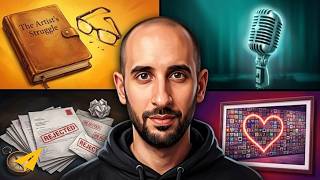
In this video, Evan Carmichael addresses a subscriber’s concern about writing a biography for a beginner painter who feels uncomfortable sharing personal details. He explains why a bio is crucial for artists and entrepreneurs: it creates a personal connection that can turn viewers into customers. Using the example of pixel artist Pete Elvitch, who creates art despite near blindness, Carmichael shows how a compelling story can outweigh technical skill. He advises against only sharing happy moments, encouraging honesty about struggles, motivations, and the emotional impact of art. He provides a step‑by‑step framework: articulate why you love painting, describe how it makes you feel, mention inspirations, challenges, and support systems. For those who value privacy, he suggests using an alias to share the narrative without revealing identity. Finally, he highlights that a genuine bio can inspire others, increase sales, and expand an artist’s reach, and he invites viewers to discuss their own bio experiences in the comments.
Chapters
If you're an artist or an entrepreneur and you're having a hard time telling your story, I'm going to share with you why it's so important on this video and how to do it. Hi, I'm Evan Carmichael. I believe in entrepreneurs, and I recently got a question from one of my YouTube subscribers— love you guys— Sarah, who wrote in to say, "I'm a beginner at painting. I'm not very public about it yet, and I'm not really interested in being public because everyone seems to have 500 questions. Do people really have to know the biography of a painter's life? What if their life was a bad life? I'm frustrated because I hesitate when a site asks me for my bio, so I leave it blank. The main reason I started painting is just because as a writer I still feel as if I have no voice, but when I paint I feel freedom. I always heard a painting is worth a thousand words, and they're right, but I don't think people should know about someone's crappy past. Any advice would be good. Is it okay to leave it blank, or can I type up a short version of the happy moments? Sarah, this is a fantastic question, and I feel your pain in, in, in writing it and the frustration that you feel and that you want your business to be successful and you feel like the bio is an important part of it and you don't know what to put in there. The reason why bio is so important is because it helps people make a personal connection to you. People like buying from entrepreneurs because they feel like they're buying from that person and not just buying from a company. And your story can make the difference between somebody wanting to buy your art and somebody just passing it over. An example is a buddy of mine, fan of the channel, Pete Elvitch. Who is a pixel artist, and he creates pixel artwork, and he did one of me as being a Minecraft character. And what's great about Pete is not necessarily his art skills, right? He's getting better. He wants to have more shows. He wants to get more sales. His technique still needs to be refined, but it's his story. What makes Pete great is he's almost blind. So here's this artist who's making art, which is very visual, right? And he's completely blind in one eye and almost completely blind in the other eye, and he uses that remaining vision that he has has to create pixel art. And so even though I think his art could be better and he's getting better at his technique and training and working on it, I'm interested in him because of his story. That's what your story does. It helps people connect the art to you. Now I think one of the things you have to get past is you only need to tell the positive happy moments in your life. If you look at a lot of artists' lives, they're not fantastic. And some of the greatest art, whether it's paintings or music or poems, came out of periods in their life of severe depression, anger, upsetness, and they funneled that energy into their art. You don't have to just tell all the good stuff. What people want to know is what went into this artwork. Who are you and why are you making these paintings? Even being honest in your bio and saying things like you come alive when you're painting and you're not great at writing is an honest, truthful statement that will help make people connect to you. So I'd start with thinking about why you love painting. Write it down and try to get a few sentences out there about your passion for painting. Then I think about how it makes you feel. How does it make you come alive? What stresses does it relieve from your life? If, for example, the rest of the world kind of stresses you out and, and you don't feel like you belong and painting is the only thing that makes you come alive, then write that. Put that down in there, right? I want to feel that emotional connection to you. You can write about some of your favorite pieces, the ones that really mean something to you, and how you came up with the inspiration for them. You could talk about your friends and your family and how you got into it and if they support you or if they don't support you and how you continue to persevere regardless. People don't want to just hear the story about how great things are. They want to hear the struggle. They want to be able to relate to you and see themselves in you. Nobody has a perfect life, and if that's the goods that you're selling, then it's not going to be authentic and you'll actually lose people. The people who you watch on YouTube or read their bios and really follow are the ones who are honest and authentic and vulnerable and willing to share that because it opens them up and allows people to connect with them on a much deeper level. And that's what you want whether you're an artist or a regular entrepreneur. You want people to feel connected to you and what you're doing and make it feel like they're a part of your story and your journey and and they want to see where you go with it. If after all that you're still super private and don't want that information to get out there, then what I'd suggest is using an alias. Tell your story in a way that nobody could pinpoint it to it being actually you, but also getting it out there under a fake name so that people can feel like they're connected to the artist. The other side benefit that I think about when I help share my story is that it could serve as an inspiration to others. If, for example, you feel lost in the regular world and art helps you escape that and makes you feel happy, that could be a solution for somebody else who is going through the same thing in their life. They might feel totally lost and helpless and have nobody in their life to guide them, and by reading your bio and looking at your art may inspire them to get into art and to have a happier life. Having a great bio and telling your story will help you get more customers, help you have a much bigger impact, help you make more money, and help you have your art be more well-known, which I think is ideally what you want. So good luck, write that bio from the heart, and believe. For those of you watching, I'd love to know your thoughts on writing the bio, any struggles you've had, how you came up with your bio, what you feel really works in your bio, as well as what you like from other people and how they express themselves that other people might be able to learn from as well. Leave that in the comments below. I'm gonna join the discussion. I look forward to seeing what you write. And of course, if you like this video and you wanna see more, don't forget to subscribe to the channel and the newsletter. Thank you so much for watching. I'll see you soon.