Craft Your Future: BELIEVE Like Mario Batali
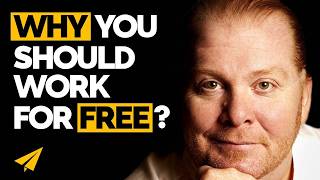
In this episode of Believe Nation, host Evan Carmichael interviews celebrated chef Mario Batali, presenting Batali’s "Top 10 Rules of Success" for entrepreneurs and creatives. Batali shares personal anecdotes from his culinary career, emphasizing relentless dissatisfaction, passion for work, staff and customer satisfaction, authenticity, creating memorable experiences, balancing art with commerce, learning from setbacks, empowering teams, the importance of family meals, and mastering one’s craft. The interview interweaves practical advice for aspiring culinary professionals, such as working for free to learn, and culminates in a step‑by‑step pizza‑making masterclass where Batali demonstrates dough preparation, sauce, toppings, and cooking techniques. Throughout, Carmichael frames the lessons with motivational commentary, encourages viewers to apply the rules to their own ventures, and invites audience interaction. The video blends motivational storytelling, business philosophy, and hands‑on cooking instruction.
Chapters
If you're looking for ways to always be yourself, create great experiences, and do what you love, then this video is for you.
When I am at work, it's never like I'm looking at my clock thinking, "Oh gee, another hour and I get to go home." It's more like, "I should have gone home 2 hours ago." I do not have a TV character. I do not have a Twitter character. I do not have a sneaky writer perspective. I only bring to the table what I am. I mean, remember when we opened Babbo, there was no internet. And there was no cell phones, and I was perplexed that they could ever be any help to us.
What's up, Believe Nation? It's Evan Carmichael. My one word is believe, and I believe in you. I believe you have an amazing gift inside you that I want to see explode out into the world. So let's get your motivation to a 10 and get you believing in you. Grab a snack and chew on today's lessons from a man who went from being a cook at a college pub called Stuff Your Face to having his own TV shows and owning restaurants around the world. He's Mario Batali, and here's my take on his top 10 rules of success. Enjoy! Let's kick things off with rule number 1: Never be satisfied.
To be or to think that you have become everything that is ever gonna be done in one particular place is generally either a symptom of blindness, foolishness, or laziness. Readiness. I think it's crucial to realize that at any level you might sometimes need to change some portion of what you're doing. I would say we're still in the middle of the development of La Serena. It started out as a, like, 500-seat restaurant, which we're not really good at running. So we haven't yet succeeded. I mean, we're popular and it's making profit and a lot of people come here, but I'm not completely satisfied with our product or our offering to this day. And I would say that that goes with most of my restaurants. If you're ever completely done and completely satisfied with something, well, then you're not in my business.
Up next is rule number 2: Do what you love.
For those of us who are interested in pursuing careers in the culinary industry, what is your best piece of advice and how we can go about achieving that? Um, it depends. Are you interested in the restaurant industry or the overall food world? Not sure. Okay, well, good. Then, then study anything that makes you feel good right now and be an A student. And when you're done, go work in something that seems like where you'd like to be for free for 6 months. Anybody will take someone who has insurance for 6 months for free to test drive it. The uninsured, however, become an issue because there's a lot of people out there that aren't, and there's a whole mess of litigious skanks out there who would love to sue us for letting someone work for our restaurant for free. So what you need to do is figure out whether it's a magazine or whether it's a dietitian facility or whether it's sports medicine or whether— I mean, there's a thousand ways to get involved in the field. Find one that you think is the one that you'd likely enjoy the most, because I can tell you one thing: of all of my college roommates, perhaps Greg Ostroff and I have nailed it the best. In that when I am at work, it's never like I'm looking at my clock thinking, "Oh, gee, another hour and I get to go home." It's more like, "I should have gone home 2 hours ago." Because I never go to work a day in my life. When you love what you do, you are never at work. You are always enjoying it. It's kind of like being in college. Except they pay us. So find something that you like and then dally in it. Like spend the next summer If you want to be at Food Wine magazine and you write Dana Cowan or Kate Krader and say, "Mario Batali said I could call you and I could come work in your place for free," they'll say, "Yes, are you insured?" And you'll say, "Yes, I am. I'm happy to come in on my own dime. I just want to be a fly on the wall, or I want to help you guys do something." And in a restaurant, in a magazine, in a soup kitchen, in a food service facility like at a college here, or a grease truck, or any one of the places, They'll always take on free labor, and you will learn a lot about that experience, and you'll also learn a lot about your potential for happiness doing that. And that's most importantly what you really have to do is say, can I see myself doing this for 30 years? And I don't think there's any of us— I mean, I didn't think I could do anything for 30 years, and now I'm old, and look, I'm still doing it.
Let's move to rule number 3: satisfy your staff and customers.
If you in your mind have decided that your career is going to be about feeding people, you have to understand that there's one piece of that which is feeding people. The other piece of that— and there's three— is that you're taking care of your family of staff in a way that allows them to feel as important in your world as is serving the customer. 20 years ago, I spent 100% of my time on guest satisfaction. Now I spend 50% of my time on guest satisfaction and 50% of my time on staff satisfaction. Because at the end of the day, you're only as good as your team is. And if they are not happy, or if they're eventually just moving on quickly because they're trying to build their own little resume and go work for Gordon Ramsay and then go work for Daniel Boulud and then go work for Mario Batali and then do this and do that, and all of a sudden, like, they're just like spinning. What you really need to be is someone who totally gets both the integration of your staff happiness and your customer happiness. When you understand that, then you can start a restaurant.
Time for rule number 4: Always be yourself.
I wish there was a wall to my private stuff. The beauty and the trouble with me is that I wear my heart on my sleeve and I am only one guy. I do not have a TV character, I do not have a Twitter character, I do not have a sneaky writer perspective. I only bring to the table what I am, and it's unedited version that people find the real me.
Let's go to rule number 5: Create great experiences.
There's a lot of investments going into the idea of changing the whole way restaurants are done. I was in an airport the other day. Everything's on an iPad. They bring it to you. Do you think like that or do you feel that there's not going to be a shift in how restaurants are? Restaurants just be restaurants for— I mean, I am— I used to— I mean, remember when we opened Babbo, there was no internet and there was no cell phones. And I was perplexed that they could ever be any help to us. So anything could change. And I'm not opposed to the idea of that. But what our restaurants espouse is the human touch. For me, the ultimate luxury is not the lack of humans. It's that there are humans there. And that they're touching it with their personal potential for error. And their humanness is what makes something for me really delicious. And that interchange is super significant to my style of restaurant. That doesn't mean that that's not gonna be somewhere else. And I mean, in a world where Chipotle can go further and further and further, You don't necessarily need a human relationship with a delicious, well-sourced, great idea to bring you that food in a very quick time. But in terms of the kind of restaurant experience that I have spent a lot of my time developing and working on, I don't see me getting rid of human beings too quickly.
Up next, rule number 6: intersect art and commerce.
As a core of your business ideology, you have to figure out what it is that you can make that is perceived as value, as delicious, and as something you want to make. When I talk to all of my chef friends, what's important for all of us is to realize we need to live on the intersection of art, the food we want to make, and commerce, the food they want to eat. And if you can find that in the same vicinity, then you have a restaurant idea. If you just want to make stuff that makes you completely happy and your customers don't understand it, you do not have a business. You have a good place for you to express your art, but the most important thing is that it's a sustainable a pleasurable experience for both you, your staff, and your customers.
Let's go to rule number 7: Fall forward.
You have so many success in your life. Is it any failure that you learn a lesson from? Failure is a word though that doesn't really enter into my vocabulary. There are things that are less successful. I like that. When you fall forward on your face, you are moving forward. Like cooking, like anything, as well stated by Gladwell in his Outliers, it takes years of practice to make it look effortless. When you watch an Italian do a kiss-kiss and throw their coat over their shoulder like that, it took them 10,000 million tries at the house to throw it over just like that. Now they're badass. They're kissing someone at the train station. It took practice to get there.
It's time for rule number 8: set your team up for success.
It's part of being a good businessman to both understand the business of the kitchen, the business of the front of the house, and the success of your employees. Being integral to the success of your operation, even after they leave you. I support a lot of my team as they go on beyond my restaurant business. I'm far more satisfied by their success, having already had mine. To see a dishwasher become a line cook, become a manager, become an executive chef, open their own restaurant and, and have it be successful is probably to my taste, the most delicious thing I can have happen to me now.
Let's go to rule number 9: have family meals. As someone who's worked in restaurants and also experienced eating at home for dinner with your family, where do you see the future of that going?
Because more and more families don't eat dinner together, and more and more restaurants don't cook for their employees. It's a good one. Well, the good thing is— pardon me. I'm a little wheezy right now. Take a little LSD, I'll be just fine. Well, I mean, the future of the home meal is obviously in your hands. And I would suggest two things. Cook more often. Cook more simply. Make the meal required. And most significantly, when you finish the meal, let the dirty plate sit on the table for 20 minutes. Because it sets the tone for the conversation. If every single part of your day is doing something, and you need to get it done, and then the next step is doing something else. Put your phones in a stack. They're calling. I don't know why. They keep phoning you. I don't know. It's because too many people have my damn phone number. Eh, eh, eh, eh, eh. Put your phones in a stack. And at the end of the meal, don't make the move. Let everyone sit and understand that we're going to sit here for 20 or 30 minutes and just chat. You can't do anything but chat. You can't clear, because that sets the tone for the conversation that can happen and should happen. If you have kids, that sets them up for understanding that this is crucial and valuable time. If it's your roommates, you should all agree to it at least once or twice a week. In college, we're gonna sit here and talk for 20 minutes with the dirty plates in front of us because it sets a tone for the rest of our life. If every single moment has to be moving forward, we're never gonna find time to relax, we're never gonna get to know each other, and we're never gonna be able to relax and kind of meditate on the meal and the beginning of digestion and the beginning of our conversation and knowing each other. My restaurants will always have a family meal, no matter what the rule is, no matter whether we get a meal credit or whether anyone gets to take a meal credit. It is crucial time. And it's also at that time, we have a rule that after everyone's done eating and we're still talking about wine or we're talking about service tonight, 10 minutes you do not clear the table. Because if every time you're doing something, you're always moving forward and you're always moving on to your next project and you're always looking at your phone, you're trying to figure out who's Snapchatting who or what's the next Twitter thing is, you're— we're losing perspective on it. And we— it could be argued that we lost it. But if you slowly start taking back quiet, personal time. And that's involving food to start. But then I would suggest that you grab personal time in the daytime. Start meditating. Take 20 minutes twice a day. Take 20 minutes to reflect on something. Just take 20 minutes to look at a building from outside and don't say anything to anybody. Try to find 20 or 10-minute slots 5 or 6 times a day. You will feel better about life and you will reflect that on every conversation that you have. You will be a better person, and we will be better people.
And finally, rule number 10 before we get to the bonuses: master your craft.
Today I'm going to show you how to make pizza. If you follow these instructions, anybody can make this. You can cook like a pro. Pizza is the single most recognizable food on the planet. What it really comes down to is that pizza is simple, it's easy to make, it shouldn't be too complicated. Two of my favorite pizzas are aglio e olio and pepperoncino. Arduino and Margherita. Let's get started with the dough. So I have 3½ cups of flour. I'm going to take in the very middle of that about 1¼ cups of blood temperature water. That's to say somewhere between 96 and 98.6. Then I'm gonna take my yeast and I'm gonna mix that in. That is 1 package of active dry yeast. I wanna start that with about 1½ tablespoons of sugar. Allow it to just sit there for a second. I'm going to add about a quarter cup of extra virgin olive oil. After about 30 seconds, you'll see that the yeast starts to bubble up. That's the key. Once that happens, I stir it all in. When you really get down to it, what you're going to use is your hands. We're going to knead this until it comes together. I'm going to add about 2 teaspoons of salt. Maybe a tablespoon. A little salty doesn't hurt him because I'm really looking for this to have its own flavor. I'm getting a massive upper body workout right now. You can't measure this. You can't do this in the gym, and it really doesn't make a difference. When you get to the point where it feels almost like it's just about too firm, like it's not really giving anymore when you do the knead like so, then you're done. And now this— at this point, you're ready to let the pizza rise. Take this just like so and put it in a warm place somewhere in your kitchen. We allow it to really almost triple in volume. So after you allow it to rest for about 45 minutes, what we're going to do is we're going to cut them like that. Everything about this is easy. The pro tip here is to make sure that you don't tear. You don't want to stretch it too thin. Although it's a little guido, throwing pizza actually gives you the best way of extending that without pushing your fingers through it. So that's the reason it exists. But the real trick is going to be when I show you that you can use your stove to par-bake a crust in advance. I have my heat on medium-high. You just drop it on like that, and then by the time we get to the final product, what you're gonna see is it's got a better crust, it's got a better chew, and in fact, it's better pizza. Pizza! Let's make the very first pizza, a pizza margherita, and that's fresh mozzarella, tomato, and basil. I'm gonna take about that much sauce, and we're gonna go starting in the center. And this is where my kids get a little jiggy. They like to have fun pretending they're going to use a paintbrush. They've decided to make it into a Picasso or something like that. But in my opinion, the trick is Don't overdress it. And I mean, come on, you guys, the trick is not putting too much mozzarella on. The whole idea of extra cheese pizza— no bueno, male. So this goes right into the broiler, right on this pan, just like so. Now, unfortunately, there are no pro tips in knowing exactly when it's gonna be done. You're gonna see the cheese is melted and the crust will get a kind of a a little char on it. I'm gonna say this pizza's done. And now let's get started with the aglio e peperoncino pizza. What it has is merely garlic and the garlic oil. A little secret in the restaurant world is poaching your toppings in the oil. What you get is the two things. You get, first of all, the ingredient itself, but then you get the fragrant oil that has all the heady deliciousness of anything you happen to cook in it. I take garlic, slice paper thin, I put it in a pan with olive oil, I submerge it underneath the olive oil, I bring it up slowly. It gives me these beautifully poached garlic cloves. It's twice as unctuous. And second of all, the oil that's left over has the magnificent fragrance of whatever you've just cooked in it. That's one of the greatest tricks of all time. I've done the same thing with these Fresno chilies. And then we take this one to the oven. Now the broiler's on kill, the phasers are on stun. Put that in like that. If you've ever had a pizza fail, it probably wasn't actually failing. You were probably impatient. What you have to do is burn 2 pizzas to understand where the wall of acceptable variation in color is. So now the pizza. We'll always get a little herbs at the last second, so I'm tearing them, I'm not chopping chopping them. Never seen an Italian grandma chopping stuff on a board. Everything that really happens in the Italian kitchen happens over the food in your hands. Very last second, another drizzle like that, and there you have Mario Batali's crispy pizza.
Thank you guys so much for watching. My personal favorite rule, I think I'm gonna go with number 5, create great experiences. It's something that I'm trying to do in all of my businesses. At Toronto Dance Salsa, we're looking at how can we make the best possible experience for people who are coming in to take dance classes with us, not just teaching them the moves but giving them an emotional experience. Same thing for my YouTube channel, for my website, everything that you guys are consuming here. I want it to be not just knowledge that you're feeding into your head but a fantastic experience for you along the way. I don't always make it perfect, I make a ton of mistakes along the way, but but that's my goal. And so it's a constant reminder to myself to create great experiences as well. So I appreciate that message from Mario. I'd love to know from you, is rule number 5, create great experiences, your personal favorite? Or is there another rule that you like better? Let me know, leave it down in the comments below. I'm really curious to see what you have to say. Now I made this video because April Blitz asked me to. If there's a famous entrepreneur that you want me to profile next, check out the link in the description. You can go to the request line and cast your vote. I also wanna give a quick shout out to Roger Pierce from piercewords.com. Roger, thank you so much for picking up a copy of my new book, The Top 10 Rules of Success, and taking that awesome picture in front of the Christmas tree. I love the smile. Thank you so much for the support, man. I really, really, really appreciate it. So thank you guys again for watching. I believe in you. I hope you continue to believe in yourself and whatever your one word is.
Much love.
I'll see you soon.
What inspires your cooking, and are there times when you just don't want to cook? I was originally inspired by the fact that my family always cooked. We grew up in Washington State. We were a second-generation immigration family, but both French-Canadian, Italian. We always cooked. That was what we did. Like, for us, a good time on New Year's Day was to make 400 pounds of sausage for the year. That was a woo-hoo. When it was blackberry season, we would take our yellow Cutlass Supreme station wagon down to Dash Point Road in Federal Way and pick blackberries until we could no longer see each other because we had blackberry fights during the blackberry picking session. And we would come back and make enough jam and enough pies to last us for a year. So for us, cooking was foraging. Foraging was fun. It was something that we did. It was kind of a chore thing, but it was also just one of the things that we did. So cooking was always something that I enjoyed and I loved. And as a matter of fact, when my mom Mom suggested that I go to cooking school instead of university when I was a sophomore in high school, I had just seen Animal House, and there was no way I was going to miss out on this whole idea of college. In retrospect, I would suggest to anybody that if they want to get a job in any craft, whether it's cooking or arc welding or, or anything, you should go to a liberal arts college and learn something about the world, become fascinating. And become fascinated, and then go off and learn your handcraft and become something else. But don't just go to a trade school first and that's it, because you won't be as good a businessperson, you won't be as interesting, you won't have as many opportunities, and that's why you're all here anyway. So, over the years— And no, I'm never discouraged. I want to cook every day of my life. You know, in the last 2 weeks, everyone's saying Crocs are cool, and I think it's Alan Cumming that made them cool. I just kept staying on and staying on and staying on. I don't know. You got a Batman button.
Batman, you've got a skull and crossbones button on there.
They're pretty cool. That's— Batman is because Adam West, who was the original Batman in the TV show, and I share a birthday. And that's not skull and crossbones. That's Keith Richards.
That's Keith—
Oh, okay. Go on, sorry, with your question, tell me. How did you develop your signature style and the confidence to wear it? It's just something like— I'm obviously not— I mean, it's a look. I don't know that— that it's a fashion statement. It's just like at a certain point in your life you realize, I don't really care what people think about my clothes. And when Clinton Kelly, who's a famous fashion plate who works with us on The Chew, is as proud of my look because he says, you wear it and you do it. I don't spend any time in my day thinking about what clothes I'm going to put on. Like, I don't spend even one minute. I grab the first thing in the row of shirts, the first thing in the row of shorts, and I wear the same shoes every day. Every day. So imagine all the free time that a lot of other people spend thinking about what they're going to wear that I can devote to doing whatever else I want. Other famous people, like famous for good reason, not famous for cooking, like Albert Einstein and Steve Jobs, they always wore the same clothes. So I'm in a long line of those kind of guys. For anybody interested in any level on any part of any art, the most important category to get together first is your person. You must learn to be comfortable in your skin. You must learn to have a critical mind. You must learn to be thirsty and hungry for knowledge at the same time. You must read. And once you've got to that point, then you should learn your craft. And if it's going to be cooking, I suggest that you go to the best restaurant you know and work for free for a year. That's the way to learn. Cooking schools are all great, but if you really want to learn what's going on and how to be a restaurateur, you should go work in a restaurant. If you want to learn how to be a cooking teacher, you should go to a cooking school. If you want to learn how to make wine, you should go to a winery. If you want to learn how to make Fords, you should go to Detroit. All of the things that you could possibly learn, you should go to the place where you think they make the best one and work there for free, because it's the only and most efficient way to get all of that information. So let me give you the one word secret to happiness. One word. This is all you need to be happy. The most important word ever. If you had to think of one word that's most important to you or that sums you up or that would be kind of like a little beacon.
Hey, Believe Nation! If you want to know what the most important one word is for Tony Robbins, Gary Vaynerchuk, Oprah Winfrey, will.i.am, and Howard Schultz, I have a very special secret video for you. Check the description for details.
More from Evan




How the Biggest Mistake in History Created A Trillion-Dollar Empire | Sergey Brin



9 Machiavelli Principles That Force People To Respect You | Machiavellian Philosophy



The First 10 Words That Instantly Ruin A Sales Conversation | Vanessa Van Edwards