Earl Nightingale Reveals the STRANGEST Secret to Wealth and Fulfillment!
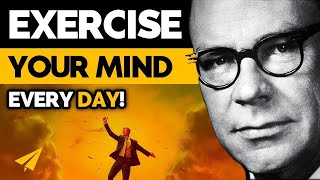
The video, hosted by Evan Carmichael, presents a curated compilation of Earl Nightingale’s classic motivational teachings, framed as his "Top 10 Rules for Success." Nightingale emphasizes that success is the progressive realization of a worthy ideal and outlines concrete habits and mind‑sets to achieve it. Core principles include: the primacy of attitude as the driver of one’s environment; daily goal‑setting and a disciplined one‑hour‑a‑day thinking habit; investing in personal development and R&D like a business; treating the boss (or customer) with respect and seeing service as the direct source of rewards; managing worry by focusing on solvable problems; harnessing imagination to become what one envisions; and the “strangest secret” that we become what we think about. The narration interweaves anecdotes, metaphors, and practical steps, urging listeners to adopt these habits to transform work, income, and overall fulfillment.
Chapters
Attitude. It's been called the most important word in any language in the world.
You see, the average man believes some businesses are better than others instead of realizing the truth that there are no bad businesses. Just one great idea can completely revolutionize your work and as a result, your life.
None of us would want to work for a company or invest our money in a company that didn't have a very viable research and development department.
If you're worried about your income or your future, you're concentrating on the wrong end of the scale. Those who insist on remaining spare gear must expect to be jettisoned when things get too rough for safety.
Success is really nothing more than the progressive realization of a worthy ideal.
Know your boss. He's the customer. Treat him with the respect, care, and courtesy and humor he deserves. Living successfully, getting the things we want from life, is a matter of solving the problems which stand between where we now are and the point we wish to reach.
Imagination is everything, and we can become what we can imagine.
He was an American radio personality, writer, respected speaker, and author. He's considered to be the dean of personal development. In the early '50s, he was the voice of Sky King and a radio show host with WGN. He's Earl Nightingale, and here are his top 10 rules for success.
Attitude. It's been called the most important word in any language in the world because it's our attitude toward our world, toward all the people in it, that will determine the world's attitude and all the people's attitude toward toward us. It's a simple thing, most of us know it, but we tend to forget it. People will react to us according to our attitude, and our attitude is the greatest gift we can be given. You know, the little creatures of the world were given a wonderful gift by Mother Nature called protective coloring, in which they can blend into their background without being seen. But man was not given this great gift because man was given an incalculably greater one. Only man has the godlike power to make his surroundings change to fit him, because his environment will change as he changes. A man's environment is a merciless mirror of him as a human being, and if he thinks his environment could stand a little improvement, all he has to do is improve and his environment will improve to reflect the changing man.
There's nothing more pitiful to my mind than the person who wastes his life running from one thing to another, forever looking for the pot of gold at the end of the rainbow. And never staying with one thing long enough to find it. No matter what your goal may be, perhaps the road to it can be found in the very thing in which you're now engaged. You see, the average man believes some businesses are better than others, instead of realizing the truth that there are no bad businesses. There are just those people who don't know enough to see the opportunities in the work they're in. No matter what our work happens to be, it's our business. We're the manager. If there seems to be no future or opportunity in it, it isn't always because it's not there, but perhaps only because we can't see it. I want to recommend that you take just 1 hour a day, 5 days a week, and devote this hour to exercising your mind. Pick 1 hour a day on which you can fairly regularly count, and during this hour every day, take a completely blank sheet of paper. At the top of the page, write your present primary goal clearly, simply. Then, since our future depends upon the way in which we handle our work, write down as many ideas as you can for improving that which you now do. Try to think of 20 possible ways in which the activity that fills your day can be improved. You won't always get 20, but even one idea is good. Now remember two important points with regard to this. One, this is not particularly easy, and two, most of your ideas won't be any good. Now when I say it's not easy, I mean it's like starting any new habit. At first you'll find your mind a little reluctant to be hauled up and out of the old familiar rut. But as you think about your work and ways in which it might be improved, write down every idea that pops into your mind, no matter how absurd it might seem. Let me tell you what will happen. Some of your ideas will be good and worth testing. The most important thing this extra hour accomplishes, however, is that it deeply embeds your goal into your subconscious mind, starts the whole vital machinery working. And 20 ideas a day, if you can come up with that many, total 100 a week, even if you don't think on weekends. An hour a day, 5 days a week, totals 260 hours a year and still leaves you 3,740 hours of free leisure time. Now this means you'll be thinking about your goal and ways of improving your performance, increasing your service, 6.5 full extra working weeks a year. 6.5 40-hour weeks devoted to thinking and planning.
Can you see how easy it is to rise above the so-called competition?
And will still leave you with 15 hours a day to spend as you please. Starting each day thinking, you will find that your mind will continue to work all day long. You'll find that at odd moments, when you least expect it, really great ideas will begin to pop into your mind. And when they do, write them down as soon as you can. Just one great idea can completely revolutionize your work, and as a result, your life.
None of us would want to work for a company or invest our money in a company that didn't have a very viable research and development department, that is pumping a good percentage of its profits back into research and development because its future depends on it. But so does a man's. And you might ask yourself, how much of your own take-home pay have you spent during the past year for materials calculated to make you smarter this year than you were a year before? Calculated to make you a little better, a little bigger as a human being, to perhaps love a little more and hate a little less and do a little better job than you you did a year ago? How much money are you pumping back into yourself and your future? It's worth thinking about.
Our rewards in life will always match our service. It's another way of saying, as ye sow, so shall ye reap. And it's been written in many ways, in every language on Earth. I like to think of this law in the form of a giant apothecary scale. One of the bowls is marked service, and the other is marked rewards. Now, whatever we put into the bowl marked service, the world will match in the bowl marked rewards. If any person alive is discontented with his rewards, he should examine his service. Action, reaction. As you sow, so shall ye reap. What you put in will determine what you must get back in return. So simple, so basic, so true, and yet so misunderstood. If a business is not expanding to the quick and exciting tempo of the times, it must examine its contribution, its service. If a person is unhappy with his income, he must examine and reevaluate his service. Never before in the history of the world have human beings been so interdependent. It's as impossible to live without serving others as it would be to live if others were not constantly serving us. In thinking of ways of increasing your service, read books on your specialty. Read what others have found to work well for them, but at the same time, think of original and creative ways of increasing your service, ways that are unique with you and the way you are. Each morning and during the day, ask yourself this question: How can I increase my service today? Knowing that my rewards in life must be in exact proportion to my service. I do this every day, and you will have started to form one of life's most valuable habits. Horace Mann wrote, if any man seeks for greatness, let him forget greatness and ask for truth, and he'll find both. You see, you can cut away all the confusion and complications and nagging worries and vague half-formed fears by returning to the great truths, the great laws, the great verities on which all success, all accomplishment, the whole world is built. If you're worried about your income or your future, you're concentrating on the wrong end of the scale. Look at the other end. Concern yourself only with increasing your service, with becoming great where you are, and your income and your future will take care of themselves. The great steel magnate Andrew Carnegie, when asked the formula for success, answered, "Put all your eggs in one basket, then watch the basket." Let's be frankly realistic. Who gets laid off work during an economic slump? Well, what gets thrown over the side when a ship is in danger of going down? Everything not absolutely vital to the operation of the craft and the safety of its passengers. And it's the same with a business or any other organization. With a corporation, its main purpose is to remain in business forever. As long as it remains in business, it can provide a needed product or service, protect the investment of those who have faith in it, and provide jobs for those who are vital to its continuity of operation. It's the duty of management to protect the firm and the people who depend upon it, just as it's the captain's duty to do everything in his power to keep his ship sailing. All a person needs to do is to make certain that he or she is a vital part of his business or organization. Those who insist on remaining spare gear must expect to be jettisoned when things get too rough for safety. Nobody, particularly the captain, likes to see cargo thrown over the side, but if it'll help save the ship, there's simply nothing else to do. That's why people are laid off. It has nothing to do with management and labor relations or personalities, and in the long run it's best for everyone since once smooth sailing has again been reached, additional employment can be made available. So each of us must decide whether we want to be part of the cargo or a member of the crew.
Most people don't know what success is all about, and since they don't know what it's about, they really don't know where to look for it. Success is really nothing more than the progressive realization of a worthy ideal. This means that any person who knows what he's doing and where he's going is a success. Any person with a goal toward which he's working is a successful person. This means that the boy in high school who's working toward a diploma, the boy in college toward a degree, is just as successful as any human being on Earth because he knows what he's doing, why he's getting up in the morning, and where he's going. But conversely, if a person doesn't know what he's working toward, what it is he wants, doesn't have a goal toward which he's working, then he must at least by this definition be called unsuccessful. Why isn't then, with this simple definition, why isn't everyone successful? Should be easy. Yet surveys indicate that 19 out of 20, 95% at least, are not. In fact, a survey one time asked thousands of working men why they got up in the morning and went to work, and 19 out of 20 didn't know. 19 out of 20 working people didn't have the foggiest notion of why they got up in the morning and went to work. Under closer questioning, they said, well, Everybody works. Well, that would be a good reason to quit. In fact, here's a little rule of thumb you might want to remember: whatever the great majority is doing under any given circumstance, if you do exactly the opposite, you'll probably never make another mistake as long as you live. Just something to keep in the back of your mind. The problem with most people is that they're playing the world's most unrewarding game, and the name of the game is follow the follower. There's a story about a small town in which there was a jewelry store, and like all jewelry stores, uh, or most jewelry stores at least, he had a big clock in his window. And every morning for years he'd noticed a working man stop, adjust his pocket watch to the same time as the clock in the window. He'd been doing this for many years, and one morning the jeweler was out in front sweeping his sidewalk, and so he asked the man, he said, tell me, why do you adjust your watch to my big clock every morning? I've noticed you're doing that for years. The man said, well, I'm the foreman down at the big plant. He said, I want to make sure my watch is correct because I blow the the quitting whistle every night at 5 o'clock. The jeweler looked at him rather strangely for a minute and he said, "Well, that's funny," he said. "I've been setting that big clock in the window by that quitting whistle all these years." A very logical thing, but they could have been off 6 months. It was a case of a person just going along with what he thought to be correct without checking his references. So I want to suggest that from now on out, at least we do that, that we check our references and ask ourselves, are the people I'm following, going where I want to go.
Try to find some way every day in which your work can be improved. And above all, know your boss. He's the customer. Treat him with the respect, care, and courtesy and humor he deserves. Remember that he pays all of your bills every month. He will buy everything you will ever own. He may be, of course, crude, coarse, ignorant, selfish, conniving, and a thoroughgoing savage. He often will be. And here it's more important that you treat him with all the care and attention you can muster. If you don't, and if you permit his attitude to affect yours, you're admitting that he's the stronger person. If you respond the same way he conducts himself, you're admitting you're no better than he is. But most people are nice people. They're people like you and me who want to be liked, who want to get along, and who want to be friends. They have problems and sorrows of their own of which we're not aware. And they have bad days and disappointments. Make sure that the time they're with you is a high spot in their day, and they'll want to come back, not just because of your company, but because of you. Successful people are not people without problems. They're simply people who've learned to solve their problems. And there you have it. Living successfully, getting the things we want from life, is a matter of solving the problems which stand between where we now are and the point we wish to reach. No one is without problems. They're a part of living. But let me show you how much time we waste in worrying about the wrong problems. Here's a reliable estimate of the things people worry about.
Things that never happen, 40%.
Things over and past that can't be changed by all the worry in the world, 30%. Needless worries about our health, 12%. Petty miscellaneous worries, 10%. Real legitimate worries, 8%. In short, 92% of the average person's worries take up valuable time, cause painful stress, even mental anguish, and are absolutely unnecessary. And of the real legitimate worries, there are two kinds. There are the problems we can solve, and there are the problems beyond our ability to personally solve. But most of our real problems usually fall into the first group, the ones we can solve if we learn how.
We become what we think about most of the time, and that's the strangest secret. This is why thinking is so vital. This is why a goal is so important, because we will become that. This is why people who set goals achieve them. The trouble with men is not in achieving their goals— they do that— it's in establishing them. We must love them. We must help them, we must serve them, because our whole success will depend on our ability to do these things. But never lose our own individuality and our identity by permitting ourselves to become submerged in what has historically proved itself to be little more than a suffocating sea of indirection and purposelessness. If we want to emulate someone, fine, but let's be choosy in whose steps we follow. It's the only life we've got. And remember to think. Imagination is everything, and we can become what we can imagine. If you find yourself getting depressed and down at the mouth, as we all get once in a while, you might want to remember this quotation by Dean Briggs. He said, "Do your work, not just your work and no more, but a little more for the lavishing's sake, that little more which is worth all the rest. And if you suffer as you must, and if you doubt as you must, do your work. Put your heart into it, and the sky will clear. And then out of your very doubt and suffering will be born the supreme joy of life. Believe it or not, in an age when we've come to nearly deify leisure time, we've almost lost sight of the fact that virtually all our satisfactions and rewards will come not from our leisure, but from our work. And don't forget the strangest secret: we become what we think about.
Thank you guys so much for watching. I made this video because Bootcamp Actual asked me to. So if there's a famous entrepreneur that you want me to profile next, leave it in the comments below and I'll see what I can do. I'd also love to know which of Earl Nightingale's top 10 rules meant the most to you, had the biggest impact? Leave it in the comments below and I'll join in the discussion. And one last thing, my personal goal now with the channel is to hit 1 million subscribers, so anything you can think of to help share the video, get it out there, get more people on here, I'd really, really, really appreciate your support. Thank you guys so much for watching, continue to believe, and I'll see you soon.
More from Evan




How the Biggest Mistake in History Created A Trillion-Dollar Empire | Sergey Brin



9 Machiavelli Principles That Force People To Respect You | Machiavellian Philosophy



The First 10 Words That Instantly Ruin A Sales Conversation | Vanessa Van Edwards