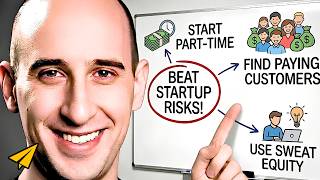
In this #AskEvan episode, Evan Carmichael responds to a viewer’s query about the biggest risks facing small‑scale entrepreneurs and how to manage them for sustainable growth. He identifies three core risks: (1) the financial danger of going all‑in—selling savings, taking on debt, or mortgaging a home—so that a failed venture leaves the founder with nothing; (2) building a product or service that no one is willing to pay for, often caused by starting with an idea rather than a validated problem; and (3) overspending early, such as renting office space or buying equipment before any revenue streams exist. To mitigate these risks, Evan offers three practical strategies: start the business part‑time to retain a steady income and build momentum; focus on acquiring paying customers first, using their problems and willingness to pay as the foundation for product development; and defer most expenses until the business is generating cash, limiting spending to essentials like a simple website and business cards. The video concludes with a call for likes, comments, and a promise of future episodes.
Chapters
Hi, I'm Evan Carmichael, and welcome to another edition of #AskEvan. In today's video, I'm going to answer a question from one of my readers, Nicholas, who says, "Thanks a lot for the inspirational quotes. Just to ask one question: What are the risks in small-scale entrepreneurship, and how do we as entrepreneurs manage them for the purposes of our business sustainability?" Good day, Nicholas. So Nicholas, I think the biggest risk that entrepreneurs face when they're launching their business is losing everything. And a lot of entrepreneurs will sell out all their savings and take on additional debt and, you know, mortgage their home. And if their business doesn't work out, they're really left without anything and have to start all over again. So that's a pretty huge risk, and I want to make sure that you guys don't have to face that. And I have a few ideas for you that hopefully will help. So the first is you don't have to start your business on a full-time basis. You can start part-time, and what that does is give you money from your current job and allows you to build your business up over time. And hopefully you're in a job that you can learn some skills or meet some people that will eventually help your business grow as well. And it's important that you take steps every day to grow your business, so it's not just spending 3 months going crazy full-time and then you run out of money and you have to go get a job. You'll do better in spending a little bit of time every day over a longer period of time so you let that momentum grow and allows your business to flourish. The second thing I would encourage you to do is try to build around a customer. A lot of entrepreneurs start with a great idea, they think it's going to change the world, and then they go out and try to sell it and nobody wants to buy it. So try to start the other way around. Try to start by finding customers who have a problem and are willing to pay for a solution for it. If you can find those people, it's the best way to build a business because you have money coming in right away. Away and reduces the risk of you running out of money and having to close down your business. So try as much as you can to find a paying customer at the start. The last thing that I would recommend is try not to spend money until you're making money. And that might sound like common sense, but a lot of entrepreneurs do the exact opposite where they start a business, invest tons of money, you know, go get an office, you might need a car for the business, you make up all these expenses that you think you need, but in reality, try not to spend anything until you have money coming in. You may need business cards and a simple, simple website, but that's it. The rest is sweat equity, is your time going out trying to find business, and try not to start spending money because you'll often spend it on the wrong things until you have money coming in. And once you have that money coming in, you know it's working and you can spend money to amplify those results. So I hope that helps. If you guys like the video, please give it a thumbs up below and I'll make more. And I'd also love to hear your thoughts and feedback if you want to leave a comment. And stay tuned for the next episode.