From Social Worker To Billionaire: The Ultimate Wealth Blueprint | Shawn Meaike
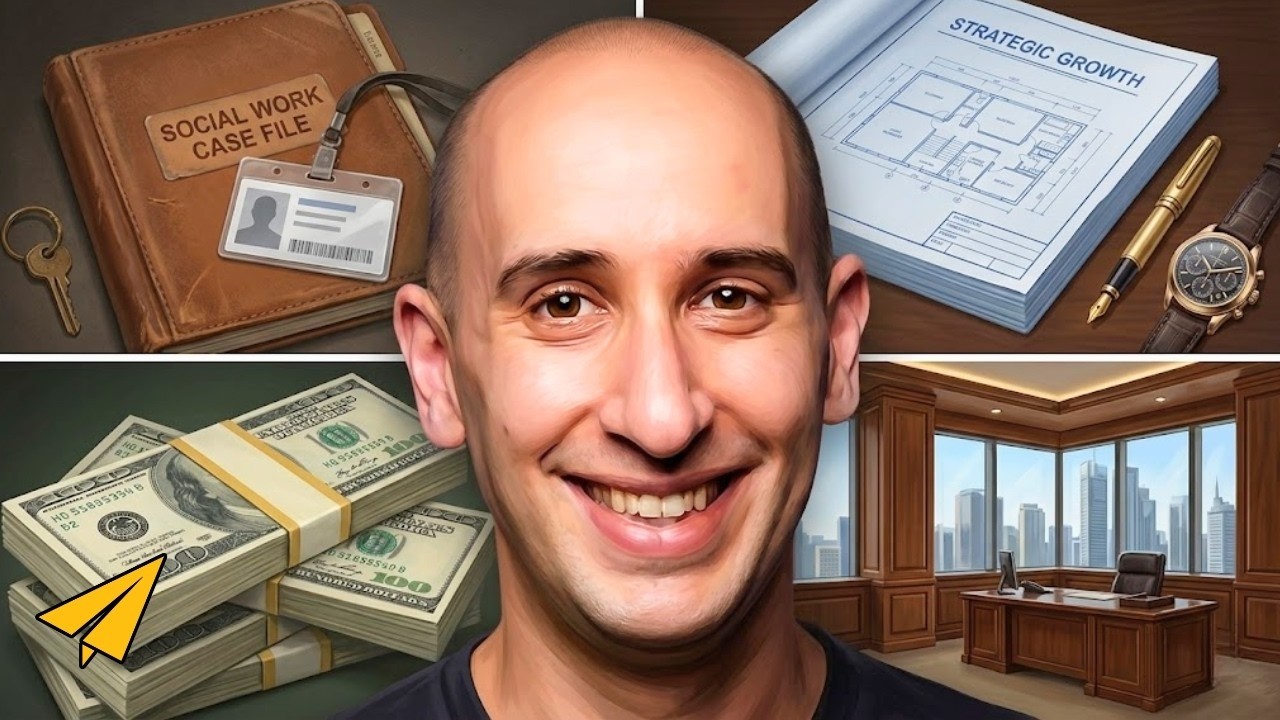
In this interview, host Evan Carmichael talks with Shawn Meaike, a former social worker who built a billion‑dollar life‑insurance distribution company and authored the book Pick Money: Five Years of Financial Freedom. Shawn explains how his social‑work communication skills became a foundation for service‑oriented selling, why life insurance is a need‑based product, and how he scaled a network of 51,000 agents. He outlines the five‑step “Pick Money” framework that promises to help anyone reach $1 million in five years through disciplined spending, financial education, recurring income, and consistent “picking” of money opportunities. Shawn discusses common money mistakes—overspending, lack of education, and inconsistency—along with mindset shifts taught by wealthy families. He emphasizes the importance of mentorship, changing one’s proximity to successful people, and honing and owning one’s skill set, especially communication and leadership. The conversation also covers the impact of AI, the need for human connection, and Shawn’s personal projects (a podcast, YouTube channel, acting) that keep him uncomfortable and growing. Throughout, he stresses service over sales, the power of asking questions, and the belief that anyone can replicate his success with the right habits and network.
Chapters
Most people struggle with money because they don't get educated about it.
I think most people suck with money because they're impulsive. They follow what everybody else does. People don't educate themselves on money, on themselves, on how anything works.
My guest today, Shawn Mike, started his career working as a social worker. He took the communication skills he learned from helping abused and neglected children and applied them to business.
I think my social work background created Like, when I started getting into sales, I watched people and they were uncomfortable to call people. And I'm thinking, I used to go to people's homes unannounced with a report, like a 3-page report that talked about sexual abuse, physical abuse, drug addiction. There was a homicide committed. And now all I got to do is call people up that want a product. I was like, man, I think it was the greatest, like, training. It's like playing minor league baseball and then getting called up to the pros. And I was like, man, this is pretty easy up here. Like, I was very well prepared.
He eventually built a billion-dollar life insurance company with a massive team of agents.
I got 51,000 people across the country selling life insurance, but I have a system, whether it was in real estate, construction management, land developing, where I've been able to teach a lot of people to make a lot of money. It's a skill set. I've developed it over years. You won't make a lot of money unless you're service-oriented. I just believe that.
And today he's sharing his exact blueprint for financial success from his new book, Pick Money. Enjoy.
There's plenty of things I do that, that make me money. I want more people to know what I learned, and it took me 30-plus years of asking thousands of questions, and I tried to put it in here and condense it best I could.
All right, everybody, I've got a special guest with me. This man went from being a social worker to building a billion-dollar company. He's got a new book out, Pick Money: 5 Years of Financial Freedom Sean Mike, welcome aboard, man.
Thanks for having me, man. It's an honor and pleasure to be with you, buddy.
Let's start with this. You have to make $1 million from nothing. Okay, you got no name. We're doing plastic surgery on you so they don't recognize you. What are you selling and how long does it take you to get there?
If I'm selling something, I'm selling something that's need-based, that has leads. I don't— I'm not a door-knocking guy. I've done it. I'm not a cold-calling guy. In post-COVID, I don't think anybody should be doing anything. other than working with leads and doing something virtually, 'cause that's the world we live in now after the world reinvented itself. But also, if I wanted to be a billionaire, I could find the right job. You know, I could build myself up. I think the thing with Pick Money is I love being an entrepreneur, but I loved having my job too. And there's a lot of people that are very, very financially successful navigating the workforce and their job. And Pick Money talks about all of the above. But if I was in sales today, anybody starting anywhere in the world, I would find a product that is need-based, not want-based, and I'd find something where you could get as many leads as you want. And with social media today, if you can't find a way to do lead gen, you're talking to the wrong people. It's actually pretty simple in today's world.
What would you actually do though? Like, would you just go sell for somebody else who's already got something with leads to go for— make your first million?
That's where I would start, yeah, because I wouldn't have— it wouldn't be that cash intensive.
And what would you sell?
Well, I've sold everything. I'd sell life insurance. Life insurance is the easiest thing I've ever sold. So, I mean, I'd stay with my, that's been my most successful sales career. I've sold real estate, I've gone door-to-door and sold roofing, siding. I've gone door-to-door and sold plenty of things. I sold cars when I was right out of college. But life insurance has been the— and that's probably my social work background, because I genuinely like helping people. I genuinely like talking to 'em, and I don't really wanna sell you. I just wanna kind of take orders. And life insurance sales is like taking orders, 'cause everybody knows they're gonna die. So all I got to do is get a little bit of emotion behind it, explain what's going to happen. I need to paint the greatest picture of what happens when you're gone and you don't provide for your family. And if you can do that, the time return on your money is obnoxiously good. So being now 53 and selling since I was 16, it's been the best product I've sold as far as, um, how profitable it can be and how, how many people it can make money for too.
You've taught your agents, uh, service over selling.
Yeah.
And the book you've got is Pick Money, right? And we'll link that up in the description for everybody who want to check out the new book. That often will come off as 2 completely different things, like we're either serving people, which is not selling, or we're making money, but they come across as different things. So, how do you make a lot of money through service?
I think for me, you won't make a lot of money unless you're service-oriented. I just believe that. I mean, your dad or mom might have left you money, you might have gotten lucky, maybe your mind works like 0.1% of people and you created or invented something, but for those of us that are in industries that already exist, and we jump into them, and we just decide to, we make some tweaks here and there, if we're not focused on service, our career won't be that long. So for me, in my business, I never apologize. And when I mean pick money, I mean, no matter what you do on a daily basis, if you live in a society that's capitalistic, and money actually is important, you can't pretend it's not. So if you don't pick money at some point in time, the whole process owns you. And I talk a lot about that in the book. Do you wanna own the process, or do you want the process to own you? When I took my job as a social worker, Evan, the very first thing I did in my working test period, which was 10 weeks, is do everything I could to make sure I kept my job. On that 10th week, I was like, okay, I did good, they kept me, when can I get promoted? Give me the book, show me how much I make as a social worker, when can I be a social work supervisor? They said within a year. Okay, got it. What do I have to do? Do these 3 things.
Cool.
Once I hit my year and I got promoted, I was like, all right, what's my next promotion level? So I got myself to making money where I would have made $1 million in my first couple years, and I was smart with my money, so I talked to people a lot about what to do with their money and invest and how you can generally take your money and make money off your money. But I was always thinking about how I can pick money. If I'm going to go to work 40 hours a week, why would I not want to pick the best opportunity for me financially? And I can be service-driven. I was as service-driven as when I kept getting promoted at the state as I was when I was a social worker. I was all about kids, safety, health, but I was also thinking, Shawn Mike's family needs to pick money because we got things to pay for. So I think— and you're right. And I think especially as a social worker, when I was leaving, people are like, oh, you're just leaving because you need to make more money. And I was like, okay, number one, I am going to go make more money and I'm not going to apologize to you for that. I'm living the best life I can now and I'm working really hard and I'm not getting where I want to get to. And also, I was raised with no money. My mother never picked money once in her life. And it doesn't make her a bad person. My mother's an awesome human being, but my mother to this day doesn't pick money, 'cause she has my money to pick money. So I get to pay for the things she wants, but my mom's never chosen to do that one time in her life. My mom took jobs, and no matter, she did not, didn't matter how much she was making, how can I get a raise? She would've never asked for a raise. Most people are afraid to go to their boss and say, Tom, Susan, you got 10 minutes? Can I talk to you about how I'm doing, what my career looks like here, and how I can make more money at the company? How can I be more beneficial to the company? And gain leverage where I can go ahead and make you more money, which in turn will make me more money. I can still be service-driven doing that. Matter of fact, I'd argue you'd be much more successful if you start with the service first, but you're picking money the entire time.
I love the idea too that you came from being a social worker to then building a billion-dollar business. I wonder if anybody's done that. Maybe there's a Guinness World Record in that for you.
I don't know, there might be, man. It's funny when I tell people I was a social worker because if you get to know, like when you watch me talk, they're like, you were really a social worker? And I'm like, yes. And they're like, I'm really surprised by that. And I'm like, why? Like, what do you— and I always— I think they think social worker means you, like, sit down with people, you listen to them for days on end. And I think that they don't understand how valuable the position really is. And I worked with abused and neglected children. So my social work was an ongoing therapy. Like, I went and got a master's degree to be able to do it. But my position was, I need to know immediately, are your kids safe? If they're not, what do I have to do about it? Do I believe that you're gonna work with me, and am I gonna be your ally or your enemy? And I took that into business, meaning, Evan, if you and I are on the same page and we're trying to do the right thing by people, I'm on your side, and I'm like the greatest teammate you can have. But if you're trying to hurt people, well, guess what, dude? I'm on the other team, and now I'm opposing you. So I think my social work background created— like, when I started getting into sales, I watched people and they were uncomfortable to call people, and I'm thinking, I used to go to people's homes unannounced with a report, like a 3-page report that talked about sexual abuse, physical abuse, drug addiction. There was a homicide committed. And now all I gotta do is call people up that want a product? I was like, man, I think it was the greatest, like, training. It was like spring— it was like, uh, it's like playing minor league baseball and then getting called up to the pros. And I was like, man, this is pretty easy up here. Like, I was very well prepared. So I don't know how many social workers go in. And I had a guy A guy named Jim who actually, when I was in my 7th, 8th year, sat me down and said, you need to quit here one day. And I said, why? He said, because you're gonna end up like me and you're gonna hate yourself. And I took a step back and I said, Jim, what do you mean? I'm really confused. Like, you like have a really good job here. And he said, no, Sean, there's so many more things I could have done with life for my family. I have— He has had a lot of kids, wife, and he was just still thinking about money. when he was in his 60s. And he had the courage to say, hey, like, I love you enough, but you need to get the hell outta here. And, uh, and but Evan had the state hat. Had they not changed processes and procedures that I thought weren't good for children, I probably would've stayed. I didn't leave to get rich. I left 'cause they pissed me off.
Why don't we put the book next to you here? Put it up so that people can see it. Like stand it up there. There you go.
Can you see?
Yeah, yeah.
Can we do both of them here? Can you see both of them?
You got a hard copy? There you go. Yeah, yeah, yeah. Of course I'm gonna do. There we go. Nice. Yeah, perfect. Looks great.
I wanna get your permission to do that, okay?
No, of course.
over here.
All right. I like it. Pick Money. There it is, guys. Pick it up. Description below. Kind of make a joke about the Guinness record, but not really. And like, the challenge is a lot of people just don't have the mindset. Like, you had to have broken out with a mindset that you don't have to stay here. Because a lot of people who are doing that kind of work who graduate, it's like, go get a job, safe and steady. The idea of building a billion-dollar business is like, it's not, it's not possible. I can't do that. It's not for me. So what shifted in you, or was it a mentor or realization that said, hey, this is possible?
It's funny because when I was a social worker, you know, you talk about 21 years old, I, I got done playing college baseball and this guy said, hey, you should come play on our slow pitch softball team. And I'm like, slow pitch softball? Like, I'm a grown man. Like, they're going to throw a big ball underhand. Like, I'm probably not going to do that, dude. And then he's like, no, no, you should do it. Like, they sponsor. And also I'm thinking, okay, I'd like to compete. So when I went down, on this team, we would travel all over the country. A lot of these guys were businessmen. And I was like, wait a minute. Like, the other 4 of us, we work in our jobs, we're pretty broke. These dudes have pretty cool lives. They were a little bit older than me, you know, they were in their 30s. And I was like enamored with what they were doing. One of the guys owned a couple hundred nursing homes in America. And I just got to know him really well. And I was just a huge question asker. I'm like, Frank, How did y'all get there? How did you get into that business? Like, where'd you get your capital? What were you thinking about? Like, what did you learn along the way? Could I get into that? Like, what do you— And I was— and he was actually the first guy. I got into real estate because of him. So I started in real estate like on my own, messing around a little bit. And what was great is after about a year and a half of traveling the country with these guys and hanging out and drinking beers and playing slow pitch softball with my sleeves cut off of my shirt, hitting a big ball underhand, I was like, If they can go ahead and live the lives they live, I got to see their wives, their kids, they didn't seem to be stressed about money. They didn't stay where we stayed. Like, I stayed in a Motel 6, they didn't stay there. Like, there was 8 of us in a rental van, they didn't, they had their own car. Like, they just lived a different life, and I was like, I want that. And there were some really successful businessmen in there. I don't think any of them were billionaires, but they were very successful, and you're talking about in the '90s. So I think, and I also had a mentor, When I was playing baseball in high school, I had a guy named John Ellis who was a Major League Baseball player for years, but he was also a very successful real estate professional. And after like 2 weeks of him coaching our summer team, I was much more interested in like how he made money than us. Like, I would do everything he wanted me to do as a player, but I was a question asker. Evan, I probably have asked, and I'm not kidding you, thousands and thousands of questions to people that are successful in business over my lifetime. And I never waited for permission to ask those questions either. And I was, so I was really focused on, And I didn't wanna live, what I knew growing up broke is I didn't wanna live that way. And everybody I hung around with complained about where we lived, but nobody had a plan. And I'm like, I'm just not gonna do it. And I remember I started hearing a lot when I was younger, you think you're better than us. And I was like, yeah, 100%. Like, not as a human being. I think I want more out of life than you do. So I'm not gonna sit around and complain or get your permission to wanna do more. So yeah, in the social work, it was hard 'cause I would spend the weekends playing ball with these guys and like hear about business. Then I go to my job Monday through Friday and everybody would complain all day long. But I had this— I worked at the state for probably 10 years, and I don't say this to be rude or disrespectful to anybody. And if somebody I worked with hears this, you know I'm telling you the truth because you worked there, because my stories are actually true, unlike a lot of people on social media that lie. Like, mine are actually true. Um, I didn't talk to nobody, Evan. I got to work at 8. If you were like, hey, what are you doing for lunch?
Nothing.
Do you wanna come with us after? No. Do you wanna? No. Do you know what Tim does? No, I don't give— I don't care what Tim does. I didn't ask you what Tim does. Do you wanna go to happy hour? No. I was so focused on finding a way to make additional income, and also I'm really protective of my mindset. So in the book, I talk a lot about navigating a job. Like, most entrepreneurial books talk about being an entrepreneur, which there's nothing wrong with only talking about that, but how did you get there? Everybody pretty much has to start with a job unless somebody gave you the capital to be an entrepreneur or you had a brilliant idea that somebody funded. But if you're jumping into an existing industry, you're doing it with a job. You have a job and you're an entrepreneur. And the book talks about navigating that. The book talks about what you do with your time. The book talks about when you'll work the hardest. The book talks about how do you have those discussions with your employer. The book talks about when do you leave your job. I hate when people are like, quit your job. He's been doing it for 3 months. Slow down. Talks about how much money you should have put aside. What does that look like for you and your family? It's different when you're 35 with 3 kids and 20 with no kids. So, it's really understanding, and also the value. When you look at the job you're in, if you weren't in that job tomorrow, does that job suffer at all? Guess what? There's your leverage or lack of leverage. If you're absent and expendable, don't ask anybody. Just be lucky to have your job. So, I'm a value-driven person. How can I bring value? Like, you letting me be on the podcast, I sit and think about how do I bring value? 'Cause that's just what I wanna do. Like, how can I bring value? How can I create those relationships that are valuable in life? So yeah, those guys I played ball with, man, I was fascinated. They had money. Like, they weren't trying to find a way to, you know, get 4 guys to pay for a 30-pack. Like, they were just living a different life than me, and I wanted their life, not mine.
How do you recommend people change their proximity to people? Because I mean, that's what happened with you, but then your day-to-day, you're still hanging around with people with a different mindset who it's easier to stay trapped there, right? So how do you recommend to somebody who wants to shift to find some of those people to be hanging around with?
You know, mine was, right, I had some athletic ability, so I got included in something and I took advantage of that wholeheartedly. I think the proximity You'd be shocked how many men and women are out there that are successful at business that want to help people. It doesn't mean they wanna mentor you and life coach you a day a week. It means that they would give you advice if you would ask. And you can get in those, you work really hard to get around those rooms, to get around those people. And also, more importantly, during the week, when you talk about in close proximity, I know that I was in physical proximity to people at the state that weren't making money. We didn't talk. Like, we didn't speak.
I'm sorry.
Like, I came, I almost wish I had, We had social media back then. Like, if you had followed me through the office, you'd have been like, God, that guy's an ass. No, I'm doing my job. I'm here to do my job. I have friends. That's what I'd say all the time. Hey guys, no offense, I know we just started the meeting, I have friends. So if you guys don't have friends, 'cause a lot of people are stuck in their job, Evan, 'cause their friend group. Their friend group.
Sure.
Their friend group. And the jobs aren't dumb. You know, post some things, have some get-togethers, get a little happy hour. Saturday we do this, this is this month, we need to celebrate this, let's go ahead and do this, let's have a breakfast. I had zero desire to make friends at my job. My job was a means to whatever it was going to be next. It wasn't to an end. I was still going to have a job. I worked jobs. I worked my jobs until— I didn't leave the state of Connecticut until I was 36. I had my job. I was making millions of dollars and I had a job. So, for people to say, you need to go ahead and do that, you need to do this, and they have all these ideas. Secondly, you gotta make sure whoever you're following actually has done what you're asking them to do. I tell this story about you all the time, Evan, 'cause Evan got on with me a long time ago when I first started doing some stuff. We have a mutual friend, we get on and Evan's like, hey, yeah, your YouTube, not good, man, not good. And I'm like, and I'm looking at the guy in the corner, then I'm like, hey dude, he's saying it's not good. Evan's like really good and he's huge. Like what? And I was like, God, that's what I want is people to go like, here's where you're missing the mark, Sean. But also, if you can't take the constructive criticism or the feedback, nobody wants to mentor you. Nobody. So you have to ask yourself first, do you actually want to get help? Yeah, I do, man. I'm not happy where I'm at, no matter what it is I'm doing in life. All right, cool. Then how do you get in close proximity to those people? You'd be shocked at how many people in your network right now, no matter where you work, if you were at a job right now, If you worked at Amazon, I don't care, pick a company, and you said, you know what, man? Man, I'm 23 years old. I'm 33 years old, doesn't matter. I've been here for a couple years, man, I'd really love to get better. I work hard, I have value. If you went to somebody at that company and said, hey, listen, man, I've been working here 3 years, does the company have any kind of mentorship program? I really wanna expand my business horizon. Like, if you would go to people and then they pull your record or ask your boss or your supervisor or your manager and go, no, man, Evan's a crazy hard worker. And this guy's asking, hey, you know what, maybe you'd be shocked what you can get when you ask if you bring value. So for me, mine's kind of a— I brought value in a dumbass slow pitch softball game, but I brought value. So I'm like, if you guys keep helping me, I'm going to keep showing up playing slow pitch softball with y'all. Not trying to make new friends, but I want to get better. And I think all of us have to understand where's the— we all bring value, man. We are all created with value. We all bring value to the world. A lot of us just hide it because we're afraid that people will judge it. We're afraid to embrace it. We're afraid to be vulnerable. So if you work and keep your eyes open enough, there's people around you. There might be a family friend. There may be a friend of a friend. I mean, but you have to seek them out. I sought out my coach when I was 17. Everybody's afraid of him. I'm like, hey, Coach Ellis, um, can I ask you something? He's like— and he was old school, hard. He's like, what?
What?
I go, I'd love to learn about what you're doing in real estate. Why? I go, I'd love to learn about real estate. I wanna make more money when I get older.
Why?
That's exactly how my conversation went. I said, Coach, I don't like the way my mom lives right now. He goes, are you a worker? I said, yeah. He goes, show up tomorrow, Highland Park, Ledgert at 5:00 AM. That was it. He didn't say what I was doing. He said, and wear jeans and a long shirt. And I did. And that's how it started. And it was like my value was— and he didn't coach me up all the time. If I caught him for 8 minutes, I'm like, Coach, how did you pick that subdivision? Coach, why do you have those units? And I learned things along the way. He told me, hey, Sean, don't buy anything that has less than 3 units. Like, there's so many things he taught me about commercial real estate. In cumulative, probably 25 minutes, but you got to seek it out. And if people think you're a good student, they want to teach.
You talk about the 5 steps, and then at the, the 5th one, I think, is hone your skills. And I think that's what, if somebody's young, that's how I got into all this. Like I had a skill, YouTube, and now we have billionaires as clients who I would never have met before, but because I can bring a skillset to them. So whether it's social media, whether it's AI, young people now have such opportunities to get in proximity by following your rule number 5, which is hone your skills. Correct?
Correct. 100%. But, but not only do you hone 'em, Evan, You gotta own it, right? So when you're talking to me, because if I'm like, okay, so I've built these businesses, I've made a lot of money, I'm very blessed. But when you and I spoke, yeah, I knew what your skillset was by watching from the outside. But with the way you carried yourself, you were confident, not egotistical, confident. A lot of us, we have these skills and we're so— we lack the self-image to say, hey man, I do have that skill. I am really good at that. I'm better than most people at that. Let me walk you through the skill set I have. I'd love to show you what I'm doing, but I can't make you do it. But I have this skill set. A lot of us are like, we're the best kept secret. We're our own best kept secret. We don't wanna tell anybody. We think if we brag about it, we're somehow we're egotistical. We're not supposed to talk about being better with other people. And that's, that's, I always joke, you know, you're in Canada, it's the American way. I always tell people, when you come from outside of this country, I'm like, good luck. Hey, congratulations. Because a lot of these guys, they're just trying to exist. So if you go and outwork them, they'll just complain about you behind your back. You know, and I really think that honing your skill is acknowledging it, working on it. You hone it, right? You develop it, but you gotta own it, man. You gotta be able to look me in the eyes and say, Sean, like if you say to me, Sean, can you teach me how to make money? Better than anybody else I'll meet. I got 51,000 people across the country selling life insurance. I can show you how much they make. I can— does everybody make money? Absolutely not. Plenty of people choose not to make money. But I have a system, whether it was in real estate, construction management, land developing, where I've been able to teach a lot of people to make a lot of money. It's a skill set. I've developed it over years. Not just me making money. One of my goals in life is to have somebody build a life insurance distribution company faster and more profitably than I did working with me, literally, and to have an exit that is higher than the one I had in life insurance. That's one of my goals, and it's a skill set I have to develop wealth for other people that are willing to go to work. But if you are trying to sheepishly talk about it, and that's part of that group you're still with, 'cause this is what they do. Like, I'm not a big fan. People are like, your net worth is the 3 people you hang out with. I'm like, I don't think that's true. I have friends that I hang out with that don't have any money. I don't take advice from them. We don't talk about business. They don't go, hey, you know what's something you should do? We go golfing. We talk about stuff. They like sports. And if they start going, hey, I have some advice for you, I go, wait a minute, you have no business experience. You run no business. You don't know anything about what I do. Don't open your mouth and give me advice, please. It'll waste your time and mine. But I love you and I'm here for you. And we're still friends. I don't give them advice on how to putt. I can't putt. I putt, I suck at putting. I don't ever go over and go, you know what you should do? I'm like, whatever I do, do the opposite. So I think you gotta have the skillset, and also you have to have that self-deprecating humor where you can kind of poke fun at yourself in areas that you're not great in, but go, hey, I don't know everything, but over here, man, I'm really good, and I can help you if you'll just follow me.
Yeah, that's something, the more you deal with achievers, it's like when we got on our first call, you're like, just tell me why I suck.
Yeah.
You know, just tell me all the worst parts and how to fix it, and that's what I want to learn. And, and the non-achievers, you have to cuddle a little bit more and cheer them on and hold their hand. But the higher up you go, if like, if you're trying to get to that proximity, if you have a skill set that they don't have, they are very open to the feedback, which took me honestly a long time to learn. I was way too nice and too Canadian. And then dealing with achievers, which is all we do now, typically, Like, the billionaire doesn't want you to tell him how good he is. He gets enough of that in his life. He wants you to tell him why he sucks and how to get it better, because he's after results and he doesn't want to waste time doing it. And like, same thing with you the first time we got on.
Well, I think, and when you do that and you get in a room of people like that, that's, I think, what you said earlier, close proximity. I think I was acting that way with these achievers and they couldn't understand it because I hadn't achieved anything yet. But I was like, please tell me why I'm not there. Please tell me, and I would ask them things about me. Hey, when you first met me, like, what could I have done different? Like anything. I couldn't ask them about my P&Ls. I didn't even have a business yet. Hey, I'm working as a social worker. What do you think would be the most lucrative thing? And I would start walking them through it, but then I'd ask about me. Like, how can I get better? And I think I had that attitude because they had that attitude. They were so transparent with each other. And all my friends were so insecure and defensive, and you couldn't tell 'em anything. They didn't do anything wrong ever. I mean, we had an army of everybody I grew up with in the apartment complexes I lived in. I don't really remember any of those parents, whether it was mom, dad, grandma, whoever raised the kids. I don't remember any of us together. We just didn't have conversations like that. Nobody was trying to get better. We were trying to get by. And the book talks about you trying to get better. If you're trying to get by, good luck. Like, if you're like, dude, I wanna get by the rest of my life, one day I'm gonna die and on my headstone they're gonna say, Tom was a pretty good bill payer, don't read the book. It ain't gonna make no difference anyway. Like, you're gonna waste your money. But if you're like, hey man, listen, I do wanna achieve, I wanna know, I wanna know the real deal, I wanna know how to— I was talking to a huge guy, runs huge churches the other day, he calls them inspirational churches. And he was talking about the downfall of these 3 churches. Doesn't matter what Donald— The downfall of these 3 individual churches and these 3 men that ran them. And I said, what do they have in common? And he said, oh, it's funny. He goes, funny you asked that. I asked the same thing 'cause I'm like, I work with these megachurches. And he said, all 3 of those men over the 12 months prior to their downfall removed literally everybody from their inner circle that would try to change their mind, have a different opinion, try to help 'em grow. They removed all those people. And once you do that, man, you're a danger to yourself. So I keep people around me. You know, my wife is not afraid to tell me if I'm off track. Like, I actually think she likes it. I think she has like an A+ in it. And I love her for it, 'cause it like, it helps me with my human— but you have to love you to be able to accept other people's feedback.
Yeah.
It's even funny, you talk about Canadian, we call it constructive criticism. Like, why do we have to modify the word criticism? Like, what is so wrong with me saying, hey, you should do this better? But we, we, we hedge our bets and we avoid speaking the truth, and, and I'm not gonna do that. So.
So the book is called Pick Money. Why do people suck with money?
Well, I think that most people think that if they have it, they're gonna lose it. I think they're pretty haphazard about it. I think they're not very focused on it. You know, if you could just sit down and show somebody, if you had X amount of dollars, and even if you were very, very, you're very conservative, like really conservative, and I said, okay, you put this much into tax-free municipal bonds, and you lived on this much money every month, and you could make this much the rest of your, like you'd be blown away at what you can actually do. I think most people suck with money because they're impulsive. I think they follow what everybody else does. I understood at a very young, like when I got my first credit card, I remember thinking, Wow, these guys are genius. They keep us broke and charge us. And when people would file bankruptcy, they're like, oh my God, they're taking advantage of the system. I'm like, what are you talking about? They charge you 18%. They know this is gonna happen anyway eventually. They don't care. They write it off. You look at the taxes. And I just started to read a lot too. People don't educate themselves on money, on themselves, on how anything works. You know, I had very early in life, I mean, you're talking about my first home, I think my interest rate, I'm 53. My first home, I think it was 11%.
Wow.
11.99, but that was not like, that was not that crazy. And I got to a point in my life, probably in my 30s, I'm like, I'm not borrowing any money from anybody unless it's under 5%. You wanna lend me money, you charge me 5% or less, I'll borrow it. If it's a car, I'll borrow it. I don't care what it is, house, land deal, business, hard money, I don't care. Anything above 5%, I'm gonna make my money, 'cause I'm good, 'cause I know I can make 5% of my money no matter what I do. I can give it to anybody at any brokerage and make 5% of my money. I'm easy. So for me, they won't get educated about money. So they don't own money, the money owns them. And also, they don't do— they never create recurring income. See, the thing about, about the business is there's so many ways to create recurring income. It could be I work my job, but on the side I'm doing these 3 things and I create some kind of passive income. People are like, well, real estate's not passive. If you buy a house and you buy it right and it has a rental income and you're not doing anything for that rental income, they live there, They pay the rent, you get the money, it's passive. Now you can get hurt immensely if you buy them wrong. I sold a real estate portfolio, um, before I got in insurance, and the company that acquired it was from out of the country, okay? They came from Asia, and they did not believe— I had a crazy great system for, um, delinquent rent. I had very low— like, it was obnoxious, and I had thousands of units. And they were— didn't believe me. They're like, there's no way, that's, that's impossible. You have to have more delinquent rent. Like I'm lying to them. And my books couldn't have been any cleaner. I said, well, you guys pick, randomly pick, I don't care, 10, 20, 30, you pick them, you pick them. Don't even tell me where they are. I'll get in the car with you. Let's go to these houses. Let's make sure they're occupied. Let's talk to them, get their bank records. So we ended up doing the verification. They realized it. I said, you guys never asked me about my system. You just said it didn't work. You never took an hour to go, hey, walk us through, Shawn, how do you screen the tenants? What are you looking for? What are you not looking for? Like, they never did that. How's the property management? So, most people just don't educate themselves on any of these processes and then money runs them around. And I think most people honestly, Evan, think they're never going to make any money anyway. So, when they get it, they can't wait to spend it.
Hmm.
The first time I got a big check, I couldn't wait to reinvest it back in my business. My friends, they couldn't wait to go on vacation for a month. You know, and also, I got sober. Like, I don't know, dude, I got sober at 28. And I think if you have a drinking problem, or I think if you've got a drug problem, I don't give a damn how much money you make. It's hard to be good with money. I just think when you have gambling, a lot of people just have bad habits. They eat you alive. You know, some people spend money to feel good. What do they call it? Retail therapy. They just spend money to feel good. So, you know, I think there's so many reasons we're bad with money and we suck with money. I think the book talks about most of them. And I think the book always keeps you refocused on, and again, whatever your goal is. This is just how do I go ahead and get to $1 million in 5 years? This isn't like you're gonna go become a quadruple billionaire or a trillionaire, gazillionaire, any of that. Like, that's not a— No, I don't know what you wanna do in life. But it's a very step-by-step plan. And the chapters at the very end have some pretty cool reflection questions that kind of walk you through it. And if you go through that, that's been my coolest feedback. People are like, man, I really didn't understand that, but I went through chapter 5 and I did this and helped change my life. And I'm like, dude, that's what I want to do. I mean, there's plenty of things I do that make me money. I want more people to know what I learned. And it took me 30-plus years of asking thousands of questions, and I tried to put it And here and condense it best I could.
What do the rich teach their kids about money that's different?
Well, it depends on the rich parents. Some rich parents don't teach their kids anything. But I think most— I do think most people that have money, if they do it the right way, right? I think they teach— first of all, I've always been laser-focused on explaining to my kids how hard I worked to get this money. Meaning like I walked them through that process. And actually they got to live it, which was kind of cool. Like my daughter said the other day to her boyfriend, which I liked, it was hard to hear at first. She said, I hope you duplicate everything my father does, my father did professionally, except I hope once we're in a good enough financial position, you learn to take your foot off the gas. He couldn't do that for a long, long time. So I was like, Wow, and it's true, and I didn't get offended. I was like, she's right, Andrew. Like, I didn't, I continued to put. I think that, I think the rich teach their kids that they should expect to make money. I think the rich teach their kids that, like, they actually would be abnormal if they don't find a way to go generate their own income and be very successful financially. I think the rich teach their kids that anybody can do it. And what I mean by that is the greatest gift I got by speaking to all these millionaires and a few billionaires as I was on my journey in my 20s and 30s, Evan, they weren't— I was never enamored by their intellectual capacity. I was never intimidated and been like, oh my God, oh, I can't get rich, he's so ridiculously intelligent. That was so awesome for me, 'cause I was like, dude, I consider myself pretty smart, but if you tell me it's only the top 1% of, you know, of IQs in the world, well, guess what? That's gonna preclude a lot of people. So I think for me, I think they normalize it. And also, guess what? The kids get to watch their parents, and their parents aren't perfect. Parents aren't the smartest, and they kind of get to see it. And I think wealthy people are always teaching their kids. Nobody spoke to me about money ever growing up. There was never one time that my mother pulled me aside, my uncle, my grandparents, never one time, and they were like, hey, you need to learn this about money, income, jobs, savings, retirement, why you should do a 401, why you shouldn't do a 401, what the market looks like, what equities are like, what kind of return you get. Nobody ever spoke to me about any of that. Anything. And I think rich people teach those educate— teach those lessons real early. I think they enjoy it 'cause it's something they were successful at, so why would they not wanna pass that down? And I think that those kids come equipped with more information. The question is, do the kids come equipped with a work ethic? 'Cause all the information with no work ethic doesn't matter. I actually believe I was in a better situation 'cause I was completely broke. So like when I would get into other industries and meet people and I'm like, I always joke, um, in the insurance space especially, I'm always like, did you build it or did daddy or granddaddy build it? So they start talking to me, I'm like, wait, wait, did you build it or did daddy or grand— because if daddy or granddaddy built it, I want to talk to daddy or granddaddy. I don't want to talk to you. But if you built it, let's talk. Like, I'm your guy. Like, I want to have a conversation. I built mine. I built it. So I think I've taught a lot of lessons that I was never taught. I had to learn from all these different people. And I think that— I think it's an attitude. I think it's a, you know, you go from why not us to, you know, why not you? Like, why can't you do what your dad did? You can do the exact same thing, whoever you are. So I think they talk about it, man. I think it's taboo in a lot of broken— you know, it's always funny. People are like, that's a broken home. Like, just because a mom and dad aren't together doesn't mean it's a broken home. I've seen a lot of my friends who have parents that were together, and their homes were disastrously broken, and their parents lived together. But when I say broke mindset, financially. If you're a mom or dad and you're broke, the last thing you want to talk to your kids about is money, because you don't even want to think about it ever. You just want to come home, watch your TV show, drink a few beers, go to sleep, and do it again the next day. And I think rich people are the complete opposite of that.
What do you think the top 3 money mistakes are that people make? Most people—
Number one, people spend money that they certainly don't need to spend, and they starve themselves or their business. So like, even if you're not an entrepreneur, You starve your future retirement, your investment. They take, you know, let's say like when I was making $80 grand a year, I didn't spend my money on stupid stuff. So I was already funding and putting my money in the market, making $80 grand a year. So the first mistake they make is they spend money they don't need to spend. They lack discipline and they spend it on stuff that doesn't matter anyway. Like there was no difference between me and my friends who went ahead and went out every weekend and partied. Or went ahead and went on vacation once every 2 months, or they bought a car they didn't need. Dude, I was running a company doing $100 million a year, driving a Honda Accord, living in a house that, like, dude, was like not even 2,000 square feet. I think the first mistake they make is they're reckless with their money and they spend on stuff they don't need. So they either starve themselves in their financial future or they're starving their business and the business dies because they don't fund it. I think number 2, they refuse to get educated on it. I don't think— listen, if you don't understand money, you don't start by getting on and watching, you know, the money show and staring at the— you don't have any money. So you need to get educated on the basics to money, basics, returns, what tax strategies are. If I had ChatGPT, Evan, when I was 21, oh my God. Like, I could have literally at night been like, all right, chat. Well, like, I could have just done that and studied. I could have gotten the information from all the millionaires and billionaires that's all over the internet, and they would have spit it back out to me, and that would have been my mentor. So you can't find a mentor? Do you have ChatGPT? If there's somebody you really like, ask chat, what does this guy say? What does this girl say about money? Like, are you able to do that? So that would be the second thing. And the third thing I think that they do wrong is They'll focus on it. They'll pick it. You know, these pick money theme, they'll pick it, but they won't be consistent in picking it. They'll deviate from here to there. They'll pick it for a month, for 6 months, for a year, for a year and a half. And then they're like, ah, not gonna do that anymore. Me, I decided to pick it at 18, 19. And I love my family. I love God. I love my family. I was all— but I'm picking money. If I'm gonna go do something, I'm getting a return on my time and I'm getting a return on my investment. And I think that once you can culminate those 3 things together, man, you get rid of those mistakes. Life's really good financially.
That's funny about ChatGPT at 21. Did you even have internet at 21? It was just like coming around at 21.
Dude, here's the funny thing. If you want to laugh, I had dial-up, like barely internet. You're talking about like MySpace stuff.
Like, I lived through that. I lived through that. But that was probably about the time, like '21, it was just internet coming online. Forget about AI. Even access, like you had to go to the library to do research. I remember those days.
I used to go to the library, get microfiche, and like put it on this— oh, I'm— that was when I was starting to try— talk about trying to get information. You couldn't get any information about anything. So that was— it was all— and I think we had to work so hard. Now the close proximity to your question earlier is, We're all in close proximity to it because we have access, but we do need to make sure we have that human contact because chat can't teach you how to carry yourself in a conversation. Chat can't teach you how people are receiving you that are successful. You have to ask them. You got to be sitting in a room, be able to read their responses and ask them if you don't know, hey, let me ask you something. The way I asked that, the way I communicated, the way I trained that, the way I discussed that, is that— do you think that's going to be successful for me? And I think when you can do that, but yeah, man, we had nothing. Reading books, man. Read a lot of books to get any kind of information. It took a long time to get 'em.
In the world of AI, what do you think the most important skills are now so that they can make more money?
Man, I think first of all, like, let's pick the industry I'm in. You better be out in front of it, right? Like, I think I, I surround— the minute I saw what AI— where we were going, I surrounded myself with people that knew a lot about it. So as a company, I think you better understand how— and it's dramatically affected my industry. And I think thankfully we've been really far in front of a lot of it where we knew, hey, this is gonna change us. Listen, let me tell you, this is what I think. For whatever I know, don't know, what I think is people Everything runs its course for a period of time. I think everything new is— it'll reinvent itself. It'll be very interesting. But I think the less human we get, the more we're gonna crave the authenticity. I actually think even in like social media, when I've watched over the last— ever since a lot of this happened, I've heard more people talk about trying to get back to— 'cause at the end, they were still human beings.
Yeah.
And we still need each other on some level. So like AI, am I a tech guy? Absolutely not. What do I do? Surround myself with really smart tech people, right? Do we use AI? Yeah, anything I can use AI for that, and we've done this with every business we've been. I was sitting down with a guy yesterday who were reducing his employee, his workforce by 75%, and it's a huge number. It's a big company. And we start going through it and I'm like, hey, this guy brought in, He's showing you what you can do with AI. I think what people need to be thinking about is the value I bring, can that be replaced? And can it be replaced by AI? I mean, and if it can, it can't. Like, you always have— hey, if you're a social worker, you're still going to go out and go and knock on people's houses. They ain't— I promise you, you're still going to get out there. But there's a lot of jobs out there where you are replaceable. And if you are replaceable, Are you thinking about your next move, your next education? You're— where are you going? I think it always scares me when people just put their head in the sand and hope it's going to be okay. So I, I, I don't know, man. Listen, I'm excited about AI. I'm a little scared, um, to be honest with you, straight up. I think I see so many people now relying on, on the support and the assistance that they lack skills, general skill sets. So if you have those and you can develop those and you can communicate those, I think you'll continue to be able to have a step up on a lot of people. But if you don't know, which I don't know, you better get around people that know. And somebody asked me yesterday, how did you guys develop all of these support systems? I was like, I spent $20 million on the tech. I knew where we were going. I knew how big we were going to get. I knew we were going to have a logjam in there. I just brought in really good people, man. Leadership at any job, I don't care if it's your job, I don't care if you have a company with 3 employees, I don't care if it's a single-standing store, I don't care what it is, you better make sure you know what you're doing. You're going to get eaten alive. And that's what makes me nervous, man.
So, for the young people coming up, obviously, learn the AI, stay ahead of the game. And back to the hone your skills section of the book, what are the people skills that are going to be extra valuable now as people do crave connection and authenticity and in-person because AI has eaten everything? What are those extra skills that the 20-year-old might not have that they should still work on in addition to AI?
It's funny, I work with a lot of 20-year-olds because my average agent at my sales force for the insurance company is like 26 years old. So I— so when somebody gives me an opinion or a stereotype of kids or people in their 20s, I'm always like, hey man, I work with tens of thousands of them. So I don't really agree with that. Like, I think they're very hardworking. I really do. I think this idea they don't work, I think that's BS. I think they're very hardworking. I think they're very knowledgeable on the things that they've been able to see and have been fed to them. AI, internet, whatever happens, pills, social media, whatever they're doing. But I think they lack the ability to have real, direct, honest, communicative conversations with people. I think they lack social skills. I think they're really, really hard to, you're like, wow, you're 22 years old. Wow, like seriously? Like you can't have a— you can't sit in front of a group? Like we will do a training September 10th with thousands of people, and they're the most afraid of— they're the thing they're most terrified of is getting in front of a group of people and talking to them. That's the number one fear of people in the world. That's everybody's afraid of that. I'm like, no, no, no, no, these are guys in their 20s. They're not really afraid of it. They don't know how to communicate to people. They've just given up. They talk to 3 or 4 of their friends. How do they talk to them? They send them memes, they DM them on Instagram, they text them. They don't talk. They don't have any conversations with people. So how do you develop those, those, that ability to continue to communicate? Every day I'm trying to find a way to get in front of more people and talk to more people. To talk to more people. To be in front of more people. So Evan, it's gonna be a lost art. Like what you're doing here and your ability, like even now you watch some of the stuff on, on, on social media and I mean, it's, it's cringy, dude.
Yeah.
Like they can't talk, like they just can't, they can't communicate with it or they can't have a real conversation. And I think that's something the generations that came before them did have done better than they have, 'cause they haven't had to do it. So if you can find a way to be a leader through your community, 'cause you're not gonna walk in as the CEO, you know, use AI, sit back in your chair and go, all right troops, here we go. It doesn't work that way. So now the ability to be able to mobilize people, the ability to communicate with people, the ability to lead people, there's gonna be a vacancy in leadership. And can you find a way to develop your communicative skills, your leadership skills, your social skills, your ability to speak life into people, have tough conversations in groups and with individual people, and be able to help them move through you talking and the actions you take as opposed to some kind of AI I just think that's an opportunity for people. You're going to see a lot of people, because when you look at these leaders of these companies too, I'm sorry, but they tend to be really communicative people. They're charismatic. They may not be the smartest person. From a tech standpoint, I've not met many CEOs that are also qualified to be the CTO. I just haven't. They're very different people. That CTO is not going to be the CEO, and the CEO is not going to be the CTO. I think if you can continue to develop your communication skills, man, you're gonna have a leg up on everybody over the next 5, 10, 15 years.
What are some practical next steps to actually do that?
It's hard in today's world because you can go through life and not talk to anybody, right? So for me, let's use, let's use what I do. I don't have to recruit anybody, Evan. I have a huge company. I don't have to do it in any capacity. I can go to a restaurant and eat my dinner and not talk to anybody. But I have a genuine desire to learn things about people. I spend, Probably 25 or 30 times a day, Evan, where I'm talking to somebody going, hey, what's your background? What are you doing here? How long you been here? And trying to help teach them or motivate them or push them towards something else. You have to learn to develop appropriate relationships with people by opening your freaking mouth and talking to 'em. When you're out in public, you gotta learn to be able to have those discussions, even though it's uncomfortable. What I hate the most, I'll do, I had a meeting yesterday, 50 people, smart as can be. Anybody got any questions?
No.
And it's the same thing every time. It's like a psychology experiment. Every time you wait and there's one person, then he asked a question, he didn't die, and then there's 3. And then all of a sudden everybody has a question. 'Cause everybody's got a question. Everybody wants to get better. They're just like, I just didn't know if I could ask that. So if you will be bold and you will be that guy or that girl that has a question in any environment you're in where you can get better, oh my God, like it's lights out. So you have to learn to develop— whoever asks the most questions wins.
Yeah.
I heard that when I was like 19 years old from a very successful person. And I was like, you know what, man? I'm just gonna be the best question asker there is. You know, there's a game we used to play called the question game. Like, you ask me a question, I answer it with a question. Like, no matter what it is, and we go until one of us just runs out. Like, we could do it for hours. And I'll bring people up and go, what's your question? I don't have any. And I'll rattle off like 200 questions they should have at 20 years old, single, just got into business. Why are they not thinking about that? 'Cause they're not thinking about themselves and their growth, and they're uncomfortable getting uncomfortable, so they won't ask anything. So you gotta keep that sharp. And dude, there's enough community, there's enough info. interaction with you on a daily basis to be able to do that. But stop wasting time where you're just bullshitting for no reason and start trying to get yourself better. The information's everywhere. Yes, AI is going to help you, but man, you find a guy or girl who's been successful and you get to pick their brain, ask questions, or you get to help somebody change their situation, learn about people. When you become a student of people, oh my God, the money will be no problem. But you have to genuinely care about people to become a student of people.
It makes me think of like, so always be the first to ask a question. Like, it's a simple rule that you can apply to your daily life. If it's don't work from home, go to the office so that you'll be around people. If it's, if there's something at the company that's like offer to organize something or be on the leadership for some event or whatever at the company so that you're kind of forced to be with people and lead people. There's probably, I agree, like that's a— It's a lost art, but it's, it's, you know, like people used to know how to fix their cars and then they figured out most people don't know how to fix their cars, but now they know how to fix their computer.
Yeah.
But fixing your car is like, is not as important a skill anymore, right? So like the lost art of being able to fix your car doesn't really matter anymore, but the ability to lead people is always gonna be an important skill to learn. Uh, anyway, it's just, that's an interesting thought. I love it. Um, you mentioned YouTube quickly. What's the future of Sean Mike on YouTube? Give us the scoop. I'm always curious to hear what your plans are.
Well, I know, 'cause you're the YouTube guru. So thank you for asking. What we're doing mostly on YouTube now is I started doing a podcast. I committed to my wife to only do things I love. So she's like, just don't do anything you don't love. Like, you don't need to make— like, please just— so I do a podcast called Fully Loaded with Chris Carter. He's a Hall of Fame football player.
I love football.
So we talk mad football and he's great at talking about it. So that one's finally creeping up the right way, Evan. You'd like it if you saw these analytics. The right way, we're doing it the right way. Like, it's organically growing. cutting some shorts, longs. Love if you want—
if you had 4 minutes, I'll take a look. Yeah, let's go.
I'd love to get your feedback and look at it. So that's mostly what we're doing on YouTube now is that we had our, uh, this week was our— I think we had like 62,000 views the first like week. So that was big for us. So we're excited.
Yep.
And yeah, man, so we do that. I enjoy it. So we, you know, I gotta do some work. We have some shorts and longs. We cut that out there and have some fun. And honestly, I wrote the book, um, so, you know, I really hadn't stopped. That's the only podcast I'm doing. I was doing a bunch of other podcasts, so I took some time to do that. I just finished a movie in LA that's coming out. It's either gonna be streaming or in theaters, which I started doing that. I was like, man, I'd like to do some acting. And then the guy cast me in a movie and I'm shooting another one in November called Red Zone. It's gonna be unbelievable. Strike Gold's first one. You'll love it. I can't wait to let you see it. It's a comedy and got some pretty decent-sized name people in there and you'll love it. So I'm doing that. But on YouTube, it's really the Fully Loaded, man. I just kind of, I was trying to make content back in the day because I felt like I should make content. And I'm like, you know what? I'm gonna live my life, do things I love, love the podcast. And I'm starting to do a little bit more. They're putting some stuff on my YouTube page. But other than that, I mean, my biggest focus now is Fully Loaded. And watching guys like you just dominate on YouTube is inspiring, man.
Why even do it? I mean, you built a billion-dollar company. You don't need more money. You know, like why even focus on a book, a YouTube channel? Like what makes you even want to? Spread a message.
I had a guy say to me years ago, he said that one of the most dangerous things that can happen to a man is if he continues to just only do things he's good at and doesn't challenge himself. Writing a book made me uncomfortable, Evan. Doing the audio for the book made me even more uncomfortable. Sitting in a room being told I didn't like it, I almost left, Evan, I'll be honest, like the second chapter. But I mean, the— but I stayed through it. Acting, I've never acted. I went to that movie set and looked around. I was like, oh, I've seen this guy, I've seen this guy. Oh, these guys are serious. And don't get me wrong, my part was not huge, but it was a part. And I had like a lot to speak about. I was like, God. So that made me really uncomfortable. The podcast makes me uncomfortable. Chris is confident, he runs his mouth, you know what I mean? He's a football player. Like, I'm like, my football career, and they're like, I messed around in high school and college with football and baseball. Like, he's a Hall of Fame football player. So it made me uncomfortable. Never done it. I want to get better. So I, I, there are things that I enjoy doing, Evan, but also they challenge me. And I'm, I'm just scared to— listen, I can run my insurance distribution every day and we can continue to dominate. And we do. I mean, it's obnoxious how much life insurance we sell, which is great. We help so many families. That makes it so amazing. But I've been doing it for a long time now. I know how to do it. I understand it. It's not real estate. If you're like, hey, Sean, can you look at this real estate project you sent to me, Evan? It would take me 4 minutes to look at it. I love it. I could tell you what to do, not to do, stay away, yes, no. But I'm not, it doesn't, like, it's not as challenging as these new things. So I wanna keep getting uncomfortable, man, but with things I love. So I'm proud of the book. You know, I was happy to have a publishing deal to do it. So that was really cool. And I was excited, proud of the audiobook, the movie. I took a beat, I learned, you know, I remember one of the guys told me, And you'd know him growing up, he's a great comedian. And he's like, hey man, come here for a minute. And I was like, what? He's like, you're so focused on your lines. And I'm like, yeah, well, I got lines. Like, what do you mean? He's like, no, no, but everybody's, he goes, a lot of it is gonna be what they're feeling in that moment. So when they come up with something different, you can't default to what they were gonna say, dude. They're not gonna say that. And the guy that I was on the scene with was hysterical, but the stuff he was saying was so off the wall and it wasn't on the script. But even that, I'm like, you know what? I can take that to every part of my life and I can use those things to help people in business. So I just, man, if I'm not challenging myself, dude, and I'm not being told I can get better, you know, so I go run a billion-dollar company, cool. But I walk into this set, it doesn't matter. It doesn't matter. I'm the least accomplished actor in the entire place, man. And I kind of like that, like, you know, rookie feeling. Like I'm walking in and I don't really know where to go and I don't know what sides are. I guess those are my scenes. I don't really know any of that stuff. So anything that I love to do, And it can challenge me as a person. I'm gonna do.
I love that. Well, the man is Sean Mike from Social Worker to Billion Dollar Business. The book you can see right there. It's called Pick Money: Five Years of Financial Freedom. Check it out in the description below. Sean, thanks for coming on, man.
Evan, thanks for having me, man. I really appreciate you, buddy.
To watch my awesome interview with Lisa Billu from my YouTube mastermind, check the video right there next to me. I think you'll love it. Continue to believe, and I'll see you there.
People who knew my quest background—they're like—but Lisa, you just built a billion dollar company. Why aren't you teaching women to build a billion dollar company?
And I'm like.
Because the money didn't change my life, my confidence changed my life.
More from Evan




How the Biggest Mistake in History Created A Trillion-Dollar Empire | Sergey Brin



9 Machiavelli Principles That Force People To Respect You | Machiavellian Philosophy



The First 10 Words That Instantly Ruin A Sales Conversation | Vanessa Van Edwards