Guest Speaker: Dr Ben Carson's 10 Secrets of Success
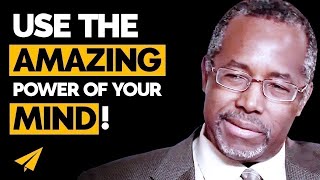
In this interview-style video, former neurosurgeon and presidential candidate Dr. Ben Carson shares his personal "top 10 rules for success" while host Evan Carmichael introduces and wraps up the segment. Carson draws on his upbringing in poverty, his mother's disciplined influence, and his own academic and professional journey to illustrate each principle. He emphasizes that everyone faces obstacles, but excuses must be rejected in favor of solutions. He argues that no knowledge is ever useless, that taking calculated risks and learning from failure are essential, and that reading and broad learning open doors. Carson recounts anecdotes—such as a businessman buying expensive singing birds for his mother and a chance conversation about classical music that helped him secure a neurosurgery residency—to illustrate the power of speaking up and cultivating diverse interests. He outlines the "THINK BIG" acronym (Talent, Honesty, Insight, Nice, Knowledge, Books, In‑depth learning, God) as a framework for personal development, stresses the importance of kindness and lifting others, and underscores the role of faith. The video concludes with Carmichael prompting viewers to reflect on which rules resonated most and to suggest future profiles.
Chapters
There is no one who doesn't have obstacles in their life. You know, even Bill Gates has obstacles. He's got to figure out how to keep all that money. Why is it that so many people act like animals? Why do they just react to what's going on rather than to plan and strategize?
Because if you don't accept excuses, pretty soon people stop giving them and they start looking for solutions.
There's no such thing as useless knowledge because you never know what doors it's going to open for you. Almost any accomplishment In the history of the world has come at the hands of people who've taken risks.
Some people hate spiders, some people hate snakes. I hated poverty. I couldn't stand it.
If you have an average brain, you're capable of almost anything. Be nice to people because once they get over their suspicion of why you're being nice, they'll be nice to you. Real success involves lifting up those who are around you.
He's a retired American neurosurgeon and former presidential candidate of the United States. He has authored numerous books on his medical career and political stances. He was a director of pediatric neurosurgery at the Johns Hopkins Hospital in Maryland. He's Ben Carson, and here is my take on his top 10 rules for success.
You know, I'm reminded of a very successful young businessman, and he loved to buy his mother these exotic gifts for Mother's Day, and he ran out of ideas, and then he ran across these birds. These birds were cool. You know, they cost $5,000 apiece. They could They could sing. They could talk. He was so excited he bought two of them. Sent them to his mother. Couldn't wait to call her up on Mother's Day. "Mother, Mother, what did you think of those birds?" And she said, "They was good." He said, "No, no, no. Mother, you didn't eat those birds. Those birds cost $5,000 apiece. They could dance. They could sing. They could talk." And she said, Well, they should have said something. And you know, that's where we end up too if we don't speak up for what we believe.
There is no one who doesn't have obstacles in their life. You know, even Bill Gates has obstacles. He's got to figure out how to keep all that money. So, you know, everybody's got problems. And it really is how you face those problems. If you allow it to be an insurmountable wall, then you become the victim. And if you say, "This is a piece of cake. I'm finding my way over, under, around, or through this obstacle one way or another," and you gear yourself to solutions. And that's always the answer. Always be thinking about how I can do something rather than why I can't do something. And so many people lead their lives by reacting rather than by thinking. And really, when you think about it, why do we have these incredibly sophisticated brains with these big frontal lobes? Because we're the only creatures that God made with the ability to extract information from the past and the present and to project it into a plan for the future. So we don't have to react. You know, animals, you know, they just, well, whatever's happening, they react to it. Why is it that so many people act like animals? Why do they just react to what's going on rather than to plan and strategize? We have the ability to figure out where we want to be a year from now, 5 years from now, 10 years from now, and to begin to organize things in a way in order to accomplish those goals. And when we don't do that, we place ourselves in tremendous jeopardy because we place ourselves in a situation where we can only react.
I was— had a horrible temper, poor self-esteem, all the things that you would think would preclude success. But I had something very important. I had a mother who believed in me. And I had a mother who would never allow herself to be a victim, no matter what happened. Never made excuses, and she never accepted an excuse from us. And if we ever came up with an excuse, she always said, "Do you have a brain?" And if the answer was yes, then she said, "Then you could have thought your way out of it. It doesn't matter what John or Susan or Mary or anybody else did or said." And it was the most important thing she did for my brother and myself. Because if you don't accept excuses, pretty soon people stop giving them and they start looking for solutions. And that is a critical issue when it comes to success.
I would get on the bus and I would go downtown to the Detroit Institute of Arts and roam through those galleries until I knew every painter who painted each picture and when they were born and when they died and what period it represented. And I was always listening to my portable radio. Listening to classical music. And, you know, I'd be walking down the streets of Detroit listening to classical music, and people thought I was nuts. This guy's crazy. But years later, when I decided that I wanted to be a neurosurgeon, I wanted to go to the place that's best known for neurosurgery, and that would be Johns Hopkins. But as I said before, they only took 2 people a year out of 125 applicants. But when I got an interview and I went there, the The fellow who was in charge of the neurosurgery residency program, George B. Uvrahi, was also in charge of cultural affairs at the hospital. And somehow the conversation turned to classical music, and we talked for over an hour about different composers and their styles, conductors, orchestras, orchestral halls. There was no way he wasn't taking me in the program because he had to have somebody to discuss these things with. But what I emphasize to young people all I tell people all the time is there's no such thing as useless knowledge because you never know what doors it's going to open for you. And the more you know, the more options you have. Almost any accomplishment in the history of the world has come at the hands of people who've taken risks, people who are willing to push the envelope, people who are willing to explore the unknown. Even if you go and you look in the Bible, you know, the people that are held up as the heroes, they're not the ones who were sitting in their tent under an olive tree. You know, they were people who were going out there doing stuff. And, you know, the key thing about taking risk is learning. You know, and if something doesn't work out, learn from it, and then you're able to move further. We have to always recognize that You know, knowledge frequently comes at a price. You know, Thomas Edison said he knew 999 ways that a light bulb did not work. Did not work, right. You know, many of us are familiar with the cleaning formula 409. Why do they call it that? The first 408 didn't work, you know. But you know, you just put these things into perspective and you learn from them. Walter Dandy, the great neurosurgeon at Johns Hopkins many decades ago, was the first one to do operations in the posterior fossa, the back part of the brain. No one thought it could be done. First 13 patients all died. Now can you imagine how devastating that was? I can't even imagine what he said to the 14th patient when they said, "How did the other 13 do?" But the fact of the matter is we now are able to do that operation routinely and safely. I did one last week. And so You know, we just have to, to put all these things in perspective and recognize that we will never make progress unless we're willing to take risks. But we have to take them in an appropriate fashion, right? Because, you know, there, there's a large group of people who never get anywhere because they're afraid to take a risk. There's another group of people who never get anywhere because they take too many of the wrong risks. They're always getting knocked back into the pond. So that's where this tremendous brain comes in, where you are able to analyze.
One of the things that I hated was poverty. You know, some people hate spiders, some people hate snakes. I hated poverty. I couldn't stand it. And, but you know, my mother couldn't stand the fact that we were doing poorly in school, and she prayed and she asked God to give her wisdom. What could she do to get her young sons to understand the importance of the developing their minds so that they control their own lives. And you know what? God gave her the wisdom, at least in her opinion. My brother and I didn't think it was that wise, 'cause it was to turn off the TV, let us watch only 2 or 3 TV programs during the week, and with all that spare time, read 2 books apiece from the Detroit Public Libraries and submit to her written book reports, which she couldn't read, but we didn't know that. You know, she put checkmarks and highlights and stuff. But, you know, I just hated this. And my friends were out having a good time. Her friends would criticize her. They would say, "You can't make boys stay in the house reading books. They'll grow up, they'll hate you." And I would overhear them and I'd say, "Mother, you know they're right." But she didn't care, you know. And, but after a while I actually began to enjoy reading those books. Because we were very poor, but between the covers of those books I could go anywhere, I could be anybody, I could do anything. I began to read about people of great accomplishment. And as I read those stories, I began to see a connecting thread. I began to see that the person who has the most to do with you and what happens to you in life is you. You make decisions. You decide how much energy you want to put behind that decision. And I came to understand that I had control of my own destiny. And at that point, I didn't hate poverty anymore because I knew it was only temporary. I knew I could change that. It was incredibly liberating for me, made all the difference.
You know, the human brain, if you have an average brain, you're capable of almost anything because of the complexity of our brains. Billions and billions of neurons, hundreds of billions of interconnections. It can process more more than 2 million bits of information in 1 second. It never forgets anything you've ever seen, anything you've ever heard. And you know, with something like that sitting up here, why would you ever utter the words, "I can't"? What do you mean by "think big"? Well, each one of those letters means something special. The T is for talent, which God gives to everybody. And everybody has their own unique set of talents. Develop those, use them, and let those carry you where they will. The H is for honesty. If you lead a clean and honest life, and you don't have a bunch of skeletons in the closet, it's really hard for them to come out if you don't put them in there. And it really uncomplicates your life quite substantially. The I is for insight, which comes from listening to people who've already gone where you're trying to go. A lot of the adults in your life have been through the very things that you're going through right now. And if you can talk to them and see what lessons they learned, maybe you don't have to repeat the same things. And maybe that will allow you to move much further and faster than they did. The N is for nice. Be nice to people. Because once they get over their suspicion of why you're being nice, they'll be nice to you. And you can get so much more done when you're being nice when they're being nice, and not get caught up in the meanness and the selfishness that is promoted by many segments of our society. The K is for knowledge, which is the way that you make yourself more valuable, and no one else can do that for you. You have to actively participate in the process of becoming knowledgeable. The mechanism for doing that is the next letter, B, books. Now some people say, "I don't like reading books. Besides that, I can learn anything I need to learn from watching DVDs and videos." Well, that's like saying that you can develop your muscles by watching somebody else lift weights. You know, it doesn't work that way. You have to exercise your brain if you want it to work for you, and reading is a perfect way of doing that. The second I is for in-depth learning, learning for the sake of knowledge and understanding, as opposed to just learning some answers so that you can put them down on a quiz. That superficial learning doesn't last very long. And the last letter, G, is for God, which is such an important part of each of us as individuals and the fabric of our nation. And we make a grave error when we allow the secular progressive movement to push God out of our lives. You know, we shouldn't try to force God on them, but by the same token, we should not allow them to remove God from our lives. Maybe some parting words for our viewers. Well, my parting words would involve: What do you really want in your life? What do you want to accomplish? Are you complacent, uh, and are you happy just to be doing what you're doing? Or do you think there's potentially more? And if you think there's more, why not use that tremendous brain that God gave you in order not only to envision it, but to make it happen? Not only for yourself, but for those people around you, because real success Success involves lifting up those who are around you and making your environment a better place than it was before you got there.
Thank you guys so much for watching. I made this video because Rachel Ali asked me to. So if there's a famous entrepreneur you want me to profile next, leave it down in the comments below and I'll see what I can do. I'd also love to know which of Ben's top 10 rules hit you the hardest, had the biggest meaning for you. Leave it in the comments and I will join in the discussion. Thank you guys so much for watching. Continue to believe, and I'll see you soon.
What are you particularly gifted in? Do you have any special gifts and talents? You know, everybody has special gifts and talents, and I started analyzing my own life and I said, "What really unusual things have happened to you? Because usually those very unusual things have something to do with your gifts and talents." And I remembered that I became a foosball champion in college. Go off to a big prestigious Ivy League school like Yale, but I remember being a foosball champion. That was a great thing. But that required a tremendous a tremendous amount of eye-hand coordination. And I remember working one summer at a steel factory, and as a college student, they let me operate the crane. Now these cranes, very complex, they had a whole bunch of levers that you had to push and pull because you were maneuvering these multi-ton steel packages through very narrow aisles and stacking them on the backs of trucks. And if you made even the slightest error, you could make a multiple thousand dollar error. And these people trusted me, having never worked one of these things before, after seeing me play with it for just an hour or so. And I had that job for the whole summer. And I said, those people must have had a tremendous amount of confidence. And me, a college student who was the only college student working at the fill— at the steel factory. So I started thinking, I want to do something that requires a lot of eye-hand coordination. And then I was also a very careful person. I never knocked things over and said oops, which is a great characteristic for a neurosurgeon, I gotta tell And I had the ability to think in 3 dimensions. You know, most people think in 2 dimensions, but to think in 3 dimensions, to be able to keep your spatial orientation, very, very important if you're in somebody's brain, because it's just like mush. It's just a big pile of mush. It doesn't have a lot of structures in it to tell you where you are. So if you can't keep in mind where all the little nuclei and tracts and things are, all of your patients will come out looking like that. So you don't necessarily want to do that either. And then I love to dissect things. I always loved to dissect things. You know, when I was a kid and I would be sitting at the table eating and I would have my fork and my knife out dissecting out all the little neurovascular bundles out of the meat and putting that in a pile. And my mother would be saying, "You can't eat with us. You go sit on the landing." But, uh, and I always, if there was a little bug around or a little rodent or something that I could catch, I always knew what was inside. I loved to dissect things. So I put all that together And I said, "You'd be a terrific neurosurgeon." Now, yeah, doesn't mean that I couldn't have been a good dentist or a history professor or even, God forbid, a lawyer. But, but I probably, I probably would not have been excelling to the same degree because I wouldn't have taken advantage of the special gifts and talents that God had provided.
More from Evan




How the Biggest Mistake in History Created A Trillion-Dollar Empire | Sergey Brin



9 Machiavelli Principles That Force People To Respect You | Machiavellian Philosophy



The First 10 Words That Instantly Ruin A Sales Conversation | Vanessa Van Edwards