How to Achieve FINANCIAL Freedom | Kevin O'Leary's Advice in 21 Minutes
In a 21‑minute interview, host Evan Carmichael presents Kevin O'Leary’s "Top 10" principles for achieving financial independence and entrepreneurial success. O'Leary emphasizes that true freedom comes from disciplined wealth building, passion‑driven work, and strategic decision‑making. He outlines ten actionable rules: (1) know when to take risks after securing a $5 million safety net; (2) be passionate about your venture; (3) pursue personal freedom; (4) buy high‑quality, appreciating assets; (5) trust your gut and learn from experience; (6) stay humble; (7) appreciate lessons from failures; (8) set achievable, data‑driven goals; (9) commit fully, outworking competitors; (10) set clear priorities. The conversation culminates with O'Leary’s three‑point framework for winning pitches—concise opportunity articulation, demonstrated execution capability, and mastery of key metrics. Throughout, Carmichael adds motivational prompts, a free worksheet offer, and cross‑promotion to related content (Mark Cuban). The tone is motivational, conversational, and occasionally anecdotal, with O'Leary’s sentiment ranging from confident to reflective.
Chapters
If you're not chasing freedom, you're wasting your life. Kevin O'Leary believes true success isn't about greed or wealth. It's about setting yourself free to live life on your terms. Most people don't realize that with $5 million invested wisely, you can secure financial independence forever. In these top 10 rules, O'Leary reveals that entrepreneurship is not about working less, but about finding something you love so much you work harder than ever. He challenges everyone to stop settling, to find their passion, and to build a life where no one else is calling the shots. Freedom isn't a dream, it's a choice. Need motivation?
Watch the top 10 on Motivation Nation.
Believe Nation.
Oh, Believe Nation. Okay. All right, here we go.
Need motivation?
Watch the top 10 on Believe Nation.
And if you make it all the way to the end of the video, leave a hashtag #believe in the comments below so I can celebrate with you.
Believe.
Okay, let's kick it off with rule number 1. Know when to take risks.
You have to get to a place where you have $5 million in the bank because you can survive the rest of your life no matter what happens, and your family. You can take care of a lot of people making 6 or 7% of $5 million. When you make that, you have to set that aside and you don't risk it. And then after that, you can start to take risk capital and put it to work.
Rule number 2 is be passionate.
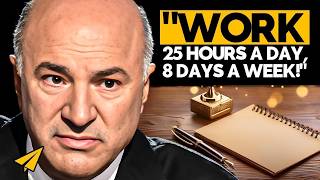
I teach a lot now, um, young entrepreneurs And I'm beginning to realize that a lot of people are confused about what it takes to be successful. And I don't mean just money. You know, it's not— I don't get up in the morning and say, I want to be richer. I don't give a shit. I don't need any more money. But you don't get rich pursuing the greed of money. You get rich because you're passionate about something It's a business you start and you're willing to work 25 hours a day, 8 days a week. And then one day you wake up and you're filthy rich. And the benefit of that is freedom to do whatever you want. You want to buy a watch, you can do it. You want to buy a car, you can do it. You want to take your family somewhere, you can do it. But mostly what happens, and this is kind of interesting, I don't care who you talk to, you just work harder.
Rule number 3 is pursue freedom.
The reason that people pursue entrepreneurship is not about the greed of money. It's about the pursuit of personal freedom. Everybody in this room wants to be successful, and in entrepreneurship, the way to find success is you make money. And then eventually there comes a time in your life when you wake up and you say, "Shit, I'm rich. I never saw it coming, and I could do whatever I want." And most of the time what people do is work even harder, 'cause they like what they do. That's what entrepreneurship's about. It's setting yourself free to spend your time, your day, in the things that you want to do. And the great part about it is nobody can tell you what that is. It's only you. That's the whole deal right there.
Rule number 4 is buy quality things.
I've made mistakes, but let me tell you a lesson my mother taught me, and I saw it happen because she's passed away a long time ago. She, you know, we were not wealthy family, but she loved Chanel. She was crazy about Chanel. Women's clothing, jackets and skirts. Chanel, Chanel, Chanel, Chanel. That's really expensive. And but she rather than buy 5 dresses a year, she bought 2 Chanel jackets a year. That's it. When she passed away, there was a catfight in my family amongst the women for those vintage Chanel jackets, which had appreciated in value Over decades, classic vintage Chanel is a big deal for women because they still look spectacular. It's classic fashion. And that kind of taught me something. Buy good shit. Buy less good shit, and, you know, instead of more crap. So buy a good pair of sneakers, buy the best, buy the best suit you can buy and keep it because it's, you know, rather than 40 pieces of shit, buy 2 good things. Same philosophy with watches. Same thing with cars. Same thing with guitars. I like good shit. And it goes up in value.
Also, to make sure you're actually taking action after watching this video, I've designed a special free worksheet just for this video. The worksheet will highlight our favorite lessons from the video that will inspire you to remember what you learned today and actually apply them. The worksheet will also give you space to write down what your key takeaways are and your specific plan of action to make sure you're getting results. If you want the worksheet designed specifically for this video, absolutely for free, there's a link in the description below. Go click on it and start building the momentum in your life and your business.
I'll see you there.
Rule number 5 is trust your gut.
I remember on the last week, the graduating class, and in those, it's sort of like an amphitheater. With about 100 people in it, and you've been there for 2 years, you've got your little nameplate in front, and they bring in guest lecturers to talk to you before you jump into the real world. And this guy comes in and he says— I'll never forget it. He walks up, the professor hands him the floor, and he just goes in the middle and just looks up at everybody for maybe like— it felt like forever, but it was really maybe 60 seconds. And he didn't say a word. And the whole room, like, you could have heard a pin drop. I'll never forget it. And then he says, you guys think you're so hot shit. You think that you've come here and you've got an MBA and you're going to go out in the world and you're going to rock and you're going to be incredibly successful. I've got news for you. For two-thirds of you, the world is going to chew you up and spit you out. You have no idea what's going to happen to you. You have proven nothing. You've done nothing. You think an MBA means something? It's worthless. And I remember the guy beside me, he'd been beside me for 2 years, and we were up in the one row down from the top so we could chat all the time. Hide a little bit, yeah. Yeah, yeah, and so I said to him, Barry was his name, I said, Barry, this guy is such a dick. What an— what an— he is. What an arrogant— he is. Well, guess what? He was right. He was 100% right. And the reason he pointed that out was the idea that your experiences make you who you are over time as an entrepreneur, as a parent, as a person, as whatever you are, as a brand, whatever you are. It's your experiences and how you deal with them that gives you that equity over time. And for many people, they can't make it. It doesn't work out for them. They don't have what it takes to take on the abuse that the world's gonna throw at you. And just to give you full circle in a kumbaya, you know, circle of life, Lion King kind of moment, I got caught saying the same thing a couple of months ago at the Harvard MBA group. And I realized I was saying the same thing that that guy said to me decades ago. I said to these kids, you all think you're hot shit, you're Harvard MBAs, you are nothing, burgers. You are nothing. And so there you have it. What he really explained was the idea of experience and how you have to listen to your gut to navigate the bombs of your career. And you have to trust it. You have to trust your gut. Every time I've lost dough, every time, and I've lost plenty, Luckily, I've had more successes than failures, is when I didn't listen to my gut, which is my experience. And I should have, and he was right. He was absolutely right. It was great information, but I couldn't assimilate it 'cause I couldn't put it in context. Now I understand it. So number 2 is you need to build that experience and all the way through, listen to your gut. Even when you're young, your gut will tell you. You'll know when it's right and wrong. And don't go against your intuition. That is actually your radar. That's your DNA speaking to you, figuring out what the next move is going to be.
Rule number 6 is stay humble.
You're always serving somebody else. No matter how rich you think you are, there's somebody else richer. There's somebody else bigger. And that's really something I've learned, that you've got to be humble because no matter how good you think you are, there's somebody better. And it Lets you think about getting better yourself. You're never the king. Never.
Rule number 7 is appreciate the lessons.
I have failed a lot. Many failures. I can give you some. I just gave you one earlier. I lost hundreds and hundreds of thousands of dollars, at least on paper, for a long time shorting Yahoo. That was a big mistake. Stupid of me to do that. Then I started a business. You know, I've started many startups when I was an operator that actually failed. One was, one was involved with one of the giant cable companies, and I probably spent about 18 months on that, made no money, lost a lot. I think in that case about $750,000. Ouch, that hurts. It really stung. I've invested in other deals. Some were friends, some were other business associates that went to zero. Generally in a startup, I'll put up about $250,000 and wait and see what happens. And put more in. And there was one that I, that I put $250,000 into. And then within 6 months they needed more money, even though my gut was telling me don't invest in it. I put another $250,000 in within 6 months, lost another half million. I've made many mistakes, but I learned from my mistakes. That's the key. I am not going to be successful in everything I do. And I want you to embrace that idea as an entrepreneur. You are not going to be successful all the time. You will make many, many mistakes, and it's okay. It's okay as long as you learn from it. Now, I don't make the same mistakes anymore. I make new mistakes. I learn from those again, and that's what's called experience. The difference between when you start your career and when you get to the middle of it and the end is all the mistakes you've made and what you've learned from them. And the older you get, The more you've learned. And that's the whole idea. And when I work with young entrepreneurs today and with my teams and my companies, I try and explain to them the mistakes I've made so they don't make the same ones. That's the whole idea. But it— I've made millions of dollars of mistakes. And I, you know, I once ran as a politician and lost millions of dollars doing that. Was that— was that a mistake? Was that a learning experience? I still haven't decided. I don't know if you've read it yet. But it's sort of— it's sort of those experiences in life are made up, the patina of life, the rust of life, the coating of life is all the experiences, not just the successes, but the failures you've made. Now, do I like losing money? No. Do I cry like a baby when it happens? Yes. Because I know how hard it is to make it. Really hard. And I hate to lose it. I distill the essence of that lesson. That's very, very important.
Rule number 8 is set achievable goals.
Let me give you some data which you may find interesting, because I've been doing this for almost 20 years now. The majority of the money I've made in companies that I was part of founding and then were operated by another CEO, the majority has come from companies run by women. Now, like, I'm not trying to start gender warfare here. I'd give money to a goat if If I could get a return, I don't care. You have to ask yourself, what are they doing that is making these outcomes? Remember, these are multiple sectors. I'm talking about insecticide companies, gym equipment companies, commercial kitchens. We have a wireless charging company. They're all different, and yet the outcomes, women are better. Why? We did some research. We said, we got to figure this out because why don't we find out what the great companies are doing and share it with our portfolio companies aren't doing so well? What we discovered was, rather interestingly, if you look at women-run companies and you look at— because we have all the data— what did they forecast for sales in a quarter, what did they achieve, and then look at the ones run by men, in the case of women, they achieve their goals quarterly 90% of the time. 90%. In the case of ones run by men, 65% of the time, but the men had sales targets 30% higher. So they were really doing what I call the testosterone stretch, really saying, let's, let's go for it, and only hitting it 65% of the time. Now, why would that manifest itself in a difference in cash flow? You got to ask that question, right? Here's why. In a company where the whole team consistently hits goals, the culture becomes very sticky and nobody wants to leave. There's no staff turnover, there's no disruption in revenue, there's no disruption in accounting compliance. The team is stuck together. And the ones where you— they only hit their target 65% of the time, there's a lot of unhappiness and angst, particularly in the sales force, and their staff turnover is much higher. So when we put this new policy in place, you set targets that you hit. We did this 3 years ago now with all the companies. I don't care if there's no growth in your target, but if you hit the target, we started to see lower turnover. And now in the companies that were not doing well, Cash flow is up 18%. That's something you should— if it's the only thing you remember today when I'm talking about, set goals you can achieve and watch things happen. Because people want to work in a winning— it's like playing for Brady. Nobody wants to leave the team. The guy just keeps winning Super Bowls.
Rule number 9 is be committed.
You have to sacrifice everything. Is that true, you think? There is no other way. It's a global competition. Your competitor is going to work 25 hours a day, 8 days a week, and if you don't, they'll just kick your butt. It is a total commitment. It is so hard to do. The only way to know it is to do it. It's not instant riches, that's for sure. Most entrepreneurs work for years before they achieve success. It's tough, but if it's in your blood, then you pursue it and the outcomes can be really good. It lets you work harder at other stuff. I mean, I go back to what I said at the beginning of this conversation. It's a lifestyle. It's not a destination. It's a journey. And you have to be ready to go on that rocky road and all the good and bad and ugly that comes with it.
And rule number 10, the last one before a very special bonus clip, is set priorities.
What makes a winning pitch, in your opinion? How is that different from other pitches that don't get the funding? Yeah, there's 3 attributes. And the reason I have this data is the show Shark Tank is on in 42 countries. Some, it's the generic American tape with, you know, voiceover to the language of that geography. And others is new productions like Canada and England and Australia and New Zealand, Brazil and Mexico, where it's called Lion's Den in Germany and Dragon's Den in Australia, whatever. It's the same idea. And it doesn't matter what geography, what language. The entrepreneurial adventure is the same. So there was a little research done about 4 years ago that took the unedited tape from all the pitches that actually got funded— did not determine the outcome of the business, they weren't looking for that. They were trying to figure out, in the period that you were engaging with the investor, what were common attributes that achieved success. So It turns out not in just some of the cases, 100% of the cases, 3 attributes existed. Here they are. If it's the only thing you guys remember from this, this is it. So you should write these down. They'll serve you well in the future. And I actually, I consider these attributes the definition of leadership in any sector because I don't care if you're a preacher, a politician, an entrepreneur, a mother, a father, No one follows you if you don't know where you're going. So here are the 3 issues. Number 1, can you articulate the opportunity in 90 seconds or less? The whole idea of presenting an opportunity is to define it very quickly. What is it that you have that could be such a great opportunity? What idea is it? But if you can't explain it, and most of the great pitches you can explain in 30 seconds, 30 seconds. Here's what I do. This is why you— I'm here. This is my product. This is my service. So you only get 90 seconds for that. Now, this is very important. Great ideas— this is number 2— great ideas are a dime a dozen. What's really rare are executional skills. So now you have the ear of the investor. You could be in a VC pitch, you could be in an elevator, you could be on Shark Tank carpet, whatever. Okay, I like the idea. Why can you make it happen? What is it about you and your team that can execute on this? Do you know the sector? Have you done this before? Have you worked for a competitor? Have you failed 3 times and figured out the mistakes you made? I personally would rather invest in an entrepreneur that's failed and felt the sting of failure and is highly motivated to get out there and fix what they did wrong because they've learned from it. But that doesn't matter. What matters is to tie your executional skills to the idea so that all of a sudden you're mitigating risk for the investor. Great idea, great team. And I can feel the change in a room in the context of Shark Tank. You can start to see all these sharks start to say, hey, what do we got here? Yeah. And because you have to have executional skills. But there's one more, and this one's the killer. I've seen this happen so many times. So let's put it back in the context of Shark Tank. You've beat out 100,000 applications to be one of the 240 companies that tapes, and you're there, you have your moment, you got the first one right, everybody loves your idea, you got the second one right, you've convinced everybody that you're the right person to execute. And then this happens. You have to know your numbers. How big is the market? How fast is it growing? What's the gross margins? What's the break-even analysis? How many competitors do you have? You have to have those right on the tip of your tongue because that is the glue that binds. If you get onto Shark Tank carpet and you've got everybody interested in your deal and you don't know your numbers, you deserve to burn in hell in perpetuity, and I will I personally put you there, and I've done it many times. You have to know your numbers. It's the language of business. You get those 3 right, the probability of a deal goes up geometrically higher, and it's in every single successful pitch. I learned this from, you know, a woman CEO years ago, to actually carry with you all the time, and I have it right here. If I don't have my big notebook, I carry a small one with me. Paper. Just paper. And what I've got in here are notes. And I carry a pen with me all the time. I love to collect pens. This is a new Egyptian Montblanc. When I know I— when something hits me, wherever I am, I remember to write it down. And the reason I do that is I build a priority set that I put down each night, and out of all the priorities of the day, I carry 3 into the next day. Because you can even see, here's a day, you can see that a bunch of stuff has been, a bunch of priorities there, but I've basically done them, I got them done. But this idea of prioritizing ends up being a really big deal. So that's attribute number 1. Politicians, teachers, CEOs, they build a data set in their heads of things they've got to get done, and they don't do anything else until they've achieved those. For me, it's a sticky note on the mirror each night. I've talked about this countless times, and I don't do anything else till I get those 3 done. And they're built from the list that I generate during the day. So definitely, for all successful people, regardless of what their discipline is, that idea of priority really matters.
For 10 more amazing rules from Mark Cuban, check the video right there next to me. I think you'll love it. Continue to believe, and I'll see you there.
What are you doing? I am really, really, really good at sales. I'm going to find a sales job. I am going to get that job, and I'm going to learn more about that industry than anybody on the planet.
More from Evan




How the Biggest Mistake in History Created A Trillion-Dollar Empire | Sergey Brin



9 Machiavelli Principles That Force People To Respect You | Machiavellian Philosophy



The First 10 Words That Instantly Ruin A Sales Conversation | Vanessa Van Edwards