How to Defeat Laziness in 17 Minutes | Transform Your Mind
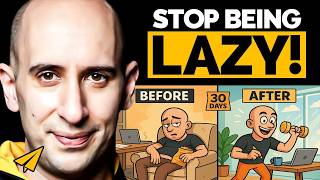
The video is a curated motivational compilation in which host Evan Carmichael introduces a series of expert insights on overcoming laziness and procrastination. Eric Thomas shares his personal struggle with finishing a book, emphasizing the power of ending excuses and breaking large goals into small, manageable chapters. Brian Tracy presents the "30‑day procrastination diet," a daily practice of tackling one resisted task to strengthen willpower as a muscle. Leo Gura discusses the deeper cause of laziness, contrasting extrinsic motivation with intrinsic purpose and urging viewers to cultivate a life purpose. Sandeep Maheshwari outlines three emotional levers—love, fear, and greed—that can instantly neutralize laziness. Tony Robbins explains that willpower is limited and offers a four‑step loop (identify avoidance, define desire, choose the next concrete step, repeat) to create leverage over oneself. Finally, Evan Carmichael synthesizes the advice, stressing the need for a clear vision, consistent action, and an environment that reinforces goals. Throughout, the video encourages viewers to apply these concrete tactics, reflect on personal motivations, and adjust surroundings to sustain momentum.
Chapters
Good morning, Believe Nation. Today we're going to talk about how you can overcome your laziness. Rule number 3 is my personal favorite, and make sure to stick around all the way to the end for my thoughts and a special bonus clip as well. And as always, if someone says something that really resonates with you, please leave it in the comments below and put quotes around it so other people can be inspired as well. Enjoy.
It took me almost 10 years, man, to finish this book. From the first time I talked about this book, and you say, E.T., how did it happen? How did you get to a place where you stopped talking about it and you completed it? All right, I want to share this with you. I got tired, right? Carl, can you go to the book and just show them the chapter that says, enough is enough? All right, I don't want to give you the book before you get the book, but I just want to show you because I want you to know I'm not just talking about this because of TGIM. I'm writing about it because it's my story. And so I got tired. Tired of what? I got tired of people asking me, yo, ET, where you at with the book, right? And I'm telling you, I don't know what happened. I'm gonna keep it real with you. I'd always write the book every year. I would start and I would go chapter 1, chapter 2, chapter 3, and for some reason I couldn't get past chapter 3 every single year. All right, so I picked the book up, I start, boom, chapter 1. I get chapter 1, I get chapter 2, I get chapter 3, I set the book down. All right, all kind of stuff happening, you know, sports, I'm playing video games, I'm going to the movies. Look, all kind of stuff happening, right? And then I finally got to a place where I got to chapter 4 and then I stopped. And this year was the first year that I said to myself, E.T., enough is enough, right? Look, yesterday, yesterday, I made my last excuse yesterday. And I'm talking to somebody, the reason why you have not become successful, the reason why you are not like a locomotive, the reason why you're not having success haven't been successful in your life is because every single day you got an excuse. I need you to do me a favor. I made my last excuse yesterday. My last reason. I came up with my last reason yesterday of why I can't do what I'm supposed to do. And so I need you to do me a huge favor. All your excuses, all your good reasons, everything, everything that's keeping you from doing what you're supposed to do, I need you to put it behind you and say yesterday was the last day for that foolishness. Yesterday was the last day to say I don't have enough money to do this. I don't have enough money to go to school. I don't have enough money to get a computer. I don't have what it takes. I'm not smart enough, right? I don't write well enough. I don't sing well enough. That's why I didn't do my CD. I didn't write my book because I'm not on that level. Listen to me. You better hear what I'm saying. Yesterday was the last day that I want to hear an excuse. It's over with. Alright, now watch this because you're a procrastinator and this is how I did it. I said the last time you wrote a book, you got the 3, you got the 4 chapters. So the first thing I need you to do is just get to chapter 3, chapter 4, right? When I got to chapter 4, I said, just get to chapter 7. Don't worry about finishing the whole book. Don't worry about this big goal because every time you set this big goal, you never get it accomplished because you never break it up in manageable pieces. So after I got to chapter 4, I was like, yo, E, let's get 5, 6, 7 done. And when I got to chapter 7, I knew it was only— listen to me— I knew I only had to write 14 chapters. And I said, I'm halfway there, baby. I'm halfway there. When I got to 7, I did 14. And when my editors got to the chapters, they said you could break 14 into 2021, and it turned into 20— listen to me— 21 chapters, 212 pages. All right, so this is, this is it. I'm talking about procrastinators. You still have time. Don't quit. Don't give up. You still have time. You can do it. You can make it happen, but you can't do it procrastinating. You can't do it talking about it.
All right, the second thing that I did personally to beat procrastination was the 30-day procrastination diet. Brain to Tattoo that one. The 30-day procrastination diet. All you do is you go into your whatever program you run your schedule from. You've got a whole month, for example, whatever month that you want to run it. Do it right now is really what you want to do. You don't want to procrastinate on this. And every single day for 30 days, you pick one thing each day that you've been resisting. So let's say you start off with usually you don't make your bed. As simple as that sounds, make your bed on the first day. Second day for procrastination diet, let's say you don't like exercising. You write down day 2. You go for a walk around the block. Day 3, you give a speech or you find a way to do some public speaking if you've been resisting that. Day 4, let's say you've been resisting writing your will, you write down your will. Maybe the 5th day of your 30-day procrastination diet, you forgive someone. For 30 days, you write down a thing each day that you've been putting off and you do it. Now here is the key. Research is showing that willpower is actually a muscle and a lot of it's about the brain research that people are really realizing how to run the brain in an ideal way. And so as you start to do what you've been resisting, you literally start to rewire the way your brain works and you actually build more willpower so you can destroy procrastination. But the real big idea is this. When you do the thing you've been resisting, you literally take back the power you gave to the thing that you were resisting. And the more you start to do what you've been resisting, you start to become more powerful. You rewire your brain, your willpower starts to grow, you start to unleash more and more energy, you feel more and more confident. So this 30-day procrastination diet is an amazing thing that I did. At the end of these 30 days, I felt so strong, I had so much energy, and almost like I felt there's nothing on my goal list I cannot achieve. I definitely— it'll work for you.
I don't have a problem with long-term laziness, um, that's because I worked hard at it. It wasn't always like that, you know. I worked hard on my life purpose. My life has purpose. That's why it's very hard for me to be lazy on the long term. I'm never really afraid of that. I can have short-term laziness though, because, you know, like anyone, I just kind of like want to slack off during a certain part of the week or whatever, especially if I'm working real hard prior to that. So the real question I gotta ask you is like, what's the problem with being lazy? Why not? I don't mean for me, I mean for you, because for me there's a really big problem with being lazy. I mean, I got an important life to live, so when I'm lazy, I I'm losing time. I'm losing time. My life purpose is not getting accomplished. What about you though? Do you have a life purpose? What's not being accomplished when you're lazy? Why does it matter? Maybe for you, being lazy is cool. Now, no one says that being lazy is cool, but I mean that even when you tell yourself that being lazy is not cool, it's still cool for you. Why is that? Because your life has no purpose, it has no meaning. You're not doing anything important with your life. There's no larger mission to your life. So honestly, the reason that you're lazy is because you can be. What else are you— what else are you doing? You're trying to come up with like fake productivity. You're trying to be productive and efficient and be— go out there and, you know, work that job or do this thing here or do whatever there. You're trying to do all this stuff just to keep busy, just because someone told you to do it, just because you have a social obligation or whatever. Uh, in that case, if you have laziness problems, well, that's because you're using extrinsic motivation, not intrinsic motivation. So that's one distinction you gotta understand here: extrinsic, intrinsic. Extrinsic means you're being motivated from the outside in. That's like when you have a kid who wants to eat some candy and his parents are telling him, "No, you're gonna eat vegetables." And then they give him some sort of reward. They'll say, "If you eat your vegetables, then we'll give you $10." That's called extrinsic motivation. Intrinsic motivation is when it comes from the inside out. So that's like if the kid would say, "You know what? I wanna eat healthy stuff, so I'm not gonna eat the candy. I just wanna eat healthy stuff." And that can happen too. It's rarer. It's harder to find people who are intrinsically motivated. You know what though? Those are the people who are the most successful. Those are the self-actualized people. And one of the ways you get this way is you have a purpose to your life. You develop it. You cultivate it. This is not something you were born with. You cultivate it.
The laziness, when that takes over us, only 3 things can help you come out of laziness. You want to know? First is your love. If you promise your to a loved one, someone whom you love, "I'm going to do this for sure," then your laziness disappears. Promise to a loved one with the time frame, then you achieve it. Second, fear. If someone tells you, "If you don't do this, then you are going to be in trouble," then laziness disappears. The third thing is greed. If you are given some idea, some greed to complete a task, sure, you will be right on it.
As human beings, we have a limited amount of willpower. There's only so much force that we can exert on ourselves on a daily basis to take action. The key to overcoming laziness and getting into action is motivation. We need to gain leverage over ourselves, and as human beings, we are either running away from something or towards something at all times. We're either trying to avoid pain or to gain pleasure. We are either afraid of something or we are hopeful of something. There's a desire. So understanding these two forces and how you can use them to gain leverage over yourself is key and critical to actually overcoming laziness and getting into action. So here are the 4 simple steps, and you may want to have a pen and paper handy when you go through this exercise. The first thing you want to do is simply ask yourself, what am I trying to avoid? What do I not want? And be very clear about the result and the consequence of not taking action. The second question you want to ask yourself is, what do I want? What is it that I am actually aiming for? What is it that I could potentially achieve if I were to take action, if I were to move myself and really do whatever it takes to actually get a result? What is the best possible outcome? So number 2, what do I want? The 3rd step in this process is to ask yourself, what's the next step that I can take? Simply the next step, not every step along the way, but just the next one. If that means putting on your shoes, if that means just simply getting to the gym, if that means simply opening your computer and whatever it happens to be, what's the next step that I can take? And take that step. And fourth, repeat the whole process. Just go back to number 1, remember what it is you're trying to avoid. Number 2, be very clear about what you can gain and what you will gain by taking action. Number 3, what's the next step? So after you've taken the first step previously, you go through the process again. What's the next step now? And you just keep doing that on a daily basis, every day simply taking one step. If you're able to move one step closer to your goal every single day, you will get there. And that's a key thing to remember: Rome was not built in a day, and you can't eat an elephant in a single bite. So simply realizing that goals and achievement takes time is very important to not getting stuck in laziness and inactivity and lethargy.
So my quick take in overcoming laziness comes down to two things for me. The first is you need to have something that you're aspiring towards. You need to have a goal, you need to have a vision, you need to have something that gets you excited. You need to have some future version of yourself in mind of something that you want to learn, whether it's becoming a better entrepreneur and selling a product or service, whether it's being a dancer, whether it's learning French, whatever it is, you have to have goals. If you have a goal for what you want to do in life, then you can see that brighter vision for yourself and start taking action and moving towards it. If you don't have any goals, if you don't know what you want to do, then it's easy to be lazy because you have nothing to get you inspired and motivated to do something. And so you need to explore, explore, explore, explore, explore until you find the thing that makes you come alive and set that brighter vision for yourself. I think it always starts with having some kind of vision a big goal that you want to set for yourself, finding that purpose for you. From there, a lot of people have found it. A lot of people found what they like doing. A lot of people have a goal for what they want to go out and accomplish, and they maybe take like a micro step and then they stop. And so it's being consistent. I think far more than anything else, the thing that holds people back isn't the lack of the vision, it's the lack of consistency in taking action towards the vision. And the best way that I know how to keep your consistency keep your motivation high, to keep your energy level high when you have a goal, is the environment. Most people have a crappy environment. From the physical environment that you work in, the office space or the home office or the basement or your bedroom or your university dorm room or whatever, whatever it is. Like, look around you. Does that inspire you to do great things? From the people you hang out with and the books you read and the videos you watch, all of that. Where are you spending your time? What are you pouring into your head? What are the things things that are around you. Most people have a really crappy environment, and so they stay where they are. Because you have this big vision that comes in momentarily, and you have this moment of boldness where you believe that you can go out and accomplish something really, really big. Maybe you watch one of these videos, or you read a book, and say, I could go out and do that, I can go out and have that big impact. And for, you know, for a couple hours, you actually believe it. You actually believe that you can do that big crazy thing. But then the rest of your environment doesn't match up. And what happens is the next day you wake up and you're starting over again, and your environment pulls you back down to where you are and keeps you where you were and prevents you from going. So you, you go like this and have this blip, and then you come back, and another blip, and you come back, and you don't stay consistently high. And so the key thing for me is figuring out what got you to that high point. Was it frustration of things not going right in your life? Was it the necessity of, you know, being crunched and having to pay back a loan? Was Being inspired by watching a video or going to some kind of seminar, having a phone call with a friend. What was it that got you so inspired to jump from here up to here, even momentarily? Whatever that was, you need consistently in your environment. You need to plan for that in your daily schedule as early as possible because you want to wake up and you're starting here and immediately jump here and stay here for the rest of the day. You fall back overnight, you wake up the next day, you start here again. You hit yourself, boom, back up. Whether it's a video or a book or whatever it is, you got to figure that out and fix your environment so that the big goal that you have for yourself matches the environment that you're creating for yourself. When those things are aligned, then you will take consistent big action towards accomplishing your goals and overcome your laziness. So I made this video because Kofi asked me to. If there's a topic you'd like me to cover in a future edition of Believe Life, please leave it down in the comments below and I'll see what I can do. I'd also love to know what did you learn from this? What, what video or what clip inspired you the most or sparked a shift in your thinking? I'd love to hear from you. Please leave in the comments. I'm gonna join in the discussion. Thank you guys so much for watching. I hope you have an amazing day. I believe in you. I hope you continue to believe in yourself and whatever your one word is.
Much love.
I'll see you soon.
The good side of laziness is when you are finding faster, cheaper, and easier ways to accomplish your goals. This is the motive force behind all advancement in human civilization. Laziness, in a positive way, has driven improvements in technology, manufacturing, production, agriculture, transportation, medicine, education. Always finding faster ways to get the same result with a lower expenditure of time, energy, and money. It's the driving force of all progress. Now, there's a dark side of laziness as well. This is the part that you're familiar with. Laziness causes people to cut corners, to slack off, to waste time, and to contribute less. And the less you contribute, the less value your contribution has. Laziness is bad in this sense because it robs the potential of the individual who practices it. It undermines his possibilities in the present and undermines his hopes for the future.
More from Evan




How the Biggest Mistake in History Created A Trillion-Dollar Empire | Sergey Brin



9 Machiavelli Principles That Force People To Respect You | Machiavellian Philosophy



The First 10 Words That Instantly Ruin A Sales Conversation | Vanessa Van Edwards