How to INVEST in GOLD | Wealth Insights from Top Experts in 2.5 Hours
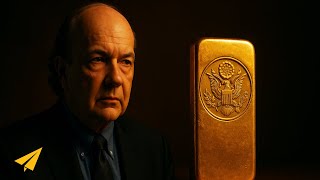
Jim Rickards explains gold's role as a monetary anchor and hedge against systemic risk, while Matthew Carr walks through his seasonal-trading methodology using trend databases and forward-projection pricing. Both stress that successful investing requires disciplined time commitment and continuous education.
Chapters
Wealth Breakthroughs is an exclusive video series where millionaires break their silence on their usually hidden secrets on how to stack up great wealth. It's like eavesdropping on the private conversations rich folks have with each other behind closed doors. But I partnered with the series creator Jeff Hays to bring that VIP pass to you right here today. In this episode, you'll learn why 5% of people control the world's wealth how to make money with gold, the best assets to invest in, and how to analyze companies to find the winners. Get ready to learn about how wealth is created and get the strategies and how to do it from millionaires.
Enjoy.
Hello again, Patrick Gentempo here, and welcome back for episode 7 of Wealth Breakthroughs. Today we have a rock-solid one-two punch for you about the world of precious metals. Let's start at the top. In times of economic crisis, the dollar tends to fall and gold rises. Then, when hard times give way to economic recovery, gold falls in price and the dollar bounces back. But what if it didn't? What if some event or series of events fundamentally changed the economy forever? Could gold go to $5,000, $10,000 an ounce, For more, we're kicking off Episode 7 with one of the world's most famous, widely read, widely quoted, and knowledgeable gold experts, Jim Rickards. Then we'll talk to Adam Baratta, who traces gold's historic significance to our monetary system. This is going to be a good one. Let's get started. Here's Jim Rickards.
So, Jim, thank you so much for being here. I've been looking forward to getting a chance to talk to you. So tell me a little bit about who you are and what you do.
Well, that's a really good question. You know who I am. I've had a long career, and if I described it all in detail, you would say either I— you could say it was eclectic or I didn't know what I wanted to be when I grew up. But After college, I went to get a graduate degree in international economics. Then I got a law degree, and I decided once was not enough, so I got a second law degree specializing in taxation and started my career at Citibank. I was international tax counsel at Citibank. This is back when it was a bank, before it turned into a hedge fund, which happened a lot later. But in the late '70s and early '80s, when I was there, Citibank was— We thought Wall Street was sort of sleazy, but banking was a high-prestige occupation. Walter Wriston was the CEO at the time. He treated Citibank like the finance arm of the State Department. So whether we were in Africa or Latin America or Asia, etc., all over the world, I was in the international side. I was the number-two guy in our particular division. We had Asia, Africa, Middle East, and Australia. And so my boss got to go to, you know, Tokyo and Sydney and Singapore, and I got to go to the Congo and, you know, Tanzania and Niger and places like that that would be hard to find on a map. But it was good experience. And, you know, eventually worked my way up and got to go to the, the more attractive cities. But I, you know, learned a lot about Africa and enjoyed the time there. After about 10 years of that, I— it's unusual for a tax lawyer to switch gears because it's so specialized, takes so much training, so much education. When you get good at it, Why on earth would you walk away from it? You just do it for the rest of your career. And that's what my colleagues did. We still have these little reunions every now and then. But I had the opportunity to move to Wall Street, join an investment bank that specialized in government securities, government bond trading. I did that in 1985. I was their general counsel, the chief legal officer. And that was my immersion in federal finance, fiscal policy, and the bond market. At Citibank, of course, I was a tax lawyer, but we were mainly involved in international lending. But now I was involved in the securities market. And this was right around the time when derivatives were taking off. I mean, you've had exchange-traded futures in Chicago since the late 19th century, so there's nothing new about that, about exchange-traded futures. But over-the-counter swaps, credit default swaps, exotic derivatives, that was all new, and it was all being made up as we went along. Today, there are trade organizations and standardized forms and you just fill in the blank. But in those days, you had to start with a blank sheet of paper and construct these contracts. We did. I wasn't the trader, but I was the lawyer and I worked side by side with traders. You had to understand the trade to write the contract. That was, as I say, a great education and an exciting time because it was all new and markets were expanding. Did that until the early '90s. And then, so the hedge funds starting up, coming out of Salomon Brothers. Salomon Brothers is kind of an ancient name today, but in the day, they were the biggest, baddest, number one bond-trading firm by far. They were subsequently absorbed by Citibank. But they had a scandal. One of their traders was a bad apple, actually tried to corner the market into your Treasury notes, if you can believe that. Not easily done. Completely illegal, but he managed to pull it off. But it got exposed at some point, and he ended up behind bars. But as a result, a lot of top people at Salomon were either terminated or just forced to resign. They weren't all bad guys. And one of them was John Merriweather, who was their top bond trader. John didn't do anything wrong; that's very clear. But given the magnitude of the problems in the firm, he had to leave. So as we say, you know, you're on the beach for 6 months or whatever; that's the expression on Wall Street. He launched a hedge fund called Long-Term Capital Management. But what he did, he recruited a lot of his former colleagues from Salomon Brothers, as well as leading academics. When I say leading, we had two Nobel Prize winners, Bob Merton of Harvard and Myron Scholes. Scholes has his name attached to the Black-Scholes formula, which is the formula for pricing all derivatives. You can show me the fanciest, most layered, complicated derivative ever done, and I can show you that at the bottom of that is an option or a series of options or a set of options that are priced using the Black-Scholes formula. Myron used to say— he actually published this article as an academic and kind of threw it out there. It was like E equals mc squared. Here's the formula if you want to understand the universe. He said, with hindsight, I should have patented it and charged a fraction of a penny on every derivative, I would be the richest guy in the world, which is probably not too far from the truth. But be that as it may, we had the founders, theoretical founders, the academic founders of modern financial theory, not all of them, but a lot of them. So many, in fact, that there were times while I was at Long-Term Capital Management, when we got calls from the deans of the leading business schools in the country. I'm talking about Harvard, Chicago, Stanford. Harvard, Yale, and a few others complaining that we were hiring so much PhD talent, we were depriving academia of the next generation of scholars, because they were all coming to work for us. But it was an exciting time. We started with $1 billion. We got to $7 billion in 4 years. Some of that was new money, but a lot of it was kind of tripling the investors' money. We were banging out $25, $35, one year $40 billion. Percent returns using these very complex arbitrages. Now, I wasn't in investment banking, I was in hedge funds, but the knowledge I learned in government securities was still relevant because we were the number one trader in Italian government debt, one of the largest traders in US government debt, one of the largest presence participants on the major futures exchanges, not just Chicago, but Paris, Tokyo, London, major financial centers around the world. We had the A-team. I'll never forget the day when the Nobel Prizes were awarded to our two partners, and they were both out that day. So all the calls came. I had to handle all the calls. I did the PR. And people, media calling from all over the world, and flower tributes showing up in the lobby. We were like, hey, Myron, where are you? We got to deal with this. But it was an exciting time. Then in June of— sorry, 1997, the government of Thailand broke the peg between their currency, the Thai baht, and the US dollar and closed their capital account. Why was that significant? Well, they had been maintaining a peg between the Thai baht and the US dollar and had an open capital account, which meant that money could come in and go out pretty freely. So money was coming in. The Thai baht offered higher returns than U.S. interest rates. So you could borrow cheaply in dollars, convert to baht, invest in Thailand—golf courses, resorts, hotels, whatever it was—and make these huge returns. It just looked like free money. Well, it turned into a boom. Then it burst, and the bubble burst, and Thailand closed the capital account. Well, there were massive losses as a result of that, because all these U.S. dollar investors, all of a sudden, their Thai baht were worth a lot less in U.S. dollars; they were suffering losses. So investors panicked. They said, "Well, if Thailand did it, now we've lost money there. What about Indonesia, Malaysia, South Korea, etc., countries around South Asia?" So there began this massive capital outflow. Everyone was just selling everything, getting their money out. Wall Street has used the expression "blood in the streets." Don't buy anything until there's blood in the streets. That was when the market was— at a low, well, there was real blood in the streets. People were getting killed in Jakarta and Seoul, South Korea, and elsewhere. That lasted from June until kind of the late fall, October, November. Then around December, it calmed down a little bit. The IMF came in, did some rescues. Governments intervened. Capital accounts were closed. The losses were suffered, but the whole thing seemed to die down a little bit. And by the spring of 1998, We were looking around for opportunities. They say things have been knocked down, maybe there's a way to invest here. We were continuing to do what we had always done with the bond arbitrage. And it could be a Japanese stock index against Japanese stock index futures, or a basket of French equities against French stock market index futures. But even the equities that we owned were in derivative form. We'd buy these total return swaps from Bear Stearns. So Bear Stearns would buy the stocks, and then sell us the derivative. So they were long the stocks, short the swap. But economically, that was a hedge position, and they'd make a little spread on that. And so life went on. But there were other things going on, one of which was that we had— let's call it secret sauce. We had formulas. That John Meriwether and the team actually invented. They were the first people to really think about the math behind these arbitrage trades where you'd have short the bonds and go long the futures or vice versa. But little by little, over time, other people started to figure out the formula. So all of a sudden, we had banks and others piggybacking on our trades, number one. And number two, around this time, Sandy Weill, one of the leading bankers of the at the time, who ran Travelers Insurance. They bought Salomon Brothers, and then he got in talks with John Reed to merge with Citibank. And right around this time, the Glass-Steagall— talking the late '90s, they were getting ready to repeal the Glass-Steagall Act. So John Reed and Sandy Weill announced this merger. Well, prior to the merger, Sandy Weill said to Salomon Brothers— these are the place— this is the place that John Meriwether left. Solomon stayed in the business. He said, hey, we want you guys to reduce your books, because one of the things about this arbitrage I'm describing, it was very volatile. You could lose a lot of money in a quarter and then make it all back and then some the following quarter. And it's because these are spread trades. So if the spreads went out like this, you'd actually buy more, and then they would come in like this, and you'd make all your money back. A little bit like doubling down in roulette. If you do it long enough and you have enough money, you'll make your money back. But Sandewald didn't like that volatility. He was thinking the stock price, stock investors are not going to like that volatility. So he said, "Close your books and get out of these trades." When they did, that widened the spread. So all of a sudden, here we are in what turned out to be a little bubble in Greenwich, Connecticut. We think the Asian financial crisis is over, but it's not. We think these spreads have to be well behaved, but they're not. Then it all blew up beginning in the summer, really July, August 1998, and then came to a head in September. The bottom line is that Russia defaulted. It's one thing to default on your external debt, but Russia actually defaulted on their internal debt, which is in rubles. Like, hey, you can print rubles. Why would you default on the ruble debt if you can print them? But they did anyway, and they broke the currency peg. That started a global financial panic, and now the best definition of a panic I've ever heard is Everybody wants their money back. Whatever trade you're in, just sell it, give me my money back. I don't care about relative value. I don't care about present value. I don't care about all your math. Just give me my money back. When that happens, the spreads just widen. Well, we were short the volatility. We made our money by selling the volatility and getting paid for that in the expectation, the reasonable expectation that the volatility would widen and then it would come in again. Well, now, it just kept going. It kept going. So August, we lost $2 billion, which was about half our capital at the time. We had $7 billion at the end of '97, but we gave $3 billion back, all cash dividend to investors. So most of the investors did fine, believe it or not. The people who lost the money, we were the ones who lost the money because we were kind of replacing our own investors. So in August, we lost $2 billion. It's about half our capital. We were talking to George Soros, Warren Buffett, anyone you could, a short list of people who can write a billion-dollar check, but we were in touch with them. And but we knew that by early September, literally September 2nd, we report monthly. We tell our investors what happened. And we did. We were completely compliant. There was no, no, no funny business. Our accounting was extremely good. We knew exactly how much we were losing. So September 2nd, we released our August statement. And in those days, we were still using fax machines. We didn't quite have the internet the way it is today. And I had about 50 faxes to send out. And I commandeered, like, 6 or 7 fax machines. And I had all my legal assistants sending these out. Before the last fax was sent, the first one had been leaked to Bloomberg, and it was public knowledge to the world. Now it changed. The panic continued, but it wasn't a general liquidity crisis. It was systematic trading against long-term capitalists. It was blood in the water. You end up as the marlin in The Old Man and the Sea. I mean, they're just coming for you. And the way Wall Street operates, it's like, why should we cut you a break? Why should we invest in you? We'll just drive you into bankruptcy, and then we'll pick up the pieces on the cheap. Nobody's doing anybody any favors. And we knew that, but we were trapped. So around mid-September, we called the Federal Reserve. We didn't expect a bailout. We didn't ask for a bailout. Who the heck's going to bail out a hedge fund? We knew that wasn't going to happen. But we felt we had some obligation, like good corporate citizens, like, "Hey, you're the Federal Reserve. This is going to end up in your lap. We want to tell you what's going on." And so the Fed came up on a Sunday. It was Peter Fisher, who was the head of market operations at the Federal Reserve Bank of New York; Dino Kass, his associate; Gary Gensler from the Treasury in Washington; myself; and John Merriweather. So the 5 of us just sat in a conference room on a Sunday. For hours, you know, turning the pages, the printouts, going through position by position. And when we were done, I looked at Peter Fisher, and his face was white. And he said, "We knew you guys were going to destroy the bond market. We didn't know you were going to destroy the stock market also." It turned out we had $5 billion of equity positions on. We were the largest risk arbitrage firm. Nobody knew that, because they said, "Well, you're a bond shop." No, we were in equities also. And just to kind of go back to my Bear Stearns example, if Bear buys the stocks and then sells them to us in derivative form, and they have a hedge position, but we go away, we just disappear, well, now you're long $5 billion worth of stocks. What do you do? You dump them. Imagine all of Wall Street trying to dump $5, $10 billion of stocks in the same morning. It would have closed every market in the world. So at that point, Peter Fisher went back, had breakfast the next morning with John Corzine, who was head of Goldman Sachs, head of Merrill Lynch, JPMorgan, 3 or 4 of the biggest banks, and said, "We have to do something." They weren't out to do us any favors. They were out to save themselves, because we had $1.3 trillion of swaps on with the 50 largest banks, most of which were concentrated into about 14 or 15 banks. So they didn't really care about us. But again, if you take us out of the equation, all those banks were going to fail. Lehman Brothers would have failed 10 years before they actually— they were always the weak link in the chain. And so they talked a couple of days, sent us a term sheet on a Wednesday night. From Wednesday to Sunday, nobody slept. We got Skadden Arps as a big law firm. Nobody was in charge. I was in charge of our side. From the legal perspective, but nobody was in charge of what came to be known as the consortium, these 14 banks. I call them the 14 families, because they were— they didn't trust each other. You know, it was kind of like the Mafia in that sense. But they acted out of self-interest, put this bailout together, and said, well, we'll give you $4 billion in cash, because they were going to take over the fund. They said this was not charity. We would have suffered our losses, but The idea was to stabilize the balance sheet and unwind it gradually over the course of a year so that you didn't have to do it all at once. And so we, as I say, 5 days, no sleep. It's funny, at the law firm, we were working 24 hours a day. You start out first thing, you have the jackets come off, you know, then the ties come off, and then like shirts are unbuttoned down to here. Nobody's shaving. There's 24-hour catering, so you could be getting a meal at at 3:00 in the morning or whatever, hundreds of lawyers flying in, because you had 14 banks, but every bank had a general counsel, a deputy, an outside law firm partner, probably 2 associates. So we had 5 or 6 lawyers per bank times the 14 banks plus some other unsecured creditors. It was a scene. I remember at one time, I was in line just to get a sandwich or whatever, and somebody came up to me and grabbed my arm and said, are you Jim Rickards? I said, "Yeah." And they go, "How are you holding up?" I mean, there were literally people passing out. The stretchers were called in. I mean, it was high stress. And fortunately no one died, but there were some people who were hospitalized, actually. And they said, "How are you holding up through this?" And I had just come from an expedition to climb Denali, then Mount McKinley in Alaska. And I had been training like crazy, and it's an extremely difficult climb. And I said, I just got back from climbing Denali. So far, this is not harder than that. So it was a good thing I was in good shape, in other words. But we got through it. And then we— I stayed for about a year after that. My metaphor was, you know, if you blow up the chemistry lab, you're supposed to clean up before your next class. But I had enough fun in that particular pursuit and left. And I ran an electronic stock exchange for a few years. But then Then 9/11 came, and not long after 9/11, I was tapped. I was actually at a cocktail party in St. Croix on a mountaintop estate, kind of a, you know, pretty exotic locale. Looked like a set from a James Bond movie or something. But, you know, you chat with people and they ask you what you did, what you do, whatever. And I don't know why, but I just started telling a story about how— now I'm going all the way back to the early '80s. When Zia-ul-Haq, the president of Pakistan, it was after the Iranian Revolution in 1979, but Pakistan had declared itself to be the first Islamic republic, but Iran said, "We're the Islamic republic." So Zia said, "Well, I've got to out-Islam Iran to maintain my stature." He declared, just out of the blue, that all banks in Pakistan had to be Sharia-compliant. Sharia is Islamic law. Well, Sharia compliant means no interest. You're not allowed to charge interest. Well, how do you run a bank if you can't charge interest? So again, this is back in the early '80s. So I was put in charge of converting Citibank Pakistan. We had a huge operation in Pakistan. And I was put in charge of converting Citibank Pakistan to Islamic banking. And so I had to become an expert in Islamic banking, which I did. And we did the conversion. Some of it was cosmetic, but the government was OK with it. And we got through that. So here I am, now flash forward, 2002, in St. Croix at this cocktail party, meeting with one of the biggest investors in the world, and I just tell this Pakistan story out of the blue. So he looks around, he takes me aside, and we walk over, and he says, "If you got a call from the CIA to help them out in the war on terror, would you take the call, and would you be interested in something like that?" I said, "Of course I would." I mean, in those days, you know, No one thought twice about helping out the United States or doing whatever you could. Well, sure enough, I got the call, and I said, "Yeah, let me—I'll do what I can." I got a letter, kind of an engagement letter, and went down to CIA headquarters in Langley. It was a symposium kind of format. They were working on something called Project Prophecy, an interesting name. But just the long and short of it is, there was insider trading. Before 9/11. And it's well documented. It's mentioned in the 9/11 Commission report. It's not some conspiracy theory. It happened. It was 286 times the average daily volume in puts— buying a put is a bet that the stock's going to go down— 286 times the average daily volume in American and United Airlines in the last 2 trading days before 9/11. Well, those are the 2 airlines that were hijacked. It's like a guy who orders a cheeseburger for lunch every day, and one day he orders 286 cheeseburgers. You know something's up. There's something behind it. It was really up to the FBI and the SEC to investigate that from a forensic point of view, but the interest of the intelligence community was, OK, that happened. If there were going to be another spectacular terrorist attack—and everyone was just waiting for one at that point—would there be insider trading again? Could you detect it in advance, trace it to the source, get a FISA warrant, break down the door and stop the attack and save lives? That was the idea behind Project Prophecy. But before you implement something like that, you study it and say, "Well, are all of those things true?" The CIA had no financial expertise inside, and why should they? The capital markets had not been part of the battlespace during the Cold War. They had economists who would estimate the GDP of Russia, and they never got it right, But in terms of capital markets and trading, they didn't have that expertise. And I will say they're very good at reaching out when they— they know what they don't know, and they're very good at reaching out. So I went down, participated, and then they said, "Well, by the way, we have a secure website. We invite people to contribute articles." I wrote an article. It was very well received. One thing leads to another, and next thing you know, I was a co-project manager working for the agency. On Project Prophecy, and we invented a new branch of intelligence. In intelligence lingo, use the word INT, the INT suffix, INT as a form of intelligence. So there's HUMINT, which means human intelligence, SIGINT, which is signals intelligence, and there are a bunch of others. But we invented MARKINT, which was market intelligence, and published some articles, which I can't discuss. They're still classified to this day, but there's a classified peer-review scholarly journal inside the CIA where you get to contribute articles like this, so I can't show my friends, but they're there. So we invented this new field, and then we developed a working prototype. We got funding from something called In-Q-Tel. What the heck is In-Q-Tel? In-Q-Tel is an in-house CIA venture capital firm. There came a time in the '90s and early 2000s when the CIA said, OK, in the '70s, you know, we had all the cool inventions. We had the spy cameras and the spy pens and listening devices and all that stuff you see in the old James Bond movies. But by the '90s, that was all happening in Silicon Valley. You know, the Division of Science and Technology at the SEC still did some cool— sorry, the CIA still did a lot of cool stuff. But they They were having trouble keeping up with Silicon Valley, so they said, okay, if you can't beat them, join them. Let's start a private equity firm or venture capital firm, go out, find the coolest stuff, invest in it, get exclusive rights or licenses or whatever if we can. And so that— oh, by the way, In-Q-Tel, so Intel, intelligence, that's easy, but the Q was a tribute to Q, who was the character in the James Bond movie who was the armorer. He gave Bond the Aston Martin and the briefcase in From Russia with Love and all that. So we got the money. We built the thing. We promised them a go-kart. We said, for this amount of money, we'll build you a go-kart. If you want a Rolls-Royce, that's going to be more expensive. Turns out our go-kart ran like a Rolls-Royce. It was amazingly successful. And we were finding insider trading all the time. Now, most of it was just criminals, you know, sleazebags on Wall Street. It wasn't terrorist-related. But we did have some success. We got a bright red on American Airlines in August 2006, and this was 3 days before the takedown of the liquid bomb plot. This was the one where they— this is why you can't take a bottle of water on an airplane to this day, because the terrorists were going to take the precursor chemicals in different bottles and then mix them on the plane, blow up the plane. They had 10 flights targeted, going to kill 3,000 Americans. 3 days before that was taken down, we got a bright red on American. We escalated it. It kind of went through the intelligence community. We didn't bust the plot, but we saw the plot in motion before it happened, before MI5 and New Scotland Yard— I was actually working at 2:00 in the morning watching CNN. I was working with CNN with the sound off, and all of a sudden I look at the screen, and I see all these London cops. Scotland Yard, like, breaking down all these doors all over London. Well, it turns out they were— it was live coverage of busting up this plot. I called my partner and said, "Well, the machine works, because we saw that 3 days in advance." So that was— did that for a long time. Then at some point, I guess I was doing a radio interview on NPR, and this person— NPR people are funny; they just listen; they love NPR. They listen to it all the time. So I got— I was in my car and I got a phone call. It was a nice lady. She introduced herself and she said, I'm a literary agent. I heard you on NPR. Would you like to write a book? And, you know, when you— the number of authors you meet who have been, like, slaving away at manuscripts and submitting them to publishers and getting rejected and all this stuff, and here she's opening the door. And I learned later that the publishing industry is— it's not supply-driven. It's demand-driven. They have to kind of want your book. But I said, yeah, well, let's talk. We met for lunch, hit it off. I worked up an outline. It took a while to come together, but that was— we met with publishers and we found a great publisher at Penguin Random House. I was Penguin at the time, but they merged with Random House since then. So I wrote a book. It was my first book. It was a bestseller. It was Currency Wars. You know, right book at the right time. Came out in 2011. I love it when reporters today say— they'll see some headline, oh, there's a currency war. I said, no, it's the same currency war we've had since 2010. It's just how currency wars roll. They last for 15 or 20 years. We're not in them all the time, but when we are, they can last for 15 or 20 years. So that book, it's still in print, still selling well, and it's still very fresh. It's very difficult in economics. Most economists don't write books. They write articles. Some do, but most of them just write academic articles. But the hard part is writing an economics book that's not a textbook, and I had no interest in writing a textbook, something for everyday readers that's still fresh 5 years later, 10 years later. That's hard to do because you get caught up in the debate of the day, as it were. But you want to do something big. You deal with what's happening, but you want to do something bigger than that, theoretically. So it has some shelf life. And so that led to a total of 5 books at this point. So I guess that makes you an established author. They've all been either New York Times or Wall Street Journal bestsellers. They're all still in print. They have a big following. I do a lot of public speaking and consulting, and I draw on my legal background and my intelligence background and my capital markets background to synthesize what's going on in markets. And as I say, this led not just to writing books, but newsletters, which I do on a regular basis, and public speaking, and have some consulting clients. So here I am. I don't know how you describe that career path, going from banking to investment banking to hedge funds to a stock exchange to the CIA to being an author. But to me, it's life. It's one It's kind of a thread that runs through it all.
So I have had a fascinating life, and people who know me will agree I've had a fascinating life, and you just made it look really ordinary. Stunning. So a couple of things I want to start with the end, the perspective that you— had access to through your career is a rare view. It's a rare perch to be able to have seen from the inside all the things that you've seen. What— starting right now today, based on your perspective, what are you telling people? What are you— what's coming next? What's really happening now, and how can someone watching this utilize that based on your unique perspective? Sure.
There are a couple of big themes, and I'll try to keep them concise, but then we can expand if you like. The biggest thing going on in the world, but it's slow motion, so it's not— I'll describe it for you, but don't think that the world's going to come to an end tomorrow. It's not. At least I don't expect it. You know, it's funny when you're in my position, people, you know, because I've got the books, and I'm active on Twitter, and I'm on TV, and I'm kind of out there a lot. But people love to put words in your mouth. You know, they'll say, well, Jim Rickards says that, you know, world's coming to an end, sell everything, buy gold. Well, I've never said any of those things. I don't believe any of those things. I don't believe the world's coming to an end. We may go through financial crashes and panics, and you come out the other side, and the world is different. Yeah, that could happen. I don't say sell everything. I say and buy gold. I say buy some gold, have a slice, but there's plenty of room for diversification in your portfolio. But the biggest thing going on right now is debt. And in particular, you know, is debt a good thing or a bad thing? Well, it depends what you do with the money. If you borrow money, and you can invest it at a higher return, create productivity, make your money back and pay back the debt, that's just fine. Manage it well and invest it well. There's nothing wrong with that. Most of the so-called money supply isn't money, it's credit. And but on the other hand, if you borrow the money to pay your bills, don't have any more money coming in, don't know how you're going to pay them next month and you're going to have to borrow more, you're probably heading for bankruptcy. So debt is not good or bad. It can be either depending on how you use it and how you manage it and is your debt burden sustainable. So how does this apply to countries? And again, going back to my experience in the '80s with the government bond market, which I've stayed current with. Well, you— and I have a chapter on this in my new book, Aftermath, it's Chapter 2. A lot of people kind of imagine, well, you know, George Washington got sworn in in, you know, 1789, and he borrowed some money, and it kept going up and up and up and up, and here we are with President Trump, and we've got $22 trillion worth of debt. But almost as if the national debt just went up the whole time. That is not what happened. First of all, Washington had a national debt before we had a nation, before he was sworn in, because they had Revolutionary War debt that was unpaid when George Washington became president. And so he says, "What should we do with this debt?" And of course, the Congress at the time said, "Well, just don't pay it. You know, it's the American way. Just don't pay it." And it was Alexander Hamilton who turned to Washington and said, "No." What we do is we borrow more, we use that money to pay off the old debt. Now we've established our credit, we can borrow more to pay off the new debt and just keep going. And that was the invention of the government bond market. It's been going strong for 230 years. So Hamilton understood that credit could be a good thing, again, always provided you put it to good use. And in fact, and the way to think about debt, national debt, is the debt-to-GDP ratio. So GDP, gross domestic product, that's the value of all goods and services. How big is the economy, in other words? So in other words, what's the debt relative to the economy? And just to simplify that, I tell people, well, if you have a MasterCard and you have $25,000 of debt, you've used up your line of credit, are you in trouble or not? Well, if you make $20,000 as a barista, nothing wrong with being a barista, and you got a $25,000 balance on your credit card, you're probably heading for bankruptcy. But if you make $200,000 a year, you can probably just write a check and pay the whole thing off. So you can only evaluate the debt relative to the income to support it. So the same thing, what's the national debt relative to GDP, relative to the size of the economy? And when you look at that number, what you find is that it went up and down and up and down and up and down. A sine wave. And actually, in 1837, when Andrew Jackson left office, the national debt was zero. He was the only president to completely pay off the national debt. He also abolished the central bank. So Jackson's legacy was no debt, no central bank. Pretty good legacy, if you ask me. We didn't have a central bank again until 1913, believe it or not. So, but it went up or down. So what was the driver behind that? Well, why did it go up and why did it go down? And why was it being managed that way? And the answer was very clear, which is it went up in times of war. So, you know, the War of 1812, the Mexican-American War, 1848, obviously the Civil War, Spanish-American War, World War I, World War II, the debt went up because it's either existential or you got to win the war and you got to pay for it. But in times of peace, it went down again. So in the late 19th century, between the Civil War and the Spanish-American War, the debt went down. Between the War of 1812 and the Civil War, or actually the Mexican-American War, 1848, the debt went down. So it went up in times of war and down in times of peace. And this was a bipartisan thing. It was not political. It was considered prudent. Republicans and Democrats, or Federalists and Whigs, or whoever it was, agreed on this. And it all goes back to the idea of dry powder. In other words, you never know when there's going to be another war. You never know when you're going to have to borrow. So it's prudent to reduce your borrowing when you can so that you can increase it when you must. This pattern persisted all the way through World War II. And at the end of World War II, the debt-to-GDP ratio was about 120%, the highest in U.S. history. But we won. We won. We and our allies won the war. So we kind of got— it was horrific, but we kind of got something for the money. And what was interesting is what came next. From 1946 to 1980, so that's a 34-year period, the debt-to-GDP ratio was reduced from 120% to 30%. And that was Harry Truman, Dwight Eisenhower, John Kennedy, Lyndon Johnson, Richard Nixon, Gerald Ford, and Jimmy Carter. You had Republicans and Democrats, liberals and conservatives persistently, persistently reducing the debt-to- GDP ratio because they knew that had to be done. And when Ronald Reagan was sworn in in January 1981, the debt-to-GDP ratio was 30%. By the way, just to put those numbers in context, 30% is very manageable, very sustainable. Nobody thinks a 30% debt-to-GDP ratio is a problem. And— but that was a huge accomplishment. It took the Fed, the Treasury, both political parties, national consensus, a lot of leadership to get there. But we did it. Now, Reagan, who has this reputation as a fiscal conservative, no, he was the last of the big spenders. He took the debt-to-GDP ratio from 30 to 50. Now, 50 is not out of control, but that's a 60% increase in the debt-to-GDP ratio. But he won the Cold War. Now, I say he won the Cold War, again, that was every president from Truman to George H.W. Bush and the American people won the Cold War. But Reagan crushed the Soviet Union with the Strategic Defense Initiative, so-called Star Wars, 600-ship Navy, and a lot else. So he spent the money, but he got something for the money, which is we crushed the Soviet Union. I didn't necessarily think I would see that in my lifetime, going back to the '60s and '70s. But if you follow this pattern, what's supposed to happen next under George H.W. Bush and Bill Clinton? They're supposed to take it back down again, maybe to the 30% level. To their credit, they held constant through the late '80s and all the 1990s up until 2000. That ratio remained around 55%, 60%. It fluctuated a little bit, down and up. It didn't get worse, but it didn't get a lot better. And so when did it go off the rails? And since 2000, we've gone off the rails. So Bill Clinton left office, we had $5 trillion of national debt. After George W. Bush, George W. Bush doubled it to $10 trillion. Obama doubled it again to $20 trillion from a higher level. So if you look at the chart I just described, the hockey stick, where that ratio goes straight up, was under the Obama administration, where growth was weak. He inherited this financial crisis from George Bush, and the borrowing was huge. The famous $830 billion stimulus plan from Larry Summers, which didn't save the economy, stimulate anything, but they borrowed the money anyway. So, and then when Trump comes in, now the ratio is 105%, and Trump has thrown a couple trillion more of debt on top of that. Now it's up to 106% and heading higher. So it was really the tail end of George W. Bush, all of the Obama administration, and the beginning of the Trump administration where this pattern I described was broken. We had the Iraq War in 2003, but there were no major wars during the Obama administration, none so far during the Trump administration. It's a period when, based on historic precedent, they should have got that ratio back down to at least 50%, maybe lower, and they didn't. They doubled it to well over 100%. Why is that important? Why is that significant? Well, there's a huge body— first of all, the historic pattern is now off the rails. So 230 years of— pretty good debt management out the window. We're just out of control. And unlike World War II, we didn't win anything. You know, we took the ratio up, but what did we get for the money? Hard to say. The weakest expansion in US history is what we got. But beyond that, you know, with these— we're back to the age of trillion-dollar deficits. There's a large body of research, very convincing, very rigorous, in my view, conducted by Carmen Reinhardt and Ken Rogoff. They're both at Harvard. Carmen used to be at the University of Maryland, but they're both at Harvard now, and their associates and other researchers that shows that 90% is a red zone. So I said 0 to 30, no problem, it's manageable. 30 to 60, sustainable. Over 60, you got a problem, but, you know, show me— it's not too late, you can get it back down. But once you're over 90, A couple things happen. You're through the looking glass. Now, you're not getting any growth for the debt. So, the Keynesian theory is, yeah, I'm in a liquidity trap, nobody wants to borrow or spend, so the government needs to step in, create what they call aggregate demand. So, the government borrows $1, spends $1, and you get $1.20 of growth. Well, that sounds pretty good. Spent $1 and got $1.20 of growth. You know, the dollar the government spends, the recipient, he spends it and then she spends it and you get velocity and you get more than you borrowed, in effect. Keynes called that his general theory. It's really more of a special theory that actually does work for a short period of time in certain conditions when you're in a recession or a depression or you're just coming out of one. There's slack in the labor market, unused industrial capacity, plenty of borrowing power, low interest rates, good credit. There's a set of conditions where that can be true for a period of time, and you can break out of the liquidity trap, but only in those conditions. But we don't have any of those conditions today. We have massive debts. We, you know, we don't— we're not coming out of a recession. We're in the 11th year of an expansion. Unemployment is at a 50-year low, etc. All the conditions that Keynes envisioned don't apply. And when you get— and what Reinhart and Rogoff show is once you get past 90%, you don't get the bang for the buck. In fact, you borrow a dollar, spend a dollar, and you get maybe 90 cents of growth. In other words, your debt's going up faster than GDP. And what does that mean? That means that ratio is going up faster. And the American people, you know, I say, you know, when it comes to your own money, everyone has a PhD. You know, don't sell the American people short. Even if you, you know, have minimal economic training, which is true of most people, they look at that and they go, you know, I may not be an expert. There's something not right about this. I'm concerned about the debt. I'm concerned about weak growth. Maybe I'll save more personally just because I'm not sure the government's doing enough. Maybe I'll buy some gold or land or hard assets because I'm worried that they're going to inflate their way out of it. I don't know exactly what's going to happen next, but it's going to be a bad outcome and I'm going to prepare for it. How do you prepare for that personally? That's the mode we're in right now. We, as I say, 11 years, we're in the 11th year of an expansion. Sounds good. It's the weakest expansion in US history. The average growth rate for the last, again, over 10 years now in the 11th year is about 2.1%. Historically, at least since the 1980s, expansions have grown about 3.2%. And if you go back to the end of World War II, it's even stronger than that. So this gap between, you know, say, 3.2% historic trend growth and 2.1% actual growth, that gap, it's a wedge. It keeps getting wider. And that gap is lost wealth. That's money that the economy could have made, wealth that could have been created that wasn't created because we can't get back to trend growth. And that number today is about $5 trillion. Can you imagine someone walking into the Oval Office handing the president a check for $5 trillion and say, "Here, Mr. President, spend it any way you like. You know, you want defense, cut taxes, benefits, whatever you want to do." Well, that's how much wealth that America has left on the table by its failure to get back to trend growth. And you say, "Well, why can't we get back there?" And people like Larry Summers throw up their hand and they go, "Secular stagnation." Well, that's a description. It's not an explanation. But the better explanation, in my view, one that holds up in empirically is the one that Reinhart and Rogoff gave, which is no, when you get the debt up that high, you get weaker growth. You can't borrow and spend your way out of it, although we're trying to. But this is the end. This is impotent fiscal policy. What do you do when fiscal policy doesn't work? And at over 90% debt to GDP, it doesn't work. I'll give you another whole explanation why monetary policy doesn't work either, but basically the twin engines, the twin pistons of monetary policy and fiscal policy have both failed. Monetary policy hit the wall in December 2018, when Jay Powell threw in the towel on rate increases and balance sheet reductions. What's he doing now? What's the Fed doing now? Rate cuts and balance sheet increases. We're back to QE4, and rates are heading back to zero. Powell won't say that, but I'll say it, because I've met with central bankers. This is what they say behind closed doors. So they failed to normalize interest rate. The Fed failed to normalize interest raised interest rates, failed to normalize the balance sheet. Congress failed to control the debt-to-GDP ratio. And now our two pistons are gummed up. Monetary policy doesn't work because they can't get to where they want to be without causing the recession they're preparing to prevent. And fiscal policy doesn't work because the debt level is too high and people don't have confidence in it, and they're not willing to borrow, lend and spend. So we're Japan. The U.S. is Japan. That's the problem.
So it's funny, all of this is occurring, and for people like me, we only have a vague sense of it, but we have a sense of it. It is— there's, you know, where you can look at it and see what's happening. I think the whole country can feel that it's happening without being able to point a finger at it and say, OK, this is specific.
I think that's exactly right. People, again, they may not have the Ph.D., but they have the intuition. They know something's not right.
As you describe it and go through history, where it's almost like who sits in the White House or who's controlling Congress doesn't matter, do you see in this upcoming election, do you see Does it matter who sits in that seat?
It matters a lot. Now, I'll grant that different presidents have different priorities, and FDR, you know, in the 1930s, he was fighting two wars. We had a depression, so it was kind of a war on poverty, war on depression, war on deflation, and then ended up with a shooting war, World War II. So he had a full plate, if you will. So I don't fault FDR for doing what he did. Did on the debt. He almost had to do that. But he was starting at a time when we had that capacity. What if you were president and you were confronted with FDR's dilemma starting with 106% debt-to-GDP ratio? This is my point. You bring it down so that you can take it up when you need to. And FDR had that capacity. But if something like the Great Depression came along tomorrow, we're already at the limit. Now, does it matter who becomes president? The answer is yes, because there's a new theory out there, and this is kind of an extension of what we just discussed. It's— people don't understand it. Even so, I've seen experts get it wrong. It's called Modern Monetary Theory, or MMT. The first thing you need to know, it's not modern. The precursor goes back to 1905, a German economist named Georg Knapp. Who wrote The Theory of State Money. I actually have a first edition of the book in German from 1905. It was given to me as a gift. But so it's been around. It's not really a theory because you can't falsify it, but they call it modern monetary theory. Now, what does it say? It says that you can borrow and spend as much as you want. And just to kind of go to the politics, so what are we hearing from the Democrats? Well, Green New Deal, Medicare for All, daycare for all, free tuition, you know, etc. This whole list of programs. And there used to be a very simple way to shut down that debate, which is, "Ah, it's interesting, but we can't afford it." And based on what I just said about the debt-to-GDP ratio, I think that's right; we can't afford it. But they have a new— and they used to go, "Yeah, you're right," and they'd go away. Now they have a new answer, which is, "Yes, we can. Yes, we can afford it, because all that we have to do is just— the Treasury will just borrow the money and spend it. Spend it on the New Green Deal. Spend it on Medicare for All, whatever it is. And if the bond market balks in any way at the issuance of all that new debt, call the Fed and have the Fed buy it by printing money and put it on their balance sheet and wait 20 years and collect the money at maturity. What's the problem?" Well, what is the problem? There are a lot of problems, but when you put it that way, it's like, yeah, well, what's the problem? Why can't we do that? And the thought leader on this, the big brain, is a lady named Stephanie Kelton. She's a professor of economics at the State University of New York in Stony Brook. She also happens to be the chief economic adviser to the Bernie Sanders 2020 campaign. So when you see— and I won't pick on Sanders— but when you see Sanders, Elizabeth Warren, I mean, Joe Biden doesn't really know what he's doing, but these others coming out with all these programs. And, you know, and then the reporters, you know, say, well, how are you going to pay for it? You know, and they've had to kind of shuck and jive their way through. Well, we're going to tax billionaires. You know, we're not going to tax you. We're going to tax billionaires and all this. And then people crunch the numbers and go, no, that gets you $10 billion. You need $90 billion for this. You know, what they are not saying What they won't say is that they see no impediment to borrowing the money. Because in fact, the Treasury can borrow as much money as it can. There's a debt ceiling, but the Congress has always extended it. The Fed, there's no legal limit on what they can print. There used to be. There used to be as late as 1968. There was a gold-to-money ratio. I know Roosevelt ended the domestic gold standard in the 1930s, and Nixon ended the international 1971, but through from 1913 to 1968, the Fed could not expand the money supply beyond a certain multiple of the amount of physical gold that was held in this case at the Treasury. The Congress got rid of that in '68 to help pay for the Vietnam War and the Great Society. So now there really is no limit. And you know, and I don't want to put words in her mouth. I've met Stephanie Kelton, very nice lady. She and other MMT advocates would say, well, look, Bernanke proved our point. Because Ben Bernanke, between 2008 and 2014, expanded the Fed's balance sheet from $800 billion to $4.5 trillion. He more than tripled it, and he quadrupled it. And he said, well, that proved— and nothing bad happened, right? We didn't have— we got out of the recession, we didn't have a depression. That's debatable, but we can talk about that later. We didn't have all these people, well, you print that much money, you're going to get inflation. No, actually, inflation has nothing to do with money printing, has to do with psychology. That's a separate subject. But nothing bad happened. We just kept growing. And what they say is, you did that to prop up Jamie Dimon's bonus. We want to do it for other reasons, the Green New Deal, but you proved it can be done with no bad consequences. So don't tell us we can't do it, number one. Number two, look at Japan. What's Japan's debt-to-GDP ratio? It's about 250%. It's more than double the United States. So when you say, where's the $100 trillion going to come from? That'd probably be enough to pay for most of these programs, $100 trillion. I say just borrow and spend it. And if the US debt-to-GDP ratio goes from 106% to 215%, or, you know, whatever the number might be. What's the big deal? The Japanese are already there. You know, you go to Ginza, the lights are on, the restaurants are open. It's not the end of the world over there. So this is— first of all, they're not being— the academics are being transparent. They publish papers. You can go read them. They're really painful to read. I have read them all, and I have a— Chapter 5 of my new book, The Aftermath, covers this. But I've delved into it just because I think it's important politically to understand it, even though I think there are a lot of problems with it. But so they're out there, but the politicians who are listening to the people I'm describing won't say it because they know it scares the American people. But it's why they're being very bold and very willing to advance all these programs because they're not assuming that they're going to tax the money, raise the money by taxes. They're assuming they can just borrow and spend it. And if you think that's true, than you actually can.
From what you're saying, and the question that comes up for me is like, well, you're right. They're right. Japan's still there. People are still able to go eat and drive cars. So where's the downside of this?
Well, let me kind of explain what my friend Stephanie Kelton and her colleagues and the politicians who listen to them are missing, which is, first of all, there's some major differences between Japan and the United States. They're both developed economies. They both have large debt loads, but the Japanese owe the money to themselves. The Japanese people, the government borrows the money, runs deficits, but most of the debt is sold to the Japanese people. So I compare the Japanese to 14 people in a lifeboat with limited provisions. But the one thing you don't want to do in a lifeboat is rock the boat. You don't want to cause a panic or you don't want any dissension. And as long as they owe the money to themselves, and as long as they're willing to hold the government debt as a Social Security equivalent or store of wealth, and they can keep rolling it over, manage it in some way, that sort of works. Two big differences with the United States. Number one, we're much more heterogeneous than the Japanese. I mean, Japanese are just— they're all one strongly bound culture. They don't allow immigration in the United States. They don't have anywhere near the diversity, the cultural, political, economic diversity that the United States has, number one. Number two, we're the dollar. So in a way, we're propping up the whole world. Part of the reason people still have confidence in the yen and the Japanese government bond market is because they're like, well, the US government bond market is supporting this whole thing, and the US dollar is supporting the whole thing. We're the foundation. What happens if you undermine confidence in the US dollar, the whole pyramid collapses. So the US has a special role. It is the leading global reserve currency. Country reserves, it's like your savings account. So if you make $100,000 and you spend $80,000 in expenses and taxes and you got $20,000 left over, you put it in the bank or invest in the stock market. That's your reserve. That's your net of your income and your spending. Well, it's no different with countries. They have a certain amount of exports where they make money and they have a certain amount of imports where they spend money. And if you have a trade surplus, that goes into your reserve position. Well, this is true of all the countries in the world. Global reserves, 60% of them are denominated in US dollars. And I'm talking China, Taiwan, Japan, South Korea, Germany, all these countries that have big surpluses. They invest in US dollars, number one. About 80% of global payments are in US dollars, and I'm including capital markets transactions. But, you know, the price of oil is about 100% denominated in US dollars. So we're not just another currency. We're not just a currency you get when you come to see the Empire State Building. We are the foundation of the whole global system. So if you undermine confidence in the dollar, the ramifications go way beyond the United States. And about— it varies, but about 17%, 18% 40% of the U.S. national debt is held by foreigners. It's held outside the United States. So our national debt's about $22 trillion. So imagine, you know, about $5 trillion of that held by who? China, Japan, Taiwan, South Korea, Germany, the countries I mentioned. Some of them are allies, but some of them are identified as enemies right now, particularly including China. I'm not saying China's going to wake up and dump their Treasuries. The president could stop that with one phone call. What I'm saying is at the margin, if they buy less, reduce their position, shorten the maturities, that puts pressure on the US government bond market in ways that we don't see in Japan. So, we're Japan in terms of growth, we're Japan in terms of debt being a headwind to growth, but we're not Japan in terms of the role of the currency. We're much more the foundation of the whole system, number one. Number two, what the modern monetary theorists fail to take into account account is the psychological aspect of confidence in the US dollar. So you say— and I've had these debates— you say to my monetary theorists, well, what's behind your assumption that the Treasury can borrow as much as they want, spend as much as they want, the Fed can just monetize it, and it's all good? Because that is what they say. And they say, well, it has to do with the tax system. So the US government collects taxes in dollars. If I want to give the U.S. government, you know, canned tuna fish to pay my taxes, they say, "No, thank you. Give me dollars." So therefore, Americans are trapped into a dollar system. We have to earn and save dollars whether we like it or not because we have to pay our taxes. And when I've debated this, I said, "Well, you know, I'm not advocating this. What happens if you don't pay your taxes?" Well, I know the answer. The IRS will send you a letter saying, you know, you didn't pay your taxes. And what happens if you throw the letter in the trash? Well, they'll send you a demand notice. They'll— and then you throw that in the trash. Well, they'll start the enforcement mechanism. They'll freeze your bank account, you know, put a lien on your house. And what happens if you still don't pay your taxes? Well, some guy with a badge and a gun will show up at your door and take you to jail. That's what happens to people who don't pay their taxes. So I say your theory of confidence in the US dollar comes from the barrel of a gun. This is a neo-fascist system. And not surprising that, you know, Germany was behind the whole thing, because this kind of played out right through to the National Socialist Party in the 1930s. But that's a heck of a way to get confidence. My point is, you can't actually enforce it. How much tax has Mark Zuckerberg paid on $100 billion of wealth? Not very much. Some, yeah. But he owns the stock. If he doesn't sell the stock, he doesn't owe any taxes. If he gives the stock away, stock to a foundation, the foundation itself pays no taxes at all. So rich people don't pay taxes. Poor people don't pay taxes because they don't make enough money. The middle class pays all the taxes. So this— your whole modern monetary theory is a neo-fascist gun to the head of the middle class in the United States. You think you've got— you've taken them prisoner and they've got to keep making dollars because they've got to pay those taxes. So that's the first thing that's kind of very unpalatable about the whole thing. They don't like to talk about that. The second thing is, okay, I've got to pay my taxes, but I have something left over. I don't have to hold US dollars. I don't have to hold bank accounts. I don't have to put it in the stock market. I can buy gold, land, silver, real estate, hard assets, natural resources. I can buy a new car. In other words, there are a lot of things that people can do to get out of the US dollar system by converting their dollar assets into other things. And once that happens, once that gains momentum, Now, interest rates go up, you know, inflation can take off, the system can come spiraling down, and the MMT answer is, well, we'll just raise— we can deal with inflation by raising taxes. Oh, really? You've got inflation out of control, your economy's weak, and your solution is to raise taxes? That doesn't work. So what they're ignoring— again, Modern Monetary Theory was called the state theory of money. I say, you know, chills should go up your spine about what's behind it. And what's behind it is violence. And so the problem really is that you're treating the American people like they're on a plantation, and they got to keep working for you, and they can't get off. And that's not true. They can get off, and there are a lot of ways to do it. And there's an invisible confidence boundary. Why do you think the Fed took quantitative easing, money printing to $4.5 trillion? And then try to get it back down again. And they did. They got it down to like $3.8 trillion. It's going up again today, by the way. But they got to a ceiling. Why do you think they did that? Because they know— they won't put it quite the way I'm putting it, but they know at some level, $5 trillion, $5.5 trillion, $6 trillion— there's an invisible confidence boundary where, again, the American people look at it and they go, you know what? I'm not the chairman of the Fed. I don't have a PhD, but I don't like what I see. Get me out of the dollar. And when that happens, the whole thing can collapse. Just like that. This is absolutely fascinating.
I look forward to going back and reading 5 books and picking up this conversation again. Thank you. Great to have you.
Thanks a lot.
Okay, time for a quick quiz. What's the best performing asset of the last 20 years? It's not stocks or bonds, and it's not cryptocurrencies or real estate. 90 years ago, this asset was worth $20. Today, it's worth many, many times more than $20, inflation adjusted. Yes, of course I'm still talking about gold. In times of the falling dollar, it's the one asset you want to own.
Here's author Adam Baratta with the answer. Adam, thanks for inviting us into your office and spending some time. I know this is going to be a hell of a conversation. Yeah, I'm excited about it. Yeah, so you and I have met— this is the first time meeting face to face, but we have spoken on the phone before, and you have an enthusiasm around what you do here that is contagious. And I think you have really rational arguments for it, but what's your background? How'd you get to be doing what you're doing today?
Well, uh, I was— we're in Hollywood, and I came out to LA, didn't do my JD/MBA in Wharton and Penn like my father wanted me to. I came out here to be an actor, get in the movie business. That led to, uh, a decade of doing bit parts and little things. Led to writing and then directing, and then I got into producing. Realized I was pretty good at the producing part. Ultimately, I think producers are great salesmen. That's what we do is we're selling, you know, the studio, selling the talent, selling the key people. And I had a pretty good salesman and The best salesmen fall in love with their product. And so, yeah, all of that was my background. That went sideways. And I was kind of, at 43 years old, trying to figure out what I was gonna do with my life.
So you had nothing in this world of gold before you were 43?
No, 43 years old, been evicted from my house, my car has been repossessed. A project that I have with major players, Stanley, Comcast, the National Hockey League, goes sideways. And I needed a job. So a friend of mine was selling gold. I had no idea what gold was really other than it was shiny. And on the first day, I was given a one-page script and said, now go sell. And that's really when this journey started. I had no idea what I was doing, and I wanted to make sure if I was going to recommend something to people that I really had a reason to recommend it. And then the more I got into this story, the more passionate I became, because I believe it's a story that most people don't know and that affected everyone, and that, that passion led to understanding how the industry works. When you say industry? Yeah, the gold, the precious metals industry and how other companies were doing it. And there was a lot of fear-based, you know, working on the gold is seen as something you want to own when the world falls apart.
Right. It's like a prepper commodity. It is.
And that's how it's been marketed. As well. It's, you know, if you like gold, you must be crazy because gold's for crazy people. Right. And the more I understood what drives markets, the why behind why things are the way they are, the more I started to realize that the story is much bigger, that gold isn't a bearish asset. Gold actually is probably the best performing asset certainly of the last 20 years, and then the why behind that. So, a long answer to your short question is I found a story that I've just become incredibly passionate about, and for the last 5 years I've been trying to tell that story to as many people as I can.
So you talk about the story. So what is the story of gold? So if I say, okay, so what is the story of gold? How would you tell it?
I have a site that has over 20 hours of content trying to tell this story. See, gold is not, as an asset, is a chameleon. It works in different ways at different times. But ultimately, you know, the story of gold is really the story of currencies and the dollar. And the easiest way to tell that story is that The dollar at one time was backed by gold.
Right. The so-called gold standard. Yes, the gold standard.
90 years ago, a 1-ounce gold coin was a $20 bill. They were interchangeable. Right. Okay. We couldn't print any money without reserves of gold behind it. In fact, on every paper bill on the back, it says, In God We Trust. And at one time that made sense because gold is from God and the dollar was backed by gold. So it was as good as gold.
And I can remember when I was a little kid that dollars could have like, I think they were blue gold. It was a gold certificate as compared to something else. There were gold certificates.
That's exactly right. Keep in mind, you could go— gold was currency. So you could walk into a tailor shop. The famous example for example, 90 years ago with a $20 bill or a 1-ounce gold coin and buy a top-of-the-line man's suit. Today you can walk into a tailor shop and with a 1-ounce gold coin buy a top-of-the-line man's suit, $1,500, $1,600 suit. A $20 bill won't even buy you a pocket square.
And this is interesting. So let's go over, because this is what I think people don't get. Is that if 90 years ago, let's say that somebody lived for 90 years and you were a year old. Yeah. And you were given by one relative a $20 bill and you were given by another relative an ounce of gold, it would have been equivalent value. Correct. And if you stored that or let's say you gave it to your grandchild and one grandchild got the $20 bill, one grandchild got the 1 ounce of gold, two very, very different things. Without question. So is that like pretty much the story in a nutshell?
It is. In fact, we don't need to go back 90 years. See, this is the story I became passionate about. In the year 2000, it took 23 $20 bills to buy 1 ounce of gold. It was worth $260. Wow. Okay. Today it takes 88 or whatever the moving price is. Where are we at today? Gold? Yeah, that's $1,600. $1,600, yeah. So 20 $20 bills today from what was 23 $20 bills just 20 years ago. Yeah. And that's really the premise is the first, I wound up writing a book called "Gold Is a Better Way." And the entire argument started from, and my passion started from, wait a second, Why does Wall Street tell us that gold is a terrible asset to own? It's been branded for crazy people, something, you know, you only want when the world falls apart. So the question I ask is, has the world fallen apart in the last 20 years? Stock market was here 20 years ago. Gold was here 20 years ago. The Dow Jones was at 12,000 points in the year 2000. It was at 24,000 yesterday. It's probably going to be below $20,000 tomorrow. But the reality is it's doubled in 20 years. Gold was $250 an ounce 20 years ago and it's over $1,500. It's up 5 times, 6 times.
So it's interesting about this, and maybe we'll talk about the manipulation of currency and the implications of all that because I think that's a part of that story, right? That's important. But a friend of mine who's a very prominent Wall Street banker a banker, you know, worked at, you know, very high level at JPMorgan, you know, he would say, you know, he would poo-poo gold. He goes, well, you know, why is gold better than cash? You know, he said, you know, what are you going to do if there's a big problem? You're going to eat the gold? You can't eat it. You can't do it. It's just, you know, it's just something that's a perception of value that has no real application. I said, well, it does have actually some, you know, industrial applications, but beside that, it is a standard. So let's start with what the gold standard was and what happened when we went off of it.
Yeah, we absolutely can. So the idea behind the gold standard— see, for thousands of years, gold has been money. An interesting side note on that: mankind has grown at an average pace of 1.5% per year historically. That's the population growth of man. Interestingly enough, the gold discoveries have grown at 1.5% per year. Gold is an element. It is static. It can't be created. Mankind for thousands of years through alchemy has tried to create gold by putting other materials together. We've been unable to. So it's finite.
It's finite.
And gold is from God. It's an element. And for that reason, gold became a— keep in mind what happens in the expansion of the world population. You have populations growing in different countries. What might be important in one country as a commodity that trades may be less valuable somewhere else, but you need a standard that everyone agrees has the same value. Gold became that standard. So gold, you could travel from country to country, and I could exchange my gold for cotton or wheat or corn or silk, and there was a— whether you were working in corn units or working in silk units, it had a number in gold that it was worth. And that then became how trade was conducted. So it's a reference point. More than that, though, because it was a reference point that was finite. It was a reference point that had value because of that finite supply. Gold is kind of the perfect currency because it's not only finite, it's malleable at a certain temperature. So it can turn into coins or bars. Which also made it appealing. And another reason is that it's something you can't create out of thin air. The fact that it's beautiful, I'm sure it didn't hurt either. So it became the perfect currency. What's interesting about the history of gold, and this is what I learned that got me passionate about this story, the Roman Empire was the greatest empire in the world And what they— you know, silver and gold were the currency. And over time, what the rulers would do is take away, dilute, start diluting the gold and silver so it wouldn't be 100% pure. They'd take the purity out. And at the end of the Roman Empire, there was, you know, the silver in a silver coin had gone down to 1/100th of the original unit. When they tried to pay their soldiers, their soldiers wouldn't take the money. And that's what really caused the downfall of the empire. Governments do this so that they can continue to expand by diluting the money supply and increasing the supply of money.
So there's actually a precedent historically for what happens when you start to dilute currency or devalue a currency.
Yeah, in fact, there's a law called Gresham's Law. Which is the bad money chases out the good. And Gresham explained this to, I think it was King Henry VII, and explained the law. And he said, listen, here's the deal. The soldiers in Rome would hold on to the valuable gold that had the most gold and silver in it and pay their taxes with the diluted metal. And the goal, the good money chases out the bad, has historically been what governments, what happens, and we're at that exact same moment in history again right now with what we're doing with the massive money printing and debt and deficits that the world is in.
So in the United States, our monetary system was pegged to a gold standard until Nixon's presidency. So how was that, was that an inflection point first of all, do you think, and if so, how so?
See, this is why the story takes so long to talk about. It's actually the subject of my next book called The Great Devaluation. Technically, we were on a gold standard until 1971. What happened in 1932, Franklin Delano Roosevelt was elected in the heat of the Great Depression. Keep in mind, The Roaring '20s had just ended a couple years earlier. I'll point out that Franklin Delano Roosevelt today looks a lot like Bernie Sanders, looks a lot like Elizabeth Warren. His policies were socialist policies. The New Deal, infrastructure spending. But what happened at that moment, what got us to that Roaring '20s and inflated boom was the Federal Reserve was created in 1913. And as the Federal Reserve, their whole structure was to extend and expand the money supply. And by doing— by expanding the money supply— prior to that, gold and silver were currencies. There was no central bank. We had local banks that traded in gold and had their own little units of paper that they would print from the bank backed by gold. Right. That became a difficult system to manage for a central government. So the Federal Reserve was created as the central bank of the country to control that. And ultimately, J.P. Morgan is the founder of the Federal Reserve. And his backstory is pretty interesting. But ultimately, I think the easiest way to explain it is on the face of every paper currency are 3 words. It says Federal Reserve Note. That note is an obligation. It was an obligation that at one time was backed by physical gold. We couldn't print any of those notes without gold stored behind it. In 1932, in the heat of the Great Depression, Franklin Roosevelt basically took away the independence of the Federal Reserve. The executive branch and Congress took control of the Federal Reserve. They set monetary policy and was able to set infrastructure and spending bills that were fiscal in nature. And we're kind of right there again right now. And that's what this election, I think, is really all about. Is, uh, we're seeing what happened 90 years ago take place again right now. So we went off the gold standard.
Yeah. And when we did that, what started to happen?
Well, what Roosevelt does is he makes gold illegal for the citizens. Okay, keep in mind, the central banks hold reserves of dollars when we trade and we where we import almost everything, OK? Dollars go out. They sit in central banks around the globe. And those dollars were always exchangeable for gold. So while citizens couldn't own gold since 1933, OK? Roosevelt made owning physical gold for the people illegal. Central banks still traded in gold. So this is interesting.
So it's not illegal for citizens to own gold now. Correct. Right? So, but Roosevelt said basically you have to turn your gold in. Correct.
So we had— Why would that be?
Why would the government say, "All right, turn over your gold"? Because we had a debt crisis.
Gold was considered money. The only thing to do in a debt crisis is a devaluation of currencies. You can't devalue something you don't control. And this is really how America became the most powerful country in the world. A little backstory, a little background. Prior to World War I, the United States was not a superpower. We were a bunch of farmer states on the, on the East Coast. And World War I pitted Europe against each other. The superpowers of Europe through that war, the United States remained neutral. We were selling goods and products to both sides, and as our products went out, gold poured in so that by the end of World War I, we had most of the money. All the money from Europe had now come to the United States. In 1933, when Nixon closed— I mean, was when Roosevelt makes gold illegal for the citizens, they had— he didn't basically take the gold away. He— you could turn your gold in for paper notes, and so the currency was exchanged. The central bank now had all of the gold. When we are resetting the monetary system in 1944 after World War II, the golden rule applies. He who has the gold makes the rules. The United States had all the gold. We got to make the rules. And the rules of the system were: the world will trade in dollars, the dollar will be backed by gold. And that was protection for every other country around the world that we wouldn't just devalue our dollars. And at any time, other countries could turn in their gold, their dollars, or their gold for dollars, exchange it for dollars. So if you had reserves of dollars built up, you could ship them back to the United States and take your gold. So that's what happened in the '30s and why he did it was once all of the gold had been turned in, he changed the price of gold overnight by executive order from $20 to $36. That devaluation helped us get out of the debt crisis. See, the only way when you have a debt—
Isn't that an artificial way? I mean, is that something that is sustainable? Or, I mean, you can't just It's like a magic trick. We're going to make debt go away just by the stroke of a pen?
1933, Roosevelt makes gold illegal. 1944, Bretton Woods. 1951— Bretton Woods what? Bretton Woods is the foundation of the new monetary system. I'm giving you how many times the rules have changed. 1951, the Federal Reserve gets control back of Monetary policy from the Treasury. 1971, Nixon closes the gold window. 1985, the Plaza Accord. 1998, Long-Term Capital Management and the Asian contagion. 2008, quantitative easing and the printing of trillions of dollars. What most people don't know is that every 15, 20 years, the rules have to change. And so in answer to your question, yes. It's manipulation. It's completely manipulation. And ultimately, we're going to need manipulation again because that's where we're at once again. At what point—
and I guess there have been points— that there's got to be a reckoning, right? I mean, you know, this is a bit of a Ponzi scheme, isn't it?
So think about it this way. Okay. In 1971, By that time, gold was worth $42 per ounce. OK? Keep in mind, we had a debt crisis then. We had come out of Vietnam. OK? We had been in war. Gold was leaving our coffers. We had a gold crisis. Other countries were sending back their dollars and taking gold out of our coffers. We had over 20,000 tons of reserves of gold whittled down to 8,000 tons. Wow. And we realized that if the gold kept leaving, the golden rule would apply. We wouldn't have the most gold, and we wouldn't be the most powerful country. So gold is really the foundation of the entire monetary system. And in that process of the gold leaving in this crisis, Nixon directed his treasury secretary to close the gold window, making the dollar a fiat currency. Now, if you were a central bank of a foreign country and holding reserves of dollars, those dollars are no longer backed by gold. They're now backed by one thing: the full faith and credit of the United States. So in 1971, the dollar became a fiat currency. Over the decade, you'd see gold go from $42 an ounce to $800.
So in your view, was Nixon right to do it, to close the window?
You know, that's an interesting question. I don't think about it in those terms. We can go back and look at quantitative easing and look at these policies and see where they've gotten us and what's occurred. I think what the interesting thing is, if there was a mulligan or a do-over that every other country had to go back to, they might go back to 1971. Because what it's allowed us to do is to maintain our power on the world stage. Because when you control the world's currency, you are the most powerful. This is evident by the fact that we have 5% of the world's population and 25% of the world's wealth. And it's all because of the power of the US dollar. So what I'm passionate about talking about is why that power exists. The power struggle that's happening right now, the risk of losing that status, because the dollar is really at risk of losing its reserve currency status. And if we lose that, America will lose a tremendous amount of our power.
When did it change that we can start owning gold again, the citizens?
Well, I believe they started making gold coins again that the citizens could buy in 1986. Gold was something you could trade, but owning it physically through the U.S. Mint and minted coins was 1986.
So in your view right now, as far as giving advice for people who want to invest in gold, You believe in physical gold, not other forms. Well, that's another great question.
I do. I am putting every penny I have into physical gold. It's what I'm doing right now. It's what I am planning on doing for the foreseeable future because I believe I know where the price of gold is going and why. Ultimately, I think you're going to see a dramatic increase in the price of gold, which is why I'm buying as much of it as I can.
Now, you talked about debt crises from the past. Yeah. With the $20+ trillion of debt we have now, are we at a crisis level?
Yeah, so that's why I'm so passionate about this story, Patrick. Why is the market at all-time highs? Why have these things occurred? Is it because of growth? Well, here are the numbers. In the '80s and '90s, our GDP averaged 4% a year. Over the last 20 years, it's been closer to 2%. So when we hear this is the best economy of all time, that's based on unemployment that's at all-time lows and a stock market that's at all-time highs. It's not built on growth. It's been built on debt. And an easy way to see that—
What does that mean when you say built on debt?
What does that mean? I'm going to give you a visual right now. So in the year 2000, our GDP was $10 trillion. Okay. Today it's $21 trillion. So we've doubled the tree of growth in 20 years. In the year 2000, our debt was $3.5 trillion. It's now over $23 trillion. It's gone up more than 7 times. So when your debt exceeds your growth by that dramatic a level, you have an economy built on debt. And what happened to get us to this part of the story— that's why I said it's a big story— in 2008, we had a financial crisis. In a financial crisis, The Federal Reserve— or in a recession, the Federal Reserve cuts interest rates 500 basis points, 5%. 1981, we had a recession. We cut interest rates from 18% to 13%. 1989, we had a recession. We cut interest rates from 10% to 4%.
So the playbook is, you know, cut 5% or so. Exactly right.
Cut 5% in a recession. 2001, we have a recession. We cut interest rates from 6.25% to 1.25%. It created the housing boom. Mm-hmm. In 2008, we have a recession. We cut interest rates from 5% to zero. But that wasn't enough because cutting rates to zero didn't restart the economy. We had to print $4 trillion, basically, of new money. So we added $4 trillion to the balance sheet and the economy reflated.
So basically, to get a visual on this, $4 trillion is printed, basically created out of thin air. And I think it's probably not literally necessarily printed, but it's created and put into where? The central banks? And the central banks distribute it?
Yeah, exactly right. So it sounds complicated because it's a bond buying program, but it's literally like taking money from your left pocket and putting it in your right pocket and counting it as new money. Mm-hmm. Okay, the Federal Reserve buys bonds from the Treasury and then deposits the cash for the purchases of those bonds into the Treasury's coffers. The Treasury distributes that cash to the banks, and the banks are meant to go lend it. And this is why the stock market rose 4x over the last decade.
So because a lot of this lending is I guess it puts into all parts of the economy, right? But then that creates consumerism, businesses, people come and buy because this money is available to be utilized. But it's not earned in value, it's just created out of nothing. Well, let me explain it a different way.
Let me explain it a different way. It's where the money flows that matters the most. Access to the money. See, in the early 2000s, when we lowered interest rates, it was home buyers that had access to refinance their homes, right? And as they refinanced their homes on cheaper credit, okay, they then could take the cash out of their home and use their homes like ATM machines, right? Of course, what then happened was, uh, the banks got greedy, started lending to people that really shouldn't have the loan, subprime mortgages. And rather than carry that risk on their own books, they packaged them and sold them as collateralized debt obligations to investors, saying that they were safe. The reality is they knew it was a bunch of junk, but they were making fees selling it, and they're getting the risk off their books. So naturally, when interest rates rise, collapses the system. And that's what happened. The housing bubble collapsed, you know. And now think about it from the retail side. It's interesting, my maid had owned 3 homes during this time. Yeah, you literally could go into a bank, sign a piece of paper, and they would give you a loan to go buy your home. Now think about what that does to home prices. Yeah. Okay, so if you, your neighbor, and your other neighbor all have access to a credit line, I of $250,000 to go buy a home, and a home goes on the market for $189,000, well, you can say, well, I can give you $195,000.
I'll give you $200,000. I remember the bidding wars.
And that's what gets the valuations overinflated. So you have overinflated valuations built on bad credit. And when the reality of valuations comes down or interest rates rise, The bubble pops. And it's a great way to explain what happened over the last decade. CEOs— let's pretend we're a CEO. It's 2009. The market has collapsed. You have now been given— here's free money. It costs you nothing. Interest rates are zero. Well, as a CEO, I have to say, do I really want to borrow? Because what am I going to do with the money? I guess I could go build new factories, spend more money on marketing, and hope to sell my products more. But the reality is there's no demand. So I don't think that's a really good idea. I don't want to lend. I don't want to borrow the money, which is why lowering interest rates didn't work, because no one still wanted to borrow. Everyone was too afraid. Ultimately, what happened then is CEOs decided, well, wait a second. I can do something else with the money. I can borrow the money for free and then buy back my stock. Okay? Now let me explain this system because it's essential to understanding where we are and what's happening as we speak right now. Buying back stock sounds complicated to a lot of people. It's really not. Let's say that the 4 of us here are shareholders in a firm. Okay? It's a million-dollar firm, okay? Each of our shares is worth $250,000. Well, if I'm the CEO and I have free access to free money, I can buy back one of the shares. There's now 3 people sharing in that same million-dollar company. Each share is not worth $250,000, it's worth $333,000. And to the CEO, I say, wait a second, that's a pretty good idea because I get paid to see my share prices go higher. So why take risk with the money? Why do what it was intended to do and stimulate, hire new people, grow the business? Why not just buy back stock? And so the boom in equities over the last decade has been largely fueled by stock buybacks— borrowing free money, buying back the shares, and inflating the share price. And it's the housing bubble all over again, only this time it's in corporate debt, in corporate America, and it's been given in, you know, free money by the Federal Reserve.
And I guess as long as the debt's being serviced, everybody's happy, but when hard times come and the debt doesn't get serviced, that's when everything— Well, yes is the simple answer.
The reality is this: That Ponzi scheme can only last so long because ultimately, if I borrow money for free, I still have to pay it back. And if valuations come down at all, well, now I'm stuck because I have all of this debt. And let me give you an example of what that looks like. See, the corporate borrowers borrow in bonds, okay? It's corporate bonds. The historical average return to lend a junk bond or a less than perfect credit company money is 12%. So lenders got compensated for that risk by lending to more risky companies with a higher interest rate. Well, here's what happens. Interest rates come down to the floor. Bankers are trying to make fees. They then start offering lending to subprime companies. Hey, I'll give it to you for 10%. I'll give it to you for 9%. I'll give it to you for 8%. The junk bond rate now— well, up until very recently, as it's now starting to implode— averaged 4%. So as a lender, I'm now taking on massive more risk, getting a lot less return. And then what's also happened is the underwriting of these bonds, the covenants for bonds has become very loose. So just like subprime lending happened and it was stated income, now because bankers are so eager to lend the money and make the fees, they're lending to corporations and it's covenant light. So Jeffrey Gundlach of DoubleLine Capital, who's known as the Bond King, thinks that 60% of the corporate bond market is really subprime.
So we're right back in it again.
Well, we're in a subprime credit crisis right now. And why? You're about to see a tremendous amount of pain because this whole system is built on leverage.
So with the picture you paint, and it's certainly supported, I think, you know, really elegantly as far as saying, okay, let's, let's look at milestones along the way and how we got here. And you're saying, wow, there's going to be some pain. But if you're in gold, and I guess this is your thesis, basically, if you actually are in gold, it's not going to be pain. It might be pleasure for you.
Well, yeah. So the question you have to think about is what happens next and why does things— what moves things? Okay. See, in 2008, we printed $4 trillion of money. There is an estimate on a white paper done by the Federal Reserve that for every percentage point away from 5%, they have to print somewhere between $3 and $5 trillion. Okay. So in 2008, we had a financial collapse. They lowered interest rates to zero and then printed $4 trillion and we reflated the economy. Well, right now—
What do you think would happen if they didn't do that? What if they said, you know what, this thing's going to work its way through we're not going to bail it out and create all this inflation. It's the great question.
And probably we would be in much better shape than we are today. We would have probably suffered through a much longer downturn. But the Federal Reserve has bailed out a very, what I believe is, criminal enterprise in Wall Street and what they did. You know, Wall Street knew they were taking on these debts. They knew they were passing off bad debt. To investors around the world, claiming it was, you know, good debt. Investors really didn't know what they were buying, and the bankers passed it off and got the risk off their books. In fact, it's the whole story of The Big Short with Brad Pitt. And, you know, they wouldn't redeem the shorts until they got it off their books. And then, of course, they allowed it to implode.
It's an interesting thing because it sounds like there's not a— they don't have the stomach for a longer-term pain, for a true healing, if you will. They are just going to like make it like a fake healing of the economy through this inflation, which is destined just to repeat itself again.
Well, is that— I think, I think an easy way to look at it is, see, Mark, we used to have a capitalist system. Yeah. OK? Our country is meant to be a capitalist system. Right. We really have socialism for the wealthy right now. Because what happens is all of that money went to the hands of a few. And just to kind of give you an overview of the new book, The Great Devaluation, OK? We have— this election is going to be— a testament to the mismatch between the baby boomers and millennials. Give you a quick example. A student right now is paying interest of 8% per year on their student loans. Keep in mind a few things. You're comparing these two generations. Okay. And, and what happens is every other generation is a population boom. Every other generation is a population less people. So you have the baby boomers, which is the most populous population in history, up against the millennials who actually now have more people than they do. And the baby boomers are leaving the system, the millennials are coming in. But here's the system millennials are coming into, okay? In 1980 was when the baby boomers hit their peak earning years, which are about 36 to 50 PE multiples in the stock market were 6 times earnings. Interest rates were over 10%. Today, a millennial comes into this environment, PE multiples are 30 times earnings. Interest rates are at zero. Now think about it. If you're a millennial and you're— I have a doctor. He's 32 years old. He has $250,000 in student debt. He says to me, I'm lucky. I'm only paying 6.5% on my debt. I said, "Oh, why is that lucky?" He said, "Because all my friends are paying 7.5% to 8%." I said, "Okay." He said, "I'm really excited because I'm paying down my debt. I'm finally making enough money to pay down my debt." And here's what a guy like that has. He can choose to take— he paid down his debt $40,000. That $40,000 he could choose to invest, put it in the market. But he'd have to guarantee he makes more than 6.5%. And how are you going to make 6.5% when interest rates are on the floor? And this is the math problem that millennials are facing. And I'll give you an opposite side of that, because the bankers— Steve Wynn has a massive art collection. Fine art, much like housing prices, have exploded in the last 7 to 10 years. And what fine art buyers are doing is leveraging their art, able to borrow against their value of their art, which is inflated over the last decade. And they're not paying 8%. They're paying 1.25%. And what are they doing with all of the money they're borrowing? Putting it back into the stock market. So you've got this, this divide between the wealthy and the haves and the have-nots.
And this is not capitalism.
This is not capitalism.
And this is one of the things I think is really an important point, because some people say when they looked at 2007, oh, you see, capitalism doesn't work, and that was always my argument. I said, this is not capitalism. This is not a capitalist system that's market-driven that works. This is manipulation of a system, and it's really more socialistic than it is capitalistic.
Look, if you have a Mercedes and you have a car and you wear nice shoes, but none of it is something you own, it's all borrowed, are you rich? Right. You have nice things, but does it make you wealthy or rich? I don't know. No. I don't think so. No. We've borrowed our way into oblivion. We have a national debt that's at $23 trillion.
And this is the thing, you know, that it's really very simple, but I don't think it's sinks in very often. The reality is that when you're buying cars, you're buying homes, you're buying clothes, all the things you're talking about, all this consumerism, when you're doing all this but it's done not because of production and value creation— Yes. So I think the whole point here is that we don't have a capitalist economy right now, correct?
I would argue that the system has benefited the wealthy at the expense of the masses.
But that's not capitalism. No, in the sense that in capitalism, the markets are going to make all the decisions about interest rates and everything else, and it's about value creation. What we've got is consumerism based on money that's created out of thin air, that's printed, given out, and as you said, Oh, all this money is available. I can buy my car. I can buy my shoes. I can buy my house. And the reality is that there's not the value creation underneath it that supports all these expenditures.
I think that's right. Keep in mind, we have no inflation according to the Federal Reserve. But they're not looking at stock prices. See, the one thing that's been purchased over the last decade are equities. Here's the thing. Most people don't own equities. So the benefit of all of that inflation, of all of that valuation increase, has not hit the pocketbooks of mainstream America. It's all gone into the hands of the few. And ultimately, when the Fed looks at these numbers, they're not looking at this. And if you look at the stock market and the Fed's balance sheet, they go hand in glove. So the more the Federal Reserve has added to their balance sheet, the more stocks has risen, and it's all built on borrowed money. And right now, why that's a problem— see, we're facing a couple one-two punch right now. We have an oil crisis at the exact same time as a health crisis. If we were solvent, okay, keep in mind, if you have money saved and you have an accident or you can't work or you get sick, it's not necessarily the end of the world because you can draw down on your savings, right? We spent $1.2 trillion more than we brought in last year in the best economy in history, according to some statistics. So the question you want to ask is a few. Number one, if this is the best economy of all time, What are we going to run in a less than best economy? $2 trillion, $3 trillion, $4 trillion deficits? And I think the answer is yes. We have today the Federal Reserve announced $1.5 trillion of new money they're going to pump into the system. We're looking at a bailout from fiscal expenditures through a tax cut or some sort of, you know, forgiveness of extending the tax deadline. It's going to be half a trillion dollars. And now think about it. April is when the Treasury collects their taxes, $400 billion. If they don't collect that $400 billion, where is it coming from? So they're going to have to borrow the money. And this is the entire crux of the argument. Treasuries have long been considered the safest investment to own. This is the model. Own Treasuries because they're safe. Well, Treasuries are now paying— a 10-year Treasury is paying about 0.5%. The 10-year. The 10-year Treasury is paying 0.5%. So for the benefit of giving the government a loan, you get 0.5% per year. And you're lending to a government that you know can't pay you back. In fact, the only way they can pay you back is with diluted dollars. And that's why you want to own gold, because as the dollars dilute, gold prices go higher. So has the stock market really doubled in the last 20 years? I don't know, because our dollars have devalued 6 times. So really, on a nominal basis, the stock market's down dramatically. And this is really the— The secret that most people don't know, they plow their money into the stock market and buy stocks and bonds because that's the tried and true, you know, program. Okay. In fact, we've been all know it. You want to own as many bonds as your age. So if you have— if you're 70 years old, you want 70% in bonds, 30% in stocks. Flip it around if you're 30 years old. Okay. Well, think about it. If stocks are at all-time highs and bonds are at all-time highs and they're both at all-time highs because of manipulated ultra-low interest rates, number one, how can owning them both be considered diversified? And if there's problems with interest rates, which is what we found out in 2018 as the Federal Reserve tried to raise rates, it collapses the system. So now we're in a situation where the more we grow, the more we're going to owe. So interest rates that rise organically make our costs go up even higher, and we are in a death spiral. And the only way out is a massive currency devaluation. So you're going to see the dollar devalue dramatically in the coming years. In fact, the only way out of a debt crisis is to pay it back with diluted dollars, and that's why you want to own gold and a lot of it right now, because that gold, as the dollar devalues, will go higher in, in price. And to kind of bring you back to the question I didn't quite answer about eating gold, okay, and, and the argument from Wall Street— I can't eat Facebook, Amazon, Netflix, or Google either, and none of them pay a dividend, right? So owning gold is just like owning Facebook, Amazon, Netflix, or Google. And the only reason to own those is to sell them to someone else for a higher price. The only reason I think you want to own gold is because you're going to be able to sell it to someone else for a higher price.
So there's truly an economic argument for gold, not just a prepper's doomsday argument, but basically just saying, hey, looking at the way things are, looking at the fundamentals of the economy, this is a really good place to place your money. Place a bet in this area?
I think I showed you this on the computer earlier. I built a site, goldisbetterway.com, and on that site, uh, the entire premise of my first book and the site is gold is better. Okay, it's outperformed the market since the book was published. Gold's up 32%, the market's down 18%. You're going to see gold outperform the stock market 8x over the next 7 to 10 years. And that's the premise of the book is when you say, do you, you know, I put every penny in gold right now because I know what's coming over the next 7 to 10 years. We're about to have an onslaught of monetary and fiscal spending. Dollars are going to devalue dramatically as that occurs, and you're going to see gold prices soar to unseen heights.
So give me a quick lightning round now. Yeah. So, okay, so now if you got me convinced, I want gold. I want physical gold as compared to buying, I guess, what would the other option be?
Sure, you could buy ETFs that are meant to be backed by gold. You could buy mining shares and mining companies.
But you would say that those don't perform.
Keep in mind, I talk to investors who are long-term investors. We specialize in IRAs and qualified accounts. These are retirement accounts. People should be looking at the marathon, not the sprint.
So now if I've got a retirement account, I can buy gold, I can buy physical gold, it doesn't have to be delivered to my house, it can be stored in a qualified location, I guess, where it's held for me.
Yeah, there's only two ways to own physical gold. One is with cash. I can buy it and have it shipped wherever I want and put it in the ground or buried in my backyard or under my bed if I want, or I can own it inside a qualified account, an IRA. That's called a self-directed IRA. It's a special type of account, and if I own gold in that type of account, it must be stored at an IRS-approved depository.
Yes. So it goes there. And so people right now, do you see a movement going on? I guess in conclusion here, do you think gold is a movement and people people are going to start waking up to, you know, the dynamics of our economy and the flaws in it, and that gold is the place to go?
Uh, gold is at the highest price point in every currency in the world except the US dollar, and it's going there rapidly. So this isn't a movement that's new. In fact, you know, it's interesting, the one asset that central banks all own is gold. China's buying gold, Russia's buying gold, Turkey's buying gold, and they're all buying gold because they know what's coming for the dollar. It's going to devalue, and as the dollar devalues, their gold holdings will be worth more. So it offsets that dollar devaluation. So the question I'd ask you is, if the central banks are owning it and buying it, why aren't you?
Yeah, good question. I think they know what's going on more than just about anybody else. Probably, yeah. Well, Adam, this has been fascinating. Your story's fascinating. The story of our economy over the century or more is fascinating, but the conclusion, I think you make a really, really profound argument for why gold. So when we wanted to find out who do we talk to about gold, yours was the name we were given. So thanks for taking the time and sharing.
Oh, it's been my pleasure. Thank you so much, Patrick.
Your episode 7 bonus interview is another one you should take notes on and rewatch over and over. Matthew Carr has led thousands of his readers to outsized gains from following breakout trends for years and years. Today, he's ready to reveal the biggest investment trend he's following right now and show you how to get in on it Before the Crowd.
Matt, thank you so much for being with us. Hey, thanks for having me. So tell us a little bit about who you are and what it is that you do.
I'm the chief trend strategist for the Oxford Club. That means that I cover any sort of emerging trends. I focus on cannabis, I focus on cryptocurrencies, small caps, micro caps, nano tax. And I also look at seasonal trading. That's, that's like my big bread and butter. It was impressed upon me when I was a kid, my dad used to say that companies only made money 3 to 6 months out of the year. The rest of the time, they're just trying to keep their heads above water. Now, we moved around a lot, very poor. I ended up living in a lot of resort towns where everybody had 3 to 4 jobs. You had your summer job, you had your spring job, you had your winter job. And so when he kept telling me this, I was like, well, this is just for the industries and the areas that we continue to live in. But when I started getting into finance, and I started looking at companies and looking at how their revenue was shaping up, that I'd see this sawtooth pattern. And you see this sawtooth pattern in their earnings. I was like, oh wait, here's this real thing that companies really do only make money a couple of quarters out of the year. The rest of the time, they're really just trying to keep their head above water and try to make sure that they're spending enough for their biggest quarters. Retail is the big one. So I started an investment strategy and a system built around that, taking advantage of that. You could see the shares of these companies would peak during their best quarters of the year, let's say like retail. On those fourth quarter earnings, they'd fly up, because that would be huge. You can look at a chart of Macy's and see that that is where all its money is being made, right there in that fourth quarter. Shares would fly on that, but then fall. On first quarter results when everything looks terrible. So this was a trend that I saw and could take advantage of. And that was how I actually got started in this industry and really sort of made a name for myself by targeting that and taking advantage of these inconsistencies.
So, Matt, what's funny about what you're saying, as you say it, it is painfully obvious. Like, I'm friends with the guy who founded Overstock.com, and I've watched them, and you know, they're like, their fourth quarter is everything. And yet, like, it's— I've never heard somebody decide to do a seasonal trading strategy. It's like a brilliant, obvious trend. Yeah.
So one of the things that I did that I really pride myself on is we do a lot of research in terms of not looking at earnings in a horizontal fashion. So a lot of analysts will say, well, this company has missed earnings, you know, 3 of the last 4 or 2 of the last 5 or something like that. So what I do is I look at earnings in a vertical fashion. So I look at all first quarter results, all second quarter results, all third quarter and fourth quarter. And how shares responded to each of those results for the last 5 or 10 years. What happens is you can see this really clear trend that companies will spike up on, let's say, a fourth quarter result. You know, Netflix is one that's huge, right? Because one of the secrets there is all of the gift cards for Netflix that are given out. No one can account for that in subscriber numbers. So when Netflix reports fourth quarter earnings, it doesn't matter what their revenue is or their earnings are. None of those companies care about that. What it is is that subscriber base. And they always beat because of this ghost sort of sales, these gift cards. But when you look at all earnings and how shares react to each each report, it's a very clear picture. And that's the stuff that I love to take advantage of. That's the stuff that for options trading is critical, because you can buy a contract on the backside of that report and make a lot of money.
Let's identify somebody that this is for. So this is for somebody that's following your newsletters. Actively trading in the market. Yeah. And, and you're bringing them a unique view of that maybe is outside what they're normally hearing.
Yeah. And it's all— I generally hold stuff for 3 to 9 months. I tell everybody that when the Dynamic Fortunes publication, which, which uses this system, once you start looking at this, once you start like going out and researching it, you will never do anything else. You will apply that to every other trading strategy that you do. And I actually do it for all of my services. I run checks on this. I run checks on how these companies report, respond to every single report, because there are very clear trends. Because the market is this giant machine, but humans are this, this underlying element. And humans aren't aren't totally rational. And so you're taking advantage of that irrationality every single time.
This is where I remember being surprised to learn that a stock has a life that is separate from the company, that sometimes the company can do well and the stock can do bad. And sometimes the company can do badly, and yet the stock performs. So I get what you're saying, where you're looking at how the stock responds to the report.
Yeah, because a lot of times, investors are looking at it sequentially. So, they're not looking at it so much year over year. So, you can beat a year over year, maybe like 8%, 10% growth. But that sequential increase is probably 60%. And that's something that everybody really latches on to. So, you have a company that reports $250 million in the third quarter, then $550 million in the fourth, investors cheer that because they're like, wow, that's massive growth. But it's really maybe 5%. Just this year? Yeah, just year over year.
So you mentioned 5 things just right as you sat down— cannabis, cryptocurrency. So let's go through these and tell me what you're seeing right now in these?
Well, cannabis, well, we can start there. That's something that we just touched upon, that companies can do really well, but the stocks are doing terrible. I did really well with cannabis in 2017 with recommendations on a lot of the Canadian LPs. This year has been much different. This year, the industry is in the longest, most destructive bear market that it's ever suffered in its very short time in existence. So cannabis has been trading for roughly 3 years. We've had 5 bear markets during that time. So it's not unusual to have these bear markets. It's a very volatile sector. But the one that we're currently in now is just— I mean, this began in March for the Canadians. April for the US stocks, and it's been really devastating. Now, all these companies are reporting great year-over-year growth in terms of revenue. You are having losses, though, as companies are spending more to expand their operations. So that's the thing that's hurting the stock. But long term, this is a fantastic play. This is 5 to 10 years. This is a great, great opportunity, because never in history do you have a $50 billion market that's already in existence, right? The cannabis, the gray market or illicit market that exists right now in the United States, $50 billion. Once the US government legalizes it at the federal level, all of that can be taken over by these these private or public companies. So it's a fantastic opportunity. That's one I see as a really great play over the next several years.
So let's look at cryptocurrency. OK.
And what are you seeing right now? Cryptocurrency is kind of like the same thing. I'll say that cannabis feels like Bitcoin in 2018. So 2017, everybody was cheering as you had these run-up $19,900. And then 2018 just fell off a cliff. I said it would go down to $3,000, Bitcoin would go down to— we saw that at the start of 2019. But this is the great thing about Bitcoin. At one point this year, it was up 300%. It was a really great trade. We're still up more than 100% at this point. Point. Next year, as we head into 2020, you have the reward halving. That is always another big driver and catalyst for that. So I think Bitcoin is one of those areas that you really have to watch going into 2020, because once that happens, we've seen in the past that the price of Bitcoin has gone up hundreds of percent to thousands of percent. So I'm pretty much sure that that's going to go to $14,000, maybe back up to $19,000 next year. I hope so.
I bought it $3,000, so I was— and I felt like I was late, and I just decided I should have some, just— and I promised myself to not look at it. And then when it went up to, I think, $12,000, I started looking at it. I have no clue what it is today. I don't care. I've made a small bet there, but it sure was fun to watch a small bet go away.
Well, I'll tell you that I knew the peak. I was going to a cocktail party and the coat check woman was talking to us and she was like, oh, you guys trade cryptos? She was like, I own Bitcoin. And what's the other one? Like, Litecoin and Ethereum. And she's like, I'm doing great. She's like, I'm going to retire off of it.
And I was like, I'm selling.
This is the shoeshine man on Wall Street. In the— before the crash, the story when the guy went and sold all of his stocks after his shoeshine man was giving him a stock tip. If it made it this far, I don't need to be in it.
And that's one of the things that I always keep a pulse on, too. I have a lot of friends that are traders, a lot of friends, contacts in the industry that invest. And when they start saying, oh, it's like printing money. I'm doing weeklies on Beyond Meat, or I'm doing weeklies on Tilray, and I'm just raking in the dough. And I'm like, all right, well, now I'm going to start shorting that. That has never worked out.
So what else are trends that you're watching for right now?
5G is the big one. So 5G is this opportunity, I think, for where the internet of things, the industrial internet of things, the fourth industrial revolution all those technologies really come into play because they need that bandwidth. Driverless cars. We already see that driverless vehicles exist in mining, like Komatsu, the big mining equipment manufacturer. That's something I've always paid attention to over the years because mining is a great venue for driverless vehicles because you're just doing the same route over and over. And so they've been doing testing, they've been building out, you'll see more and more of that come up. So 5G, I think, is the big area for the next year, next couple of years. This is a $250 billion market just in the short term. It's going to impact probably more than a trillion dollars worth of stuff over the next couple of years. So that's the big one I watch. Small caps. I love all kinds of small caps, nano caps, micro caps. I look for all kinds of opportunities there.
So, if somebody is interested in 5G, how do you— I know that it's going to be a wave, but I don't know where the wave exists.
So, I think the market itself got ahead of itself in 2019. Everybody predicted this rollout was going to be really smooth. Everybody's going to make a bunch of money like Nokia, Cisco, all these companies. What ended up happening? All those sold off. So, I think going into the next year, you have a lot of opportunities. You can look at big names like a Cisco, like a Nokia, even smaller names like CRNT, Saragon Networks, which are doing backhauling. So, I think there's a lot of opportunities. That exists just over the next 12 months. Because once that rollout hits, once it actually takes place this year, you'll see again, that revenue come into play.
So for your readers, what do they— what can they expect from you on a monthly basis? How many companies are you tracking? What are— what— I track hundreds of companies.
So I usually give anywhere between 2 to 3 recommendations per month per service that I run. So I run 3 services, VIP trading services that each have their own individual focus. So Dynamic Fortunes does seasonal trading. Trailblazer Pro does high growth small caps and micro caps. And then the VIPER system focuses on high growth small caps. That have been beaten down. So I'll do Viper. We do one pick a week with options. Trailblazer Pro, about a pick a week. And then Dynamic Fortunes, 2 to 3 per month. So I have hundreds of companies that I track that have built systems to analyze and look at. And then I just go through and kind of pick the best opportunities. And like I said, there's a lot of opportunities out there. One of the things that I love to focus on is what I call 20/20 small caps. These are companies that anybody can go out and find. So you're looking for 20% revenue growth, 20% earnings growth at least. And those are going to be your great opportunities because they have a tendency to take off and really skyrocket.
And are they in a particular sector? Is that tech, or is it—
what tech is very popular? Tech and biotech are very easy. Easy. But you can find ones in energy. You can look at a company like New Fortress Energy, which is in LNG in Puerto Rico, Jamaica, and Mexico. It's a company that just started trading, 75% revenue growth in the third quarter, 100%+ in the fourth. And when we look at the first quarter of 2020 and next year, 300%+ right now. At the same time, all of its money that it spent to build out its operations are already in the books. So now it's going from, let's say, losing $1.15 per share to actually a gain of more than $0.34. So I mean, they exist across all kinds of things, all sectors. You look at retail, you can look at tech, you can look at cannabis, obviously, energy.
And how heavily do options play into your trading strategy?
OK, so I'm an option trader by heart. And I believe that options are a great way to have a rocket boost for returns. So you can buy shares, and maybe the shares go up 20%. But that underlying option can go up 10 times that amount. And that's where you're going to get those big gains. So I always get freaked out when people be like, oh, I put $50,000 in this option. Whoa, whoa, whoa. That's fine if you want to take that kind of risk. But options are inherently risky. They're extremely volatile. But I really like to take advantage of that and those gains. So I actually hold the record for the Oxford Club for the highest gain ever, which was 2,700% on an option, which we only held for a couple of months from October to February.
If somebody is new to options, but they have the right risk profile, they want to take some of their money and do options, how do they learn of it? I guess, how did you learn options?
One, you just kind of start going in small, right? Like you're nibbling at it. I'll also recommend, there's a great book one of my friends Lee Lowell wrote, Getting Rich with Options. That's a fantastic book. It's a great title. Yeah. He teaches you everything. He goes through puts, goes through calls, straddles, all that kind of stuff that's more complicated. So first is maybe paper trading, nibbling, reading. I always go—
there's a quote— Hold on. Paper trading, just so somebody watching it—
so paper trading means what? Paper trading, you're not actually putting any money. You're just getting a feel for it. It. That is one of the best ways to learn. We— all of the people that we have that join our company that are new to investing, that may not be experts, we make them paper trade like every single service. They start going out looking for their own sort of options place because that's how— that's how you learn, right? That's how you're going to learn how it moves, what it costs, what your risks are, how much you're going to lose. And then we actually hold in-house house competitions for like the best— the best paper trade, the best paper trade. So paper trading is a fantastic place to start. And then once you start actually going out and making those trades with real money, understand that, especially in the beginning, that options move a lot, not only in a single day, but over months, and you can actually lose your entire portion that you invested in. But you have to understand that volatility and embrace it. So someday, you're going to be down 50%. You're going to be down 70%. The next day, you'll be up 120%, 200%. So you want to take gains every time it doubles. That's what my general rule of thumb is. Once I get 100% plus gain, I'll take half off the table. So then I'm just playing with house money, right? If it doubles again, you know, or goes up like 300%, I'll take another half off the table and then continue doing that until it goes to expiration.
And if it goes down, just ride it out?
Yeah, just ride it out. Because, you know, this is actually something that we kind of talked about this week. And if it goes down and you're heading into expiration and it's worthless, you can just let it expire and save yourself the trading costs of picking up your $4.
So if someone's paper trading, does your newsletter have any trading, any options trading training involved in it?
Yeah, I will actually do— when you sign up for any of my services, I actually have an options seminar that I do, several videos where I'll walk through how to place a trade, what it represents, because every contract of an option is 100 shares. So how you're going to calculate your cost, how you're going to calculate your return, your risks, all that kind of stuff. So when you sign up, there's a series that I do, Optimizing Your Options, which goes through all of that and breaks it it all down.
So if somebody's doing this and they have the right temperament, they like it, and this is something fun for them to do with a part of their portfolio, how much time are they going to have to spend watching this? Is this hours a day?
Is this— No, no, I don't do it hours a day. I'm, you know, my rule of thumb is always, um, if I don't— if I'm not going to spend time watching it are doing it or reading it, then I'm not going to expect somebody else to do it. So if there's a video that's too long, let's say it's like, you know, hundreds of hours, it's going to be very difficult for everybody to get through that. I've done those training courses in the past and I know how many people actually complete it. So I'll try to keep it short, tight, to the point, and as useful as possible.
Is The thing you're most excited about coming up, is that 5G?
5G, especially for 2020. That's one of the industries that I'm most excited about. That's going to be our main focus for the year ahead. I'm also excited about, like I said, cryptocurrencies, Bitcoin. I think cannabis has a great rebound year ahead of it. Everything's beaten down to levels that you haven't seen since 2017. So if you missed that run-up in 2017, you missed the run-up in 2018, you missed the run-up in early 2019, now you're getting another opportunity to buy in at those levels.
And do you apply your seasonal trading strategy to 5G, to these things as well?
I will as much as I can, because all these systems, they sort of run and operate. I create trend profiles for hundreds of companies. I have a database of trend profiles for hundreds of companies. And so I will check all of these against it if that data exists. Generally, it has to be a few years to get something reliable. Because what the system also does is it not only takes that historical data that you can look at and see this trend, but then it builds a profile for forward projection prices. So one of the things Dynamic Fortunes does is when I do like an options trade, I will actually say what the potential projected price target is at that point, because the system will tell me exactly what it believes it'll be. So then it's really easy to calculate your gains. But I will run everything through that system, or if I know a trend profile exists for it, I'll a look at it.
For somebody who's interested in you, you know, I don't want to sell a newsletter, how can somebody just follow you, or not subscribe or buy anything, but just follow you and see what you're doing?
ProfitTrends.com. This is a website that I run, and I'll do several pieces a week. Mondays, we do Beyond the Bong, which is our cannabis-focused mailing. I would give— I give a roundup of the week, the last week. And then I give what's the high five. And those are the 5 pot stocks to watch for the week ahead. Tuesdays, I do Making the Grade, which I will look at— I'll pick a sector or whatever I'm interested or whatever I think people should know about. And then I'll give the 10 best stocks that I think to watch that maybe they have biotechs that have quadruple-digit growth in terms of revenue for 2020 or the year ahead. Pot stocks that are overbought that are going to collapse, or biotechs that are overbought that are going to collapse. Making the Grade on Tuesdays, I'll go into all of that research and I'll give 10 companies to watch or avoid. And then on Thursdays, I do Cannabis Now, or NBiz Now interview. This is a video segment about 8 to 10 minutes long where I interview CEOs, or advocates, legislators, anybody in the cannabis industry that has something of value to say. We interview them, and that gives people actually access to these CEOs to hear from them about what's going on, and as well as medical professionals. So we actually had our medical professional that we've worked with for the last couple years, he said in October 2018 he would not use any vaping device, right, like any sort of vape pen, because he outlined all the dangers that existed. And we saw, you know, unfortunately that became true. And then we do a wrap-up every Saturday. So if you don't want to read all that stuff that I, that I put out during the week, we do a wrap-up on Saturdays. And this is free? This is free.
Okay, so that website again is ProfitTrends.com.
Well, I love that you do this so I don't have to.
So I really appreciate you being here today.
Thank you very much.
To see the next episode in the Wealth Health Breakthrough Series, check the video right there next to me. I think you'll love it.
Continue to believe and I'll see you there.
I'm standing there in the delivery room and I've got my cell phone and I'm barking orders into the trading floor.
Sell, sell, sell. At the same time I'm standing there and my wife's right there in the bed and I'm saying, push, push, push.
More from Evan




How the Biggest Mistake in History Created A Trillion-Dollar Empire | Sergey Brin



9 Machiavelli Principles That Force People To Respect You | Machiavellian Philosophy



The First 10 Words That Instantly Ruin A Sales Conversation | Vanessa Van Edwards