How to Make It in Fashion | Discover Industry Secrets in 16 Minutes
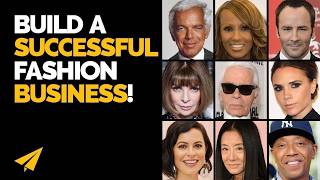
In this 16‑minute Believe Nation episode, host Evan Carmichael curates a rapid‑fire series of insights from ten fashion powerhouses—Ralph Lauren, Anna Wintour, Tom Ford, Victoria Beckham, Vera Wang, Karl Lagerfeld, Russell Simmons, Tory Burch, Iman, and Sofia Amoruso. Each guest is introduced with a numbered headline that encapsulates a core principle for succeeding in fashion. The video interleaves short sound‑bites with Evan’s framing, delivering concrete anecdotes (e.g., Lauren’s tie‑sale showdown with Bloomingdale’s, Ford’s “markdown rack” instinct, Beckham’s apprenticeship mindset) and distilled advice (trust instincts, embrace failure, stay practical, absorb knowledge like a sponge, be fearless, pursue constant improvement, act with honest intention, take calculated risks, solve a market problem, and create an emotional brand feeling). The tone is motivational and instructional, urging viewers to internalize these lessons, apply them to their own creative ventures, and engage in the comments with their own “one‑word” brand feeling. Bonus clips and a final call‑to‑action reinforce the belief‑centric message.
Chapters
I think it's healthy for everyone to lose a job as well as to gain a job.
I'm very practical, you know, if I'm designing something I'm saying, "Okay, but who's gonna wear this? Where are they going in it? That's not gonna work. Nobody's gonna buy this. Looks like a markdown rack to me. Get it out of here. Doesn't work.
Out." When I was working with Linda Farrow, which is a sunglasses brand that I was working for, I was like a sponge and you can take that opportunity to learn so much about the industry.
What's up, Believe Nation?
It's Evan.
My one word is believe, and I believe in you. I believe you have an amazing gift inside you that I want to see explode out onto the world. I started the #MakeIt series to try to get really specific on different niches, different industries, try to learn from the best and get specific tips, tactics, and execution on how to have success in that field. So today we're going to learn from some of the most successful and famous designers on how to make it in the fashion industry. Enjoy! Kicking us off at number 1 is Trust Your Instincts with Ralph Lauren.
When I went to Bloomingdale's, the buyer said, "We like your ties, Ralph, but would you make them narrower? And would you— we don't want to use your label, we want to use our own label, but we'll give you a really good order." Now here I was, no business and hungry, and I said to the buyer, I said, my heart's in my throat, or whatever the expression is. I would love to sell Bloomingdale's. They were the hottest store, young, hot store. I said, but I can't sell you. I'm closing my bag and I'm not going to sell you. 6 months later they called me back. And they said, Ralph, we can't find your ties anywhere and we want to buy them and we want to put a rack in, a rack of ties amongst the other ties. And that was it. The breakthrough was they bought it. The breakthrough for me is that I learned to trust my instincts. I learned to trust my own sense. Because the normal thing to do is say, "I'll make it any way you want to." I mean, that's how the world was. You want to— I want to sell you the ties, you know, maybe I'll have a new fashion for you next year. Let me buy it. My philosophy was that I love these ties. I made them. They were not just a business to me. They were my voice to myself.
Number 2 is Accept Failure with Anna Wintour.
You eventually joined Harper's Bazaar US, and in 1976, it was, you were fired. And I find that extraordinary.
Oh, wow. No, they were very clear in that they thought that I would never understand the American market. I remember I was the editor on one shoot was, uh, I think it was a French fashion shows, and I just decided that it would be interesting to have dreadlocks on the models, and I think that that pushed them further than they could bear. So that was it for me. But I, you know, I think it's always part of life to have some knocks as well as some successes and to take risks and, you know, to to learn, so I think it's healthy for everyone to lose a job as well as to gain a job.
Number 3 is Be Practical with Tom Ford.
I'm very practical. You know, if I'm designing something, I'm saying, okay, but who's gonna wear this? Where are they going in it? That's not gonna work. Nobody's gonna buy this. Looks like a markdown rack to me. Get it outta here. Doesn't work.
Out.
No, I'm not— I'm just pointing at you because you're sitting in front of me. I'm not saying your dress looks like a markdown rack, but also after having been in the business long time, I can look at something and say, "Oh, markdown. That's gonna be a markdown. Don't even do it. Don't send it to the store." I have wonderful, to say middle-class taste, that's not the right word, and I don't like to use words like middle class, it's a stupid word, but I have mass taste. I have a, I think I have, and what I mean by that is it may be aspirational mass taste, but if you put, 10 shoes down on a table, I can almost— it's rarely that I will fail. I will say, "Those 3 are gonna be the top sellers. That one will sell the most." Or if I pick the ones that I like, they will generally be the ones that perform. It's just, you know, that's part of your talent as a designer is being able to know what people want before they know.
Number 4 is "Be a Sponge" with Victoria Beckham.
I say the best advice that I could give anybody is to work for somebody else. Work for another brand. And when I was working with Rock 'n' Republic, when I was working with Linda Farrow, which is a sunglasses brand that I was working for, I was like a sponge. And you can take that opportunity to learn so much about the industry. And I did that. They were license deals that I had. Back in the day, and I worked with Coty, the fragrance company, the fragrance house, as well. And I learned so much. And then when I was in a position to bring everything in-house and own everything myself and create a team that would do this with me, I felt ready to do it. So though I didn't really— I didn't go to fashion school, I was working for other people, and I learned an enormous amount of time— an enormous amount in a very short space of time.
Number 5 is Be Fearless with Vera Wang.
One of the things, uh, that I found extremely fascinating about you is that you and your career have consistently been a risk-taker. In fact, I think one of the biggest risks you took was turning the traditional white bridal gown into pink, yellow, green, even black. Um, what drove you to take such risks? Well, I will say I am fairly fearless. Although it doesn't come without a price. But creatively, when you work in a certain genre— and I work in ready-to-wear as well as bridal, but I think we're very celebrated obviously for the dress for the woman's most important day of her life. So I have to say that trying to keep that fresh, trying to keep that new, trying to keep myself creative, and trying to envision bridal as a whole nother form. Trying to envision bridal is a whole other form of self-expression for not only myself as a designer but for the bride. I've taken big risks like black dresses, nude dresses, pink dresses. Color is one of the ways I can— for someone who works in black in ready-to-wear, color is one of the ways that I've really been able to distinguish our bridal collections through the years. But it's way more important than that to me. For in reality, I'm really a designer who does bridal gowns. I'm not a bridal designer. And because of that, I've been able to be— I've been able to have real freedom in what I do, and I don't feel any parameters, um, in which I have to define myself within.
Number 6 is strive to improve with Karl Lagerfeld.
I'm never pleased with myself, uh, I always think I could do better, I could make an effort, I'm lazy. I mean, it's ridiculous, I know, but I had a healthy attitude, and I don't think I should changed my state of mind because when people start to think about their past, their art and all this, it's very dangerous. I do a kind of applied art, don't be too pretentious. And the good thing is that I get never, like the old Rolling Stones song, any satisfaction of what I'm doing. I always think it could improve, I could do better and I could do more. It's ridiculous, but it's very healthy, I think.
Number 7 is Have an Honest Intention with Russell Simmons.
An honest intention is always at the core, no, usually at the core of a worldly business success. I mean, it's a, I want to give people something they need. Hopefully you're giving something they need that you approve of. You know, if you're vegan, don't have a steakhouse, you know, something like that. But it's the idea of going to work and giving people something that you believe in and make it an honest intention more so that that you give without, you know, so much— it's not about the expectation of receiving so much. There's faith in this idea that if you put your energy into something, it will give you a return. But there's something greater about loving something enough to just want to share it. And I think that that's a major motivation that we all should have if we want happiness and success.
Number 8 is take risks. With Tory Burch.
Opening a store on your first day that you launch a brand is a huge risk.
Why did you choose to start that way?
Well, I was warned against it over and over again. And I really felt that number one, we found a spot in New York that was budget-friendly. And it was basically— it was very little money. And we felt, or I felt, that I wanted to create an environment. And retail at the time was minimalist. Very stark and clean, and we thought it would be interesting to be inspired by David— I was very inspired by David Hicks in the beginning, and this idea of coming into a welcoming and warm environment, having couches for boyfriends or husbands or children, and making it accessible and friendly, but also interesting. And so it was a way to show who we were immediately when you walked in, and it was everything. We launched with, I think, 12 categories. Which also people thought was ridiculous. And it was a lot of going to China. I set up an office from the beginning and convincing factories to work with us and taking a shot on us because making 20 and 50 pieces of something was essentially losing money for them. So when we ended up getting that done, the store was the best place to really house that and show it and speak to our customer.
Number 9 is solve a problem with Iman.
I started Iman Cosmetics in 1994. So I, when I was creating Iman Cosmetics, to me, I wanted to have a new language. I didn't want the old mentality that the whole world is black and white, because the world is not black and white. There's a lot of different shades in between. And so I wanted to create a new product, a new language for people to address what beauty is. And in 1994, when I created Iman Cosmetics, it was the first company that was truly multicultural and truly global in terms of all the skin tones that we were covering. We started first in America and Canada, where now we're also in Europe, in London, in England, in France, in Italy.
And number 10, the last one before the bonus clips, is Create a Feeling with Sofia Amoruso.
So Nasty Gal is very much a feeling. It's a feeling, you know, to sell things online successfully, you have to create a feeling. So, you know, when I started selling on eBay, you know, the department stores that were online, the people who were treating their online stores as just another door and were dumping stuff on a model and cutting their head off and still are, are missing the point, like the opportunity that we have for storytelling online. And there's so much context that you can give a product within a photograph and within a description that, you know, I talk about exalting the details. So, I mean, I literally turned— I guess I like to say, and it's not really shit, but I turned shit into gold. I bought $5 things that weren't designer vintage, that were just vintage, that were stylish, that I put in the context of modern fashion and made something desirable. And I started the auctions at $9.99. Nasty Gal's not successful because I marked my prices up and tricked people into buying stuff that they were eventually dissatisfied with. They fought over it. The prices went crazy. That's how I built a cash positive, you know, cash flow positive business because I told a story through the photos. So it was, you know, the girl is always going somewhere. She has intent. So it's not just We have to— it's so much work, and it's not cheap to find girls who look like they're a person. But to tell a story with that photo and for someone who can't try that product on to look at it and say, "Oh my God, I can see myself wearing that," or— it's why people are interested in blogs and fashion bloggers. I mean, it's the celebrity— it's the paparazzi culture at the same time. Like, people understand things that are common. Kind of fed to them in a way that is like, mmm, pre-digested, I guess, a little bit, for lack of a better word, which I always tried to do with the photography by putting it in the context of like a real girl, which today is very much what we continue to try to do, and it's become much more common.
Now I have some special bonus clips for you guys, but before we get into that, my question of the day is, I'm curious, How do you create a feeling with your brand, with your fashion, or what is the feeling that you would like to create? Leave it down in the comments below. I'm really curious to hear from you. Thank you guys so much for watching. I believe in you. I hope you continue to believe in yourself and whatever your one word is. Much love. I'll see you soon and enjoy the bonuses.
And I think everyone should be an intern, by the way. I think this is a problem today as people come out of school and they think they should immediately be a star. And in today's world, of course, you can make a sex video and you can become a star. You know, if you're clever, you can get yourself, you know, out in the world through social media and you can become a star. But I think everyone should be an intern. You should sweep floors, you should pick up pins. If you're interested in being an architect, you know, you should run errands, you should, you should do all those things because you learn so much.
When I initially started up the brand, I didn't put too much pressure on myself. I didn't go into this to prove anything to anybody other than than myself. I was very focused. I didn't try and do everything at once, you know. For quite a few seasons, I stuck to just perfecting the dress. I didn't want to run before I could walk. It's very important to be focused and do what I was doing very, very well and move on and do more when my team was in the position to do that. So I think that it's about keeping things focused and not trying to do too much.
When I first started, I used to do sketches where I could say, well, here's a low neck, here's a high neck, here's a version of that with a bigger skirt. I mean, it was the only way I could get out what was in my brain. But over the last 25 years, I've really come to want to work myself with the fabric. So being here is now integral to my design process. There's no other place or way I can do it anymore. It sounds very extravagant in this day and age, but we work right on the body. We have a constant fit model because I have to see the clothing on the body. Very interesting. Do a raglan. I don't want to tear this one apart. We make another, right? That goes away. I drape it on her, I correct it, I make them cut it. We do pages of notes. I want a space where I could, in a way, retire from the intensity of that room, which is extremely intense. So this room is my office, if that's the right word. No one comes in here. It's really, for me, my haven, slash disco, slash hos— mental hospital.
But let me give you the one word secret to happiness. One word. This is all you need to be happy.
The most important word ever.
If you had to think of one word that's most important to you or that sums you up or that would be kind of like a little beacon.
Hey, Believe Nation, if you want to know what the most important one word is for Tony Robbins, Gary Vaynerchuk, Oprah Winfrey, Will.i.am, and Howard Schultz I have a very special secret video for you. Check the description for details.
More from Evan




How the Biggest Mistake in History Created A Trillion-Dollar Empire | Sergey Brin



9 Machiavelli Principles That Force People To Respect You | Machiavellian Philosophy



The First 10 Words That Instantly Ruin A Sales Conversation | Vanessa Van Edwards