How to Use Belief to Change Your Future | Oprah Winfrey
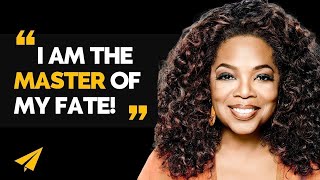
In this Mentor Me interview, host Evan Carmichael invites Oprah Winfrey to share the beliefs and experiences that shaped her life and career. Oprah recounts an early childhood moment reciting the poem "Invictus," which introduced her to the mantra “I am the master of my fate, I am the captain of my soul,” and ties it to the law of action‑and‑reaction, emphasizing personal responsibility for one’s energy. She narrates her unconventional path from a news anchor to a talk‑show host, describing how listening to her instinct led her to abandon reporting for talk shows, where she felt authentic. Oprah explains how she transformed television from a platform that used her into a platform she used, committing to purposeful work such as the “Christmas Kindness” project in South Africa and building a school after conversations with Nelson Mandela. She reflects on authentic power, drawing on Gary Zukav’s Seat of the Soul, and illustrates the importance of aligning one’s personality with the soul’s mission. Throughout, she stresses that belief—not wishes or hopes—drives outcomes, urging listeners to discover and live the dream God or the universe has for them. The interview ends with Evan prompting viewers to share the message that resonated most.
Chapters
Hello, Believe Nation! I started the Mentor Me series with the goal to try to hang around people who've done a lot more than us, and by hopefully spending a little more time with them, some of their mindset, motivation, inspiration, way of thinking, belief system seeps into us to help us become the best version of ourselves. So today we're gonna learn from Oprah Winfrey on staying motivated. Mentor me, Oprah! And as always, guys, if Oprah says something that really, really resonates with you, please leave it in the comments below and put quotes around it so other people can be inspired. Inspired as well. Enjoy!
When I was about 8 years old, I was— I grew up in the church, and I was going to one of those Women's Day, you know, how we had church all day long. I've been to Sunday school and then we're going to— and then afternoon they were having a women's tea from the women's board. They were having a tea and the little girl that was supposed to be there to do a recitation had gotten ill. And so they said to my stepmother, "We need some— a little girl. Can Oprah come back and do a recitation this afternoon?" My stepmother said, "Yeah, I'll have her back here." this afternoon. So, you know, church ain't over till 1:30. So, by 4 o'clock, I had gone home and learned to recite Invictus by William Ernest Henley. Now, it starts out, "Out of the night that covers me, black as a pit from pole to pole, I thank whatever gods may be for my unconquerable soul." I was reciting it and doing the pit from pole to pole. I didn't know what I was saying. But at the end of the poem, there is the stanza that says, "It matters not how straight the gate, how charged with punishment the scroll. I am the master of my fate. I am the captain of my soul." Now, my little 8-year-old brain didn't really fully understand the the power and depth of those words, but they sounded good enough for me to write 'em down and put 'em on my mirror. And those words, "I am the master of my fate. I am the captain of my soul," became a mantra for me. What it said is, "I am responsible for the choices that I make in my life. I am responsible." I am responsible. So, obviously, I grew up and was better able to articulate what those words really mean. And I discovered in physics class, those of you who remember physics, the third law of motion. You remember what that is? The third law of motion in physics says, for every action, it's called Newton's law, and it says, for every action, there is an equal and opposite reaction. So, what does that mean? That means everything that you are putting out into the world, every action, bam, there is an equal and opposite reaction. It means no matter what you do, the energy of what you do, what you say, and most important, the energy of who you are is going out into the world into your home, into your relationships, and that energy is always coming back to you. You are responsible for the energy that you are pulling out into the world, 'cause that very energy, bam, is coming right back to you every single time, whether you believe it or not, 'cause it is law. It is law. It is law. That what you put out into the world is coming back.
And I was hired in television, not knowing anything about it, having in mind Barbara Walters, but thinking, oh, okay, I can do that, not knowing how to write or film or anything. And I think it was because it was the times, and I literally had somebody who was willing to work with me that I managed to— to find my way. But I had to find my way because the reporting never really fit me. And what did work for me— I'm this old. I'm so old that when I started that it was a year of live action cam. And so it was like video cameras live. And so the news stations would do a live shot. They would throw to somebody live, even if nothing was going on, just so they could say, Live action cam. And what I found is I wasn't so good at the writing part. But if I was just standing up and talking about what had just happened, it was really good. And then I started to feel— so I started in 19 working in television, became an anchor immediately afterwards. My father still had an 11 o'clock curfew. Can you believe such a thing? That I am the 10 o'clock anchor.
In Nashville, Tennessee. I am the woman on the newscast reading the news. And my father would say, be home by 11:00.
And I'd say, Dad, the news is on at 10:00. He goes, and it's off at 10:30, so be home by 11:00. So I had a very strict father. So anyway, I could feel inside myself that reporting was not the right thing for me, even though I was happy to have the job.
Right.
I got an offer to go to Atlanta. I was making $10,000 a year in 1971, but still in college, so I was thinking I was doing pretty good. Yeah. I got an offer to go to Atlanta for $40,000, which I thought, it's over. I'm going to make $40,000. And my boss at the time said to me, you do not know what you don't know. And you need to stay here until you can learn to write better, until you— can perfect your craft as a journalist. And so he said, "We can't give you 40, but we can give you 12." So I stayed. And you know, the reason why I stayed is because I could feel inside myself that even though the 40 was alluring at the time, that he was absolutely right. So to make a long story short, because I'd be here all day just talking about how it all came about, I started listening to what felt like the truth for me. A couple of years later, I moved to Baltimore. I could feel that as a reporter— and by this time, 22, I'm making $22,000. I met my best friend Gail there who said, oh my God, can you imagine if you're 30 and you're making $30,000? And then you're 40, and then it's $40,000? We actually had that conversation in the bathroom. So this is, I started to feel that reporting wasn't for me. But I had my father, I had my friends, everybody was saying, oh my God, you're an anchorwoman, you're on TV, I mean, you can't give up that job. And when I was, by the time I was making $25,000, my father goes, well, you just hit the jackpot. You're not gonna make no more money than that. That's just it. So I was torn between what the world was saying to me and what I felt. Felt to be the truth for myself. It felt like an unnatural act for me, reporting, although I knew that to a lot of people it was glamorous. And I started to just inside myself think, what do I really want to do, what I really want to do? And I will say this, knowing what you don't want to do is the best possible place to be if you don't know what to do. Because knowing what you don't want to do leads you to figure out what is it you really do wanna do. So you discovered talk then, right? Around that time. I didn't discover talk, I was being, I got demoted. They wanted to fire me, but I was under contract, and they didn't wanna give up the $25,000. So they were trying to keep me on to the end of the year. So they put me on this talk, this is the way life works. They put me on a talk show to try to avoid having to pay me the contract out. And the moment I sat on the talk show interviewing the Carvel ice cream man and his multiple flavors, I knew that I had found home for myself. Because when I was a news reporter, it was so unnatural for me, you know, to cover somebody's tragedies and difficulties and then to not to feel anything for it. And I would go back after a fire, and I would take them blankets. And then I would get a note from my boss saying, what the hell are you doing? You're just supposed to report. Can't be that empathetic. Cannot be that empathetic. And it felt unnatural for me. So if I were to put it in business terms, or to leave you with a message, the truth is I have, from the very beginning, listened to my instinct. All of my best decisions in life have come because I was attuned to what really felt like the next right move for me. And so it didn't feel right.
I knew that I wouldn't be there forever.
I never even learned the streets in Baltimore because I thought— I was there longer than I thought. I was there 8 years. I should have learned the streets. But I kept saying to myself, I'm not going to be here long.
I'm not going to be here. I'm not going to be here.
So I'm not going to learn the streets. So when I got the call to come to Chicago, after starting with a co-anchor and working in talk for several years, I knew that it was the right thing to do. And I knew that even if I didn't succeed, because at the time there was a guy named Phil Donahue who was the king of talk and was on in Chicago and every single Not a single person, except my best friend Gail, said you're gonna fail. Every single person, when I left, my bosses by this time thought I was terrific and said, you're gonna, you're walking into a landmine, you're gonna fail, you're gonna fail, Chicago's a racist city, you're black, you're not gonna make it. Everything to keep me saying. They even offered me a car and an apartment and all this stuff. And I said, no, if I fail, then I will find out what is the next thing for me. What is the next true thing for me. It felt right to you, so you went for it. Because it felt like this is now the move I need to make. And I was not one of those people, you know, all of my, the people who worked with me in news, they would have their tapes and they'd have their stories and they'd have resumes ready. I didn't have any of that, because I knew that the time would come where I would, where what I needed would show up for me. And when that showed up, I was ready. Because my definition of luck is preparation meeting the moment of opportunity. And I was prepared to be able to step into that world of talk in a way that I knew I could do it. People refer to me as a brand now, the Oprah brand. I never knew what a brand was when I first started out. I didn't even know. What that was. I became a brand by making every decision flow from the truth of myself. Every choice I made for every show that was going to be on the air, I made based upon, does this feel right? Does this feel right? Does this feel right? Is this going to help somebody? Is this going to help somebody? That's not going to help somebody. And I learned my biggest teachers were people like the Ku Klux Klan and skinheads, because I was sitting on television one day doing an interview with the KKK, and I realized in that moment that the energy that I was broadcasting throughout the world was energy that I did not want to be a part of. And so I literally, in the middle of a commercial break, I just thought, I will never do this again. I will only allow my platform to be used for— as a force for good. And that there are many forms of the KKK, even if it's not called that. So I really made a conscious decision to use myself and to use the platform for that which I thought was going to enhance, enlighten people in a way. So that's a difference in that moment I stopped being used by television and made a decision to use television. I started out, I wanted a million dollars so I could buy my dad a house on a hill or something, you know. I didn't, I didn't see the possibility for a long time until I was in it, and then I saw it, and then I said, oh, this is more than what I thought it was. This isn't just the vision to You know, because when you're in television, as I was starting out, the big vision is, oh gee, can I get a network job? And I had this idea. I literally had said to my agent when I was in Baltimore, I said, could you get me the substitute job for Joan Lunden on Good Morning America? I would just like to, when Joan Lunden doesn't want to be there or when she's on vacation, could I just have that job? Yeah, fill in. And he said, this was 1982, he said, "Mm, you're not gonna get that job 'cause they already have a Black person." I go, "They don't have a Black person." He said, "Brian Gumbel already has that job." "Well, ABC doesn't have a person." He goes, "No, you're not gonna get that job." "Not even as a substitute?" "No, not even a substitute." So I let that agent go, but that was my thing. Oh gee, if I could just get to the network, if I could just get to the network. If you can get to a larger market if you could get to. And the top 3 were, you know, New York, Chicago— no, New York, LA, Chicago. I knew it wasn't going to work. I wasn't going to be accepted in LA in 1982 because I wasn't the right minority. And that's why Chicago. And I literally chose Chicago because of that. And then I happened to be— I thought, well, Chicago. And then I was on someone else's tape and I got a call from Chicago. Oh, that's a sign. But when you wanted— when you envisioned yourself being a backup, what was the greater goal? That was a step in the right direction. You had something in mind. Okay, so my goal was that I would be the backup for Joan London, and they would see how good I was, and then they want me to back up more. And then when Joan left for vacation or Joan, you know, decided that she no longer wanted to do it, they'd say, what about that girl? I was the girl that stood in for Joan. Yeah, that was my goal. And then you'd be on air. Yeah. You'd be a personality, but again, to what end? Yes, because I didn't have a vision beyond being successful on network television. It wasn't until I was literally on television, mm-hmm, had my own show, made the decision that I was going to own the show, meaning I would take the risk if it worked or it didn't work, that I thought about what does this really mean. And actually, I guess the vision was inspired by— I used to speak in high schools all the time, and I remember speaking at a school and a kid said to me, "You're that lady. Oh, you're the one that plays on TV." And I say, "No, I don't play on TV. It's actually my work. I use TV." as my work. And when I, you know, journal every night and was thinking about that, yeah, a lot of people think, and for a long time I thought it was just a job where you're going to play on TV, you're going to act on TV, you're going to have this job. But it was around probably 2 or 2 and a half years into it, around '88, '89, that I started to see, oh, this is bigger than— it's a platform. Yeah, television, that it's actually a platform. I changed how I viewed power about 1989. There was a book I read by a man named Gary Zukav called "Seat of the Soul." And in "Seat of the Soul," he defined what is true power, what is authentic power. And his definition of authentic power Authentic power, meaning the kind of power that can never be taken from you. Not your looks, not your fame, not your money, not your square footage. But authentic power is when the personality, your personality, comes to serve the energy of your soul. When you are able to align who you are, who you've become in the world, with really what you've come to do in the world, when your personality serves the soul. So I thought a lot about that. That book was actually life-changing for me. And I was building a home in Santa Barbara, and as anybody who's ever built a bathroom or a home or anything, nothing ever happens on time. And it was 2002 and we're supposed to be finished and it wasn't finished. And I was like, I can't wait to get in my house and I'm finally gonna have a great Christmas and I'm gonna do the kind of Christmas that I dreamed of from the Courier Ives, you know, cards. I'm gonna have the wreaths on the door and, but I didn't have a floor, so it was a little difficult to do that. So I started to think, If I can't do that Christmas, well, what am I going to do for Christmas? My house isn't even ready, and what can I do? So I started, as I was walking around through the trees, sitting under that tree, because my favorite time is to be alone with my thoughts. And as I was alone with my thoughts, I was thinking, what would be the next best possible Christmas for myself? And I thought of the best Christmas I ever had. The best Christmas I ever had was when I was 12 years old. My mother was on welfare. I was living with my mother and a half brother and sister in Milwaukee. And my mother called me, the oldest, to say, into a room to say, we won't be having Christmas this year. I said, we won't be having Christmas?
What about Santa Claus?
There is no Santa Claus. I had already figured that out, but OK. I was embarrassed and I was ashamed. Because for the first time I had to face the reality that, yeah, what I've been suspecting, that we're not like the other kids, that we really are poor, is true. So we're not going to have Christmas and there is no Santa Claus. My first thought after being embarrassed and ashamed was, what will my story be? What am I going to tell everybody when we go back to school and they're showing their toys and I don't have anything to talk about? What am I going to do? I'm not going to go outside tomorrow when everybody's out in the yards, in their yards, showing the toys they got for Christmas. I'm going to stay inside. Am I going to pretend I'm sick? What is my story going to be? Well, late that night, some nuns showed up at our house, and they brought a basket of food, and they brought toys for my brother and my sister. And I was overwhelmed with joy that those nuns showed up, not because they brought me a Tammy doll when I really wanted a Barbie doll. I was overwhelmed because somebody remembered that we existed and somebody cared enough in the middle of the night to come to our house with food and toys. And also, I would now have a story. So as I was contemplating what is the— that was the best Christmas I ever had. I thought, how could I make that possible for somebody else? What could I do to create the same kind of experience for other children? So I took 50 members of my team at Harpo, Harriet, one of them, Sherry, the table, and hired another 50 people in South Africa. And we went to South Africa with the idea of creating something that we ended up doing a documentary about called Christmas Kindness. Christmas Kindness, using my personality to serve the energy of my soul. So we went from village to village offering toys and clothes, food, soccer balls, to children who'd never experienced Christmas before. And early in the morning, you could see them lining up by the thousands to come. And we actually went to 10 or 12 villages to do this. And people said to me at the time, "Oh, that's so frivolous, and the kids won't remember it. And why don't you use your money to do something else more substantial, Oprah?" And I said, "They may not remember the toy. They may not remember the clothes, although—" They were most excited, the children, to open boxes containing clothes because, as their caretaker said to us, having new clothes made them not feel poor. And for so many of these kids, it was the first time they'd ever experienced having something that was new for them. They may not remember what they got in the box, but they will remember that somebody remembered them. They will remember the experience. So during this entire experience, Nelson Mandela had invited Stedman and I to stay at his home. So when Nelson Mandela invites you, you stay. And I was so nervous. I was like, oh my God, what am I going to talk to?
Because it's 10 days. It's 10 days.
It's not just a dinner. It's not a lunch. It's 10 days. It's 10 days breakfast, lunch, and dinner with Nelson Mandela, what am I going to say? Stedman said, why don't you try listening? So I did. I had 29 meals with Nelson Mandela. At first, really, really, really, I was very, you know, like, oh my God, it's Nelson Mandela. And by the third or fourth day, he and I would sit together in his living room, sharing the paper at the end of the day, talking about events in the world. And one of the things we came to talk about the most was the power of education to overcome poverty. So in one of those lucid moments, I said to him, well, you know, I've always wanted to build a school. He said, you want to build a school? Oprah, you want to build a school? So he got up and made a phone call to the Minister of Education. I wasn't planning on building it then, but all right. The Minister of Education comes over later in the day, and we start the process of building a school. The reason why I wanted to build a school, because I tried different things, because I always knew, even before I could articulate, that my personality needs to serve my soul.
This is what people don't know, 'cause you can't tell everybody. I am who I am. One black woman, my hand in God's hand, trusting in that word, 'cause that word never failed me. And I got to where I am, and I stand as I am. As Maya Angelou often says, and often said and says in her poem to our grandmothers, every time you see me, I come as one, but I stand as 10,000. Every time you see me, I come as one, but I stand as 10,000. So it's just not me standing up here. It's every— it's my mother, my grandmother, her mother, the mother before her, her grandfather, every uncle who prayed, every sister who cried, every aunt who sacrificed, those whose names made the history books, those whose names never could make the history books, who allowed me to come as one and stand as ten thousand. So oftentimes when I walk into a room just as cool as you please and I can't see another black face in a 50-mile radius, I stand and sit at the boards as one, but I'm bringing the 10,000 behind me because I not only know who I am, but I also know whose I am. And so anything you hear about me that feels good, sounds good, you think about, "I wonder what Oprah's doing, how she doing?" I I am living the dream, and I want you to live the dream, because I'm not living the dream because I'm special. I'm living the dream because I was obedient to the call of the dream. So I want you to leave here today thinking about what is the dream for you? What is What is God's dream for you? What does the Creator's dream hold for you? So often, we spend our lives wishing and hoping and hoping and wishing and desiring things. This is what I know for sure. You don't get what you wish for. You don't even get what you hope for. You get what you believe. So what is it you believe and know to be God's dream for you. So, I live in the dream. I'm living in the space of the dream, and dream's good, dream's good. The dream is greater than anything that I could have imagined. You know, when I was a little girl, my father, on Sunday mornings after church, he was a deacon, so he thought he had to say goodbye to every single person. We were the last car leaving the parking lot in the green Oldsmobile. And we would drive through the white people's neighborhoods. And I used to dream the dream, driving through the white people's neighborhoods. We'd drive through the white people's neighborhoods and you'd see their fancy houses. Some of them had gates, but all of them had trees. And I remember when I first came to Baltimore, I met a friend. Hello, Baltimore in the house! When I first came to Baltimore, I made friends with a wonderful woman named Arlene Weiner. She was the wealthiest person I'd ever met. And I went to her house and parked in the driveway. There was a Corvette and there was a BMW and there was a Mercedes. I went, "Whoa, Arlene's rich." And at Arlene's house, once I got inside, I could see from her kitchen window 6 trees in the front yard.
I thought, "Oh, rich people have trees." When I get rich, I'm gonna get me some trees. I'm not just gonna get me—
everybody wanna get cars and pocketbooks and shoes, but I want me some trees. So, as life would have it, I was standing in my kitchen window about 3 years ago in California, making coffee in the morning, and I was looking out the window, and I saw the Six Flags. Trees. But listen to me. I was making, making, making the coffee. I saw the 6 trees. I went out on the porch to actually count the 6 trees, and this is what I noticed: that I could dream the 6, but beyond the 6 trees in my kitchen window are 3,000 687 trees. How do I know? Because I had them counted. I had them counted. Because I said, I want to know how many trees out there. I dreamed the 6. That's as much as my small mind and my imagination could hold for myself. I dreamed the 6. 6, but God can see beyond the 6, can see beyond the 6 because there was a bigger dream for me. And I'm here to tell you, there is a bigger dream for you, Essence. There's a bigger dream. And so the key, the secret, the magic is to surrender to God's dream for you. To quit fighting against and pushing against and disallowing against and resisting against and trying to tell the Creator, the universal forces, divine intelligence, what you are supposed to do, and get still and know for sure what his dream, the dream, is for you.
Thank you guys so much for watching. I hope you enjoyed. I'd love to know, what did you think of the video? Were you inspired? Are you motivated? What was your favorite message from Oprah? Please leave it in the comments below, and I'm gonna join in the discussion. I also want to give a quick shout out to Renee Montague. Renee, thank you so much for picking up a copy of my book. It really, really, really means a lot to me. So thank you guys again for watching. I believe in you. I hope you You continue to believe in yourself and whatever your one word is. Much love. I'll see you soon.
More from Evan




How the Biggest Mistake in History Created A Trillion-Dollar Empire | Sergey Brin



9 Machiavelli Principles That Force People To Respect You | Machiavellian Philosophy



The First 10 Words That Instantly Ruin A Sales Conversation | Vanessa Van Edwards