If You Started Investing in 2024, Do This
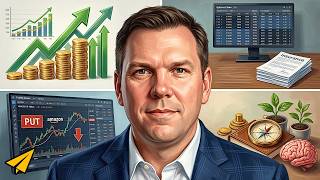
Patrick Bet-David covers options basics, then talks with David Gardner about Motley Fool's investing philosophy. Garrett Gunderson explains advanced tax strategies like Section 1202 and CAPS trusts, and recommends building a three-person financial team before investing in businesses or real estate.
Chapters
In my office, I don't have pictures, I have quotes. You know, feed the brain. And one of them is from Warren Buffett. He says, I'll tell you how to become rich: be fearful when others are greedy and be greedy when others are fearful. This is not Tesla. This is not buying Tesla and then the next day you're rich. It's not buying Amazon and all of a sudden it gaps up. The greed that people have of wanting a lot for little can overwhelm and distract them from what we call compounding. If a person wanted to get into sales and they really wanted to, you can morph. That's what personal development is. I would hate someone to put me in a box and say, "Andy, you're kind of gregarious and you're out of control. You're too emotional to trade options." Baloney. I can learn to temper those things. If someone says, "Oh, you're born without a personality, you'll never be a salesman." Baloney. I believe that with personal development that a person can do darn near anything they want to do in this life. That's just my opinion. And if you're humble and you're a student, you're willing to make some mistakes, you're going to be just fine.
Money Revealed is an exclusive video series where self-made millionaires share their secrets on how they got rich.
In this episode, you'll learn how to get started trading options, invest with minimal risk, and find profitable investing opportunities.
These are the lessons that they don't teach you in school about making money.
And we've partnered with the series creator, Jeff Hays, to bring it to you on my YouTube channel. Enjoy. Andy, here we are again. We had part 1 of your interview, which really covered a lot of ground and I think set the stage for this second part of the interview. And this is to talk about options and options trading and maybe the considerations around this, especially in today's world. Some interesting things are happening. So let's start with maybe the notion of trading options in today's market? What's going on? And is it crazy? Is it like crazy town right now? Or how do you see it?
Well, if a person— it would begin with understanding what an option is to help answer that question. And I often use the term choice. You know, what's another word for a choice that starts with an O? Option.
Yeah.
And so choices are nice to have. They can put you in a position of power. It's not a mandate, right? There's a freedom to an option. I don't have to do something, but I could do it if I wanted to. So I have a choice. And part of the problem with stocks is you have lots of risk because you have very little control. You know, if I'm a flipper of a home, I suppose I can use forced appreciation. I can say, well, we're going to renovate this, we're going to fix the management, we're going to force appreciation. Great. But when you buy a share of Apple, there's not much you can do. And so what options do is they give us choices about when we can buy things and when we can sell things. So when people say, oh, options are risky, that's crazy, derivatives and, you know, nutty stuff, actually options are often used. In fact, I would say that that the reason they were created, by and large, is to bring some stability to your ability to buy and sell at certain places. And it costs a little money. So think about it this way. Insurance. You know, would it be a good time to have— right now we have California that's on fire. And I don't mean to be light or flippant about that, because people are losing their homes. But there's part of me that thinks the real news story would be if California wasn't on fire. They're just always having this problem. Is it a good time to have insurance on your home in California? Is it a good time to have fire insurance right now?
You bet.
So, when you say, Andy, in this environment right now we're in, in the stock markets, is this a good time to have options and choices? Yeah. I'd say it's a really good time, both as a buyer and a seller of options. So, hopefully we can have time to talk about both and introduce both today.
Well, you spoke before we started rolling, you were talking about the volatility indexes.
Yeah.
And you said that one of the indications from what you've seen in the market, and I want you to explain this, and I want to wait till the cameras are rolling before you did. But you said one of the things is that people are more afraid of the Fed not supporting the market than they are of COVID-19. So what did you mean by that?
Well, let's take a chance for some education on what the VIX is. It's called the VIX. I've written a couple articles on this. They call it the fear gauge. And so let's really help people understand this by speaking about insurance premiums. If I have a bunch of DUIs and a bunch of tickets and I still have a driver's license, obviously my insurance premiums will go higher. If you're like my wife and you drive very carefully and the kids are in the back, you know, soccer mom type stuff, Your insurance premiums go down. So all the VIX is, is it says, look, when you look at the S&P 500, all these 500 companies, and you're worried about them falling, how much would you pay to guarantee your sell price? So we talked about the choice. Mark Cuban had a company called Broadcast.com, and he sold it to Yahoo for stock instead of cash. Now, why would he choose stock instead of cash? Well, stocks can go up, cash probably going to go down. Well, he purchased some put options. He purchased some of these contracts that gave him the choice to sell high even if they went down low. So it's an insurance deal. And when they say, hey, Mark, Yahoo! isn't barely even around anymore, what happened to all your shares? He goes, you know, well, I was covered and then some. I had insurance coverage. I had contracts allowed me to sell high when things were low. So the question is, if you want to be able to sell high if the market drops low, how much are you willing to pay for that? Well, that's what the VIX is. The VIX just says, look, based on the implied volatility of how scary things are, how much will people pay? So when you look at, you know, I'd say probably going in the end of 2018 into 2019, the Federal Reserve is looking at their magazine in their gun. They're saying, "Well, where's our interest rate here? We've shot all the bullets. We've— okay, we've gone to zero interest rates. All those bullets are gone. We did QE and, you know, all those bullets are gone. Operation Twist. I guess we better reload." So they started to hike interest rates, and the market does not like— did not like that. And it really helped us know, at least in my opinion, that the market showed its hand on how addicted to that heroin they really are. They went into withdrawal pretty quick.
What is the heroin?
It's low interest rate printing money. It's low interest rate. So here we have 10 of the most prosperous years in the market. We're supposed to be through, and, you know, the economy is supposed to be doing great. But if you look at the Fed, you know, you're a medical guy. If you look at the Fed stimulus as medicine to help us, obviously we weren't that— we weren't better because we were still giving lots of medicine to the economy. And when they pull hold that off, and we started having twitches and withdrawals here, you saw the Fed spike. And you and I got together with you and your son, COVID, the big spike had hit, but actually the VIX had fallen below the level all the way down. The COVID had calmed down, the VIX was actually below the level that it was at the end of 2019, which tells me that the fear of the market crashing was greater over the Fed pulling their stimulus and pulling their low interest rates than it is with a global pandemic. The markets were more afraid of that. And in our previous interview, we talked about that. When the Fed doesn't directly buy equities yet, but they still print money that finds its way into those markets of real estate and equities and causes inflation in those prices. So yeah, if you're in those markets, you're more afraid that the Fed will cut off liquidity and low interest rate than you are of a global pandemic.
You'd rather deal with corona than that.
Yeah, you'd rather deal with corona than that. Isn't that crazy? That shows that detachment of fundamentals we talked about in the previous interview.
Yeah, and there seems to be— you talk about that detachment. It's like, I feel like we're in some kind of a la-la land. In all my years, I can't really wrap my head around it in a way that utilizes any understanding of economics and fundamentals to what's actually happening, which is disturbing. It makes it harder as an investor. I'm not alone, obviously. I think a lot of people feel like me and probably a lot of people who are a lot smarter in economics than I am feel that way. Is a conclusion, at least in your mind, options now more than ever?
I don't think there's ever been a better time or more important time to learn about that particular vehicle for the reasons both of protection, but also opportunistically. And it's interesting, my, you know, last year they cut off school and I'd never homeschooled before. So now I'm homeschooling, which for my kids, that's a nightmare.
Okay.
When you looked at my grades and when I was growing up, that's a nightmare for them. I didn't realize how much I'd like it. The relationship I've had with my kids have always been great. We play a lot of basketball together. But I didn't see that benefit coming. You know, some people saw a burden. I was like, this is an opportunity. So I sat my son down, and we like to play a lot of hoop, and I said to my older son, I go, what do you want to do this year? You want to go to school? You want to stay home? Because they gave us our choice. And he said, Dad, I want to come home. I go, what do you want to learn? He goes, let's do financial education. So the very first option trade that he made is in this environment. And this is a kid that I care about.
How old?
He's 14. And that was fun. We recorded it for posterity, you know, and he's making his first real option trade. And so every day, you know, he looks at some of my accounts and he gives me feedback on what he thinks as he's learning. What an incredible opportunity to have father-son time. But the options strategies we're using right now They're Warren Buffett type stuff. They're not that elaborate and a person can learn them. So I'll share with you the first one we did. We, we sold a put option on a stock. Now, what does that mean? You know, to the person watching, you know, is that— that just well be speaking in Japanese for some people. What we did is we found a stock that we liked fundamentally. In other words, In our previous interview, he said, gee, there seems to be this detachment from fundamentals. You know, are there any companies out there that still have a pretty decent price and pretty good earnings? And so we found one. And they had a little bit of debt. But as you know, if the dollar loses value, that's not as bad. So they had a little bit of debt, but they had enough cash flow to service it. And I said to my son, I go, do you think this will be around in 20 years for you. And he says, yeah, that company's pretty solid. We'll still use their goods and services. So I said, all right, what level would we like to buy it at? And we went down from price. I go, that would be a nice sale price. Use a little technical analysis, you know, look at the chart. And, you know, they, they're going to pay us about 12 to 15% per annum as a bonus which would be about 1% a month, right, as a bonus to buy, to promise to buy something cheap. Now think about that for a minute. We're gonna get paid to pick up businesses on the cheap if they fall. That is text, in my opinion, that's textbook Warren Buffett. In my office, I have quotes. I don't have pictures, I have quotes. You know, feed the brain. And one of them is from Warren Buffett. He says, I'll tell you how to become rich. Close the doors. Be fearful when others are greedy and be greedy when others are fearful. How'd you like to be Geico right now? You know, collecting premiums. Think about that for a minute. If you're selling insurance, Patrick, what's your manufacturing costs? What's your raw material costs? What's your assembly? What's your packaging? What's your shipping? All you are as an insurance company is someone who makes promises. Imagine a business right now in your life where you could get paid by making promises, and not only promises, but promises you'd like to keep. So this put my son in an interesting situation. If that stock stays high, he gets paid to watch it be high. He won't get to buy it, but his cash is earning a wonderful rate of return. And you can get into that, you know, I was pretty conservative with him as the first one. You get into the 20s on this stuff. If it goes up, he gets paid on his cash. If it stays the same, he gets paid on his cash. If it goes down, he gets paid on his cash. And it goes down far enough, he gets paid on his cash and he gets to buy on the cheap. This is exactly how Warren Buffett bought some of his railroads. It's exactly how Warren Buffett bought some of his Coca-Cola shares, is he says, what price do I want? I will insure other people, give them the option, give them the choice to sell me that stock at a price that I like. And that is one of the most basic options trades a person can learn their first time out. It's usually the first one I share with students at Cashflow Academy because think about it, my son's risk is less than if you bought stock alone.
So, but what's the— obviously, it seems like, well, gosh, if that was so easy and worked so well, everybody'd be doing it. What's the potential downside? Like, in other words, how does somebody get hurt on a trade like that?
That's a perfect question because you think everyone would. It's really not. It's not a hard answer at all. Let's say my son's stock was at $35 today. If he buys the stock, what's his risk?
35.
If it keeps going down, yeah. 35, it goes to zero.
Yeah, what's the worst— bankrupt is your worst case. Y'all, whenever you talk about risk, you start with the worst-case scenario and try and improve it from there. So if he buys at 35, his risk is $35. Okay, what if he promises to buy at 32? What's his risk now?
$32.
Yeah, 32 minus— what if he gets paid $100, or what if he gets paid $1 to do that? Even lower. So what I'm talking about is less risky than buying stock.
So when you buy the— it was a put. So if you buy a put, somebody pays you to hold the put.
Well, they have the put.
They have the put, but they're paying you to buy it at a lower price, which is insuring them against—
you nailed it. It's that simple. So if my son says, I like it at $32, great. I'll get paid to buy it at $32. Now, what if it doesn't get there? Well, what if he got paid a dollar on that? You know, if your $32 in the bank was generating a dollar every month, that'd be $12 at the end of the year, wouldn't it?
Right.
That's pretty good ROI on your cash. That's going to beat inflation.
Yep.
And so this is the downside, if there is one, is, is that if you'd actually bought the stock at $35 and it goes to $60.
Yeah, you missed the opportunity.
You missed the opportunity. But remember, Warren Buffett says I'm gonna buy when others are fearful. And selling insurance, I mean, think about it, he owns GEICO. He actually gets paid for risk transfer. Think about that. That's scary for people. I don't want to take any risk. That's why he's rich. If you have a $150,000 car and you pay GEICO, that $150,000 risk is now GEICO's. But you know what? They know the numbers, and that's where the financial education comes in. They know the actuaries. They know how much to charge for that insurance. And you're going to pay some premiums. Hey, sometimes I've bought some stocks and I paid a higher price, you know, to where it fell. You know, that's happened to me multiple times. But, you know, I want the asset and that price is good for me and I'm going to hang on to it for a while. So here's what's, what's fun about this environment is the VIX is definitely not where it was in March. You know, everyone was panicked completely with COVID VIX is still very, very high compared to where it's been historically in these times. And so people are still nervous about the bottom falling out. They're still nervous about the Fed. And so what I do with my son is I say, what are some companies that I wish I could have got? Where's the ones that got away? Where's the one— where's that company that, oh, I almost bought it. I thought about buying it, I was gonna buy it and I didn't. Okay, go back to some of those. You say, you know, if it ever got down there again, would you want it? And see if you can't just get paid to wait for it to get there month after month. Get paid, get paid, wait for it to get there. And when it does, boom, now you get to buy at a low cost basis. So that's probably a little wonky for an interview for someone listening, you know, out of the gate. But what I hope it does is people might say, gee, I might not have a perfect understanding of options for my first time with Andy, but you know what, if I studied this, this might be something I want to learn. I can get paid to buy an asset? That's a lot different than a 401(k) where you pay a fee to buy the asset. A lot different, right? A lot different.
And I guess another potential risk is if If the stock plummeted, if you bought it at $32 and it kept going down to $28 or something, you know, that's maybe another side of the risk.
Well, yeah, but that's a risk you were taking anyway if you bought it at $35, right?
Right, right.
So there's really no difference between selling a put option at a lower price and buying it today at the higher one. In fact, your risk actually is lower.
It's lower. And you're making money. Yeah.
And you got paid to buy it. So it's a very Basic strategy is very simple. It's easy to learn, but in a way to build a position over time and to acquire stock, that's one of— there's an article in the Wall Street Journal I often reference where it's not about options, about financial education, and it's an older article. It says Buffett scores with derivatives. This year, the insurance salesman Warren Buffett, Berkshire Hathaway, collected $2.5 $1 billion in premium by selling insurance on stock indexes, which is exactly what we're talking about here. Now, that's a bunch of jargon mumbo-jumbo. But if a person could find an environment where it can be made simple, and they practice a little bit, they'll pick it up and do the same thing Buffett does. He just does it a little bigger than most of us.
Yeah. A couple decimal points. So is it more profitable to trade options during higher volatility, is that a better time to do it than when there's less?
Yeah, it's more profitable because there's more risk. Obviously, when I'm selling premium at a higher vol— when the VIX is higher, that means I'm making commitments where it could really have the bottom fall out. That's where your education comes into. I've always hated the advice culture on Wall Street. I've hated it because what people will do is they'll watch a program like this and they'll be craving the wrong thing. They'll be craving advice and tell me what to do, tell me what to do. Is that ambitious or is that lazy? And so it says, Andy, should I buy gold? If I say yes, didn't learn anything. Say no, should I buy Bitcoin? Yes, didn't learn anything. No. So what education is, is learning to fish, not just asking for a fish. And, you know, Wall Street gets very, very rich on the advice culture because that's what you're paying for. A guy like Warren Buffett doesn't ever touch Wall Street. He just buys his companies, and he often sells a put, gets paid to buy them. So that's just an example of one strategy. Flip it over. If I see a stock that I have and I say, boy, if it got here, I'd really love to sell it. I don't know if it'll get there, but I really love to sell it. I could sell an option to sell and get paid for a promise to sell. It may never get there. If it does, great.
Which is called a call.
Exactly right.
So walk us through that. So in the same scenario where you have a $35 stock, instead of doing a put at 30—
Sell it at 40. Give me a buck. You know, I'll sell it at 40.
So walk through that just like kind of slowly. So, okay, so now I'm going to say I'll buy it. So you're committing to sell it at 40?
Yeah. Use my son as an example. So we've sold this put and it will expire in about 2 weeks. And 1 or 2 things will have happened. A, it will have gone down far enough that now he has an asset. Now he's got out of cash and he's got 100 shares of this stock. B, it didn't go down for him and he collects the premium. So either way, my son's going to be pretty happy, isn't he? He's going to say, yeah, I finally got my stock. Maybe buys it a little bit higher than it is, but, but he's happy to have it. Well, the moment he owns that stock, just as you can get paid to make promises to buy stocks that you want, you can also make promises to sell stocks you want. And so the moment that happens, we'll turn right around. And one of the games I play with him is, you know, he's getting big. I'm not gonna be able to do this too much longer. I'm 6'8" and he's about 6'1" now.
Wow.
And so I'll hold the basketball in front of him and I'll play this game, you know, where he can't get it. And that's a lot of what we learn how to do using some technical analysis and a couple of fancy standard deviations. But I basically will say, hey, you want to— you want to buy my stock? You want to buy my stock? And I'll just put it just to where if they get it, great, I sold it at a huge profit. And if they don't, you know, next month maybe. So you can collect premium, and this is called time decay. Think of what a rental— to make this simple, think of what a rental agreement is. Well, you have the choice to stay in my house. If you want to live in your mom's house, that's fine, but you've got mine if you want to live in it, right? And it's good for a month. Now the price of the home could go up and down, but I'm going to collect rent because you have the choice to live in my house. Well, this is just the same. Look, I have some stock. Stock's not yours, but I'll give you the chance to buy it if it goes high enough. And these are not— you know, this is not Tesla. This is not buying Tesla and then the next day you're rich. It's not buying Amazon and all of a sudden it gaps up. The greed that people have of wanting a lot for little can overwhelm and distract them. From what we call compounding. And one of the most popular— and this is so conservative, this little idea of selling a call saying, hey, I'll sell it if the price gets high enough that you entice me to sell. You can do that in an IRA. So this is not overleveraging, this is not, you know, going crazy. You have cash to cover the promises that you make to buy things, and you have stock to cover the promises you make to sell things. And that's probably the 2 most basic cash flow strategies. And let's say it pumps up your, you know, your percent you get a little bit. Well, anyone that knows about compounding, get another percent here, another percent there, by the time you're 89 and you're looking at Berkshire Hathaway, you're pretty happy. You're pretty happy.
So what would you say the timeline is for a novice who now is listening to this saying, You know, the general themes I can kind of track here. It kind of makes sense to me. Yeah, I think this is a better thing for me than trying to just buy and sell equities outright. You know, I like the idea of options or choices, as you like to put them, and I want to enter this arena, but I'm sure there's— I don't even know what I don't know yet. Sure. What's, what's the first step for somebody like that? Should they paper trade? Should they What would they do?
I'd do it just like I did my own, my own boy. You know, he's a bright kid. I mean, despite his father, he's a pretty bright kid. And we started, you know, homeschool, and about a month in, we, we did just what you said. We practiced and paper traded an account for a month or two. And having a mentor is important, having someone to watch what you do. And then someday you're ready to make that first little trade. It isn't like you go from paper trading to full-scale, all your money's in. It's a gradual thing. Oh, Mostly paper, a couple reel, you know, oh, maybe 3 reel, you know, it's a gradual thing. But for most people it's something they can pick up. You know, even if a person says— this is the mistake a person makes— is at first blush, the school does this to us, is at first blush they didn't get it, they think it's not for them. That was the big problem I had in school. I went in my chemistry class and because I didn't understand it the first day, I sold my short. It's just too hard for me. But if a person gets the right teacher and if a person puts in just a few minutes in their education, it can be actually fun to learn something that they thought was complex. And it's like my dad always says, you know, it's awfully simple when you know it, simply awful when you don't. And so I would say, yeah, it's a very short amount of time for the average person. My son, I'm, you know, of course I'm a dad, so I'm way proud of what he's done, but he's coming along really, really well. And if he can do it, I think most people could learn it.
Is there a profile of a certain type of person or persons that should not do options, like it's not the right thing for them?
Yeah, the worst personality you could have to trade options is mine.
Well, that doesn't make any sense. This is what you do.
It is the worst. As I look back, there's two things that I think I've found. If I look at my mistakes, either one was an education gap where there was something I should have learned. I was doing things that I didn't understand. But another one is temperament. I'm sure that in both our lives we could list things that we Weren't ignorant. We knew what we should have done, but the devil made us do it. And so I don't think there's a specific personality that would forbid a person from doing anything they wanted to do, right? If a person wanted to get into sales, and they really wanted to, you can morph. That's what personal development is. I would hate someone to put me in a box and say, Andy, you're kind of gregarious, and you're out of control. You're too emotional to trade options. Baloney. I can learn to temper those things. Someone says, "Oh, you're born without a personality, you'll never be a salesman." Baloney. I believe that with personal development that a person can do darn near anything they want to do in this life. That's just my opinion. And if you're humble and you're a student, you're willing to make some mistakes, you're gonna be just fine. You're gonna be okay.
And your humility and self-deprecation, I think, might be overselling this for some people. I think you might be a little small smarter than you let on to, and you've earned your stripes here, no doubt.
You ask my wife, she'll verify everything I've said.
Yeah, that's maybe not the first person I'd go to. But anyway, but this is— I think it's fascinating. I mean, people are lost right now because I really feel like we've entered like the Twilight Zone to a large degree. You said we got polarized politics, we got states that are burning, we've got fear indexes that are riding high, we've got a market that maybe in some respects doesn't make sense. How's the market holding all the way up here when all these other things are going on, yet it is. In the end, it's like, what do I do? It's a little paralyzing. But the idea of options to me seems like, wow, this is a place that if you can get in and learn some things about it, master it and incrementally increase your trading in it, that that's maybe a place that no matter what all these other variables are, you can still work in that marketplace.
The gift I would offer is one of serenity and calmness. I would invite people to say, think about your car right now. Did you freak out last night about whether you're going to get in a wreck? No, you got insurance. Am I freaked out that my home might burn down in California? Might be. Oh, but I have insurance. Thank heaven. And in a time where you look at your 401(k) or you look at your investments, you think, wow, where could all this go? To be able to spend a very small amount of money and to arrange your portfolio in such a way that you know an outcome, up, down, or sideways, you're locked in with insurance with just a little money to do that. You get to sleep a little easier. You get to concentrate on your family. You get to concentrate on your world. You know, let these politicians do what they want to do. They're always going to be fine. Let the world go along its merry way. If I have insurance and I have options and I have choices, that makes me feel good inside that I have the choice to do X, Y, and Z. So I would say the person that would be— that this would find appealing. Number 1, would I like a little bit more calmness and a little bit more serenity in that part of my investing portfolio? Number 2, would I be curious to actually get an income, you know, a cash flow based on time movement, maybe even less than, or maybe more so than stock movement? That's worth investigating. And so, like you say, is now a good time to do to do this. Yeah, it's a good time.
It seems like a really good time. As always, I so much appreciate you coming and sharing all this, and it's so awesome giving us the real-life analogies that kind of bring it all into visibility, at least for me. Yeah, you're an awesome teacher, so thank you so much for doing that.
Thank you so much for having me. I hope we get to do it again sometime soon.
I'm sure we will. Thanks. Pretty much everyone knows about The Motley Fool, and one of the co-founders of The Motley Fool is David Gardner. David is bright, he's energized, he's been at this stuff for a while, and you would think that it just started yesterday with the level of energy that he brings to the table. When we showed up with our production crew to Motley Fool headquarters, I have to tell you, I was pleasantly surprised, maybe even somewhat shocked, how the culture and the environment of what they do there is pervasive. You might see like the ads, you might see interviews of David Gardner, you might see things that are in the media, but you wonder behind the scenes, what does it look like when you show up to work there? Well, I have to tell you, what you see in their brand in the marketplace is what's going on at the headquarters of The Motley Fool. And also their way of looking at the market and picking stocks, I believe that it's timeless, that these principles are ongoing no matter what's going on in the world. You can benefit from them. You can understand the markets better. And this is why they have decades of success in their company, because they are not something that is a fad. Their way of approaching the markets is something that lasts for eternity. So tune into this, listen to it, understand it, and you're going to walk away with some gold nuggets. Enjoy my interview with David Gardner. David, thank you so much for inviting us into your home, or your home office, I should say. But it feels very friendly and homey here.
Let me just say, Patrick, thank you for suffering fools gladly. We're like fools all the time. When actually anybody comes in from the outside world, hangs out with us, they're always raising the caliber here, because you're surrounded by a lot of foolishness. So thank you for suffering fools gladly.
It doesn't feel like suffering, but nonetheless, I'm enjoying my experience already. And I just— so much I want to talk to you about. I'm like, oh, let's, let's wait till we turn on the cameras to have this conversation. Your story is a great entrepreneurial story. So could you kind of give us the background? Like, how did this whole thing emerge?
Sure. Well, we really just started The Motley Fool as a newsletter for our parents' friends. They were the only ones willing to pay us $48 a year for our advice. And I think they just kind of felt sorry for us. And I had quit my one job that I'd had up until until The Motley Fool. I was writing for Louis Rukeyser, who was the longtime host of Wall Street Week on PBS. He had a newsletter, a financial newsletter, published here in Alexandria, Virginia, where we're talking today. And it wasn't a good job, as it turns out. I didn't really get to work with Lou, but what I was doing is I was writing, and I was able to write about things that I thought would be helpful for people in the financial world. So I would write about discount brokers, which 25 years ago was a newer thing. The idea that you could make some of the decisions yourself and actually just buy stocks directly for a much lower price through a discount broker. So I'd write that up and then it would come back edited and only half of it was what I'd written and any color or personality was stripped out of it and the first half was just a dry recitation of what I'd already said and the second half were all the reasons you wouldn't want to use a discount broker. And from one month to the next, whether it was Quicken software or discount brokers, I kept not being able to advocate for something, and always without any color. And so, I was out of that job. And so, we had to start a newsletter for our parents' friends. But Patrick, from the get-go, we've always loved the stock market. We had a dad who taught us about the stock market. And we started to realize, our parents' friends don't know that much about the stock market. And so, we thought we had a voice. And by picking a Foolish name, a business grew out of that.
How did the name get picked?
So, I picked the name. It was from Act 2, Scene 7 of As You Like It. That's Shakespeare's probably greatest single scene about fools and foolishness. You can read all of Shakespeare, which I haven't quite, and I don't think you're going to find a better scene. Act 2, Scene 7 of As You Like It. But it's a nondescript quote. A fool, a fool, I see a fool in the forest, a motley fool. There are some other great lines in that scene, like invest me in my motley. There are a lot of good puns for us and what we're doing, but it kind of celebrates a foolish life, which is you're not really with Wall Street. You're out, you're in the rural area, you're enjoying the forests, and you come across people who don't take themselves so seriously. And so I thought that's a great viewpoint to be coming from because we are going to be talking about Wall Street and what we're doing, but we want to make it clear we're not that. We're more Main Street, not Wall Street. And so I love the character of the Fool. We're going to screw up a lot. I've made a lot of bad stock picks in my life, so I can at least say ahead of time, hey, at least I told you I was a fool, right? Like, we know— please We take our work seriously, but we don't take ourselves too seriously. And so the name just— it fit. Yeah, I'm so glad we picked it. It's a crazy thing to take into the financial world.
Well, yeah, I was going to say it's really a crazy thing to bring into the financial world. The opposite of the newsletter you were originally writing for, right? Where everything had to be sterile and clean and serious. Yeah, that's right. So the idea was breeding credibility. But you're basically saying, hey, we're being more transparent about the fact that, you know, this is, this is not such a serious game insofar as you're not Wall Street, you're literally on the other side of that wall, metaphorically speaking.
Yeah.
And you can have some fun with this.
Yes. And there's also a second aspect to it which helps, and that is that once you start to get into understanding what fools are about, you start to realize they were the only ones who could tell the king or queen the truth back in the Elizabethan courts and back through Renaissance history, right? Fool was there, he or she had license to be a truth teller at court when everybody else couldn't. How did he or she survive? Well, through humor. There's one part of our brand and our name which is kind of like Dummies Guide, like Dummies Guide to Investing kind of thing. That's what we try to do at The Motley Fool. We try to make it— we speak the lingua franca, use plain English and talk to people just like ourselves and to help them understand money. But the other part of it is that we really do try to tell the truth and make people smarter and use humor. And of course, when you're going to take the name The Motley Fool and enter the financial world, where people say, "A fool and his money are soon parted," you better have something special, and you better feel really motivated to own and earn that name over time.
And the brand purity is here after all these years, especially because I'm walking around the offices and as I'm looking how the office is set up, what the environment is around you, how the employees interact either with me or I see them interact with each other, that general vibe is all there. I mean, there's certainly a sense of purpose and intelligence, no doubt about it, but there's this kind of just we're having fun vibe going on.
Yeah, and it's something that you can't just make happen overnight. I mean, you really have to— any culture is built whether we're talking about civilizations in the last hundreds of years, or we're talking about a corporate culture, or at a university. A lot of us can look back to our colleges and remember something unique that felt cultural. But I think especially here at The Fool, we've just hired— who you hire, who you fire, who you promote, the cliché runs— that says a lot about your culture. That is your culture. We started by just hiring our friends from college. They're the only ones we could afford to hire initially. We couldn't take out wanted ads in the Washington Post, which is how you hired 25 years ago. These days we wouldn't have been able to afford a big LinkedIn package, so we just started hiring our friends. And if you're gonna do that, then you're gonna create a culture probably by necessity, which is fun, right? Because you're not gonna say things like, you need to be here at 9 o'clock and you have to stay till 5, or we're gonna count your vacation days, or all those things the other corporations do. When we started, we would never have done that to our college friends, and so we've just kind of kept that vibe going.
You guys have won some awards around being one of the best companies to work for, haven't you?
We have. And, you know, I credit my brother, number one. He's our CEO. And Tom has always had— I mean, Tom was a great summer camp counselor. He's like one of those guys that if you went to a summer camp, we went to one in New England, you know, you'd love to have him be your counselor. And that love of kind of a collegial atmosphere, whether it's summer camp or college, that feel, he's always done just a great job kind of projecting that. And then I guess just, you know, from our name that we chose intentionally, but then right down through to the business of what we do every day, Patrick, which is that we try to help the world invest better. You know, it's a world that doesn't understand investing. The word invest is largely misunderstood. We can talk about that maybe a little bit later. But, you know, so much of our work is almost trying to peel back the layers of complexity that people have added to money that have caused them not to see the truth or what they should be doing. And so a lot of our job is just to kind of get people right back in touch with, hey, you're a human, I'm a human, we can figure this thing out, especially using the internet together. We can become better at money together. So I think I'm starting to rant or left your actual question, but it's because I love talking about our purpose and what we do.
You know, you didn't leave it at all. And it actually leads to another question, which is, so you start with a newsletter and, you know, and I think you said what the intent is, having your parents, friends kind of understand this a little bit better, right? And have some fun around it.
That's true.
True. What were the other milestones in the journey that started to build out this very large organization?
Yeah. So I think the first one I'll identify is just that we did an April Fool's joke, um, because we were the Motley Fool and we did it online, which back then was like a new thing. These days every corporation has its April Fool's joke annually every year. It's like not even a fun day anymore because everybody's making the joke. But back then nobody was doing it and the internet, well really the internet didn't exist, the World Wide Web, that phrase wasn't being used back in AOL in 1993. '04, and so we played a joke hyping a penny stock that didn't exist. We started to see people are pumping and dumping, and people are using this medium to cause others to buy bad penny stocks, and they're literally selling their own shares to the people they're getting to buy the stock, and then leaving them to dry with these penny stocks. So we basically parodied that and got the attention of the Wall Street Journal, Time magazine and Forbes magazine, each of which wrote a little article on what The Motley Fool had done on Prodigy, which I know— we're about the same age, so you remember back in the day Prodigy? Not a big brand anymore. AOL's not as big a brand anymore, but back in those days, they were big dogs. So that was number one, is that we got the attention of the press for what we were doing online, having fun with the medium, and trying to make a really important financial point, which is don't buy penny stocks and don't get involved in other pump-and-dump schemes. AOL said, "Hey, you guys should open up The Motley Fool on AOL." That's No. 2. That was August 4th, 1994. So, it's 25 years— 24 years later now, but we started the newsletter 1 year before, so The Motley Fool is celebrating its 25th anniversary this year. But that was No. 2, debuting online, keyword Fool. Getting up on AOL main screen back in the day, that was really big. We had lots of people clicking through. "What is this jester? Who are these people?" And so, we had a lot of attention. And then we had a great first month or so, and The New Yorker wrote us up in the Talk of the Town section and said, there's this cool new thing on AOL called The Motley Fool. And that triggered calls from Simon Schuster, from literary agents. Hey, there's a book here. And all of a sudden, we started realizing, two bros, we had money to hire a third person and a fourth, and we could become a company. So we very much did not start as a company. We were not entrepreneurs. We didn't think of it that way. But all of a sudden, we realized This is gonna become something.
So now this starts to build and builds momentum, um, and at that point it was information-based for the most part, right? Just giving out, uh, you know, advice as you saw it. There was no product or service that you were selling other than that.
In retrospect, I wish we'd had a product. You're right.
Yeah.
We wrote our first book, Simon Schuster, and we basically just said, hey, go to Keyword Fool on AOL. Yeah. Now, uh, it was kind of a product in that back in those days we paid— you remember this? Connect fees, remember? $4 an hour? So if you came to The Motley Fool keyword "fool" on AOL, we'd get 10% of that. So if you're paying AOL $3.50 an hour, we're getting 35 cents if you spend an hour. So our first book, which tried to help America think smarter about the stock market, ultimately didn't have any product or anything that we could really sell other than, hey, go to our site. All of a sudden, 2 years later, AOL goes free. Going to our site isn't even— now we're just trying to get money on ads. Which is how The Motley Fool transitioned its business during a golden age for AOL, where all of a sudden it got cheap to get online, finally. But we ended up in really bad trouble after 2001, which was such a horrible year for our nation, for the stock market, which closed a few days, some buildings fell. It was just a horrible year. So we had a lot of layoffs, and we had to shift our business model. And we went from an ad-free, free ad-supported site to a subscription-based business, which is how we'd started 7 years before for our parents' friends. And now, 25 years later, that's how we butter our bread. We're a subscription business.
I'm reading from your energy and enthusiasm. This is still as fun today or more fun than it ever has been after 25 years?
It is more fun today than it ever has been. I mean, there are pleasures that I'll never get back. For example, the very first time the Wall Street Journal ever printed the phrase "The Motley Fool Seriously." I mean, I was on the floor. I was like, to think that we actually— it was a newsletter for our parents' friends' people, and we called it The Motley Fool. Look, they've just legitimized this. It's The Motley Fool says that. So I can never get that back, right? Other experiences like that, having supper with Barbra Streisand as she's talking about how she loves The Motley Fool and is day trading eBay, which is an earlier stage of Barbra Streisand's existence. Like, just experiences that I could never have imagined just a year or two before that. I was just operating from a small apartment in Charlottesville, Virginia, as my wife went through grad school. I couldn't believe what had happened. So I love all that. We were on the COVID of Fortune magazine. When I go back to the University of North Carolina Chapel Hill, which is where I graduated university, and I say, if I could see a video of myself right now with a fool cap on giving a talk to the business school when I was an undergrad studying English, I'd be like, what?
Who?
What?
What has happened to me that I'm talking about stocks with a jester cap on in front of the business school? I, so I can never get those moments back, but the truth is that we're operating at just a larger base today and reaching more people, and now globally. We just have more capabilities, more possibilities, and that's what's most fun. So I, I can say I sure hope Tom's having more fun than he ever has before. I am. I think many of our employees are. I'll never speak for anybody but myself, but I'm having a lot of fun, and I think our members are too. And when the stock market's as strong as it has been, you can imagine that that's going to be fun too for our business, always will be.
Sure. I noticed many of the conference rooms around here have people's names on it. Right now we're in the Mackey Room for John Mackey, who, you know, the Whole Foods CEO and co-founder. I see Bezos across the way here. What's the theme here?
So we definitely love entrepreneurs. There are no great stocks, there are no great stock picks without great entrepreneurs.
Entrepreneurs.
So while we're very stock market focused, the truth is we're just very business focused. So I want to make it really clear that we deeply admire and are grateful for people like Jeff Bezos. I'm glad that I got to live on the earth at the time that Jeff did. Not only did we pick the stock at $3 a share and now it's like $2,000, so it's up 600 times in value. So it's been our best stock pick ever. So not only do we appreciate that, but apart from any bragging, What an incredible company Amazon is. I mean, how much value does it add? Just for me as a consumer, maybe you too. And then right next to it, Rowling, J.K. Rowling. What an incredible entrepreneur. I mean, the author of the Harry Potter books.
You just made my daughter very happy, incidentally.
And you know what I love about both Rowling and Bezos? Think about the smiles they brought to how many lives in totally different ways. And yet both of them very business-minded. J.K. Rowling, I think the highest net worth except for maybe Queen Elizabeth. Female in the UK today, and think about where she came from. In fact, both Bezos and Rowling didn't come from wealth, right? And so that's also a great story and always been true, will be true every generation about business, is that entrepreneurs rise from anywhere.
Yep, it's a story of wealth creation, right? And that's what I think people have to understand, is that wealth is created through efforts, through purpose, through these types of productive activities. It's value creation.
That's exactly right. In fact, the way I've heard it before, and Patrick, I bet you know this because it sounds very familiar, is poverty doesn't need to be explained, right? Because poverty is how everything started, right? We arose from the swamps. We didn't even have clothes. Poverty doesn't need to be explained. Maybe in some context it does. Really, what needs to be explained is our wealth, our prosperity. How— where did that come from? And how do we— how do we get more of that? How do we generate more of that for everybody globally?
Aside from these conference rooms, I'm seeing this open area work environment here that's fascinating, to say the least. It looks like fun.
I want to go out and play. It's funny you mention that, Patrick, because in some ways, both my brother, our CEO Tom Gardner, and his brother, Dave Gardner, have sometimes wondered, is this the most productivity that we could have, this kind of approach? It is fun. It's very social. There's a lot of glass, a lot of transparency, which is true of The Motley Fool's advice and our brand and how we've always built our company. But it also means sometimes it's almost too fun. Some of our employees have to sequester themselves sometimes in quiet spaces or dark places to actually get work done here at Fool HQ. I don't come in every day of the week now these days at The Fool, but when I do, I'm here for meetings. I stack my meetings wall-to-wall across the day. If I actually needed to be picking my stocks or do other things, I might need to find some quiet spaces outside of Fool HQ. Anyway, it is a lot of fun and we love it.
Now, you earlier alluded to saying people don't understand what the term "invest" means. So, can we circle back to that and tell me what you mean by that statement?
Yeah. So, the word invest comes from the Latin investire, and I never did take Latin, but I do love etymologies. I do love seeing where our language comes from. So, the word investire in Latin means to put on the clothes of, to wear the clothes of. So, a word like priestly vestments, that's from the same root investire. So, to wear the clothes of. and I love that visual for trying to teach others truly how to invest. Because I think it's a lot closer. We're about to hit the NFL football time of year. So if you're a fan, you go to the games, people are wearing the jerseys of the teams. Or hockey. It happens especially in hockey and football. Not as much baseball. Anyway, people are wearing the clothes. And that's the way we think you should be with your money when you're investing in great companies. You should love what the company does. You should see something of yourself in it. You should be patient. When your team has a losing streak, you shouldn't sell. And you shouldn't be right away thinking, now that I've bought this stock, when do I sell? Right. You should basically be making a lifetime of it as a fan of capitalism and of the companies that you're invested in. So that's where the word invest comes from, to put on the clothes of. And we live in a world where the average mutual fund today turns over 70% to 100% of itself over the course of a year. So the average managed mutual fund today, whatever the managers start with January 1st, those stocks are typically gone by the end of that same year. And while that might work for the institutions, although I don't think it's a great approach for institutions, it certainly shouldn't be done by individuals. We have an incredible advantage by showing patience and by putting on those clothes.
Well, it's interesting because the context of that word is used that way, like I'm invested in my team, you know, the New York Giants, you know. You're right. And that's why you would be, because you're emotionally invested, you know.
And why?
Because there's something about that that reflects— you said this, so I'm just reiterating— but there's something about that you see there that reflects something in yourself that you connect to, that you want to be bonded with. So does that translate into more, like you're saying, like a long-term view when you're investing or buying stock, that you don't want to just turn things over, but what you advise people as a part of your investment philosophy is to buy and hold or be invested in it for the long haul. How do you see that?
That's right. I see that as the greatest advantage that you and I have as individuals, and it's more powerful than the institutions. Institutions really have to trade in and out, in part because they have a lot of people who are putting money in the fund and then need to pull it out to buy a house or whatever. So institutions themselves are jumping in and out, partly driven by individuals. But you and I, with our own portfolios, our 401(k) plans, there's no compulsion to do that. We should be investing toward retirement or toward goals that should be long-term goals. And so the greatest friend to us is the power of compounded returns. But I mean, it's just such an incredibly The math is so beautiful. The stock market on average returns about 10% annualized. I don't know of anything else that does that. I mean, that is literally every year it goes up another 10%. Now, you and I both know it's not literally every year. Some years it drops 28% and other years it goes up 42%. But when you take it on average over decades or now century plus, it's 10%. 10% a year. If you just let that 10% keep compounding, you know that you start to double your money every 7 years. That's just if you're doing what the stock market on average does. Now, every day at The Motley Fool, I and my fellow Fools work to beat the market averages. I'm happy to say we have a record of doing that. We can actually double our money faster than that. But there's nothing like that. The earlier anybody watching this show finds out about that in life as early as possible, they get on that train, the compounding train, that 10% annualized wind at your back. And it's so powerful 10, 20, 50 years later. That's why it's a delight whenever I can talk to a teenager. And when I'm talking to a 52-year-old like myself, I still feel great. Like, I hope we got another 50 years. So let's stay invested. But the earlier we can get them through all the work that we're doing together, the better for them.
So it's obvious for the younger person saying, hey, you know, there's a lot of road in front of you and it'd be good to take advantage of this now. But let's say you're the 50-something, as you characterize it, professional. You've made a good living over time, but you've never understood investment, never understood, you know, you only understood how to create revenue based on the business that you're in. What advice would you have for them? Say I'm in my 50s now, how do I jump into this?
Yeah, so number one, a lot of what you learn from your professional life can and should be applied to your investing life. And one of the sad things for me, since there's such a lack of financial literacy and understanding in our country— and our country is well ahead of many, much of the rest of the world— so there's just mass ignorance about how to make your money work for you. But once you realize that the lessons you learn as a professional can be applied, like What companies do you admire? Great. Let's buy those companies in our portfolios. Let's be numerical. We have to be that in our business. Well, did you know, you know, that whole 10% thing I was talking about earlier? Let's do some math on a spreadsheet together and put together a plan. And let's— so, so number one, you have more than you think, which was the title of our second book. All those lessons and viewpoints you have both as a professional and a consumer.
Right.
And the people around you. Some of my best stocks come from my kids. My wife, my friends, my fellow Fools. I don't have to be a genius and find every good company out there. I can definitely listen and socialize it. Then, No. 2, we're all living longer these days. A lot of people have the biggest fear, not that they didn't save, but that they're going to live so long that they're going to outlive and outstrip their savings because of the increase in longevity. Worldwide, longevity for humans is up one-third in the last since 1950. So basically the last 80 years, we're all living one-third longer than they did just a generation or two ago. So, so as a fellow early 50s person, if I'm speaking to somebody like me because I'm 52, I'd say you should be thinking about 40 years ahead. Does that sound like a long amount of time? To me, that sounds like the long term. That sounds like a good, healthy amount of time. So let's get invested now. Let's take our savings right away. And get it in the market. And we can talk some about the market and its wiles, but, you know, let's not worry about what the market's going to do tomorrow. Let's not worry about people telling you it's going to crash next year, those kinds of things. Think about being an investor for the rest of your life, 40-plus years, and let's start doing it the real way, the way that works.
So let's talk about the market. So what, what comments did you have in your mind when you were saying, yeah, we can talk about the market? What do you want to say about it?
So a couple of rules of thumb everybody should know. We've already covered one. Stock market rises on average 10% a year. It's very hard to find anything that's going to do that. Real estate, depending on where we are, might do something like that, but it's illiquid. You can't turn around and sell that property. And sometimes you have to maintain or be a landlord. That's a lot of effort relative to just a stock portfolio. Bonds, 5%, 6%, 7% historically. CDs, 1%, 2% historically. The state lottery minus 50%. I have to put a quick slam in the state lottery because it's really bad advice that we're giving our fellow Americans every day. Things like, you got to play to win, right? You could be next. It's really sad. Every dollar that anybody spends on a lottery ticket, $0.50 is skimmed right off the top as a tax. And you're left with an incredibly— it's a bear market every day in state lottery. So people lack an understanding of these numbers. And so I just would like to make sure we understand kind of the range of possibilities. -50% daily, right up to— how about 10% annually over time? So another rule of thumb: 2 years out of every 3, the stock market rises. 1 year out of every 3, the stock market drops. So if you're gonna hold, as I do, for decades, that means a third of the time you're gonna feel bad. Mm-hmm. You're gonna look silly. As a professional picking stocks that people follow my advice, I look like an idiot all the time. A lot of the stocks that I picked haven't worked out. You just have to be at peace with that and recognize you need to lose to win.
Let's say I'm a subscriber of yours, maybe a new subscriber. What's the best way for me to engage so that I can maximize the benefit I get from your service?
Motley Fool Stock Advisor is our starter service. The vast majority of our members are subscribed to Motley Fool Stock Advisor. What we're doing there is, my brother and I are each picking a stock a month. We're thinking about the next 3+ years. So if you were to join this month, you're going to see my latest, freshest, newest favorite pick, my brother Tom's. You'll be able to look up and down and see all stocks we've ever picked since we launched in March of 2002. So you can see our records. You're going to see we've beaten the market very substantially in a world where it's often assumed or taught that you can't beat the stock market. It would just be luck, right? For some reason, I've happened into the one professional discipline where everybody thinks that it would just be luck to be better than average. People don't think that about NBA players, they don't think that about doctors or lawyers, but for some reason, you know, picking stocks, well, that would just be, you're coming against monkeys and you have no shot throwing darts against the wall, right? So I don't believe that, I've never believed that. I think that you are rewarded, you definitely can beat the market, we've demonstrated that. So you'd see that in Stock Advisor. And then we would want you to get your feet wet. We'd suggest that you buy one or both of those stocks. And then next month when we come out with our next picks, we'd suggest you do it again and make a regular habit of saving every 2 weeks, investing every month. And I'd hope that you could go from 0 stocks, if that's where you were, to 15 stocks, right, as quickly as possible so that you have a nice base of portfolio. And from there you could keep adding or just add to those 15. You could add more. There's a lot of ways to play it. But what you're doing there, 2 things: you are investing regularly, right? You're not sweating the market or worried or waiting because you hear it might crash. Every single month, you're dollar-cost averaging into our picks. And number 2, you're gonna start experiencing the positive vibe of success because, again, 10% on average is the gain made by this thing year in and year out. And 2 years of every 3, you're winning, and it beats everything else, especially over time. So I think you're gonna start feeling those positive positive vibes. You're going to want to save more at that point. You're going to start saying, honey, let's save even more because look. And in fact, you'll be rewarded for that over time.
So structurally, it'd be a matter of saying, OK, so I would follow, you know, subscribe. I'd set up some kind of a trading account.
Ah, yes. Yeah, you would definitely want to open up a brokerage account, which these days is very easy to do online. There are things like Schwab and E-Trade, and you see them all advertising. And they're all pretty good. But yes, you definitely need to have an account. And that's not much more than when you opened up a bank account as a high school kid. You probably wrote a check to deposit that first amount of money. You do the same thing with a brokerage account. Of course, a lot of people have 401(k) accounts and retirement plans, IRAs, where they can invest sometimes stocks directly there. So a lot of people use that.
And, but, and I think a part of this, which is maybe the psychological part, you know, this human psychodynamic is saying, well, once you have a structure, then you start to have the discipline to fund, you know, as a process saying, hey, you know, we have a certain amount of income coming in and we're going to allocate And doing it with you, you know, because just hearing you talk about it being in the glow of what this environment is here, it seems like fun as compared to drudgery. And I think that's a part a lot of people say, this is too abstract and mystical for me, and it seems very boring. I don't want to get involved. But somehow you guys keep people engaged through humor and through fun.
Well, I appreciate that. And because I don't want to take— I don't want us to take too much credit for it. I think it is among the most fun and positive things that you can do, whether or not The Motley Fool ever told you to do that or not. The act of becoming a part owner of companies that you admire, companies whose products you love. A lot of people love Apple. It's been a pretty good stock over the last 10 or 20 years. It's now the largest public company in the world.
The first trillion-dollar company.
That's right. It's been tremendously successful. A lot of people, the reason it's so successful is because they love the product. And so for anybody who ever bought an iPhone, I'd say, did you think about also spending that same $200 saving additionally, buying some Apple stock? Because that iPhone is going to depreciate, you're going to have to buy the next one. But the Apple stock, that appreciates. So to go away from the stock market briefly, you know, a lot of people buy that first car, right? And they don't realize that's going to be a depreciating asset. It's made maybe not the best way to spend your money. If instead you'd spent that money with a $30,000 stock purchase and you play that forward 10, 15 years, you start to see the power of not buying cars new that often. So I think it should be fun. I think it is fun. I love the companies I'm invested in. I'm fascinated by Intuitive Surgical, which is bringing surgical robots and improving outcomes for people, or Netflix, which is where I've spent a lot of hours. These are companies I love. So I think this should be by nature fun. And maybe a lot of people like fantasy football. I like fantasy stock ball. I think that we should have the same fun that people have with watching sports with our stocks.
You know, and it's interesting. So often over the years, my mother had like— she like when we were having to have traffic directed to go into a Whole Foods, you know, when it first came out in our town, she's like, you ought to go buy that stock. You know, Home Depot, you ought to buy it because she just sees crowds and And back then, of course, I was smarter. I went and I looked and I said, well, you know, it looks like all the growth is priced in already, blah, blah, blah. Whole Foods was up like 20 or something. And so my mom actually was a much better stock picker than I was. Appreciate that. But I think that's the point is what you're saying is that if you're a consumer of something that you have a passion about, that's probably a good stock to be in, you know, given some other, you know, considerations. But that's one way to look at it.
Absolutely. In fact, that's the truest way of looking at it. The reason that the stock market exists exists is so that people like you and me can take part ownership in the companies themselves. They take in our money and it allows them to grow their business, right? But we become part owners. And so it's, it's amazing that every day you have access to thousands of companies that you and I could right now become a part owner of. And then the only question is, A, do I have the money? Am I saving? Am I saving 10% of my salary every 2 weeks? I hope so. Yep. And then B, okay, which one out of this kid in a candy store farmers market here, which booth do we want to go up to? We're not going to be buying fruits and vegetables. We're actually going to be buying Hasbro or Disney or Under Armour. And why would we buy this one over that one? And which is going to be the best one? And if you're a gamer and I'm a gamer, like, I'm not even an investor. I'm really just a gamer who happens to invest. If you're a gamer, this is like the greatest game of all is asking What's going to beat the market? What's going to be the best? What's going to be the next Apple? That's one thing we do every day at The Motley Fool. And over the last 25 years, we've gotten it right some of the times, and it's tremendously fun when you do.
So, what are conversations like around here? Because I'm sure you have a team of people that are looking at different things, and you probably get together and say, "OK, let's have a conversation. What do you think? What do you think? What do you think?" And people share their passions or their ideas as far as what stocks— What's your process like?
That is true of what happens here at Fool HQ, especially among our analysts. That's their professional calling. But with member events and people on our website and the community that we've grown at fool.com over the years, we basically love those conversations. Again, it's kind of like if you do a fantasy football draft, except we're talking about stocks. The good news is, while it's fun to win your draft NFL league, When you win with your stock portfolio, that really causes your life to change in wonderful ways. You can retire early off this. Harder to do off that. So, we recognize the importance of these decisions, and we try to make sure that everybody, whether they just started as a receptionist here at The Motley Fool, and you'd think, "Well, that person maybe wouldn't even care about stocks." No, everybody, we want to make sure that they love what we do. Now, not everybody's going to care about the stock market as much as my brother and I do, But that feeling of, well, the purpose of our company is to help the world invest better, so darn it, we should start with our employees. In fact, we give each of our employees a stipend to begin investing, regardless of what their role is. But yeah, I think that shows like Silicon Valley— I mean, just think about how business is more and more popular. The Office, right? Like, these are entering our narrative, our stories as storytellers. These things that were kludgy stock market conversations 30 years ago. So, so I think being interested in where the world's headed, and it's being shaped by for-profit corporations globally, in my opinion, most strongly of all. You're talking about the future as much as you are some wonky thing like the stock market, right?
And it seems to me like you're giving people a new lens to look through when they're viewing the market, like just to have a different experience in what they, what they're seeing. What do you, what do you see moving forward as far as Motley Fool and what's in, what impact it might have on the world, let's say in the next 10 years? What do you want to see happen?
Well, I would love for everybody to be invested. For that to happen, everybody needs to save. We've tried various things over the course of time at Fool.com, our book You Have More Than You Think. We've written to the people who don't have money yet and who can invest in the stock market, but shouldn't. They have credit card debt, got to get rid of that. A lot of student debt these days. We've tried to speak to these and help people. There. But the future that I hope that we're helping create is one where everyone's a saver, because everyone truly can be, and then they're using that savings in a way that they enjoy. Not everybody is going to want to invest directly in stocks, we know that. So they can go for index funds or have friends do it for them. But in particular, we're creating a world where the people who do want to make a choice— it doesn't have to be all of your money, but buy your first stock. They start to see the fun and participate in capitalism. Capitalism is the most participative system that I can think of. Everybody is a buyer or seller. Everybody's trading. We're buying from each other. You're really good at doing TV shows. I hope I'm not horrible at giving stock picks. Here we are trading, right? We're each— so it's such an awesome system. Everybody should be on board. And conscious capitalism, which is something we could or could not talk to, I know Patrick, it's part of your background. John Mackey is a founder of the movement. I think everybody's doing that, and that's what The Motley Fool is working toward. When more people are participating in capitalism, then which stock you pick starts to matter even more. What do we want to fund? What's going to win? What's going to lose? Let's make sure that we're betting on the right horses and that we feel in touch with the purposes of the companies. One thing we never do at The Motley Fool is we don't advise people to buy companies that they don't respect the products or services. We don't think, hey, it'll be a good stock, but, you know, they sell tobacco, so just buy it, but, you know, it may not be good for the world. No, we're like, your money should be exactly aligned with what you think about the world. In fact, if you really care about socially responsible investing, one of the most responsible things you could do is become a direct investor in stocks and not just give it to some fund manager who's making that decision for you. So I see a world that's more and more in touch with a proliferation of innovations that are for-profit companies and more and more people interested and excited. Maybe slightly less fantasy football. I feel like I'm pounding fantasy football for no good reason in this interview. Maybe it's just that time of year. But I think too many people care about sports and not nearly enough people care about their financial freedom. And I know the value of this and I love this too, but it's like that and that's the way That's the society The Motley Fool, I hope, is helping to create.
With a group of my entrepreneurial friends, we are putting together a book called The Moral Virtue of Capitalism, where each of us are writing to that, because the practical aspects of capitalism are a foregone conclusion. But you're actually starting to speak to the moral virtue of capitalism. So can we dig a little deeper there as far as how you see that this system is really the right system and how human beings should live together and trade together?
Well, it's the story of humanity. In fact, a wonderful book called The Rational Optimist by Matt Ridley, he talks about how what makes us unique as a species is we trade. We trade goods, we trade ideas, we trade experiences, we trade across cultures. From the dawn of humanity, we started to rise out of the swamps where many other species weren't because we traded. And more than anything, we traded ideas. Because I think it was Thomas Jefferson who said, you know, an idea is like a lamp that's lit I can light yours from mine, and I lost nothing, and you gained something. And that's the story of capitalism. When we work together, when you do something you're really good at and I do something I'm really good at and we buy from each other, we both got a better quality product across both of those experiences, and the world starts to specialize, and that's obviously what's happened. America probably practices the highest, most advanced form of capitalism at scale today, and yet we still see so many ways that it could be improved and will be. But it's still such a great system because at the heart of it, you have people doing what they love and do best, I hope. I hope we're all doing jobs that we love. And if you're not and you're watching Patrick and me right now, change your job. I had one job before when I started The Fool and I hated it and I'm so glad that I walked away from it at the time. But so we should be doing something we're good at that we love and then we should be buying that thing from other people. And then we should start corporations together and be invested together. And then watch our stocks triple or go up 300 times in value like Amazon.com. I'll close my answer by saying that how did our dad get us started with the stock market? He said, hey kids, look, we're in Safeway here in Washington, D.C. at the grocery store. Chocolate pudding. We own some of the company that makes that chocolate pudding. We own some stock in them, just a little bit. Let's go get more chocolate pudding. So it made him an awesome dad because we were like 7 years old being told that we We should be getting more chocolate pudding. But that's capitalism. And it's a beautiful thing, well practiced, which it is increasingly today.
Well, and that's a perfect metaphor, I think, for what you've done is that you're, you know, The Motley Fool has brought to the world the idea of getting more chocolate pudding, making it fun. So somehow that little lesson from your father all those years ago has manifested, touching millions of lives. Around the world in a very positive way. And I think what's extraordinary is that you've injected vitalism, life, into something that was seen as a very kind of dry marble facade, you know, staunch, boring thing. You turned it into something fun. You turned it into something that not only is employing people that are having a lot of fun with it, but it's touching millions of lives out there. So I know you're extraordinarily busy and the The fact that you take the time to sit and talk to us is just a testament to how much you really care about getting this word out there and getting your message out there. So, thank you so much for spending this time. And I wish The Motley Fool many, many more decades of the foolish behavior and fun that you're having.
Thank you very much, Patrick. And thank you for featuring us on your show in this series. I think it's great what you guys are doing, which is that you're trying to help all of us understand money better. It is such an important subject. It's often not taught in schools, even at the university or graduate level. And yet every day we're losing new adults upon the world who are going to have to make decisions the rest of their lives about money. And it's going to matter a lot. So let's keep spreading that.
Thank you so much.
Thank you.
Great to be with you. What role do you think your mindset plays in your wealth development and in your future? I can tell you that my premise is it plays a huge role. It's the leading role. It all starts there. And Michael Bernoff is one of the best people in the world when it comes to wealth mindset. He has a presence when he walks in a room. He's 6'6". He also has energy, focus, and he's developed ideas and practical applications of mindset that can absolutely transform your financial future, which is why you want to listen to my interview with him. Here it is. Michael, having seen you speak multiple times before, I know we're in for a very lively conversation.
This is going to be fun.
So let's talk about how did you— a boy from Jersey. Yeah, like me.
Two of us.
Two of us, right? How did you end up doing what you're doing? What was your path?
Pain. Pain. I say it all the time to people, pain. I went into business for myself and I thought it would be easy. I had a couple of great parents that, you know, mom's a teacher, dad's an engineer. And, you know, they said that everybody that did well had a business. Nobody showed me how to do it. So I went into business with their whole attitude of, you know, work hard, be a good person, and failed miserably at it right off the bat. So when I—
did you go to college?
Yeah, I went to college. Yeah, I went to college. But in college, this is crazy. So I had a guy introduce me to direct sales and network marketing at 17 years old. I got started as an entrepreneur right in college. One of the guys that actually founded Under Armour is the guy that introduced me. I didn't realize it till years later. This guy, Wood, he, one of the founders of Under Armour, introduced me to a direct sales company and I was hustling stuff. You know, I knew how to talk. I could, I could, I knew the shtick. I could get people to do things, but I didn't really have the long-term stick in what I was doing.
Mm-hmm.
So then you got out of college, you went to your own business, failed miserably.
I was almost not gonna finish school. I, someone gave me Rich Dad Poor Dad book and literally looked at it and they're like, entrepreneur. It was really for me. So it was like one semester left, ADD, have my own little business on the side, still failing miserably at it but wanting to figure out how to do it. And I had to like force myself to finish school. But when I finished, when I finished, I never really wanted to work for anybody else. It was one of those things I've always said I wanted to figure it out. So it was a teacher in college that changed my life. I remember I failed out of Arizona State for a semester, did a good job, went for, you know, it took me 5 and a half years to get out. And at Mesa Community College, I took an interesting sales class. See, couldn't get into the business school at ASU, never got in. I graduated with a communications degree, but one of the teachers handed me a book and a list of books. You could read anything from The Wealth of Nations to this, and one was How to Win Friends and Influence People. And literally got the book. I'm a single guy. How to Win Friends and Influence People. I'm 19 years old, and that book opened myself up to the idea of you can actually learn yourself better. I had no idea that. I thought I was stuck with what I had in life. I thought I'd work hard. And that book taught me the biggest shortcut in the world, that you can learn from others how to get what you want.
Wow.
So where'd that lead you then?
So you're failing in a business, failing in business, had a couple of businesses didn't work out. And then when I found personal development, when I found the ability to work on myself, to understand the problem was up here, that the reason I wasn't making the money I wanted, the reason I wasn't getting ahead the way I wanted, was sitting up here in my head. It was one little meeting that I was at in California. There was a gentleman named Tom, and he was a a pet safety guy of all things. And he walked up to me and he goes, that was a great presentation. I'm like, actually, it was a sales pitch because you just didn't work well because nobody bought anything. He goes, you got a great presence. Have you ever heard of neuro-linguistic programming? And he goes, I used to work with, you know, this guy back in the day. Are you— you got a great thing about yourself. But I wasn't listening to him. And he, he's the guy that geared me towards understanding communication. So he has never actually went extremely far with this stuff, but he's the guy that actually got me started with 2 people. One was a book and number 2 was a guy just nudged me. And sometimes the littlest things nudge us and they wake us up.
So, you're talking a lot about headspace now saying that you discovered that, you know, this is your headspace can really change your life, your outcomes, etc.
Changed everything.
So, do you think that the primary determinant of the ability to create wealth is headspace?
I would say the primary ability to create wealth in your life is based on a little something which I would call your average. And I think most people in life, they are living an average life. And I don't mean you versus somebody else. I believe that you get to a point in your life, even when you're doing well, I've seen people that make a lot of money but they're not wealthy, right? And I've seen people that are broke and they're definitely not wealthy. And what I've recognized is most people are— the way they've set up their life, their automatic autopilot they have for their life is to get about what they have right now, and anything else they want is in a dream, as a hope, as a wish. And wanting it is so exciting and turns them on so much wanting it that actually having it isn't really in the equation.
Meaning that they're always just pursuing.
They're pursuing and the idea of wanting it isn't part of their current identity. Wanting it's part of their current identity. Actually having it, getting over the wall to literally get from where you are to where you want to go is people's biggest challenge. And it's the mind, it's our actions, it's our attitude. But most people aren't aligned to be able to actually do that.
So how do they get aligned? So I was watching, saying, you know what, I'm where you were. Yeah, I'm struggling, you know, I'm failing miserably, but I feel like I want to be an entrepreneur. I want to, you know, create good income or wealth, and— but I find these blocks. How do I— how do I clear them out? How do I get my head—
there's a few things to work on. I always sort of— I figure if you're gonna be put in a box, you might as well have a metaphor of what that box really is. So for me, I always think the box is is the I'll never go back there again box. And I think the reason this thing typically gets created, it's a really good idea at first. You finally make a little extra money, you get out of a relationship you shouldn't be in, you say I'll never do that again. I believe people build our wall of what we want a little too far out instead of recognizing that we need to get where it is we need to go. But this is where the biggest challenge comes in for most people. It's in our identity. It's how you see you that is the biggest challenge. So number one is to really change what your identity is and how you see you and how you perceive what it is you're doing. I think most people are wanting to do that. And I know the whole law of attraction and just wish it's going to be there. That's cute and all. But to actually get yourself to be a person that does it, there's a few things you have to change. And one of those is to accept that you actually have people in your life right now that cheer you on for being who you are. The biggest thing I'd say is one very simple word. Most people getting what they want is negotiable. And one of the terms I use all the time is non-negotiable. So getting what you want has to start to become non-negotiable. And part of that is actually working on what it is that you want. So I know the whole personal development space is don't talk about the word want because want means not having, but you actually have to work on what you want and understand there's a major disparity between what you have, what you want, and what are these like dream board dreams that are way out there. I feel that if most people actually were getting what they wanted, maybe not their ultimate dream, they'd be satisfied. So what we need to do is to enhance our identity of how we see ourselves and start getting pieces of what we're looking for in our lives.
So does this tie into the idea of what's your average?
That's the whole average. Yeah, that's, that's my whole average thing. I mean, that's the whole average sucks. I mean, that's the point of everything. And I, I wear my shirts all the time. I'd say the average sucks. And people look at me like, they look at me and they say, you know, so you're telling me like, you know, you're right, average sucks. You know, I'm better than them. It has nothing to do with me versus you, it's you versus your average. Like, so the question is for most people, like, when someone says, Michael, like, how tall am I? And I'm 6'6". And years ago, a buddy poked me, he goes, how tall are you? I go, I'm 6'6". He goes, you really should start to act like it. And he goes, most people really act about 5'6" and they're maybe 5'10" or they act 5'1". And the reason is we're only playing a piece of ourselves and we're getting away with it. And the reason is we're comfortable. We're comfortable with where we're at. So by raising what your average is, like most people's income is about the same every year. They get about the same amount of money. And what's fascinating is anyone watching doesn't have to work as hard as they are. They'll wind up in the same place anyways, right? You could sit on your ass for 9 months of the year. In the last 90 days of the year, your gears will kick in. You'll start to do it. You'll get super excited about it because, you know, that's who you are. You're the person that actually does that thing, earns that amount of money. To get the amount of money you want means you're going to have to learn to change your average. And part of that is really starting to create new non-negotiables for yourself. Starting to put things in your life and make them necessary for you to do.
Give me an example like some non-negotiables that somebody might change. Like income sounds like one. Saying, "You know, I'm used to making $100,000 a year and I find a way no matter what whether I lose a job, I'm in a business, you know, ups and downs the economy, I still find a way to get to that $100,000. And you're right, it really— I think people do somehow migrate to an expectation that they have, consciously or unconsciously. So how conscious is somebody's average versus, you know, unconscious average?
I don't think anybody really thinks about it. People weigh about the same amount of weight every year, or within the course of 5 years or 10 years. Everything averages out. It's fascinating. You have just about the same amount of fights every year. It's based on what your conversations are, what you're doing. So to answer, to answer the question and keep it It's simple. Just give an example. Like, let's just say we got cameras around. Let's say somebody's watching this, says, you know, I've always wanted to be a photographer. I got a job. I work at a— I work at a company. I make decent money. Well, you got a dream of being a photographer. You don't have a camera. You don't have any clients. You have nothing. One of the things we need to learn is how to jump over the metaphoric wall to go to the other side and start actually doing what it is you want to be doing. Years ago, I had a guy that worked at Motorola. I'll give it an example. He came to me, came to one of our events, and he said, Michael, I want to start to be a photographer one day. I'm like, you got a great income. I said, do you own any equipment? He goes, no, I don't own any equipment. So I said, why don't you go do that? So he jumps over the wall, buys equipment. Now he's a guy that actually owns a camera. And then one day he says, hey, I want to shoot a birthday party, make $100 shooting a kid's clown party. So he jumps over the wall, shoots a clown party. It's non-negotiable. Eventually, unfortunately, this guy got laid off. Off. The economy went down, Motorola laid off a bunch of people. The guy now is forced to actually have to make this work. So now he's doing parties and weddings and bar mitzvahs and everything, and he's working on it. And he started to make it non-negotiable for ourselves. We need to work on what it is that we want and stop dreaming about it. And we have to be willing to do the little teeny things along the way. So when I think of wealth, wealth creation for most people, I think the relationship with money is part of their challenge, and the relationship relationship with their average. I mean, I told a guy once, I said, you're not going to save your way rich, but if you start respecting money, like the fact that you avoid Starbucks, you know, it's $7 a drink. Here you are wanting money, but you're going there 3 times a day. I had a limo driver, he wants to go see his dad over in Africa, right, for the summer. I said, where do you spend your money? You know, you're not able to go. And he goes, well, I go to Starbucks. He goes 3 times a day, plus the pound cake, spending $50 a day going to Starbucks, this guy. I said, why don't you just transfer $20. It's changing. This is going to get you rich. But transferring $20 from your checking account to your savings account, that's all I'm going to ask you to do. Make the transfer every single day. Just have it automatic that it does automatically.
So, on a savings basis, the changes is average, right?
It changes is average. He comes to me a couple months later. He goes, "Michael, I have $1,600." I said, "It's not going to change everything but it changed your relationship with money. You're actually starting to respect it." And most people don't have really respect for money. And They don't have a great relationship with it. They don't understand it. They don't know where it comes from. It's not important to them. Most people that aren't doing well financially, they have zero books in their house on wealth. They have zero friends that are making the amount of money they want to make, and they're not surrounding themselves with an appropriate relationship when it comes to money.
So those are, I think, two important dimensions. One is, like you said, you know, what are you reading? I mean, what are you feeding your mind? And then two, who you're surrounding yourself yourself. So, so talk— can you speak a little bit more about each of those?
Yeah, I mean, what you're reading, I mean, that's the thing. I mean, I remember Jim Rohn was one of my earliest mentors. I had years ago when he was, when he was alive, he was like my dad. And then that was like my business dad. And he would teach me everything about money. And he said, you actually are living the life that you're choosing right now. And I realized I had no money. And he said that that's your choice. And that's what you're doing. And a lot of times that's a hard pill to swallow.
So Did you resent that at first?
I hated it.
Okay.
Yeah.
Because if you were like— if somebody's watching us right now, yeah, we're saying to them, you know, you don't— you don't want to be rich, you don't want money. And they're like, what are you talking about? It's— so how did you receive that? And when did you finally realize I was right?
I get it now. It's hard to accept that when you're in a situation. I always tell everyone, if you had more money, you'd have nothing to bitch and complain about.
Right.
So— and then you'd be bored because people's favorite thing is to bitch and complain. Complain, right? So it's your favorite thing. I mean, if I ask you to eliminate complaining for— well, not you, you don't complain, and I don't complain either, because we like to talk about big things. And that's the thing, wealthy people, they talk about big things. All of our friends that we know, they talk about big things, stuff that's happening in the world that's making it happen. But if you stopped complaining about your problems for a month, right, you'd have no friends left, because that's what people talk about, they complain. So when I first heard that, I didn't like it. And then I recognized that In order to make more money, I needed to first accept I didn't have enough. And that is one of the most painful things for people to do. But once you get through that pain, like Chapter 2 of our book is on adversity, and we say that the biggest challenge in the world today is people aren't very good at dealing with everyday adversity because life has gotten super easy, right? Little House on the Prairie back in the day when Pa was out there, I don't think he was bitching about going to the gym. He wasn't complaining like, I'm having trouble getting a Lifetime Fitness because he worked out. He was out there. He had to learn how to survive. You people, people who don't have adversity, life's easy. Kids are getting food delivered to the house, get delivered to their school these days. So life has gotten really easy. So is marketers' ability to take our money. So it's very hard to get ahead. So we've got a lot of info against us. So we need to empower ourselves better. So backtrack to what I was saying a minute ago about what Jim originally said, that you're living the life that you're choosing to live. It was hard to hear, but he also said how many books do you have on being wealthy? And I had Think and Grow Rich and I was broke. I had the magic of thinking big and I thought small and I like to complain a lot. And I realized that I didn't understand Think and Grow Rich. I didn't understand that the book is in the title. You don't even need to read the book, right? Change your thinking, right? You've got a chance to grow rich, right? Change your thinking. You can get wealthy.
Yeah.
Okay.
So that's interesting saying, hey, you know, what are you reading? What are you— what are you putting in your mind? And that helps really create mindset. Books have totally changed my mindset. It's really— now talk about who you hang out with, because the old adage, you are like the 5 people you hang out with most. Is that true?
It's massively true, and it's their expectations you take on. You take on their expectations, you take on their standards. And a lot of times we play to the weakest link and to the strongest link. So I like to be the weakest link, and that's why I attempt to surround myself with as much as possible with people— they don't have to be wealthy. There's different levels of wealth. Wealth. I have friends that are billionaires. They're some of those fun people in the world, and they're very cheap, some of them.
Yeah.
I have friends that are absolutely horrible with money. They make $300 grand a year and they spend $450,000 a year. I have friends that make millions and they've got good lives. Some of them are married, some of them are happy. But the wealthiest people, the ones that have what it is you want, and their relationship with money is the one you want it to be. So if you don't have somebody like that in your life, one of the first things you could do is you can audio mentors. You can watch things like this. You can get around those people and start modeling their behaviors, figure out what they're doing. That's a big step in the right direction for people.
You speak a lot about persuasion, and you're really an expert in that world. I've heard you present on that.
It's one of my favorite things.
Yeah, well, and you do it— I mean, it's, it's an extraordinary presentation that you have on that, or series of presentations. Is there a relationship between wealth development and persuasion?
The only way to get what you want in this world is through communication. Money comes from other people, and money comes from relationships. That's where it comes from. So let's get really clear that communication is the most underdeveloped and underutilized asset we have as human beings, and is the fastest way to get what you want in this world. If you need a loan, you have to communicate with the bank that they need to give that to you. If we're selling right now and you have a business you need to sell, I need to communicate why my product has value as a, as a Doctor, you need to communicate why they need to come back again, which brings in money. So all money comes in a form of communication, and it is the most underdeveloped thing in the world. A big sign at my office says, your future hinges on your ability to effectively communicate. Really think I should change that to, your wealth hinges on your ability to effectively communicate, right, to get what it is you want. And I believe we're very misspoken. I had a guy come in the office the other day, young kid, just graduated graduated from college, entrepreneurship. I said, how many classes have you taken on communication? One. One in 4 years. I asked doctors how many classes they've taken on communication, and they're having trouble financially. No classes, right? You can graduate from Palmer or East or West or any chiropractic school in the world and not take one class on influence and communication, which is the most fascinating thing in the world. So I believe that people can get there a lot quicker if they can learn how to influence other people but also influence themselves. So this guy comes into the office and the person doing the hiring in the office asked the question, what type of income are you currently accustomed to? Kid says, I don't know, what do you want to pay me? She turns around and says to him, whether we hire you or not will be one thing, but whoever you ever talk to again and they ever ask you that question, let me help you reframe that. Because the difference is whether you're getting $25 grand a year or $100 grand a year is how you answer that question.
Did it sink in?
He got it. And waiters and waitresses are a great place to practice. You know, what kind of tip would you like? I don't know, whatever you feel like giving. Very obvious. Like, guys, it's $100, I'll give it to him. $1,000, I'll give it to him. I've done that before. It's a wealthy mindset.
Yeah.
So here's what's interesting. Now you talk about communication, persuasion, I guess, is the cousin, or they're closely related. So here's the question. You hear terms like, well, he's got or she's got the gift of gab. What I'm hearing from you is that no, this is This is a skill that can be developed and learned. It's not like either you have it or you don't. Is that accurate? What's your premise?
I mean, there's a lot of things that happen from birth. You could walk out of the womb and you're— I came out with my legs were crooked. I was born, I had casts on my legs like Forrest Gump when I was a kid. I got out of that. Some people, they breathe correctly when they're born. Some people wind up being more effective. You grow up in Jersey, you got to talk just to speak. To get a word in my household, you have to. But the funny thing is people don't recognize in their hometown. I mean, if you want to get ahead, you go to Toastmasters. You can spend $100 a year. You could probably convince the guy to let you come for free. You'll clean the floors to spend $50. Imagine 52 weeks a year you did that. You want to get ahead. Like, most people don't recognize that if you even were a better communicator at your job, you'd make more money. You could take that extra money and create wealth with it, buying real estate, doing something on the side, reinvesting that money. He or she who communicates effectively— the wealthiest companies in the world are communication companies. Companies. If you think about Steve Jobs, he created a communications company. That's all Apple really is. All Microsoft is, is a communications company. How to get material out to people. Telmex, the wealthiest guy in Mexico at one point, is a communication company. So I believe anybody can learn communication, but you have to know it's a problem first and not just say to yourself, well, you know, my problem is I'm not good with people. You don't even need to be good with people to be a good communicator. You have to understand people and be willing to understand human psychology.
So are there some fundamental things that, like, let's say, okay, I've never taken a course in communication, most people haven't, so likelihood is people watching this haven't either.
No, most people haven't.
Yes. So what are some of the, maybe the basics or fundamentals, like, are there maybe like the common mistakes that people make or some principles that they should learn?
Most people have to understand life is not about getting people to like you, and that's where I think most people go wrong. And if you want to get ahead in sales or business, it's about willing to risk the relationship. If you want to get ahead in your own relationship, you have to be willing to risk and say, will you marry me? You have to be able to— not you personally, but, you know, will you marry me? Or being able to walk up to somebody and say, I think you need to buy this product. And what that is, is momentarily the relationship gets risked for a chance for it to be even better. You got to risk your muscle to make your muscle better. You have to risk your money to make your money better. It's not about a home run. I had years ago, the guy wasn't communicating with me correctly. I came into a little bit extra money. I was maybe 22 years old, had $30 grand, and I thought I was rich. You know, I had $30 grand. Now it's like, you know, you could blow that on a weekend in Cabo, right? And not even on drinks and just being out there, just going to stay in a nice place. And I went to call the financial guy and I said to the guy, I said, can you make this money into more money? And he said, well, what are you planning on wanting to do with it? And he said, I said, can you make it more? And I'm a young kid. I'm like, can you just— I heard that there were people that can get me more money. Can you? Because I have a fiduciary responsibility. I need to know what you want to do with it. Do you want to save it to pay back loans? Do you want to buy a house one day? I'm like, no, just make it more. And he goes, I cannot take you on as a client. And I realize I don't think people have a clear path of what they want to do with their money or they want— what, how little people need to impact themselves. Like most people want to get like 100% return on their money, like 1,000. Percent return. If you could find a way to get 8 or 10% every 8 years in your money, your money doubles.
Yeah.
And that's the part most people don't realize. They're looking for this large thing instead of realizing the secret is inconsistency.
Yeah.
And getting okay with being peaceful with the idea that 8% for most people over a course of a long enough period of time, you could double, triple, quadruple your money overnight. Bam, bam, bam, bam, bam. And then you have extra money when you find a big opportunity that can make you 1,000% return, do something big. You have cash ready to do it, right?
What are some of the bigger lessons you've learned then around money? I guess that's one of them, saying, hey, you know, it's more of a consistency game than trying to make big hits.
The big hits will get you killed. I've never— have you ever met anyone that the big hits really worked out for consistently? No, I've had big hits.
I've met people who got lucky, and I've gotten lucky sometimes. Yeah, but, you know, I thought I was smart, and that was the problem. Like, my— the first time I bought a piece of commercial real estate, I I almost better than tripled it within about 4 years when I sold it. I'm like, I'm a real estate genius. And then I could— then I lost on the next 3 deals. I'm like, oh, I was lucky.
Profit gone, profit gone, profit gone. Yeah, I see that all the time. It's like being out at a town. Like, I remember being younger and being out one night like, hey, let's reproduce, let's reproduce last night again tonight. And you try as hard as you can. Night 2 sucks. Yeah, you can't reproduce it. So looking for the home run is one of the biggest issues. I believe the biggest thing is education and educating yourself and taking a minute to understand wealth and understand what wealthy people do. They do different things. Yeah, they have. I remember watching this thing on Warren Buffett. He's got a free calendar. He spends a lot of time thinking. Yeah, he's very, very concerned with keeping his thoughts clear in his head and getting around the right kind of people and keeping a really open schedule to hear about opportunities. And he's listening all the time to high-level opportunities. He's also got the right voices is in his head. So when you ask me, when it comes to wealth or it comes to creating finances for yourself, I've recognized that there isn't just one way and you have to look at the overall picture. So I'd say the first thing is really to change your relationship with money and stop having it be something that you want and start being something that you're beginning to create. And how you create it is just looking at where you're at. I mean, just accepting, like taking a minute, like if you're not willing to take 5 minutes and go, here's where I'm really at, here's how much I have coming in, here's what I have going out. I never wanted to do that. But if you don't take a minute and figure out where you're at, how on earth are you going to figure out where you're going?
It's no reality in a sense, because some people like— it's like you want to ignore that. I don't want to know.
Not going to balance anything.
Yeah. It's like almost in a sense, the example you gave of the driver who was spending all this money on Starbucks probably wanted to ignore how much money per day he was spending on Starbucks.
$50 a day, putting it right here in his belly.
Yes. So it's like, you know, coming face to face with that, it's like saying, okay, now I have to change my relationship here. I got to become conscious. Basically is what it amounts to. It sounds like if you want—
if you can respect your own influence and understand that you have a chance to impact the people around you, and as parents, we have an obligation to teach our children who are doing anything about money. We have messed them up completely just by life being so easy. We should make it harder for them. But we have an obligation to people. If you could accept the power of your own influence, that your kids do what you do, by being able to risk the relationship and saying, you know what, we're not getting a Starbucks today or we're not going out to dinner today. And being able to reallocate that money is enormous.
And that's what you mean by risk the relationship, risk the relationship that you might upset somebody. It's not like you'll never talk to your kids again, but saying I might cause somebody I care about to be upset by doing something that is going to be positive for their future.
Yes.
Yeah. Or for their mindset or for their headspace. As far as saying, hey, they need to get out of being numb and become more conscious of what's going on around them.
We're pretty numb as people, and we're following the wrong group. It's not complicated. You're just following the wrong crowd. I mean, I'm just going to tell you, like, if you look at what wealthy people do, like when the economy was shot, we'd go to Mastro's, a nice steakhouse, and it's busy all the time. Chili's isn't filled up, but Mastro's is filled up. You know, a $1,000 dinner, and people are still going to Napa. They're still spending money. Maybe the fake people are not the ones that hit the one home run, like the commercial real estate geniuses that both of us have been. Maybe that person hit a home run. But the people that created consistency, they weren't even— they weren't even like— didn't bother them. But I think also we get obsessed, and I had the wrong kind of obsession. I think people get where it's something that they want so bad that they build it up in their head and they build it up as this big thing. For years, Inc. did an article on me, and I talked about perception and people talk about what they want with their life, especially wealth. And they talk about this big house on the hill, you know, big home, big house, you know, overlooking the ocean or the ski slopes or whatever it is. And they picture their kids being happy in the nicest Gucci attire and Lamborghinis in the driveway. And I'm like, well, where are you in the picture? They're like, didn't think of putting myself there. I said, what, did you die and they got the life insurance money? I mean, what happened? And being able to put yourself in the picture Meaning being there with it and also building some of the challenges in advance. I like to build that stuff in. Like, so when I build a timeline for my life, I build trampolines and trapdoors. I build like, how am I going to get rid of this job down the road? How am I going to get rid of this thing that's going to bother me? A trampoline that's going to get me over one of these hurdles. And I build out a timeline of— and I like to see my challenges in advance and me beating them before I get through them. So when they show up, yeah, I destroy them. And that's what big companies do. They have contingency plans. And I think most people aren't prepared for a contingency plan. So one thing shows up, boom, knocks them over. But if you could be ready to go, oh, that's what Patrick was talking about. My real estate deal, I screwed up on one of those. Look, I'm halfway there. Then you're one of us.
Yeah. So given that backdrop that you just gave, what is your definition of wealth? You know, how would you describe wealth? What does it mean to you?
It's changed. It's changed massively. You asked me when I was 22, it was $100 gazillion you know, I didn't have, you know, all these kind of stuff. Now wealth to me is not worrying about money, getting to a point where way more than enough is coming in, and structure my life to make my life work for me. And that's the thing. So your wealth amount could be $200 grand, right? Your wealth amount could be $35 gazillion. I have no interest in being Bill Gates. I have no interest in being Steve Jobs. That used to be my dream. I have no interest in traveling that much. I don't even like being on a plane that much, right? But what I do like I like is not having to worry about money and my life working the way I want it to. Time with my kids, never missing a kid's sport. Even my life, I'm very wealthy right now. I have money in the bank and my money makes money. We did very well last year. I own buildings, I own real estate, I own properties. I got 7 or 8 mechanisms going all at once that are producing wealth for me. And my job is to how can I do what I love all the time and have money coming in regardless.
Was it a gradual change going from— because very similar in a sense of, you know, in younger years, the ambitions as far as, you know, those days, you know, the billionaire ambitions. Right. And then— but over time, that really does, at least for me, it did. And it sounds like it changes quite a bit. And it sounds like, you know, having some sense of security and having fulfillment is really, you know, kind of the dimensions of wealth for you. At this point? Was there a sudden realization or was it kind of a gradual process for you?
I'd say it was gradual. I matured. You know, you get married, you have kids, things change. I mean, that's the one thing people don't recognize. And having children immediately changes. Then your needs change. The things that matter to you change immediately. So back when you're single and you want to impress everybody, I wanted money to impress people. Now I want money for lifestyle and to leave a legacy and to be an example for my kids and to be be able to support them in a way that they can have what they want and have what they need and help them out. So, it changed over time. But in the last 7 or 8 years, I've been married 8, 9 years. And almost this year will be 9 coming up. And what's interesting is after being in a relationship and having a relationship with money, we're on the same page. And that's another thing. I think people have to be willing to have the relationship with someone they love, have that tough conversation to get on the same page. You want the most detrimental way to lose. And Napoleon Hill does talk about in Think and Grow Rich, be married to the wrong idea with the wrong person. It's not even the person you need to get rid of, right? You need to get clear with them so you're on the same page. She's outspending, he's outspending, you're outdoing. Get clear, right, on your vision together is big. So my gradual progression, I would say it came in when I started to get serious about investing. I went from a saver to an investor.
Yeah.
And I had a lady that was vetting us for years to help us with our money. And I met her at a seminar. Very wealthy. And she only works with people in our industry. People that are making a difference. She fired all of her corporate clients she hated. She only works with people that are high level and that are, that are care, that she enjoys working with. And her first thing is, Michael, I want to get rid of things you don't need to be spending money on. Let's clean it all up. Let's teach you about the benefit of life insurance. Let's teach you all these things. So wealth came in with me started to educate myself. But also, I would say in that move changed everything. Went from an investor to now owning commercial real estate, to doing our events in our own buildings right now instead of having to go rent hotels. So now make— saving hundreds of thousands of dollars a year, reinvesting that money. So it was in a decision to just get consistent and really care that was a weird breaking open that I had.
It sounds like one of the principles that I've heard, you know, through doing this series is that you you earn your money by, you know, the work you do, your income, but you become wealthy through investing.
100%.
And so you agree with that premise?
You'll never get wealthy. I hear it all the time. I sat with a guy the other day and I know this. He's like, oh my— I said, looked at the guy, 33 years old, he's making $10-15 million a year. He's investing everything back in his business. I said, are you saving some of it? He goes, yeah, you know, I got a couple hundred grand on the side. I said, look, I know you want to invest back in your business for the 400% returns you're getting. But what if something happens here? You have nothing set up over here. And he's like not listening. And that used to be me. Yeah, I did that 100 times. And now I'm realizing I'm building multiple entities in financial wealth management for myself that are making a big difference. So you got it. You got to put in your sweat equity. You got to put in your 10,000 hours. You got to get good at what you do if that's what you want. But there's also a great way to get ahead. I've seen people, you know, work on paying off their home quicker and they pay off their home quicker. They stop eating out. They pay off their home quicker. They work wind up saving $2,000 extra a month, reallocate that into real estate, rent it to the neighbors. 10 years later, they're a millionaire.
Yeah. Amazing how that can work, right? And it's not as hard as one might think.
Decision. And that's the hardest part we have as human beings. Decisions are tough. Being something different. So like, if you woke up tomorrow, let's change your hats. You're not you anymore. You don't have the wealth you have. You don't have the beautiful stuff you have in your life. And you got a nice job and you're doing okay in the world or you want to get ahead. How comfortable would you be changing your identity to the people around you that you are actually working on this and you meant it. At the beginning, it's easy because either they're going to listen to you or not. But are you willing to go through 6 months to a year until everybody sees you differently?
Yeah.
Within 1 year, I promise anybody that you really commit to this, people will start asking you advice. Yeah. And that's the real ancillary benefit. They'll ask you advice, then you become the expert.
So you talk about influence. One of the things that's coming through to me in everything that you've been describing, and I could see the threads of influence in it all, but I guess the most important person to influence is to influence yourself. And that's really because it's one thing, you know, my mother used to say to me growing up, you know, when you talk to yourself, watch your language. And that's good. Yes.
Mom gets credit for that.
Yeah.
And I remember her saying that to me as a kid. If I'd say something that was self-deprecating, Whatever she's saying. When you talk to yourself, watch your language, you're listening. So now, you know, when I'm looking at, you know, how you're talking about communication and influence through communication, but then I guess you got to turn that into in the mirror also, I guess, and say, okay, what— because you're talking about identity. So how do you influence yourself to create a new identity or to move toward a new identity?
Okay, so this is interesting. This is like high level, but everybody can handle this conversation. We warn our children about stranger danger and watch out, people out on the street, right? We don't warn our children about the internet to the levels that we need to, that there's all kinds of stuff out there that you got to be careful what you look at because you can't unlook at that, right? Look at what you saw. In our minds, we have the ability to— we— everything we have that's ever happened to us is stored in pictures, sounds, and feelings inside of our brain. Everything. The first time you get into an accident or your first time you're falling in love. How you store that and where you keep that in your head is completely up to you, but nobody tells us that. How much you make it matter. So your file for wealth is inside of your brain, but the question is, is it one that you got from someone else or is it one that you want or what do you want it to be? So when it comes to influencing yourself, the big question you have to ask yourself is like, are you going to accept that you're controlling the communication in inside of your head? Are you one of these people that says, "I can, maybe, sort of, I don't know how," or are you making it necessary for you to do? So when I go back to the word non-negotiable, like, are you really working towards what it is that you want? And the pictures, sounds, and feelings you have inside of your head, are they aligned with what it is you're doing? And really taking a minute going, "Wait a second, I got some stuff I need to clear up. Like, I need to think about this. My dad always told me I wasn't good with money," or, "You always screw everything up." Do you want that voice in your head. You don't have to have that voice in your head. You cannot have that voice in your head if you want to be wealthy or allow that voice to drive you.
Yeah.
Okay, that's the question. So how much are you really going to accept the power of your own influence over yourself? And once you accept that power, that's where the creativity comes in. So there isn't an exact answer that I can figure out in the next 15 seconds. If you want to give me a scenario, I can probably give you a solution for that. But I believe that it's a communication with you to make it the easiest.
So now somebody's been watching this, you know, and seeing the progression of these thoughts and ideas, etc. The conversation ends, yep, and now they have to take a step. What's the step they should take?
First step you have to do is decide and not talk. Decide. And a decision is very different than talking. And I would say watch where people's feet move, because if you're bowling, you know the direction of their feet. You can always tell like, and as a chiropractor you can tell like what direction people have been walking based on their shoulders and everything. You bowl and your foot's looking that way, the ball's going that way. So you're gonna have to move towards what it is you want. I'd recommend if you want to change your relationship with money, number one is how much do you have? How much do you really want? Accept the disparity between those two, and the difference between them is you being a different person. And really accept I'm here and I want to be here, and It is not about a location you're going to wind up. It's a state of being.
Yeah.
How do you become that person? Well, the first step in the right direction, like I tell anybody, if you're not willing to right now transfer $5 automatically a week, a day, a month, a year from one account to another and take 5 minutes and do that auto on your thing, I won't even give you lesson 2. Lesson 1 is that you do lesson 1, you let it sit there for a week or 2. I'll give you lesson 2. Lesson 2 is we're going to change your relationship with money. We're going to start figuring out what we're spending, what we're buying. Buying and where the money is.
Yeah.
And you're going to get it from other people.
Got it. Well, I have to tell you, I feel like we could talk about this for years. Years. And I really appreciate you sharing your own personal journey, but then also kind of the wisdom that came from that, that you can share with the world. But the mindset of wealth is something that I think is really a complex or can be a complex, but I think you just simplified it a great deal. I appreciate you sharing it all.
Look at it as a relationship and look at it as one of those things and start respecting money. And I think people have a lack of respect for it. Start looking how you spend it. You'll see how much you respect it. You start respecting it, it respects you. Yeah, it's like a great relationship. Buy it flowers sometimes. Take care of it.
I had it.
This is— this is because people say, you know, love of money is the root of all evil. I said, what do you mean by love? Not lust, but love. You have to lick it.
You have to have a relationship.
Love is, you know, love is respect. Love is buying it flowers. Love is, you know, paying attention.
Visit it.
Yeah, visit it.
Spend some time with it. Figure out what you have. Spend some time with it and ask yourself, like, if your relationship was $100 and you wanted a million-dollar relationship, would you just settle with your $100, sit down with a beer, and have a relationship with it? No, you'd nurture it. You'd figure it out. You'd bring it friends. Yeah, you'd help it. You'd help it grow. You'd help it do more. It just Changing your relationship with it is— and read it a bedtime story, read it a book, let it watch the video.
Awesome. Michael, it's been really stimulating and entertaining. So yeah, thanks so much for doing this.
Absolutely. Honor and a privilege and love to help any way I can.
Now I get to introduce you to a person that I go to for my personal wealth development and finances, and that's Garrett Gunderson. When I first met Garrett Gunderson, we geeked out for about 2 hours. This man has an incredible philosophy when it comes to wealth development, wealth management, entrepreneurism, et cetera. And he not only has a generalized philosophy, but he's got practical applications on how to put that on the ground and make it work for you. Garrett is someone who has enormous energy, incredible drive, sincere purpose, and I can tell you personally, his stuff works. It worked for me. My only regret is that I didn't meet him 20 years earlier. But when I did meet him, it was transformative for me. So it is so exciting for me to share him with you right now. Enjoy this interview with Garrett Gunderson. So Garrett, when I think about the idea of having a wealth breakthrough, you're the first person that comes to my mind, and for good reason, because how many years I've known you and my experience the first time I met you and how radical a thinker you were in in this realm had a massive impact on me. So I'm really excited to have this particular conversation.
Me too. I always like our conversations.
Yeah, they lead somewhere, don't they? Yeah, absolutely. Somewhere productive. So let's start with you first as far as your kind of trajectory. What was your upbringing? How'd you end up doing the type of work you're doing?
Well, look, I grew up in a coal mining town. I mean, my great-grandfather left San Giovanni, Italy, left his family behind for 7 years, became a goat herder and eventually a coal miner. And it took him that 7 years to save up enough money to have a house and afford to get them over to the United States. So that creates a lot of scarcity. And then my grandfathers were coal miners. My father was a coal miner. So I came from a very blue-collar background where the belief was if you just work hard enough, everything's going to work out. But the reality was it didn't, right? Mines went on strike. There were mine disasters, things like that. So when I was 15, I was playing sports and in school, and I want to have a job to have some extra money. But it was a little hard to do and navigate sports, so I actually started my first official business detailing cars. So I just cleaned cars. My dad being a coal miner, bring home the surface vehicles for the bosses, I'd clean those up. My mom worked in a credit union, they'd repossess the vehicles, I'd clean them up so they could sell them for more. And I started winning young entrepreneur competitions, and that came with money, and I wanted to invest that money. Now my mom, being the Italian that she was, Her money management method was put money in a coffee can, put it in the cellar, and you don't ever give anyone else that money, right? So there's just all this accumulation, scarcity, pinching pennies type of mentality. So when I was like, I want to invest, she wouldn't sign off.
So you had, as a teenager, I guess you had some money. What kind of money were we talking about?
Oh, look, man, I was more in like the Millionaire Next Door mindset when I was a teenager. I thought if I just never spent money, I could accumulate a lot. The first year in business, which was about 8 months total, I think I made $600 of net income, but then I won $500 for taking third place for the Rural Young Entrepreneur. The second year, I took first. It came with $1,000, and then I won it for the state, which came with $5,000.
Statewide championship you won on this?
Yeah, statewide. Governor's Young Entrepreneur. I remember getting handed that $5,000 check and thinking that was a lot of money. I was like, oh, man, I'm going to invest this money. Big time, and it— I didn't realize it was just a drop in the bucket. It didn't really matter in the grand scheme of things, but at least got me thinking. It had me asking different questions, had me going and interviewing the wealthiest people that I knew, which to me at the time was who had the biggest homes, right? That was basically the mindset I was in at that age.
So then off to college, what was next?
Yeah, I did go to college. I had a scholarship. I went to Southern Utah University, a small college, but fortunately I became a senator there. And the year I became a business senator for the college, this guy Steve Harrop showed up. And he was going to be a professor. And so he'd managed money for 25 years and ended up managing $5 billion of strong investments. At the time, it was the number 2 investment company in the world as far as performance and ranking. And he just decided his next 25 years, he was going to pay it forward. So I greeted him when he came on board. I ended up getting to know him a little bit, found out he wanted to work out. So I became his racquetball partner. But after racquetball, we'd go get— yogurt, and we just sit down and talk and ask him a lot of questions. And at that same time, I was doing an internship, June of 1998, in the financial industry. And when the market started to go down in 2000, he became instrumental in me facing all my clients and saying, I don't know what the hell I'm doing. You invest in the market, I don't know how long this is gonna last on a downturn. I tell you, you're in it for the long haul doesn't sound like the right thing. Telling you the market's on sale seems insulting because you've already got your money in and it's going down. So we save people hundreds of thousands— it would have been millions, but I I was pretty young at the time. And then in the year 2001 and 2002, my clients did 44% positive return and 41% positive return, and they were out of the market 80% of the time. And that's where my financial journey really began.
When you had that sort of, I guess, I'd call it epiphany, where you got to see, you know, how the difference in performance in those two years, what did you start thinking? Like, how did that affect your decisions about what you want to do with your life?
Well, the way it really affected me was in the year 2000, because I went from being this little financial Einstein of my community, a town of 12,000 people, and a lot of them, I'm becoming— they're becoming my clients simply because no one's really talking to them. I'm having them cash in EE bonds and put it in mutual funds. Yeah, '98, '99, everyone's making money. Now the market goes down. A lot of my clients are family members, so family reunions become more awkward than normal.
Yeah, right, right.
So I'm showing up and they're like, What's going on? And that's when I had to tell him I didn't know what I was doing. And that's when I went on a journey for 26 straight months, flying somewhere once a month, spending anywhere from 2 days to a full week, and I was just interviewing people. I leveraged my age. See, when you're 19 years old, almost anyone will talk to you because they want to pay it forward, right? So I didn't have to write a check to get that mentorship. I just asked questions, and I had a little red memo pad I would flip, and I had all these questions I'd ask him. I'd go meet with actuaries. I'd go meet with fund managers. I'd go meet with people that were working with and advising people on Wall Street. And I just got a huge awakening during that time of what was really going on, because I saw people that were worth $20 million and they sold stocks, but they had less than 5% of their portfolio in stocks. And so that was kind of shocking. And then I went and saw a family office for the first time, which is a group that essentially the client wasn't even there, but this guy was presenting a $400 million transaction and it was all these people doing real due diligence. I wrote a book, What Would the Rockefellers Do? And what the Rockefellers did to create generational wealth was they actually hired financial professionals that just worked for their family. So the Rockefellers had their own group of accountants and attorneys and investment advisors and fiduciaries and risk management specialists that helped manage their entire family wealth. And so hence family office. Now, in today's world, these family offices, it means you're under one roof and you've got this entire team of professionals, but they might manage 10, 20, or 100 families. And so when I saw that, I was like, this is phenomenal. How does this work? Because the client wasn't even in the room, right? They weren't even past that stage to bring the client in to say, here's something we think you should consider. And I just saw that their first emphasis was how can we be tax efficient? How can we be tax efficient? Because that's a guaranteed return. And my question changed. From where should we invest to what are the guarantees in finance. And I found there were 4 areas that you could have a guaranteed return.
What are they?
All right. So the first one is saving on tax. The majority of the population is overpaying on tax. And with all the tax law changes, it's almost everyone, including me. I think about it all the time, but I just got what's called a DPAD credit because I'm creating books and all this stuff. And I was able to go back 3 years and amend those returns. Because of DPAD or Section 199 and get that amendment. All right. See, because I'm constantly asking these questions, I'm constantly bringing new people into my life and I know what conversations to have with them. So the second one is interest. There's a lot of ways you can save interest, whether it's you reallocate. So let's say that you have an underperforming asset like a certificate of deposit or a bond or something like that, and then you have a loan that you're paying more interest than what you're earning. Why not cash that thing out? Pay it off and it's a guaranteed return. Or you can restructure the loan, right? If you have collateral like a car, you could refinance a car and pay off other loans that might be double that interest rate. And all of a sudden, car loan improves your credit score. Improved credit score might allow you to refinance a mortgage and refinance that mortgage in today's interest rate environments will save you a boatload of cash. So you can restructure, you could reallocate, or you could renegotiate. All loans are negotiable. And if you know how to have that conversation and how to set yourself up to look good to the banks and institutions, institutions, you can lower the interest rate. So we got, you know, the IRS, then we've got interest. Next is investments. Investments are riddled with hidden fees, hidden commissions, non-performing fees. And if you can discover where those are, you can boost your returns substantially. Now, it seems like it would be incremental because if I told you, hey, you could earn 9.2% or 10%, that doesn't sound really big, right? But it's logarithmic. So think about if you had $100,000 over 30 years, that $100,000 could grow to $1.74 million at 10%. At 9.2%, it grows to $1.4 million. That's $340,000 from what seemed to be inconsequential costs.
Right.
The other big part on investments is people just participate in the downturn when they don't need to. They can create measures and structures to cash out, sit in cash, and then when everyone else loses, they can buy and make money on the buy. The fourth place is insurance. There's duplicate coverages, there's improper structure. And all you really have to do is say, how can you insure the catastrophic and not the inconsequential? Consequential. So you give the insurance companies less money and you only insure the things that would actually derail or harm you. And there's a lot of money that you can put back into your pocket while still protecting yourself.
So from a category standpoint, what makes this really interesting is a lot of times people are saying, how can I invest in what kind of return can I get? But literally that kind of return they're trying to get, you know, it could be gained just by getting more efficient in all those 4 categories you just mentioned.
So inside of what would the Rockefellers do? We did this study where we said, what if someone had $1 million to invest? And we can take a zero off and make it $100,000, or we can add a zero, make it $10 million. The number isn't as important. But we said, what if you had $1 million? What rate of return would you have to earn if you're in a standard situation where you have two loans, right, where you have a business or even a side hustle? What would you have to earn on that money in order to equate what it would take if we went through those 4 I's of the IRS, interest, investments, and insurance and just remove the drag and keep more of what you make. And the rate of return would have to be 44%. Wow. Or it would have to be tax-free at like 30%, right? Or 29%. That's extraordinarily hard to get. Warren Buffett's at 22%. Ray Dalio maybe is getting those numbers, but the majority of the population isn't. And by the way, they're taking unnecessary risk to try to get that higher return. And a lot of times it doesn't pan out. And that's hard to sustain that for year after year. Maybe a business can grow 50% one year, but we're not going to see the major players like Apple double in size over a year, right? Or double their stock value. So these are the things that are so essential because if you could be more efficient, you get a win right now. If you go those 4 I's, if you can make money on the buy, which was another thing when I said we got really high rates of return while sitting in cash, there's an entire philosophy that when we're in distressed economies, those people with cash are king. Right now, the wealthiest families in America have 36% of their assets in cash and cash equivalents. Well, while everyone else is being taught to be fully deployed and allocated into retirement plans that are illiquid, that they couldn't get that cash if they wanted to. So being in cash means you have negotiating power when people need to liquidate. And the big reason this happens is because we've overemphasized as a society net worth. Net worth is a number on a piece of paper that could be converted into cash but typically doesn't directly equate to cash flow. So we've overemphasized muscle like, okay, we're going to have this, we got this big net worth, we got bragging rights. It's kind of like revenue for a business. Revenue is impressive. It's awesome. But ain't what you make, right? It's what you keep, right? So instead, we're looking at cash flow and those people that don't manage their cash flow appropriately, recessions decimate them. And the people that make huge amounts of money are the ones that have the cash to help create liquidity for those people. At a deep, deep discount, that's called making money on the buy.
Well, pausing on that for a second, if we look at saying, okay, keep a large chunk of your assets in cash or cash equivalents, you know, one side says, well, you don't want to do that because with inflation, you know, every day that cash is worth less and less. Whereas if it's in an asset and that asset happens to be moving up, then of course you're not losing it. But I guess there's an offset saying by having that cash, the opportunities when they occur, and they always do occur at some point, the return on those opportunities because you're in cash are extraordinary, which is why you want to stay there.
Here's the thing, we can all have great opportunities come our way. A lot of people don't have the ability to capitalize on that, but recessions create conditions for massive opportunities, not just an opportunity.
Right.
Right now, we're in the longest period of time in US history without a recession, although we're showing all the signs of the recession. Recession. And there's too many people that are overextended, overleveraged, utilizing credit, and that's been boosting the economy. And as that cuts back, those people that have cash will find the people in distress that were only focused on net worth and can get a 40% return in the short term. Maybe they missed out for 2 years, maybe they didn't earn any money during that time, but they're going to make up for it when they come in and capitalize, just like we talked about in 2001 and 2002.
Showing up at the family office seemed to be an inflection point while you're taking notes on your little red pad, and certainly led you to some of these conclusions. What happened from there?
At that point, it was actually an interesting year because I would come back to the firm that I was working for, and they'd bring in attorneys and investment advisors, and they'd pitch these ideas. I was labeled a fanatic because I just asked so many questions, and then they would say, well, —because I'm questioning how they get compensated, essentially. And so it took me a minute, but I had to start my own thing.
Let's talk about that for a minute, though. You're questioning how they're getting compensated. How are they getting compensated?
Well, typically, it's by commission or by fees because of assets under management. You referred me to someone once, and I quoted them for us to help them would be $20,000. And he said, that seems really expensive. I said, OK, well, it's all relative because I've looked at your portfolio. And how'd you do last year? He goes, well, I lost money. I said, well, did you know that you paid $19,600 in fees even though you lost money? He said, no. I said, well, see, in the old days when you were robbed, someone showed up with a gun on a horse or something. Now it's just automatically coming out of the account. But I know how to look for those fees. And they said, oh, and by the way, this was someone who had 33 businesses. So we saved them $39,000 per month in going through saving on tax, restructuring loans, using the very 4 I's that we talked about. And after that, we became friends because I said, how do you— how expensive do you think we are? And he just giggled about it, right? Like, New Yorker guy too, by the way. Yeah. Boston. Yeah.
So, so $39,000 a month just on savings, which— what would it take to generate that additional $39,000 a month in trying to create new business?
Well, think about it in today's world. If we think about investing, like, there's people that are putting money in retirement plans, okay? Retirement plans follow a faulty notion anyway because it's all based upon an accumulation theory that it's how much money you put in. And so that's the notion it takes money to make money, which a lot of people unfortunately believe. That's not true. Then it's what kind of return can you get? And most people believe that's high risk equals high return. So they're taking an unnecessary amount of risk. And then it's how long can you wait on the time? So money times rate times time. So they put money in these types of plans. And let's say that they do okay. Let's say they do really well. As a matter of fact, they get $1 million in these plans because there's not a lot of retirement plans with $1 million. Yahoo Finance did an article saying it's about 1 1.2% of people. So that's not great. Now let's look at today's interest rate environments. Interest rates are so low, that's amazing for business owners, it's terrible for retirees. Because if your interest rates are 3%, you have $1 million, but you're only getting $30,000 per year in interest that's all taxable. So you're a millionaire on paper, you're a pauper in life, right? And that's the unfortunate thing here. So if we're trying to generate $39,000 per month from a retirement plan, think about the amount of money that needs to be in there. We're talking about 8 figures, 8 figures of money. And how are you going to get there? This guy was in his 50s. It's going to take a long time. It's going to take really savvy investing because a Standard Mutual fund is not going to get him there.
You ask all these questions, you find out about people's fees, and you're starting to look at it not from how can you get paid, but from the, from the point of view of the people you're trying to serve. And you decided you got to go out on your own.
Right. And this is, this is the difficult piece of that, because at that time I had tasted what it's like to get paid commissions. It was pretty good. Yeah, it's pretty easy. Yeah, right. The transaction happens like, oh, what do I pay you? I'm like, oh, I get paid a commission. And, you know, it's like they don't even know what's leaving their hands. And then I'm now going to, okay, we don't get paid commissions, we don't get fees on assets under management. You just have to write us a check. That's a more difficult stance. Yeah, I think it's the more ethical stance. I think it's the more valuable stance. And as you know, I even put guarantees. I'm like, if we don't find this money and put it back into your life, it's on us and we'll pay you back.
And that's how you started your new business.
That's how we started the business. And by the way, the very first fee I ever charged was $1,500. I remember the person looking at me like, that's so ridiculously low, I don't trust you, right? Like, I was like, oh wait, $1,500 per quarter? You know, like I threw something out there, but it was just, it was just so and it was so, like, it was difficult to just— and then all of a sudden they started exponentially going up on our side because our performance of what we could provide for them went up. And we're like, great, let's look at this as, are you okay if I get paid $100 grand if I save you $2 million? And people are like, great. And if they weren't, then they're just not in the right mindset.
So you then went out, created your own firm. You had some partners. Yep, and the other partners. And then where'd that go?
We did We did really well. I mean, we did well enough that we bought a company plane and, you know, had all that kind of stuff. But in 2006, that company plane went down with 2 of them in it. Wow. So we, we started to host events and we created a monthly membership. This is before WordPress and Kajabi and all these things that are basically free that you could use as a platform. We had to go build something that cost us hundreds of thousands of dollars to deliver content on a daily basis. Because what we discovered is no matter how much money someone had or how much money we could save them, if they couldn't conquer the scarcity mindset, it didn't matter. Because there's no greater destroyer of wealth. And I don't care how much luck someone has, how much discipline, what kind of rate of return they can get, what financial advisor they have. If they're in scarcity, that fear, doubt, and worry destroys wealth, and they'll find a way to mess it up.
So your premise, and this is important because we're talking about wealth breakthroughs here, right? So your premise is that mindset is the greatest destroyer of wealth, or can be, right?
And like, I'll see people I'll put a video out there and people say something like, "Yeah, that's fine if you're wealthy," and, "I could never be that wealthy," because of either where they're born or their circumstance, but all of it comes down to their perspective. Our perspective determines our action. And so most people's perspective is stuck in one of two paradigms that are both scarcity-related. One is playing not to lose. Playing not to lose, from the coal mining town I came from, is where you're holding on to the past. You don't want any innovation. You want fossil fuels and coal to be the future because that's your skill set. That's what you know. That's where your paycheck comes from. And you'll hold on to that and grasp onto that. And people that only focus on keeping the past the same are in the most dangerous, painful place moving forward. Now, there's other people that we might even see on the COVID of magazines. We might hear about getting awards and they're stuck in a different paradigm. That's the play to win paradigm. And a lot of people wear it like a badge, like I play to win. And what they'll do is they'll hustle their life away. They'll lose family. They'll lose friends, and they'll be aggressive, right? I play to win. I'm just going to put all the chips on the table. And then they get wiped out and they have to start over, and then they get wiped out and they have to start over, and they get more bitter and more exhausted. And there's more body bags laying around them as time goes on because they're only thinking about the future. There's no celebration along the way. There is no acceptance. And it's almost like people that have just never healed from whatever trauma in their life, they're just going, I got to fill this void. And if I'm successful enough, then maybe people will love me. Maybe they'll accept me. And you know, you see a lot of entrepreneurs in that situation. Both are forms of scarcity. Both are highly dangerous. My philosophy is win then play.
So what is, what is win then play and how might that apply to a wealth breakthrough?
So win then play begins with abundance, right? And look, society helps to propagate scarcity. Society's trained people to be busy and consume. It's the belief that if I work hard enough, I'll have what I want. It's the belief that one day, someday, I'll be able to retire and finally get to live life. So it's always in the future, right? It's always eventually, or it's I'm just never spending any money, so I'll be okay, right? It's one of those things. And it's kind of like, I feel like Wall Street went to A Christmas Carol and they left at intermission. So they thought Scrooge, they thought that was a good deal. Like, oh, look at him, all of his money, right? Even though they missed the redemption story. And that's kind of that penny pincher that they get blisters on their fingers. And on the other hand, you've got the notoriety of like, ooh, here's someone that does so, so much good in society. Society, but they don't do good for themselves or for their family, or they don't enjoy life. So win then play is that you actually create a game worth winning. You make sure the juice is worth the squeeze. And most importantly, you enjoy the journey along the way because you're coming from abundance. Abundance says, hey, even if there's a finite amount of resources, there's innovation, there's human ingenuity, there's creativity. And in abundance, we believe that profit is evidence of value creation. In scarcity, profit is evidence of deception and coercion. So people don't want to be rich because they think of rich people as bad or wrong or taking something, because in scarcity it's a zero-sum game. One person wins at the expense of another. There's no cooperation, there's no communication. It's completely competition that they try to decimate and destroy. People in play not to lose are trying not to be destroyed, and people in play to win are trying to destroy. And when they play, it's you create a compelling, exciting future, but you enjoy the journey along the way. And when it comes to money, it comes down to 4 things. Number 1, make money on the buy. You're not waiting for 30 years. You're looking at how you can buy because of the situation that your cash can buy a deep discount. So you're profitable from day one.
Give me an example of that.
In 2014, there was a business that just skyrocketed coming out of the recession. But the problem was the person leading the business was teaching something that wasn't their ultimate expertise. And when they got into some trouble or hit some bumps and stumbled along the way, they lost their voice. They lost their ability to deliver the value they originally created. And they were willing to let it go, but they didn't want to lose their legacy. I was able to come in and buy that at a deep discount based upon that distress. And so right away I was profitable. I just interviewed a couple people that bought businesses because the business owner had had something happen with either their health in one situation or with their family in another situation, and they had to unload that so they could focus on something because it was very important to them to take care of those things. So they were willing to let that go at a deep discount. Or real estate. There's people that they could go and buy that piece of real estate because they know what to do with it and the person that owns it doesn't, right? Maybe they can go in and say, hey, if I fractionalize this into 10 pieces and sell this as a corporate retreat, I can sell it for 20% more. But the person selling it is going, I can't rent this thing out because I don't know how to rent it. So they're going to sell it for 30% less. You're already at 50% improvement simply because of your knowledge.
So you win on the buy. So basically saying Don't invest in something and wait some time to the future but find a way to win immediately on the transaction.
Right. So, I just did this today. Okay. Today, we want to create a new product that helps people navigate the recession. And so, rather than going and building it, we said, "Why don't we pre-sell it?" So, we sold 600 tickets to the virtual summit. So, we had 600 people registered and they were now watching. And then we filmed it and let them know, "Hey, we're turning this into a product." So, they paid for all the production. We tested out what was working, what wasn't working. So we now have 600 people going, I want that. And now we'll have a product just 2 months later that we can resell to the marketplace. And then they actually get it.
So that's, that's fascinating because it's— and I've heard this may be done like, you know, testing an infomercial with a book, but the book isn't written yet. If there's no interest in the book, then they won't print the book. Or if there were orders that came in, just refund the orders and you don't have to get into it.
Yeah, I pre-sold Killing Sacred Cows, 22,000 copies before it was ever released. I pre-sold it by saying, hey, I'll give you this— back then it was DVD— and this teleseminar series and these transcripts, and you'll get that right now, but you won't get the book till it's complete. Mm-hmm. So they kind of knew what the content was going to be in the book, right? Benefit from it now with the bonuses. But now I already knew I was going to hit New York Times, and I already knew there was going to be momentum. See, erroneously in Play to Win, people go borrow money, they let venture capitalists into their life that start to control all their actions, that minimize who they are with their micromanagement, and sometimes even push that owner and founder out and change the vision of the company or squash it because it's not profitable enough, even if it's profitable, right? I would rather see us go right to the customer and say, do you want this? Let's survey. You help us tell— you tell us what you want. And then guess what? We'll help build it. But you're going to pay us 50% of what it's going to cost when it's done. You give us feedback, you become the case studies. And then you don't owe any money and you've already got the momentum of people utilizing it. That's making money on the buy. That's win then play. We can use it in business, we can use it in real estate, and we can use it in investing if we have knowledge. Too many people are gambling and calling it investing. They're out there investing, hoping that it's going to work out, hearing that everybody else is doing it. I got to get in cryptocurrency. Oh, I got to get in this type of real estate. But they don't have the expertise, so they don't know when to exit. They don't know if it's the right time to buy, you know, and they'll look and say, well, look, Warren Buffett makes a lot of money in the stock market. Really? Warren Buffett buys companies. He's got enough money that he buys the company and employs his management philosophy throughout that. And all of a sudden he has a degree of control over the profitability versus someone who just buys a share. And I guess they can have one meaningless vote, but it doesn't mean enough to influence that company. So he can make money on the buy, maybe because of a parallel company he has that that company can support. And there's that horizontal integration. You know, we've got a friend, Mike, that he would— went and bought a company because he knew how to list manage. And all of a sudden he turned that into profitability from day one. That's making money on the buy.
All right. So what you said, there's 4. So make money in the buy.
What's the next? Second one is cash flow investing. We've been trained, taught, and educated that everything's about accumulation. It's about long haul, it's about sacrifice, it's about scrimping, saving, you know, delaying and deferring. Instead of that, look at cash flow from day one. How can you become a cash flow investor that you get recurring revenue? Recurring revenue can cover your personal expenses. Because here's the deal, everybody's saving 10% of their money if they're doing what they're supposed to, and then they try to earn 10% on that. But what ends up happening is they don't earn 10%. It's hard to save the 10%, and then they're not where they want to be. What if you have enough cash flow coming in to cover your basic life expenses, either from assets like real estate or, or businesses, or even your own business and entrepreneurial income inside of it? That's the income that comes in even if you don't show up. So I'm not talking about when you're in, in the mix of things, I'm talking about when there's scale and leverage there, when that covers the basic expenses, 100% of your active income can be reinvested. You have a 10 times advantage over anyone else in that situation. So if we start shifting towards cash flow, number one, we're alarmed when things don't work out, where if we're in accumulation, we might find out when it's too late that it's not working out, it's not on track, there isn't good enough pacing, it's declining. So cash flow becomes that indicator. The third one is efficiency. That was the 4 I's: IRS, interest, investments, and insurance. It's plugging the leaks and keeping more of what you make. And the fourth one is actually that state when you create economic independence. You've already won the game. Choose how you want to play from there. You're not forced to make any decisions. You don't have to go to work to make the ends meet or to pay the bills. So you get to say, what is your life going to be about? What impact do you want to make? What's your vision? Because remember I mentioned activity and consumption is the detriment for so many people in play to win, right? They're not thinking about vision. Vision is when we break through the norms, and creation is the highest form of reality, and it's the highest compensated thing out there. Vision is the rarest commodity, and to me, vision is when we talk about something so compelling, but it's outside of our reach. We don't have the bandwidth, we don't have the money maybe. It's bringing maybe even a little bit of fear where we're like, I don't know how to accomplish it, but if it's inspiring enough to others, we now have created a miraculous space where people can come and support to support what we're up to. And when people can get beyond their own capabilities, that they can enroll other people in the capabilities and in bringing this forth, that is where real wealth is built. That's the breakthrough. Wealth breakthrough is vision. There's no greater way to earn money than vision because dollars follow vision. And vision is the most scalable, leverageable thing that exists in the world. When everybody else is trying to borrow money to leverage, may or may not work for a lot of people, but where the ultimate leverage is is in two forms: our mental capital, which is our ideas, knowledge, wisdom, tools, strategies; and relationship capital—people, networks, organizations, you know, individuals, customers. And the bridge between those is business. So how do we take our mental capital to serve people? And when we can leverage that because we've created a big enough picture that isn't just about paying the bills, that isn't just so selfish, it's only about us, which retirement is such a low barrier and a low mark. The icons, I've heard you say it, the icons never retire. Why? Because their vision and purpose is big enough to compel them forward until the day that they die, and they typically have, if they take care of their health along the way, longevity, right? So I really look at vision as the ultimate breakthrough. When we escape what society says success is, in Win Then Play, it's when we've created a vision worthy of our life, when we've discovered our own sole purpose, our values, our abilities, our passions, and when we combine that for something worthy of getting up for every single day, If that vision is bigger than our problems, we find a way. If that vision is compelling enough, other people come and be part of it. And that's why the rich get richer, because rich people have vision and poor people have work ethic.
So, well, and without a vision, the people perish, you know, as the old adage goes.
And I'm not yelling at you, man.
No, I know you're just passionate. I know you're just excited.
I get it. It's the Italian side.
So one of the things that I think bears some investigation, because a lot of times when we talk to people who are, hey, you know, you're doing a thing on wealth and on wealth, right? So yeah, you know, they've got this desire to be wealthy. Given your experience, how do you define wealth?
See, being rich means having money, but being wealthy to me comes in 5 tracks. And in these tracks, we're not looking for balance because balance is impossible. People are out of balance all the time. When you're in flow, you're out of balance, and flow is a great thing. And I think there's a lot of guilt and shame when people are trying to be perfectly balanced. What we're looking for is depth and harmony. And those 5 things, it begins with money. Money is part of our wealth. If you don't have money, you better be in a loincloth out in the woods with a bow and arrow. Otherwise, it's going to be a tough living, right? So money is important, and people that say that it's not important usually don't have much of it. The second thing is purpose. If we spent the same amount of time looking at our purpose on a daily basis as we do managing our finances as a society, life would get exponentially better because purpose drives money. When money's the beginning thing, like I remember going to school and it said in my textbook, the purpose of business is profit. And I looked at it this way. The responsibility of business is profit. The purpose is why you're doing what you're doing. Right. And if your why is not compelling enough, profit won't see it through during difficult times. Right. So purpose is so instrumental because that's the vision that can help us reach And that vision and purpose is the container in which we live, the actions in which we take. Then the third one is mindset, because you can have all the money in the world, but if you have a poor mindset, you'll be afraid of losing that money every day. You'll destroy relationships, you'll lose sleep, you'll have stress, you'll die early. Mindset is essential. It is part of wealth. Absolutely. Then there's health. Health is part of wealth. If you don't have your health, you'd probably spend every last dollar you had to get that health back. There's that, you know, proverb that says, hey, if you have your health, You could have thousands of dreams, but if you don't have it, you're probably going to have one, right? You're just trying to get that back. And there's a lot of people that sacrifice their health in the name of riches, and then they end up finding out that those riches slip through the cracks just trying to get their health back. And then finally is social. So social wealth means relaxation, recreation, and rejuvenation. You are your greatest asset, not a stock, not a bond, not some piece of real estate. So what are you doing to take care of yourself and enjoy life along the way? And win then play? We celebrate the wins. We consider quality of life. Money alone is a misleading benchmark because there's always someone with more. And no matter how much you have, you could live in Zimbabwe where the, it gets deflated to nothing and it's not worth anything. The ultimate wealth is that you have relationships that are rich, that you have experiences that you enjoy, and that you have quality of life so that you actually can live a long period of time. So it's money, it's purpose, it's mindset, it's health, and its social aspect. That's wealth. And what I mean by depth and harmony, depth is presence. Depth just means it's not about quantity all the times, it's about quality. It means that you are present when you're in what you're doing. And then harmony is that you're deliberate and intentional about what you do. So there's times when I'm writing a book, I'm not in balance. I'm writing, you know, I'm not seeing my family as much. But then I'm taking 2 months and spending time in Italy later on, 'cause I don't believe in retirement. I'm retiring along the way by having experiences, and I'm retiring that concept because my purpose is greater than just the selfish notion of me living and not having to work anymore, right? Because I feel like I have more to contribute to the world, and I think everyone does. But the people that have to retire, like my dad that was a coal miner, retire from that shit. But you don't wanna retire from something that actually calls to who you are in that vision.
You know, I've heard you describe people you've worked with before that are, they have a lot of money, Right. They're rich, I guess, in that respect, but they don't live wealthy, right?
What do you mean by that? These are the people that read, you know, they're the broke millionaire, they're the miserable millionaire. You wouldn't know that they had the money because they've never spent any of their money. These are people like when I flew to Vegas to visit one of my friends, he picked me up and I think the hubcap rolled up and hit someone at the, uh, you know, because he had such a jalopy vehicle. He's making a good six-figure income But his car didn't have air conditioning. Now, this is what that's like in Vegas in August. The windows are up and you're not sure if it's a sauna, so you're so hot. So you roll down the window, then it's a blow dryer. Which pain do you want, right? I'm like, thank God we're going to get to his house soon. When we got there, he had it set on his thermostat at 82. I was like, bro, if I give you $5, can we just get that down in the 70s somewhere? See, there's plenty of money that's being compiled, but if it's never utilized, what good is it? And if it cripples a mindset to only be thinking about what we can sell instead of how we produce, reductionist thinking actually helps us to avoid wealth because no one shrinks their way to wealth. Wealth is a game of expansion. It's a game of value creation at the, at the core of it. How do we deliver value to others? And if we can deliver it to more people or we can more deeply impact the people we serve, the more wealth we're going to have, especially if that's aligned with what I would call our sole purpose or if that's aligned with our vision and purpose.
So you certainly advocate living within your means, but people take that to varying extremes maybe that you disagree with. So how would you define living within living within your means?
My immature mind early on in my life believed living within my means was cutting things out and eliminating. Like when I was first getting married, my father-in-law says, if you guys want to live in the basement, you're free to live there rent-free. So I tell my wife, I'm like, hey, we should move in your parents' basement. She goes, I guess you don't care about having sex. I was like, okay, maybe we should have a little bit better budget than that. But see, you could save yourself into misery, right? And that's kind of living within your means is people think about cutting. And cutting isn't going to get you wealthy. There's intelligent cutting and then there's the mindset that you only focus on that. So the second thing is to be more efficient within your means. This is to plug the leaks. This is the 4 I's, IRS, interest, investments, and insurance. We want to design that right. But the last one is the game changer. And this will separate everyone. It's to expand your means. When I wrote Five Day Weekend, I had this framework which is first off, Let's help you to make more money. You got to be in the right mindset to expand and grow and make more money. Then second, when you make that money, let's help you keep more of the money that you make. Not by budgeting, but by intelligence. Then the third thing was, now it's time to grow your money. See, and when I was a kid, I wanted to grow the money before I did anything else. Like, I wanted to skip these steps and make my money make money, even if it was only $700 or $5,000. And then finally, the fourth thing is, you got to invest back into yourself. No matter how far along you are, you've got to put your ego in check and be infinitely curious curious. Curiosity is key for wealth because if we feel we've arrived at any time, that's a dangerous place to be. We're at a faster, more rapidly changing world than ever. In the next 7 years, more of the S&P 500 will go out of business than the last 70. Well, that's because small technology allows people to do big things and you don't have to have massive amounts of money or capital. You just have to be able to create value. And we've seen that over and over because even in the last decade we've seen a lot of those companies didn't make it. So in that, let's go to the second piece of how to be more efficient within your means. So the first one is the IRS, and there's a framework to save. And look, it doesn't matter which country you live in. I just like to keep it 4 I's. I'll maybe now, because we're talking to the world here, say it's to dot the I's and cross the T's, right? So then we have 3 I's and 1 T, and that's tax, right? And this framework works no matter where you are. There's 3 parts to it. Now, there's 2 mistakes people make around tax. All the time and it destroys wealth. One is to defer tax. Deferring and delaying tax is detrimental from a standpoint of we don't— I don't know anyone that trusts the government. Do you think they're going to lower taxes in the future? I mean, they're addicted to their consumption and the way that they handle that consumption is either by borrowing or by taxing to cover what they borrowed. So I think that with the US being $23 trillion in debt, I don't really trust that they're going to lower taxes in the future. And if you defer those taxes, you have a few things working against you. One, inflation. Inflation means in the future you have to have more money to buy the same number of things that you buy today. That means you're going to be pushed into a higher tax bracket because you have to have more money, right, just to maintain lifestyle. The second thing is because the government's addiction to spending, they might have to raise taxes in the future. And if you have a financial planner tell you you'll be in a lower tax bracket in the future because you don't need as much money to live on, they're planning for you to fail. You should run. Yeah. Okay. The second thing is, and I see this far too often, people spend a dollar to save $0.37. I did this early on. I bought a car because you could do a Section 179, which meant if it was over 5,500 pounds, you got to write it all off in that year that you bought it. So it's cool. I can write that off. I pay less in tax, but now I have a depreciating asset that I didn't even want.
Yeah. So you didn't need the car.
So I spent money. I didn't make money. Right. That's like someone going, oh, it's a 50% sale, buying something I didn't want or need, right? Yeah. You just lost. Money on what you bought if you didn't want or need it. So what to do instead is first thing is you got to build the right team. Second thing is you maximize your deductions. And third thing is the most powerful. You reclassify your income. You got to have the team. And this is the hardest thing, even though it's the easiest thing to understand. You just got to have data, whether you're using an app to get your data or whether you hire a bookkeeper, a CFO, or, you know, a controller. Timely data is essential. If you get your data to your accountant after the year's over, you overpaid on your taxes. So you've got to meet at least quarterly with your team. You got to have the right data to have the meeting. And the other two people on the team are going to be a tax strategist and an attorney. Most people miss the attorney, and that's where the biggest tax advantages are. A tax strategist might be a CPA in America, but it might not be. Some CPAs are more historians telling you what you owe based upon what you earned, not how you navigate the tax system. Because sure, we have a few hundred pages of why we have to pay taxes, but then we have thousands of pages of why we don't, if you know how to navigate it properly. So this is the three people. You got the controller, you've got the tax strategist, and then you've got the attorney. And if you own commercial property, you add an engineer. An engineer can do something called a cost segregation study that anyone that owns commercial property, which is greater than a fourplex or a commercial building, they can get accelerated depreciation. One of the reasons why Trump pays so little in taxes is because of that feature right there. So Now you want to meet with these people every quarter and your job is to think outside the box, to be a brainstormer. Their job is to think inside the box and what the rules and regulations are. When I have these meetings, I go, hey, I just bought a side-by-side Can-Am, right? These are like— you've seen it— the turbocharged golf carts going 100 miles an hour on the dirt roads. They're the price of a car, right? So I start the meeting by saying, can I write that off? And they say no. And I go, wait, it's in the intro to my speaker video because I just filmed me and my family in it. Everyone that comes and does my podcast will be able to write in it. Here's the liability waivers showing that they can write in that. It's going to be in other videos, including the intro and outro to the podcast. And by the end of the conversation, we're going to write 50% of that thing off.
And this is what's fascinating, because I think what you're saying, I agree with it, is that people overdelegate to these so-called experts and they're more Monday morning quarterbacks than quarterbacks.
Right, right. Yeah.
They're looking backwards rather than saying we got to go score some points.
Wealth is built in proactivity. It's easy for all of us to be reactive. Retroactive or reactive, it's easy. Yeah. But the people that are proactive are the visionaries. The people that are proactive have the riches. The people that just are busy and active and consuming, they get spoiled. Yeah.
But, and this is a great example where you walked in and said, oh, can I write this off? And they're like, no. And most people, I'm going to say 98 out of 100 times, are probably going to say, okay, What's the next item on the agenda? As compared to you saying, wait a minute, what if— not so fast, what about your friend?
What if— what if in what cases could it be written off? Would there be any situation where any organization could write this off, right? And then I'll go into, I'm going to Italy, I'd like to write that off. And then they laugh and I go, well, I think I need to do my annual corporate compliance meetings. And like, oh yeah, I think better with wine in Italy than I do in my home in Utah. And then they laugh. But then by the end of that I think it was 55% of that trip I got to write off. I filmed while I was out there. I got footage of where my great-grandfather was from. I mean, we did certain things to help justify that. So you want to have these quarterly meetings, and then every 3 years you want to look back and see if you missed anything. So going back, maybe people have missed research and development. They've developed something on the internet. They've built an app. They've improved a software system. They can get credits for that for— in the United States, for example, or I had to have research to write my books, and that research allowed me to get domestic production credits of $28,000 one year, $31,000 another year, $32,000. I was able to go back. That's money that I'd overpaid. So every 3 years, a different set of eyes. Every quarter I have the meeting. It's a 20-minute to an hour meeting depending on how many items. And here's how I run that meeting. The second column here we're talking about is deductions. So deductions, I just have 2 rules. Number 1, I say, does this expense relate to my business? And so this is now assuming people want to build wealth. And even if it's a side business, a business is a huge advantage, right? 83% of people that have side businesses want to make it a full-time gig. We're moving into that type of an economy. And 70% of people in America have a side business. But most of those are not set up to maximize tax savings. That'll be the reclassification strategy here in a minute. But all I do is I go, could this relate to my business? And if I'm uncertain, I just document it for that quarterly meeting, right? And if it does, then I make sure to get it reimbursed by the business. But I charge it to a personal credit card. That way, if I don't end up using it, it's not infringing upon my corporate veil. What this means is if you're a corporation and you accidentally spend money out of the corporation on personal things, you don't have the liability protection you thought you had.
So even if when it comes and you allocate and you say, okay, the company paid for this, but then I took it as a distribution after the fact.
That would help, but it might not always hold up. Okay. I like it as clear as possible, but that would at least be an argument. Okay. They're going to— what they're going to do is if you ever sue, they're going to call that an alter ego. Alter ego. This isn't really a business. This is just, you know, Patrick or this is just Garrett. So, so I like to just charge it, then I write it down, then I have those statements in front of me. And then when we have the meeting, I go, I bought this, I bought this, what can I write off? And then we go through some of it's a percentage we can write off. Sometimes I get a flat out no. But every now and again I get a flat out no and I go, what type of companies could write this off? And my favorite was I like to buy nice clothes sometimes and I'd like to write those off. But the uniform code says if I can wear them out there every day, it's not really a write-off. I said, but guys, Hollywood's buying normal clothes for their actors all the time. Are you telling me they don't write it off? They're like, well, they're a production company. I said, oh, so if I had a production company, which I have a TV studio, I have a podcasting studio, I have clothes that stay there pretty much all the time. Could I write that off? And they're like, well, if it's a production company, yes. See, I'm here to brainstorm and challenge. They're here to keep me within the laws. Right. On that call, I could be as wild and crazy as I want because we're not filing anything. Right. Okay. And there's so many rules out there that people miss. The Augusta rule where I can rent my house out for 14 days. I get to rent that to my business if I want, write it off in the business, but I don't have to claim it as personal income. Or I could pay my kids. I can pay my kids up to $12,000. That's tax deductible to the business, tax free to them, even though I control the account.
Slow down for the people who are writing. Okay, so let's get back to this Augusta rule. Yeah, I want to make sure I heard you correctly. You're saying you could rent your house to your business for 14 days and you don't have to take it as income?
Right. So the Augusta rule is the nickname for it. And the way it came about is there was a senator out of Georgia who happened to own a home in Augusta. Now, that was his second home. So there was 14 days a year he could rent that out for a lot more than any other time of year. That's during the Masters. Right? So he wanted to rent it out, but he was frustrated they had to pay tax on that. So he just slipped that into one of the bills. And now that tax code got changed that you can rent out your home, and that doesn't have to be to your business. It could be to anyone. You could Airbnb it for 14 days. You don't have to claim it as income, right? Right. So it's just tax-free money, or you get to write it off for the business and get to take it as a personal income, tax-free, 14 days or less.
I'm saying so the business can expense it, but you can take it personally. You pay— well, yeah. And I have to imagine there's some parameters around how much you can rent it for. Right. But, but as long as you're in line with what might be considered a market rent in that case, if you're— if it's during the Masters golf tournament, you can—
that's the beauty. Yeah. Is the parameters are dictated by the demand. Right. So when the Super Bowl was in Atlanta, I had a bunch of clients in Atlanta. I called them all and I said, this is the time to host something at your house. Go on Airbnb. See how much homes similar to that are renting for. And they were like, oh my gosh, it's astronomical. Sundance. Yeah. In Park City, which is where— how much bigger rent is it during Sundance?
It's, it's astronomical.
As a matter of fact, like tenfold, right?
At least some companies will come into town and rent people's stores and pay their whole year's rent for the 2 weeks. Right.
So we're looking for those unique opportunities at the time that we do it. It's all in documentation. Documentation is your friend. And I know there's going to be people that listen to this and they go, This sounds risky, right? I'm here to tell you that I've been doing this for over 20 years now and we haven't had audit issues because this is all legal and ethical things. And part of what I'm giving is very US-centric. But here's the deal. I've had people in Canada that have heard this platform that saved $100,000. This guy Yuri, because he's using the framework, it's a little bit different with the nuances whether you're in Australia or the UK, but you can use having a team, meeting with them every quarter, Ask them these kind of questions. That's how you're going to navigate the whole thing.
How much can you pay your kids a year?
$12,000 a year if you're in the US.
So you can pay them $12,000 a year. They don't have to pay tax on it, right?
Yeah. And here's how you navigate that properly. You better have them do $12,000 worth of work. Okay. So early on, I missed these deductions because I didn't really know what could I justify these young kids of mine to do. I didn't realize I could have a model by putting on my website, and that's $2,500 apiece per year. I missed that, but that's a union standard, right? Now I'm like, well, how much do I pay an MC at an event? What if I have my son introduce me before I went on stage? So I brought him out. He's 9 years old, introduces me to 1,000 people. He's fired up and stoked. The crowd's fired up and stoked. Then he signed books with me for 5 and a half hours afterwards. Wow. Now, he didn't sign nearly as many books as me because he tried to write and take forever, but he was fascinated. It was cool because the What Would the Rockefellers Do? It's a legacy book, and there's my son, right? Or I had to take a red-eye once to speak in Boston, so I brought the kids because I didn't want to torture my team with it. And they're handing out books and they're there with me. Those are higher, you know, dollar things than if I have them mow a lawn or if I have them file something. So you've got to document what they did. You can't just pay it with no documentation because some people are going to be afraid, like, well, am I going to get in trouble with the IRS? This is legal and ethical strategies. Absolutely not going to get in trouble with the IRS. Amendment, the IRS is going to say yes or no whether or not they approve approve that amendment based upon what you send them. So you've got to have the right tax team. So what's the next thing we should consider? Well, reclassification is the game changer. So some people do a good job maximizing their deductions. Almost no one does good with reclassification. There's 4 ways to reclassify. One, you take active income and reclassify it to passive income for tax purposes. I'll give some examples. Two, you take ordinary income and make it a capital gain. Capital gain could be 0%, 15%, or 20% in the top tax bracket in the US is 37.5%. So you can see the savings there. Number 3, tax-free income, which is almost exclusive to capital gain assets like a business or a piece of real estate or a highly appreciated stock. And then tax arbitrage. Now, tax arbitrage sounds complicated, but it's this simple. If I spend a dollar on something, I better get more than a dollar back from the government. No more dollar for 37 cents, right? It's a dollar for $2. Okay, so let me give just an example or two in each area. Active to passive, You can set up a corporation. You can pay yourself a reasonable salary if you have employees. What is the test in your industry? You know, I know you have a background of being a chiropractor, and we look at the reasonable salary for a chiropractor versus what Patrick Gentempo, the chiropractor, would get. Two very different numbers. But as long as you're in the reasonable salary test, you pay the rest in distributions. Distributions avoid self-employment tax, which is as high as 15.3%. Right. So you're just paying yourself two checks instead of one. Right. Or let's say that you own a building. And you could actually rent that building out to your business, charge yourself the highest possible rent based upon the comparables, and that's going to get you a passive income at 1099 instead of W-2. That's going to save you that money as well. So ordinary income to capital gains. Let's say you do business internationally. You do, right? You do business internationally. Sure. You could actually run that business of anyone that buys these documentaries outside the United States through an international sales company. And anything that flows through that company is is capital gains. So you've just reduced your taxation to capital gains.
It's automatic capital gains. How did I not know that?
Well, I want you to interview me. So if I keep giving you an insight every time you interview me, I keep being in everything that you do. So that's my secret sauce there. Tax-free, there's several ways. Like just to give a more obscure one, but that's completely tax-free is called a 1202. A 1202 says if you have a C corporation that's at least 5 years old that was started after like 1983, you could sell up to $10 million tax-free on a business and tax-advantaged above $10 million. So I've only seen that happen once, but it's worth knowing about if you have a business that could fit that category. There's other things like a CAPS trust, which allows you to spread your taxes out after 10— over 10 years or up to 20 years. There's something called a charitable trust where you can actually donate your business to a charitable organization. When the business sells, it funds a trust that you get to be the first beneficiary of. The charity keeps whatever's left over when you die, which is estimated to be 10%. So you give the charity 10% rather than the government 20%. And by the way, you get a tax deduction for what they think you're going to leave behind to the charity. So not only do you not pay tax upon the sale, you get a tax break. Tax break. That could be a 50% swing for people, right? So there's— that's a few tax-free examples and tax arbitrage. I'll just give two examples. One, I bought some artwork. You've seen the artwork before. I bought a big collection at a deep discount because I agreed to never sell it on the open market. And after 3 years, I started to donate it. When you donate after 3 years, it moves from book value to appraised value. And those museums get it appraised when I donate it, and I get a deduction for the full appraised value. So I spent $300,000. I got $2.2 million in tax deductions. Wow. So I got paid to own art. And then another thing is a conservation easement. Let's say, you know, we have a mutual friend that had a lot of land out there in Colorado, close to Florissant. Right. I said, hey, you have all this land. Are you ever going to develop it? He said no, but he had 30 1-acre lots, right? And then a bunch of other acres. I said, if you do a conservation easement saying you're never going to develop it, you get that tax advantage over a century right now today. And so all of a sudden you can get major tax advantage. In some cases, depending on development rights, could be worth as much as what you paid for the property. Well, people in Florida that own property where these turtles that, you know, dig and everything, if they give that up in a conservation easement because of the preservation of an endangered species, it could be a high, high value. Or someone in West Texas owning land that they have a hard time selling that has a lot of sand that could be used for fracking, you get it appraised as if you were to develop it for fracking and you might get a 6.5 or 7 to 1 tax deduction. So all of a sudden you're getting paid for the land in tax benefit rather than trying to sell it to someone that may— it's not developed yet. So those are just a couple tax arbitrage examples. So look, I know that this is a lot of information in a short period of time, but this is the That's the bottom line. 3 by 3 by 3 by 3. The 3 columns. You want to have a team, 3 people on that team, right? You got the controller or bookkeeper. That could be someone very part-time. You've got either tax strategist, you've got the tax attorney, which is mostly reclassification. The tax strategist is mostly deduction. The second column is deduction. The third column is reclassification. Look back every 3 years, see if you missed something. Meet with them every single quarter, ask compelling questions. And the hardest part of this is finding the team. If you find the team, the team— the game is won in win, then play. The game is won a lot of times when you pick the teams, right? You pick the right financial team, you've already won because they can help you navigate. Like that family office, like I saw when I was 22 years old, man, they have major, major, massive advantages because of what they could do that no one else gets a chance to do.
So let's say now that I'm earlier on. Yeah, I'm working, but I've saved $30 grand. Yep. And I want to have a wealth breakthrough. I want to, I want to start moving toward building financial freedom in my life. What would you recommend?
So the first thing I recommend is you got to set up a separate account. It could be a checking, savings, or money market, but we need a more elegant tracking system. What I find is people have insatiable appetites when money's sitting around, and businesses have an even more insatiable appetite and finding excuses to spend the money. So the separate account is a wealth capture account. It's a place where you're saying, This is my money that I'm going to automatically save, but then deliberately invest. And your first benchmark in that is you want to have at least 3 months set aside for personal expenses. That way, if you have a health issue, a family issue, a financial surprise, which we all are going to have those sometimes, you've got more staying power. From there, I would look into cash flow banking. Now, cash flow banking is a Rockefeller method of how they've perpetuated wealth. My belief is why not buy net worth and build cash flow? Most people only focus on building net worth and neglect cash flow. Right. So how do we do that? This is very interesting because this is something that happened in the 1950s with GE. GE decided they wanted to recruit the very best talent in the world, but to recruit that talent, they said, how do we do that so that we could be number 1 or number 2 in every category we're in? So what they decided is we got to go recruit these executives that already have a job and offer them something their current organization can't. So they went and they recruited them and said, we'll give you a pension. Now, the way they funded the pension was the right way initially. They didn't use the stock market. They bought life insurance, corporate-owned life insurance. And here's what would happen. That would build cash value. That cash value would supplement the pension after the person retired and the person would die. The death benefit would come back tax-free to the corporation and give them between 6% and 7% tax-free after expenses. Right. This got so big that Walmart got in trouble because they were even buying it on their greeters. And be like, hey, you just profited from grandpa's death. So what, you know, kind of got some negative press. But ultimately, we can do this as individuals. We could buy cash value policy, but you've got to design it right. You've got to design it how the Rockefellers would design it, or, you know, really wealthy families, which is very cash heavy. So rather than getting 1% on your savings account, or 2% if you're in an internet bank, what the banks do is they can take a third of their reserves and put it into cash value policies. Now these are cash heavy, very cash heavy from day one that they can pull the money back out, but it doesn't get hit with tax. It's protected from liability and bankruptcy, right? It's available and accessible within 30 days of when it's first deposited and they can usually get it within 72 hours upon request. Right. And if the market goes down, it does not go down. So rather than getting 1 to 2%, you're getting 4 or 5% tax advantaged. So now you've got a place to store this cash. That you can then capitalize when other opportunities come along. And that's where you got to be patient and discover your investor DNA. Where can you invest where you have unique insight, unique knowledge, and unique ability? And then you look for making money on the buy. Or if you own a business, it might be putting money into the business to increase profits, might be hiring someone, it might be putting a piece of equipment into place, it might be your own personal education. But the place that you never get to stop investing is into yourself and into your knowledge, into your network and into your mentors. That makes the biggest difference because we all face scarcity. Sometimes we all face cash crunches, we all face changing economies, and we don't want scarcity thinking to ever take over and make high emotion create poor financial decisions. Right? So you want that outside perspective. And then from there, I think Investor DNA is where we really discover our core competencies, our core values, our core drivers so that we're interested in it. And then we focus instead of diversify. Diversification is admission of ignorance. I don't know what's going to work. Let me spread myself thin. Diversification is a play not to lose strategy that if you're really affluent makes sense because you have more money than you can allocate to the things that you know, maybe. Right. So it's more of a stability thing. But as a growth strategy, it's a horrifically bad choice, especially if it's a lot of you spreading yourself thin and things you don't know. You're playing defense, right? Andrew Carnegie said he put all of his eggs in one basket and watched it like a hawk. And so if you build your foundation, you have your liquidity. You have your cash flow bank. Now you have permission to capitalize on the right opportunities. So for me, there's only a few places I invest. I invest in my businesses, which I have 3 businesses that I look to expand. I like it because it's 3-dimensional. Number 1, the more cash flow that can come in without my involvement, the more equity I create. And I actually get to hear from the people that I serve. I get hugs sometimes. I get gifts. My mutual fund never gave me that. It gave me a piece of paper in the mail to tell me why I just lost money. So, that's a very different thing. Or business acquisition when the economy turns. That's for me. For other people, that investment might be real estate. But only if you know real estate. And you're not going to know everything if you're just getting started. Is it going to be fix and flip for you? Is going to be, you know, cash flow real estate on rentals? Is it going to be commercial? Get really, really good at one thing and look to make money on the buy. $30,000 might not be a ton of money but it can get you started. Invest in your education first. First and your infrastructure second. And then third, capitalize on opportunities when they arise, but don't go prematurely allocated.
Right. So is there a level of patience here? So if we got the $30,000, like I got to go do something with it as compared to saying, let me educate myself really well about something before I start jumping into it.
If you want to be wealthy. Yeah. Wealth requires that patience. It doesn't mean we sit around and wait for things to happen to us. It means we invest in our knowledge so we're prepared when the opportunity comes.
So let's say that, okay, take that to the next level. I get that. I don't know what I might have passion about yet. I want to survey the landscape a little bit. Maybe something will start to, you know, pop out to me saying, oh, you know what, that really captures my interest. Right. Is there— how would you recommend starting down a path saying I want to see maybe where I have competency or what I might have passion around if I don't know what that is right now?
Well, look, courses help, right? What they're watching here with Wealth Breakthroughs help because you get exposed to a lot of things, right? In my book, Five Day Weekend, we wrote about a ton of different types of investments, most of which I would never touch because they would bore me, right? So early on, I wanted to make more money as an investor than an educator. So I had over 100 real estate properties at one time. And, you know, I didn't like it. I didn't like deferred maintenance issues. I didn't like dealing with property managers. I didn't like dealing with financing and banks. And so it was more drudgery It was supposed to be passive income, but it was very active. So I said, why am I in real estate and real, real property when I can be in intellectual property? I like creating content. I like writing books. I like being on video. I love interviewing. I love being interviewed. This is something I'm passionate about. And I didn't discover that early on. I discovered that more in like 2007, right? So I had almost 9 years of being an investor and I invested in 2 IPOs. I invested in a hard money lending fund that I started and initiated with two other partners, which was a nightmare, the amount of work. And all these things derailed and distracted me because I thought, based upon the books I had read, that real estate was the only place to put your money. And for the right person, if you're going to treat it like a business, it can be a good place to put your money. But for 70% of people out there that are just starting, it's a horrific place to put your money because you're not ready. You don't understand. You don't know. So you've got to invest in that education. You've got to be exposed to things and see to see if you really are intrigued, if you're interested. What are you reading about? Like, we've got people because of you that are so intelligent in health, they invest in health-related companies, right? You know, I invest in financial and intellectual property-related companies. So, you know, that's really the places to look. But first, plug the leaks. And probably the first place to invest is in the team, because you've got to have the advocates, people that do due diligence, people that save you a bunch of cash, and people that got your back to tell you when you're not thinking straight because I put on rose-colored glasses before. I'm ready to make that investment. I'm trying to do due diligence, but I'm just looking for all the evidence that confirms my bias, right? Where when I have other people like Norm and Ryan and Andrew who are my due diligence team, they don't have that same attachment and they can prevent me from making those missteps or mistakes, or at least making sure I have better collateral, right? That I have better protection, or that I'm negotiating at a different level.
Well, as always, Garrett, it feels like we're just getting started, but boy, that's a lot of great information. Really appreciate you coming and sharing it. And I know that this is some— this, this segment is something that's probably got to be watched a few times. A lot of takeaway value. So I appreciate you not showing up with fluff, but showing up with some real value that people can put to work.
So thanks for the work you're doing. Appreciate the friendship.
Thank you.
To see the next episode in the Money Revealed series, check the video right there next to me. I think you'll love it. Continue to believe, and I'll see you there.
What's What seems crazy in normal times becomes necessary in a crisis.
And right now, the Federal Reserve is saying this is necessary. Monetary systems come to ends.
More from Evan




How the Biggest Mistake in History Created A Trillion-Dollar Empire | Sergey Brin



9 Machiavelli Principles That Force People To Respect You | Machiavellian Philosophy



The First 10 Words That Instantly Ruin A Sales Conversation | Vanessa Van Edwards