JAY SHETTY Reveals the SECRET to Conquering Fear
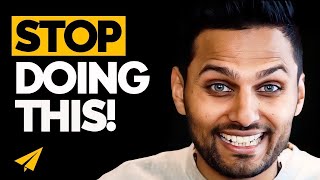
In this motivational YouTube video, host Evan Carmichael introduces a "Top 10 Rules of Success" series featuring Jay Shetty. Shetty delivers a rapid‑fire guide to overcoming fear, criticism, and self‑sabotage while building a purposeful, fulfilling life. He begins by exposing the four‑word mental trap – “What will people say?” – that kills dreams, then walks through each rule: 1) Don’t hold back; 2) Invest in your passion; 3) Do not seek revenge; 4) Learn how to think (head‑heart‑hand education, daily habits of thankfulness, inspiration, meditation, exercise); 5) Help others; 6) Live with gratitude; 7) Avoid unnecessary conflict; 8) Use rejection as growth fuel; 9) Connect with purpose (protect your purpose like a jewel); and 10) Bonus practical advice on financial habits and mindset. Throughout, Shetty shares personal anecdotes (e.g., his teenage job lie, a childhood encounter in an Indian slum, his own rejection by media companies), cites statistics (resume‑lie rates, workplace engagement, financial stress), and references thinkers such as Aristotle, Jocko Willink, Thomas Edison, Warren Buffett, Ray Dalio, and others. The video ends with a free worksheet call‑to‑action and a reminder to apply the rules daily.
Chapters
We all feel that rejection kills dreams. We all feel that failure kills dreams. We all feel that people kill dreams. But actually, there's 4 words that we say in our heads to ourselves that genuinely have destroyed more dreams than all of those things put together. Those 4 words are: What will people say? What will people say? How many times have you stopped yourself from doing something because you're scared of how people will react? How many times out of the fear of someone else's opinion or criticism have you stopped yourself from doing what you believe in? How many times has someone's perception or perspective stopped you from living your potential? No matter what you choose to do, there will always be people who find fault with it. There will always be people who criticize, complain, who try to bring you down and tell you that what you're doing isn't right. It's crazy that we give up what we most want in life just based on people's opinions. And the crazy thing is, if we're living for other people's opinions will never be right. There'll always be someone with something that they won't agree with. And this is why it's so important that we work with our own conviction. We work on what matters to us. It was Aristotle who told us that there were only 3 ways to avoid criticism: do nothing, say nothing, be nothing. And I'm sure none of us want that of our future. So don't let anyone's opinion stop you. Don't let anyone's criticism hold you back. Keep following your passions, invest in what you believe in, and remember, don't let people's compliments get to your head, and don't let their criticism get to your heart.
Need motivation?
Watch a top 10 with Believe Nation.
Hey, it's Evan Carmichael, and I make these videos because you are probably the most ambitious person in your circle, but you know you're capable of more, and you get that push by surrounding yourself with the best. So today, let's learn from one of the best, Jay Shetty, and my take on his top 10 rules of success. Enjoy. Rule number 2: Don't hold back.
Real empathy is connecting to someone in their emotional language, not yours, right? That's real empathy. That's real connection. That's real compassion, is that you're able to communicate with someone and express your thoughts in their emotional language, not yours. And this is something we struggle with because when we're feeling tired, exhausted, stressed, overworked, we communicate more in our language because we want to be heard, not realizing that when we fight for being heard, we actually alienate the other person. They're just disconnected because we're speaking a foreign language. That's literally what it sounds like. If this group is talking to this group and they're only talking about goals and schedules and plans, this group is going to say, "But what about the people? What about people are exhausted? People are tired. What about how they feel?" That doesn't mean they don't agree with you. They just want you to take into account people. It's not that they don't agree with your plans and goals and schedules and any of that. And you may sit there and go, "Well, they don't understand. They just don't get it. Like, we need to hit these targets. They don't understand." But you're both on the same team. You both need each other. Both mindsets are important. So then the question becomes, how do we care about people in the pursuit of our goal? And that's where all the focus goes. The focus now isn't, well, we're right because we're gonna hit targets and that's what pays for everything, or no, we're right because we care about people and obviously people are everything. It becomes, well, how do we hit our targets and care for people? How do we do that? If we both start having that conversation, you get some incredible synergy. So much of our life and society and our being today is divided. We have work and life. We have family and friends. We have personal and professional. And so many of our challenges in life come from the fact that we think we have to be in two places at once. That we have two sets of responsibilities. And when we talk about our well-being, we often think that's what we do after work. That's what we deal with when we get home. That's what we try and do on the weekend. And then when we're at work, we're wondering whether our well-being is in the right place. I've sat down and interviewed some incredible individuals, Jocko Willink being one of them. And when I've sat down with these Navy SEALs, I've talked to them so much about the power of breath. The power of presence, the power of stillness. We often think that force is the most powerful thing in the world, and sometimes when you speak to the strongest people in the world, they'll say it's not force, it's stillness, right? Stillness is the most powerful thing in the world. Stillness creates more force than force itself, because that stillness creates clarity, it creates focus. So think about how you can find, again, just 2, 3 minutes for that. All of these habits that I'm sharing today should take you no longer than 5 minutes each. And then finally, E, T-I-M-E. E is for exercise, moving, sweating. One of my favorite things is to see families compete over 10,000 steps. You'll be shocked at how much your partner is competitive when you all put on a Fitbit or a wearable or whatever it may be. And see who gets to 10,000 steps first. The idea of moving is so powerful for our mind and our psychology. So those are 4 habits. Exercise, probably a bit longer than 5 minutes, but the rest of them, if we could add thankfulness, inspiration, meditation, and exercise to our daily, weekly habits, you'll find that your personal well-being your personal connection with yourself will elevate to levels that you never could have imagined. These simple habits have a giant impact. These simple daily investments have giant rewards, and they take very little time. They take very, very little time. And it's also a beautiful thing to bring to the table. To practice with your children, to practice with your partner. It's something that can be nicely brought into a family activity that makes it easier for each and every individual. So that's the first thing. The first thing is you. If your foundations are set, if you're feeling rooted and grounded, everything else is possible from that place.
Rule number 3: Invest in your passion.
I was 15. I really needed the job. I'll even tell you what it was. I'll confess. I was applying to a local supermarket, and I wrote down that that I really, really, really wanted to work there. That was my lie. There you go. And I've got nothing against supermarkets. They're awesome. I actually really enjoyed the experience afterwards, and I'm glad I did it. How many of you have ever lied on a resume or a CV? Tell me right now in the comments, and don't lie. Now I'm guessing most of you wrote down no. Well, that means that 57% of you are lying, because that's how many of us belish our skill set on our resumes.
Of course I lied on my resume.
55% of us lie about our responsibilities. It's when all you did was get Starbucks and coffee and you say that you were the team performance manager. Or maybe all you did was filing and copying and you said you were the big project manager on the job. I do everything around here, okay? 42% of people lie about the dates they worked. It's when you work somewhere for 3 days but you wrote 3 months. Easy mistake. Oops. 26% of people even lie about the company they work for. I work for the CIA. They interviewed 2,000 HR professionals and asked them what were the most memorable resume lies. I'm gonna tell you them right now. Let's see if you can see yourself in some of them. Applicant claimed to be the assistant to the prime minister of a country that doesn't have a prime minister. Applicant claimed to have an Olympic gold medal. Applicant claimed to have 25 years of experience At age 32. 32 minus 25, 7. Yeah, 7. You started working when you were 7. Applicant applied for the same position twice with different work histories. Now, I don't know who's gonna fall for that, but it's a pretty creative idea. I'd give them the job just based on that. So I started digging a bit deeper. I was looking at all these statistics and wondering and asking myself, why do we lie? Why is it that over half of the people in the world lie on their resume? Amazed to get these jobs, to get these positions. We need the money, that's true. We need to work, that's true. But there was something at the root cause of it that I want to talk to you about today. One of the biggest reasons is because there are so many job specifications and requirements out there now that are stopping us from feeling confident. But the root cause is self-awareness. When we were young, we had hobbies, we had passions, we had skills that we could articulate, that we could share with people. But as grown older, we've forgotten about them. We struggle to express our passion for absolutely anything. The more self-aware we become, the more confident we become about the skills that we have. We're so busy trying to convince people that we have skills that we don't even care about, that we forget the ones that we really already have. See, the truth is that everyone has potential and talent, but we've been made to believe that we need to have a certain checklist to give us a certain status, when reality is a lot of the people who are doing what they love would never get a job and a place out there. We've been made to believe that there are certain skills and qualifications that define us, but I'm going to ask you to answer this question first. What do you love and what are you good at? Figure that out. What do you love and what are you good at? And invest in that. See, people say follow your passions. I say you can follow them, but make sure you work on them, make sure you invest in them, make sure you improve on them. Because as you get better, as you you grow in what you love and what you're good at, that's going to become the most powerful asset you have. So next time you think you're lying on a resume to get a job, think about whether that's a job you really want.
Rule number 4: Do not seek revenge.
I'm sure you've heard the phrase before, success is the best revenge. In my opinion, the best revenge is no revenge at all. What? Why? Revenge in Latin was often referred to as vindictive or injurious. And today the dictionary definition shows revenge to be in a resentful or vindictive spirit. Now, I don't know about you, but when I hear about words like resent, vindictive, injury, what I find is that you can't fix yourself by breaking someone else. That's a good point. It's so true that sometimes people cause us the greatest pain, the greatest suffering, the greatest betrayal, the greatest lack of trust, miscommunication, and almost destroy our insides. But when that happens, you have a choice to move forward or to destroy yourself further. See, when you think that success is the best revenge, or you want to take any revenge in any form at all, it's like holding a hot piece of coal, wanting to throw it at someone else. In the process of picking up that hot piece of coal, we burn our own palm, we burn our own hand. Even if we get to the point of chucking it at the person, we've already caused ourselves more pain, more strain, and more pressure simply by picking up the baggage of wanting to get our own back on someone or wanting to take out that pain and pressure on another individual. We're now carrying that pain pressure ourself. And I know it's easier said than done. I know that it's difficult. But if someone has caused you pain, don't allow them to win by doing it to yourself again. Not this time. Remember, the person that broke you is not going to be the person to fix you. Your growth, your healing is totally up to you. And that's why the best revenge is no revenge at all.
Also, to make sure you're actually taking action after watching this video, I've designed a special free worksheet just for this video. The worksheet will highlight all of the lessons learned in this video, as well as pull out our 3 favorite learnings and quotes that will inspire you to actually do something. The worksheet will also give you space to write down what your key takeaways are and your specific plan of action to make sure you're getting results. If you want the worksheet designed specifically for this video, absolutely for free, there's a link in the description below. Go click on it and start building the momentum in your life and your business. I'll see you there. Rule number 5, learn how to think.
Most of us have been to school. Most of us may have been to college or university, but most of us will feel that our education let us down. Our education didn't give us the skills, the abilities, the mindset that help us thrive in life. No, they did not. And most of all, our education did not prepare us for our real future, real decisions, real relationships. That's why so many of us feel lost, confused, and bewildered as we get older in life, from 20 to 30 to 40 to 50, and look back and wonder what did we learn. And that's because at school we learn what to think but not how to think. And the ideal education system has 3 elements. An ideal education is an education of the head, the heart, and the hand. Let me explain what I mean. Please, please do. The education of the head is what we already receive. Academics, knowledge of math, knowledge of English, science, history, geography. These subjects equip us with knowledge, ideas, thoughts. They educate our head. They make us understand things. They improve our memory when we learn them, when we're tested on them. These are all valuable skills for our future. The challenge is that's currently all we get. I guess that's it. Yep. The two that are often missed out are the heart and the hand. An education in the heart is understanding the values that lead to long-term growth and long-term success. Things like empathy, kindness, compassion, being able to have emotional intelligence, being able to be aware of yourself and aware of others around you, knowing how to communicate effectively, knowing how to respect others' beliefs and boundaries, knowing how to read in between the lines of other people's thoughts and emotions. You good? This education in the heart would save us so much time and so much energy and potentially even so much money because so much of it is wasted because we've never been trained to understand ourselves or understand others. Do you understand? Yes. And the final step is an education in the hand. Being able to give, being able to teach, being able to share. See, we remember when we're engaged and involved. We learn more when we're teaching. We learn more when we're giving, when we're experimenting, testing, trying things out. That's when we accelerate our growth in learning. It's not just when we're sitting back and waiting to hear ideas and thoughts. When we're taught how to learn, how to teach, and how to share, we're able to grow. We're able to enhance. We're able to start living far beyond what we ever imagined because it allows us to have that opportunity to test ourselves in reality, to test ourselves with a real person. And therefore, the two parts of education that we missed out on at school are the two we should invest in for life. Think about who are the people that you want to be around that can help you grow your education of the heart, values that you want to live by, mindsets that you see proving to be successful in people's lives. And think about opportunities where you can make a difference in the lives of others. Gandhi said that we find ourselves when we lose ourselves in the service of others. When we use our skills to make a difference in the life of other people, we learn so much more about those skills We learn so much more about ourselves, and we learn so much more about the meaning and fulfillment that comes from making a difference. Don't blame school, don't blame your parents, don't blame anything that stopped us from getting a full education. All we have to do is get an education in the head, the heart, and the hand. If at any point you feel like you're not growing, you're not moving forward, you're not feeling you're feeling a positive boost, ask yourself, which of these three am I in need of? Because it's always going to be one or two of those three that you're missing.
Rule number 6: Help others.
The truth is that the world we live in will always be uncertain, unpredictable, and potentially include chaos. And the challenge is that in that time, it's very hard to find peace or find calm or find joy. And it's at those times when we can use what we have, wherever in the world we are, to try to positively create peace, to try to serve others, to try to be there for others. That is the only way that we can experience peace, by being peace, by creating peace, by sharing peace, by sharing love. And in terms of what we're looking for, when you're going through something difficult, you can't find happiness, and you often can't find peace immediately. But you can always find meaning and service. And this is how we were trained to think as monks, that in times of uncertainty, don't look for certainty because you won't find it. Look for service. Look for where you can help, how you can help. Because when you start making a change, even in the smallest of ways, when you start supporting others and helping others, even in the tiniest of ways, you start to see that there's hope, there's possibility, there's opportunity. So start wherever you are.
Rule number 7: Live life full of gratitude.
I was around 9 years old and I was visiting India with my family. We were stuck in traffic and we were driving through a slum area. It was the first time I'd seen homes built out of cardboard, scrap metal, and bricks, all at the same time. Growing up in London, I'd never ever seen anything like it before, apart from on TV or in the movies. I saw some children on the streets, probably around the same age as me, but very different. Some of them didn't have clothes, they looked undernourished, and they probably didn't have access to much water. I could tell by the dryness on their lips and their skin. I noticed this one young girl who had her head inside a trash can. It looked like she was scrambling for something. When she finally came out, and looked at me, she smiled. Not knowing what to do, I smiled back. She was obviously trying to look for food, and I could see her scrambling and trying to reach in as far as she could. Only then did I realize that she only had arms. She didn't even have hands. As she looked at me, I could tell she was hungry, but by the time I was just about to do something, our car took off, and I could only see her now and feel her disappointment that I wasn't able to help. At the time, I didn't have any food food or money, and before I could ask my parents or the driver to stop, we were too far along on the highway. But I couldn't stop thinking about her. When we got back to the hotel, I got out of the car and it was lunchtime. And even though I was really hungry, I couldn't eat because I couldn't get over the fact that I couldn't have done anything for that young girl that I just saw. Even though I went to the buffet with my parents, it felt as if only me and her had looked at each other in that whole exchange, and the whole city had stopped. I could remember exactly how she looked as I was looking at the food. When we were there at the buffet, I overheard a couple arguing with the hotel staff. Listening into their conversation, I found out that the couple were really upset at the hotel staff because of the number of choices available in the buffet. I looked around, there were so many options. They were complaining about there not being enough choice, but all I could see was choice. There were at least 30 items just as starters available to everyone there, but it wasn't enough for them. Now I get that everyone has their own standards, has their own expectations in life, and we're allowed to have them. And I know that everyone is fighting their own battle, but that little girl, she didn't even have hands. She was scraping with whatever was left of her arms. But many years on from that event now, I've learned a lot. One of the things is that I can I can sit here and be angry at that couple who was complaining, or I could actually do something about it. It reminded me of a quote by Gandhi. He said that I was sad because I didn't have any shoes, and then I saw a man with no feet. For me, this event left a lasting impression in my heart and two messages that I want to share with you today. The first one is to remain grateful for absolutely anything we have. Robin Roberts said it perfectly. She said that if we threw all our problems into our pile, we would rush to grab our own back. And when we start with gratitude and see everything as fortune and grace, we're able to receive much more deeply. And number 2, let's help those who need it. Let's not be mad that the world isn't helping them. Let's see what we can do. Compassion is key and empathy is essential. And that's one of the reasons that I focus so much of my life in trying to help those in And it may mean that you're in a space in your life where you feel you can't currently help anyone right now. But I guarantee you that there's this one person out on the street today that you could impact, that you could change their experience, at least for a moment. Remember what Gandhi said? I was sad because I didn't have any shoes. And then I saw a man with no feet. It puts everything into perspective.
Rule number 8: Avoid conflicts.
Now, there is no relationship in the world where people don't argue. If a couple says they don't argue, it can mean one of two things. Either they're just getting to know each other or they're lying.
Are you calling me a liar?
I'm calling you one if you are one. Managing conflict is one of the most important skills in any relationship. The one simple question that improves any relationship is, how will I feel in one year about this current conflict in my relationship? People feel more forgiving and interpret their relationship in a more positive light when looking at it from a future perspective. When couples and partners argue about finances, family, jealousy, or attention, or whatever it may be, in those situations we use our current feelings as fuel for a heated argument. Loud noises! But with this simple shift, where we're envisioning our relationships from the future, we're actually able to mitigate conflicts and think think of things with a bigger perspective and picture. Everybody calm down. When we start thinking about things through the future, we use more long-term thinking. We start using our reasoning strategies, our more mature intelligence, rather than our currently emotion-filled mind. How many times have you said something in the moment that you regret later? How many times have you made an impulse decision that you later recognize wasn't the right one? A lot, actually. When we employ future perspective thinking, we get the ability to rise above our current emotions and start thinking from a point of intelligence. When we do this, we blame our partners less, we take more responsibility about what we can change, we're more forgiving, and we're even more able to focus on why the conflict happened in the first place. How many times How many times have you started an argument, let it continue for days, and even forgotten why it started? I can't remember anything that happened before 2 weeks ago. Next time you're in a conflict, an argument, or a debate with your partner, ask yourself this question: How will I feel in 1 year about this current conflict in my relationship? It will make a difference, and it will surely give you perspective.
Rule number 9: Use rejection to grow.
Just around 2 years ago, I had this idea. I wanted to share wisdom at a pace we wanted and entertainment. I wanted to share wisdom in a way that it could connect, resonate, and deeply evolve the lives of people all over the world. For 10 years before that, I'd been working with individuals, groups, coaching at universities, companies, and all of these opportunities. But I really wanted to serve and connect with everyone across the world. I wanted to make wisdom accessible to anyone who had one of these. I have one of those. So I was excited, I had the energy, the enthusiasm, and I was pitching my idea to every single company that was online. Now remember, this is before I ever made a single video, before any of you knew who I was. Who's this guy? I applied to not 10, not 20, but 30 online media companies hoping that one of them would like my series idea. I waited a day, I waited 2 days, I waited a week. I was rejected by every single one of those companies before interview. None of them invited me for a phone interview. None of them invited me for a video interview. None of them even connected with me in any personal way. That's rude. I said to myself, it doesn't matter. Let's see what else I can do to try and make my goal a reality. What else you got? So I tried to network. I work with people who may be able to give me a chance. I got one answer and one answer only. They said, you're getting older now. Most of the people who want to break into this industry are around 21 years old. Just don't worry about it. Other people said to me, look, you need to go get a media and journalism degree or a master's, and then we'll take you seriously. Literally, I was getting rejected from every single person I spoke to. But inside of me, I had this desire, I had this calling, I had this mission, I had this vision that I wanted to share everything that I had learned with people out there. I genuinely tried every single possible method I could to break into the media industry, to the point that the only thing that was left that I could try was to start a social media channel. And of course, you know the rest. The most incredible thing is that it It reminds me of a really powerful thought from Thomas Edison. He once said, when you believe you've exhausted all options, remember this: you haven't. That thought stayed in my mind the whole time. What I learned from all of this rejection, from all of this failure, from all of these clear nos, was one really important thing. And today I want to give that as a gift to you. Me? If you have a dream, you have an idea, you have a vision, we have to take the responsibility to prove our worth before we expect anyone to value our talent. When I started crafting and creating my own videos, teaching myself how to edit, learning how to produce, understanding the mechanics of social media, when I started putting my energy into that space, that's when people started to take notice. People noticed. That's when people started to listen. That's when things started to happen. This is nice. It's when I decided to take the responsibility for sharing what I was passionate about with the world and not waiting for someone external to validate me or give me permission or allow me to do that. That's what made the difference. If you're feeling you've been going through a lot of rejections, ask yourself this: Is your deeper passion and calling making you want to move further? Number 2, have you truly knocked on every single door? And number 3, are you working hard on investing in your expertise and passion so that you really have something impactful to offer?
And rule number 10, the last one before some very special bonus clips, is connect with purpose.
I think that people who found their purpose are better partners, better parents, better professionals, better people. And so if everyone in the world was deeply aligned and connected to their purpose, the world would be a beautiful place. And I think any pain we see in the world comes from a disconnect with purpose. There's a beautiful thought from Russell Barkley where he said that the people who need the most love often ask for it in the most unloving ways. So we confuse love with power. We confuse love with control. We confuse love with validation and being liked. And to me, love comes from living our purpose, self-love and true love with other people. We all have what's called the monk mind. And the monkey mind. And as monks, we were trained to look at the parts of our minds that we make mistakes, that fail, that do things wrong as the monkey mind. And immediately when you think of your mind like a monkey, you just end up laughing. You're just like, that's just the silliest thing. And so now when you start seeing yourself do things that are out of character or out of alignment or things that you don't feel proud of, instead of judging yourself and criticizing yourself, you're approaching it going, well, that's just the monkey mind. Let me understand that is separate of me. That is not me. That is a habit that I've taken on. That is a group of people that I've spent too much time with. It's an idea that I've absorbed. If you can look at these things as separate to who you are, you can now actually tackle them versus when you think you are them, it just leads to guilt, judgment, self-criticism, and self-sabotage, which I'm sure a lot of us are privy to, that we go through this period where we're like, I can't believe I did that, I shouldn't have said that, I wish, I just wish I didn't say that in that moment. And that doesn't change your behavior, it doesn't switch how you feel, it just creates more regret. But when you go, wait a minute, that's just the monkey mind. I've got that condition, I've associated with that type of environment and energy. Let me approach it as something that is separate of me, creating that distance and space from our challenges is, lets us actually start solving them. Beth Kanopic understands. 8 years ago, she lost her 16-year-old daughter, Leanna, when suddenly and inexplicably, a virus Leanna contracted migrated to her heart and could not be cured. After a tumultuous month in the hospital, Beth's vibrant, joyful, Her athletic daughter was gone. It's every parent's worst nightmare. And as you'd imagine, it catapulted Beth into what seemed like bottomless grief. And yet last year, something incredible happened. Beth gathered 14 other mothers in and around her Florida town who had all lost children for lunch. She says there wasn't a dry eye in the room. Only the tears weren't from sadness. They were from joy. Somehow each one of these mothers, some of whom had lost more than one child, were able to share positive, loving memories of their children, along with the beautiful ways their lives had changed as a result of their profound loss. Of course, every one of these women would rather have had their children back. But remarkably, they were able to take what had happened and allow something powerful to grow from it. As one of my good friends Ray Dalio says, pain plus reflection equals progress. It all starts in childhood. We want to be loved and accepted. That's completely normal. But because of this need for love and acceptance from just a few years of age, we begin to live according to what others want for and from us. We form ideas ideas about who and how we should be based on what parts of us, our behavior and personality, are welcome and praised and which are not.
I like that about him.
We also learn by imitating what we see others doing. As we grow older, we shape our likes and dislikes according to the people we surround ourselves with. For example, according to data from Adweek, among 18 to 34-year-olds, 68% said that their peers' social media posts were at least somewhat likely to influence them to make a purchase.
I got one for myself, see?
Soon these attitudes and behaviors we're imitating become indistinguishable to us from who we really are. What have I become? In a pair of studies, researchers reviewed data from 3 different seasons of the Premier League football play and concluded that referees systematically favored home teams by shortening close games where the home team is ahead and lengthening close games when the home team is behind. The reason? Pressure from the home crowd. So when it comes to making decisions, we change our own picture of reality to avoid the discomfort that comes when we go against what others think. And that's just strangers. Imagine the influence of our friends, our families, and coworkers, and the effect they have on us. Yeah, but I'm your brother. We're family. What finally does make us question our thoughts and behavior is often that we hit a wall. Maybe we wake up one day and realize we're dreading going to work. Maybe we're sitting with a group of friends and suddenly we think, what am I doing here? I don't fit in with these people. And then we end up asking asking even more powerful questions like, what do I want to do with my life? And who am I really? As billionaire investor Warren Buffett once said, chains of habit are too light to be felt until they are too heavy to be broken. And maybe that's how you feel, like you're being weighed down by this version of you that you've been pretending to be or had to be because of life. Imagine your life was an empty jar. If you're you're filling that jar with ideas and beliefs that are not yours, you're living a life that isn't yours. The first type of filler we put in our lives that blocks us from knowing ourselves is other people's opinions. So many of us are in constant disconnect with ourselves because we're always validating or verifying others' opinions of us.
So, what do you think?
We let others' ideas and beliefs define how we feel instead instead of being guided by our own values. Following others' opinions blindly can quickly get us lost. Before I decided to become a monk, I was training to be an investment banker or work in business. When I stopped to look at why I was chasing this career that I wasn't really interested in, I realized I was following my community's definition of success and not my own. This isn't me. Step back and ask yourself, why am I doing this? Is it because it's what you truly want, or is it because it's society's or someone else's opinion of what you should do or want? If you want to know yourself, and if you want to experience meaning and purpose, this is the kind of stuff you want to fill your life with. Your values should come first. When you isolate your values, you'll start to see more clearly what's important to you. You'll start to get a sense of your passion and and your purpose, and you'll be able to start to see and understand what choices will bring you closer to the life of your dreams. In the Manusmriti, which I talk about in Think Like a Monk, it's a monk book, and in the verse it says, when you protect your purpose, your purpose protects you. Now I want to unpack that. What I mean by that is your purpose is like a rare jewel jewel and a rare gemstone. And imagine you were walking around with the most expensive diamond or jewel in the world. How would you protect it? You wouldn't just like— You wouldn't just wear it. Yeah, you wouldn't just wear it on your chest. Like this. Like a baby. Holding it. Yeah. Putting a pillow around it, a blanket. You'd do like, yeah, protect it. You'd protect it. And so your purpose is like that. And guess what? People are going to tell you every day that that jewel is not worth anything. Anything. They're going to tell you that that jewel is actually valueless. It doesn't have any impact on your life. They're going to try and take away that value. They're going to tell you that there's another jewel out there that you need to have more value. And what ends up happening is you don't— I love the word, look at the wording— protect your purpose. You have to protect it. So what happens is your success grows, you get more opportunities, more ideas, more things coming Temptations, but they can all take you away from your purpose. Distractions. And to me, I'm repeating this for myself because I'm like, I just want to stick to what I was born to do, and I'm so grateful that I get to do it. I'm so happy I get to do it, and I want to keep protecting it. I don't want to get lost in the waves, you know. You don't just get chucked in the waves of the ocean and just get lost and just not know where you're going. So for me, when you protect your purpose, your purpose Purpose protects you. So that's been your biggest lesson? That's my biggest lesson. Why, do you feel like your purpose has been maybe distracted in some ways? I don't think it has, but I'm saying it so it doesn't. You're reminding yourself. Yeah, I'm reminding myself. I'm preaching to myself right now. Especially being in Hollywood and the temptation of all these opportunities out here. Totally, and I think for me it's a bigger lesson also because it gives me more faith. So I always encourage, and this is actually, this is why it's my biggest lesson, I encourage so many people that I coach, so many people that I mentor, obviously everyone in my community and audience and everything, to go and follow that, go and live that purpose. And I see time and time again that when I see people trying to live their purpose, they are protected, that things work. When you're playing in your dharma and your purpose, things work, things move, you feel momentum happen, they happen. And I'm not saying they happen without effort, but they happen, they move. Whereas when you're not, you just constantly feel like you're grinding up against, you know, a wall. In a 2019 employee survey at PwC, 71% of millennials said their money stress had gone up over the past year. It is stressing me out. And nearly half of all respondents said that they spend 3 hours or more every week thinking about or trying to sort out their finances. And money woes don't just affect us individually. 44% of young adults said that money is the number one stressor in their relationship. I need to borrow some money. And check out these stats. According to Erin Lowry, creator of the Broke Millennial blog, the average millennial graduated with $37,000 in student debt. That's in the States. And some have much more. That's enough to buy a brand new car, or put a down payment on a house. Maybe you're like, yeah, don't remind me, Jay. Hey, I get it. Lots of us come from tough places financially, and you might be there now. Growing up, my family definitely was not what you'd call wealthy. For some of us, the hard times actually help spur us on to success. Here's one of the stories that's really inspired me. It's of a young man who at 14 was evicted with his mother from their apartment and couldn't afford a place to live. By the time he was 16, he was arrested multiple times. Though he went on to secure a spot to play American football at a top college, in his junior year he lost his spot and his NFL career opportunities with it. At one point, he found himself with only $7 in his pocket, but he kept working and striving. And today, Dwayne 'The Rock' Johnson says that every time he experiences a big moment of success, he reminds himself remind himself of those early struggles when his back was up against the wall and the only way to go was forward. And that's why he named his company Seven Bucks Productions. Still, even if you don't have aspirations of becoming a mega movie star, financial security is within reach. And the place to start is to stop wasting money. Now, a little disclaimer first: what I'm going to share with you is for informational purposes only. Only. It is definitely not intended as formal legal, tax, investment, financial, or other advice. You want to consult a qualified licensed professional for that. Okay, so here are those 5 big areas where you can stop wasting money and get yourself on track financially. Take notes, boys. Let's start with a super common one that's really simple. Financial expert Suze Orman says if you're buying a coffee every day, you may literally flushing your chance to be a millionaire down the drain. You know, because after the coffee goes through your body— okay, never mind, you get it. Anyway, Ullman says that if you invested that $100 or more per month so many of us spend on coffee in a Roth retirement account, over 40 years with compound interest, you'd have a million dollars. What? That's worth making your own coffee, right? Actually, the entire category of food and drink is a big one. Not only do we spend loads of money eating out for dinner, another big money waster people often overlook is lunch. Here's a quick quiz. How much do you think the average person spends on lunch in a year according to Visa? Is it A, $520, B, $1,280, and C, $2,746? If you guessed C, you're right. The average person spends $2,746 per year on lunches. Now check this out. If instead of buying lunch, you invested that money every month in a basic savings account, over 20 years you'd have— I hope you're sitting down because this is unbelievable— you'd have $60,760.41. I'm going to sit down. And that's just with basic compounding interest. Okay, so here's another big way we waste money: buying new. Now here's the thing, I know for lots of us, I'll be honest, myself included, how we look is important. We enjoy fashion. But you can continue to have your unique look and have favorite brands and still spend less money on clothing. Here's a way to do that. I have another friend who's into designer brands but would never pay designer prices. Her secret is to shop at consignment stores. And now that there are lots of these stores online, there are tons of items to choose from, and you can even shop by your favorite brands. The other month, I complimented my friend on a sweater, and she told me she got it for 65% less than the original price, and it came brand new with the tag still attached. Plus, shopping consignment also benefits the environment because we're recirculating clothes instead of just making more stuff. Beyond clothing, there are loads of things we tend to buy brand new that we really don't need to. For example, if your iPhone breaks, you can actually buy a refurbished one directly from Apple for way less money, and they come with a warranty. And don't get me started on cars. Here's another quiz. When you drive a new car off the lot, it literally immediately loses a certain percentage of its value. What percentage is it? A) 5%, B) 10%, or C) 30%? The answer is B. According to Carfax, the second you drive a new car off the lot, it loses at least 10% in value. Over the first year, it loses about 20% of its value. That means if you spend $30,000 on a brand new car, within a year it's worth only $24,000, and the value just keeps going down. Instead of needing everything brand new, look at what you can buy used or borrow from someone you know. And that's another way we waste money— we buy things immediately. We think of it, we get all excited, we go online and buy it. It's like when the Apple Watch first came out and I went out and bought one. I was so stoked, but no offense to the product, I discovered pretty quickly, just in time to give it back, that I didn't actually need it. Ended up with returning it. Take it back. Instead of impulse buying, batch your purchases. If you say, oh, I need to buy that, whatever it may be, and then go to Amazon and buy it, and then later in the day, oh, I wanted to get some of that other thing I love, and then go on to Amazon or another store to buy that, what happens when you get your card statement? It all adds up and you're like, whoa, how did I spend that much money? I don't remember any of that. And that's because $15 here and $10 there doesn't seem like much of the time, especially when you're using a credit card or other digital payment, because you don't see the money, you don't feel it, you don't actually have that experience of giving it away or holding on to it. Instead, when you think of something you need— and I'm putting need in quotes because it might not be a real need but a want— put it in your cart and leave it there, or write it down list. Don't buy it right away. Then at some specified time, like the end of the week, look at your list or your carts and choose what it is you really need. That will give you a better idea of what you're actually spending and what you actually need versus what you want. People who are happy, passionate, and successful are everywhere, right? Can't we just turn to them to see what they did to get there? Not quite. A few years ago, Gallup conducted an international poll that included questions about workplace happiness and engagement. How many people said they felt engaged at work? Was it A, 65%, B, 35%, or C, 15%? If you guessed A, you're way off. The answer is C. Only 15% of people worldwide said they felt engaged at work. That means that 85% of people around the world don't find meaning meaning and purpose in what they do. Considering that, according to writer Gemma Curtis, we spend 13 years and 2 months of our lives at work, that's a lot of time being upset. But when we look around, we see a different story, right? Social media posts show people pursuing their dreams and living their best lives, and news and interviews showcase entrepreneurs stumbling on that great idea, creating a company selling it all before age 25. Yet, as we just saw, the statistics don't bear this out. In Japan, a whopping 94% of survey respondents said that they're not engaged at work. It's a bit better in the US, but not much. Only 30% of workers say they're happier with their work. This is colliding with what Gallup says is an increased focus on the value of work among millennials. They We want a job and a career that's dreamworthy. Keep dreaming. It was worth a shot. So in a world that's so unhappy at work, how do we make that dream come true? There's a single powerful secret I'm going to share that will help you sort it all out. There's a Zen story about two monks standing in the garden of the monastery watching some prayer flags waving in the distance. One monk comments, the wind is moving. The other monk shakes shakes his head. No, he says, it's the flags that are moving. A senior monk walks by and the two monks ask his opinion. He said, you are both wrong. It is your mind that is moving. That's the powerful secret, that in life it's actually less about what you experience and more about how you experience it that's important. The truth is actually less about what job you have and more about how you you do it that shapes the quality of your life. That actually makes a lot of sense. Katrina Lake didn't know what to do after college, so she decided to work at a consulting firm. It was there that she became curious about what would happen if you married technology with clothing retail. Her initial idea flopped, but she kept exploring, going on to work for a venture capital firm, then on to business school. Finally, Lake had her big idea. She would marry personal shopping with online clothes buying. She started shopping for her friends and keeping meticulous data about what they liked and didn't and why. Business plan and spreadsheets in hand, she began to search for funding and was turned down by more than 50 different venture capitalists. That didn't stop her though. Periodically, she would get just enough money to keep going and building her idea. In 2017, Lake became the youngest woman in history to take a company public, and in 2020, Stitch Fix was valued at $3.37 billion. Lake did an interview with the podcast Skimmed from the couch and was asked the worst piece of advice she'd ever gotten. What was it? Follow your dreams. Lake says the notion that your job should be your dream job is misleading. Reading. So many parts of this job have not been a dream, she said, whether it was struggling to raise money, cramming to get Stitch Fix boxes out the door on time, or being the one who had to go out and buy a new printer when theirs broke down. Here's the thing: you can be a stockbroker who makes millions of dollars but is miserable, or you can be a grocery clerk who changes others' lives simply with your kindness and caring. The difference lies in how you approach life, and that difference comes from your motivation. Social scientist Tim Kasser studies values and goals, including two types of motivation: extrinsic, such as for money, image, or status, and intrinsic, such as for personal growth, close relationships, and making the world a better place. He and his colleagues have consistently found that people who who place a high value on extrinsic versus intrinsic goals are less happy and report lower levels of satisfaction with life, along with higher levels of anxiety and depression. And external rewards can even decrease the internal motivation you already have. Researchers took a group of kids at a nursery school who had a natural love of drawing. In one group, the children were just left to draw. In another, they were told they could earn a good player award, which included a ribbon and a certificate, if they drew a picture. 2 weeks later, the same kids were offered the opportunity to draw pictures. Those who were allowed to just draw showed the same high level of interest in drawing the second time around. But those who were told they could earn a reward by drawing a picture the first time around were half as likely to want to draw another picture. What's in it for me? The external reward actually made them less motivated to draw. When we do things out of intrinsic motivation, we're more likely to find meaning and purpose in our lives and our work. For Katrina Lake, it was her love of data along with wanting to answer the question, what could the future of retail look like? Here are 3 ways ways to connect with your intrinsic motivation. First, live for who you want to become. Create a vision of who you want to be in 5 years. In that vision of yourself, list out 5 ways you're feeling about your life and your work and your relationships. Are you excited, joyful, satisfied, fulfilled, driven, confident? Be as specific as possible. Now, for the next week, every time you make a choice, ask yourself that choice will bring you closer to or take you further away from that vision of yourself in 5 years. Do you want to play a video game or read a book? Do you want to watch a movie or have a conversation? Do you want to take a class or waste time scrolling on social media? Hey, there's nothing wrong with any of the things I said. I love them all, but we need the right ratio. We need to make sure that more more of our steps are leading us towards who we want to be than away. It's simple math. Tip number 2 is discover where you can connect something you're already doing or have a natural strength or inclination for to something you're passionate about. That connection point. Your passion doesn't have to pay you, but if your current job can pay your passion, that might just be as good and a good start. Check this out. When computer science professor Luis von Ahn set out to create Duolingo, he had one motivation: to make learning free. As a kid growing up in poverty, he saw so many kids who didn't have access to quality education. So he and a partner created Duolingo, a language learning app that's now used by more than 40 million people worldwide. And while the company has become tremendously profitable, Ahn's motivation was never about making money. It was about giving giving back. That's major intrinsic motivation— connecting your passion with a larger purpose. One of my greatest loves, and one of the things that motivates me, is learning. And that's the third tip: learning to love learning. And no matter what you do in life, you cannot fail. If you look at every situation and ask yourself, what can I learn here? You're going to experience two things. You get to feel curiosity, awe, and wonder 3 things that research shows contribute to feeling satisfaction and meaning in your life. And second, if you're always focused on learning, you will never be disappointed, because even when something doesn't go the way you'd hoped or planned, you can learn from it. As Katrina Lake says, I think a lot of people find themselves unhappy in their jobs because it's not their dream. But I think at the end of the day, if learning, and if you're working with great people, that's going to be a rewarding experience. And that's how you too can have a rewarding, fulfilling, purposeful life and career. When you're going on a long car trip, you take your car to the mechanic first, right? To get things recalibrated, realigned, and ready to go. That's our second M. How we're going to recalibrate for our new journey journey is to adjust our self-awareness. Neuroscientist David Eagleman says that as far as our brains are concerned as adults, we are more like our peers than our childhood selves. Yet when we think about who we are, we mostly base our ideas on our younger self. So tune up your self-awareness. You're going to go on a data-gathering expedition among those who know you best. Simon Sinek, the author of Start With Why, has a great exercise for this. When people say, I don't know what I'm good at, or I don't really know what my unique abilities are, that's because it can be hard to get an accurate picture of yourself from the inside, right? There's a saying that you can't read the label from inside the jar. So you're going to ask people outside your jar to help you out. Can you help me? You're going to ask 3 to 5 people who know you who you know well, it may be personal, professional, friends, to describe for you what makes you special. Ask them, Simon recommends, "Why are you friends with me?" "Why did you pick me as your partner?" or "What makes me stand out as an employee?" or "What do you really like about me as your parent?" Now beware, most people will answer first with something general. "You're smart, you're funny, you're a good listener." That's not deep enough. Anything else? Ask for more. For example, lots of people are funny. Why are you friends with me instead of someone else who's funny? Or lots of employees are dedicated. Can you give me more detail, like a specific incident or example that really showed you that? Tell me more. Then you'll start getting the truly helpful data and information, such as I love the way you use humor to make other people feel welcome and comfortable. Or, you have this ability to take our discussions deeper by bringing in insights from lots of other fields. That's very nice of you to say. You'll start to see yourself through others' eyes and get an understanding of what's working, what your strengths are that you can go deeper on and maximize, and what makes you uniquely you. Here's an awesome idea: convene a feel-good roundtable in person or over Zoom with a few good friends. Friends or family members, or even do this with coworkers where you go around and tell each other some of your greatest strengths in detail. Then you're spreading the love and the joy and the support as well, and it doesn't feel as awkward as just asking it for yourself. Please don't make this awkward for me. Okay, so what else do we need to start a journey strong? We need some idea of where we're going, right? A map. That's our third M. You've just learned about all all these great things you've got going for you, but no doubt you also have an area or two or 12— that's me— where you'd like to grow. So we're going to create a map of how to get there. And one way you can do that is to pick a mentor, someone who embodies that quality or those qualities you're looking to grow this year. One of my greatest mentors is Martin Luther King Jr., specifically the way he inspired people for a meaningful cause and connected people through his powerful words. Maybe if you want to become better at relating to others, your mentor is Oprah Winfrey. Maybe if you want to be more strategic and thoughtful when it comes to business, it's your father or mother. That was the case for John Mackey, the founder of Whole Foods. His father was his business mentor for years. Maybe if you want to cultivate innovation or persistence, your mentor is someone like Sir James Dyson or Richard Branson. Next, figure out basic, simple ways to connect with your mentor regularly. If it's not someone you can connect with in real life, you can read their work, watch their videos, listen to a podcast, read about their lives, tape an inspiring fact about them or quote from them above your desk, or put it into your wallet. Remember, it's not that you want to mimic your mentor. You want to be yourself and combine those strengths you're developing with those great strengths you already have in place. But if you look at some of the geography your mentor has traveled, it can help provide you with your own map for developing those strengths. The first thing is that purpose is like an adult, right? Finding your purpose is like an adult in terms of growth. Passion is like a teenager. But before you become a teenager, what are you? You're a child. Child is like the interest. And before you're a child, you're a baby. That's curiosity. So at the baby stage of passion, what you first need is curiosity. That curiosity turns into an interest. That interest turns into a passion. That passion turns into a purpose. For so many of us, we get stuck trying to be like, well, what's my passion? It's like saying, well, I should be a teenager before I'm even a baby. Let's first learn to crawl before we learn to to walk or run or fly. So when we start that, we ask ourselves, what am I curious about? What could I watch documentaries about forever? What could I get excited about learning forever? What is it that I keep getting up to do even if I fail? What is it that I get motivated to learn about or hear about or read about or watch about even when I don't know so much about it? What are you naturally curious about and drawn towards in your life that is the birthplace of your passion. It doesn't have to be a passion just yet. It just needs to be a curiosity or an interest. According to writer Gemma Curtis, each of us has on average 28,835 days in our lives. Of that time, we spend 33 years in bed, 7 of them trying to fall asleep, 1 year and 4 months exercising— unless you're my wife from I'm guessing will spend something like 5 years exercising. She loves it. We spend 11 years and 4 months on non-work screen time, and 8 years and 4 months of that is spent watching TV, with the rest on social media. In fact, we spend 6 times longer watching TV and 2 times longer on social media than exercising. Yet experts say that even just 10 minutes of exercise a day would increase the overall quality of our sleep. 10 minutes? See how it's all interconnected? We'll also spend about 3 years on vacation. That might sound like a lot, but compare that to the 13 years and 2 months we spend at work. Unless you're Elon Musk, who says he spent 15 years working 100 hours or more a week. He's been known to sleep under his desk. Ladies, most of you will spend about 136 days getting ready. Guys, it's about 46 days for you, unless We spend 4 years and 6 months eating. 66% of workers say they eat meals at their desks. We spend 235 days waiting in line. After all of that, it's no wonder that we spend just 1 year and 3 days of our lives socializing. But here's some good news: we spend about 115 days of our lives laughing. It's pretty shocking, right? Who knew we were spending We spend so much time on things we probably don't really care about and so little on the things we do. Here's the thing, and I say this in my book, Think Like a Monk. No matter what you think your values are, your actions tell the real story. Sure, there are things we have to do, like go to work, but when we have free time, we dedicate that time to what we value. You may say and even believe that you value time with your partner or your kids most of all, well, but when you have spare time, you're more often scrolling on your phone or with your friends. There's a well-known saying by Ben Franklin, and it's worth remembering. It goes, when you take care of the minutes, the hours will take care of themselves. When we don't spend our time on what we value, mostly that's not on purpose. It's because we're simply not paying attention. Part of that is because for a lot of us, by the time we have time, we're wiped out, and it's just hard to get motivated to change gears. I need my sleep. The other reason we waste time is we discount the value of our minutes. You're probably familiar with the dreaded time gap. That's what I call the mysterious black hole where our missing time goes. You know, when you're at work and you sit down to do something, but then a headline pops up on your news alerts and you click on it, and the next you look at you look at the clock, it's 45 minutes later, and you don't know where the time went. Or when you get home and you're about to change your clothes to get some exercise, but first you just want to forward this hilarious meme to a friend, and then all of a sudden 90 minutes have gone by and you're still sitting on your couch.
I must have lost track of time.
We lose time because we treat our minutes like dimes. A dime isn't worth much to most, right? It's just like 10 cents. If we were walking down the street and saw a dime, most of us wouldn't even stop to pick it up. According to data from Provision Living, the average American spends 324 minutes on their phone every day. If you measured that in dimes, over a single day you'd have enough money to pay for a drop-in yoga or meditation class. Over 7 days, you'd have enough to pay for organic groceries for a week for 2 people. Over a month, you could take a long weekend weekend at the deluxe Airbnb. But let's say you didn't spend those dimes but instead put them in a basic savings account. By the end of the year, you'd have $11,826. But forget dimes, in actual minutes, if you spend just an hour less on your mobile phone per day, you'd have an extra 21,900 minutes per year. That's a lot of time saved and a lot more time to do the things that support you— your health, your well-being— along with the other things and people you value. Have you ever had that vacation that you've been getting ready for, that you've been so psyched about, and by the time you're ready, packing, getting ready to leave, what's happening? Stress, right? You're running around like, what do I pack? Did we put out the note for the dog sitter? Where's our Uber? All right, here. I know my wife and I can have our moments when we're both trying to tie things up and get ready for some time off. And it's ridiculous, right, that that's how we're starting out. As we set out on our journey this new year, let's spend some time and energy deliberately setting our mindset. We're going to do it with gratitude, and here's how. Writer Marcel Proust once said, let us be grateful for the people who make us happy. They are the charming gardeners who make our souls blossom. Kelly McGonigal is a professor and researcher at Stanford University, and her work centers on this idea that stress is neither good nor bad. It's our reaction to it that matters. She says that one of the most effective positive ways we can deal with stress is to practice gratitude. But not just any kind of gratitude. Specifically, she says that it's the gratitude that focuses on others and their impact on our lives that's most effective. Dr. McGonigal says that stress is designed to motivate us, to get us to do something. In the case of the stress of loneliness, for example, it's designed to move us to connect. And when we can feel gratitude for things others have done for us, it helps us feel more hopeful, more willing to seek help and support, and to offer help and support to others. Sounds like an amazing mindset to start out with, right? Yeah, it does. So, every day, for 1 week, each morning when you get up, spend 3 to 5 minutes diving deep into 1 beautiful or meaningful thing someone has done for you in your life. Be specific. You're grateful to your mom for helping you with your homework, or you're grateful for your best friend in 5th grade for that time he stood up to someone who was bullying you. And of course, it can be something in recent memory too. Be sure to remember the sights, sounds, and smells and what was said so you can really reinforce that memory in your body and in your brain. It's one of the biggest and most common things that wears us out and weighs us down every single day, starting from the time we wake up. Negativity. Doesn't it often feel like everywhere you look, most of the headlines and social media posts, even messages from your friends and family, are negative? Why does it seem like no matter where we turn, negativity is just coming at us from every direction. I'm not about that negativity. When it comes to negativity, research tells us some interesting things about human behavior. Scientists from McGill University set up a study that participants were told was about observing their eye-tracking patterns while they read news from a web page. Really, the scientists just wanted to see which articles the participants picked, and overwhelmingly It was negative articles. But why? Another study reported in Adweek showed that on average, negative headlines outperformed positive headlines by 63%. And data from Pew Research says that two-thirds of Americans say they feel worn out by the sheer amount of news that's out there. Just the quantity is tiring and negative. It's way too much. It's just too much. Researchers also estimate that up to 80% of our thoughts every day are negative. So I'm going to give you 3 ways to lighten your negativity load so you can start feeling more energized and positively engaged. Scientists have concluded that our overconsumption of negativity is due, at least in part, to something called negativity bias. We're wired to detect threats, so we give more of our attention to things that are negative. So let's say you're out on a hike in in a gorgeous location. There might be 99 beautiful things to take in about your surroundings— the birds, the trees, the cascading waterfall— but the second you hear a little rustle in the bushes, all of your attention will go to that one sound because your brain is worried it could be a threat. Did you hear that? There's also research that sheds some light on what encourages negativity in our social circles. According to neuroscientists, certain receptors for dopamine, the reward chemical, actually become unavailable when we don't give a socially desirable response to others. If your friends say, "Let's go to the ABC Grill for lunch," you're more likely to get that feel-good dopamine hit if you say, "Sounds great," even if that's not where you want to eat. Our brains want us to fit in. If you've ever participated in gossip or other negative behavior and then wondered why you did that, this helps to explain it. Well, I feel better about myself. The negativity odds may feel like they're stacked against us, but we really can decrease the negativity in our lives. And we do it through small, simple choices made consistently. Going along with your friends even though you disagree is like someone offering you a sugary candy bar. It's hard to resist and tastes great in the moment, but later you feel the weight of that choice when you're burned out, tired, potentially depressed. I made a mistake. That food analogy can be helpful when looking at the negativity in our lives. Like junk food, junk thoughts and junk behavior are weighing us down. If I'm giving myself a steady diet of refined sugar and processed food, if that's what I'm ingesting, I'm going to be tired and cranky. I'm awake. I'm awake. But if I eat lots of fresh produce, if I'm consuming things that are more positive, I'm going to feel energized. I'll feel more motivated. My mood will be better and my thoughts will be clearer. And that makes it easier to make healthy decisions. It's self-perpetuating. Have you ever found it when you're tired, you eat worse? When you eat worse, you're more tired. If our daily diet is made up of judgment and anger, we're going to feel terrible. We won't be as creative and we won't feel inspired. Studies even show we won't be as physically healthy because people who are mostly negative get sick more often. Harvard did a research study on 3,000 leaders, managers, individuals working inside organizations. And they looked at the top-performing ones, and they wondered and asked what was the number one skill they had. And it came down to this one word: associating. The ability to connect dots where people usually see differences. The ability to find parallels and similarities and synergies where other people only see divide and disconnection. We live in these echo chambers inside our organizations. We get lost around the same group of 3 to 4 people. We get lost in the same mini groups of people, and we don't expand our minds beyond that. People with broader networks, people who had people in their lives that were very different from the other people, were actually able to provide more creative, more productive, more effective ideas and solutions in the company. Because they were able to look at things from multiple angles, different perspectives. How can we start to recognize that when we win and someone else wins, when we win together, when we're able to help and serve and support each other together, that so much more can happen?
Because you made it this far in the video, I want to celebrate you. Most people start and don't finish. Most people never actually follow through. Most people say they want something, but they don't ever do the work to actually get it. But you are different. You are special. Believe Nation, you made it here all the way to the end, and I love you. So as a special celebration, if you put a hashtag #believe down in the comments below on this video, I will showcase you and celebrate you somewhere on the screen in a future video because you are awesome. For 10 more amazing rules from Brendon Burchard, check the video right there next to me. I think you'll love it. Continue to believe and I'll see you there.
If you wrote down your 3 top priorities for the day, do those first before you do your social media, before you reply to everyone's DMs, inbox, voice message, texts. I have so many people, they spend all day
More from Evan




How the Biggest Mistake in History Created A Trillion-Dollar Empire | Sergey Brin



9 Machiavelli Principles That Force People To Respect You | Machiavellian Philosophy



The First 10 Words That Instantly Ruin A Sales Conversation | Vanessa Van Edwards