Mark Zuckerberg: The Story of Facebook
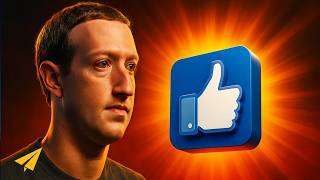
In this Mentor Me interview, Evan Carmichael talks with Mark Zuckerberg about the origins, growth, and philosophy behind Facebook. Zuckerberg explains that the platform began as a simple Harvard directory created for personal use, not as a business plan. Rapid adoption among students led to expansion to other schools, the introduction of features like News Feed, and eventually opening the service to anyone. He recounts the pivotal moment when Yahoo offered to buy Facebook for $1 billion, describing the internal debate, the decision to decline, and the subsequent departure of much of the early management team. Zuckerberg emphasizes a mission‑first mindset—connecting the world and later initiatives like Internet.org—over short‑term profit, arguing that deep personal care and belief in the product outweigh resource advantages. He shares his risk philosophy, stating that the greatest risk is not taking any risk, and highlights the importance of learning quickly from mistakes. The conversation also touches on leadership challenges, the need for clear communication of vision, personal qualities such as determination, and how Facebook’s tie to real‑world relationships differentiates it from other online communities. Throughout, Zuckerberg offers practical advice for entrepreneurs: start with a problem, stay mission‑driven, persevere through setbacks, and let genuine passion guide decisions.
Chapters
What's up, Believe Nation? I started the Mentor Me series with the goal to try to learn from people who've done a lot more than us and leverage some of their skills, their knowledge, their ideas to help us become the best version of ourselves. So today we're gonna learn from Mark Zuckerberg on his Facebook story. Mentor me, Mark. And as always, guys, as you're watching the videos, if you see something that really resonates with you, please leave it in the comments below and put quotes around it so other people can be inspired. And if you write it down, it's much more likely to stick with yourself as well.
I, I built the first version of Facebook because it's something that my friends and I wanted to use at Harvard, a directory and a way to connect with the other people around us. I didn't think at all that it was going to be a company. I remember very specifically the night that we launched the first version. I went out to get pizza with a couple of my friends who now work here. And, you know, and I remember really clearly we were talking about how one day we thought that someone was going to build a community like this for the world and that that would be some company. But it clearly wasn't going to be us. I mean, it just— it wasn't even— It didn't even occur. Yeah, no, I mean, it wasn't even an option that we considered that it might be us. I mean, we just weren't focused on building a company back then. We were just building something that we thought would be useful at our school. With Facebook, there was just such— you know, people loved it, right? And had such an intensity of using it. I think within a couple of weeks, two-thirds of students at Harvard were using it. All these other students at MIT and other local universities were writing in asking us if we could open up Facebook at their school. So we kind of just followed that, right? And, you know, again, we didn't— I didn't set out and, you know, my roommates didn't set out to build a service that we were going to turn into a company, but we just kind of followed what people wanted. And that led us to expand it to all these other schools and eventually beyond schools and to, you know, at some point Once we'd hired a bunch of people, we decided to turn it into a company and, and, um, and go for this mission of connecting the world. But that's not where we started. I think one of the hardest parts for me was, um, was actually when Yahoo offered to buy the company for, for a lot of money. Because up until that point, that was this turning point in the company where before that we Every day we'd just come in and kind of do what we thought was the right next thing to do, right? We'd open to more schools. We, we opened to high school and opened beyond schools and, you know, launched more photos because, because that's what seemed like the next thing that we needed to do to help people express themselves and understand more what was going on around them. But then, you know, Yahoo came in with this, with this really meaningful offer, right? I mean, a billion dollars for And this was how far into the company? I was a couple of years in. Okay. Right, and, you know, we had 10 million people using the product at the time. Right, so it wasn't like, it wasn't as if it were obvious that we were gonna succeed far beyond that. And that was the first point where we really had to look at the future and say, wow, is what we're gonna build going to actually be so much more meaningful for this? And, you know, that caused a lot of interesting conversations in the company and with our investors. You know, at the end of that, Dustin and I just decided, you know, no, we think that we can actually go connect more than just the 10 million people who are in schools. We can go beyond that and have this really be a successful thing. And we decided to go for it. But that was really stressful, because a lot of people really thought that we should sell the company. And, you know, for a lot of folks who joined a startup, I feel like at that point I hadn't been very good about communicating that we were trying to go for this mission. Yeah. You know, we just showed up every day and just kind of did what we thought was the right next thing to do. So for a lot of the folks who joined early on, they weren't really aligned with me, right? For them, you know, they joined and, you know, being able to sell a company for $1 billion after a couple years, that was like a home run, right? And it is a home run, right? And that's, you know, I think that that's, I get that. But, you know, I think that the fact that I didn't communicate very well about what we were trying to do caused this huge tension. And the part that was painful wasn't turning down the offer. It was the fact that after that, huge amounts of the company quit because they didn't believe in what we were doing. Right, I mean, if you look at the management team that we had— Did that whole management team leave? The whole management team was gone within about a year after that. Did you ever regret that decision in that period? Like, were there times where you were like, well, we should have sold? You know, we were— I got really lucky because, you know, not only did what I believed in end up working out, but it ended up working out pretty quickly, right? So literally, you know, I think this was in the summer of 2006, and by, um, I think the next month after that we launched News Feed, which now 10 years later, looking back at it, is, you know, one of the most used products in the world. And then we launched the ability for anyone to sign up, which immediately started growing the community. So within a few months after turning down the offer, I think it was actually pretty clear that that was the right decision. But, you know, I think, you know, since then there have been much harder decisions that we've had to make where, you know, sometimes you have to, you have to bet on something and, and, you know, either, you know, bet the direction of the company or, you know, bet billions of dollars on something. And it's not going to be clear whether you're right for 5 or 10 years. And, you know, that I think actually can end up being much harder than this. That's what I want to talk about next. But before we go there, Have you ever thought about selling the company again since? No, after that point— So it was just— Yeah. Got that out of the way, we're gonna hire people that wanna be here for a long time. Yeah. I always think that you should start with the problem that you're trying to solve in the world and not start with deciding that you wanna build a company. Right, I mean, the best companies that get built are things that are trying to drive some kind of social change, even if it's just local in one place. You know, more than starting out because you want to make a bunch of money or have a lot of people working for you or build some company in some way. So, you know, I always think that this is kind of a perverse thing about Silicon Valley in a way, which is that, you know, people decide often that they want to start a company before they even decide what they want to do. And that just feels really backwards to me. And, you know, for anyone who's had the experience of actually building a company, you know that you go through some really hard things along the way. And I think part of what gets you through that is believing in what you're doing and knowing that what you're doing is really delivering a lot of value for people. And that's, I think, how the best companies end up getting made. You know, I actually, I spent a bunch of time analyzing and reflecting on why it was that we were even able to do it, because all, like, all reasons suggest that we shouldn't have been able to do it, right? Because all these other companies had way more engineering power, and servers and time and money and all this stuff. And I actually think that this is a pretty instructive thing for anything that you want to go do, because this is— the same property is going to be true for anything that you guys start, is that someone else is going to have more resources and be able to do it. The reason why I think we actually ended up being the ones doing it is because we just cared way more about it than everyone else. Right? So there were always projects at some of these other companies that were these hobbies, but We always thought that it was this really important thing, and really just like felt in our gut, in our heart, that we wanted to do it. And early on, there were always these skeptics saying that, "Oh, this can't be a business." We didn't actually care that much about it being a business early on, but a lot of the reason why bigger companies didn't invest in it was because it wasn't clear that there was a model that would work for it. [Speaker] It seemed like a bad idea. [Speaker] Yeah, and I actually think that that's true for a lot of the best ideas, where it is that it's not that someone else can't do it, they actually can, and the odds are stacked against you, But I think often that belief in the fact that you just care so much about what you're doing is the only thing that kind of drives you to do it. And to be honest, that kind of drives me to this day. I mean, one of the big emphasis points for the company right now is internet.org. And for a while, we had this rallying cry of, can we connect a billion people? And when we started talking about that, we thought that was crazy. It was way bigger than any service in the world that had been built. Is 10 digits long, right? It's like a, you know, it just, it felt crazy. We'd never get to that. But then the thing is, as we started to actually get closer to that, we took a step back and we're like, all right, well, our mission isn't actually to get 1 in 7 people in the world to be connected. It's we want to connect everyone. So it's a big issue that only around a third of the people in the world have access to the internet. And that's something that we think that we can do something about. And similar to early Facebook, there's no business model around this. I mean, all the people who have all the money in the world, I mean, it's not necessarily a fair thing, are already the people who are on Facebook. It's in the first, you know, seventh of the world. But we just believe really strongly. It's like, this is what we are here to do. This is what our company cares about. I care about it. The team cares about it. Our culture cares about it. So we're just going to keep pushing on it. And I actually think a lot of the reason why great stuff gets built is because it's kind of irrational at the time. But so it kind of selects for the people who care the most about it doing it. We had a very simple focus and idea. The goal wasn't to make a huge community site. It was to make something where you could type in someone's name and find out a bunch of information about them. So I don't know, I took a few days and just threw together Facebook and launched it on February 4th, 2004. It was just me working on it at that time, but at that point my roommate Dustin, who hadn't had much computer programming experience at all, was like, "You know, I can help you expand it." And I'm like, "That's cool, dude, but you don't know how to program." So he's like, "No, no, that's not an issue." And he went home one weekend, bought the book Perl for Dummies, came back and was like, "All right, I'm ready." And then we started getting emails from people at a bunch of other schools asking if we could launch Facebook there. In the last tech bubble, most websites were run using these really expensive machines, which made it that you had to basically go and raise money before you could do anything. We ran the site originally for $85 a month, renting computers for the first 3 months. Were you ever in debt? Um, I mean, I was in debt $160, you know? In a world that's changing so quickly, the biggest risk you can take is not taking any risk. And I really think that that's true, right? I mean, a lot of people, I think, think that, um, you know, whenever it comes to— whenever you get yourself into a position where you have to make some, some big shift in direction or do something, um, you know, there are always— people are going to point to the downside risks of that decision. And locally, they may be right, right? I mean, for any given decision that you're going to make, there's upside and downside. But in aggregate, if you are stagnant and you don't make those changes, then, then I think you're guaranteed to fail, right? And not, not catch up. So to some degree, I think it's really right that over time, the biggest risk that you can take is to not take any risks. Now, we've made a huge number of mistakes along the way, right? Now, I always say I just think we've made probably every possible mistake you could make. Is there a decision that you've made that the people around you told you was a mistake? And you defied them and you were right. You know, I mean, the most famous one, I think, probably has to do with selling the company, right? I mean, in 2006, right, with this opportunity to sell the company to Yahoo for $1 billion, and we turned that down. I think a lot of people at the time thought that we should sell the company. Absolutely. But, you know, I felt really strongly, and I think like now people generally think that that was a good decision. A lot of people who I think build startups or companies think that selling the company or going public is this endpoint, right? It's like you you win when you go public. And that's just not how I see it. What do you think that Facebook brings to the table that other online communities don't have? I think that, like, the fact that Facebook is tied into the real world instead of just being an online community is a big difference. So a lot of online communities don't really have, like, a set culture. So, I mean, people don't know how to act online, you know? And I mean, right now we're face-to-face and we're acting in a certain way, which is different than we'd act if you were just like a screen name game on my monitor or something. But the fact that this is tied into culture— so my friends at Harvard will observe how I act on Facebook— makes it a different kind of community. Because it's actually an online community with the values of a real community. So I think that makes it cool. It makes it so that there's real life useful information that's available there. And the interactions also sometimes are more applicable to real life too. I think that that's pretty interesting. And I mean, like, there's also cool interactions that occur on other sites, but I mean, this is very real, I feel. And I think that's what we're going for with it. Do you think there's anything about you, like a personal quality of yours besides sort of basic smartness and determination that made you well-suited to work on this project? I realize this requires some introspection. Yeah, I actually think determination is probably the biggest piece. You know, it's, so many things go wrong when you're starting a company, and often I think people ask, you know, what mistakes should you avoid making? And you know, my answer to that question is don't even bother trying to avoid mistakes because you're gonna make tons of mistakes, right? And the important thing is actually learning quickly from whatever mistakes you make and not giving up, right? And I mean, there are things every single year of Facebook's existence that could have killed us or made it so that it just seemed like moving forward and making a lot of progress just seemed intractable, but you just kind of bounce back and you learn, and nothing is impossible. You just have to kind of keep running through the walls.
Thank you guys so much for watching. I hope you enjoyed. I'd love to know what did you learn from Mark that you can immediately apply to your life or business somehow. Leave it down in the comments below, and I'm gonna join in the discussion. I also want to give a quick shout out to Katie Cruz. Katie, thank you so much for picking up a copy of my book, Your One Word, and making that awesome animated YouTube summary of it on your channel. Thank you, thank you, thank you for your support.
We are talking about Your One Word: The Powerful Secret to Creating a Business and Life That Matters by Evan Carmichael.
So thank you guys again for watching. I believe in you. I hope you continue to believe in yourself and whatever your one word is. Much love. I'll see you soon.
More from Evan




How the Biggest Mistake in History Created A Trillion-Dollar Empire | Sergey Brin



9 Machiavelli Principles That Force People To Respect You | Machiavellian Philosophy



The First 10 Words That Instantly Ruin A Sales Conversation | Vanessa Van Edwards