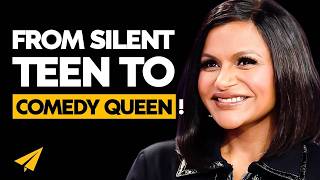
In this interview‑style video, Mindy Kaling shares a candid, stream‑of‑consciousness account of her life, career, and personal philosophy, framed as her "top 10 rules for success." She opens by describing a childhood marked by silence until age 15, emphasizing how listening and a high social‑IQ shaped her writing. Kaling stresses the power of kindness—citing advice from mentor Greg Daniels—as essential in a competitive writers’ room, especially for a woman of Indian‑American heritage navigating stereotypes. She discusses the importance of being expressive while remaining perceptive, and how she deliberately downplays her ethnic identity to stay productive. Kaling highlights the value of working with trusted creative collaborators (e.g., the cast and writers from The Office), noting that long‑hour environments become more enjoyable when surrounded by friends. She recounts her highly organized, checklist‑driven approach to life, from high school ambitions to career milestones, and reflects on personal insecurities about body image and the desire for skinny ideals. The interview also touches on diversity in television, her pride in featuring two dark‑skinned women of color as series regulars, and the challenges of meeting higher expectations placed on her as a trailblazer. Throughout, Kaling mixes humor, self‑deprecation, and earnest advice, offering a blend of practical career guidance, personal growth tips, and reflections on authenticity in storytelling.
Chapters
I didn't talk until I was like 15 years old. I was pretty much silent, which no one believes. Being kind to people and listening to people tell you about their families and their lives. People will think you're not funny because of the way that you look. My favorite artists have always been the ones that stick together with their group. That feeling of like waiting for this pregnant woman to leave so I could finish writing my like little weird plays that I would write is when I was like, oh, I love doing this. It felt like you better get your own show because that's what everyone else is doing. If anyone should be doing it right, it should be me. And that makes sense. And I actually like that. Like, I've never been just like one, like, live for the moment and who cares what happened. Like, c'est la vie. Like, I was never that. I was highly organized. I just want to be skinny since I'm 12 years old. I've just been like, oh, God, I just wish I could be one of those skinny girls. Never happened. I meet handsome men in cute and unusual ways on television. And next season, my character might get a pet puppy.
She's an American actress, comedian, and writer. She's the creator and star of the Fox sitcom The Mindy Project. She's also known for her work on the NBC sitcom "The Office." She's Mindy Kaling, and here are her top 10 rules for success.
It is very important to be expressive, in so much that no one should ever be stopping you from saying what you need to say, or you should never have that fear. However, I think as a young person, it's equally important, if not more important, to be perceptive and to be sensitive. And I feel like we don't talk about that a lot because we feel like the only way to show that we're empowered is by speaking in. And I think that, you know, when I was growing up, I really thought that what my parents taught me was like— I largely— I didn't talk until I was like 15 years old. I was pretty much silent, which no one believes. And it's because I just was like listening and paying attention to what everyone was saying and, you know, trying to have like a good social IQ, which I think helped me become a really— which helped me later to become a good writer. And I think that that is the one biggest thing is to really, you know, to listen to others more than necessarily putting such a premium on being able to say what you feel. The best advice I ever got is probably from Greg Daniels, and he's given me tons of good advice, but one piece of advice he gave me, which seems very simple but is very hard to follow all the time, is be kind, which is if you're in a room with kind of a bunch of like sardonic East Coast educated, like kind of impatient writers. It's very hard to show kindness and I think that especially graduating from comedy writer to running a show where you're like, I'm a manager, like I can be sued for like human resources issues. Like that's not something that I came into this doing. Like it's like being kind to people and listening to people tell you about their families and their lives, it's like, I think that was a very useful piece of advice. I came up with people who wanted to, so like I said, the writers I work with identify as feminists. They want to include women. They are excited about the voices of an Indian woman, even if they are a white man, the way that I am also excited about female voices in my writing staff and like stand-up comedians and all sorts of, but it has been challenging. I think one of the things that's been, helpful to me is that I try not to think that much about the fact that I'm like an Indian American. So many people will look at me and be like, you're different than everyone else. But I can't sort of think about it. I can't like think about my legacy or whatever because it stops me from being productive. And it's a distraction. And I don't want to deny who I am because it's so important to me, but I can't rely on it. Right. And that's just been something that I think is so important because people will try to make you feel like you're other. I mean, I've felt that constantly, people assuming I'm not funny in New York coming up as a stand-up, or coming up and trying to do improv and stuff. People will think you're not funny because of the way that you look. So you have to just be like, I'm not gonna like think in these terms at all. Like, I'm just gonna ignore it. And I think that's my advice to people is like you can get so hung up on being like, am I the victim of the situation? Or you can be like, I'm in charge of it. And I think that that's been why I've been able to be successful, is like my singular, crazy Richard Nixon-like focus on succeeding. Cool president to pick. Cool. He was focused. He was focused. My favorite artists have always been the ones that stick together with their group, whether it's Christopher Guest and his actors who are often in a lot. It seems like they have a company. Or Woody Allen using Diane Weist and Mia Farrow. It also just makes the quality of life so much better because my hours are so long. And if I can just pack the scenes in the writer's room with my old friends, first of all, things go faster. And second of all, it's like you get to transition from like work to social life much more easily. Now that said, all of my original friends at The Office, like Mike Schur, he went on to create Brooklyn and Parks. He's very busy. Paul is running newsroom. BJ has his second book out, and Greg is, you know, Greg. But it's great when they can just kind of come in and do that. Also, the tone of The Office is just great. I know that it's a mock documentary, and our show is very cinematic, and it's very different. But in terms of the types of jokes we write, they're all— that is exactly the same, I think. I, as a little kid, I had very, very protective parents. Who would not let me out a lot to do a lot of stuff. I didn't do any sports. I was not good at instruments. We never really traveled or anything. I was just, I was just like told to study. Both my parents worked. Study and read books. And so I think that so much of my childhood was sitting— my mom was a doctor and she'd have her office where she would see patients and talk to them and then like an exam room and then there was an extra room that was for storage and for phlebotomy, which is like drawing blood. So, 'cause we like, my mom didn't wanna leave me with like a nanny. After school I would take the bus to her office, go to this last room, and then I'd sit there with a typewriter and I'd either read or write, that was all I could do. And then if someone had to come in and get their bloods taken, I would just get shuffled out. And then a pregnant woman would just be sitting there getting her bloods drawn and then like, I'd kinda wait impatiently. And then she'd leave and then I'd come back in and start writing again. So, to the point where like they would read what I was writing and I would write these stories and I think that, that feeling of like waiting for this pregnant woman to leave so I could finish writing my like little weird plays that I would write is when I was like, oh, I love doing this, like, and I can do it without anybody else to entertain me. To have a successful pilot on network television right now is so rare. You must have been over the moon. How did it happen? What was the secret to your success? Well, I think that I had been It is very rare, and it's— I was so lucky and have had so many people involved from all of our studio execs and Bella Bajaria and everyone at Fox and Kevin Reilly, who I had a long relationship with. But Greg Daniels had a writers' room in season 2 of The Office. It was like Gene Sibnitsky, Lee Eisenberg, who then went on to start Trophy Wife and write Bad Teacher, BJ Novak, who's done a ton of amazing stuff. Mike Schur, who did Parks and Rec and then Now Whatever. So Paul Lieberstein is now showrunning The Newsroom and does director episodes. So of that group, it's not that weird to have your own show. So like that, it, we're very competitive and sort of high achieving people that like the season 2 writers room. So it felt like you better get your own show because that's what everyone else is doing, which is a good atmosphere to be in, I think. Diversity has become like a thing with this show, the topic of, you know, contention. But I, I'm more interested in knowing how you feel about that in terms of like having to, uh, address it and justify your decisions. Has it been— you know, it's so important to me, so I feel a lot of times, um, when I talk about it that I get really like passionate about it. Um, and I ultimately take it as a compliment because I just get held up to a higher standard because there's a sense that if anyone should be doing it right, it should be me. And that makes sense, and I actually like that about that. I like that people have a higher expectation to me than other shows. Um, I think we can always be doing better. And, you know, we sometimes— what people don't see behind the scenes is like, we want to get Kevin Hart on the show or Duleé, and they can't do it because of scheduling. And people don't know that because we don't advertise it. But, um, It's, uh, I love our cast. I think Zoë is so funny and so great. I think two dark-skinned women of color as series regulars in a show, one of whom is the lead, is— I feel really proud of that. And that said, it's like we are always trying to do better. Do you have a blueprint for your career? Not a blueprint cleanse, but an actual blueprint. Um, yeah, I've always been one of those weird kids where like When I would go to high school, I would like make lists of like all the things that I wanted to do and then I kind of like checked them off like a serial murderer. Like, did I do this and do this and do this? And when I went to college, I like assessed what I thought was like cool to accomplish and then I like checked it off. Like, I've never been just like one like live for the moment and who cares what happened, like c'est la vie. Like, I was never that. I was highly organized. And so I think when I was younger, This is one of the cooler things about my life, and I have to acknowledge it sometimes because when I like get mad at it being humid or whatever, that I was— I am living my life's dream. Like the job I have now, I had a plan up until now, which was to get my own television show that I would create. And so I have to start thinking more unless I die. So I could die. I could die this week or something. Wouldn't that be— That would be pretty dramatic and cool. But I— barring that, I have to make some more plans. So now I'm looking inward. I'm like, oh, I should maybe have kids, get married, maybe that sort of thing. I should do that now. What I'm interested in when I'm telling stories is that you think you want one thing your whole life. For me, my whole life, it's just like, I just want to be skinny. Since I was 12 years old, I've just been like, oh, God, I just wish I could be one of those skinny girls. Never happened. And I wish I had, like, thick, beautiful hair and everything else. And for this character, what's been fun is she just wanted to get married, and now it's happening. And she's like, I want more.
Yeah.
And that is something that is super relatable. And it's the one thing that seems, no matter who I meet who's a woman, that seems very constant. So I like telling that story. So even though I have no idea why I was asked to speak here today, I prepared this speech very carefully the way that any good Dartmouth-educated graduate would. I drank a 40 of Jägermeister. Then I called my dad to see if he would get me out of it. He's here today. He could not get me out of it. So I tried to hire a college freshman to write it for me in exchange for a $200 gift card to Newbery Comics. That didn't work out. Finally, seeing that I absolutely had to do this and couldn't get out of it, rolled up my sleeves, sat down at my computer, and tried to buy a commencement address off of movingcommencementspeeches.com. My credit card was declined, so I had to write the thing myself, and here we are today. There are many, many distinguished speakers who have spoken here today. I am sharing the stage with Preet Bharara, U.S. Attorney for the Southern District of New York. We've heard what a great guy he is. In 2012, he was named by Time magazine as one of the 100 most influential people in the world, which apparently they're just giving out. According to Time, he has battled terrorism, as evidenced by his conviction conviction of the Times Square bomber. He's crippled international arms dealers, drug traffickers, and dealt with financial fraud. Clearly, Harvard wanted you to see the full range of what India can produce here. Mr. Bharara fights finance criminals and terrorism. I meet handsome men in cute and unusual ways on television. And next season, my character might get a pet puppy. So Is one more important than the other? Who can say? The real reason I am here is, as Connie said, I am obsessed with justice. Not so much with the law, but with justice. Actually, in my mind, law is that pesky thing that often gets in the way of justice. I believe in the Clint Eastwood school of the law. An eye for an eye? I don't think so. That solves nothing. You take my eye, I take your life, my friend, OK, in a duel, Aaron Burr style. I don't want your stupid eye. For what, my eye collection? You're dead, OK? Yes, duels are the first thing that you learn when you enter my graduate program, the Harvard School of Vengeance. But again, that is not what I came here to talk to you about. That's for the reception after. We can talk about that more. The Harvard Law School crest which you can see in front of you, has the word "veritas," which means truth in Latin. I know this because though I have been known as Mindy my whole life, my first name is actually Vera, which also means truth. It's true. It's actually too boring to make that fact up. And if you look at the crest, you'll notice that under this hallowed word, there are 3 bunches of asparagus. Because asparagus is the tallest and the proudest of the vegetables. The pillar of the vegetable kingdom. And it's like the— okay, that is not asparagus. That is wheat. Which makes also not a ton of sense either. Okay, well, that was like 3 pages of my speech. Nope, okay, that was— That's a callback to asparagus. I have this really funny run about hollandaise. You'll never get to hear that. You know, this isn't going anywhere. I'm going to move past trying to make sense of your crust, which makes no sense.
Thank you so much for watching. I made this video because Obina asked me to. So if there's a famous entrepreneur that you want me to profile next, leave it in the comments below and I'll see what I can do. I'd also love to know which of Mindy's top 10 rules had the biggest impact on you and why. Leave it in the comments, and I'll join the discussion. Thank you so much for watching. Continue to believe, and I'll see you soon.