One Simple Rule to Outwork Everyone! | Pitbull | Top 10 Rules
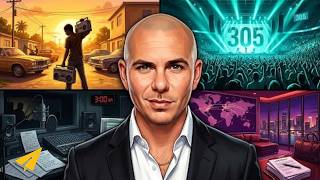
In this Believe Nation episode, host Evan Carmichael interviews Grammy‑winning artist and entrepreneur Pitbull (Armando "Mr. 305" Christian). The conversation is structured around Pitbull’s personal "Top 10 Rules for Success," each introduced by Evan and elaborated by Pitbull with bilingual anecdotes, concrete examples from his music‑business career, and motivational advice for entrepreneurs. The rules cover: (1) Stick to your gut; (2) Always get better; (3) Work hard; (4) Learn from failure; (5) Break barriers; (6) Take risks; (7) Enjoy the journey; (8) Collaborate; (9) Reinvest in yourself; (10) Wake up and act. Pitbull repeatedly stresses that critics who say "it’ll never happen" are fuel, that risk‑taking is essential, and that perseverance plus continuous improvement beats talent alone. The interview ends with a bonus clip where Pitbull discusses his long‑term vision, the Spanish motto “pasos cortos, vista larga,” and the energetic catch‑phrase “dale.” The tone is conversational, high‑energy, and motivational, mixing English and Spanish, and the content is aimed at aspiring entrepreneurs and creatives seeking practical, mindset‑based guidance.
Chapters
But I really get motivated when people tell me it'll never happen. For people that are entrepreneurs, there's no cutting the corner, there's no magic bullet, there's no cheat sheet. We have to take risk. If we don't take that risk, I go back to it, it's the biggest risk that we take.
Need motivation? Watch a Top 10 with Believe Nation. What's up, it's Evan. My one word is believe, and I believe in you. I believe you have an amazing gift inside you that I want to see explode out onto the world. So let's get your motivation to a 10 and get you believing in you. Grab a snack and chew on today's lessons from a man who went from growing up the son of Cuban expatriates and having his parents divorce when he was really young to becoming an award-winning rapper, actor, singer, and record producer. He's Pitbull, and here's my take on his top 10 rules of success. Enjoy! All right, let's kick things off with rule number 1, my personal favorite: stick to your gut.
But I really get motivated when people tell me it'll never happen. It's like, you know, this— I mean, it happens to me all the time in my business. You gotta understand, guys, I gotta reinvent myself every record. So that means every 3 to 6 months I gotta find myself again because the last record or the new record is not as big as the last record. Siempre. Siempre la misma muela, el mismo cuento. ¿Cómo entienden? You're not going to be great. But you guys have to understand, I got a guy that's sitting in an office that hasn't been to a club, sabe yo, en cuántos años. No entiende lo que es disfrutarse, bailar, locura. He don't understand none of that. Telling me what a hit record is. You know? So you got to be able to stick to your gut, stick to what you believe in, understand your worth, and go, OK, well, this is where you build an infrastructure. At least in my business, we built a— our own team, our own one-stop shop where if someone says, "No, we don't think it is," you say, "Don't worry, we'll check back in in a month and we'll see who—" And which has happened. They'll go, "Oh, that'll never work." And in a month, Edipo Viene says, "You know, this is really starting to sound like a hit." [SPEAKING SPANISH] So that motivates me. That to me is what makes me get up in the morning and go, "What's next?" Rule number 2, always get better. At the end of the day, this is called the music business. So you gotta continue to get better. Continue, always find ways to better your business. It's, uh, kind of like Apple, you know. If he stayed on, on a laptop, then what would he be? No. What did Steve Jobs and the whole team come up with? iTouch, iPad, iPod, now it's iCloud. It's always finding ways to get better. And that's the way I looked at it through music. I said, well, now I can just go from rapping to everybody in the neighborhood to the whole And it worked. And now everybody's doing it. Now I gotta figure out the next movement. Now I gotta figure out my next I something. Rule number 3: Work hard. Well, my mother growing up had every job known to man. Worked— I mean, me personally, I went to probably about 25 different schools, lived in good neighborhoods, bad neighborhoods, worse neighborhoods. But my mother sold water. I was right there with her knocking on doors. My mother sold cable. I was right there knocking on doors with her. She sold Avon. I was right there knocking on doors with her. Amway, I mean, you name it, she did it. I was there with her when she would do telemarketing and I seen how she would pick up the phone and I started working in telemarketing, picking up phones, and I learned that I think that not only to be an entrepreneur is thinking outside the box, that I agree with 150%, but I also think it's all about an approach. And not only an approach physically, an approach mentally. If you're chasing money, it runs. All right? If you're making money, it's different. All right? So for people that are entrepreneurs, there's no cut in the corner, there's no magic bullet, there's no cheat sheet. It's really simple, as complex as it may sound. Hard work. Work hard. Believe in yourself. They tell me all the time, Chico— that's another name that I got, by the way— they say, "Chico, eh, you're so lucky, Chico." I say, "Man, you know what's funny?" Harder I work, luckier I get. It's really that simple. And people think that we— there's something genius to the things that we do, and it's not. Because look, in the music business, it's just that— music business. And it's a business where half of them don't know music and half of them don't know business, have no business in music. What is this? I'm confused, right? Well, guess what we have to constantly do? Fight. Because it's 90% business, 10% talent. And I'm far from talented. But I'll outwork you.
Rule number 4: Learn from failure.
I came up with a slogan, and I tell it to my kids all the time. I say, "There's no losing, only learning. There's no failure, only opportunities. And there's no problems, only solutions." So to me, what failure is, failure is the mother of all success. If it wasn't for Michael Jordan getting cut from his 9th grade basketball team, he wouldn't have became Michael Jordan. You know, if it wasn't for— I seen an article the other day where they were talking about Oprah Winfrey and how she got fired because she wasn't good for television. You know, you got people like Walt Disney who got fired, if I'm not mistaken, from a newspaper saying he had no imagination. ¿Tú me entiendes lo que te estoy diciendo? These are the same people that I gotta deal with telling me what's not a hit record. So what do you tell them? You tell them, you know, that all they can do is learn and come back bigger, better, stronger, 'cause all it's gonna do is lead you in the right direction. See, if you're always winning, then you don't really understand what it is to win. You gotta take those losses. You gotta take those hits. There's gotta be the valleys, the peaks, the ups, the downs. In order for you to, when it does happen, you go, wow, qué rico. You know, this is what it's all about. And not only that, it's never about making it, guys. It's always about maintaining it. That's the toughest part.
Rule number 5, break the barriers.
You said that when you were younger, you ran into some trouble for being a blue-eyed Cuban American. I was telling you. Blue-eyed, light-skinned Cuban American from Miami. And the thing was, Miami wasn't respected in no way, shape, or form when it came came to the hip-hop industry at a certain time. It was just 2 Live and that was about it. Yeah, 2 Live Crew, you had Trick Daddy Trina. Trick, he opened a lot of doors. Luke opened a lot of doors as far as fighting in the Supreme Court for the First Amendment, being one of the first African American— Band in the USA. Yeah, Band in the USA. First African Americans to go platinum independently and have his own pressing plant. And so to me, he was the blueprint of the independent mind state, which I still use to this day. So, For me, it was 4 strikes against me trying to get in the game, you know? 'Cause when I went on tour with Luke and I did, you know, Mississippi, Alabama, Arkansas, South Kakalaka, North Kakalaka, you know? And you're going into these deep parts where they look at you and they go, "Who is this guy?" You know, "Yeah, Eminem, whatever, that's cool. White guy?" "No, no, no, Cuban." "Cuban? What's Cuban?" You know? So— Learned a lot from that, and I think they learned a lot from me also. And at the same time, it taught me how to break barriers, knock down walls, but always through music.
Rule number 6: Take risks.
When I visit students, I also tell them that the greatest risk they take is not taking one, which, by the way, Miss Martinez taught me that, and I use it to this day. Anytime I feel that, should I I feel nervous like I feel right now, eh, I take the risk. And for all the students, for all the teachers, and for all the educators here, we have to take risk. If we don't take that risk, I go back to it, it's the biggest risk that we take.
Rule number 7: Enjoy the journey.
We're living in a society that's filled with instant gratification. Instant, instant, instant. Gratification. But if they only knew, the more you want things faster, okay? And they come fast because we used to say it about drug money in the streets. What comes quick leaves quicker because it's easy money. You don't appreciate it. You don't understand it. So to me, it's not about building a business and making all this money. Yes, don't get me wrong. There's no hidden agenda here, guys. We all want to generate. I get that part. But man, the priceless part is the journey. The priceless part is all the nos you ran into, all the failures that happened, all the slip-ups, you know, all the times you got knocked down. That is the fun part of the story. That's why when you get in a circle of people and you're talking to them about success and you're talking to them about what it's really like, they respect you and they love to be around you because you admit what it took to get there. You know, and that to me is a true entrepreneur, a true fighter, someone that goes, you knock me down, but wait till I get back up. Oh, it's going to be so much fun, you know? And those are the things that, that I look forward to.
Rule number 8: Collaborate.
How does it help you to be a featured artist on an album and to actually have other people lend their name to your project? Well, I mean, for one, it's, it's from a marketing standpoint? Yeah, from a marketing standpoint, obviously it's something where you're tapping into numerous audiences, you know, working with so many different people. Working with Enrique Iglesias, you're gonna tap into a certain audience. Marc Anthony, another audience. Jennifer Lopez, Shakira. Then the great thing is about the music and the position that we're in, we're able to tap dance between different genres and different cultures. Then you got records with T-Pain, records with Ne-Yo, like you were saying, Kelly Rowland, Chris Brown, and these are all things that I think Over the years, not only have we gained the respect from them, you know, I also respect everything that they do, but I also understand that growing up in a city like Miami has helped me a lot to understand music from so many different perspectives because it's a melting pot. Right, right. You know, so I— growing up around so many different people allowed me to think out of the box when it came to music. And from a marketing standpoint, I mean, what better than to be able to be that bridge, that ambassador of being able to bring music this way and music that way and be able to really show literally how powerful music is.
Rule number 9, reinvest in yourself. The most important thing that any artist can do is real simple.
Obvíate los banqueros, obvíate the agents that can tell you they can get you this house or this car or this, that, and the other. Obvíate those. You get that money and you reinvest in yourself. 'Cause no one's gonna bring you back a return on your money more than yourself, meaning your career. So if you get a record and you invest into yourself, the promo of the record, the PR on the record, the video on the record, and you put a team behind it, it may cost you a little bit, but you just doing what the label is gonna do for you, or supposedly do for you. When you do that for yourself, it's the best investment.
And rule number 10, the last one before a very special bonus clip: wake up. What do you say to someone who— to help them follow their dreams?
Advice. Don't sleep, you know. No, bottom line, I mean, they call it dreaming because you're sleeping while this happens, you know. I've lived my dream every day. I wake up, I go out there, I work hard for it. Patience, passion, perseverance equals success. Everybody, you know, you call it a dream. No, no, no, no, you can make it reality. So I always say, you know, I dream and they stay dormant. They, they stay sleeping, you know. So for everybody out there, it's a dream, but wake the fuck up and get out there and get it. And then a lot of people, they, they just think this is easy, and it's, it's far from that. But you gotta love it. Anything that you do, you gotta love it. You gotta be passionate about it.
Now I've got two very special bonus clips from Pitbull that I think you're going to enjoy on how to have a long-term vision. But before that, my question of the day for you is: what is your favorite Pitbull song of all time? The greatest Pitbull song ever? Leave in the comments below. I'm really curious to find out. Thank you guys so much for watching. I believe in you. I hope you continue to believe in yourself and whatever your one word is. Much love. I'll see you soon and enjoy the bonus clip.
It's hard for me to say, yes, I'm successful. Yes, this is success. Thank God that we've reached a certain level, but I don't want to plateau by saying that. I would say— I get that. I think there's so much more to do. I get it. And we have another saying in Spanish, pasos cortos, vista larga, which is short steps, long vision. And that's the way I feel about everything that we got going on and success. Dale is just like, let's go. Dale is also you can hit, like dale duro. What does that mean? I mean, hit it hard. Hit what hard? The baseball. The baseball. Hit it hard. Hit it hard. That did look like a baseball that you were hitting. All right. Yeah, that was my volleyball game right there. I was hitting it hard.
So when you say it, because it is your motto, what do you want people to think when you say "dale"?
Dale is all about energy. It's like we're about to go into some energy. So usually when you hear it, it's right before I go into the hook. Right when I'm finishing, I'm like, "Dale." So let me give you the one word secret to happiness. One word. This is all you need to be happy. The most important word ever. If you had to think of Is there one word that's most important to you or that sums you up or that would be kind of like a little beacon?
Hey, Believe Nation! If you want to know what the most important one word is for Tony Robbins, Gary Vaynerchuk, Oprah Winfrey, Will.i.am, and Howard Schultz, I have a very special secret video for you. Check the description for details.
More from Evan




How the Biggest Mistake in History Created A Trillion-Dollar Empire | Sergey Brin



9 Machiavelli Principles That Force People To Respect You | Machiavellian Philosophy



The First 10 Words That Instantly Ruin A Sales Conversation | Vanessa Van Edwards